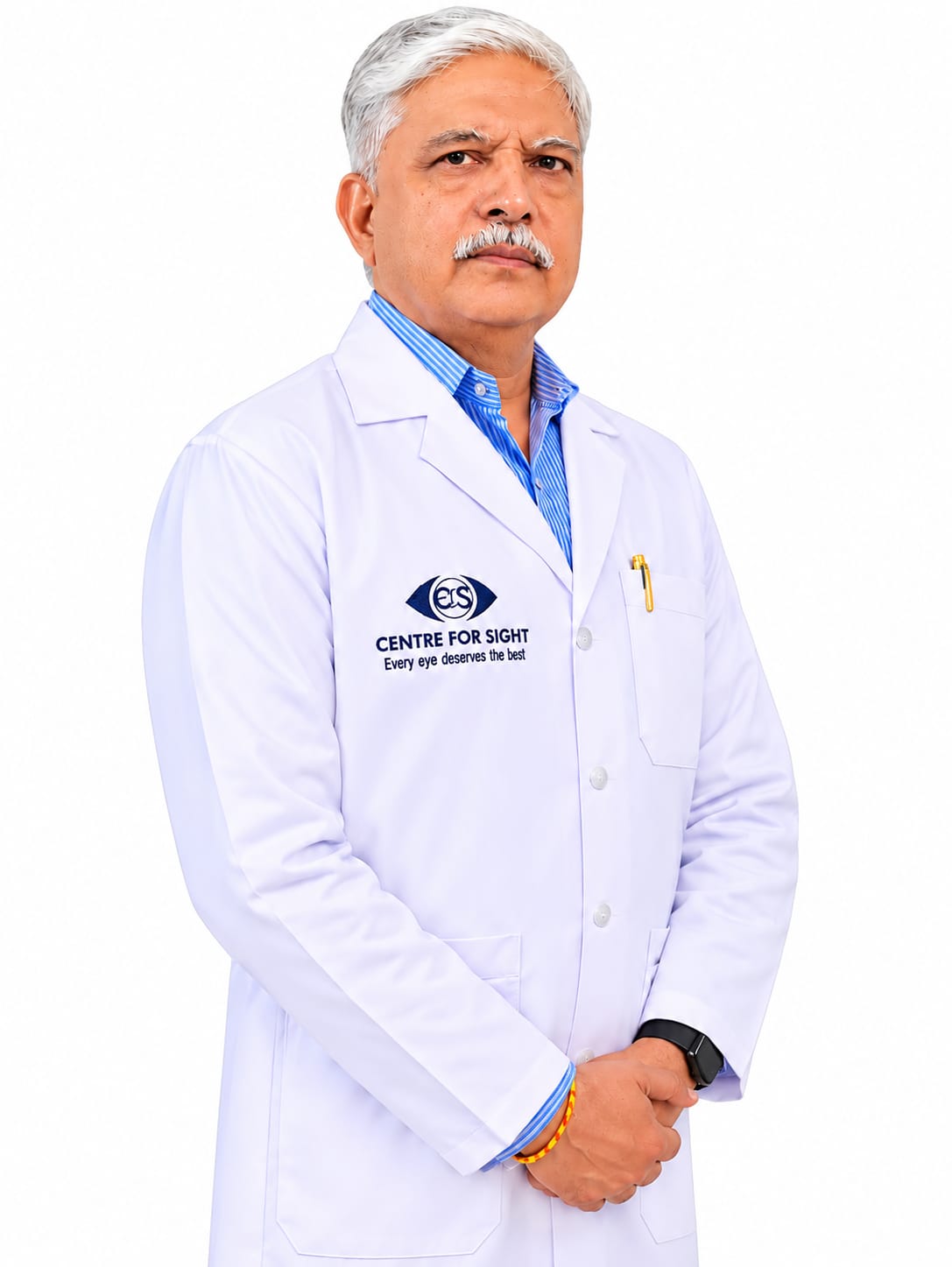
Dr Parimal Desai, Medical Director, Centre for Sight, Gandhinagar, Ahmedabad
Misplacing your reading glasses, holding your newspaper a little farther away, struggling to read road signs or finding it difficult to recognise familiar faces from a distance are experiences many people begin to notice as they grow older. Often, these changes are dismissed as a natural part of ageing. While some changes in eyesight are indeed age-related, not every vision problem should be accepted as inevitable. In many cases, these seemingly minor difficulties could be early signs of an underlying eye condition that requires timely attention.
Our eyes undergo several changes as we age. The natural lens gradually loses flexibility, making it harder to focus on nearby objects, a condition known as presbyopia. However, ageing also increases the risk of cataracts, glaucoma, age-related macular degeneration and retinal disorders. The challenge is recognising when an ordinary change in vision is actually a warning sign.
There are five everyday vision changes that older adults should never overlook.
- Holding Books or Mobile Phones Farther Away to Read: If you increasingly find yourself stretching your arms to read messages, newspapers or medicine labels, it could be presbyopia. This common age-related condition affects the eye's ability to focus on nearby objects, usually becoming noticeable after the age of 40. While reading glasses can help, a comprehensive eye examination is important to rule out other vision problems.
- Cloudy Vision or Difficulty Seeing Colours Clearly: Does the world appear slightly hazy, or do colours seem less bright than before? These could be early signs of cataracts. As the natural lens becomes cloudy, vision gradually loses its clarity, making everyday activities such as reading, watching television and recognising faces increasingly difficult. Increased glare and difficulty seeing at night are also common symptoms. Cataracts are treatable, and timely evaluation can help determine when surgery is appropriate.
- Difficulty Seeing at Night or Increased Sensitivity to Light: Struggling with headlights while driving, experiencing halos around streetlights or finding poorly lit areas uncomfortable to navigate should not be dismissed as normal ageing. Cataracts can cause glare and reduced contrast sensitivity. Other eye conditions may also affect vision in low-light environments. An eye specialist can identify the underlying cause and recommend suitable treatment.
- Straight Lines Appearing Wavy or Faces Becoming Distorted: If door frames, window edges or lines on a newspaper appear bent or distorted, it could indicate a problem involving the macula, the central part of the retina responsible for detailed vision. Age-related macular degeneration (AMD) is one condition that can affect this area. People may also notice difficulty recognising faces or reading despite wearing the correct spectacles. Such changes warrant prompt evaluation by an ophthalmologist.
- Frequent Changes in Spectacle Power or Gradual Loss of Peripheral Vision: Repeated changes in spectacle numbers may sometimes indicate developing cataracts or other eye conditions. More importantly, a gradual reduction in side vision can be an early sign of glaucoma, a condition in which damage to the optic nerve can lead to permanent vision loss. Glaucoma often develops without noticeable symptoms in its early stages, making regular eye pressure checks and optic nerve assessments particularly important.
Beyond recognising these warning signs, preventive eye care plays a crucial role in preserving vision. Adults above 40 should undergo regular comprehensive eye examinations, with the frequency guided by their eye health, medical history and risk factors. People with diabetes, high blood pressure or a family history of glaucoma may require more frequent monitoring. A healthy lifestyle, a balanced diet, protection from ultraviolet rays and avoiding self-medication with eye drops can further support eye health.
The most important thing to remember is that deteriorating eyesight should never be considered an unavoidable consequence of growing older. While some age-related changes are natural, many eye conditions can be managed effectively when detected early. Do not wait until blurred vision begins interfering with everyday activities. A timely eye examination can make the difference between simply adjusting to poor vision and taking the right steps to preserve it. Ageing is inevitable, but losing the ability to see the world clearly should never be accepted without seeking medical advice.