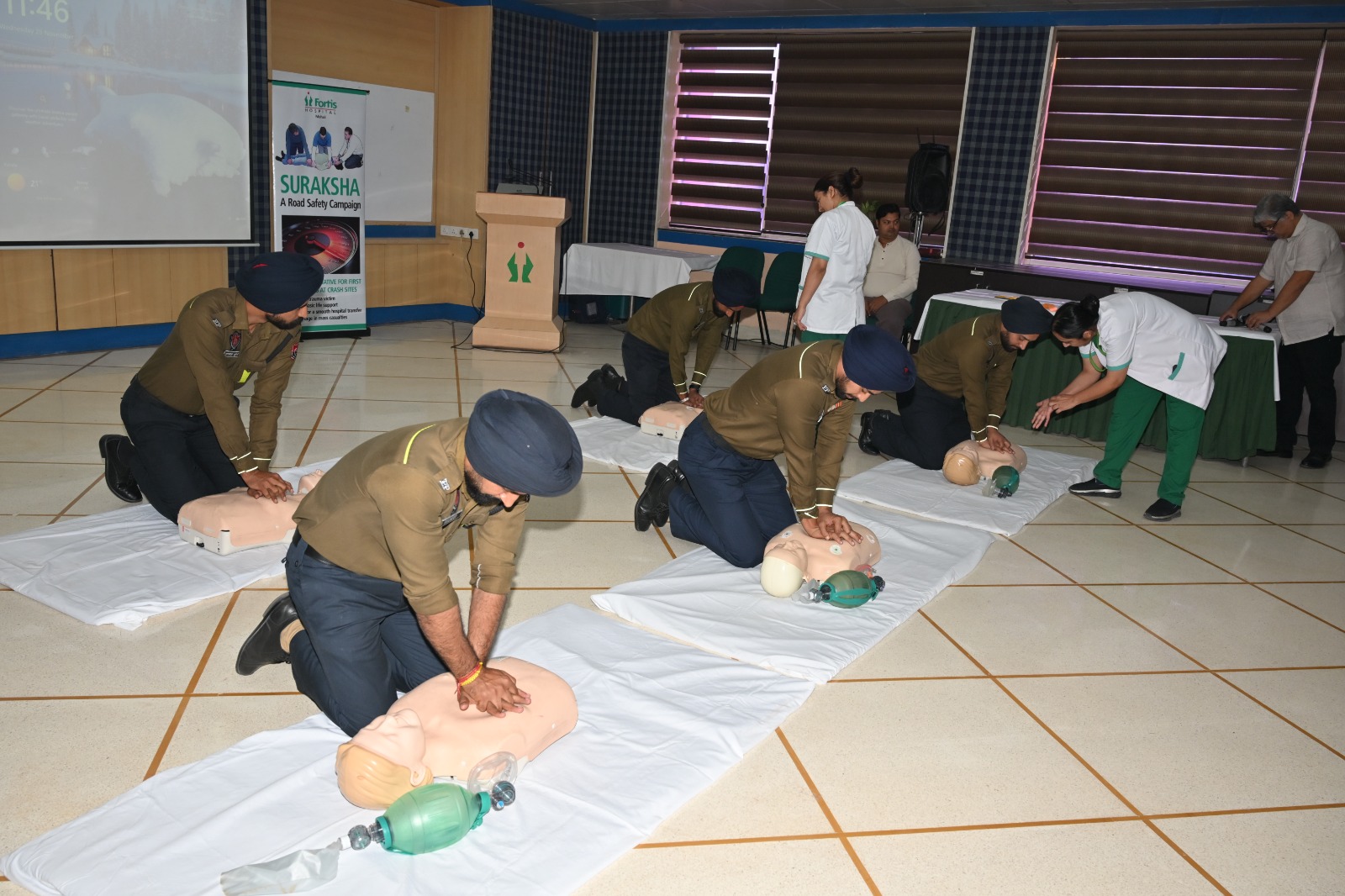
Mohali, November 25, 2026: Road traffic accidents claim about one million lives worldwide every year, and the majority of these deaths are preventable. What is done, or left undone, in the first few minutes after a crash often decides whether a victim survives. On highways, the first people at the scene are usually police patrol personnel, which is why SURAKSHA was built around them.
Launched by Fortis Hospital Mohali in 2014, SURAKSHA has grown over twelve years from a single training initiative into a lasting community campaign. Across its two phases, it has trained nearly 5,800 police personnel from Punjab and Chandigarh in trauma care and Basic Life Support (BLS), strengthening emergency response on the region's roads.
Dr Arun K Sharma, Head – Critical Care, Fortis Hospital Mohali, said, “The first golden hour after an accident is critical, and the first few minutes matter most within it. Our police personnel are usually the first responders on the road. When they can assess a victim quickly, control bleeding, protect the spine and begin CPR correctly, they can make the difference between life and death. Our aim is to make our community trauma safe.”
Dr Vikramjit Singh Dhaliwal, Medical Director, Fortis Hospital Mohali, said, “Good healthcare does not begin and end at the hospital gate. SURAKSHA reflects our long-term commitment to preventive healthcare and community welfare. Over twelve years, we have seen how skills shared with the right people can build a safer society, and we will keep investing in that.”
The workshops are held in the hospital auditorium and are interactive, with an emphasis on hands-on practice on manikins. Participants learn the basic dos and don'ts that apply to most trauma victims, including:
- why lives are lost in road accidents and how to assess a trauma victim quickly
- BLS for trauma patients, covering spine stability, log roll, bleeding control and penetrating injuries
- chest compressions for an unresponsive victim
- preparing for a smooth transfer to hospital
- triage when there are multiple casualties
Mr Amardeep Singh Rai, Special DGP Traffic and Road Safety, Punjab, said, “For our personnel on the road, this training is of real practical value. They are often first at the scene of an accident, and knowing how to act in those first minutes helps them respond faster and with more confidence. Initiatives like SURAKSHA strengthen our road safety efforts, and we appreciate Fortis Hospital Mohali's sustained support.”
SURAKSHA sits within a broader programme of community engagement. Fortis Hospital Mohali has also conducted over 400 BLS workshops for school and college students, resident welfare associations, senior citizens, corporates and clubs, spreading lifesaving skills well beyond the police force. Its Phase 1 began on 27 June 2014 and trained over 4,300 police personnel from Punjab and Chandigarh across 67 sessions. Phase 2, launched on 13 May 2025, reached about 1,500 personnel of the Punjab Sadak Suraksha Force.