


31, Mar 2026
A browser built for SMBs: NordLayer launches NordLayer Browser
The new NordLayer Browser offers small and medium-sized companies comprehensive, streamlined, and optimized advanced security through a user- and business-friendly experience
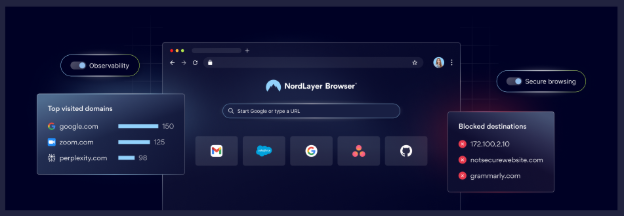
NordLayer, a toggle-ready network security platform for businesses from the cybersecurity leaders that created NordVPN, has officially launched the NordLayer Browser — an enterprise-grade solution tailored to small and medium-sized businesses (SMBs). To safeguard company operations, it integrates browser-native security, enhanced observability, and access management and control into a single platform, delivering a familiar and intuitive experience for users with effortless deployment and management for businesses.
“Companies increasingly depend on web-based software-as-a-service (SaaS) applications. Consequently, the browser has become the new endpoint,” says Andrius Buinovskis, head of product at NordLayer. “Traditional consumer browsers with no built-in security controls are insufficient to safeguard organizations in the current cyberthreat landscape. However, existing enterprise browser solutions are too complex and demanding for SMBs. The NordLayer Browser fills the market gap by delivering streamlined, advanced security that is simple to deploy and effortless to use.”
Leading research and advisory firm Gartner predicts that by 2028, 25% of organizations will deploy at least one secure enterprise browser technology to address specific gaps in their cybersecurity strategy. Gartner also predicts that by 2030, enterprise browsers will be the core platform for workforce productivity and security software on managed and unmanaged devices for a seamless hybrid work experience. These predictions are a direct response to cybercriminals frequently targeting employees via web-based and SaaS-use related attacks, like phishing, malicious browser extension campaigns, and account takeovers, that call for an additional layer of control and visibility within the browser.
The lack of dedicated IT staff, coupled with limited cybersecurity budgets, makes SMBs an attractive target for cybercriminals. A report from NordStellar, a threat exposure management platform, revealed that SMBs — companies with up to 200 employees and revenues up to $25 million — bore the brunt of all ransomware attacks last year.
“The NordLayer Browser reflects a deep understanding of SMB cybersecurity needs and is backed by extensive industry experience,” says Buinovskis. “It offers deep observability, browser-native security, as well as access management and control without the complexity, rigidity, deployment challenges, or enterprise price tag. All of the features are designed to empower IT admins while maintaining a seamless browsing experience for employees.”
Key solutions of the NordLayer business browser include:
- Shadow IT management. The browser provides visibility into SaaS usage and helps mitigate shadow IT activity through web activity monitoring, browser extension tracking, domain blocking, and a comprehensive activity log.
- Browser data loss prevention (DLP) elements. DLP elements restrict camera, microphone, file downloads, and clipboard access to prevent data capture and exfiltration on untrusted websites. This helps organizations limit uncontrolled data movement and reduce the risk of data leaks.
- Secure browsing capabilities. The browser enhances security through IP anonymization to hide the user’s address as well as web threat protection that blocks malicious or deceptive websites before they load. Category-based DNS filtering further restricts access to websites based on predefined categories for safer browsing.
- SaaS access control. The NordLayer Browser secures access through single sign-on (SSO) and multi-factor authentication (MFA) to prevent unauthorized access and maintain compliance. A dedicated IP feature enables IP-based control for internal and SaaS applications, while administrators can configure access to internal websites via a private gateway with a fixed, allowlisted IP address for secure connectivity.
- Zero-trust browsing. The browser securely manages how the browser traffic flows and what users can access. It routes traffic through approved gateways, provides secure tunnels to private resources, and enables security administrators to allow or block connections to internal and cloud services.

- 0
- By Neel Achary