


30, Sep 2026
Saya Group Leases 55,000 Sq. Ft. to Leading Fitness, Gaming, F&B and Lifestyle Brands at Saya Piazza, Jaypee Wish town, Noida
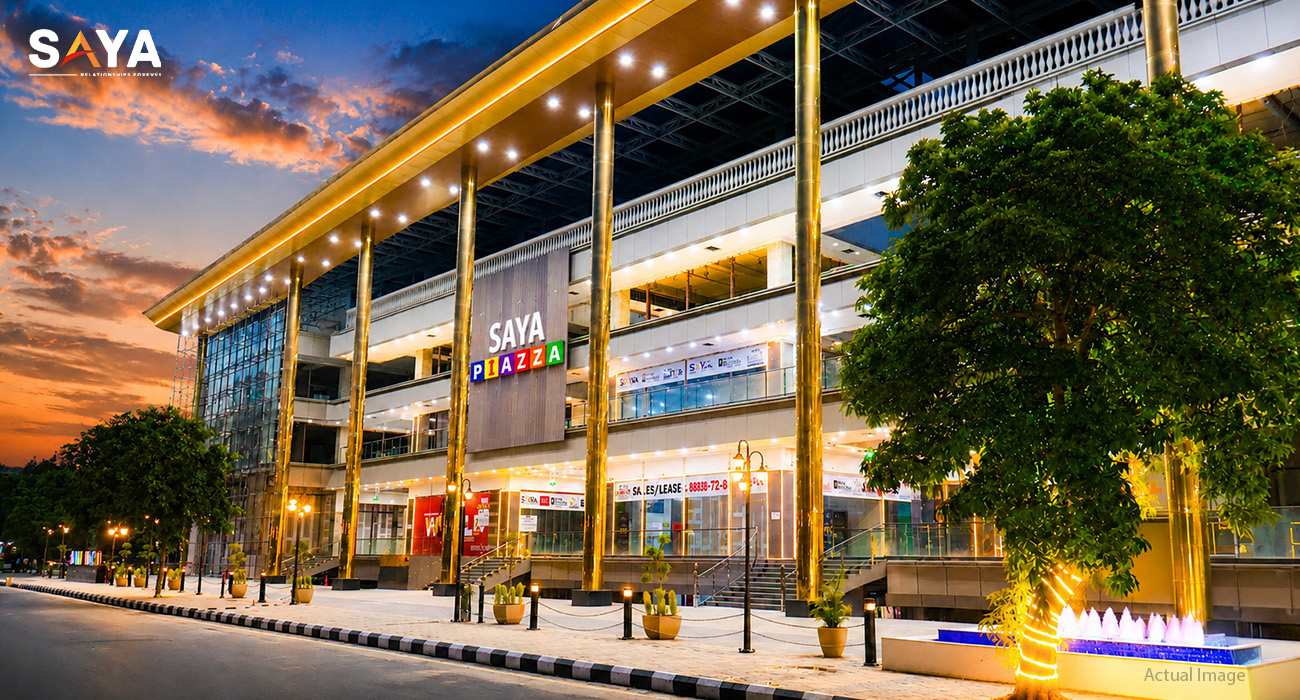
New Delhi / NCR, 30 Sept, 2026: Saya Group’s premium high-street development Saya Piazza, located opposite the Golf Course in Jaypee Wish Town, Sector 131, Noida, has recorded significant leasing momentum with leading fitness, gaming, food & beverage and lifestyle brands taking up approximately 55,000 sq. ft. of space.
The latest leasing includes Gold Gym and Viking Gaming which together have taken up more than 33,900 sq. ft., while Brewhouse, Domino’s, ShreeJee and Looks Salon, among other brands, have leased an additional approximately 20,000 sq. ft.
The addition of these brands is expected to strengthen Saya Piazza’s positioning as a premium lifestyle, entertainment and high-street destination for the affluent residential catchment of Jaypee Wish Town and surrounding areas.
Gold’s Gym, one of India’s leading fitness chain, Gold Gym has been present in India since 2002 and has 150+ active clubs across the country. Its presence will add a large-format premium fitness destination to the project.
Viking Gaming, bringing a large-format gaming and entertainment offering to Saya Piazza. The brand is expected to add a strong experiential element to the development and complement its dining, retail and lifestyle offerings.
Other brands that have recently taken space at the development include Brewhouse – Brewery, which has leased 7,402 sq. ft., along with Domino’s, ShreeJee and Looks Salon, among others.
Strategically located opposite the Golf Course in Jaypee Wish Town, Sector 131, Noida, Saya Piazza is positioned to serve the growing HNI and affluent residential community in and around the area.
One of the project’s key differentiators is its 360-foot frontage, offering high visibility and accessibility for retailers and customers.
Spread across approximately 2 lakh sq. ft., Saya Piazza has been designed as an integrated destination combining premium retail, dining, entertainment and lifestyle offerings. More than 50,000 sq. ft. is dedicated to dining, food courts and entertainment, while approximately 1.5 lakh sq. ft. comprises premium retail space.
The development will house nearly 350 shops and is planned to feature a curated mix of 100+ international & national retail brands, premium clubs, fine-dining restaurants and lifestyle services under one roof.
With the addition of large-format brands across fitness and entertainment, along with established F&B and lifestyle operators, Saya Piazza is shaping up as an all-day destination for shopping, dining, fitness, entertainment and leisure.
The diverse tenant mix is designed to create multiple consumer touchpoints throughout the day — from fitness and gaming to dining, shopping and personal care.
The combination of established retail brands and experiential offerings is also expected to enhance the attractiveness of Saya Piazza for both consumers and retailers, while creating a vibrant commercial ecosystem for the surrounding residential catchment.
Mr. Vikas Bhasin, Managing Director, Saya Group, said: “Leasing momentum at Saya Piazza reflects the strong potential of its location and our vision to create a differentiated lifestyle destination for Jaypee Wish Town and surrounding Noida catchment. The addition of brands such as Gold’s Gym and Viking, along with established F&B and lifestyle operators, strengthens the overall ecosystem. We are focused on bringing together the right mix of retail, dining, entertainment and lifestyle experiences to make Saya Piazza a destination rather than just a shopping centre.”
With further leasing activity underway, Saya Group expects Saya Piazza to emerge as one of the prominent high-street retail and lifestyle destinations in the Noida market.
- 0
- By Neel Achary

30, Sep 2026
From Maldives to the World: THE OZEN COLLECTION Takes Centre Stage at the 33rd World Travel Awards
OZEN RESERVE BOLIFUSHI and OZEN LIFE MAADHOO earn top honours at the 33rd World Travel Awards, reaffirming their positions as leaders in luxury hospitality

Maldives, Sept 30 – In a world where true luxury is measured by the moments that linger, THE OZEN COLLECTION has once again proven its mastery. The brand claimed top honours at the 33rd World Travel Awards, cementing its position as a global leader in luxury hospitality. From the turquoise waters of the Maldives to the world stage, its commitment to refined elegance, personalised service, and sustainable innovation was celebrated by industry peers and discerning travellers alike.
OZEN RESERVE BOLIFUSHI was awarded ‘Maldives’ Leading Luxury Hotel Villa’ for the fourth consecutive year, a remarkable achievement that underscores the resort’s unwavering dedication to ultra-luxury hospitality. The crown jewel of the resort, the Royal RESERVE, spans 3,000 square metres and features a private beach, sprawling pool, personal spa treatment room with dedicated therapists, and lavishly appointed living spaces. Guests enjoy exclusive privileges including 24-hour private butler service, a personal chef, and direct lagoon access with panoramic Indian Ocean views. The signature RESERVE Experience™ ensures every desire is anticipated and fulfilled with discreet precision.
“This extraordinary recognition celebrates our passionate pursuit of crafting unforgettable journeys,” says General Manager Abnash Kumar. “To be honoured for four consecutive years fills us with immense joy and strengthens our commitment to perfecting the art of meaningful luxury.”
OZEN LIFE MAADHOO was honoured with ‘Indian Ocean’s Leading Villa Resort’ for the second time, having previously won the same category in 2024. The resort’s acclaimed INDULGENCE™ Plan continues to set the standard for comprehensive luxury, offering guests unlimited access to gourmet dining across seven restaurants, premium beverages, curated excursions, and signature spa journeys, all seamlessly included. The iconic underwater restaurant M6m, the first of its kind in the South Malé Atoll, provides a breathtaking setting for unforgettable dining experiences.
“This award is a testament to the dedication of our entire team,” shares General Manager Mei P. Pun. “Every aspect of OZEN LIFE MAADHOO is designed to offer a genuine connection to the beauty and culture of the Maldives.”
These latest accolades add to an impressive collection of recent honours. Both resorts were named among the top ten percent of hotels worldwide in the Tripadvisor Travellers’ Choice Awards 2025, with OZEN LIFE MAADHOO securing a coveted place in the ‘Best of the Best’ category, reserved for the top one percent of hospitality providers globally. The collection also earned JOINT GOLD for ‘Best All-Inclusive Hotel for Families’ at the inaugural Junior Travel Awards 2026. OZEN RESERVE BOLIFUSHI’s ELE|NA Elements of Nature Spa was nominated as Maldives’ Best Wellness Retreat at the World Spa Awards 2025, while OZEN LIFE MAADHOO’s sustainability leadership has been validated by three consecutive years of Green Globe Certification.
As THE OZEN COLLECTION continues to expand its award-winning hospitality beyond the Maldives, with upcoming properties in India including OZEN MANSION KOLKATA, OZEN VILLAS JAIPUR, and OZEN PRIVADO GOA, these recognitions reaffirm the brand’s position at the forefront of luxury hospitality, where refined elegance meets genuine connection and environmental responsibility.
Discover award-winning luxury at THE OZEN COLLECTION. Whether you seek the profound privacy of OZEN RESERVE BOLIFUSHI or the vibrant energy of OZEN LIFE MAADHOO, your perfect island story awaits.
30, Sep 2026
Xyper Launches New Rewards Model for the Global Creator Economy
Xyper Points brings creator campaigns, community contributions, referrals, and advertiser acquisition into a single rewards framework
Dubai, United Arab Emirates, Sept 30 – Xyper, the on-chain creator marketing marketplace connecting advertisers with creators to run and reward social content campaigns, has introduced Xyper Points, a new program that expands how participation across its marketplace is recognized and rewarded.
On Xyper, advertisers fund campaigns around the content and distribution they want, while creators participate in those campaigns by producing eligible social content. Xyper Points builds on that model by recognizing a wider range of activity around the marketplace, including community contributions, referrals, and bringing new creators and advertisers onto the platform.
The program launches as the global creator economy continues to expand, with the market projected to reach $1.35 trillion by 2033. Xyper’s new model looks beyond content creation alone to recognize the wider network of participants involved in bringing creator campaigns to market and helping them grow.
Creators and community members can earn Points through eligible campaign activity, original content, verified quests, and referrals. Existing Protocol XP will also be incorporated into the same Points balance, giving users a single place to track eligible activity and progress across the platform. Points will also be redeemable for XYPER tokens in the future, with further details to be announced.
“Creator marketing has traditionally focused on rewarding the person producing the content, but there are many more people contributing to whether a campaign or marketplace actually grows. Someone might introduce an advertiser, bring a new creator into the ecosystem, or help another participant get started. We wanted the reward structure to better reflect that. Xyper Points gives us one framework for recognizing those different contributions rather than treating them as separate activities.” said Philipp Eryushev, CEO of Xyper.
Xyper is also extending participation to the advertiser side of its marketplace through a structured business development pathway. Participants can access leads and outreach materials to approach prospective advertisers and earn partner rewards when advertisers they bring to Xyper fund qualifying campaigns. More experienced partners can also recruit and train other participants and develop teams of their own.
Under Xyper’s current partner fee structure, up to 50% of protocol fee revenue from partner-attributed campaigns can go to the Biz Dev partner. Xyper’s protocol fee represents 10% of gross campaign funding, with 5% of gross campaign funding available to be divided between the partner reward and any advertiser discount. For example, a qualifying campaign with $20,000 in gross funding could generate up to $1,000 for the referring Biz Dev partner where no advertiser discount is applied. Actual partner rewards depend on the applicable campaign and program terms.
To make participation easier to follow, Xyper Points includes a dedicated dashboard where users can see their Points balance and breakdown, mission requirements, verification status, and activity history. Published reward rules and visible requirements provide greater clarity around which activities qualify and how progress is recorded. The program is also designed to maintain continuity over time. While Xyper Points may operate across individual seasons, users’ overall Points balances will not reset between seasons, allowing eligible activity to accumulate within the same framework.
With Xyper Points, Xyper is expanding the economic participation around creator marketing campaigns beyond the creators producing the content. By recognizing the community members who contribute, the partners who bring advertisers onto the marketplace, and the participants who help expand its network, Xyper is building a broader model for how value created across the creator economy can be recognized and rewarded.
30, Sep 2026
Developers hold off-plan pricing steady while sales volumes and absorption rates adjust

Only 6% of projects have cut rates by 5% or more since February as pricing decides how quickly projects sell out
Dubai, UAE, Sept 30: Dubai’s developers have largely held their off-plan prices steady through 2026 in the face of adjustments in sales volumes and absorption rates, according to a new market analysis by fäm Properties.
Of 717 off-plan projects launched since July 2023 with sufficient registered sales to measure their performance, just 44, or 6%, have reduced prices by 5% or more since the end of February. Only 28 projects, or 4%, are currently selling below their original launch price.
In a market which has displayed strong resilience despite geopolitical developments of the last few months, the first price reductions recorded in the analysis occurred in June 2026 or later, with project pricing being influenced by local area conditions.
Among 574 projects launched since 2025, the median project, priced 4.2% above the median price for its area, sold 73.8% of its units. By comparison, projects priced 20% or more above their area’s median price old a median of 60% of their units.
“Pricing is beginning to decide how quickly projects sell out,” said Firas Al Msaddi, Founder and CEO of fäm Properties. “Developers have generally been reluctant to reduce their headline prices, so where a project is positioned against comparable properties is having a greater bearing on its sales performance.”
While registered developer apartment sales during the first eight months of 2026 totalled 62,147, down 6% from the same period of 2025, the change was not evenly distributed across apartment types.
Studio sales in fact increased 26% to 21,728, while one-bedroom sales declined 18%, two-bedroom sales fell 16% and three-bedroom sales decreased 13%.
Dubai South was a major contributor to the increase in studio transactions, with sales rising 185% to 11,147 during the first eight months of the year.
“The data indicates that the adjustment in the market has been more evident in sales volumes and absorption than in widespread reductions to launch prices,” said Al Msaddi. “More than nine out of ten projects in the analysis have retained their launch pricing.
“The relationship between pricing and absorption is particularly relevant as developers compete across an increasingly broad range of projects and locations. Projects priced closer to prevailing market levels are recording higher median sales absorption than those carrying a substantial premium over their local market.”
30, Sep 2026
NuvoRetail Named 2026 Amazon Ads Partner Awards Winner for Full-Funnel Advertising in APAC

San Francisco, September 30, 2026: NuvoRetail, an ecommerce marketing agency and Amazon Ads Advanced Partner, has been named the 2026 Amazon Ads Partner Awards Winner for Full–Funnel Advertising in APAC. The award was announced on September 28 at the Amazon Ads Partner Awards reception held during Amazon unBoxed 2026 in San Francisco.
The recognition follows NuvoRetail’s selection as an APAC regional finalist in the Full–Funnel Advertising category, recognising its work in developing integrated advertising strategies that connect discovery, consideration, conversion and retention across the customer journey.
A key example of this approach is NuvoRetail’s work with Barry Callebaut, the world’s leading manufacturer of chocolate and cocoa products. NuvoRetail designed a four-wave, insight-driven strategy using Amazon DSP and Amazon Marketing Cloud to help Barry Callebaut establish its consumer brands, Callebaut and Van Houten Professional, on Amazon India.
Krishnakumar R Pillai, Managing Director, India & SWA, Barry Callebaut Group said, “E-commerce is a strategic growth pillar for Barry Callebaut India. Our full-funnel partnership with NuvoRetail on Amazon delivered category leadership in just five months—demonstrating the strength of our digital-first strategy and our focus on driving meaningful consumer engagement. This recognition marks an important milestone, but more importantly, it sets the stage for our next phase of e-commerce growth.”
Over five months, from November 2025 to March 2026, the campaign helped transform Barry Callebaut’s Amazon presence from zero to category leadership. Monthly reach grew 160x from 44,000 to 7.15 million users, while detail page views increased 35x. Ad sales grew 17x, total sales increased 10x, and loyalty scaled 51x. The brands also secured 6 of the top 10 Best Seller Ranks in the category.
“This is a defining moment for NuvoRetail and a proud achievement for our team. Being recognised as the APAC winner in Full–Funnel Advertising validates our approach to connecting strategy, media, data and measurement into one integrated growth system. We are grateful to Amazon Ads for recognising our work and to our clients and team whose trust and commitment made this possible,” said Vishal Sharma, Founder & CEO, NuvoRetail.
The APAC win follows NuvoRetail being named the 2026 Amazon Ads Partner Awards India Winner for Full–Funnel Advertising. The achievement also builds on its 2025 recognition as an APAC regional finalist in the Seasonal Sales Strategy category.
The Amazon Ads Partner Awards recognise advertising agencies and technology partners across categories including Full–Funnel Advertising, Programmatic Optimization, Strategic Localization and Brand Storytelling, celebrating their contribution to measurable business outcomes through Amazon Ads.
NuvoRetail’s Connected Funnel model, supported by Amazon Marketing Cloud and its proprietary AI/ML platform enlytical.ai, brings strategy, measurement and optimisation together to help brands connect consumer discovery with measurable business outcomes.
30, Sep 2026
India Set to Sustain 7 pc Growth in FY27 as Domestic Demand Stays Firm
New Delhi, Sep 30: India is expected to maintain strong economic momentum in the current financial year, with S&P Global projecting GDP growth at 7 per cent for FY27, supported by resilient domestic demand, investment activity and continued strength across key sectors.
The latest projection comes after the Indian economy recorded a stronger-than-expected 7.8 per cent growth in the April-June quarter, providing a solid foundation for the year ahead.
S&P Global has raised its FY27 growth estimate from its earlier projection of 6.6 per cent, reflecting the stronger-than-anticipated performance of the economy in the first quarter.
Domestic consumption remains an important pillar of growth. Improved economic activity, continued government investment and steady demand are expected to support expansion through the year.
Strong First-Quarter Performance
India’s 7.8 per cent growth in the first quarter highlighted the resilience of economic activity despite uncertainties in the global environment.
Industrial activity, consumption, goods exports and government investment have contributed to the stronger performance. The improvement in economic activity has also provided greater confidence in the near-term growth outlook.
The latest forecast indicates that India is likely to remain among the faster-growing major economies, although the pace of expansion could moderate during the second half of FY27.
Consumption and Investment Remain Key Drivers
Domestic demand is expected to continue playing a central role in India’s growth story.
Consumer spending, public infrastructure investment and improving business activity can support economic expansion, while private-sector investment could become increasingly important for sustaining momentum.
Government capital expenditure has also remained an important contributor to economic activity by supporting infrastructure development and generating demand across associated industries.
Inflation and Global Risks in Focus
While the growth outlook has improved, inflation and external risks remain important factors for policymakers and businesses.
Food prices could be influenced by weather conditions and agricultural output, while movements in global crude oil prices could affect India’s inflation and import bill.
Geopolitical developments and uncertainty in global trade could also influence exports, commodity prices and investor sentiment.
Monetary Policy Outlook
The stronger growth environment could also have implications for monetary policy. S&P Global expects the Reserve Bank of India to carefully balance growth requirements with inflation risks as it assesses future policy decisions.
Interest-rate decisions will remain dependent on the evolving inflation trajectory, domestic demand conditions and developments in the global economy.
Outlook for FY27
The upward revision by S&P Global reflects the stronger-than-expected start to FY27 and the resilience of India’s domestic economy.
With consumption, investment, industrial activity and exports continuing to provide support, the country is projected to record 7 per cent GDP growth in FY27.
However, sustaining this momentum will depend on managing inflationary pressures, maintaining investment activity and navigating global risks.
The latest forecast underscores the continuing strength of India’s growth engine while highlighting the importance of stable domestic conditions and resilience against external economic challenges.
30, Sep 2026
Sundaram Finance Partners with GMT Engineers Pvt. Ltd. to Enable Seamless Financing for Advanced Metal Forming Machinery
Chennai, Sept 30: Sundaram Finance Ltd., one of India’s most trusted NBFCs, has entered into a strategic partnership with GMT Engineers Pvt. Ltd., a leading supplier of metal forming machinery and automation solutions in South India. The partnership aims to provide manufacturers with quick, convenient, and customised financing solutions for the purchase of GMT Engineer’s advanced range of CNC bending machines, fiber laser cutting systems, power presses, and automation equipment.
The collaboration is designed to support small and medium-sized manufacturers, job shops, and industrial enterprises by simplifying access to capital and enabling faster acquisition of world-class manufacturing technology. Customers will benefit from Sundaram Finance’s streamlined financing process and GMT Engineers’ ready availability of high-performance machinery, helping them expand capacity, improve productivity, and take on larger business opportunities.
Speaking on the partnership, Mr. BS Prasad, Managing Director, GMT Engineers Pvt. Ltd., said:
“This strategic partnership with Sundaram Finance marks a significant milestone for our customers in facilitating seamless financing options for our metal forming machines. Our mission is to equip South Indian manufacturers with the advanced high-volume CNC bending machines, fiber laser cutting systems, and power presses they need to scale sustainably. With the combination of ready-stock machines and seamless, quick-turnaround financing from Sundaram Finance, our customers can focus on maximizing their production and growing their order books, allowing them to take on larger contracts with absolute confidence.”
Commenting on the partnership, Mr. Rahul Jyoti Kumaran, Senior General Manager & Head – SME, Sundaram Finance,said:
“At Sundaram Finance, we remain deeply committed to supporting India’s manufacturing growth story by enabling easier access to finance for MSMEs and emerging enterprises. As the country advances its ‘Make in India’ vision, access to modern, productivity-enhancing equipment is critical for manufacturers seeking to improve quality, scale operations, and compete globally. Through our partnership with GMT Engineers Pvt. Ltd., we aim to make advanced metal forming and automation solutions more accessible to businesses across South India, including customers in underserved industrial clusters. By combining GMT’s cutting-edge machinery with our flexible and customer-centric financing solutions, we are helping manufacturers invest with confidence, enhance operational efficiency, and unlock new growth opportunities.”
The partnership reinforces Sundaram Finance’s commitment to supporting India’s manufacturing sector by making technology adoption more accessible and helping enterprises invest confidently in productivity-enhancing equipment.
30, Sep 2026
Submer and ACES Sign MoU to Build AI-Ready Data Center Capacity in Saudi Arabia
Partnership pairs Submer’s full-stack AI infrastructure engineering with ACES’ delivery footprint in the Kingdom to bring high-density computing capacity online faster
Duabi, UAE, Sept 30: Submer, a full-stack AI infrastructure provider, today announced the signing of a Memorandum of Understanding (MoU) with ACES (Advanced Communications & Electronics Systems), a Saudi digital infrastructure company, to accelerate the rollout of high-density, AI-ready data centers across the Kingdom.
Under the agreement, the two companies will jointly pursue projects that serve the growing demands of AI and high-performance computing workloads. Submer contributes engineering and technology spanning the full project lifecycle, while ACES contributes local delivery, infrastructure services and investment.
The scope covers advisory and consultancy for facility planning; the design and build of new and retrofit sites; IT integration across compute, networking and monitoring systems; thermal and power systems, including advanced liquid and immersion cooling; and potential co-investment in Saudi data center capacity.
As the Kingdom pursues its Vision 2030 digital and AI agenda, rising rack densities are reshaping requirements for power, cooling, facility design and IT integration. Between them, the two partners aim to take customers from early planning through deployment and long-term operation.

“The Kingdom’s AI ambitions are moving faster than the infrastructure models supporting them,” said Khalid Aljamed, General Manager for the Middle East, Turkey and Africa at Submer. “Rack densities are pushing conventional design to its limits, and customers are too often left coordinating separate parties for engineering, construction, integration and financing. Working with ACES, we can strip out much of that overhead and hand over facilities engineered for dense AI workloads from day one.”
“This agreement brings together exactly what building AI infrastructure here demands,” said Dr. Akram Aburas, Group CEO of ACES. “Submer offers deep engineering and technology across the project lifecycle; ACES offers proven execution on the ground, market presence and investment strength. Together we can add AI-ready capacity and help Saudi Arabia’s wider digital infrastructure ecosystem keep growing.”
30, Sep 2026
UP International Trade Show 2026 Closes on Strong Business Note with INR 6,500 Crore MoUs
Greater Noida, September 30, 2026: The Uttar Pradesh International Trade Show (UPITS) 2026 has concluded with significant commercial activity, positioning the five-day exhibition as an important platform for businesses from Uttar Pradesh to connect with domestic and international markets.
The fourth edition of the trade show resulted in around 4,400 Memoranda of Understanding (MoUs) valued at approximately ₹6,500 crore, while business enquiries generated during the event indicated a potential business pipeline of nearly ₹15,500 crore.
Organised at the India Expo Centre & Mart in Greater Noida from September 25 to 29, the event brought together manufacturers, MSMEs, exporters, entrepreneurs, buyers, investors and industry representatives. The scale of participation reflected the growing emphasis on connecting Uttar Pradesh’s production base with wider markets.
One of the major features of UPITS 2026 was the volume of business-to-business interaction. According to figures associated with the event, around 41,500 B2B meetings were conducted during the five-day programme.
The meetings included interactions facilitated through the Reverse Buyer-Seller Meet (RBSM) as well as business discussions held directly at exhibition stalls. The RBSM component alone accounted for approximately 13,500 meetings, providing participating enterprises with opportunities to engage with international buyers.
The overall number of B2B meetings was higher than the approximately 31,650 meetings recorded during the previous edition. The increase points to greater emphasis on direct commercial engagement rather than simply showcasing products.
For Uttar Pradesh’s MSMEs, the trade show offered an opportunity to move beyond local markets and present products to buyers from different parts of India and overseas.
Enterprises representing manufacturing, textiles, handicrafts, food processing, agriculture, leather, engineering, electronics and other sectors participated in the exhibition. The platform enabled smaller businesses to present their capabilities alongside larger industrial and commercial participants.
A significant attraction was the representation of products associated with the state’s One District, One Product (ODOP) initiative. Products linked to traditional skills and district-level manufacturing ecosystems were displayed for buyers looking for distinctive Indian products and suppliers.
UPITS 2026 also had a strong international component, with Russia, Austria, Japan, Singapore, Belarus and Vietnam participating as partner countries.
The presence of overseas delegations added an export-oriented dimension to the event. Businesses from Uttar Pradesh were able to explore potential relationships with international buyers and companies across areas such as manufacturing, electronics, information technology, textiles and agri-food processing.
For exporters, such interactions can be particularly important because establishing overseas market relationships often requires direct discussions around product specifications, pricing, supply capabilities, regulatory requirements and distribution.
The trade show attracted close to 5.99 lakh visitors and business buyers over its five-day run. The attendance included both business visitors and members of the general public.
The large footfall gave participating companies an opportunity to generate brand visibility in addition to pursuing direct commercial discussions. For consumer-oriented businesses, the exhibition also provided an avenue to understand customer responses to products and identify potential markets.
While the headline numbers underline the scale of activity at UPITS 2026, the figures need to be viewed in their proper context.
The ₹6,500 crore MoU figure represents agreements signed or announced during the event, while the ₹15,500 crore figure represents estimated potential business generated through enquiries and commercial discussions. These figures should not be interpreted as equivalent to realised investment, confirmed revenue or completed orders.
The next stage will be conversion. Businesses will need to turn meetings into purchase orders, distribution agreements, investment commitments and long-term commercial partnerships. The eventual economic impact will therefore depend on how successfully the opportunities generated at the exhibition translate into actual business.
The trade show comes at a time when Uttar Pradesh is seeking to strengthen its position as a manufacturing, investment and export destination.
Its large MSME base, district-specific products and expanding industrial ecosystem provide a broad platform for companies looking to source products or establish manufacturing and commercial relationships.
Events such as UPITS provide a common marketplace where these capabilities can be presented to buyers in a concentrated format. For smaller enterprises in particular, access to organised buyer-seller meetings can reduce some of the barriers involved in entering new markets.
The conclusion of UPITS 2026 now shifts attention from the exhibition floor to the commercial follow-up.
Thousands of meetings have created a sizeable pool of business leads, while the MoUs provide a framework for potential partnerships. The coming months will determine how many of these discussions progress into actual contracts, investments, exports and business expansion.
For Uttar Pradesh’s entrepreneurs and MSMEs, the significance of the trade show will ultimately be measured not only by the number of visitors or agreements signed, but by the business generated after the exhibition closes.
With ₹6,500 crore worth of MoUs and an estimated ₹15,500 crore potential business pipeline, UPITS 2026 has created a substantial set of commercial opportunities. The next challenge—and opportunity—will be converting those opportunities into sustained economic activity and market growth.
30, Sep 2026
Peavey Commercial Audio sees strong interest in networked solutions at InfoComm India 2026
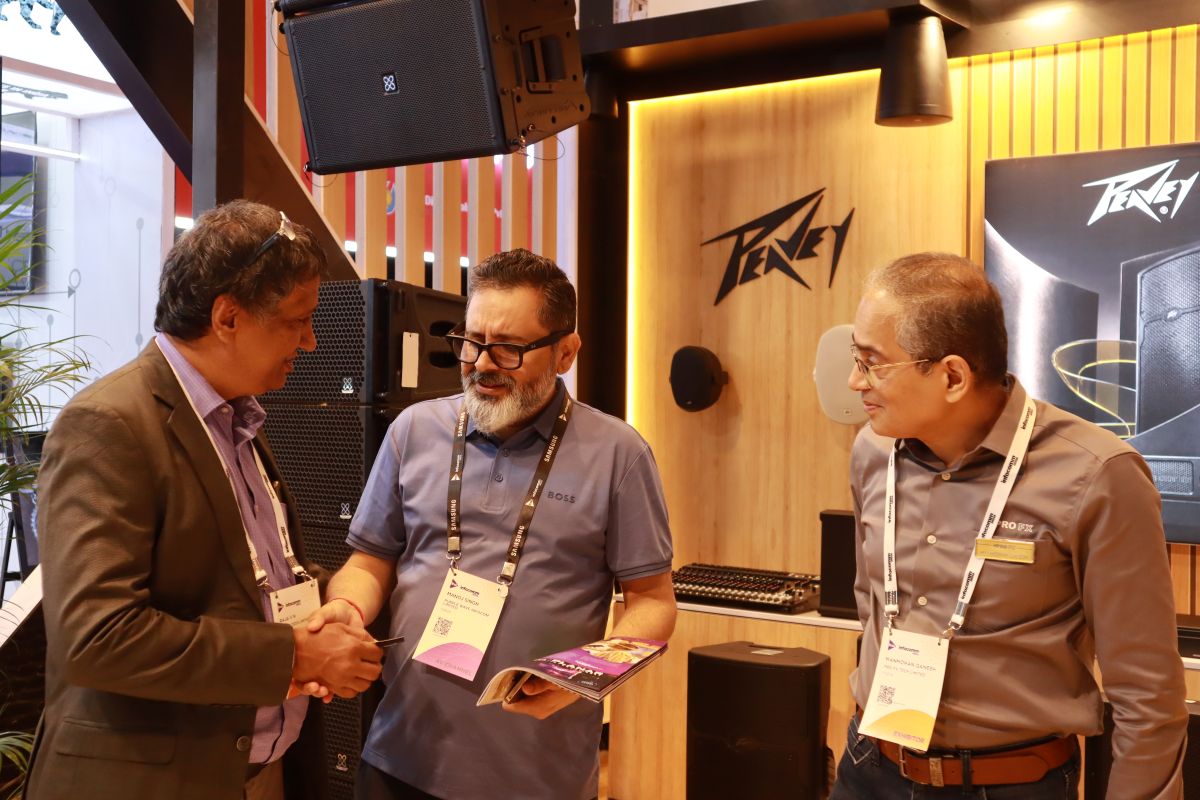
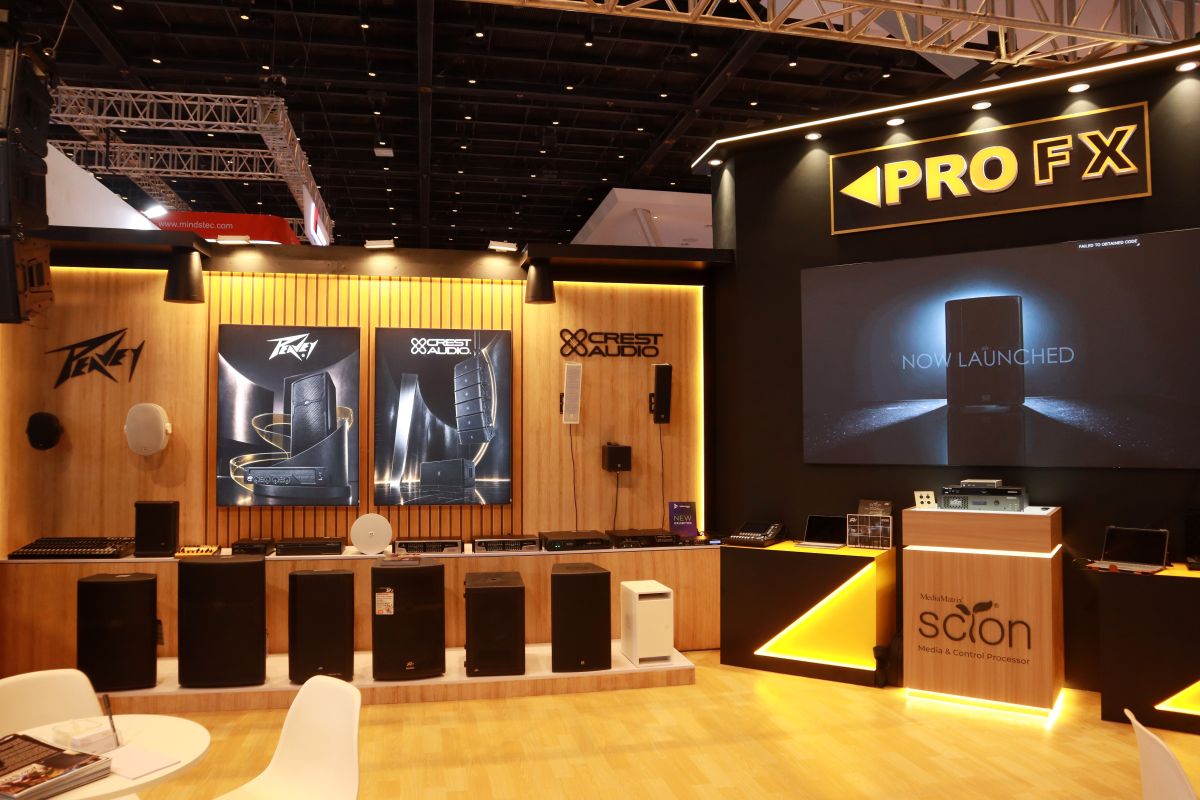
Exhibiting alongside distribution partner ProFX in Mumbai, Peavey Commercial Audio showcased its latest MediaMatrix SCION DSP platform and Crest Audio loudspeaker ranges, resulting in its most productive InfoComm India to date
Mumbai, India – Sept 30 – Peavey Commercial Audio re-established its presence at InfoComm India 2026 this month, describing the event as its most productive to date, with strong interest in its latest professional audio portfolio, particularly its networked management capabilities, from the show’s 13,275 attendees.
According to forecasts, the India professional audio market is projected to grow from $1.9 billion to $3.4 billion by 2031, perfectly positioning Peavey to capitalise on new business opportunities and support growing demand across the Indian market.
Exhibiting alongside Indian distribution partner ProFX at the Jio World Convention Centre, the company left the show with positive leads, ranging from hospitality to transport sectors.
At the centre of the ProFX booth was the latest MediaMatrix SCION digital signal processing platform. Building on MediaMatrix’s history in networked audio, SCION offers a flexible foundation for designing and managing professional audio systems. It supports AES67 MediaMatrix sNET protocols, along with Dante, and combines modern processing capabilities with the backwards compatibility needed when upgrading established MediaMatrix installations.
Conversations at the show reflected growing interest in how IP audio can simplify the management of systems across buildings, venues and larger estates. SCION’s modular architecture allows integrators to configure processing and management around the requirements of each project, from an individual site to a multi-site deployment.
ProFX has been instrumental in developing Peavey Commercial Audio’s presence in India. Its local product knowledge, system design expertise and technical support have helped consultants, integrators and customers specify and deploy Peavey technologies across the region. The partners’ joint presence at InfoComm India gave visitors access to both the technology and the local expertise needed to take projects forward.
Raja VN, Sales Manager SAARC at Peavey Electronics commented: “It was truly a testament to Peavey Commercial Audio in terms of the excitement from visitors at our booth who were delighted to see a 60 year legacy make a comeback to India at InfoComm Mumbai. We sensed genuine appreciation towards our comprehensive solution capabilities as well as our wide product range across Peavey, Crest Audio and Media Matrix.”
Show also explored Crest Audio’s CiP range of networked loudspeakers. The range uses IP infrastructure to carry audio, power and control, helping to reduce cabling and the need for locally installed amplification. Dante connectivity and PoE++ power support make CiP suitable for networked
AV projects across corporate, education, hospitality and public-space applications.
Peavey also presented the Crest Audio CPL+ series, a passive loudspeaker range for installed and portable sound reinforcement. Its two-way loudspeakers and subwoofer options provide a choice of configurations for venues requiring clear reproduction, consistent coverage and higher output. Rotatable high-frequency horns offer flexibility for vertical and horizontal installation, while EASE and CLF data support system planning.
Shayne Thomas, GM Peavey Commercial Audio and Peavey APAC Director Akshay Vaidya, both attended the show and entertained question from a non-stop foot fall at the booth and were both extremely excited about the opportunities that are developing in India.
“The booth was busy throughout the show, and it was encouraging to see such strong interest in the breadth of our portfolio,” said Thomas. “IP audio management prompted particularly valuable conversations. It was, without doubt, the busiest InfoComm India I’ve witnessed.”
He added: “Thank you to all that spent time with our staff and the great people at ProFX. Working alongside ProFX gives us the chance to discuss these opportunities in detail with the people delivering projects on the ground. The conversations we had at InfoComm India have given us a strong launchpad for more exciting work ahead.”


