HOUSTON (April 23, 2026) – Dr. Damian Young, investigator at Texas Children’s Duncan Neurological Research Institute (Duncan NRI) and director of the Center for Drug Discovery at Baylor College of Medicine, along with collaborators, has been awarded a $6.7 million grant from the National Institute on Aging (NIA), part of the National Institutes of Health (NIH), to develop new approaches to rapidly identify potential treatments for Alzheimer’s disease and related dementias with the goal of accelerating the discovery of new therapies.
While Alzheimer’s is often associated with aging, researchers at Texas Children’s are uniquely positioned to study it. By examining how the brain develops and functions early in life, scientists can better understand how those same systems break down over time—revealing new opportunities to prevent and treat neurodegenerative disease.
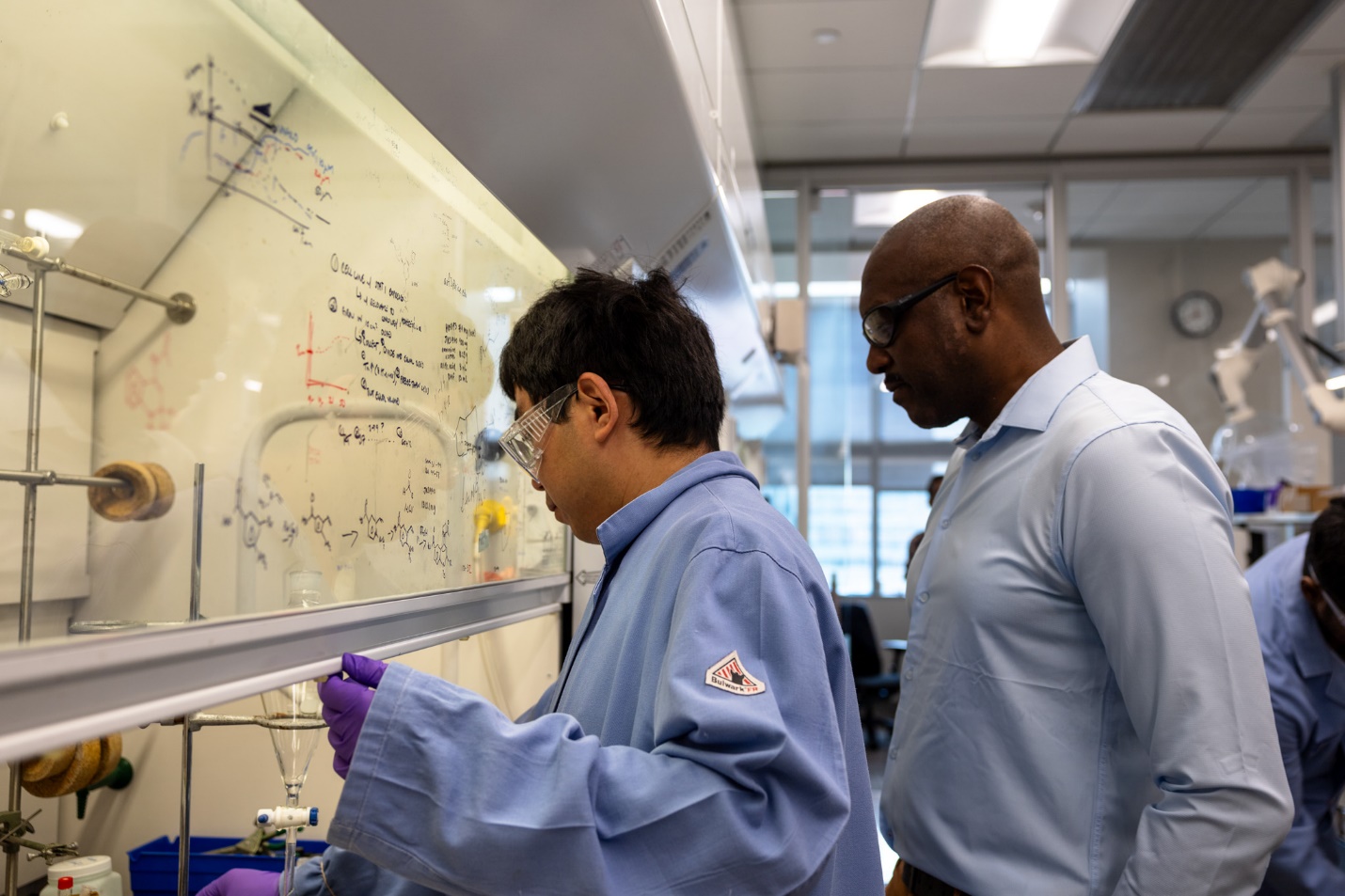
This five-year project brings together experts in chemistry, artificial intelligence and translational science to tackle one of the most complex challenges in Alzheimer’s research—quickly identifying therapies that are both safe and effective.
“This grant will enable the most expansive screening effort to date for compounds targeting Alzheimer’s disease,” Dr. Young said. “By integrating cutting-edge biological insights from Alzheimer’s disease research worldwide with a highly innovative chemistry and machine learning platform, we aim to unlock new opportunities for discovery. This work will represent the first critical step toward developing transformative therapies for Alzheimer’s disease and related dementias.”
Alzheimer’s disease and related dementias affect millions of people worldwide, yet developing new treatments remains a slow and complex process. One of the biggest challenges is identifying which molecules can successfully target the biological drivers of disease and reach the brain in a safe and effective way.
To address this, Dr. Young’s team will use DNA-encoded chemical libraries, a technology that allows researchers to screen hundreds of millions of potential drug compounds at once. Each compound carries a unique DNA “barcode,” enabling scientists to quickly identify which molecules interact with proteins linked to Alzheimer’s.
The team will then use artificial intelligence and machine learning to analyze the data and predict which compounds are most likely to succeed—significantly reducing the time from early discovery to viable drug candidates. Ultimately, this approach is designed to shorten the timeline for identifying new treatments—bringing potential therapies to patients faster and with greater precision.
The project will move through multiple phases, starting with large-scale screening and advancing to refining the most promising compounds to improve their strength, safety and ability to reach the brain. Researchers will also explore whether existing drugs can be repurposed, potentially accelerating the path to clinical testing.
A key component of the project is its open science approach. Data and compounds generated—including results from screening more than 900 million unique compounds—will be shared publicly, enabling researchers worldwide to build on the findings and advance new treatments. An internal advisory board of Texas Children’s and Baylor faculty consisting of Drs. Huda Zoghbi, Joshua Shulman, Hugo Bellen, and Juan Botas will provide critical expertise in prioritizing protein targets most strongly implicated in Alzheimer’s disease.
The work will be supported in part through collaboration with the Structural Genomics Consortium, which will provide critical protein targets needed for the research.
This research reflects Texas Children’s commitment to solving the unsolvable by advancing innovative, collaborative approaches to complex neurological diseases. Insights gained from pediatric research often inform adult treatments, and discoveries in adult disease can in turn accelerate breakthroughs in children’s health. By bridging these areas, researchers at the Duncan NRI are helping drive progress across the full spectrum of neurological disease, with the goal of improving outcomes for patients of all ages. For patients and families affected by Alzheimer’s and related dementias, this work represents a critical step toward earlier detection, more effective treatments and ultimately, prevention.
