


7, Mar 2025
Kamya Panjabi to Women on Women’s Day: Every Day is Ours to Be Appreciated

Women’s Day isn’t just a celebration; it’s a reminder of strength, resilience, and the power of womanhood. Kamya Panjabi, who mesmerizes audiences as the fierce Mohini in Sun Neo’s much-loved Ishq Jabariya, opened up about what the day means to her. Known as one of the strongest women in the television industry, Kamya shared her experiences of portraying powerful female characters on screen and revealed who inspires her in real life.
Kamya shared, “For me, every day is Women’s Day! I don’t wait for a special date to celebrate my life, my mother, my daughter, my friends, or the incredible women of this country. Women don’t need just one day of appreciation—we deserve it every single day. I hope more people understand this. Instead of limiting our recognition to just one date on the calendar, let’s celebrate women every day for their strength, sacrifices, and contributions in every role—whether as mothers, daughters, wives, or professionals. It’s not about making grand preparations; it’s about changing our mindset and truly valuing the women in our lives.”
Opening up about the women who inspire her the most in life, the Ishq Jabariya actress expressed, “You know, it might sound surprising, but my biggest inspiration comes from my two younger sisters, Mala and Madhu. There were moments in my life when I felt lost, when expectations weighed me down, but they were always there—lifting me up, standing by me like a rock. Despite being younger, they have inspired me in ways I can’t even explain. Their strength, resilience, and unwavering support have shaped me into who I am today. They may be my little sisters, but in so many ways, they are my guiding force.”
Kamya has won millions of hearts with her powerful onscreen portrayals. Talking about the same, she said, “I have always played strong female characters—whether it was Sindura, Preeto, Didun, or now Mohini in Sun Neo’s Ishq Jabariya. Maybe that’s because, in real life too, I am headstrong, determined, and never one to give up. Television, after all, belongs to women! Let’s be honest—women rule the industry. Yes, there are many amazing male actors, but at its core, television is driven by strong female characters who connect deeply with audiences. And I am forever grateful for all the love people have given to my characters. So, on this Women’s Day, let’s not just talk about opportunities and struggles—everyone has their own journey. Let’s simply celebrate women for who they are.”
Kamya currently plays the role of Mohini in Sun Neo’s Ishq Jabariya, airing on at 10:00 PM. The show is a compelling love story that follows Gulki, a strong-willed young woman with big dreams. With a stellar cast also featuring Dipshikkha Nagpal, Siddhi Sharma, and Lakshay Khurana, the show brings emotion and depth to its captivating narrative.
- 0
- By Team

7, Mar 2025
Coromandel International Invests in Expansion, Doubling Sulphur Capacity to 50,000 MT at Visakhapatnam Plant
Mumbai, 7th March, 2025: Coromandel International Limited, one of India’s leading agri-solutions providers, has inaugurated its second Sulphur manufacturing plant at its Visakhapatnam facility in Andhra Pradesh.
Visakhapatnam site is the company’s wholly backward integrated unit and produces approximately 12 LMT of complex fertilisers along with Phosphoric acid and Sulphuric acid. The site also hosts a Sulphur Fertiliser plant with 25000 MT production capacity. With the inauguration of this new plant, the company’s Sulphur fertiliser capacity is doubled, ensuring a steady supply of high-quality bentonite Sulphur fertilisers to the farmers.
This expansion marks a significant step in strengthening Coromandel’s presence in the specialty nutrients market, reinforcing its commitment to Indian agriculture. The event was graced by Mr. S Sankarasubramanian, MD & CEO, Coromandel International Limited, Mr. Avinash Thakur, Business Head, Specialty Nutrient and Organic Fertilisers, and other senior team members.

Sulphur is an essential nutrient for plant growth, playing a crucial role in protein synthesis, enzyme function, and overall crop productivity. In India, Sulphur deficiency is a growing concern due to factors like intensive cropping, imbalanced fertiliser use, and declining organic matter in soil. By increasing its Bentonite Sulphur capacity, Coromandel aims to provide Indian farmers with high-quality, affordable, and sustainable nutrient solutions to improve soil health and maximize yields.
The new plant is equipped with advanced German technology and capabilities to fortify Sulphur fertilisers with multiple micronutrients, addressing the evolving nutrient deficiencies in Indian soil. Beyond production, this facility also sets the stage for research and development for introducing new Sulphur variants designed to meet the crop and geography specific needs of Indian agriculture.
Speaking at the inauguration, Mr. S Sankarasubramanian, Managing Director and Chief Executive Officer – Coromandel International Limited said
“At Coromandel we believe in delivering innovative and sustainable Agri solutions to the farmers. By continuously augmenting our infrastructure and expanding capacities, we are ensuring a steady supply of fertilisers that promote long-term soil health and at the same time enhance productivity. Over the next 4-5 years, this plant will play a crucial role in effectively meeting the growing demand for Bentonite Sulphur fertilisers across India. This milestone aligns with our long-term vision of advancing agricultural growth through technology and farmer-focused initiatives.”
Coromandel’s broader vision to drive agricultural innovation, support sustainable farming practices beyond the NPKs and DAP is depicted through the Sulphur capacity expansion at the Visakhapatnam. With this initiative, Coromandel reaffirms its leadership in providing science-backed, farmer-centric solutions that cater to the evolving needs of the agriculture sector.
6, Mar 2025
Celebrating Colours Safely: Important Guidelines for a Secure Festival
As one of the largest festival of India, Holi is approaching experts from Techno India DAMA Hospital, Monoshij – A Mental Health Unit of Techno India Group and Disha Eye Hospitals shared their insights on how to indulge in a joyous and a safe celebration of Colours for the pregnant women, children, elderly generation, those who are Chromophobic and the simple basic ways for protecting the environment and the innocent stray animals.
1. Dr MS Purkait, Medical Superintendent, Techno India DAMA Hospital
Pregnant women should participate in Holi but should exercise restraint and caution –
i. Should not indulge in alcohol or other inebriants .
ii. Should stay away from places where there is congestion and smoke.
iii. Not overindulge in sweets and other greasy ,unhealthy food.
iv. Should not drink water from roadside stalls etc .
v. Should take special care in cases of twin pregnancy or having other risk factors like hypertension ,Diabetes,heart conditions etc.
vi. Should use only organic colours .
vii. They should not stay out in the open air for a longer period of time.
Just before the monsoons and also during change of seasons, there are a lot of allergens and pollutants in the atmosphere which should be avoided.There could also be an outbreak of seasonal viruses especially H2N1 and other Adeno viruses causing cough, cold,fever and other respiratory symptoms.
If anyone is exhibiting these symptoms, they should take appropriate preventive measures and should practice social distancing.
2. Ms Pragya Priya Mandal, Counselling Psychologist, Monoshij
To ensure safe and fun-filled Holi, there are certain points to keep in mind:
1. It is vital to not cross the boundaries of those who do not wish to participate. Holi as an event or the colours and celebrations it entails might be associated with past trauma for certain individuals, triggering them on being forced to participate. It can also be over stimulating for people with social anxiety and autism to be exposed to the crowd and the loud noise of explosive cap guns.
2. People with Chromophobia prefer to stay indoors fearing the possibility of coming into contact with their phobic colours. Especially during Holi, it is a difficult time for them since those colours can trigger intense anxiety attacks. For people living with these difficulties, it is extremely important for the community to be kind and careful when dealing with those who show reluctance to participate for reasons they might not even feel comfortable to share.
3. An equally important point to remember is that ‘Bura na maano, holi hai’ is not an excuse to establish non-consensual physical contact with those who are uncomfortable. Take consent before applying colours.
4. To lose oneself in the festival to the extent that one overlooks the stray animals and their discomfort is unfair. Refrain from spraying harmful colours at them or shooting guns too close to them, the loud noise can be traumatic for the strays who do not possess the ability to articulate their discomfort and pain.
5. There can be risky behaviour linked to consumption of bhaang as a traditional practice on the day, leading to impulsive, aggressive behaviour, which can be disturbing for a lot of other individuals. It is important to keep a check on the consumption and the behaviour without crossing a boundary so as to ensure that other participants of the festival can comfortably enjoy the occasion as well.
6. There are individuals among us who might be going through personal losses, or those without a strong social circle. Ensure including people who do not have a strong social circle to play with, or those who are isolated. Be emotionally present for those who require emotional support.
7. To play with colours does not necessarily mean involving crowd and loud noises. It can even be played indoors with family, in a quiet environment, with powdered colours and good food. There is always an alternative to chaos. There is no reason to feel guilty about not wanting to participate in crowded spaces as it is not a zone of comfort for everyone.
8. While it is Holi, it is also the season of board examinations, and students appearing this year might not get the opportunity to dedicate as much time to the festival because of their preparations. This can be disheartening and isolating for them as well, a sense of feeling caged and lonely. For them, especially, it can be helpful to spend at least a few moments with their family and close friends, even if that is on virtual media, and reminding themselves that this is just a temporary restriction, and bigger celebrations are soon to come.
9. Being compared to the colourful pictures on social media celebrating the festival with grandeur can be triggering and isolating to a lot of individuals who may not get to enjoy it the same way. It is important to understand that most of what can be seen on social media are portrayals rather than reality. Grandeur is not the sole factor determining the beauty and meaning to an event, every celebration, every festivity is personal, and it is more about how one wants to celebrate with what they have, even if that does not look as shiny as the crowd of posts on social media.
10. Holi’s vibrant colors are a visual treat but let them not affect your vision. Gulal colours weren’t always synthetic. Traditionally, they were crafted from natural plant and flower extracts. However, over time, harmful chemicals have replaced these organic dyes. These toxic chemicals not only can affect us with harmful damages to our skin, eyes, body but also the environment around us. Let’s reclaim Holi’s joy by celebrating with safety and natural colors.
3. Dr Ketaki Subedar Ghosh, Consultant – Pediatric Ophthalmology, Disha Eye Hospitals
The Main causes of eye problems in children during Holi and steps for prevention and cure –
1. Corneal scratches, pink eye & blinding chemical burns caused by synthetic colours like yellow containing heavy metals like lead, malachite containing green, shining mica particles in red colour or the silvery metallic varnish paint.
2. Eye trauma by Water balloons & Water guns. Kids love to play with water balloons the most but they pose a significant risk of blunt eye injuries. A direct hit by ballon or high speed jet from water gun can cause blinding internal bleeding or retinal detachment.
Take precautions
1. Use protective eye wear or sunglasses or simple glasses while playing with colours
2. Never put colour on others around the eyes!
3. Fasten or tie hair together by using a cap to prevent colour dripping into the eyes
4. Avoid aiming at face with balloons or water guns.
5. Apply thick layers of coconut oil around your eyes as it will help the colour to get off easily without causing harm to eyes
6. It is always important to keep an eye on the kids.
Quick guide if colour enters the eye
1. Flush with water: Immediately rinse your eye with plenty of clean water to remove the colour.
2. Remove contact lenses (if applicable): Take out your contact lenses to prevent the colour from getting trapped underneath.
3. Avoid rubbing: Gently pat the area around your eye dry with a clean cloth. Avoid rubbing your eye, as this can push the colour further into your eye.
4. Use eye wash or saline solution: If available, use an eye wash or saline solution to help flush out the colour.
5. Seek medical attention: If you experience any of the following symptoms, seek medical attention immediately:
– Severe eye pain or burning
– Blurred vision or vision loss
– Redness or swelling of the eye
– Discharge or pus in the eye
– Increased sensitivity to light
Eye drops such as artificial tear drops (carboxymethyl cellulose) may be applied safely. Do not self-medicate with steroid eye drops without consulting a doctor first.
DIY Natural Colors
For the kiddos ditch synthetic colors and celebrate Holi with eco-friendly, home-made natural colors. These are easy to make, safe, and offer a unique experience. If DIY isn’t your thing, opt for organic and vegetable-sourced colors available in the market. These are a great alternative to synthetic colors and ensure a safer Holi celebration
1. Yellow: Mix haldi (turmeric) with besan (gram flour) for a vibrant yellow color that doubles as a face mask.
2. Saffron: Use Palash flower petals to create a beautiful saffron hue.
3. Magenta: Soak beetroot in water to get a bright magenta color.
4. Other Options: Henna powder, Gulmohar, and Hibiscus flowers can be used to create various colors.
6, Mar 2025
Dehydrated Vegetables Market Flourishes as Consumers Opt for Healthy and Convenient Meal Solutions

The global dehydrated vegetables market is witnessing substantial growth as consumers increasingly prioritize health, convenience, and long shelf life in their food choices. Dehydrated vegetables, known for retaining most of their nutrients while offering extended storage capabilities, have become a popular choice among busy consumers, outdoor enthusiasts, and the health-conscious population. The shift towards healthier lifestyles, coupled with the demand for ready-to-eat and easy-to-store food options, is significantly boosting the market.
According to Persistence Market Research, the dehydrated vegetables market is estimated to increase from US$ 84.89 Bn in 2024 to US$ 145.48 Bn by 2031. The market is projected to record a CAGR of 8% during the forecast period between 2024 and 2031.
Technological advancements in dehydration techniques, such as freeze-drying and air-drying, are enhancing the quality and nutritional value of these products. Additionally, the rising trend of plant-based diets and clean-label products is further fueling the demand for dehydrated vegetables. As food manufacturers innovate to meet evolving consumer preferences, the dehydrated vegetables market is set for robust growth in the coming years.
Shifting Consumer Preferences Towards Health and Convenience
Modern consumers are increasingly seeking food options that are both nutritious and convenient. The busy lifestyles led by urban populations have amplified the demand for ready-to-use ingredients that do not compromise on health benefits. Dehydrated vegetables fit perfectly into this niche, offering the richness of fresh vegetables without the hassle of preparation and limited shelf life.
The dehydration process preserves essential vitamins, minerals, and fiber, making these products a preferred choice for health-conscious consumers. Moreover, the absence of artificial preservatives in many dehydrated vegetable products aligns with the clean-label trend, where consumers opt for products with minimal processing and recognizable ingredients.
Technological Advancements Enhance Product Quality
The dehydrated vegetables market has significantly benefited from advancements in dehydration technology. Modern methods such as freeze-drying, vacuum drying, and microwave drying have transformed the industry by enhancing nutrient retention, flavor, and texture. Freeze-drying, in particular, preserves up to 97% of the nutritional content of fresh vegetables, making it a preferred choice among manufacturers.
These technologies also reduce the risk of microbial contamination, ensuring that dehydrated vegetables remain safe and high-quality over extended periods. The ability to retain color, taste, and nutritional value has expanded the appeal of dehydrated vegetables to a broader audience, including gourmet food enthusiasts and athletes looking for nutrient-dense options.
Growing Popularity of Plant-Based and Vegan Diets
The surge in popularity of plant-based and vegan diets is another critical factor driving the demand for dehydrated vegetables. As more consumers reduce or eliminate animal products from their diets, the need for nutrient-dense, shelf-stable plant-based foods has grown. Dehydrated vegetables offer a convenient solution, providing essential vitamins, antioxidants, and minerals.
In response to this trend, manufacturers are diversifying their product lines to include a wide range of dehydrated vegetables, from kale chips and beetroot powder to carrot flakes and spinach crisps. The focus is also on organic and non-GMO options, catering to the preferences of health-focused consumers who seek transparency and quality in their food choices.
E-commerce and Online Retail Fuel Market Expansion
The expansion of e-commerce platforms has significantly contributed to the growth of the dehydrated vegetables market. Online retail offers convenience and accessibility, allowing consumers to explore a variety of products from different brands without leaving their homes. The ability to order in bulk and benefit from subscription-based models has further boosted online sales of dehydrated vegetables.
Digital marketing strategies, including social media promotions and influencer endorsements, have also played a crucial role in raising awareness about the benefits of dehydrated vegetables. Detailed product information, customer reviews, and direct-to-consumer sales channels have made it easier for consumers to make informed decisions, accelerating market growth.
Rising Demand in the Foodservice Industry
The foodservice industry, including restaurants, catering services, and ready-to-eat meal providers, is increasingly incorporating dehydrated vegetables into their offerings. The long shelf life, reduced storage requirements, and ease of use make these products a practical choice for bulk consumers.
Dehydrated vegetables are being used in soups, sauces, snacks, and even gourmet dishes to enhance flavors and nutritional profiles. The ability to quickly rehydrate and use these products without extensive preparation aligns with the fast-paced demands of the foodservice industry, further driving their adoption.
Cost Efficiency and Reduced Food Waste
Dehydrated vegetables offer a cost-effective alternative to fresh produce, especially in regions with limited access to certain vegetables due to climate or logistical constraints. The reduced weight and volume also lower transportation and storage costs, making them an economical choice for both consumers and retailers.
Additionally, dehydration significantly reduces food waste by extending the shelf life of vegetables that would otherwise perish quickly. With growing awareness about sustainable food practices and the environmental impact of food waste, consumers are increasingly opting for dehydrated options as a responsible choice.
Challenges Facing the Dehydrated Vegetables Market
Despite its promising growth, the dehydrated vegetables market faces certain challenges. The high initial investment required for advanced dehydration equipment and technology can be a barrier for small and medium-sized enterprises. Additionally, consumers sometimes perceive dehydrated products as less fresh or flavorful compared to their fresh counterparts.
Educating consumers about the nutritional benefits and superior quality of modern dehydrated products is essential to overcoming these perceptions. Strategic marketing efforts, transparent labeling, and sampling campaigns can help build consumer confidence and drive adoption.
Innovations in Packaging and Sustainability
Sustainable and eco-friendly packaging is becoming a significant focus in the dehydrated vegetables market. Biodegradable and recyclable packaging options are being developed to cater to the environmentally conscious consumer base. Innovations such as vacuum-sealed packs and oxygen absorbers also help maintain freshness and extend shelf life, making dehydrated vegetables more appealing.
Manufacturers are increasingly adopting sustainable practices throughout the supply chain, including sourcing vegetables from organic and fair-trade farms. These efforts not only reduce the environmental impact but also enhance brand reputation and appeal to consumers who value sustainability.
Future Outlook of the Dehydrated Vegetables Market
The future of the dehydrated vegetables market looks promising, with sustained growth expected across both developed and emerging markets. The rising health awareness, coupled with the demand for convenient and long-lasting food options, will continue to drive market expansion.
Technological advancements, particularly in drying methods and packaging, will further enhance product quality and appeal. The growing trend of meal kits, plant-based snacks, and clean-label foods presents new opportunities for market players to innovate and capture a larger market share.
As consumers increasingly embrace healthy and convenient food solutions, the dehydrated vegetables market is set to thrive. Strategic investments in technology, sustainable practices, and consumer education will be key to unlocking its full potential.
6, Mar 2025
Colourful Escapes Await at ITC Royal Bengal: A Destination for One-of-a-Kind Stays

Serenity isn’t far away. Give yourself a much-needed break and experience a colourful staycation at ITC Royal Bengal with our curated “Colourful Escapes.” Whether seeking relaxation or indulgence, this offer promises to elevate every stay with curated inclusions at this magnificent property.
Book before March 23rd for stays between March 13th and March 31st and elevate the experience with exclusive offers on stays. Club ITC members can save up to 25% on stays and double the rewards with 2X Bonus Points, providing more benefits for future stays. Additionally, guests can embark on a culinary journey at ITC Royal Bengal, enjoying delectable global cuisines at our signature restaurants. Unwind with rejuvenating spa therapies offering an exclusive 20% savings during your stay. This package combines the elegance of ITC Royal Bengal with personalized services, perfect for those seeking opulent Holi escapes.
This offer is valid for a limited period only, so don’t miss the opportunity to immerse yourself in the luxury and tranquillity of ITC Royal Bengal.
6, Mar 2025
Tata Power Renewable Microgrid Limited and ESAF Small Finance Bank Collaborate to Drive Clean and Renewable Energy Growth in Rural India
Kochi: Tata Power Renewable Microgrid Limited (TPRMG), a wholly owned subsidiary of the Tata Power Company (TPC), a prominent player in India’s Solar rural microgrid sector, has signed a Memorandum of Understanding (MoU) with ESAF Small Finance Bank, a Social Bank with a priority to impact and execute Environmental Social Governance (ESG), to drive the adoption of clean and efficient energy solutions in rural India. The partnership, focusing on rural communities, aims to empower them and entrepreneurs by promoting renewable energy-based solutions, providing affordable financing options, and fostering energy entrepreneurship. ESAF Small Finance Bank operates in 24 States and 2 UTs of India, serving over 9.1 million customers, mainly from unserved and underserved geographies.
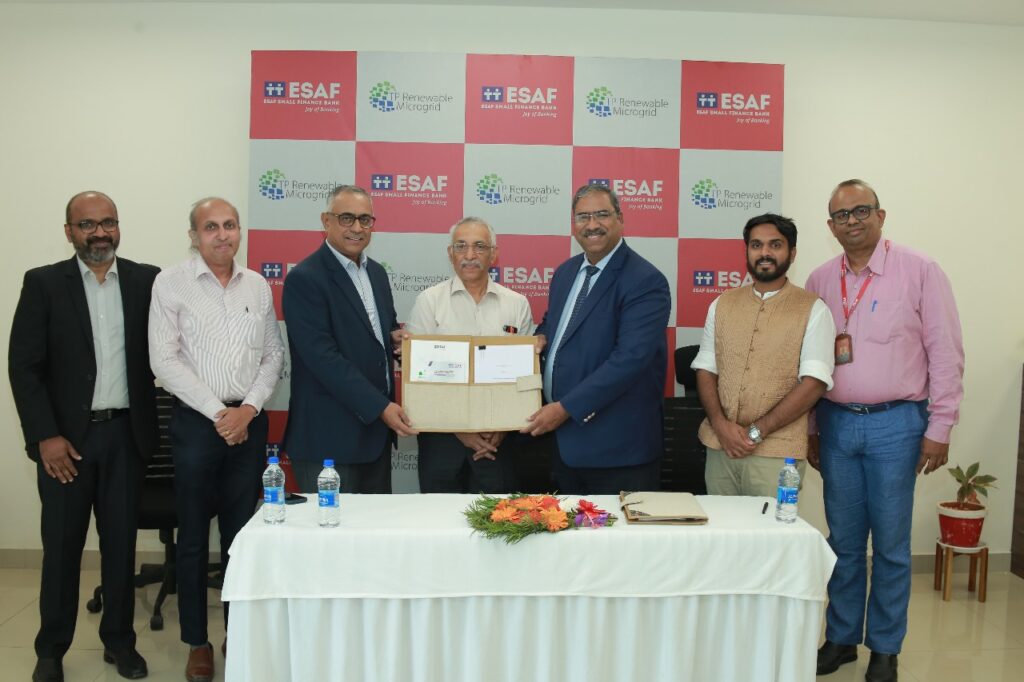
Under this collaboration, TPRMG and ESAF BANK will work together to enhance accessibility to sustainable energy solutions for rural communities and entrepreneurs. The alliance aims to promote energy entrepreneurship, ensure trained professionals support clean energy initiatives in energy-deficit areas, and contribute to the transition to renewable energy. ESAF Small Finance Bank will offer affordable financing schemes to rural micro-entrepreneurs, enabling them to adopt renewable energy solutions. TPRMG will provide expertise in designing, supplying, and installing renewable energy solutions to facilitate a seamless transition to clean energy.
Furthermore, TPRMG will drive the deployment of innovative renewable energy technologies to provide reliable and affordable energy solutions to rural micro-entrepreneurs. Meanwhile, ESAF Small Finance Bank will financially support such projects. Both organizations will collaborate on public policy advocacy initiatives aligned with India’s Net Zero plans, reinforcing their focus on ESG-driven growth.
Commenting on the same, Shri Manoj Gupta, CEO of TP Renewable Microgrid, stated, “Our partnership with ESAF Small Finance Bank marks a significant step towards enabling rural communities access to clean, efficient and affordable renewable energy. This partnership aims to enhance energy accessibility, promote skilling & entrepreneurship, and drive India’s renewable energy transition at the grassroots level”.
Speaking about this collaboration, Shri K. Paul Thomas, MD & CEO of ESAF Small Finance Bank, said, “We are proud to collaborate with TPRMG to empower unserved or underserved rural areas and enhance energy security in the country, and support micro-entrepreneurs with sustainable energy solutions. By offering affordable financing options and supporting the deployment of clean energy technologies, we strive to enhance livelihoods and contribute to India’s green energy goals”.
This strategic alliance between TPRMG and ESAF Small Finance Bank is set to create a meaningful impact in rural India by facilitating access to energy-efficient decentralized renewable technologies and solutions for rural entrepreneurs. Thus, it will promote economic growth and contribute to the country’s carbon neutrality objectives.
Shri Manoj Gupta, CEO of TP Renewable Microgrid; Shri P. R. Ravi Mohan, Chairman, ESAF Small Finance Bank; Shri Hari Velloor, Executive Vice President, ESAF Small Finance Bank; Shri George Oommen, Business Head – General Loans & Mobility Loans, ESAF Small Finance Bank, and Shri Alok Thomas Paul, MD, Cedar Retail, were present on the occasion.
6, Mar 2025
Adnan Sami to Bring Heartfelt Music to Delhi with ‘Jazbaa’ Live Concert on 9th March 2025

New Delhi : Delhi is all set to ready for an unforgettable evening as Adnan Sami, the “Sultan of Music” and the world’s fastest keyboard player, takes the stage at Jazbaa: Dilon Ko Dilon Se Jodne Ka, a Musical Night organised by Rudraksha Communication on 9th March 2025 at Plenary Hall, Bharat Mandapam, New Delhi. This magical night promises soulful melodies, timeless classics, and electrifying performances that will captivate your heart.
Adnan Sami is more than an artist—he’s an emotion, a celebration of music that connects souls and creates lasting memories. Don’t miss this extraordinary celebration of love and music. Join us for a night that will stay with you forever.
Excited about his performance in Delhi, Adnan in a video message said, ” I am coming to increase your heartbeat at Jazbaa:Dilon ko Dilon Se Jodne Ka in India’s heartbeat Delhi on 9th March .
Adnan has been mesmerizing fans for years now. Credited with being the first person to play Indian classical music on the piano in a style he created through the Santoor, he can play over 35 musical instruments. He has also given the music industry several melodious songs.He is known for his chartbuster tracks like ‘Bhar Do Jholi’ from Salman Khan’s Bajrangi Bhaijaan, ‘Tera Chehra Jab Nazar Aye’,’Lift Karadey’, ‘Kabhi To Nazar Milao’, and ‘Sathiya’ .
6, Mar 2025
The King of Bollywood teams up with the King of Basmati
Hyderabad, March 6th, 2025: LT Foods Ltd., an Indian-origin global FMCG company in the consumer food space, proudly announces its collaboration with the finest global superstar, Mr. Shah Rukh Khan, for the world’s finest basmati brand – DAAWAT®.

The moment marks the coming together of the Bollywood icon, who has enthralled the audiences with his finest performances, with DAAWAT® known for delivering the finest food experiences across millions of homes globally.
Speaking about the association, Mr. Shah Rukh Khan said, “I’m glad to partner with DAAWAT®, where passion and commitment to excellence come together, inspiring people to bring out their finest in every meal and every moment.”
Mr. Ashwani Arora, Managing Director & CEO, LT Foods Limited said, “DAAWAT® is not just about food, it’s about crafting moments of joy and togetherness. We take pride in bringing the finest quality basmati to tables across the world. Shah Rukh Khan, being the finest global actor, is synonymous with excellence, making him the ideal choice to represent DAAWAT®. Together, we celebrate the art of Bring Out Your Finest.”
6, Mar 2025
Bandhan Mutual Fund Rolls Out Bandhan CRISIL-IBX Financial Services 3-6 Months Debt Index Fund
Mumbai, March 06, 2025: Bandhan Mutual Fund has announced the launch of the Bandhan CRISIL-IBX Financial Services 3-6 Months Debt Index Fund, an open-ended Constant Maturity index fund designed to provide investors with a structured short-term fixed-income investment opportunity. The fund offers exposure to a portfolio comprising AAA- rated Certificates of Deposit (CDs), Commercial Papers (CPs), and Corporate Bonds issued by leading banks, NBFCs, and financial institutions. With a systematic roll-down strategy from 6 months to 3 months, the fund aims to capture short- term yield advantages while maintaining liquidity and minimising interest rate risk. The New Fund Offer (NFO) opens on Thursday, March 06 and closes on Tuesday, March 11.
Commenting on the launch, Vishal Kapoor, CEO, Bandhan AMC, said, “Fixed-income investments, particularly short- duration debt, provide a structured approach to navigating market fluctuations while preserving capital. The financial services sector—comprising banks, NBFCs, and financial institutions—has remained resilient, supported by strong capital buffers, low NPAs, and steady credit growth. This creates a compelling opportunity to access high-quality, AAA- rated debt instruments with attractive yields. Bandhan CRISIL-IBX Financial Services 3-6 Months Debt Index Fund systematically captures these advantages, offering a transparent, cost-effective, and liquid investment solution that is well-suited to today’s market conditions.”
The Bandhan CRISIL-IBX Financial Services 3-6 Months Debt Index Fund aims to leverage the roll-down strategy by investing in CDs, CPs, and bonds within the 3-6 months maturity, capitalising on strong demand for short-term securities. This approach makes it an appealing option for investors looking to generate potential income through exposure to shorter-maturity instruments on the yield curve.
6, Mar 2025
Ghodawat Consumer Limited Unveils Revamped Kumar Vidya Mandir Under ‘Future First’ Program
Maharashtra, 6th March: Reinforcing its commitment to Education and Community development, Ghodawat Consumer Limited (GCL), the FMCG arm of the Sanjay Ghodawat Group, has successfully upgraded the educational infrastructure at Kumar Vidya Mandir, Tamdalge, under its flagship CSR initiative, ‘Future First.’ Focused on improving education and healthcare facilities, the initiative is designed to create a better learning environment for students, ensuring their holistic development and well-being.
The initiative introduced key infrastructural improvements, including upgraded desks and chairs, improved sanitation facilities, and enhanced cooling systems, fostering a comfortable and safe educational space. Additionally, new road safety measures were implemented to ensure the security of students, promoting better attendance and deeper community engagement. Recently, a handover ceremony was held to mark the completion of these significant enhancements, carried out with the support of the Tamdalge Gram Panchayat.

Salloni Ghodawat, CEO, Ghodawat Consumer Limited (GCL), emphasized the company’s dedication to social responsibility, stating, “At GCL, we are committed to making a real difference in communities through our CSR efforts. The ‘Future First’ program prioritizes education and healthcare to provide students with a conducive environment for learning and growth. Supporting Kumar Vidya Mandir aligns with our vision of fostering quality education, and we will continue investing in such impactful initiatives. Proper infrastructure in education and healthcare plays a crucial role in national progress, and through our contributions, we aim to create lasting positive changes benefiting students, teachers, and society at large.”
Beyond Kumar Vidya Mandir, GCL remains committed to expanding its impact on education in the region. Apart from this, Smt. Gangabai Khivraj Ghodawat MahaVidyalaya, Jaysingpur has played a pivotal role in shaping young minds by educating over 5,000 girls from 52 villages since 1995. In addition, GCL’s commitment to inclusive education is evident through its long-standing support for the ‘Lions Clubs Visually Disabled School’ in Miraj, where it manages daily operations and has donated the school building, ensuring a dedicated space for specialized education.


