


9, Aug 2024
Merck’s Aarogya health program positively impacts communities in Patalganga
Merck, a leading science and technology company, introduced Aarogya, a quality healthcare program designed to address pressing health issues in the Patalganga region of Raigad district.
Launched in July this year, the Aarogya program aims to improve the overall health outcomes for the community by offering comprehensive health screenings, diagnostic support, and increased health awareness.

Since its inception, the initiative has made a significant impact benefiting around 800 community members through health camps held in the villages of Borivali, Sai Nagari, Washivalli, Kaire, and Vadgaon in and around Patalganga.
Under this program, Merck conducted extensive screenings to identify and address primary health ailments in the region, providing essential diagnostic services for accurate detection and timely treatment. The company also raised awareness and educated the community on best health practices. Additionally, Aarogya established a unique referral system and follow-up care to ensure consistent and equitable access to healthcare. The initiative aims to assess current health conditions and disease trends in the region to develop a strategic roadmap for future health interventions.
Merck Life Science’s state-of-the-art facility for providing lab materials and reagents to pharma and biopharma companies is located at Patalganga. The site came into operation in the middle of the pandemic and has worked with the community ever since 2020.
Aarogya is one of Merck India’s many initiatives to empower communities with good healthcare services. The company is deeply committed to social responsibility, positively impacting over 120,000 lives through initiatives in education, healthcare, relief, and employee engagement. The company offers scholarships, access to quality education, and healthcare services, and also donates essential medical equipment during crises. Driven by its core values, the company remains a key player in India’s science and technology landscape, continually driving innovation and enhancing lives.
- 0
- By Rabindra

9, Aug 2024
US Consul General visits Milk Mantra
Bhubaneswar, August 9, 2024: US Consul General Ms. Jennifer Larson, accompanied by her team, visited the Milk Mantra Headquarters today.She met the founders Srikumar Misra & Rashima Misra to know about their unique entrepreneurial journey of starting Milk Mantra in Odisha.
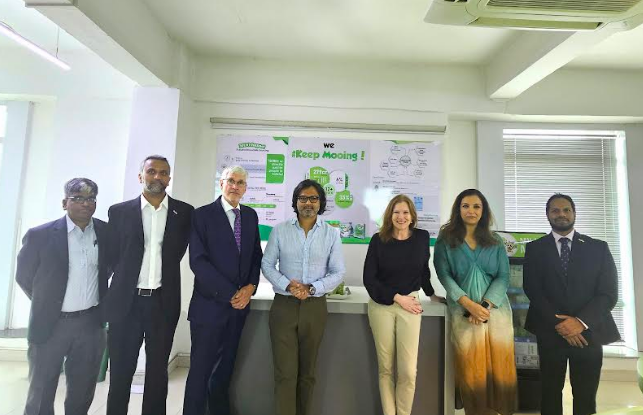
It is to be noted that Milk Mantra raised USD 10 Million in funding from the US Development Finance Corporation in 2020 to build a new plant at Puri. The plant is nearing completion and will further enhance the impact Milk Mantra has on the ecosystem from job creation to improving farmers economic livelihood and expanding the Milky Moo range of products. Meanwhile the founder Srikumar Misra has moved on to start his next venture called ‘aarna’ in the AI + Decentralised Finance space, whilst he continues on the Board of Milk Mantra. The management of the company is being led by cofounder & executive director Rashima Misra and a professional management team including Kailash Gahir as CEO and Pradeepta Jena as CFO.
The US delegation included Economic Chief Frank Talluto, Commercial Chief Raghavan Srinivasan, Political Advisor Srimali Kari, Economic Advisor Siba Prasad Tripathy, and Commercial Advisor Suniel Kumar.
9, Aug 2024
Bangalore tops flex office stock in APAC region, outshines Shanghai, Seoul and Tokyo
National – August 8th, 2024 – CBRE, world’s leading real estate consulting firm, announced the findings of its report, ‘H1 2024 Asia Pacific Flexible Office Market’. According to the report, Bangalore topped the list of 20 APAC cities with the highest flexible office stock at 15.5 mn. sq. ft. in the APAC region, including Shanghai, Seoul and Tokyo. Delhi NCR ranks second in the city list with a total stock 10.7 mn. sq. ft. (till June’24) of flexible office space. Recent growth in the Asia Pacific flexible office space market has been primarily driven by Indian cities, where the expansion is supported by the demand for managed solutions offered by domestic flexible space operators.
The report highlights that Delhi NCR witnessed the highest increase of 26 % in the flexible office stock since CY 2023. Other Indian cities also did exceedingly well with Hyderabad and Mumbai making it to the top 10 cities, with 6.8 and 6.1 mn. sq. ft. of flexible office stock, respectively.
The Asia Pacific flex space market continues to display stable growth, with the total stock of flexible office space in the APAC region reaching 89 million sq. ft. as of June 2024, an increase of 3.9% from CY 2023. The report points out that the APAC region is home to approximately 3,000 flex space centers. With strong leasing activity by flex space operators during this period, it is anticipated that the pace of new flex center openings will continue to be rapid throughout the remainder of the year in these markets.
Anshuman Magazine, Chairman & CEO – India, South-East Asia, Middle East & Africa, CBRE, said, “Recent growth in the Asia Pacific flexible office space market has been primarily driven by Indian cities, where expansion has been underpinned by demand for managed solutions offered by domestic flexible space operators. The ongoing expansion of the flexible office space market in India highlights its significance as a strategic option for businesses adapting to the changing demands of workspace needs”.
Henry Chin, Global Head of Investor Thought Leadership and Head of Research, CBRE APAC, said, “Recent years have seen an evolution in business strategy by operators of flexible office space in Asia Pacific. In the post-COVID era, operators’ priorities have shifted towards income diversification, turn-key managed solutions, and maximizing centre utilization. Operators are increasingly differentiating their brands and exploring alternative deal structures, such as management agreements and CapEx contributions by landlords, to create more sustainable business models. Leveraging turn-key managed solutions enables operators to increase commitment terms while providing additional value to occupier solutions”.
The report also points out that despite a return to growth mode after the pandemic subsided, the Asia Pacific flexible office space market has now entered a period of normalized expansion compared to the pre-COVID boom years.
CBRE APAC study covered 20 major Asia-Pacific markets, including Japan, China, South Korea, Philippines, Hong Kong, Australia, Vietnam, Singapore, Australia, Taiwan, New Zealand and India.
9, Aug 2024
Pacific Mall Dehradun Hosts Exciting Sports Carnival A Weekend full of Thrills and Shopping
Dehradun, 09th August 2024: Pacific Mall Dehradun is thrilled to host the Pacific Sports Carnival, which is set to take place from 9 to 11 August, 2024. This thrilling event promises to bring the exhilarating spirit of sports to Dehradun, with athletic excitement and fantastic shopping rewards.
During the Pacific Sports Carnival, shoppers who make purchases of INR 5,000 or more will gain access to a wide range of Olympic-style games, including Air Hockey, Golf, Archery, Basketball and Hammer. Participants can compete against each other in these activities and grab a chance to win medals and exciting giveaways. The event offers a unique opportunity for customers to combine their love for shopping with the joy of engaging in their favourite sports.
Abhishek Bansal, Executive Director, Pacific Group expressed, “The Pacific Sports Carnival is designed to offer an unforgettable experience where our patrons can enjoy both top-notch shopping and exhilarating sports activities. We are excited to bring the cheerful spirit of Paris’s sports culture to Dehradun creating a weekend full of fun, competition, and memorable rewards.”
9, Aug 2024
Real Estate Sector welcomes LTCG tax amendment
In a significant move that brings relief to homeowners and the real estate sector, Finance Minister Nirmala Sitharaman has proposed an amendment to the Finance Bill, 2024, offering taxpayers the option to choose between a 12.5% Long-Term Capital Gains (LTCG) tax rate without indexation or a 20% rate with indexation for properties acquired before July 23, 2024. The amendment, now widely welcomed by the industry, had earlier faced backlash warning that the initial proposal to eliminate indexation benefits, as outlined in Budget 2024, could hamper the growth of the real estate sector. The proposed amendment now provides much-needed flexibility and ensures that taxpayers can opt for the most beneficial tax calculation method. Below are insights from industry leaders on this development.
Mr. Prashant Sharma, President, NAREDCO Maharashtra
“We welcome the amendment to the Finance Bill by Finance Minister Nirmala Sitharaman, providing taxpayers with the flexibility to choose between a 12.5 per cent LTCG rate without indexation or a 20 per cent rate with indexation for property acquired before July 23, 2024. This decision is a significant relief for the real estate sector, which has been concerned about the potential impact of the indexation proposal introduced in Budget 2024. The ability to select the more favorable tax computation method ensures that homeowners and real estate investors are not unduly burdened by changes in tax regulations. This move by the government reflects an understanding of the complexities within the real estate market and its importance to the overall economy. We believe this amendment will help maintain investor confidence and support the sustained growth of the real estate sector, benefiting not just developers, but also homebuyers and the larger economy.”
Mr. Pritam Chivukula, Co-Founder & Director, Tridhaatu Realty and Vice President, CREDAI-MCHI
“The recent amendment proposed by Finance Minister Nirmala Sitharaman to allow taxpayers the option to choose between a 12.5% LTCG rate without indexation or a 20% rate with indexation for properties acquired before July 23, 2024, is a welcome relief for the real estate industry. This balanced approach not only addresses the concerns raised by stakeholders but also provides homeowners with flexibility in managing their tax liabilities. The initial proposal to eliminate indexation benefits had sparked significant apprehension within the sector, as it threatened to impact the growth momentum we’ve been working hard to maintain. By reintroducing these options, the government has shown its responsiveness to the industry’s needs and the broader economy. This move will encourage continued investment in real estate, providing stability and fostering confidence among both developers and homebuyers. We commend the government’s decision and look forward to continued collaboration to support sustainable growth in the sector.”
Mr. Rajeev Ranjan, Co-Founder & CEO, The Mentors Real Estate Advisory Pvt. Ltd
“The proposed amendment by the Finance Minister allowing taxpayers to choose between a 12.5% LTCG rate without indexation or a 20% rate with indexation for properties acquired before July 23, 2024, is a significant relief for property owners and investors. This flexibility will empower taxpayers to make decisions that best align with their financial strategies, especially in a real estate market that has witnessed varied growth patterns. By offering this choice, the government not only acknowledges the diverse nature of property investments but also provides a much-needed breather for those looking to optimize their tax liabilities in a challenging economic environment.”
Mr. Vedanshu Kedia, Director, Prescon Group
“The recent amendment to the Finance Bill, allowing taxpayers to choose between a 12.5% Long Term Capital Gains (LTCG) rate without indexation and a 20% rate with indexation for properties acquired before July 23, 2024, is a much-needed relief for property investors and homebuyers. This move reflects the government’s responsiveness to the concerns raised by the public at large and shows empathy to the citizens who plan their taxes in advance. By providing homeowners with the flexibility to opt for the more beneficial tax regime based on individual circumstances, this amendment will help sustain investor confidence and encourage continued investment in the sector as the government acknowledges the vital role that real estate plays in our economy. We believe this decision will positively impact both developers and homebuyers, fostering a healthier, stable and more resilient real estate market.”
9, Aug 2024
Digital Competition Bill: Experts Raise Concerns About Bill’s Impact on MSME and Startup Competitiveness
Bengaluru, August 9, 2024 – The India SME Forum hosted a roundtable in New Delhi on Wednesday, for stakeholders to discuss the implications of India’s proposed Digital Competition Bill on MSMEs and startups. The participants expressed concerns over the impact of the Bill on MSMEs competitiveness in India and global markets, and the potential detrimental effect on their ability to serve consumers. The Bill’s intent is to regulate and provide a level playing field however it is being used as a measure to solve commercial disputes between private parties. This can derail the vibrant MSME ecosystem in India.
“With large companies moving out of China, India is blessed with a great opportunity to gain from the exodus. Any regulation like DCB will act as a stumbling block in the country’s efforts to attract FDI, and promote global competitiveness of MSMEs,” said Mr. Vinod Kumar, President, India SME Forum (ISF), expressing concerns emanating from the DCB proposal.
MSMEs gathered at the roundtable, highlighted the essential role of supportive regulations in facilitating the growth of small businesses. Experts emphasised the necessity of policies and regulations that empower MSMEs, enabling them to digitise and sustainably utilise digital services, thereby maintaining competitiveness in domestic and export markets.
Aditi Madan, Founder, Director, Blue Pine Foods Pvt Ltd., expressed concerns regarding over-regulation of online markets, stating, “Regulations which are probably meant for larger companies will also have an indirect effect on startups and SMEs, and these unintended consequences will upset the innovation and certainty in the ecosystem. Proposals like the DCB are likely to further impede and compound existing issues faced by product startups looking to access new markets, accessing capital and scale their operations.”
Insights were shared from an upcoming survey-report examining the potential implications of India’s proposed Digital Competition Bill for Indian businesses deploying digital tools as a key driver of business growth and expansion. Preliminary observations from the study show that 82.2% of business users believe that digital services have enhanced their ability to compete effectively in markets, while 74.3% of business users believe that digital services have enhanced their ability to differentiate themselves from their competitors.
Acknowledging MSMEs’ and startups’ substantial contribution to India’s macroeconomic goals, participants urged the Government to continue with a light-touch regulatory approach that enables innovation and experimentation. Noting the relatively limited extent of consultation on the Digital Competition Bill, participants emphasised the importance of extensive and inclusive pre-legislative consultations, that educate MSMEs and startups on the implications of policy and legislative proposals, while promoting greater involvement by MSMEs and startups.
Members of ISF, the largest association of SMEs in India, were not only concerned with the immediate impact of the Bill, but also felt that it could be a deterrent for India’s Viksit Bharat goals.
In his closing remarks, Mr. Kumar, urged the Government to carefully consider the potential impact of new policy proposals on MSMEs and startups, ensure adequate representation of the concerns and perspectives of SME stakeholder groups in pending policy proposals such as the proposed Digital Competition Bill, and take note of the unintended but harmful consequences of untested frameworks.
Quotable Quotes from the discussion
Vinod Kumar, President, India SME Forum: There is a sense of unease among MSMEs regarding the Draft Digital Competition Bill, as they are unsure about its potential impact. In India, the majority of enterprises are micro, with only a tiny fraction being medium or small enterprises. Many MSMEs are concerned about the proposed ex-ante regulations, especially those related to personal data usage. They argue that data is crucial for services like predictive analysis and targeted advertising, which are vital for their business operations. Furthermore, provisions like the unbundling of digital products could make essential services unaffordable for smaller businesses. The bill appears to be similar to international regulations. The Indian ecosystem is vastly different from that of developed economies, and reliance on international models could be detrimental to the country’s MSMEs.
Amit Agrawal, Founder at DSI Robotics: The Digital Competition Bill is somewhat of a safety paradox and can result in an undue compliance burden for small businesses, as has happened in the past. For instance, the government’s decision to prohibit digital platforms from saving credit card information, while intended to prevent fraud, created significant challenges for SMEs. A firm managing multiple subscriptions now faces the burden of manually authorizing payments each month. This shift from automated to manual payments is highly inconvenient, causing delays and potential missed payments. This highlights a paradox where measures aimed at increasing security inadvertently hinder business operations.
Aditi Madan, Founder, Director, Blue Pine Foods Pvt Ltd: The policy priorities, particularly in the digital market economy, needs to ensure that SMEs have access to relevant information. The focus should be on directly engaging with SMEs during policy creation to ensure their needs and perspectives are adequately addressed.
Debashish Das, Founder & CEO, ElenchusHR Solutions: Overly stringent regulations could adversely impact businesses by forcing them back to manual processes reminiscent of the 70s and 80s. This would increase costs and reduce operational efficiency. India’s unique economy, with its diverse cultural and regional nuances, cannot adopt a one-size-fits-all approach based on foreign laws. Policies must consider the specific needs and inputs of the MSME sector to be effective and beneficial.
9, Aug 2024
Saluting Valor Through Flavor’: The Fern Hotels and Resorts Announces ‘Regimental Zaika’ Food Festival
Mumbai, August 09, 2024: This August, The Fern Hotels and Resorts proudly presents ‘Regimental Zaika’, a unique food festival celebrating India’s rich culinary heritage inspired by the authentic dishes of various regiments and battalions of the Indian Army. Scheduled from August 10 to August 18, 2024, across 25 select Fern properties, this festival coincides with India’s Independence Day and pays homage to the valour and diversity of the armed forces.

India’s military regiments are renowned not only for their bravery but also for their distinct culinary traditions, which vary across regions and communities. ‘Regimental Zaika’ aims to bring these flavors to connoisseurs of food, offering a remarkable journey through the diverse tastes and stories behind each dish. Each dish has been carefully curated to reflect the authenticity and tradition of its origin, promising a culinary experience unlike any other.
Guests can indulge in a wide variety of dishes, from robust North Indian delicacies such as Kashmiri Dum Aloo and Chana Amritsari to aromatic South Indian specialties ranging from Kanyakumari Fish Curry to Pazham Pradhaman. From hearty Northeastern delights such as Mati Mahor to Assamese Meat Curry and flavourful dishes like Mutton Pandhara Rassa and Gatta Pulao from Western India, each menu item has been meticulously crafted to capture the essence of the culinary traditions of each regiment. Whether you are a food enthusiast, a history buff, or someone looking to celebrate India’s Independence Day in a unique way, ‘Regimental Zaika’ promises something for everyone.
“We are thrilled to host ‘Regimental Zaika’ and honour the brave men and women of our armed forces through their culinary legacy. This festival is not only about savouring delicious food but also about celebrating the spirit of unity and diversity that defines our nation. This festival is a way for us to highlight the remarkable culinary prowess within the Indian Army while offering our guests an authentic taste of these distinctive regional flavors” shares Chef Ritesh Sen, General Manager – Food & Beverage, The Fern Hotels & Resorts.
Regimental Zaika aims to create awareness and appreciation for the lesser-known but deeply cherished aspects of military life, particularly the diverse regional cuisines that unite soldiers from all corners of the country. It promises an unforgettable culinary journey through India’s military kitchens, offering guests a chance to experience the flavors that have nourished and inspired our brave soldiers for generations.
Scheduled to take place from August 10- August 18, 2024, the ‘Regimental Zaika’ Food Festival will offer a dynamic culinary journey, celebrating the diverse and rich flavors that characterize the cuisine of India’s military kitchens. Kindly refer to the list of participating hotels & restaurants:
9, Aug 2024
Kochi Hosts INASL-2024: India’s Premier Scientific Meeting of Liver Specialists
Kochi, 09-08-2024: The 32nd Annual Scientific Meeting of the Indian National Association for the Study of the Liver (INASL), themed “Shaping the Future of Hepatology,” was inaugurated at Le Meridian Kochi. The chief guest was Prof. J.B. Dilawari, former Head of the Department of Gastroenterology at PGI Chandigarh, Prof. Aleksander Krag, Secretary-General of the European Association for the Study of the Liver (EASL), and Prof. Nazia Selzner, representing the International Liver Transplantation Society (ILTS), were the guests of honour.
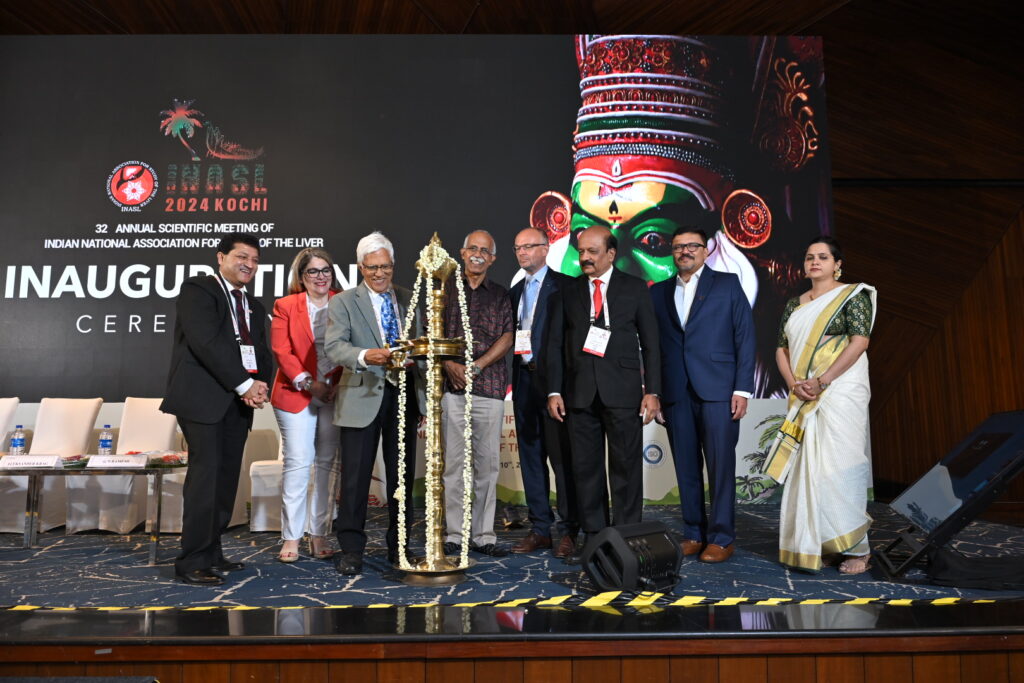
This conference, being hosted in Kerala for the first time, has attracted 200 international and national faculty members, along with over 1,500 delegates from across India and around the globe. With nearly 420 presentations scheduled, researchers and practitioners will share their insights and experiences in hepatology.
The conference, which runs until Saturday, will cover key topics such as Predictive and Preventive Hepatology, Liver Transplantation, Alcohol-associated Liver Disease, Viral Hepatitis, Metabolic Dysfunction Associated Steatotic Liver Disease, Acute Kidney Injury and Kidney Failure, and Autoimmune Liver Disease. Attendees will also engage in case-based discussions and explore the latest advancements in the field.
INASL 2024 is being jointly organized by the Indian Society of Gastroenterology Kerala Chapter, Cochin Gut Club, Cochin Liver Club, and Kochi Liver Transplantation Society, providing a comprehensive update on current knowledge and future advances in liver disease research and treatment.
Dr. G.N Ramesh, Organizing Chairperson-INASL-2024 and Senior Consultant – Medical Gastroenterology, Aster Medcity-Kochi , Prof. S.P Singh, President-INASL, Prof. Ajay Duseja, Secretary General-INASL, Prof. Aleksander Krag, Secretary General-EASL, Prof. Nazia Selzner, President-ILTS, Prof. JB Dilawari and Dr. Charles Panackel, Organizing Secretary -INASL-2024 and Senior Consultant – Hepatology- Aster Medcity-Kochi spoke at the ceremony.
9, Aug 2024
Toyota Technical Training Institute Marks the Convocation of its 15 th Batch of Students
Bangalore, 09 August 2024: Toyota Technical Training Institute (TTTI) today celebrated the convocation of its 15th batch of students in a grand ceremony, marking the successful completion of its comprehensive skill training on Global Manufacturing Practices along with holistic development of knowledge, skill, body and attitude. This milestone event recognized 58 Regular TTTI students and 156 Toyota Kaushalya course students from rural Karnataka. The academic honours were bestowed upon the graduates by the esteemed Chief Guest, his holiness Jagadguru Sri Shivarathri Deshikendra Mahaswamiji, in the presence of TKM Management, representatives from Toyota Group Companies, Suppliers, Automotive Skills Development Council (ASDC), National Skill Development Corporation (NSDC) and Toyota Technical Skill Academy – Japan, the Toyota Indonesia Academy, who participated to foster knowledge sharing among Toyota affiliates.

Since its inception in 2007, TTTI has focused on imparting advanced technology knowledge and fostering overall development by transforming rural youth into skilled manpower tailored to industry needs. A key factor in TTTI’s success is its consistent 100% employment rate, with students securing excellent job opportunities in Karnataka, across India, and overseas. The recently launched ‘Toyota Kaushalya’ program has been well received, offering a unique opportunity for youth to acquire manufacturing industry skills through a ‘Learn and Earn’ approach, combining theoretical learning with On-the-Job Training (OJT). Additionally, being a part of Japan India Institute for Manufacturing (JIM), TTTI helps inculcate Japanese-style manufacturing skills and practices, contributing to the Government of India’s ‘Skill India’ Mission.
TTTI promotes inclusivity by offering free training to economically challenged students across rural Karnataka. Over the years, the comprehensive training has enabled the students to achieve remarkable feats at prestigious competitions like the India Skills and World Skills contests. The institute’s hallmark residential training program ensures holistic development in knowledge, skill, and physical and mental abilities, making TTTI a coveted learning institute. The TTTI Regular Program is a three-year residential course, while the Toyota Kaushalya program is a two-year residential course, both structured around the pillars of Body and Mind, Skill, and Knowledge. TTTI has graduated 1,020 students, currently hosts over 810 students, and provides training in trades such as Vehicle Assembly, Welding, Painting, and Mechatronics.
Chief Guest His Holiness Jagadguru Sri Shivarathri Deshikendra Maha Swamiji said “It is a great pleasure to be a part of the convocation ceremony at Toyota Technical Training Institute, celebrating the remarkable achievements of the young and talented individuals. TTTI has consistently demonstrated its commitment to empowering the youth of rural Karnataka by providing exceptional training and education. Such initiatives play a vital role in uplifting the community, resulting in collective progress and a lasting positive impact. The graduates are a testament to the institute’s dedication to nurturing skilled professionals who are well-prepared to contribute to the automotive industry and beyond. As they step into their careers, we are confident that they will carry forward the values and skills instilled in them here, making significant contributions to society and the nation. We extend our heartfelt congratulations to all the graduates and commend TTTI for its unwavering dedication to fostering a skilled and capable workforce.”
Mr. G. Shankara – Executive Vice President, Finance and Administration, Toyota Kirloskar Motor said, “At Toyota, we are committed towards transforming rural youth into world-class competitive technicians through comprehensive 360-degree development. We are proud to announce that today, 214 graduates have joined the over 1,000 skilled rural youth trained by the Toyota Technical Training Institute. These graduates, from various districts of Karnataka, have secured placements at Toyota Kirloskar Motor, within our value chain, and even internationally in Qatar, Jordan, and Slovakia. We are deeply honoured to have the blessings and convocation address of his holiness Jagadguru Sri Shivarathri Deshikendra Mahaswamiji. In addition, we are actively developing 65 Industrial Training Institutes (ITIs) and Government Tool Room and Training Centres (GTTCs) across all districts in Karnataka, focusing on train-the-trainer programs for principals and faculty, infrastructure support, and culture building. Till date, Toyota has trained over 110,000 youth across India, continually fostering employable resources and contributing significantly to society and the Sustainable Development Goals.”
Graduates received multiple certifications, including the NAC (National Apprenticeship Certificate), ASDC Certificate and JIM and Toyota certificate. To date, 1,020 students have graduated, with 452 joining TKM and the remaining 568 securing positions in group companies, supplier companies, and overseas. These graduates have had the opportunity to join various companies across the industry.
Students from TTTI have been recognized in World Skills Contests, with 1 Medallion in Brazil in 2015, 1 Bronze & 1 Medallion in Abu Dhabi in 2017, 1 Medallion in Russia in 2019, and 2 Bronze in Germany in 2022. Recent accolades include winning India Skills in Additive Manufacturing, Mechatronics, and Manufacturing Team Challenge (MTC), with representation at the upcoming World Skill Competition in France in September.
With the convocation, TTTI celebrates the success of its graduates, who represent the true potential of skilled youth in India, with their achievements resonating with the essence of the company’s commitment to fostering a talented and skilled workforce, contributing to the nation’s progress and development.
9, Aug 2024
RBI MPC Highlights: Key Updates and Comments
The Reserve Bank of India’s Monetary Policy Committee (MPC) has announced several key updates. The UPI transaction limit for tax payments has been increased from ₹1 lakh to ₹5 lakh, aiming to simplify larger transactions. Additionally, a new feature called “Delegated Payments” allows primary users to set transaction limits for others using their bank accounts, enhancing UPI’s functionality. The MPC has also addressed adjustments to interest rates and inflation targets to guide economic conditions and growth. Furthermore, updates on economic projections and measures for maintaining financial stability have been provided.
Mr. Abheek Barua, Chief Economist – HDFC Bank on RBI Monetary Policy Committee (MPC) Decision
A no change policy with the RBI keeping the repo rate and its stance unchanged. This decision to stay on course has been clearly guided by domestic factors even as rate cut expectations have risen globally. The overall tone of the policy seemed hawkish with the RBI highlighting the risks around stickiness in food inflation. The food inflation forecast was raised by 60bps for Q2 FY25 to 4.4% and now inflation forecasts for the next four quarters all stand above 4%. With the RBI refraining from creating any space for a policy pivot, expectations of a future rate cut or change in stance will have to be pushed forward.
Mr Nikunj Saraf, Vice President, Choice Wealth
“The RBI has decided to hold its key interest rate steady at 6.50% for the ninth consecutive meeting. This decision, approved by a 4:2 majority, demonstrates the central bank’s ongoing commitment to balancing the need for inflation control with supporting overall economic stability. Maintaining its ‘withdrawal of accommodation’ stance, the RBI is aiming to manage inflation while still nurturing growth. Food inflation remains a major concern, with the Consumer Price Index (CPI) reaching 5.1% in June, largely driven by rising vegetable prices. Given that food items account for a significant portion of the CPI basket, the RBI’s focus on reining in these prices is crucial. Although the RBI has retained its FY25 real GDP growth forecast at 7.2%, slight downward revisions to the quarterly projections suggest a somewhat cautious view of the immediate economic conditions. However, positive factors like a favourable monsoon and increased kharif sowing are expected to buoy economic growth. To facilitate lending, the RBI is emphasizing flexible liquidity management, as evidenced by the rise in top-up home loans. However, any potential rate cuts are likely to be postponed until late 2024, with the priority being on controlling inflation over providing short-term economic stimulus. The central bank has also introduced new regulatory measures, including the creation of a public repository for digital lending apps and an increase in the UPI tax payment limit to boost digital transactions. With record-high forex reserves of $675 billion, the RBI is well-positioned to handle external economic shocks, but remains vigilant to global economic trends.”
Mr. Vedanshu Kedia – Director, Prescon Group
“We commend the Reserve Bank of India for its decision to keep the repo rate at the moderate level of 6.5%, to adequately balance the inflation and development goals of the country. The government’s commitment to ensuring rate stability is a positive step, it will likely maintain growth in the real estate and infrastructure sectors. We are particularly encouraged by the balanced approach on maintaining liquidity and supporting financial institutions, while balancing inflation. With these measures in place, we remain optimistic about the future of India Inc and anticipate a positive impact on the broader economy.”
Mr Amit Prakash Singh, Co-Founder & Chief Business Officer, Urban Money, a loan distributor
“On expected lines, the RBI has chosen to keep the repo rates unchanged at 6.50% as it aims to keep inflation in check amidst robust economic growth. This decision means borrowing costs will remain steady, and interest rates on loans and credit cards will stay put. While this move boosts market sentiment, it’s worth noting that people were undeterred despite last year’s rate hike, as credit growth maintained a double-digit spree driven by personal and home loans due to strengthening consumption patterns and housing demand. At Urban Money, we are witnessing similar trends across all segments, with the most significant growth in personal and home loans. Consumers are confident about their future earnings and are willing to invest in their aspirations. This resilience highlights strong economic confidence and a sustained demand for finance solutions in upcoming period.”
Mr. Umesh Revankar, Executive Vice Chairman, Shriram Finance Limited
“The RBI’s decision to maintain the existing Repo Rate, MSF and SDF is on expected lines and will help in maintaining a great balance in the financial sector and keeping it stable and healthy. This decision reflects the RBI’s focus on balancing inflation control and supporting economic growth. The regulator’s plan to put in place a public repository for digital lending apps shows their focus on safeguarding the common man’s hard earned money.
We are more than half way through the monsoon season and a prolonged festive season is approaching, the unchanged repo rate will keep interest rates steady and help the interest-sensitive sectors like real estate, automotive, home improvement, etc.
The various initiatives taken by RBI shows that the overall growth outlook remains positive. However, the RBI has also cautioned that banks and financial institutions need to build strong frameworks to ensure operational resilience which will help them buffer themselves from global volatility.”
Mr. Sampad Swain, Co-founder & CEO, Instamojo
“We appreciate the RBI’s advancements towards UPI in the policy meet today, which support the vision of a Digital India. By raising the limit to ₹5 lakh per transaction, high-value payments for MSMEs and small merchants will become more streamlined, enhancing payment efficiency and financial management. The ‘Delegated Payments’ feature adds another layer of control, enabling primary users to authorize others with set transaction limits. This is particularly beneficial for our merchants who can now delegate payment tasks while maintaining strict oversight. These innovations will drive higher adoption rates, expand the reach of digital payments across diverse demographics, and further our commitment to empowering businesses through digital commerce solutions.”


