


21, Oct 2026
Kota, Beyond the Expected: Discover a New Place to Stay, Dine and Celebrate
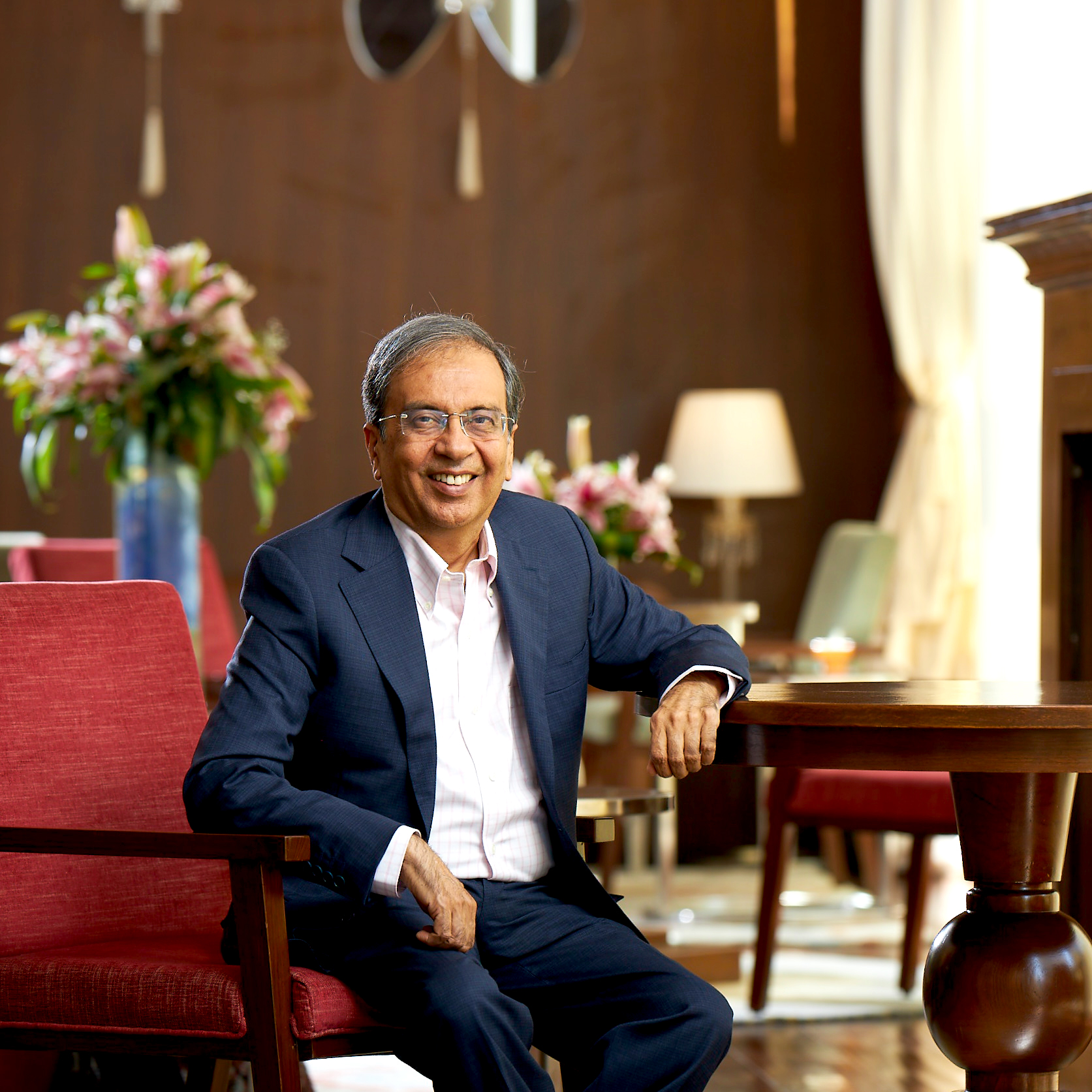
Bengaluru / Kota, 21 October 2026: Think Kota, and education may be the first thing that comes to mind. But look a little further, and there are lakeside views, historic palaces, riverfront experiences and local discoveries waiting to be explored. Adding a new reason to experience the city, Royal Orchid Hotels Ltd. (ROHL), through its subsidiary Regenta Hotels Private Limited, has launched Regenta Place, Kota-a contemporary hospitality destination designed for travellers visiting the city for business, family, leisure or celebrations.
Situated at Aerodrome Circle on DCM Road, the hotel offers a convenient base from which to experience Kota, with thoughtfully equipped accommodation, all-day dining and versatile venues for gatherings of every kind.
Your Kota Stay, Your Way
Whether it is a family trip, a business visit or a few days spent discovering the city, comfort makes all the difference. Regenta Place offers 57 rooms and suites across Executive Rooms, Executive Twin Rooms, Royal Rooms and Suites. High-speed Wi-Fi, Smart TVs, digital safes, tea and coffee makers, in-room dining and 24-hour hot and cold water help make every stay convenient.
Good Food Is Always Part of the Journey
At Pinxx, the hotel’s all-day dining restaurant, guests can explore Indian, Oriental, Continental and regional flavours. From a leisurely breakfast before heading out to a satisfying meal after a day of sightseeing, Pinxx brings a range of dining choices together in one place.
From Grand Celebrations to Meaningful Gatherings
Some trips are remembered for the places visited; others, for the people who came together. Regenta Place caters to both with two indoor venues: Crystal Hall, approximately 8,400 sq. ft., and Sapphire Hall, approximately 2,200 sq. ft. Designed to accommodate gatherings of varying sizes, the venues are suited to weddings, social celebrations, conferences and business events. A fitness centre and ample parking further enhance the guest experience.
The Other Side of Kota Is Waiting
For travellers looking to add discovery to their stay, Kota offers plenty to explore. Take in the playful landmarks at Seven Wonders Park, spend time around Kishore Sagar Lake, discover Jagmandir Palace, experience the Chambal River Front or explore the heritage of Kota Garh and the Rao Madho Singh Museum.
These attractions offer opportunities for sightseeing, photography and cultural exploration-making Kota an interesting stop for visitors who want to look beyond the familiar and experience more of the city.
Chander K. Baljee, CMD, Royal Orchid Hotels Ltd., said: “Kota holds a significant position as one of India’s leading education and coaching hubs, attracting students, families and business travellers throughout the year. With Regenta Place, Kota, we are strengthening our presence in Rajasthan and expanding our reach in an important urban destination.”
Keshav Baljee, Executive Director, Royal Orchid Hotels Ltd., said: “Every destination has more to offer when travellers have the right place to stay. Kota brings together education, business, heritage and family travel, and Regenta Place is designed to serve these varied needs with comfortable accommodation, dining and event facilities. We look forward to being part of the experiences that bring visitors to the city.”
Susheel Jain, Owner of Regenta Place, Kota, said: “Partnering with an established hospitality group gives us an opportunity to combine our understanding of the local market with the Group’s experience in hotel operations and guest service. We look forward to welcoming guests with comfortable accommodation, quality dining and well-equipped event spaces.”
A new stay. More ways to experience Kota. With its mix of contemporary comfort, varied dining and event facilities, Regenta Place invites business travellers, families, celebration planners and city explorers to make their time in Kota more rewarding.
- 0
- By Neel Achary

21, Oct 2026
Mary’s Meals USA Announces Leadership Appointments to Advance Mission and Expand Impact Across the Globe
“With 79 million children around the world going hungry each day, Mary’s Meals is committed to reaching children waiting for a meal in their place of education. I’m incredibly grateful for the leadership, expertise and support Mark and Andy will bring to me and our team. Their guidance will be invaluable as we work together to expand our impact in the United States and help ensure more children receive the daily meal they need to learn and thrive.”
“I first discovered Mary’s Meals in Scotland and was deeply impressed by the extraordinary impact of its work, its cost-effective model and, above all, the loving commitment of the organization to its mission. I knew I wanted to get involved and help Mary’s Meals USA become a much greater contributor to this cause, bringing more people together to ensure children receive a meal in the place where they learn,” said Menking.
21, Oct 2026
A festive collection of artisanal mithai, gourmet treats and thoughtfully designed gifting options for family, friends and corporate associates
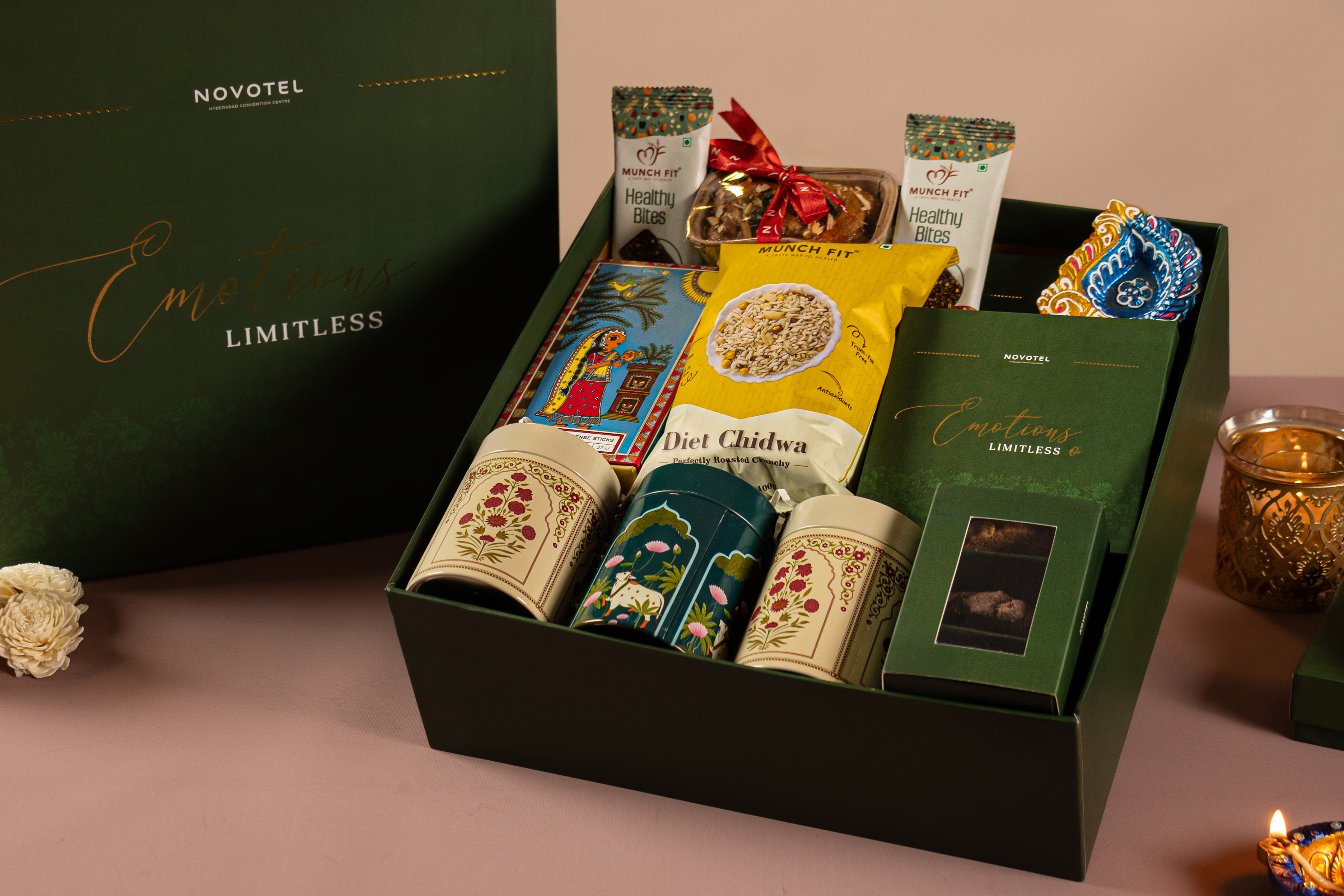
This Diwali, Novotel Hyderabad Convention Centre & HICC brings the spirit of the Festival of Lights to life with a thoughtfully curated collection of festive gifting options, bringing together artisanal mithai, gourmet treats and elegant presentation. Designed for sharing joy with loved ones, friends, colleagues and business associates, the collection combines traditional Indian flavours with a contemporary gifting experience.
Part of Accor’s All for You gifting programme, the collection celebrates the idea of thoughtful gifting, bringing together carefully curated festive edibles and non-edibles inspired by regional flavours and premium ingredients. The Diwali collection features a selection of artisanal sweets and gourmet accompaniments, making each box a celebration of flavour, craftsmanship and the festive spirit.
A Festive Assortment of Artisanal Mithai
The collection features a choice of 18-piece and 24-piece Premium Mithai Boxes, presented with a greeting card and glossary booklet. The assortment brings together six distinctive festive creations: Sattu Gond Burfi, Gulab Pearl, Kaju Élan, Hazelnut Royale, The Golden Jewel and Mewa Khajoor.
For those looking to curate individual mithai selections, the sweets are also available separately, allowing customers to create their own assortment from the festive collection.
The Sattu Gond Burfi combines roasted gram flour, sugar, ghee, cardamom, almond and pistachio, while Gulab Pearl brings together pistachio, rose petals, almond and honey. Kaju Élan offers a richer cashew-based indulgence with saffron, Pishori pistachio and cocoa, while Hazelnut Royale combines hazelnut praline, cashew nut and gold dust.
For those looking for a more opulent festive offering, The Golden Jewel brings together Himalayan honey, almond, Pishori pistachio, Kashmiri walnuts and saffron. Mewa Khajoor, meanwhile, combines cashew nut, figs and dates with gold leaf and khus khus, offering a contemporary take on traditional festive flavours.
Beyond Mithai
Complementing the artisanal sweets is a selection of spiced nut jars with customised labels, offering an alternative for those looking to add a gourmet savoury element to their festive gifting. Options include Sea Buckthorn Trail Mix, Chocolate Hazelnut Ladoo and Nimbu Pudina Cashew, allowing gifts to be further personalised for individual and corporate requirements.
The collection is designed with gifting presentation in mind, with the Premium category featuring a curated box accompanied by a greeting card and glossary booklet, complemented by festive detailing and a premium gifting bag.
Rubin Cherian, General Manager, Novotel Hyderabad Convention Centre & HICC, said, “Diwali is a celebration of togetherness, generosity and the joy of sharing. This year, we wanted our festive collection to capture that spirit through a thoughtfully curated assortment of artisanal mithai and gourmet treats. From familiar Indian flavours to more contemporary combinations, every element has been selected to make gifting feel personal, considered and truly festive.”
Whether it is a gesture of appreciation for a business associate, a festive gift for a loved one or something special to share at home, the Diwali Gifting Collection at Novotel Hyderabad Convention Centre & HICC offers a refined way to celebrate the season and spread the joy of Diwali.
For orders and enquiries, guests can connect with Novotel Hyderabad Convention Centre & HICC.
21, Oct 2026
IHCL Opens Vivanta Indore, Amaltas
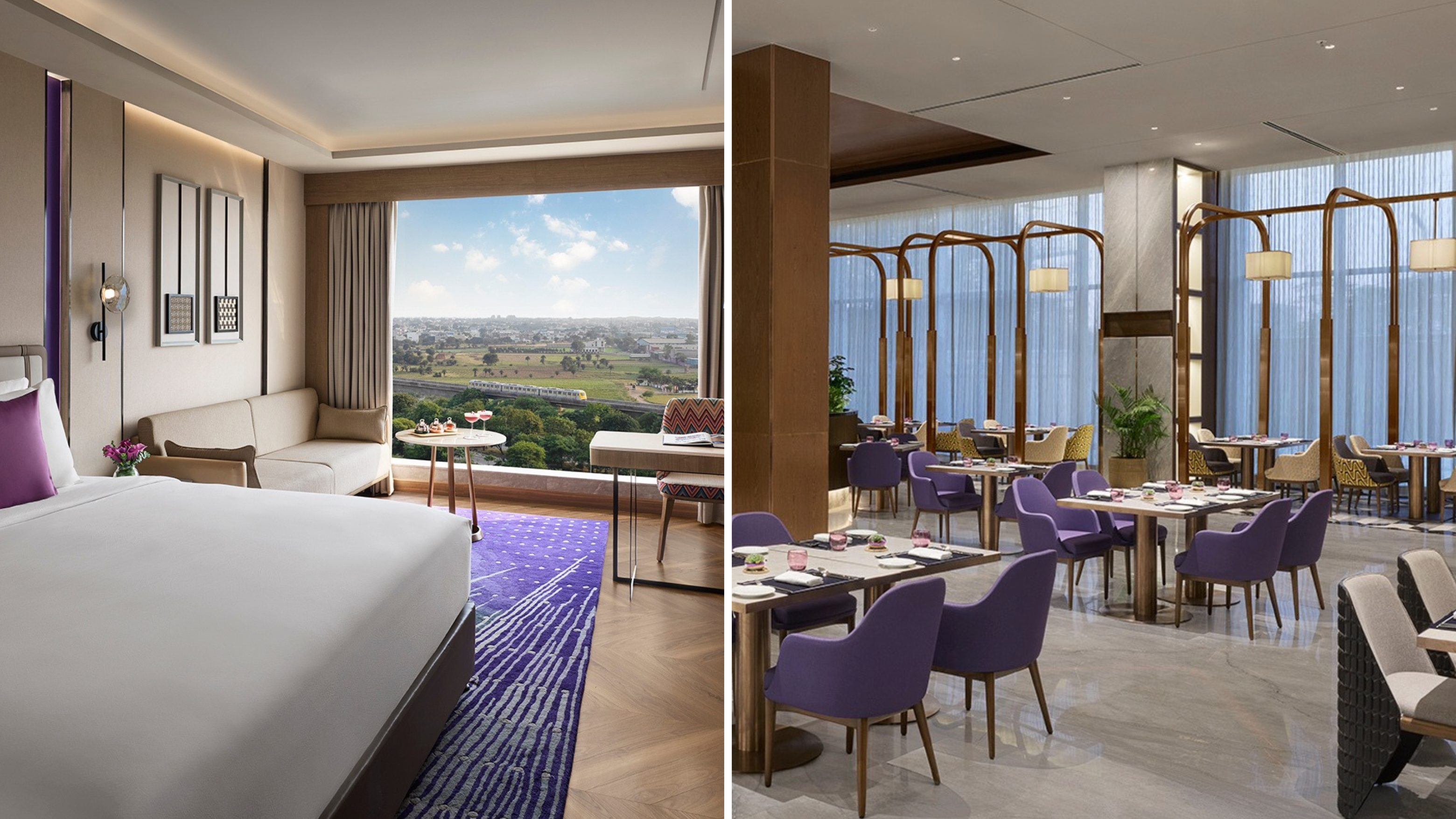
Mumbai, October 21, 2026: Indian Hotels Company (IHCL), India’s largest hospitality company, today announced the opening of Vivanta Indore, Amaltas in Madhya Pradesh.
Mr. Gaurav Pokhariyal, Chief Operating Officer – Full Service Business, IHCL, said, “Indore has emerged as one of Central India’s leading commercial and educational hubs, with growing demand across travel segments. The opening of Vivanta Indore, Amaltas strengthens IHCL’s presence in this high-growth market and offers a contemporary hospitality experience for the travellers.”
Located along the MR-10 corridor, the 202-key Vivanta Indore, Amaltas is designed around openness and natural light. Guests can enjoy contemporary dining experiences at Mynt, the all-day dining restaurant, and Swirl, the bakery and deli and unwind at the spa, swimming pool or explore the fitness centre. The hotel houses spacious venues, including a ballroom, multiple meeting rooms and the expansive Horizon Lawns, catering to conferences, social gatherings and celebrations.
Mr. Dinesh Maan, General Manager, Vivanta Indore, Amaltas, said, “Vivanta Indore, Amaltas, a blend of style, comfort and convenience will offer experiences that reflect the city’s energy and character. We look forward to welcoming our guests.”
Indore, one of India’s fastest-growing cities, is renowned for its rich heritage, iconic landmarks, and vibrant culinary culture, also serves as a leading educational and economic centre of the region.
21, Oct 2026
Bondada Group Enters the EV Market: Hosts a Curtain-Raiser Event to Launch Website and Preview T1
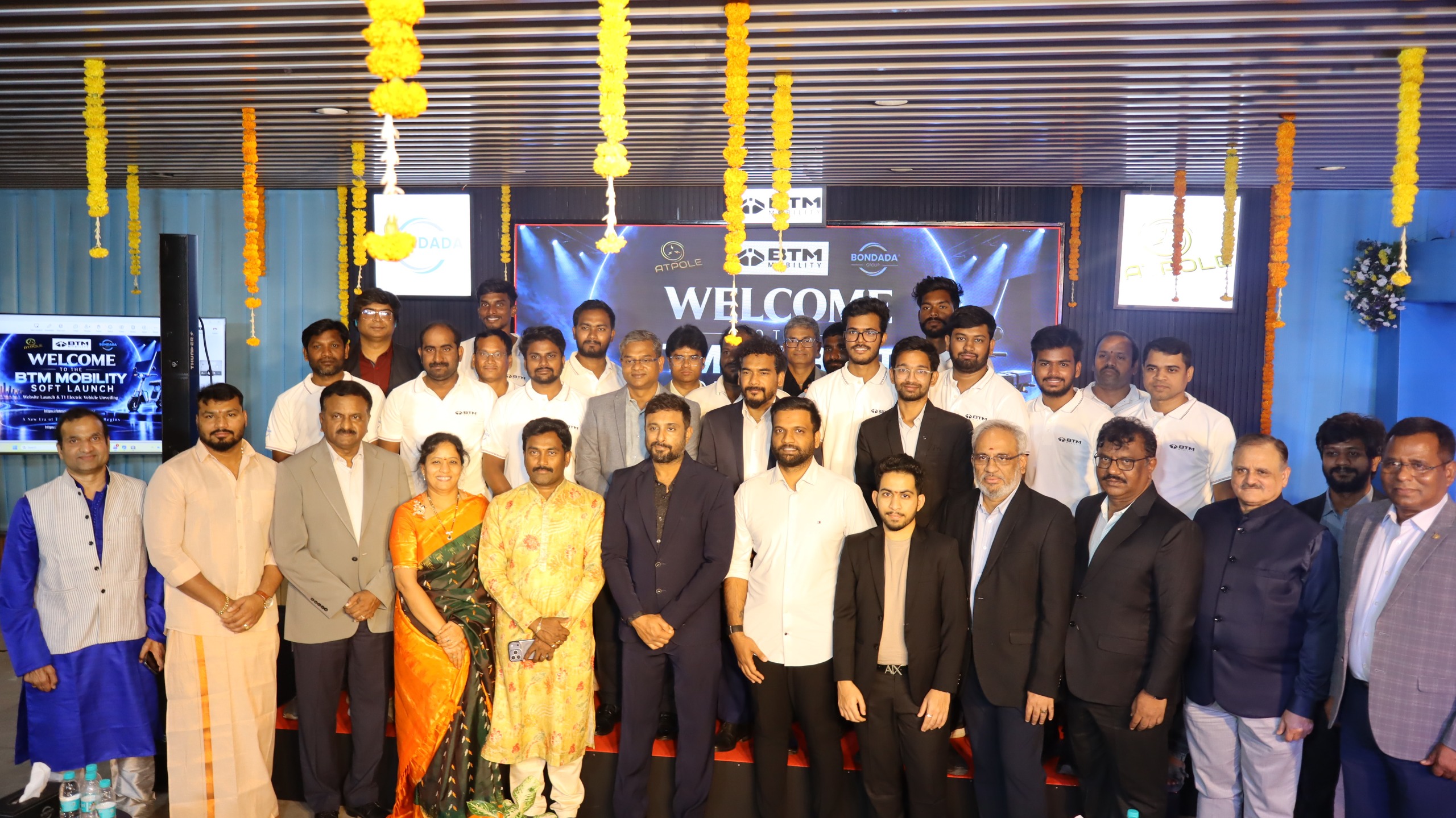
Hyderabad, October 21, 2026: Bondada Engineering Limited, through its subsidiary Atpole Technologies Pvt. Ltd., in partnership with Thuraga Motors, hosted a curtain–raiser event to launch its dedicated website and preview its upcoming T1 electric two-wheeler on the occasion of Dussehra. The initiative marks the Group’s entry into electric mobility, serving individual customers alongside businesses, fleet operators and institutional buyers with B2B mobility requirements.
Speaking on the occasion, Rear Admiral R. Sreenivas, VSM (Retd), Group Chief Executive Officer, Bondada Group, said, “Bharat’s progress is powered by farmers, workers, small businesses and delivery partners whose livelihoods depend on practical mobility. At Bondada, we believe innovation must improve everyday lives. Along with Thuraga Motors, we aim to make electric mobility more accessible through indigenous solutions designed and manufactured for Bharat, contributing to the vision of Viksit Bharat.”Mr. Jagadish Kumar Meesala, Director, Atpole Technologies Pvt. Ltd., said, “Our focus is on dependable, practical mobility for farmers, workers and delivery partners. Through Atpole Technologies, we aim to bring an indigenously developed and manufactured electric two-wheeler to market, shaped by real-world needs and supporting sustainable mobility in Bharat.”Mr. Abhiram Thuraga, Founder and CTO, Thuraga Motors, said, “Bharat needs mobility solutions suited to its roads, working pa erns and everyday transport demands. T1 reflects our focus on homegrown engineering and accessible, practical electric mobility. Developing and manufacturing for Bharat is our contribution on to a more self-reliant nation and Viksit Bharat.”
21, Oct 2026
Makani Creatives Conceptualises Limelight’s Shilpa Shetty-Led Campaign to Challenge Conventional Diamond Narratives
Mumbai, 21 October 2026: Makani Creatives, an independent creative agency, has conceptualised a new campaign for Limelight, the lab-grown diamond jewellery brand, featuring actor Shilpa Shetty Kundra and introducing the character ‘Miss Clarity’. The campaign takes a fresh approach to jewellery communication, using humour and cultural insights to challenge long-held assumptions around diamonds and the expectations associated with buying, wearing and gifting them.
At the heart of the campaign is a consumer insight: misconceptions around lab-grown diamonds can create hesitation among potential buyers. Rather than addressing these concerns through conventional product-led communication, the campaign introduces Miss Clarity, played by Diljot Kaur Chhabra, as a diamond expert who cuts through the noise and encourages audiences to reconsider what matters when making a purchase.
Through a series of films and social assets, Miss Clarity challenges familiar ideas around the cost of a proposal, the size of a diamond and the expectations surrounding wedding gifts. Shilpa Shetty Kundra brings a recognisable cultural perspective to these conversations, while Miss Clarity’s wit and directness give them an unconventional edge. The creative approach aims to make a category often associated with tradition and formality more open to everyday conversations.
The campaign extends across digital, outdoor and other media touchpoints. Its outdoor rollout includes more than 80 hoardings in Mumbai and over 500 hoardings across 45 other Indian cities, alongside digital films, lookbooks, social media assets and on-ground activations in select markets.
For Makani Creatives, the mandate was to build a distinctive brand association with diamonds while moving beyond the category’s familiar communication conventions. The work includes three digital video commercials, three lookbooks, Miss Clarity social assets, behind-the-scenes content and digital bytes.
Link: https://youtu.be/uj1kypXU8t4?si=wujRc505gVkCPqbV
“Jewellery is a category with deeply established codes, and we felt there was an opportunity to approach it from a more contemporary, conversational point of view. Instead of simply explaining lab-grown diamonds, we wanted to create a character who could challenge the assumptions surrounding them in a way people would enjoy engaging with. Miss Clarity gave us a way to bring humour and perspective into the category, while keeping the larger brand-building objective at the centre,” said Pavan Punjabi, CEO, Makani Creatives.
For Limelight, the campaign is part of a broader effort to strengthen the brand’s association with diamond jewellery and build greater consideration for lab-grown diamonds. The focus is not limited to communicating product attributes, but also on addressing the perceptions and social expectations that influence how consumers think about diamonds.
“Consumers are increasingly looking for choices that reflect their own priorities rather than simply following established conventions. With this campaign, we wanted to open up a more relatable conversation around diamonds and the assumptions people often carry when buying or gifting them. Miss Clarity helps us approach these conversations with a sense of humour, while Shilpa brings a familiar and engaging presence to the narrative,” said Pooja Sheth Madhavan, Founder and Managing Director, Limelight.
By placing a character-led narrative at the centre of its communication, the campaign reflects a broader shift in how established categories can engage consumers: not only by showcasing products, but by questioning the cultural assumptions that shape purchasing decisions.
21, Oct 2026
Gold Holds Above INR 1.47 Lakh, Silver Nears INR 2.10 Lakh as Dussehra Trading Pause Puts Bullion in Focus
Mumbai, Oct 21: Gold prices remained above ₹1.47 lakh per 10 grams in India on Dussehra, while silver traded close to ₹2.10 lakh per kilogram, as investors assessed global economic signals and the outlook for US interest rates. Trading on the Multi Commodity Exchange (MCX) remained suspended during the morning session due to the festive holiday, with the evening session scheduled to begin at 5 pm.

Representational Image
In the previous trading session on Monday, gold futures for December delivery declined by ₹618, or 0.42 per cent, to settle at ₹1,47,300 per 10 grams. Silver futures for December delivery closed largely unchanged at ₹2,09,825 per kilogram.
According to bullion.co, 24-karat gold in Mumbai was priced at ₹1,47,340 per 10 grams, while 22-karat gold stood at ₹1,35,062 per 10 grams.
Gold and Silver Deliver Strong Annual Returns
Despite recent volatility, precious metals have recorded substantial gains over the past year. Gold prices in India have risen by more than 25 per cent since Dussehra last year, while silver has outperformed the yellow metal, delivering returns of approximately 45 per cent over the same period.
The gains have kept both metals in focus among investors, although short-term movements continue to reflect changing global economic conditions and expectations about monetary policy.
US Interest Rate Outlook Weighs on Gold
International gold prices faced pressure amid elevated crude oil prices, which have fuelled concerns about inflation and strengthened expectations that the US Federal Reserve could maintain a restrictive monetary policy or consider further rate increases.
Spot gold edged up 0.1 per cent to $4,144.15 per ounce, while spot silver advanced 0.6 per cent to $57.44 per ounce.
Higher US Treasury yields have also weighed on gold, which does not offer interest income. As bond yields rise, interest-bearing assets can become more attractive relative to precious metals, potentially limiting demand for gold.
A recovery in US technology stocks has further reduced some demand for government bonds as safe-haven investments, contributing to higher Treasury yields and adding pressure on bullion.
Investors Track Inflation and Federal Reserve Signals
Market participants are closely watching US inflation trends and signals from Federal Reserve policymakers for clues about the future direction of interest rates.
Expectations of higher borrowing costs can strengthen the US dollar and raise the opportunity cost of holding gold, creating headwinds for the precious metal. Conversely, expectations of monetary easing or increased demand for safe-haven assets can support prices.
Gold has largely remained above $4,100 per ounce during October, recovering some stability after falling more than 6 per cent in September. However, the metal continues to face pressure from a stronger dollar and elevated bond yields.
Geopolitical Developments Add to Market Uncertainty
Geopolitical tensions have also contributed to uncertainty in international markets. Gold has remained sensitive to shifting investor sentiment, with its performance influenced by the competing effects of safe-haven demand, inflation concerns and expectations surrounding US monetary policy.
Despite its recent consolidation, international gold prices remain around 20 per cent below their levels before the US-Iran conflict began in late February, according to the figures cited in the market report.
With domestic futures trading set to resume in the evening session, investors are expected to monitor international bullion prices, currency movements and interest-rate expectations for further direction.
For buyers planning festive purchases, the latest prices underline the importance of checking prevailing local rates, as retail jewellery prices may vary depending on purity, making charges, taxes and the jeweller.
21, Oct 2026
Middle East Conflict Disrupts Gulf Flights; Air India, IndiGo Extend Saudi Arabia Suspensions
New Delhi, Oct 21: Air travel between India and the Gulf region continues to face disruptions amid escalating security concerns linked to the Middle East conflict, prompting airlines to cancel services and revise flight schedules despite the resumption of operations at Riyadh’s King Khalid International Airport late last week.
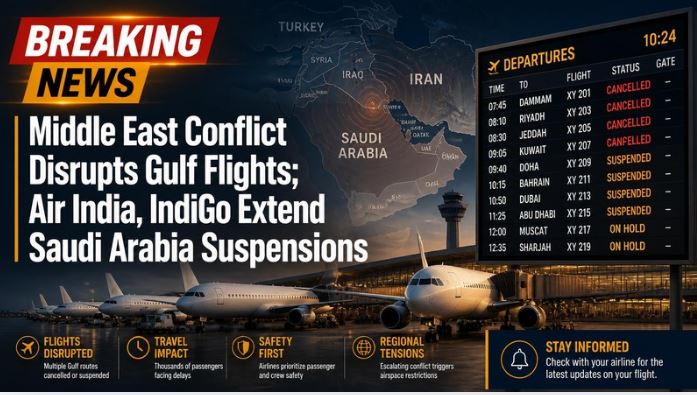
Representational Image
The latest wave of cancellations has affected passengers travelling to Saudi Arabia and other Gulf destinations, while travellers connecting to Europe and other Western countries are also facing uncertainty as airlines adjust routes to avoid potentially dangerous airspace.
The disruptions follow Houthi missile and drone attacks that have heightened concerns over the safety of civilian aviation in the region.
European Aviation Agency Extends Airspace Warning
The European Union Aviation Safety Agency (EASA) has extended its advisory cautioning airlines against operating over parts of the Gulf region, including waters around the United Arab Emirates, Bahrain, Kuwait, Oman and Qatar. The advisory remains in effect until at least November 16.
According to the agency, the presence and potential use of missiles, drones, combat aircraft and air-defence systems pose significant risks to civilian aircraft operating at various altitudes.
The warning applies to European Union airlines as well as non-EU carriers authorised to operate flights to, from or within the bloc.
In response to the heightened risks, several international airlines have suspended services to affected destinations or modified flight paths to avoid Iranian, Iraqi, Israeli and parts of the Gulf airspace.
Air India, IndiGo Suspend Saudi Arabia Services
Indian carriers have announced temporary suspensions on several routes connecting India with Saudi Arabia.
Air India and Air India Express have suspended flights to and from Riyadh, Jeddah and Dammam until October 24. The airlines are monitoring developments before deciding when normal operations can resume.
IndiGo has also cancelled flights to and from Riyadh, Jeddah, Dammam and Madinah until October 24.
Akasa Air, meanwhile, has suspended its Riyadh services until October 24 and flights to Jeddah until October 21.
The suspensions may affect both departing and returning passengers, including those travelling for business, tourism, employment and family visits.
Passengers Advised to Check Flight Status
Airlines have advised passengers with affected bookings to check the latest official updates before travelling to the airport. Travellers should also review available refund and rebooking options, as arrangements may vary depending on the carrier and ticket conditions.
Passengers connecting through Gulf airports to destinations in Europe and elsewhere are being urged to verify their entire itinerary, as changes to one sector could affect onward connections.
With the security situation remaining uncertain, airlines are continuing to assess operational risks and determine when suspended services can safely resume.
Uncertainty Continues for International Travel
The continuing disruption highlights the vulnerability of international aviation to geopolitical tensions, particularly in regions that serve as major transit corridors between Asia, Europe and other parts of the world.
Although operations have resumed at Riyadh’s King Khalid International Airport, that development has not resulted in an immediate return to normal flight schedules across the region.
For Indian travellers, the duration of the disruption will depend on security assessments, airspace restrictions and decisions taken by individual airlines. Passengers planning journeys to the Gulf or travelling through regional hubs are advised to remain alert to schedule changes and rely on official airline notifications for the latest information.
21, Oct 2026
fäm Properties connects DXBinteract to ChatGPT and Claude
Brokers and investors who add DXBinteract can ask either assistant what Dubai properties sold for, what they rent for and what hands over next
Dubai, UAE, Oct 21: fäm Properties has connected DXBinteract, the free Dubai property data platform it built, to ChatGPT and Claude.
It means brokers, investors and buyers can add DXBinteract to either assistant as a custom connector, sign in and ask in plain language about prices, rents, yields, future supply and developer delivery records.
The service is available now, and the answers come from DXBinteract’s market data, including analysis based on Dubai Land Department records.

“While listings tell you what sellers want, transaction records tell you what buyers actually paid,” said Firas Al Msaddi, founder and CEO of fäm Properties. “We built DXBinteract for the whole market, not just for fäm. Every broker gets the same data on the same terms as ours.
“Now a broker or an investor can ask ChatGPT or Claude to check a price against real transactions, including the prices we quote.” Questions brokers and investors can ask include:
- Which Dubai communities offer the highest rental yields and strongest price growth?
DXBinteract ranks areas by gross rental yield, year-on-year price growth and transaction volume. It leaves out areas with too few transactions to give a reliable figure.
·Is this apartment overpriced? DXBinteract gives an indicative value and a low-to-high range, based on the area’s median price per square foot and recent sales of similar-sized units. It is a reference point, not a formal valuation.
·Does this developer deliver on time? DXBinteract shows how many of the developer’s projects were handed over on time, how many late and how many are still overdue, with the median delay in days. Every developer is scored the same way, Nordic by fäm included.

“An investor should be able to ask one question and understand not just what a property costs, but how it compares with the market, what returns it could generate and what risks lie ahead,” said Fateh Al Msaddi, founder of DXBinteract and COO of fäm Properties. “We’ve built the intelligence, and now AI makes it easier for everyone to use.”
Users can also compare up to six communities, side by side, and see how much of an off-plan project has sold and how far its construction has progressed.
They can track upcoming handovers and future supply, and work out gross rental yield, payback and mortgage affordability, including the cash needed upfront. Setup steps for both assistants can be found (available) at dxbinteract.com.
20, Oct 2026
SPIRO launches its first 100 electric bikes in Ghana, marking a new milestone in its pan-African expansion
ACCRA, GHANA, 20 OCTOBER 2026 – Spiro, Africa’s largest electric mobility company, today officially launches its first 100 electric motorcycles in Ghana, marking a new milestone in its expansion across the continent. The launch introduces the Ekon 450 M1 V3 electric motorcycle to the Ghanaian market, alongside Spiro’s battery-swapping solution, designed to make electric mobility more affordable, accessible and practical for everyday riders.
Designed to meet the everyday mobility needs of African riders, the Ekon 450 M1 V3 offers an alternative to conventional petrol-powered motorcycles. Combined with Spiro’s battery-swapping technology, the motorcycle is designed to help riders reduce their daily operating costs, with Spiro riders saving up to USD 2 per day compared with conventional petrol-powered motorcycles. Rather than waiting for a motorcycle to recharge, riders can exchange a depleted battery for a charged one at a Spiro battery-swapping station in just two minutes, allowing them to get back on the road with minimal interruption. This integrated approach is particularly relevant for commercial riders, for whom fuel expenses and time on the road directly affect their daily earnings.

Kaushik Burman, CEO-Mobility of Spiro, said: “Ghana represents a major opportunity for electric mobility, with a rapidly growing two-wheeler market and increasing demand from commercial riders and delivery fleets. With the launch of the Ekon 450 M1 V3, we are bringing a solution that addresses two key barriers to adoption: operating costs and access to charging infrastructure. Our first 100 motorcycles mark the beginning of our ambition to make electric mobility accessible at scale across Ghana.”
The launch, held under the theme “The First 100: Powering a New Era of Mobility in Ghana”, features a symbolic key handover to the first ten riders, followed by a convoy of 100 Spiro electric motorcycles through Accra. The event concludes at Accra Mall, where visitors can discover the Ekon 450 M1 V3 through product demonstrations, test rides and live demonstrations of Spiro’s battery-swapping technology.
Mr Maxwell Dodd, Managing Director of Spiro Ghana, said: “Today, Ghana’s electric mobility journey shifts into gear. With our first 100 Ekon 450 M1 V3 motorcycles hitting the road, we are showing riders that cleaner, more affordable transport is no longer a vision for the future, but a reality they can experience today.”
Following the launch, Spiro will continue engaging with prospective customers through test rides and product demonstrations across Greater Accra, supporting the progressive adoption of electric motorcycles in the Ghanaian market.
Building on its recent USD 270 million equity funding round and additional USD 18 million in debt financing from the Africa Go Green Fund, Spiro is accelerating its expansion across the continent. With the ambition to establish a presence in 20 African markets, the company is preparing to enter new countries, including Ethiopia, Malawi, Mali and the Democratic Republic of Congo, as it continues to scale its electric mobility ecosystem.