


21, Mar 2023
P&G India awards ‘P&G Shiksha Betiyan Scholarship’ to 29 girls pursuing STEM courses in Khammam District, Telangana
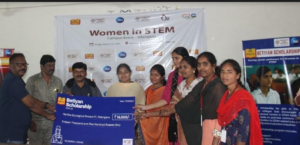
Telangana, March 21, 2023: Procter and Gamble India (P&G India) today recognized and awarded ‘P&G Shiksha Betiyan Scholarships’ to 29 girls pursuing STEM (Science, Technology, Engineering, and Mathematics) courses at Haritha Ecological Private Industrial Training Institute (ITI) in Paloncha, Khammam District, Telangana. Dignitaries present at the event handed over the scholarships to the students.
During the event, the students at the ITI engaged in a workshop on career opportunities for women in STEM and used art and craft to creatively showcase their vision of a dream career in STEM. Further, the students also participated in a group discussion to deliberate on women’s representation in STEM fields, barriers and myths that contribute to underrepresentation, and ways of countering it to enhance the representation of women in STEM.
This marks the first year of the P&G Shiksha Betiyan Scholarship Program in Telangana, where 80+ girls pursuing STEM courses at ITIs and Engineering Colleges across the state have been awarded the scholarship. These girls qualified for the scholarship basis merit along with financial challenges.
Shubhrangsu Dutta, Plant Head – Hyderabad Manufacturing Site, P&G India said, “At P&G, our ambition is to create an inclusive world where access to equal opportunities to learn, grow, succeed, and thrive are available to everyone. Data indicates the underrepresentation of women in the STEM curriculum, which further translates into underrepresentation in manufacturing, engineering, and technology roles in the workforce. With P&G Shiksha Betiyan Scholarship, our endeavor is to increase female representation in STEM roles, by paving the way for change and facilitating equal access to education, busting barriers, and shattering myths that perpetuate a glass ceiling for women in STEM.”
The ceremony is part of the first-of-its-kind ‘Women In STEM Caravan’ – a multi-city roadshow organized by P&G India together with the Centre For Civil Society – that aims to advocate for women’s participation in STEM roles. The roadshow, officially recognized as a part of the G20 events, commenced in New Delhi on February 11, on International Day for Women and Girls in Science, with a high-powered ‘Women in STEM: Policy, Practice & Interventions’ roundtable conference focused on policy provisions, ground realities, the role of corporates and direct interventions for advancing women’s representation in STEM opportunities. It then moved to Nalagarh in Himachal Pradesh, where 60 girls pursuing STEM courses were recognized and awarded with the P&G Shiksha Betiyan Scholarship. The roadshow will now move to its concluding destination in Maharashtra.
P&G India in partnership with Centre For Civil Society launched the ‘P&G Shiksha Betiyan Scholarship’ program last year, as part of its flagship CSR initiative P&G Shiksha, to enable STEM careers for girls. Under this program, P&G India is providing financial aid and mentorship to girls aspiring to pursue STEM education. The program has so far supported hundreds of women with the aim of breaking barriers and enabling the entry of skilled women professionals into manufacturing, technology, engineering, and other STEM-related jobs.
Further, the Company’s skincare brand Olay is working to shrink the gender gap in STEM careers with its ‘STEMTheGap’ initiative, by spotlighting the biases and stereotypes that hold back progress and enabling young girls to get interested and excited by STEM subjects. P&G India also has a long-standing partnership with NITIE and hosts the annual ‘P&G-NITIE Equality Summit’ to spark conversations on issues that perpetuate a glass ceiling for women, uncover deep-rooted stereotypes that still exist, and motivate change specifically linked to equal representation of women STEM and Supply Chain.
- 0
- By Rabindra

21, Mar 2023
Clove Dental reaffirms its commitment to Oral Health as it celebrates its 12th Anniversary
Worldwide, 3.5 billion people suffer from oral diseases, affecting 3 out of 4 individuals with tooth decay, gum diseases, or tooth loss. This prevalence continues to increase due to factors such as the availability of affordable high-sugar content food and beverages, inadequate exposure to fluoride, and poor access to oral health care services (WHO Global Oral Health Report 2022).
On this ‘World Oral Health Day’, it is prudent to remember that the global burden of oral diseases is constantly on the rise and not getting the attention it deserves, especially in developing countries. Moreover, the scientific literature is constantly bringing to light new connections between oral health and general health which is a matter of concern to healthcare providers. On this day, it will be imperative to draw the attention of the Government, the regulatory bodies, and other Dental Associations to work cohesively towards finalizing and implementing the much-awaited ‘National Oral Health Policy’, which can focus on the consequences of poor oral health of the masses and plan to provide affordable healthcare at all echelons.
Clove Dental, the largest network of dental clinics in India, has been committed to elevating Oral Health since its inception in 2011. With more than 350 clinics, at 26 cities in the country, Clove Dental has conducted over 1.5 million treatments in the last twelve years. The company’s commitment to quality treatments is evident in its rigorous compliance with safety and hygiene protocols, including quality checks on sterilization, radiation control, and spore testing in every clinic. Clove Dental’s focus on patient care and ethical treatments has made them pioneers in the Indian dentistry landscape. Employing the largest number of dentists in the country and with expansion plans to hire another 1000+ dentists in the next 3 years; Clove Dental will be one of the largest Oral healthcare providers in the world. With state-of-art materials, equipment, technologies, and superspecialists; Clove Dental is redefining Oral Health. Dental Surgeons at Clove Dental are being inculcated with the value system of ‘primum non-nocere’ (no over-treatments) and a clear focus on exceptional patient service, adhering to the highest principles of commitment, professional conduct, and ethical values.
Clove Dental employs the largest number of dentists from the best dental colleges and brings them together through the common thread of ‘focus on patient care and ethical treatments. Further, the regular quality audits of the clinics and the treatments, help maintain professionalism.
With a robust team of reputed senior specialists providing multi-specialty treatments, and in-house training in Clove culture of ‘Patient first’; the company has earned a great name in handling complex clinical cases. Advanced specialty treatments like adult incognito Orthodontics, guided template Implantology, and smile designing with emphasis on cosmetic treatment, forms the backbone of the professional setup in every Clove clinic.
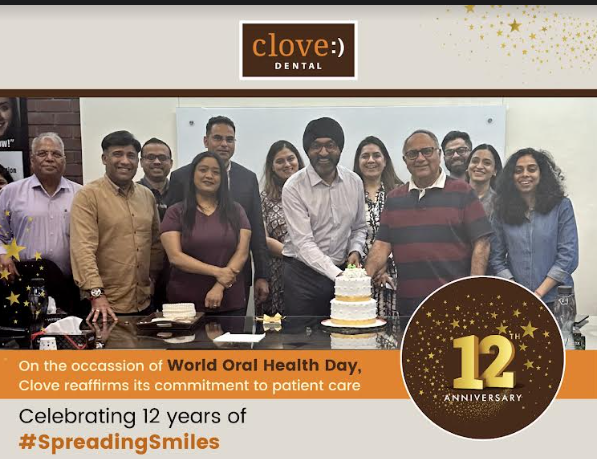
Clove Dental celebrating their 12th anniversary is reinforcing their commitment towards #SpreadingSmiles and promote oral hygiene across the geographies. The commitment to expand to 1000 clinics in the coming five years and at the same time organizing 750 camps every month with a view to creating awareness is one of the most positive steps towards this goal.
As compared to developed countries, the awareness level in India towards Oral Health is woefully inadequate. Only 4-6% population seek opinion or treatment for dental diseases as compared to 24-40% in other countries. “Let my countrymen seek dental check-ups once every year and let my medical colleagues emphasize the importance of this to their patients so that they enjoy great Overall Health”, says Lt General Dr. Vimal Arora the Chief Clinical Officer of Clove Dental. General Arora, who is the former Director General of the Dental Services of the Army Dental Corps, acknowledges that “while a lot has been done towards improving the oral health of the masses, however, there is still a long way to go to communicate the right message across the country and emphasizes the need to inculcate good oral health habits in the daily routine of every individual for enjoying best Health”.
21, Mar 2023
CYK Hospitalities Launches Ndori in NOIDA

NOIDA, March 21, 2023. CYK Hospitalities, a leading end-to-end F&B consultancy, recently executed a project and helped open a brand-new European theme-based cafe, Ndori, in Sector 104, NOIDA, Uttar Pradesh. The company has rendered its services from ideation to execution in bringing out this café. This is 4th project that the consultancy has completed in NOIDA.
As part of its services to Ndori, CYK Hospitalities provided conceptualization, menu engineering, chef trials, chef hiring, plating, business plan, recipe curation, and beverage menu curation. Various exquisite international cuisines are served at the café, as well as an innovative and never-before-seen mocktail menu that provides a whole new dining experience. The mocktails made here by mixologists are fresh and artisanal, exciting consumers’ taste buds. Among the best innovations offered by the cafe are Jalebi Chat, Lemon Classic Ice Tea, Garden Pesto Pizza, Mango Habanero Spiced Cottage Cheese Pizza, Tropical Bounty Shake, Fungi Cheese Pizza, Okinawa Cold Coffee, Paneer Tikka Lasagna, Spaghetti Bolognese, Irish Coconut Cold Coffee, and Macchiato. A wide range of menu items can cater to various tastes and palates, including plates of pasta and burgers.
The European-styled café offers mouthwatering dishes and gives a feeling of eating on the beautiful streets of a European city. Simranjeet Singh, Director of CYK Hospitalities, said, “We studied the Noida market for the
proprietors of Ndori and saw a void in the distinctive cuisine they wished to provide with the highest quality standards and flavor. As a result, our team of specialists skillfully created the cafe’s menu and designed the special European theme café. We worked closely with the owners from project conception to completion.”
“The owners of Ndori were clear in their thought right from the beginning to recreate the European style café and to offer the best dishes with a hint of twist to the menu. The execution of the entire café went smooth as we exactly knew what the owners wanted”, adds Pulkit Arora, Director, CYK Hospitalities.
On the opening of a brand-new European theme-based cafe, Ndori, Rishabh Gupta and Prateek Nagar, Partners in Ndori, said, “It’s been a great journey working with CYK Team, together with them we curated an outstanding restaurant, with their guidance and impromptu availability. It has been easy in managing difficulties in operations, will positively want to endure this amalgamation of efforts for our further ventures.”
With expertise in ‘Brand Building’ for FnB brands, CYK Hospitalities serves various clients, including restaurants, hotels, and cafes, providing consultation and ongoing support. Additionally, they assist with location mapping and leasing, networking, hiring, and training. CYK is currently engaged in several additional F&B projects in India. The company has worked with well-known brands and food juggernauts, including Starbucks, Burger King, Twisting
Scoops, House of Candy, The Belgian Fries, Fat Tiger, Made in Punjab, Giani’s, Baskin Robbins, Urban Deck, House of Wok, Pandan, Theobroma and several more, to support the development of their brands and the marketing of their goods.
20, Mar 2023
We need a Global Alliance to have Equity in Diagnostics in PPP Model says Dr Sowmya Swaminathan at CII’s Conference
Hyderabad, March 20, 2023: CII-Southern Region organized its Annual Regional Meeting for the year 2022-23 and a conference on South India@100 with the theme “GOING BEYOND BOUNDARIES” today in Hyderabad
During the Session on ‘Creating a Healthier World in 2047 – Role of India’
Ms Shobana Kamineni, Past President, CII & Executive Vice Chairperson, Apollo Hospitals Enterprise Ltd while moderating the session mentioned about how India has emerged as a leader in life sciences sector in the recent years specially during the pandemic times. Ayushman Bharat scheme is bringing a strong positive change across the country. We have witnessed solidarity in global action while fighting the pandemic and we need better co-ordination in future she said.
Dr Roger Glass, Director, Fogarty International Center, National Institute of Health, USA said that there is a need to improve the human health through compassion and service. He mentioned that there is a need to be strengthen primary healthcare and scale up the healthcare reach which could create massive positive impact.
Dr Soumya Swaminathan, Former Chief Scientist, WHO & Chairperson, M S Swaminathan Research Foundation said that healthcare sector contributes about 5% global CO2 emissions and all healthcare providers should commit to go green. All possible measures should be taken to become Net zero within a stipulated time period. India as a country need to work on disease prevention and health preparedness Pandemic has taught us this lesson. There is a huge inequity in diagnostics and patients need to be treated for the right disease. There is a need for Global Alliance in this area and we need to work on a mission mode in PPP model. India has proved that scale could be achieved in a short span and we need simpler short term treatments. As responsible leaders, we need to have better strategies to channelize credible communication with all stakeholders.
18, Mar 2023
Indian Dental Association (IDA), Deccan branch; celebrates the World Oral Health Day, by hosting a free dental & medical camp!
Hyderabad, March 2023: Indian Dental Association (IDA), Deccan branch; is hosting a free dental and medical camp, in collaboration with Our Lady of Good Health Church, on Sunday 19th March 2023, from 10.00 am to 5.00 pm at Roch Memorial High School and Church, AC Guards, Hyderabad, to mark the World Oral Health Day on March 20th, 2023. As part of the camp free doctors’ consultations for dental and general medicine, along with basic diagnostic services, will be extended. Interested persons can walk in for the check-up
16, Mar 2023
Osmania Medical College, launches the first of its kind Skill Lab in Telangana!
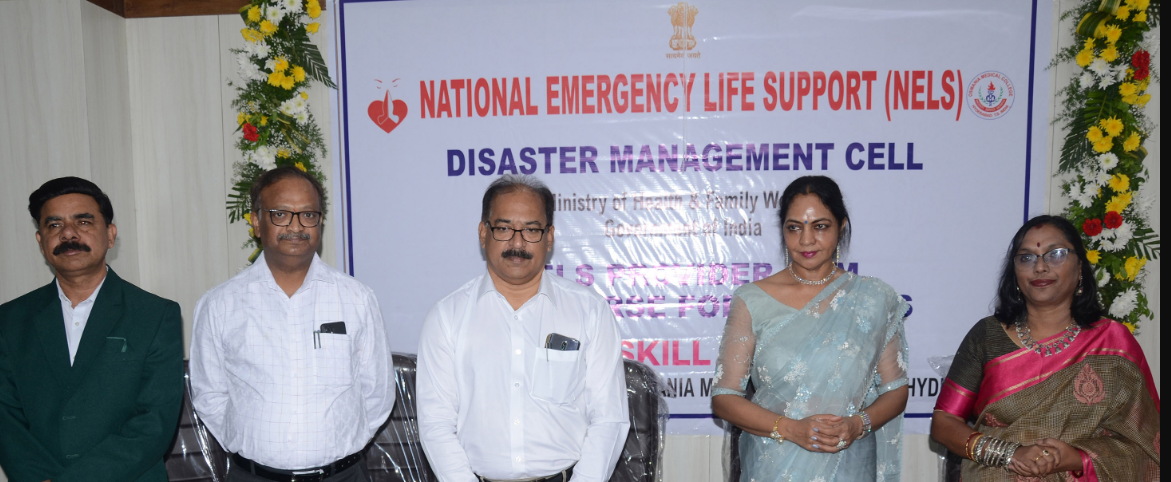
Hyderabad, March 16th, 2023: The iconic Osmania Medical College, launched the first of its kind ‘Skill Lab’ in Telangana; at its campus in Koti, today. Chief Guest Dr. K Ramesh Reddy, Director of Medical Education, Telangana; inaugurated the Skill Lab, a much-awaited milestone in the history of the institute. Dr. P Shashikala Reddy, Principal, of Osmania Medical College; presided over the function. Dr. Anuradha Medoju, Regional Director (MofH & FW), and Dr. Pandu Naik, Nodal Officer, Skill lab; graced the occasion. Skill Lab is a prototype demo and learning facility for healthcare professionals to fine-tune their clinical skills, prior to real-life application.
The Skill Lab is funded by the Department of Human Research, Ministry of Health and Family Welfare, Government of India under National Emergency Life Support. It will cater to nearly 500 undergraduates and postgraduates and several hundred para-medical technicians every year. The Lab is a valuable platform for medical professionals to practice procedural skills like Trauma management, Basic life support, Paediatric emergency, Obstetrics emergency, and acute cardiac management.
Dr. K Ramesh Reddy speaking on the occasion said, in our training programs the hands-on skills which we need to tackle emergency cases are really lacking in many of our colleagues, it is something that is very important. When we were students these types of labs were not available and literally we used to get trained in the casualty. It was a different attitude at that time. The education of the younger generation has shifted from skill learning to bookish learning, they are more dependent on volumes of literature available to them. They are not showing interest in the treatment of the patients, which will make a lot of difference in the days to come in the overall medical management. We need to take this very seriously and all the departments, especially the clinical departments should ensure proper training of the students in emergency skills. This is one area that is dynamic and a few minutes could make or break the situation. One has to be very active and try to tackle so that we will be able to save a life and give a quality life which is equally important. If it is delayed, the individual goes into a vegetative state, imagine the torture for the family. Here the skill labs will make a lot of difference. As per our university program, all the House Surgeons are trained in Basic Life support. But it’s a very short structured program, how many are concentrating on it and moreover, this course is conducted at the end of the course, because it becomes mandatory, it needs a certificate. That shouldn’t be the way, what I suggest is this training should be done at the time when they finish their final year and are ready to go for an internship. Because the internship is the real training ground for all of us and that is where especially management of trauma, the critical care skills, need to be structured in such a manner that respective departments train the students so that they will be able to put their skills to proper use. The Government of Telangana is very serious about mass training of CPR. You would have seen our Hon’ble ministers Harish Rao garu and KTR garu, conduct the inaugural program for CPR at different levels. The genesis of these skill labs was to not only train the doctors, paramedics, and Asha workers involved in the medical system but also police and sanitary workers should be trained in these skills. The state government is procuring mannequins so that programs can be done in different sections. For that this training is very important because if you don’t have proper trainers this program will be a total waste. We need to have properly trained trainers available in good numbers in every nook and corner of the state, so that even the mass CPR program can be done for common masses too on regular basis. Off late, we are seeing young people dying, they are just collapsing and dying, and some of them could benefit from a proper CPR at the right time. A similar Skill Lab facility will be shortly made available at Gandhi, Kakatiya Medical College, Nizamabad, and Siddipet, also shortly will seek sanction for all the 17 medical colleges in the government sector in Telangana. Government of India has given a structured training program, without any deviation from that, a proper training program has to be held. Even the upgradation of Training the trainer’s program should be done at regular intervals, which is also important. Ensure that initially, we cover all the areas which have no established medical colleges, all the medical professionals and workers from the neighborhood areas can be brought and trained there. The training programs should be for small groups so that proper skills can be imparted, such training will go a long way. The level of training should also differ, with a higher level of training for doctors and simpler training for medical workers. This particular center In Osmania will be a role model for other centers in the days to come.
Speaking on this occasion, the Principal, of Osmania Medical College Dr. P Shashikala Reddy said, Our students will now be able to proficiently manage surgical, cardiac, and obstetric emergencies with greater efficiency and skill. Those undergoing training will be awarded a nationally recognized training Certificate from this facility, which is mandatory for every Indian Medical Graduate. With this facility, Osmania students will be one of the best in dealing with emergencies.
A five-day Training of Trainers is being hosted for the first time in Telangana; from 13th to 17th March 2023; for Medical, Surgical, Paediatric, Anaesthetic and Obstetrics specialty doctors from Govt Medical College, Nizamabad; Gandhi Medical College, Guntur Medical College, and Kakatiya Medical College.
16, Mar 2023
What is Health Insurance? Read to know the Benefits and Types!

The importance of paying heed to our health has become more apparent in recent years. It has drawn attention to the fact that while it is indispensable to be prudent about our lifestyle to lead a healthy life, we still be faced with unwelcome situations like illnesses, accidents, natural disasters, etc. And it is during such unforeseen health emergencies that health insurance becomes vital.
Unfortunately, health emergencies don’t just drain us emotionally but financially as well. And when we or our families go through a health crisis, we should be able to access the best healthcare facilities without having to worry about finances. We be financially secure in the face of such unforeseen circumstances with the protection of health Insurance.
Health insurance policies provide a wide range of coverage to the insured against surgical and medical costs.The purpose of health insurance is to assist you in meeting medical and related expenses during a health emergency ensuring that you don’t have to deplete your savings. In addition to direct hospitalization expenses, a comprehensive health insurance plan includes benefits such as pre and post-hospitalization charges, ambulance coverage, and critical illness coverage amongst others. A good health insurance plan can provide your family with lifelong comprehensive medical coverage and peace of mind. It also has the added benefit of tax savings.
The various kinds of health insurance policies available are:
Individual Health Insurance – This policy provides insurance coverage for individuals. It can be purchased for yourself, your spouse, dependent children, and your parents.
Family Floater Health Insurance Policy -It covers the entire family under a single floater sum insured. Here the sum insured floats over the family members covered under a policy.
Critical Illness Insurance –A Critical Illness policy provides coverage for serious illnesses such as heart attack, cancer, paralysis, and a few others depending on factors like the company you are purchasing the policy from and so on. If the policyholder is diagnosed with any of the diseases listed in the policy, the insurer will pay a lump sum amount to the policyholder. This money can be used to pay off debt, cover treatment costs, replace lost income, or make necessary lifestyle changes for recovery.
Group Health Insurance–It is a type of Health Insurance policy that covers a group of people within a single policy. A Group Health Insurance plan provides equal insurance coverage to all members of a group, regardless of age, gender, occupation, or socioeconomic status. Employees are typically provided with Group Health Insurance as part of their pay package. This type of plan can also include group members’ spouses, children, and dependent parents.
Speaking on the importance of health insurance, Mr.Shreeraj Deshpande, Head – Health Business, SBI General Insurancesays “Besides the benefit of having financial security to care for your loved ones, a health insurance plan is extremely useful in combating medical treatment expenses. Lifestyle diseases are on the risemaking it critical to buy health policies at a young age. It serves as a financial cushion in the event of a medical emergency, allowing you to focus on having access to quality healthcare and treatment rather than worrying about managing the necessary funds.”
You can visit the insurer’s office, buy online, etc. and choose from a range of health insurance policies to get the finest protection at an affordable price.
15, Mar 2023
7 Leading Global Companies That Are Working to Increase Access to Safe Blood
Access to safe blood is a critical issue around the world, as millions of people require transfusions each year. However, not all countries have reliable systems for collecting and distributing blood, which can lead to shortages and safety concerns. Fortunately, several global companies are working to address this issue and increase access to safe blood. In this listicle, we will highlight 10 companies that are making a difference in this important area. From developing innovative technologies to organizing blood donation campaigns, these companies are committed to saving lives and improving public health.
- Novartis: Novartis is a global pharmaceutical company that is committed to increasing access to safe blood in developing countries. The company has partnered with blood centers and national health authorities in countries like Ghana and Kenya to improve blood safety and availability.
- B Medical Systems: B Medical Systems is a global manufacturer and distributor of medical cold chain solutions. Based in Hosingen, Luxembourg, the company was established in 1979, when the WHO approached Electrolux to provide a solution to store and transport vaccines safely around the world. Across its three business portfolios of Vaccine Cold Chain, Medical Refrigeration, and Blood Management solutions, the company offers 100+ products. B Medical Systems’ products are used across 140+ countries and have an installed base of more than half a million products worldwide. The company has been a long-trusted partner of global humanitarian organisations such as UNICEF, the WHO, the Red Cross, and more and has extensive experience working with Ministries of Health, hospitals, research organisations, universities, and blood transfusion companies across the world. B Medical Systems delivers its products worldwide and has subsidiaries in the USA and India.
- Pfizer: Pfizer is another pharmaceutical company that is working to increase access to safe blood. The company has partnered with organizations like the International Federation of Red Cross and Red Crescent Societies to provide training, resources, and equipment to blood centers in developing countries.
- Abbott Laboratories: Abbott Laboratories is a global healthcare company that is focused on improving access to safe blood in developing countries. The company has developed a range of diagnostic tools and technologies that help to improve blood safety and reduce the risk of transfusion-transmitted infections.
- Roche: Roche is a leading healthcare company that is committed to improving access to safe blood around the world. The company has developed a range of blood screening and testing technologies that help to ensure the safety and quality of donated blood.
- Grifols: Grifols is a global healthcare company that specializes in the production of plasma-derived medicines and other blood products. The company is committed to improving access to safe blood and has implemented a range of programs and initiatives to support this goal.
- CSL Behring: CSL Behring is a global biopharmaceutical company that is focused on developing and producing innovative therapies for rare and serious diseases. The company is committed to improving access to safe blood and has implemented a range of initiatives to support this goal.
13, Mar 2023
Aims to Empower Women, ‘Pink Healing Hands’ women’s Group Launched in New Delhi on Int’nl Women’s Day
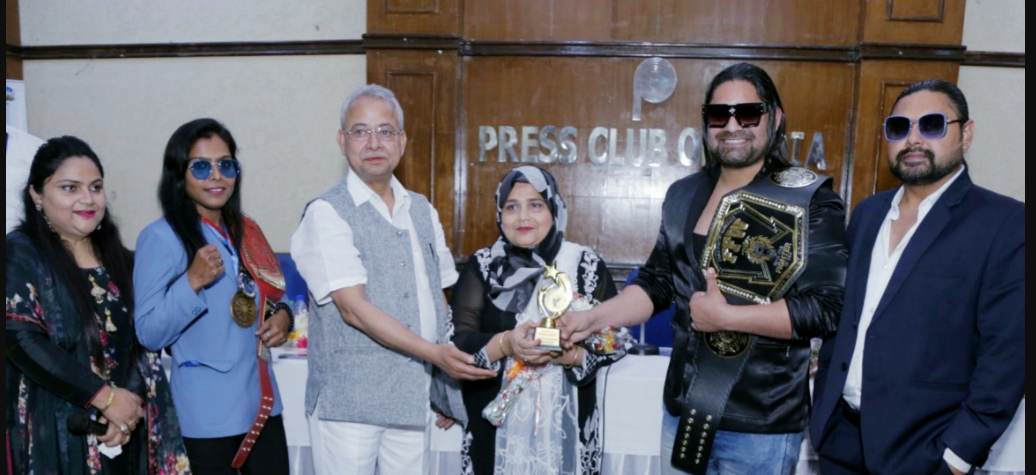
Pink Healing Hands, an all-women group for women was launched on International Women’s Day to celebrate women by Chief Guest, Mr. H. N Sharma, Legal Expert, and Ms. Shabina Khan, founder and entrepreneur at Press Club of India on March 11, 2023.
Mr. Veer Sachin Aadavanshi, Founder Chairman, FFW Group of Company, Prof. Jaseem, Chair Person, Narendra Modi Study Kendra, and Mr. Habib Akhtar, Veteran Journalist were special guests at the program
Founder Ms. Shabina Khan launched the Group to the world and gave an insight into the group’s modus operandi. She said, “The group is bound to empower women in all possible respect from health to self-defense to self-reliance and creating a better world for girls and women. We thrive to make our surroundings better for women.”It’s her Motive is a women’s exclusive event that commits to highlighting and uplift female talent.
She further said, “We feel proud to announce the launch of our latest initiative focused on women’s empowerment, safety, and self-defense. As an organization committed to promoting gender equality and ending violence against women, we believe that every woman should feel safe and confident in her ability to protect herself. Our capabilities begin where your imagination ends. You educate the world if you educate one woman.”
Prof. Jasmen, Chairperson, of Narendra Modi Study Kendra, said, “Through this new program, we will be offering a range of resources and services designed to support women in developing the skills and knowledge they need to stay safe and defend themselves against any potential threats. Our goal is to empower women to take control of their own safety and well-being, and to provide them with the tools they need to succeed.”
The group will be working on four verticals namely Women’s Empowerment, Women’s Self-Defense, Legal Support to Women, and Health and Hygiene Awareness.
Mr. H. N Sharma and Mr. Veer Sachin Aadavanshi promised to provide help and support to the group in all possible ways. At the program, the women and the organizations working for women’s cause were awarded ‘Women Excellence Award2023’ for their excellence and contributions. You educate a woman you educate the world.
13, Mar 2023
AIIMS Director Prof, M Srinivas flags off 8th Edition of Racefor7
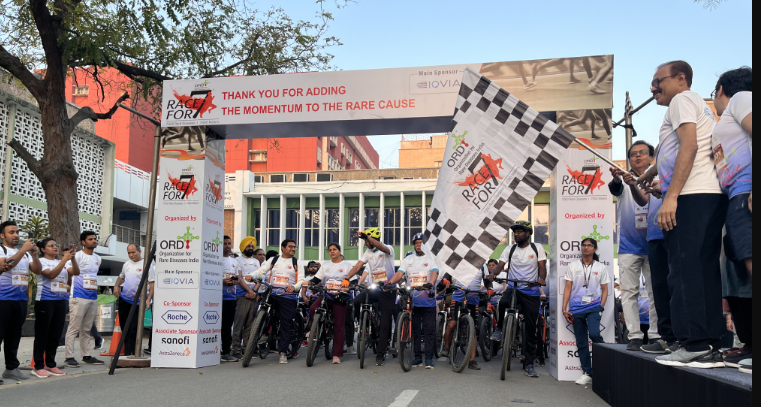
New Delhi, March 13, 2023: The Organization for Rare Diseases India (ORDI) hosted its eighth edition of Racefor7® on Sunday to raise awareness about rare diseases in India. The event was flagged off by AIIMS Director Prof, M Srinivas, Chief Guest flagged off the event along with medical doctors from AIIMS and other hospitals. Participants joined the run/walk/bicycle to support the rare diseases cause at the AIIMS campus.
Team ORDI works to connect rare disease patients, policymakers, the medical fraternity, and Health Care Industry through various initiatives to sensitize the public at large to acknowledge rare diseases. A major initiative in this regard is our Annual Awareness Run – RACEFOR7. Race for 7 is an awareness run organized by Organization for Rare Disease India (ORDI) in line with World Rare Diseases Day. Racefor7 symbolically represents the 7000 rare diseases.
Every year ORDI organizes Racefor7®, the largest and longest rare disease awareness campaign in India with support from various Patient Support Groups, Clinical Research, Pharmaceutical, Diagnostic Support Companies, Physicians, Hospitals, Volunteers, and Runners with an objective to raising awareness among Public, Health Care Providers, Policymakers, Patient Organizations, and other stakeholders. As part of Racefor7, short marathons/walk/bicycle of approx. 7 KM are organized across multiple cities in India spread across February and March significantly boosting awareness and education on rare diseases.
Dr. Madhulika Kabra and Dr. Neerja Gupta on behalf of the Division of Genetics, Department of Paediatrics, AIIMS New Delhi comment, “Awareness about Rare diseases and their challenges among the general public is important along with other stakeholders like the medical fraternity, government, Industry, media etc. It is heartening to know that awareness is increasing globally and In India. Events like ORDI- Race for 7 shall make a huge impact that has brought multiple stakeholders together. We at AIIMS feel privileged for hosting this event and thank ORDI for giving us this opportunity and shall be happy to collaborate with ORDI to host this event in future. Our special thanks to all the participants for joining the event and expressing their solidarity to Rare disease patients and caregivers. Declaration and implementation of the rare disease policy by the Government of India is a major step, helping many families with better management of affected individuals. Specific treatment is presently available for about 5% of disorders, treatment being prohibitively expensive for most patients. There is a need to focus on research in the area for therapeutics for rare diseases and drug development in India.”
Speaking about the event, Mr Prasanna Kumar Shirol, Co-founder and Executive Director of ORDI, he, said “It is inspiring to see so many people come out to support the cause of rare diseases. The Rare Diseases community extends its heartfelt appreciation to all the participants.”
“Racefor7 is conceptualized and developed to raise awareness and build an annual Program to engage all the stakeholders concerned with Rare and Genetic Disorders.The 8th Edition focuses on access to treatments and building quality of life for 70 million people affected with Rare Diseases.”
Further, he thanked Government of India and the State Governments for initiating treatments for Rare Diseases patients under National Policy for Rare Diseases, 2021 at the Government Hospitals. He said, “120 patients are getting treated in the first phase and there is long way to go in this journey of treatment, clinical trials, drug discovery and drug development, Insurance, find funding for both medical and non-medical support, continuous therapies, special education, care giving and building Quality of Life for patients and families suffering from Rare Diseases”.
All participants received a Tee Shirt with Bib mentioning a Rare Diseases Name. In addition, a medal and e-certificate were given to the participants along with sumptuous breakfast.


