


28, Apr 2025
Logitech Leads in Sustainable Innovation with Full Move to Paper Packaging
National, April 28 2025 – Logitech today announces significant progress in eliminating plastic clamshell packaging from its hallmark mice categories, with the transition to paper now nearly complete. The magnitude of this initiative is estimated to remove 660 tons of plastic and reduce 6,000 tons of carbon dioxide from the air, equivalent to eliminating over 37 million single-use plastic water bottles annually. The global transition to paper packaging across tens of millions of products continues across various retailers, with expected completion dates by the end of 2025.
“Shifting away from plastic clamshell packaging marks a significant step toward our goal of completely eliminating single-use plastics from our portfolio. This milestone is about 90% complete and is our largest packaging endeavor to date,” said Delphine Donné, GM of the Personal Workspace Solutions business group at Logitech. “Before this transition, we successfully eliminated 1,800 tons of packaging material by implementing design modifications in other areas across our packaging. Every step forward brings us closer to saying goodbye to single-use plastic.”
A custom study conducted in partnership with GlobeScan’s Healthy & Sustainable Living report identified that 61% of consumers globally say they are interested in choosing recyclable packaging in the coming year. Single-use plastics and mixed-material packaging contribute to significant waste, as well as confusion about recyclability. While Logitech advocates 100% recycling of all materials, current waste management methods across geographical areas fall short. Instead, Logitech is proactively eliminating single-use plastics at the source.
“People increasingly value and actively seek out packaging less harmful to the environment. Using paper instead of single-use plastic enhances the customer experience by making packaging easier to open, visually appealing, and informative,” said Bliss Buter-Thompson, head of packaging at Logitech. “At the same time, we can optimize the weight and size of the package and lower the product carbon footprint – all in alignment with meeting our customers’ needs.”
Nearly 80% of a product’s environmental footprint can be influenced during its design process, impacting material choices and efficiency. As part of its Design for Sustainability initiative, Logitech has implemented packaging solutions that minimize environmental impact, including an FSCTM-certified paper packaging program introduced in 2019 and a Single-Use Plastics Policy introduced in 2021. The company also removed plastic shrink wrap in its Logitech G gaming division, and implemented recyclable materials like paper pulp hang tabs and wood fiber bags for many products.
- 0
- By Team

28, Apr 2025
Recycled PET Sector Fully Compliant with New FSSAI Guidelines for Food Contact Use: APR Bharat
New Delhi, April 28, 2025: FSSAI’s recent guidelines on use of r-PET as a food contact material, is set to give a huge fillip to circular economy in India. This guideline also aligns well with The Plastic waste Management Rules 2016 (as amended from time to time), which mandates the use of 30 per cent recycled content in rigid plastic packaging and is already effective from April 1, 2025.
Commenting on the recently released guidelines by FSSAI, Shailendra Singh, Director General of Association of PET Recyclers (Bharat) – APR Bharat, said, “It is a significant move by the regulator and is expected to fast track the adoption of recycled PET in food-contact packaging in a big way thereby giving a huge boost to the country’s circular economy.”
According to Mr. Singh, a combined investment of Rs 7500-8000 crores has been made into world class PET recycling plants, capable of making the safest grade of r-PET to be used as a food contact material. This investment is estimated to generate 10,000 new jobs and also benefit the rag picker community of over 2 million people who collect post-consumer PET bottles and send them for recycling.
The industry, which has already created a capacity of close to 4 lakh MT (commissioned), is hopeful of taking it up to 7.5 lakh MT by 2027 and further increase the installed capacity to 11 lakh MT by 2030. These capacities are being built across the country.
The current mandate requires using 30 per cent recycled content for rigid packaging, and there is more than adequate capacity available to meet emerging demand for r-PET, he said and also added that with the guidelines being notified by FSSAI a significant chunk of capacities will also be made available very soon, thereby enabling producers and brand owners to meet their targets of use of recycled PET content.
28, Apr 2025
UGRO Capital Limited – Q4’FY25 Results
Hyderabad, April 28, 2025: UGRO Capital, a leading DataTech NBFC focused on MSME lending, today announced its robust financial performance for the quarter and financial year ended 31st March 2025. Continuing its journey toward becoming the largest small business financing institution driven by data and technology, the Company reported Assets Under Management (AUM) of INR 12,003 crore as of March 2025, reflecting a 33% year-on-year growth.
UGRO Capital recorded its highest-ever quarterly loan origination of INR 2,436 crore, compared to INR 1,554 crore in the same quarter last year — a growth of 57% YoY and 16% QoQ. Its Emerging Market LAP (formerly the Micro Enterprises business) also witnessed strong performance, with disbursements reaching INR 669 crore for Q4’FY25, up from INR 203 crore for Q4’FY24, marking a 230% YoY and 23% QoQ increase. UGRO’s embedded finance platform, MSL, continued its upward trajectory, crossing an AUM of INR 700 crore as on March 31, 2025. This reflects strong traction and reaffirms UGRO Capital’s commitment to empowering small businesses.
In terms of financials, Total Income for FY25 stood at INR 1,442 Cr (up 33% YoY), with FY24 reporting INR 1,082 Cr (up 58% from FY23). Additionally, the Company reported a Profit After Tax (PAT) of INR 144 Cr for FY25, marking 21% YoY growth. For Q4’FY25, PAT was reported at INR 41 Cr, indicating 24% YoY growth.
On the liability side, UGRO Capital mobilized its highest-ever debt of INR 1,500+ crore during Q4’FY25, bringing its total debt to INR 6,904 crore as of 31st March 2025. These robust quarterly figures, along with GNPA/NNPA metrics of 2.3%/1.6% on the total AUM, underscore the sterling quality of UGRO’s portfolio, highlighting a well-structured risk management approach. UGRO Capital’s distinctive co-lending approach, off-book accounts for 42% of AUM, and its strategic partnership with 17 Co-lending partners, 59 lenders, over 10 green anchors, and 730+ GRO partners, facilitates data-driven, tailored financial solutions for more than 150,000 MSMEs across India.
Speaking on the performance, Mr. Shachindra Nath, Founder and Managing Director of UGRO Capital, said, “Our FY25 performance underscores the strength of our DataTech-driven business model and the progress we have made in reaching underserved MSME segments. With record quarterly originations and robust AUM growth, we remain on track to expand our Emerging Markets portfolio, driving both yield enhancement and greater financial inclusion. Our diversified liability mix, and industry-leading collection efficiency demonstrate the resilience and scalability of our risk-management framework. As we set ambitious targets for FY26, backed by continuous innovation and a growing branch network, UGRO Capital is more committed than ever to empowering MSMEs across India with tailored, high-impact financial solutions.”
28, Apr 2025
Juniper Networks Powers Next-Gen User Experience and Data Protection at St Luke’s ElderCare Singapore
INDIA– APRIL 28, 2025 – Juniper Networks, a leader in secure, AI-Native networking, today announced that St Luke’s ElderCare (SLEC) has implemented its AI-Native Networking Platform across SLEC nursing homes, active ageing centres and senior care centres, with the rollout expected to be completed by end of 2025. Leveraging purpose-built AIOps, Juniper’s AI-Native networking solutions helped SLEC unify wired, wireless, WAN and firewalling with a common cloud to modernize and secure SLEC’s network, while providing superior user experiences for its staff, elders and IT administrators.
Transforming elderly care with a future-ready network
With Singapore’s rapidly aging population and a forecast of around one in four Singaporeans to be aged 65 years or older by 2030, SLEC has expanded from four to over 30 locations in the last 25 years, with more care centres and nursing homes on the horizon. To support this growth, the organization required a highly secure, scalable and AI-native network to deliver seamless operations, protect sensitive healthcare data and enhance the overall user experience.
With the need for a centralized, cloud-first approach, SLEC transitioned from an IT infrastructure with 17 disparate systems to a fully integrated Juniper AI-native network. The deployment of Juniper wired access, wireless access, WAN and firewall solutions – all driven by Mist AI ensures highly-secure, measurable and high-quality connections with end-to-end visibility into the user experience, while network and security operations are managed through Juniper Mist Cloud for scalability and performance even as SLEC’s growth continues. The solution has allowed SLEC’s lean IT team to manage the organization’s expanding infrastructure with greater ease, reducing downtime and maintenance costs.
This transformation has delivered significant improvements, including enhanced operational efficiency, seamless connectivity across its care centres and nursing homes while strengthening cybersecurity to ensure a secure and resilient network.
Enabling the secure implementation of innovative elderly care services
With Juniper’s high-performing AI-native network and advanced threat detection capabilities, SLEC was able to securely introduce advanced innovations like virtual reality for immersive travel experiences, advanced robotics for more effective rehabilitation and a smart transport management system to enable real-time tracking of its vehicle fleet to optimize routes and ensure the safe transportation of elders between care centers and their homes.
Digitally empowering the future of elderly care
The successful implementation of Juniper’s AI-native networking solutions coupled with its robust security capabilities, has allowed SLEC to safely and confidently adopt emerging innovations, reinforcing its commitment to providing safety, well-being, and an enhanced quality of life for Singapore’s elderly population.
Supporting Quotes:
“St Luke’s ElderCare’s goal is to provide holistic, high-quality care experiences that enhance the well-being of Singapore’s elderly community. By modernizing our network with Juniper’s AI-Native Networking Platform, we have transformed how we deliver care – ensuring seamless connectivity, strengthening cybersecurity and enabling innovative services for our elderly. This transformation has also empowered our caregivers with the tools they need to provide more personalized and efficient care, allowing us to future-proof our care services.”
Dr Alan Wong, Chief Operating Officer, St Luke’s ElderCare
“As we face the challenges of an aging population in Singapore, we are proud to partner with St Luke’s ElderCare (SLEC) on its journey of transformation and innovation. Juniper’s AI-Native Networking Platform will enable SLEC to cater progressively to the growing demands of elder care through the seamless scaling of its infrastructure. We look forward to continue playing a key role in SLEC’s progress they enhance their services, creating a secure, future-ready environment that benefits caregivers, staff and elders alike.”
– Perry Sui, Area Vice President, ASEAN, Hong Kong & Taiwan, Juniper Networks
28, Apr 2025
FUJIFILM India Unveils High-Performance Additions to Its A4 Printer and Multifunction Device Range
New Delhi, 28th April 2025: FUJIFILM India, a leader in printing excellence, has officially launched a new range of Four A4 Multifunction Devices and Two A4 Printers at the Dehradun Partnership Summit 2025, comprising four multifunction devices and two printers available in both colour and monochrome options. Engineered to deliver high performance in compact space, the new series is tailored for space-conscious environments such as retail counters, offices, and customer-facing service points. Available in the market from April 25, 2025, these new devices combine productivity, efficiency, and advanced features, making them ideal for businesses that demand performance without sacrificing workspace.

Equipped with the newly introduced Fast Boot Mode technology, users can use the products within seven seconds after power-on, and the control panel can be activated within one second from low power mode. Printing is enabled almost simultaneously, and they are ideal for users who have customers waiting for the printouts at receptions or counter operations. These products provide the same operability and major functions as A3 multifunction devices to contribute to business process optimisation.
Mr. Koji Wada, Managing Director, FUJIFILM India, stated, “At FUJIFILM India, we are committed to delivering innovative products and solutions that embody our Group purpose of ‘Giving our world more smiles.’ By blending diverse ideas, unique capabilities, and extraordinary people, we aim to create solutions that bring joy and smiles to the world. We are constantly innovating to provide high-performance, and reliable printing solutions that cater to the growing demands of businesses in India.”
Mr. Priyatosh Kumar, Associate Director and Head of Graphic Communications and Device Technology, FUJIFILM India, further commented, “These devices offer high-speed printing, secure document handling, and seamless print management capabilities, making them ideal for a wide range of business environments. With Fast Boot Mode and automatic duplex scanning, we are confident that these solutions will significantly improve business productivity and contribute to smoother operations. We are excited to bring these advanced solutions to India, where they will help businesses optimize their processes.”
The A4 multifunction devices, Apeos C4030 / C3530 and Apeos 5330 / 4830, streamline operations to support diversified workstyles. For example, scanned data can be converted to PDF format with OCR (optical character recognition) processing, allowing easy search and edit on the Excel or Word documents. Users can also print from anywhere with Universal Print by Microsoft, a cloud-based print solution eliminating print servers and printer drivers’ installation.
28, Apr 2025
Covestro Leads the Way in TPU Advancements for Supercritical Fluid Injection Technology
Covestro has announced the launch of Desmopan® FLY, an advanced Thermoplastic Polyurethane (TPU) series specifically engineered for supercritical fluid (SCF) foaming technology. This high-performance material solution addresses the growing demand for lightweight, performance, and sustainable footwear design while expanding possibilities across sport gears, furniture and electronic products.
Desmopan® FLY features an advanced formulation that enables superior supercritical fluid dispersion during the molding process, resulting in uniform fine-cell structured foams with outstanding mechanical properties. For footwear applications, this translates into midsoles with superior cushioning and energy return properties, and long-lasting comfort performance. The absence of chemical blowing agents and crosslinking additives ensures recyclability of the midsole; when combined with soft TPU outsole, the whole sole system supports circular economy initiatives.
“Leading sports brands are driving unprecedented demand for materials that combine elite performance with strong environmental credentials,” says Wilson Chan, Head of Business Development TPU Asia Pacific at Covestro. “Desmopan® FLY brings exceptional lightweight and resilience properties while maintaining dimensional stability and durability throughout the product lifecycle. Its optimized processing enables efficient production through automated injection molding, allowing brands to create high-performance, recyclable footwear that meets demanding consumer expectations.”
In a pioneering industry move, Covestro has installed the advanced SCF injection foaming system at its TPU Asia-Pacific R&D Center in Taiwan. This state-of-the-art facility enables Covestro to provide comprehensive R&D support and rapid application services for customers’ specific requirements, demonstrating Covestro’s ongoing commitment to advancing footwear material solutions and supporting the industry’s evolution.
“Our investment in the SCF injection foaming system marks another milestone in Covestro’s continuous innovation journey,” explains Dr. Christian Haessler, Head of Global Innovation TPU at Covestro. “This in-house capability enables us to optimize TPU material properties with precise SCF processing parameters. By being among the first in the industry to integrate this advanced technology within our R&D center, we can effectively combine TPU material and SCF injection expertise to accelerate customers’ development from concepts to commercial production.”
The combination of SCF foaming technology and Desmopan® FLY delivers an energy-efficient manufacturing process that reduces the overall carbon footprint. The automated injection process integrates multiple components in a single step, enabling substantial production efficiency while maintaining consistent, high-quality output.
Desmopan® FLY is now commercially available, supported by Covestro’s comprehensive technical expertise and advanced in-house facilities. This integrated material and technology platform empowers sports brands in their journey toward advanced footwear solutions, combining performance, sustainability and production efficiency.
28, Apr 2025
University of Southampton Delhi Hosts Vibrant Academic Discovery Day in Hyderabad, Bringing World-Class Education Closer
Hyderabad, 28th April 2025: Bringing the promise of world-class education closer home, the University of Southampton Delhi, one of the UK’s top Russell Group universities and India’s first UGC-approved international university, hosted an exclusive Academic Discovery Day in Hyderabad. The event attracted a large gathering of enthusiastic students and parents, all eager to explore how globally ranked undergraduate and postgraduate programmes can now be pursued without leaving India. Students had the opportunity to explore a range of flagship undergraduate courses, including BSc Accounting & Finance, BSc Economics, BSc Business Management, and BSc Computer Science, as well as leading postgraduate offerings such as MSc International Management and MSc Finance.
During the event, Dr. Vishal Talwar, Chief Operating Officer, University of Southampton Delhi, delivered an insightful talk on the University’s unique Triple Helix model, which integrates academic excellence, industry engagement, and global opportunities. He highlighted how this model ensures that students gain the skills, experience, and global perspective necessary for enhanced employability. Vishal also emphasized the strong connections the University has with global employers, which provides students with access to a wide range of career opportunities both in India and abroad.
The event also featured personalised academic profile reviews, career counselling sessions, and curriculum briefings conducted by senior faculty and advisors from the University of Southampton Delhi. Students gained insights into the global employability focus of each programme, the availability of merit-based scholarships, on-campus accommodation plans, and the opportunity to undertake part of their degree at the University’s UK campus.
Highlighting the city’s strategic importance, Dr. Vishal Talwar, Chief Operating Officer, University of Southampton Delhi, said, “Hyderabad is a thriving academic and innovation hub, and we’re thrilled by the enthusiasm shown by students here. The city represents the aspirations of a new generation that values global exposure without compromising local accessibility. With our presence in India, we aim to empower students from Hyderabad and beyond with globally recognised qualifications, practical learning, and access to international networks. We see tremendous potential here and look forward to nurturing future leaders from this region.”
The University of Southampton Delhi is set to commence its inaugural academic session in August 2025 at the International Tech Park in Gurgaon. The new campus will feature modern infrastructure including a student hub, collaborative spaces, a comprehensive library, IT labs, and research areas – all designed to foster innovation, learning, and global employability.
Ranked among the Top 100 universities globally (QS World University Rankings 2025) and Top 125 for graduate employability, the University of Southampton is also one of the Top 10 UK universities most targeted by leading employers. To support meritorious Indian students, the University has introduced scholarships such as the Delhi Presidential Scholarship and Future Talent Scholarship for undergraduate and postgraduate programmes. Applications for the first Delhi cohort are currently open, with an early bird deadline of 28th April 2025.
28, Apr 2025
Advancements in Endoscopic Microsurgery and CyberKnife Radiosurgery for Brain Tumors
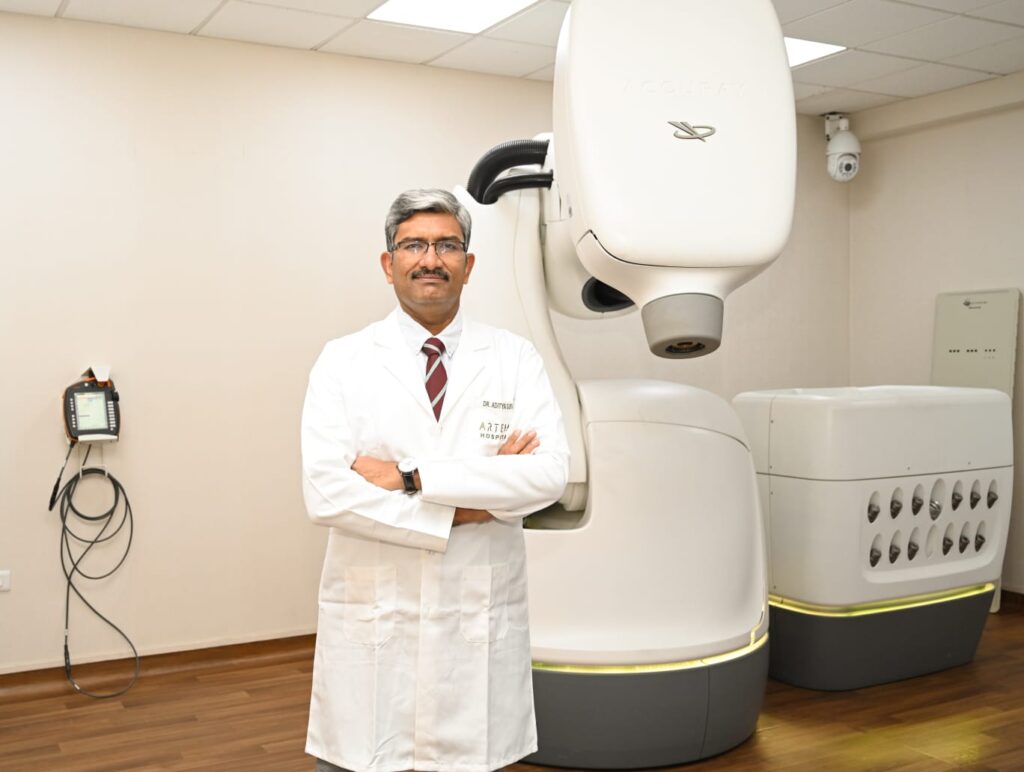
By-Dr. Aditya Gupta, Director – Neurosurgery and Cyberknife, Artemis Hospital, Gurugram
The field of neurosurgery has undergone a revolutionary transformation over the past decade, particularly with the emergence of advanced endoscopic microsurgical techniques and the evolution of radiosurgical technologies such as CyberKnife. These innovations have significantly enhanced the precision, safety, and efficacy of brain tumor treatment, offering patients new hope with fewer complications and faster recovery.
Traditionally, brain tumor surgery involved large craniotomies—removal of a significant portion of the skull—to access and remove the tumor. While effective, such procedures were associated with considerable risks including infections, blood loss, and prolonged recovery times. With the introduction of endoscopic microsurgery, the approach has become minimally invasive, involving the use of high-definition endoscopes inserted through small openings, either via natural orifices like the nose or through tiny incisions in the skull.
This technique has proven especially effective in the treatment of pituitary adenomas, craniopharyngiomas, colloid cysts, intraventricular tumors, and other deep-seated brain lesions. Using angled lenses and precise instrumentation, we can now reach regions of the brain that were once considered high-risk or inoperable, all while preserving surrounding healthy tissues.
endoscopic endonasal surgery for tumors located at the base of the skull are performed through the nasal cavity, eliminating external scars and significantly reducing hospital stay. Patients typically experience faster recovery, reduced postoperative pain, and a quicker return to normal activities.
Another significant advancement has been the integration of neuronavigation systems—akin to a GPS for the brain—which guide the surgeon with real-time, 3D imaging. Combined with high-powered microscopes and fluorescence-guided techniques, we can achieve maximal tumor resection while minimizing the risk of neurological deficits.
While surgical resection remains the gold standard for many brain tumors, not all tumors are amenable to surgery. For lesions located in eloquent areas of the brain or for patients who are unfit for surgery due to age or comorbidities, CyberKnife radiosurgery offers a non-invasive, outpatient alternative.
CyberKnife is a revolutionary robotic radiosurgery system that delivers highly focused beams of radiation to the tumor with sub-millimeter accuracy. Unlike conventional radiation therapy, which is delivered over multiple sessions, CyberKnife can often treat brain tumors in one to five sessions with minimal impact on surrounding tissues.
This technique is particularly effective for treating vestibular schwannomas (acoustic neuromas), meningiomas, brain metastases, arteriovenous malformations, and even recurrent or residual tumors following surgery. One of the standout features of CyberKnife is its ability to track the tumor in real time, adjusting the radiation beams as the patient moves slightly—this ensures continuous accuracy without the need for a rigid frame, offering unmatched patient comfort.
At Artemis Hospital, we have successfully treated hundreds of patients using CyberKnife, either as a standalone therapy or in conjunction with surgery. The synergy between microsurgical tumor debulking and radiosurgical precision allows us to optimize outcomes even in complex cases.
The integration of minimally invasive surgery with robotic radiosurgery represents the future of neuro-oncology. With continuous advancements in imaging, instrumentation, and intraoperative monitoring, we are now better equipped than ever to tackle tumors once deemed untreatable.
For patients and their families, these technologies translate into better quality of life, reduced hospitalization, and long-term disease control. The focus is no longer just on survival—but on healing with dignity, functionality, and minimal disruption to life.
28, Apr 2025
New Insights from Achilles Survey Showcase Momentum in Sustainable Supply Chains
Mumbai, India – 28 April 2025 – A new global survey from Achilles highlights where companies stand in their sustainability journey, revealing growing strategic intent but uneven execution when it comes to embedding sustainability across complex supply chains.
The 2025 Global Sustainability Priorities Survey, based on responses from over 1,600 companies, including buying organisations, as well as suppliers shows that 63% of businesses now consider sustainability a board-level priority. Yet only 19% report full visibility into sustainability performance across their supply chains.
Key insights from the report:
- 63% say sustainability is a board-level priority.
- Just 19% have full visibility into supply chain sustainability.
- Only 20% apply consistent sustainability standards across all suppliers.
- 38% say sustainability is not yet a key factor in supplier selection.
- Reputational risk is now the most cited concern linked to poor sustainability performance—surpassing cost and operational risks.
The findings indicate a growing recognition of sustainability as a business imperative – driven by regulation, investor expectations, and reputational risk. The findings also reflect the operational challenges many organisations face when trying to align suppliers to consistent standards.
“The intent is clearly there, but the ability to act at scale is still developing,” said Paul Stanley, CEO of Achilles. “This survey provides valuable benchmarking for companies looking to understand where they are and what gaps need closing to make sustainability work end-to-end.”
Achilles supports organisations in building more transparent, ethical, and sustainable procurement ecosystems through supplier audits, ESG assessments, and its Ethical Business Programme.
“Across APAC, the pace of regulatory change, investor scrutiny, and customer expectations is accelerating. Organisations are recognising that sustainability risk is business risk. As companies in the region look to align diverse supplier bases to global expectations, the ability to make informed decisions based on verified data is becoming a core enabler of resilience and growth,” said Smitha Shetty, Regional Director – APAC, Achilles Information.
“Organisations are increasingly aware that sustainability performance must extend beyond internal operations to include suppliers. That means having the right data, the right partnerships, and a scalable framework to drive change,” added Dr Stanley.
28, Apr 2025
NDTV Marathi Manch Highlights Maharashtra’s Blueprint for Development and Security
28th April, 2025 – As NDTV Marathi celebrates its first year, it hosted a flagship event—NDTV Marathi Manch—bringing together political leaders, policymakers, entrepreneurs, and experts to review Maharashtra’s development trajectory and collectively envision its future. The event served as a dynamic platform for dialogue on governance, infrastructure, public health, environmental challenges, entrepreneurship, and national security.
Mahayuti leaders committed to a farm loan waiver ahead of the elections, leading to ongoing questions directed at the government over its implementation. Speaking on the matter, Chief Minister Devendra Fadnavis said, “60-70 per cent of farmers in the state are under financial stress. We help farmers in the state with Rs 12,000 annually. We help them through insurance in various ways. If we consider all these things, we are helping farmers”.
As part of the program – ‘Nava Gadi, Navam Rajya’, Maharashtra’s newly appointed ministers, including Public Works Minister Shivendraraje Bhosale, Public Health and Family Welfare Minister Prakash Abitkar, and Minister of State Meghna Bordikar, shared insights into their respective departments and addressed current challenges.
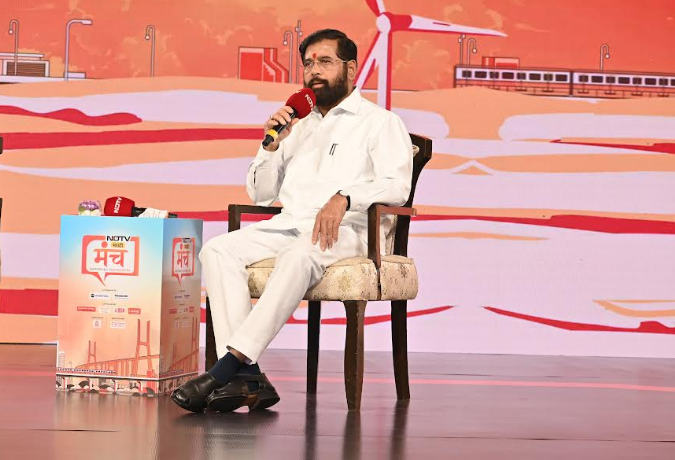
One of the standout sessions featured an engaging conversation with acclaimed filmmaker Om Raut and veteran actress Pallavi Joshi. Known for his cinematic successes such as Tanhaji: The Unsung Warrior and Adipurush, Raut offered a behind-the-scenes look into his creative journey and his perspectives on Indian cinema. Joshi, whose illustrious career spans decades with roles in Woh Chokri and the recent The Kashmir Files, brought a rich actor’s perspective to the discussion.
In another thought-provoking session, NDTV Marathi Manch welcomed a panel of popular Marathi digital creators: Rohit Mavle, Siddhesh Lokare, Saurabh Bhosale, and Ganesh Vanare. These influencers shared their personal journeys—marked by perseverance, creativity, and community engagement. They emphasized how their content serves not just to entertain, but to preserve and promote the cultural richness of Maharashtra, from traditional foods to local festivals and values. Their presence highlighted the powerful role of digital media in shaping cultural identity and inspiring the next generation.
The conclave also shed light on Mumbai’s ongoing transformation, with insights from BMC Commissioner Bhushan Gagrani and Mumbai Metro Rail Corporation MD Ashwini Bhide. Commissioner Gagrani outlined the BMC’s continued efforts in providing vital civic services—from water and healthcare to transportation—ensuring Mumbai remains functional and resilient. Bhide shared a significant update on the city’s mobility landscape, announcing that Phase 2 of the expansive Metro-3 project is likely to commence in May 2025, marking a crucial step toward improving urban connectivity.
Minister Shivendraraje Bhosale addressed speculation surrounding Deputy Chief Minister Eknath Shinde’s visits to his native village in Satara, saying, “It is incorrect to say that Mr. Shinde is displeased whenever he visits Daregaon. These are narratives built on screen. We meet him regularly, and he warmly receives us. If he were truly upset, such meetings wouldn’t occur. Visiting one’s village should not be seen in a negative light.” Additionally, Minister Meghna Bordikar echoed this sentiment, stating, “I have never observed any signs of discord. Discussions about tensions between Chief Minister Devendra Fadnavis and Deputy Chief Minister Eknath Shinde are purely media-driven.”
Union Minister Nitin Gadkari addressed the economic development and emphasised the critical role of infrastructure, which contributes 22–24% to the GDP. “Maharashtra leads in infrastructure, services, and agriculture. We must continue building on this momentum,” he stated.
Health Minister Prakash Abitkar also announced a major initiative in the public health sector, highlighting the lack of regulation in diagnostic testing laboratories across the state. “Until now, there’s been no formal monitoring mechanism for these labs. We are drafting legislation to inspect and regulate their functioning. Irregularities will not be tolerated,” he said. The law is expected to be tabled in the upcoming legislative session.
The event also turned its attention to national security in light of the recent terrorist attack on Hindus in Pahalgam, Jammu and Kashmir, resulting in over 26 fatalities. RSS leader Prabhakar Sunil Ambekar condemned the attack, stating, “This was an attempt to disrupt the peace and development of the region. The culprits must face severe consequences to ensure such acts are never repeated.”
On environmental issues, MPCB Chairman Siddhesh Kadam provided updates on the steps being taken to combat urban pollution, a growing concern across Maharashtra’s metro cities. In the business and innovation segment titled ‘Let’s Startup Maharashtra’, industry leaders such as Indranil Chitale (Chitale Industries), Vilas Shinde (Sahyadri Farms), and Vidyadhar Anaskar (MSC Bank) delved into the opportunities and challenges facing startups in the state.
Fisheries and Port Development Minister Nitesh Rane presented the transformative potential of the Vadhan Port, asserting that the project would generate over 1 lakh direct and 25,000 indirect jobs, significantly boosting Maharashtra’s maritime economy.
On the infrastructure front, Charudatta Deshmukh, Planning and Design Head of Navi Mumbai International Airport, announced that the airport’s first phase will be inaugurated in August. He underscored its global benchmark-setting design and capabilities. The event also featured inspiring stories of emerging career paths. Girish Kamble, CEO of Vayudoot Education Pvt. Ltd., offered guidance on becoming a commercial pilot, while Rajendra Chodankar, Chairman of RRP Electronics, highlighted India’s growing potential in the semiconductor sector.


