


13, Sep 2024
AGS Transact Launches Prepaid Card Platform for IndianOil’s XtraPower Fuel Program
Hyderabad, September 13, 2024……Malleeswari Sunkara, a homemaker, a talented athlete from Sunkarapalem, East Godavari District, Andhra Pradesh, and currently residing in Secunderabad, has made Telangana proud by excelling at the just concluded World Masters Athletics Championships held in Gothenburg, Sweden.
A sprinter, she competed in the 45 to 49 years age category.
Malleewari and Kruti Kadakia are the only two athletes from Telangana out of 129 represented India and they competed in the 45 to 49 years age category.
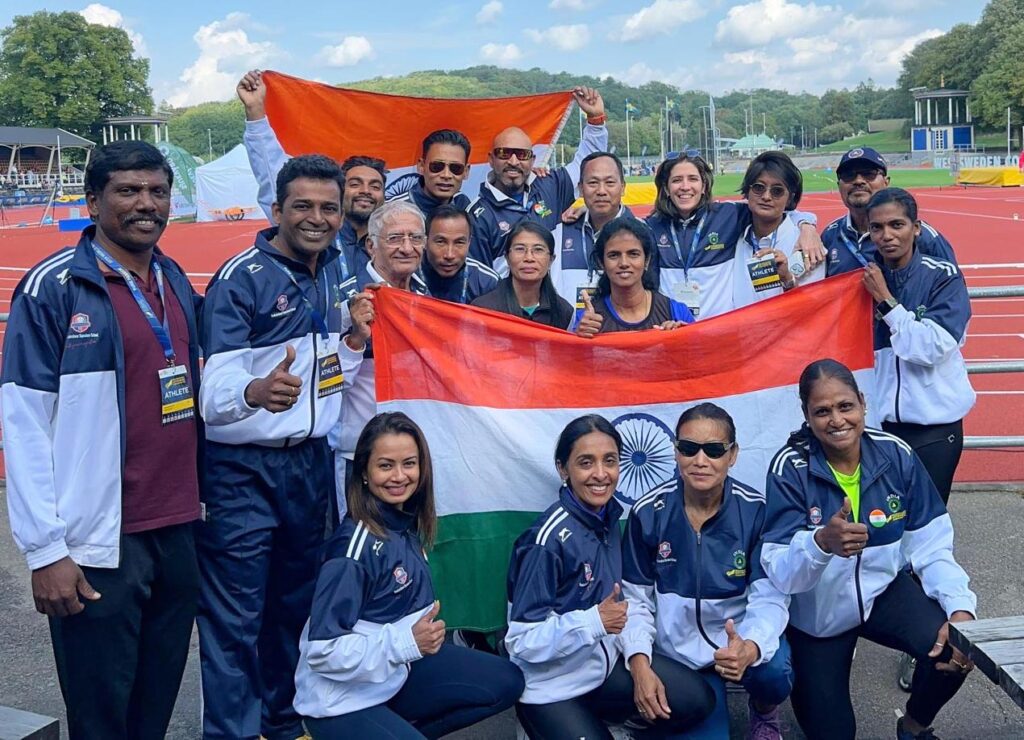
The World Masters Athletics Championships are the biennial championships for masters’ athletics events held for athletes 35 years of age or older. Its mission is to promote premier athletic events for athletes thirty-five and over, of all abilities and encourage their passion for active healthy competition, global camaraderie, and celebratory spirit. The event had 8,000 participants from 118 nations. Among them were 129 athletes from India, ranging in age from 35 to 102. Some of the participants were former Olympians and spoke about the level of the competition.
The competition included various athletic events and the heptathlon, distributed across three stadiums, each suited to its respective events. Notably, one of these venues was the historic New Ullevi Olympic Stadium. However, all the events were ultimately held at the Slottsskogsvallen Stadium.
The event also saw several former Olympians participating show the level of competition.
Malleeswari, who has won numerous gold medals in national competitions, marked her international debut with an impressive performance. She competed in the 100m, 200m, and 400m events, securing 42nd, 46th, and 30th world ranks, respectively. Additionally, she was part of the 4×100 relay team that secured 7th rank and the 4×400 relay team that finished 6th.
Malleeswari credits her success to her coach, Shefil, who has been instrumental in her training and preparation. “Coach Shefil has been a constant source of guidance and support throughout my journey,”
She also expressed her gratitude to her co-athlete and friend, Kruti, who has been a pillar of support throughout her journey. “Kruti has been with me every step of the way, from travelling to Sweden to competing in the events,” and I’m grateful for her presence in my life.”
“I’m thrilled to have represented India on the global stage and achieved these remarkable rankings,” said Malleeswari, beaming with pride. “This was my first international competition, and I’m eager to continue pushing myself to new heights.”
Malleeswari’s achievement is a testament to her dedication, hard work, and the support of her coach and fellow athletes.
Kruti Kadakia, a freelance interior designer and resident of Hyderabad says that it was her first World Masters Championship. My first event was the 800 meters at the New Ullevi Olympic Stadium. To my surprise, I saved 12 seconds off my previous time, finishing in 3:02 minutes for 800 meters and ranking 28th in the world. Next, I had the 1500 meters at Björlanda Stadium. The 1500 meters turned out to be my best race yet—I overcame all the challenges I’d faced during practice, from fatigue at 1000 meters to breathing difficulties, and finished strong in the last 100 meters, shaving 17 seconds off my time and ranking 19th in the world.
I also had the honour of competing in the 4×400 meters relay with Team India at Slottsskogsvallen Stadium. Having raced in all three stadiums, this one felt different—the surface required more effort to run and accelerate. Our fabulous Team India finished 6th in the world, completing the race in just under 4 minutes and 47 seconds, she shares.
Kruti says it is an excellent forum to engage elder athletes. The government must also encourage Indians of all age categories to lead a very active lifestyle.
- 0
- By Rabindra

13, Sep 2024
Immerse Yourself in the World of Film, Media & Creative Arts at Celebrate Cinema 2024
Whistling Woods International (WWI), proudly presents Celebrate Cinema 2024, an exclusive event designed to offer a hands-on experience in the world of film, media and creative arts. This year’s event is set to be an exciting two-day celebration, offering participants the opportunity to dive deep into the creative, technical, and business facets of the Media & Entertainment industry.
Film enthusiasts, aspiring media and creative arts professionals, are invited to explore WWI’s expansive campus, celebrated for its state-of-the-art facilities and vibrant, hands-on learning environment. The event will feature engaging celebrity panel discussions, exhibits, and screenings, offering a unique opportunity to gain invaluable insights and experiences from leading industry experts.
In addition, a diverse range of workshops is scheduled, covering topics from Screenwriting, VFX Compositing, and Film Editing to unique sessions on Mobile Filmmaking, Instagram Engagement, Podcasting, and Public Speaking. Whether you’re interested in the art of storytelling, the nuances of acting, or the latest trends in digital media, there’s something for everyone at Celebrate Cinema 2024.
13, Sep 2024
Model and Actor Richa Mehta ties the Knot with Debashish Kalita in a Private Ceremony
New Delhi, September 13, 2024 : Renowned model and actor Richa Mehta, known for her substantial social media presence, exchanged vows with Debashish Kalita in a private ceremony on September 12, 2024. The intimate wedding, held at The Roseate in New Delhi, set a new trend that prioritises meaningful celebration over extravagance.
The couple chose to keep their special day private surrounded by close family members. This decision allowed them to focus on the essence of their union and the people who matter most in their lives. The ceremony beautifully blended tradition with personal touches. One of the most poignant moments was Richa’s entrance holding a cherished photo of her late father, honouring his memory in this significant life event. She was accompanied by her brother on the left.

The celebration included a traditional Milni ceremony, a ring exchange and garland ceremony at the lake deck, and the sacred Pheras. The evening concluded with indoor performances, featuring a special dance by the bride.
Richa Mehta shared her thoughts on the celebration “Our wedding day was a beautiful reminder of what truly matters – love, family, and building a future together. It’s about the love you share and the promises you make. Debashish and I are excited to start this new chapter of our lives, focusing on our bond and the values we hold dear.”
Richa Mehta and Debashish Kalita’s union is a testament to love transcending societal norms. As an inter-caste couple with a six-year age difference where the bride is older, they have shown that a relationship knows no boundaries.
The newlyweds chose to keep their celebration private, with no social media influencers or celebrities in attendance beyond their immediate family. They shared their first post as a married couple on September 12th, revealing their journey to their fans and followers.
Richa Mehta, a successful model and actor, has captured the hearts of many through her work and social media presence. Debashish Kalita, employed at Ernst & Young, is known for his professional excellence and sporting achievements. The couple’s wedding hashtag, #DEBGOTRICH, encapsulates their union and the joy of their celebration.
This intimate wedding serves as a reminder of the importance of mental health and well-being, especially in the context of social pressures surrounding weddings. Richa and Debashish’s wedding celebration emphasises that the true essence of a wedding lies in the love shared between the couple and their closest family members.
13, Sep 2024
Honda Racing India riders arrive in Malaysia for Round 5 of 2024 FIM Asia Road Racing Championship
Bengaluru, 13 September 2024: As the 2024 FIM Asia Road Racing Championship (ARRC) nears its final stage, the IDEMITSU Honda Racing India team is gearing up for the second last round scheduled for the upcoming weekend at Sepang International Circuit in Malaysia.
The Round 5 is a great opportunity for Honda riders to showcase their racing prowess at one of the most challenging and competitive circuits on the 2024 ARRC calendar. Following the completion of Round 4 in Indonesia, the young riders, Kavin Quintal and Mohsin Paramban finished at 18th & 23rd positions, respectively. The team has been refining their strategies to push their limits and secure more points in this round.

With a cumulative total of 12 points across this season, the team is committed to maximizing their performance in the remaining last two rounds in the Asia Production 250cc (AP250cc) class.
Sharing his thoughts, Kavin Quintal said, “Sepang is a circuit in Malaysia that tests every aspect of a rider’s ability and his expertise. It is fast, technical, and seeks perfect harmonization between rider and the machine. The Round 4 didn’t go as I planned, but that has only powered my motivation for Round 5. I have been working hard on examining every aspect of our performance to make sure we come back stronger. I am confident that we can give a much better performance this time. The support from the Honda team keeps pushing me forward.”
Looking forward to Round 5, Mohsin Paramban said, “Round 4 was a tough race, and finishing 23rd was not where I wanted to be. But setbacks like these are part of racing, and they teach us valuable lessons. Sepang International Circuit is known for its long straights and tight corners, and I’ve been focusing on refining my techniques for the upcoming challenge. I feel more prepared, both mentally and physically, for what’s ahead. The team has been incredibly supportive, and I’m determined to make the most of these last two rounds.”
13, Sep 2024
Arkade Developers Launches Unique Campaign: Redevelopment Cha Raja to Fulfill Mumbaikars’ Dream Homes
Mumbai, 13th September 2024: Arkade Developer, a leading Mumbai real estate developer with 38 years of legacy, launches the ‘Redevelopment Cha Raja’ campaign to help homeowners create future-proof living spaces.
The campaign is conceptualized by Arkade Developers & Good Old Delight and features a social media film emphasizing the importance of family and spacious homes. A child’s conversation with Ganpati Bappa about their ideal home underscores the campaign’s message.
Expressing his views on the campaign, Mr Amit Jain, Chairman and Managing Director, Arkade Developers said, “Family First is our core philosophy and our commitment to redevelopment is a commitment to families, creating environments where every family can grow and prosper. Taking the same thought forward we have created a concept that everyone can relate to, the need for a home that meets their family’s requirements. Keeping the festive mood in mind, owing to Ganesh Chaturthi, ‘Redevelopment Cha Raja’ aims at capturing the positive spirit and encouraging everyone to fulfil their dream of a perfect home!”
As a trusted luxury redevelopment brand, Arkade Developers is committed to shaping futures and uniting families. With a portfolio of over 28 completed projects and the trust of 4,000+ happy families, the ongoing redevelopment portfolio is Arkade Aura, Arkade Pearl, Arkade Vistas, Arkade Views, Arkade Eden and more across western suburbs.
13, Sep 2024
Tata Power and Tata Motors to Set Up 200 EV Fast-Charging Stations
Chandigarh, September 13, 2024: Tata Power EV Charging Solutions Limited, one of India’s largest EV Charging solutions providers and a subsidiary of Tata Power Renewable Energy Limited (a subsidiary of Tata Power), today announced the signing of a Memorandum of Understanding (MoU) with Tata Motors Limited (Tata Motors), India’s largest commercial vehicle manufacturer, to set up 200 fast-charging stations for electric commercial vehicles (CV) in all metros cities viz. Mumbai, Delhi, Chennai, Bengaluru, Kolkata. This strategic move expands their ongoing collaboration, in providing sustainable mobility solutions, with a focus on easy charging solutions for small electric commercial vehicles.
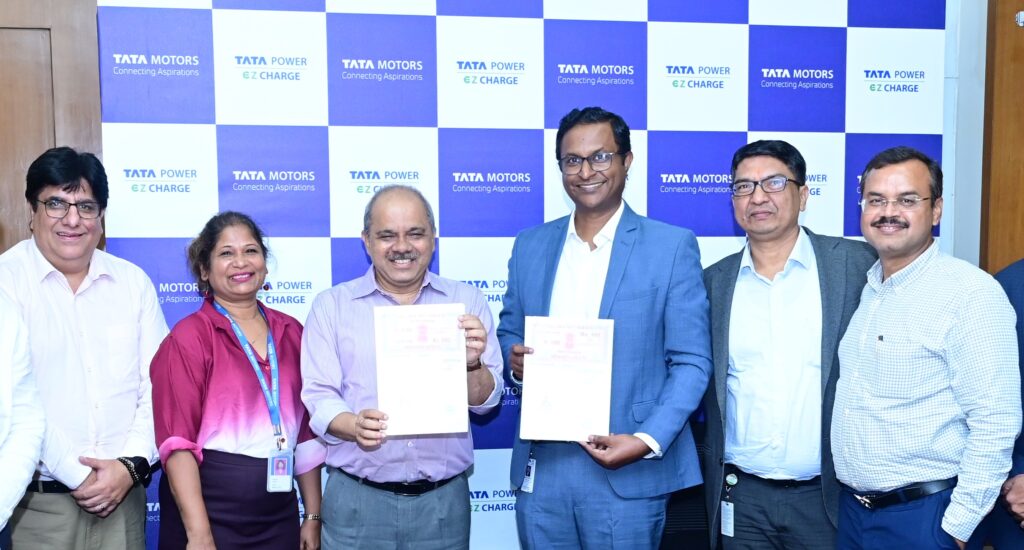
As part of this initiative, Tata Motors and Tata Power will provide exclusive charging tariffs for Tata Motors’ electric CV owners, resulting in lower operating costs and increased profitability for its customers. Electric CV users across the Country, will soon benefit from access to almost 1000 strategically located fast chargers, with the planned expansion of the charging network.
Mr. Vinay Pathak, Vice President & Business Head – SCV&PU, Tata Motors, said, “We’re pleased to strengthen our partnership with Tata Power to transform the electric commercial vehicle landscape by ensuring ease of access of fast chargers at convenient locations across the country. It has been our endeavour to not only engineer and manufacture world-class electric vehicles, but also help develop the necessary ecosystem to democratize the use of these eco-friendly and emission-free vehicles. This partnership will also explore avenues to maximize the use of renewable energy to make electric vehicle operations greener.”
Mr. Deepesh Nanda, CEO & MD, Tata Power Renewable Energy Limited said, “With one of the largest EV Charging networks across the country, Tata Power has been enabling electric vehicle owners through its reliable and accessible charging solutions across the country. Already present across diverse segments such as public, semi-public, bus/fleet, and home chargers, we are expanding to the commercial vehicle charging segment, delivering integrated EV charging solutions. This collaboration underlines our commitment to accelerating e-mobility by providing an expansive and reliable EV Charging network across India.”
Tata Power has expanded its network under the brand name of EZ Charge to over 1,00,000 home chargers, 5,500+ public, semi-public, and fleet charging points, along with 1100+ bus charging stations across 530 cities and towns. These chargers have been strategically deployed at diverse and accessible locations such as highways, hotels, malls, hospitals, offices, residential complexes, etc. This concerted effort has been instrumental in facilitating the exponential growth of electric mobility in India.
Tata Motors offers the Ace EV, India’s most advanced electric small commercial vehicle, which is supported by over 150 Electric Vehicle Service Centres nationwide. The Ace EV features an advanced battery management system and ‘Fleet Edge’ telematics, utilizing smart technologies to improve vehicle uptime and road safety with real-time insights into vehicle status, health, location, and driver behaviour.
13, Sep 2024
5 ways green data centers are increasing efficiency and sustainability
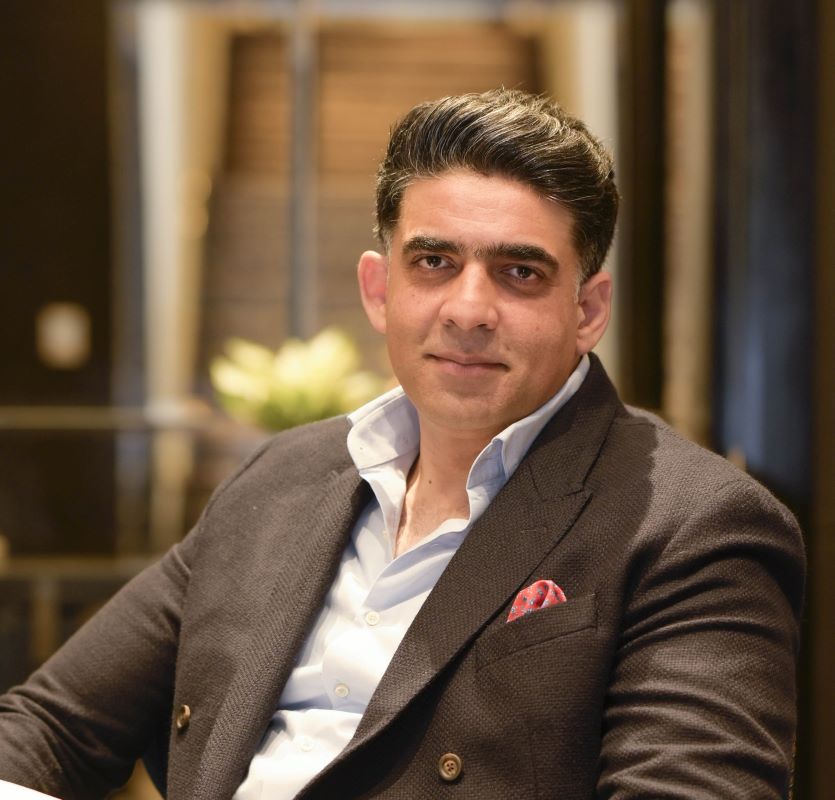
By- Khalid Wani, Senior Director, Sales, Western Digital
Data centers (DC) have become essential components which run the networks that power everything from booking plane tickets, to sending emails, to streaming movies on over-the-top (OTT) platforms. DCs not only store massive amounts of data, but also process and manage it, all at once.
Data centers consume about 2% of the world’s electricity and emit CO2 equivalent to the airline industry, doubling their energy use every four years and contributing significantly to the global carbon footprint. DCs are adopting measures to reduce energy consumption and emissions to mitigate this impact. The majority of energy consumption in DCs is attributed to cooling systems and servers, followed by network devices. Also, considering DCs store massive amounts of data, they require a huge amount of storage devices. Each drive that runs requires cooling, in turn consuming energy. As a result, it becomes imperative to look for sustainable solutions.
Higher capacity HDDs
A significant innovation in HDD technology is OptiNAND, which integrates iNAND embedded flash to enhance drive architecture, firmware, and system-on-chip (SoC) capabilities. This results in improved capacity, performance, and resilience. Western Digital has introduced the Ultrastar DC HC580 24TB CMR HDD in India, incorporating OptiNAND technology to maximize storage capacity while reducing power consumption. This drive enables data centers to optimize space and energy use, making it ideal for power-constrained environments.
By upgrading to higher-density HDDs, such as 26TB drives, data centers can achieve up to 29% reduction in watts per terabyte and 20-25% cost savings. This reduces infrastructure and maintenance costs, contributing to energy efficiency and a smaller facility footprint. The use of high-capacity drives streamlines operations by eliminating servers and supporting infrastructure, leading to significant TCO savings.
Helium-filled hard drives
Using helium-filled hard drives instead of air-filled ones also helps in lowering the power consumption. Since helium has a lower density that is one-seventh of that of air, it causes much less turbulence within the drive which provides several benefits including accommodating more disks in the same 3.5-inch form factor, reducing drag on spinning disks and leading to lower power consumption overall.
Renewable energy sources
Embracing renewable energy is a crucial strategy for reducing carbon emissions in data centers. Several facilities in India have achieved 100% renewable energy use through a combination of onsite solar power and offsite renewable energy procurement. By adopting sustainable practices and technologies, storage solution companies can significantly mitigate the environmental impact of data centers. Technologies like Shingled Magnetic Recording (SMR) and UltraSMR enhance energy efficiency and reduce power consumption per terabyte, lowering the overall carbon footprint. Transitioning to renewable energy sources further decreases dependence on fossil fuels, promoting clean energy adoption.
Cooling Technologies
In addition to renewables, DCs are embracing innovative cooling technologies such as immersive, liquid, and evaporative cooling that enhance cooling efficiency and reduce energy consumption. For instance, Western Digital has introduced innovative technologies, such as the ArcticFlow Thermal Zone Cooling design in its data center storage servers. By optimizing the arrangement of drives and hardware, this design directs cool air through the chassis, maintaining lower and more stable system temperatures. This not only reduces the workload on fans but also lowers power consumption and cooling requirements.
Parameters to measure ROI against sustainability goals
Implementing systems like Battery Health Monitoring Systems (BHMS), Integrated Building Management Systems (IBMS), Energy Management Systems (EMS) and Power Usage Effectiveness (PUE) can help in monitoring battery health and lighting and, improve operational and energy efficiency against sustainability goals.
Data storage is becoming increasingly critical for not just organizations, but for the growth of the digital economy today. As the drive to decarbonise data centers is reaching an inflexion point in India, it has become imperative to adopt green and sustainable practices across industries, including DCs. Businesses today have a moral responsibility towards the environment because it could be the key to their long-term resilience and profitability.
13, Sep 2024
IIM Bodh Gaya signs MoU with Transport Department of Bihar for Training of Officials
Indian Institute of Management Bodh Gaya has signed a Memorandum of Understanding (MoU) with the Transport Department of Bihar to provide training in management, leadership, and skill development for its officials. Under the agreement, officials such as Additional District Transport Officers (ADTO), Motor Vehicle Inspectors (MVI), and Enforcement Sub-Inspectors (ESI) will undergo training in phases. The programme will include six-day residential sessions for each batch, conducted at IIM Bodh Gaya.
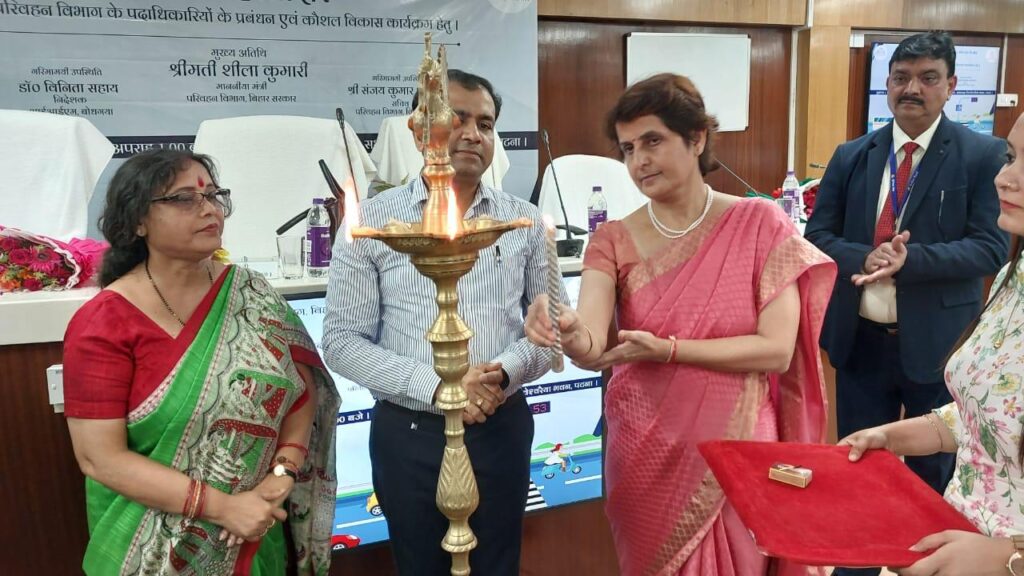
Transport Secretary Shri Sanjay Kumar Agarwal stated that the agreement aims to equip the officials of the Transport Department with modern management techniques and skills. He added that the training will improve officials’ skills, work culture, office management, and revenue, while also contributing to better transport services and a reduction in road accidents.
Dr. Vinita Sahay, Director of IIM Bodh Gaya highlighted that the programme will focus on management, leadership, and skill development, enabling transport officials to perform their duties more effectively.
Sheela Kumari, Minister of Transport, Bihar, remarked that the agreement is an important step for the Transport Department and reaffirmed the department’s commitment to providing training to officials, leading to improved transport services.
The Transport Department of Bihar manages road transport services, traffic regulation, and vehicle compliance, with an emphasis on safety and efficiency. It focuses on delivering citizen-centric services through its 38 District Transport Officers (DTOs) and 9 Regional Transport Authorities (RTAs) to ensure responsive governance.
The collaboration between IIM Bodh Gaya and the Transport Department of Bihar marks a key step in strengthening the skills of transport officials and improving transport services in Bihar. Pinku Kumar, ADTO of Patna, noted that the training would improve decision-making abilities while Baby Kumari, ADTO of Gaya, expressed that training would assist in data analysis and strategizing to reduce accidents.
IIM Bodh Gaya also provides leadership and management training to various departments of the Bihar government, such as the Water Resource Department, State Health Society, Bihar Police Academy, BIPARD, and the Department of Industries among others.
13, Sep 2024
Canon Elevates Visual Possibilities with An Innovative New Lens
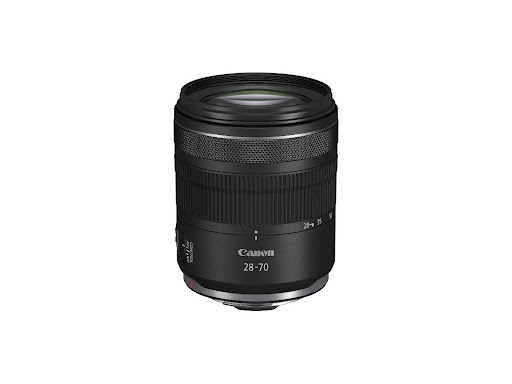
INDIA, 2024 – Canon today announced the RF28-70mm F2.8 IS STM, a new RF mount lens for the EOS R mirrorless camera system that will take imaging possibilities into a new dimension. As a bright f/2.8 constant aperture standard zoom lens, the RF28-70mm F2.8 IS STM opens accessibility to more users, being Canon’s first non-professional-grade lens of its kind.
Redefining Versatility
A constant aperture zoom lens is one of the most versatile types of lenses available. With its bright f/2.8 maximum aperture and compact, lightweight portability, the RF28-70mm F2.8 IS STM offers even more versatility. Users can freeze their precious moments in low light and achieve dreamy shallow focus (bokeh) effects, regardless if they are shooting glittery urban scenes at the 28mm wide end or taking close-up beauty shots at 70mm. When paired with APS-C cameras, it transforms into a standard zoom ideal for daily scenes, products, and portraits, with a full-frame equivalent effective focal range of 44.8mm to 112mm.
The versatility is boosted with powerful built-in Optical Image Stabilizer, which helps users achieve sharp, steady images even when using shutter speeds up to 5.5 stops slower on cameras with no In-Body Image Stabilizer (In-Body IS) like the EOS R8, and up to 7.5 stops slower on cameras that do, like the EOS R6 Mark II. Movie Digital IS during video shooting is also supported, allowing users to record smooth, steady handheld footage even without a tripod or gimbal.
While the combination of a bright constant aperture with zoom capabilities is usually associated with larger professional-grade lenses, the RF28-70mm F2.8 IS STM dispels that notion. At approximately 9.22cm long when fully retracted and weighing approximately 495g, it is smaller and 45% lighter than its closest professional-grade counterpart (RF24-70mm f/2.8L IS USM), making it travel friendly. Despite not being an L-series lens, the RF28-70mm F2.8 IS STM boasts weather-sealing[1], the same level of durability and shock resistance, and an excellent image quality that far exceeds that of a kit lens, thanks to Canon’s advanced optical design technology.
PRODUCT SPECIFICATION
| Lens | RF28-70mm F2.8 IS STM |
| Focal Length | 28-70 mm |
| Maximum Aperture | f/2.8 |
| Minimum Focusing Distance (m) | 0.27 / 0.89 (AF, f=28mm)
0.24 / 0.79 (MF, f=28mm) |
| Maximum Magnification | 0.24x (f=70 mm) |
| Lens Construction | 15 elements in 12 groups |
| Filter Size Diameter | Ø67mm |
| Aperture Blades | 9 |
| IS (CIPA Standard Correction Effect) | Yes (up to 5.5 stops) |
| Coordinated Control IS (With IBIS equipped Camera) | Yes (up to 7.5 stops) |
| Maximum Diameter and length | approx. 76.5 mm × 92.2 mm |
| Weight (g) (Approx.) | 495 |
13, Sep 2024
Abacus Institute of Engineering and Management Organises a One-of-a-Kind Hackathon, SIH 2024
Kolkata, 13th September 2024: Abacus Institute of Engineering and Management (AIEM), a JIS Group Educational Initiative, organised SIH 2024 (Internal). The event witnessed enthusiastic participation from over 200 students, comprising 34 teams with 6 members each, representing various departments of the institute.
The program was chaired by the Principal of AIEM, Prof. Jinia Datta, who commended the students for their active participation and encouraged them to continue pushing the boundaries of innovation. The event commenced with a welcome speech by Mr. Shounak Bandyopadhyay, Assistant Professor of the Department of ECE and SPOC of the event, setting a positive tone for the day. The valedictory address and vote of thanks were delivered by Dr. Goutam Kumar Das, Head of the Department of ECE, who appreciated the efforts of the participants and the organising committee.
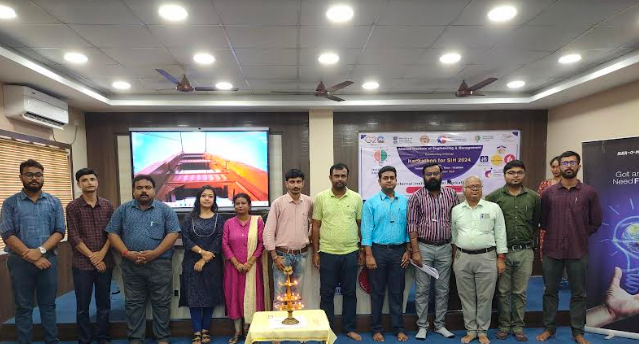
The participants showcased innovative solutions to the problem statements curated by the SIH Committee, reflecting their technical acumen and creative approaches to real-world challenges. Each team presented its ideas before an esteemed panel of four judges, who provided valuable feedback and insights, enhancing the learning experience for the students. All participants were recognised for their contributions with participation certificates, while the top three teams were awarded winner certificates and attractive prizes for their exceptional ideas and presentations.
The event was conducted with the jury members contributing their insightful perspectives. Their expertise from diverse domains added further value to the students’ innovative ideas.
Speaking on this occasion, Sardar Simarpreet Singh said, “We at JIS Group firmly believe in nurturing innovation and creativity among our students, and events like SIH 2024 take us a step closer to that vision. Abacus Institute of Engineering and Management has created a platform that encourages students to think critically and develop solutions to real-world challenges. The enthusiasm and dedication shown by the participants are commendable, and I am confident that this experience will further inspire them to become future leaders in technology and innovation.”


