


13, Sep 2024
10 Lakh Jobs Expected for Festive Season: Surge in Gig and Female Workforce – NLB Services
By-Mr. Sachin Alug, CEO, NLB Services
As the festive season approaches, all sectors in India are expected to see a sharp increase in demand for workforce. Many industries are gearing up for a rise in hiring, including retail, hotel, e-commerce, logistics, consumer goods, banking, financial services, and insurance (BFSI), and retail. Amongst these industries e-commerce will see the highest demand with 22% increase over last year.
Businesses are anticipated to take advantage of this period by launching new products and promotions as the holiday season continues through December. The e-commerce sector, in particular, is poised for a major surge in sales, driving a need for extra workforce and leading to an uptick in both temporary and permanent hires. These jobs will cover various supply chain roles, including warehouse staff, inventory managers, logistics coordinators, kirana partners, and delivery drivers. As a result, it is anticipated that on days of peak demand from customers, the demand for gig delivery riders on rapid commerce platforms will increase by 30%. Additional key drivers for increased hiring include consumer spending, seasonal business needs, economic indicators, and industry-specific trends.
Major metro cities such as Delhi, Mumbai, Bengaluru, Chennai, and Kolkata have seen a 15% rise in seasonal hiring compared to last year, while Tier 2 cities like Nagpur, Jaipur, Vadodara, Kochi, Vizag, Madurai, Lucknow, Gurugram, Chandigarh, Indore, Coimbatore, Surat, Bhubaneswar, and Bhopal are experiencing an even stronger growth ranging from 20% to 25%.
In terms of employment type, this festive season is also expected to bring a significant boost in job opportunities, with a 35% increase in both white-collar and blue-collar positions. Of these new roles, around 70% will be temporary to meet the seasonal demand, while the remaining 30% are likely to be permanent, offering more stable, long-term positions. The gig economy, in particular, is projected to experience a notable rise in female participation, with a 35% increase. Women are increasingly drawn to the flexibility and variety of roles available in the gig economy, including brand advocacy, beauty and grooming, online tutoring, domestic help, cab driving, and food delivery. Overall, the festive season presents a promising outlook for job seekers, especially women looking for flexible and varied employment opportunities.
Sachin Alug, CEO of NLB Services, emphasized the significant opportunities presented by the festive season, which enables both temporary and permanent workers to increase their earnings. He highlighted that roles such as delivery drivers, customer service representatives, tech support specialists, and freelance designers are expected to experience the highest demand. Salaries for these positions, currently ranging between ₹12,000 and ₹16,000, are projected to rise by 10-20% over the next 3-4 months, driven by the surge in demand.
Alug also underscored the surge in job creation during this period, recalling that last year saw the addition of approximately 500,000 temporary and gig jobs, primarily due to the festive and wedding season. This year, he anticipates even greater growth, with over 1 million temporary jobs expected. This rise is driven by factors such as booming e-commerce activity, the expansion of the gig economy, and heightened consumer demand during the festival season.
- 0
- By Rabindra

13, Sep 2024
Baba Kalyani becomes the 2nd Indian to receive U.S.I.B.C Global Leadership Award
New Delhi, India: September 13, 2024, Today at the U.S. Chamber of Commerce’s U.S.-India Business Council (USIBC) India Ideas Summit and 49th Annual General Meeting, Babasaheb “Baba” N. Kalyani, Chairman and Managing Director of Bharat Forge, named recipient of the Global Leadership Awards. Each year, USIBC recognizes business champions from the U.S. and India who dedicate their work to advancing the bilaterial economic relationship and making significant contributions to catalyzing growth in the U.S.-India commercial corridor.
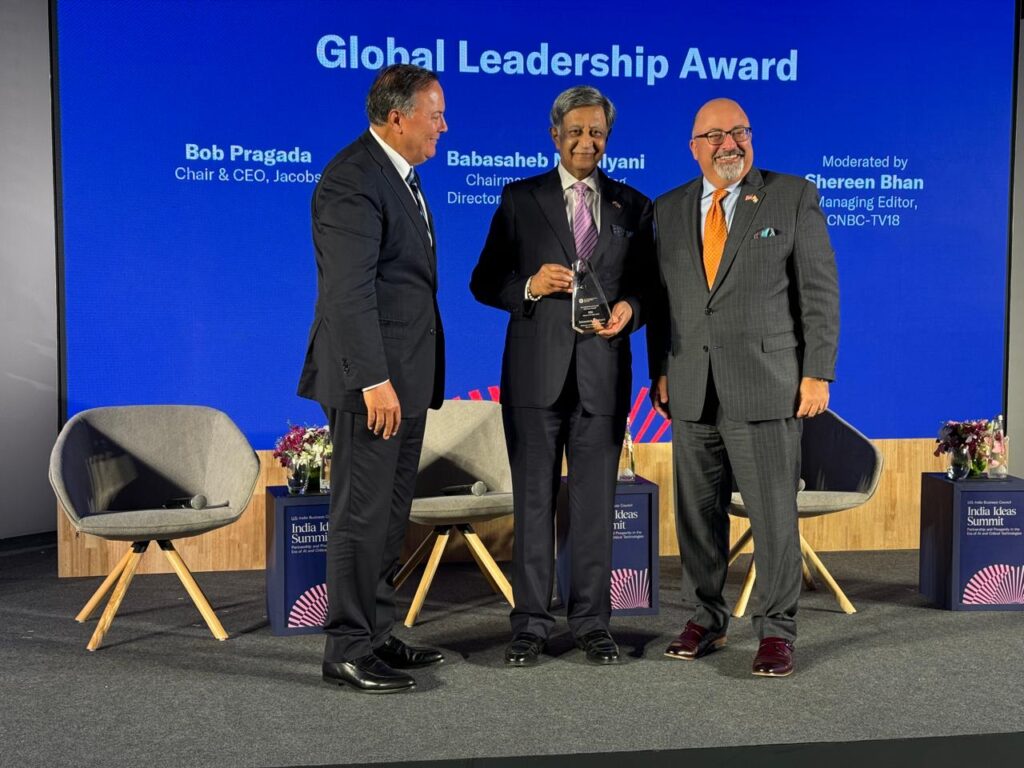
USIBC President Ambassador (Retd.) Atul Keshap said, “Baba Kalyani is an exceptional global business leader with a long-term vision to create the building blocks of critical infrastructure. As a recipient of the Padma Bhushan, Baba exemplifies the power and dynamism of an Indian entrepreneur who has dedicated his life’s work to transform India into a globally-competitive center for advanced manufacturing. While Bharat Forge is an established name in the global automotive and industrial sectors, Baba’s astute leadership and passion for technology-driven innovation is rapidly positioning the company as one of India’s largest defense manufacturers and at the forefront of driving India’s aspiration to become a net defense exporter. USIBC is honored to confer its 2024 Global Leadership Award to Baba N. Kalyani.”
In his acceptance speech, Baba Kalyani expressed his gratitude for the recognition and said, “I am humbled and greatly value this prestigious honor conferred upon me today. As the largest democracies, India and the United States share a strong global strategic relationship and we at Bharat Forge take pride in contributing to growing bilateral trade and enhanced business engagement between the two countries. As India lives up to the scale of its colossal economic potential, Bharat Forge will continue pushing the boundaries of innovation with AI, Industry 5.0 and advanced defense technologies and products. For decades, the USIBC has not only been Bharat Forge’s trusted partner in business, but also shares our commitment to free enterprise, fair trade, unlocking opportunity, and solving challenges in our countries’ economic relationship.”
13, Sep 2024
Cleartrip records 150% growth in the Bus category
Bengaluru, 13 September 2024: Cleartrip, a Flipkart company, registered a phenomenal 150% growth in the bus category, since its launch in April 2023. This impressive growth highlights the strong demand for bus travel, especially from tier 2 cities. Riding on the opportunity in this category, Cleartrip has launched ‘Bus Pass’, an industry-first offering to make bus travel more affordable for its customers. Bus Pass, is a cost-effective solution, which aims to provide frequent bus travellers with significant savings and enhanced value-based offerings.
Consumer data on Cleartrip revealed that:
- The bus category sees the highest number of frequent travellers with 32% of users repeating their bookings in the
- last 3 months
- 15% of users book at least three times within three months
- Bus users are also highly value-conscious, with 75% of travellers using discount coupons while booking.
- Indore-Bhopal, Bengaluru-Hyderabad, Indore-Pune, Chennai-Madurai and Coimbatore-Bengaluru are top routes with high repeat bookings
Customers can purchase the Bus Pass for a fee of ₹150 while making a bus booking. Benefits of the Bus Pass:
- Customers will receive an immediate discount of ₹100 (in addition to availing other coupons) on their current booking for a minimum order value of ₹300
- With one Bus Pass, customers can make a maximum of 5 bookings at this discounted rate
- Customers can enjoy a cost savings of ₹500 with one Bus Pass
- Each Bus Pass is valid for 90 days from the date of purchase
Anuj Rathi, Chief Business & Growth Officer, Cleartrip, stated, “Over the last year, Cleartrip’s bus category has experienced a remarkable 150% growth, mirroring the booming consumer demand in this category. We are committed to building products powered by in-depth market research, aligning with our customers’ ever-evolving needs. The Cleartrip ‘Bus Pass’ will offer exceptional value and convenience to our user base. We aim to make travel affordable while strengthening our position as a trusted travel partner.”
13, Sep 2024
Dr. Alka Kapur’s dedication to education lauded at Savitribai Phule Samman 2024
The 5th edition of the Savitribai Phule Samman, a significant event in the field of education, was organized by Indraprastha School Sahodaya and the Delhi Sahodaya Schools Complex. It was a resounding success, held at New Maharashtra Sadan, KG Marg, New Delhi. The event was dedicated to honouring the legacy of Savitribai Phule, a pioneering social reformer and advocate for women’s education in India.
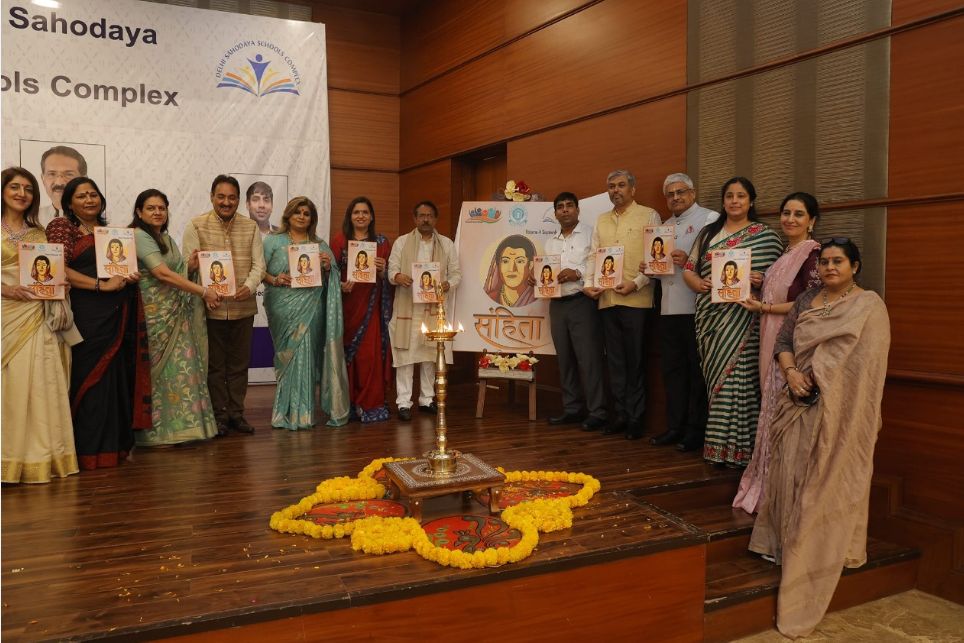
Dr Alka Kapur, Principal of Modern Public School, Shalimar Bagh and President of Delhi Sahodaya Schools Complex, along with Dr Jyoti Arora Principal of Mount Abu Public School and President of Indraprastha School Sahodaya Complex, the Sahodayas were the driving force behind the event. It’s the 5th edition of the hard work of celebrating the contributions of both Presidents and also inspiring and acknowledging those who have made significant strides in the field of education.
In her address, Dr. Kapur shared her commitment to advancing education and contributing to national development. “It is a great honour to be part of an event that celebrates the remarkable legacy of Savitribai Phule,” said Dr. AlkaKapur, “I am deeply committed to furthering the cause of education in our country. The work we do today lays the foundation for a brighter, more equitable future. My dedication to this cause will continue as I strive to foster educational excellence and contribute to the development of our nation.”
The event featured Shri Harsh Malhotra, Minister of State in the Ministry of Corporate Affairs and Ministry of Road Transport & Highways, as the Chief Guest. In his keynote address, Shri Malhotra underscored the critical role of education and social reforms in shaping India’s future.
The guests of honour included Dr Biswajit Saha, Director of CBSE (Training and Skill Education). Dr. Saha praised Dr. Alka Kapur’s tireless efforts to promote quality education and her role in empowering young minds. He highlighted her innovative educational initiatives and their impact on improving educational practices and uplifting disadvantaged communities.
The Savitribai Phule Samman 2024 was not only a tribute to the enduring legacy of Savitribai Phule but also a celebration of today’s educational leaders who continue to inspire and uplift communities through their dedication and innovation.
13, Sep 2024
Groundbreaking Research Unveiled: ‘Treasures of the Gupta Empire’ Launched at IGNCA
New Delhi, September 13th, 2024: A momentous occasion unfolded yesterday at the Indira Gandhi National Centre for the Arts (IGNCA) as the highly anticipated book, ‘Treasures of the Gupta Empire,’ was officially launched. This groundbreaking work, authored by Mr. Sanjeev Kumar, promises to revolutionize our understanding of one of India’s most influential historical periods—the Gupta Dynasty.

This magnum opus has garnered acclaim from international historians and scholars. The book’s meticulous research, rooted in advanced scientific analysis, offers unprecedented insights into the Gupta Dynasty, which flourished between the fourth and sixth centuries CE. Through this volume, Mr. Kumar bridges critical gaps in our historical knowledge, reshaping the narrative of India’s rich past.
The launch event, held at IGNCA, saw an esteemed gathering of scholars, historians, and cultural aficionados. Key highlights included the display of selected Gupta coins, which provided a tangible connection to the empire’s storied past.
The book’s significance was underscored by a distinguished panel of speakers, including:
Dr. Sacchidanand Joshi, Chair and Member Secretary, IGNCA
Dr. B.R. Mani, Guest of Honour and Director General, National Museum, New Delhi
Prof. K.K. Thaplyal, Professor Emeritus, Lucknow University
Dr. Sanjay Kumar Manjul, Additional Director General, Archaeological Survey of India, New Delhi
Dr. Prashant Kulkarni, Chairman, Indian Coin Society; Hon’ble Fellow, Oriental Numismatic Society, UK
Mr. Sanjeev Kumar, Author of ‘Treasures of the Gupta Empire’
Prof. (Dr.) Ramesh C. Gaur, Director Head – Kala Nidhi, Dean (Administration), IGNCA
Dr. Dilip Rajgor, Ex-Director, D.M Institute of Numismatics & Archeology, University Of Mumbai, Mumbai
Mr. Kumar’s ‘Treasures of the Gupta Empire’ is not merely a historical account but a transformative work that redefines our comprehension of the Gupta period. This book unveils previously unknown facets of powerful Gupta rulers such as Samudragupta, Chandragupta, Kumaragupta, and Skandagupta.
13, Sep 2024
Birla Estate Subsidiary Acquires Rs.537 Crore Worth Land Parcel in Mumbai MMR: Square Yards
Mumbai, 13th September 2024: Birla Estates, the real estate venture of the Aditya Birla Group has made a notable acquisition of a land parcel in the Mumbai Metropolitan Region (MMR), valued at Rs. 537.42 crore, according to Square Yards. The strategically located plot is in Kalwa, along the Thane-Belapur Road, an area experiencing rapid growth due to its proximity to key hubs and improving infrastructure.
Kalwa has emerged as an attractive residential destination, benefitting from its close connection to Thane, one of India’s most active real estate markets, and Navi Mumbai, a growing employment hub. These factors make it particularly appealing to working professionals seeking convenient housing options.
Anand Moorthy, Co-founder and CBO, Capital Market & Services, Square Yards said, “We are witnessing leading developers strategically positioning themselves across key markets, acquiring significant land parcels. This aligns with the growing demand for office spaces as well as residential apartments in gated communities as homebuyer preference have shifted towards projects that offer a range of amenities and open spaces. These high-value deals in the market clearly signal profitable opportunities for developers in both residential and commercial sectors. Additionally, global firms and tech-giants are increasingly expanding their presence in India. The digitization of land records and enhanced transparency have played a key role in boosting stakeholder confidence in the Indian real estate sector.”
The registration document, reviewed by Square Yards, indicates that Ekamaya Property Private Limited, a wholly-owned subsidiary of Birla Estates Private Limited, acquired the 99,021.47 square meter (~24.5 acres) land parcel. The transaction, finalized in September 2024, involved the purchase from Hindalco Industries Limited.
Birla Estates has a strong geographical footprint, with residential and commercial developments across Mumbai MMR, Pune, Bengaluru, and Delhi NCR. As per Square Yards data insights Birla Estates, ranked third in the Mumbai MMR amongst developers with the highest registered home sales values during the April-June quarter of 2024.
13, Sep 2024
Zuno General Insurance Appoints Jackson Jacob as Chief Distribution Officer
New Delhi, 13th September 2024: Zuno General Insurance Ltd, a new-age digital insurer, has appointed Mr. Jackson Jacob as Chief Distribution Officer, effective September 6, 2024.
With over 21 years of experience in the insurance sector, Mr. Jacob is a seasoned professional known for his expertise in Profit Centre Management, Sales, and Distribution. He’s navigated every channel in the book, be it Bancassurance, Broking, Agency, Motor Dealer, Commercial Lines, Travel or Direct Marketing. His most recent role was as Executive Vice President and National Head at Bajaj Allianz General Insurance catering to the retail broking segment. Prior to that he successfully transformed the distribution division into a leading distribution arm through new product launches, and strategic partnerships. His expertise in aligning distribution strategies with business goals has been instrumental in driving Bajaj Allianz General Insurance’s massive revenue growth, setting up successful partnerships, and significantly boosting team productivity.

Throughout his career, Mr. Jacob has successfully crafted success stories with diverse partners across geographies, from small towns to major cities pan India. His deep understanding of these markets will be crucial in expanding Zuno’s reach and enhancing the company’s mission to provide accessible, customer-friendly, and transparent insurance solutions.
Commenting on the appointment, Ms. Shanai Ghosh, MD & CEO of Zuno General Insurance, said, “We are thrilled to welcome Jackson to our team. His extensive experience in insurance distribution and market engagement will be instrumental to drive the Zuno outreach, in our pursuit of making insurance easy, friendly, and transparent for all.”
Ms. Ghosh further remarked, “Jackson’s unique combination of experience, vision, and passion aligns perfectly with our commitment to growth and innovation in the ever-evolving insurance sector.”
A strong advocate for integrating advanced technology into distribution channels, Mr Jacob believes that innovation is key to maintaining a competitive edge in today’s dynamic landscape.
“I am excited to join Zuno General Insurance as Chief Distribution Officer. With its commitment to redefining the insurance experience through innovation and customer-centric solutions, Zuno presents a dynamic platform for growth. My goal is to leverage my extensive experience in distribution and market engagement to drive strategic expansion and enhance our reach. Together, we will continue to make insurance more accessible, transparent, and tailored to our customers’ needs, embracing technology as a vital component of our success.” Mr. Jackson Jacob, Chief Distribution Officer, Zuno General Insurance, said.
Outside of his professional endeavours, Mr. Jacob is a meditation practitioner, runner, and fitness enthusiast. He also enjoys cooking dishes from eastern and southern India and is a passionate biker and Royal Enfield aficionado.
13, Sep 2024
Rashmika Mandanna Shares Her Secrets to Achieving a Festive Glow This Onam
Onam, the grand harvest festival of Kerala, is a time of joy, celebration, and indulgence. As traditions come alive during this vibrant season, every aspect of life is enriched—from the delicious Onam Sadhya to the vibrant Pookalam adorning your home. This Onam, treat yourself to an indulgent bathing ritual that not only refreshes your spirit but also leaves your skin glowing with radiance.

ITC Fiama brand ambassador Rashmika Mandanna says, “The festive season is the most favourite time of the year because I get to unwind from my busy life. My ultimate secret weapon to shine during the festivities must be Sandalwood! The goodness of its natural moisturising properties act as a doorway to flawless and glowing skin. ITC Fiama Golden Sandalwood Oil and Patchouli Shower Gel unique combination of sandalwood oil and patchouli helps me relax my senses and feel rejuvenated”.
Here’s how you can also pamper yourself and embrace the festive season with a luminous glow.
1. Set the Mood with Aromatic Bliss
Begin your bathing ritual by setting a serene and calming atmosphere. Light a few aromatic candles or incense sticks infused with floral and earthy fragrances. These soothing scents will envelop you in a peaceful embrace, capturing the essence of the festival. It’s the perfect way to relax and immerse yourself in the festive spirit.
2. Choose a Revitalizing Shower Gel
Elevate your bathing routine with a refreshing shower gel that energizes your senses. Opt for something infused with natural ingredients like Fiama Golden Sandalwood & Patchouli Body Wash Shower Gel, known for its calming and skin-conditioning properties. Sandalwood, often associated with traditional festivals, carries a sacred and aromatic essence that enhances the festive spirit. This soothing ingredient helps calm your mind while invigorating your senses, while patchouli adds an earthy richness to your bathing experience.
3. Finish with a Fragrance Mist
Complete your indulgent bathing ritual by spritzing a light fragrance mist. A citrusy fragrance can be the perfect finishing touch, keeping you fresh and fragrant throughout the day. Alternatively, the warm and comforting notes of sandalwood can provide a traditional scent that lingers beautifully.
Onam is a time for joy, celebration, and renewal. Amidst all the excitement, taking a moment for yourself can enhance your festive spirit. By indulging in a bathing routine, you not only prepare for the celebrations but also honour the tradition of looking and feeling your best during this auspicious time.
13, Sep 2024
D2H Celebrates Onam with a Heartwarming Film Campaign by LS Digital and Special Festive Offers for Customers
India, September 13th, 2024: D2H, a leading DTH brand of Dish TV India Ltd. is marking the Onam festival with a dual celebration. The festivities include a compelling film, developed in partnership with LS Digital, which beautifully showcases the rich traditions and communal spirit of Onam. Complementing the film, D2H is also offering exclusive promotions that enhance value and entertainment, ensuring a festive and memorable experience for all customers.
India’s leading integrated Digital Business Transformation (DBT) company, partnered with D2H, a leading DTH brand of Dish TV India Ltd., to develop a heartwarming film to mark the Onam festival with a dual celebration. The festivities include a compelling film, crafted in collaboration with LS Digital, which beautifully showcases the rich traditions and communal spirit of Onam. Complementing the film, D2H is also offering exclusive promotions that enhance value and entertainment, ensuring a festive and memorable experience for all customers.
Titled ‘Onam: A Celebration of Togetherness,’ D2H has introduced a poignant film campaign in collaboration with LS Digital. This campaign masterfully blends traditional Onam customs with a modern narrative, capturing the festival’s essence through a contemporary lens. The film takes viewers on a nostalgic journey, celebrating the vibrant Pookalam (flower carpet) and the elaborate Thiruvonam feast while highlighting the significance of maintaining cultural connections in a rapidly changing world.
To add a special touch to the Onam festivities, D2H is rolling out enticing offers for both new and existing customers. New customers can take advantage of two special offers: the first offer is available with all modern retail chain outlets priced at ₹1,999, includes ₹5,000 cashback—₹2,000 as instant cashback plus 33% cash back on every subsequent recharges—and comes with a robust 5-year warranty (1 year comprehensive and 4 years on the set-top box) plus access to 6 OTT platforms (5 constant and 1 as per choice), available at select stores like Lulu Connect, Nandilath G-Mart, Pittapilly Agencies, KannanKandy, White Mart, Easy store, among others. The second Offer priced at ₹2,500, offers similar cashback benefits plus access to 6 OTT platforms (5 constant and 1 as per choice) and also includes a 3-year warranty. For existing customers, any customer having ₹200 or more pack unlocks access to 6 OTT platforms (5 constant and 1 as per choice) without any extra cost, making it a perfect time to upgrade and enjoy enhanced entertainment options.
Sukhpreet Singh, Corporate Head – Marketing, Dish TV and Watcho, Dish TV India Ltd, said, “At D2H and Dish TV, we consider our customers part of our extended family, celebrating their joys and milestones together. Onam is more than just a festival; it honors our cultural heritage, the values of kindness, and the spirit of community. Through this campaign, we aim to reconnect with these timeless traditions, especially during times when we may feel distanced from our roots. We are also excited to offer exclusive deals that provide exceptional value and enhance our customers’ entertainment experiences, underscoring our commitment to delivering the best in entertainment and being a cherished part of their lives.”
The film, which is now available on YouTube, Facebook and Instagram has resonated deeply with audiences, garnering significant attention and sparking meaningful conversations on social media about the value of preserving heritage. The authenticity and emotional depth of the film have been praised for their ability to evoke a sense of nostalgia and pride, making it a compelling tribute to the spirit of Onam.
Manesh Swamy, MD and CCO of LS Digital shared his insights into making the film, “It was an exciting opportunity to create something that felt authentic yet relatable to the youth as well. Onam is like this big cultural melting pot of stunning visuals like the iconic boat races, quiet moments of reflection by the Pookkalam (flower rangoli), the laughter at the Onam Sadya feast, the vibe of the Pulikali Performances and festivities. We wanted to show the homecoming of Mahabali in a New Vibe, New Beat. Hence, we got a mix of traditional Kerala Musicians and Rappers to come up with this unique piece of Sound to sing along”.
With this campaign, D2H aims to celebrate Onam and strengthen cultural connections, reminding audiences of the values that bind us together during festive times. With these special offers and the heartfelt film campaign, D2H invites everyone to embrace the spirit of Onam, celebrate their cultural heritage, and enjoy an enriched entertainment experience during this festive season.
12, Sep 2024
Techno India Group and Manchester City Usher in a New Era with the Launch of an Exclusive Manchester City Football School in Kolkata
Kolkata, 12th September 2024: Techno India Group officially partnered with City Football Group to launch the first-ever Manchester City Football School in West Bengal, marking a new era in Indian football development. The school, which began its pre-registration in September, aims to nurture young talent from across the country by offering players a unique blend of world-class football coaching and a strong sports foundation.

The football school will cater to athletes aged three to seventeen, providing them with top-tier training led by full-time Manchester City coaches who have been handpicked by City Football Group. These coaches will implement Manchester City’s renowned training methodology, tailored to each player’s skill level and designed to elevate young athletes to international standards.
Alongside the football training, the school will provide a select group of exceptional students with a unique opportunity to train at Manchester City’s UK facilities. They will be invited to immerse themselves in the club’s renowned training environment and gain exposure to top-tier international football facilities.
Furthermore, all enrolled students will receive a detailed performance report and personalised improvement plan during the program, crafted directly by Manchester City Football School in the UK. These reports will be sent to Kolkata to be distributed to the students, offering valuable insight and tailored recommendations to accelerate their skill development and enhance their understanding of the game at a professional level.
The opening of this football school is expected to set a new benchmark for sports education in India, broadening the opportunities for aspiring footballers. The school, with an initial capacity of 150 students, underscores Techno India Group’s dedication to fostering holistic development through distinguished sports training.
Debdut Roychowdhury, Director of Techno India Group, emphasised the significance of this partnership, “It is with immense pride, excitement and joy that we announce our partnership with the Manchester City Football School. By combining their world-class expertise in football training with Kolkata’s proud football heritage, this collaboration reflects our vision and deep commitment to nurturing the champions of tomorrow.”
“We are delighted to be opening our first Manchester City Football School in Kolkata with Techno India Group, who are a leading education provider to children and young adults throughout West Bengal. We are looking forward to creating a first-class educational experience, through the presence of fully trained, full time Manchester City Coaches, based on the same approach and methodology that we use in our programs in Manchester, tailored to the level of each player,” said Jorgina Busquets, Managing Director – Football Education, Recreation and Partner Clubs for City Football Group.


