


1, Mar 2024
Investigating Cell Killers: Advanced System for Size-Dependent Cytotoxicity Analysis of Silica
The excellent physicochemical properties exhibited by silica nanoparticles (SiNPs) have led to their wide acceptance in industrial and biomedical applications. Alongside the growing popularity of SiNPs is also the increasing concern regarding its negative effects on human health. To enable a better understanding of SiNPs’ toxicity towards biological material, researchers from Chiba University now propose a technique that can separate nanoparticles of different sizes, assess their uptake by cells, and evaluate the potential toxicity.
Metal nanomaterials have become an indispensable part of industrial and medical fields due to their unique and versatile properties. Their size, which imparts them with the desired physiochemical properties, is also the reason for environmental and health concerns. The nano-sized particles in nanomaterials have shown high reactivity towards biomolecules and often even toxicity towards biological cells.
Scientists have attributed this behavior of metal nanoparticles in interaction with biomolecules to phenomena like inflammation or oxidative stress. However, to ensure the safe usage of metal nanoparticles, there is a need to explore molecular mechanisms responsible for the toxicity and understand how the uptake of nanoparticles by cells varies based on their shape, size, morphology, and other aspects.
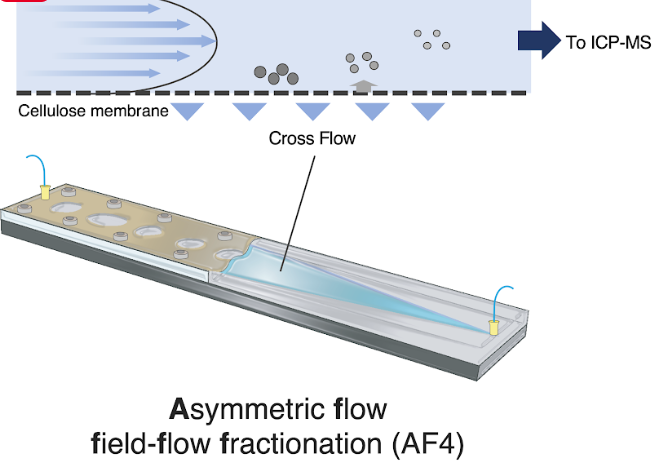
To shed light on this issue, Assistant Professor Yu-ki Tanaka and Prof. Yasumitsu Ogra, both from the Graduate School of Pharmaceutical Sciences at Chiba University, have now estimated the cellular intake of silica nanoparticles (SiNPs) based on their sizes. In their recent breakthrough published in Archives of Toxicology on January 14, 2024, the researchers developed an AF4-ICP-MS (asymmetric flow field flow fractionation with inductively coupled plasma mass spectrometry) system, which separated SiNPs of five different sizes (10, 30, 50, 70, and 100 nm) and enabled quantitative assessment of cytotoxicity of SiNPs in HepG2 cells.
“SiNPs have gained momentum in various fields such as drug delivery, biomedical imaging, catalysts as well as environmental remediation for removing contaminants from water and soil. However, there is also a significant concern about its environmental toxicity and potential impact on living organisms,” says Dr. Tanaka when asked about the motivation behind this study. “So, to find a remedy to the trade-off between industrial availability and toxicity, we decided to develop a technique to understand the potential adverse effects of SiNPs by combining quantitative data on cellular uptake and toxicological responses.”
Size analysis techniques like electron microscopy and laser-based dynamic light scattering failed to observe nanoparticle specimens in deep layers and elucidate the chemical compositions of the nanoparticles. To counter these issues, the team adopted the new AF4-ICP-MS size analysis technique, which not only overcame those issues but also detected nanoparticles of size as low as 10 nm. This wouldn’t have been possible with conventional ICP-MS methods.
The team used the AF4-based method to evaluate the cellular uptake of SiNPs in lab-cultured human hepatoma HepG2 cells. The measurements showed that approximately 17% of the SiNPs exposed to the HepG2 cells were absorbed. The transmission electron microscopy (TEM) carried out by the team observed the presence of SiNP aggregates within the cells, indicating the ability of small nanoparticles to settle down in the culture medium and enter the cells easily.
“We found that the smaller SiNPs exhibited higher toxicity towards the HepG2 cells than the larger ones, but the AF4-ICP-MS analysis found no significant size-dependent difference in the particle volume absorbed by the cells,” remarks Dr. Tanaka, highlighting the outcomes of the toxicity experiments. These results suggested that the elevated cytotoxic behavior of the small SiNPs was rooted in the large surface area relative to particle volume when compared to the larger ones.
The researchers also investigated the chemical mechanisms associated with cytotoxicity. The data indicated that cell necrosis was partly linked to oxidative stress caused by the production of reactive oxygen species (ROS). Additionally, interactions of the silanol groups on the SiNP surface and phospholipids in the cell membrane were responsible for the associated cell damage.
Overall, the results present the new AF4-ICP-MS technique as a powerful tool for quantitatively determining cytotoxicity induced by metal nanoparticles of varying sizes. The insights from this study also provide a solid groundwork for future studies looking into the evaluation of nanoparticle exposure risks and their potential burden on human bodies. “Our study aim was to come up with a facile analysis technique that would aid in the mission of minimizing potential health damage from nanoparticles. We are hopeful that the toxicological information provided by our study will help establish criteria for the proper utilization and regulation of nanoparticles in industries, the medical field, and even in daily use items containing nanoparticles,” concludes Dr. Tanaka.
- 0
- By Rabindra

29, Feb 2024
Sharda Hospital Organises India’s First-Ever International Robotic Workshop
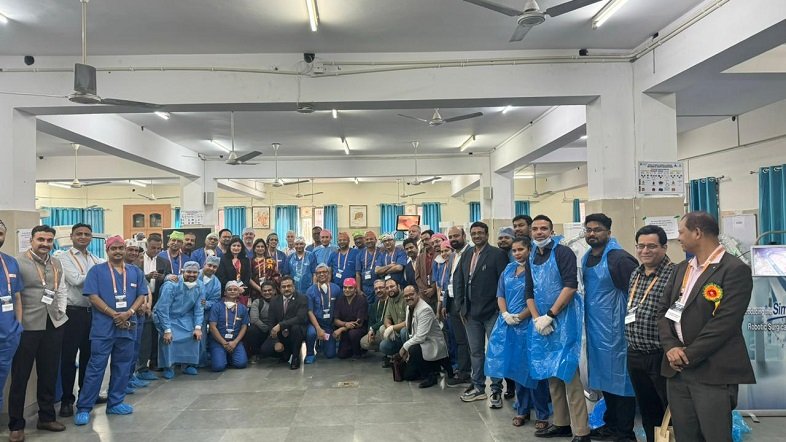
Delhi / NCR , India – February 29, 2024 – Sharda Hospital, a pioneer in healthcare innovation, proudly organised India’s first-ever “International Robotic Workshop” equipped with multiple robotic systems, in collaboration with the School of Medical Sciences & Research, Sharda Hospital and Sharda Care – The Healthcity (Upcoming Ultramodern 700+ bedded super speciality Hospital, Greater Noida).
The program, inaugurated by esteemed international trainer surgeons as faculties, marks a significant milestone in advancing medical education and surgical training in India.
The event signified a groundbreaking initiative, as it introduced cutting-edge multiple robotic technology into the lab environment for the first time in India. With multiple robotic stations available, the lab offered unparalleled opportunities for medical professionals, students, and researchers to explore the intricacies of robotic surgery under the guidance of globally renowned trainers from the U.S.A. and U.K.
Mr. P.K Gupta, Chancellor, Sharda University & Chairman, Sharda Hospital and Sharda Care – The Healthcity felicitated the International and National faculty in a traditional-culture style, with Shawls and expressed his enthusiasm for the initiative, stating, “We are proud to introduce India’s first ever Multiple Robotic Lab, a testament to our commitment to advancing medical education and research. This initiative underscores Sharda Hospital’s dedication to providing cutting-edge training opportunities and shaping the future of healthcare in India.”
The inaugural ceremony, graced by renowned personalities in the medical and academic fields, highlighted the importance of leveraging technology to enhance healthcare delivery and education. The program featured a series of sessions and workshops designed to provide participants with “hands-on” experience and in-depth insights into robotic surgical techniques.
Dr. Nirupma Gupta, Dean, School Medical Science & Research, Sharda University highlighting the importance of the event said, “This International Robotic Workshop signifies a groundbreaking step, as it introduces cutting-edge robotic technology into the lab environment for the first time in India. With multiple robotic setups available, the lab offers unparalleled opportunities for medical professionals, students, and researchers to explore the intricacies of robotic surgery under the guidance of globally renowned experts.”
Dr. Ram Murti Sharma, Medical Superintendent, Sharda Hospital, expressing his delight at the successful organisation of the International Robotic Workshop, along with the setup of the lab, said, “This one of its kind multiple robotic systems lab further strengthens Sharda Hospital’s position as a leader in healthcare innovation and education. With its state-of-the-art facilities and collaborative approach, Sharda Hospital continues to set new standards of excellence in the field of medical education and patient care.”
Attendees had the opportunity to engage in a variety of activities, including demonstrations of robotic procedures, interactive training sessions, and panel discussions led by experts in the field. Moreover, the event showcased the collaborative efforts of Sharda Hospital, SMS&R, and Sharda Care-The Healthcity in fostering innovation and excellence in healthcare.
The successful implementation of the program underscores Sharda Hospital’s position as a leader in healthcare innovation and education. With its state-of-the-art facilities and collaborative approach, Sharda Hospital continues to set new standards of excellence in the field of medical education and patient care.
25, Feb 2024
Governor of Haryana Shri Bandaru Dattatreya Ji inaugurates Shri Ram Global School
Gurugram, February 25, 2024 – Shri Ram Global School, Sector 70, witnessed a momentous occasion today with the grand inauguration ceremony graced by the presence of the Honorable Governor of Haryana, Shri Bandaru Dattatreya Ji. The event marked official opening of the school and was celebrated with great enthusiasm by the school community. High Commissioner, Uganda to India, H.E. Prof. Joice Kikafunda’s graced the inaugural event as Guest.
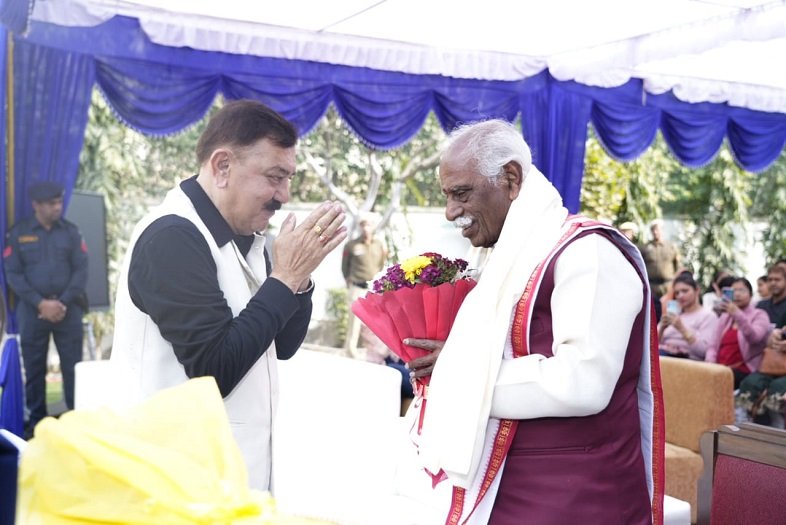
The ceremony featured a vibrant cultural program showcasing the talents of the school’s students. The program included traditional dances, music performances, and skits, all of which received warm applause from the audience.
Following the program, there was an annual get-together organized for the school community, providing an opportunity for students, parents, and teachers to interact and celebrate the special occasion.
The ceremony commenced with a traditional welcome, followed by an address by the school director, Smt. Abha Kumar, In her speech, Smt. Kumar expressed her gratitude to the Governor for his presence and highlighted the school’s commitment to providing quality education to students in Gurugram and nearby regions. “We are honored to have Shri Bandaru Dattatreya Ji inaugurate our school. His presence is a testament to the importance of education and inspires us to strive for excellence in everything we do.”
She further stated, “Today, we are pleased to join hands with the Sri Ram Global School which will be ICSE K-12 School. The Sri Ram Group has a legacy of Sri Ram College of Commerce and Lady Sri Ram, two of the finest institutes of India. We thrive to promote excellence through determination and hard work. The school will have state-of-the-art facilities with a temperature-controlled swimming pool, squash court, indoor badminton court, and cricket pitch. The ambitious target will help students to grow holistically.”
Shri Bandaru Dattatreya, Hon’ble Governor, Haryana, in his address, lauded the initiative of Shri Ram Global School and emphasized the crucial role of education in shaping the future of the nation. He said, “I truly appreciate the cultural program by the students. Education is the foundation of a strong and prosperous society. And Hindi language plays a pivotal role in our development as it is our mother tongue. Though we understand the importance of English but we shall also strive to learn Hindi as Prime Minister Shri Narendra Modi has made Hindi a crucial aspect of our New Education Policy.”
He further stated, “The education we impart today in our children will be etched for long in managing our relationship and family. It impacts our lives. I am confident that Shri Ram Global School will provide its students with the knowledge and skills they need to succeed in life.”
Shri Jitender Seghal, Chairman, Shri Ram Global School, Sector 70, Gurgaon, said, “We are committed to providing our students with a holistic education that nurtures their intellectual, social, and emotional development. We believe that every child has the potential to excel, and we are here to support them on their journey.”
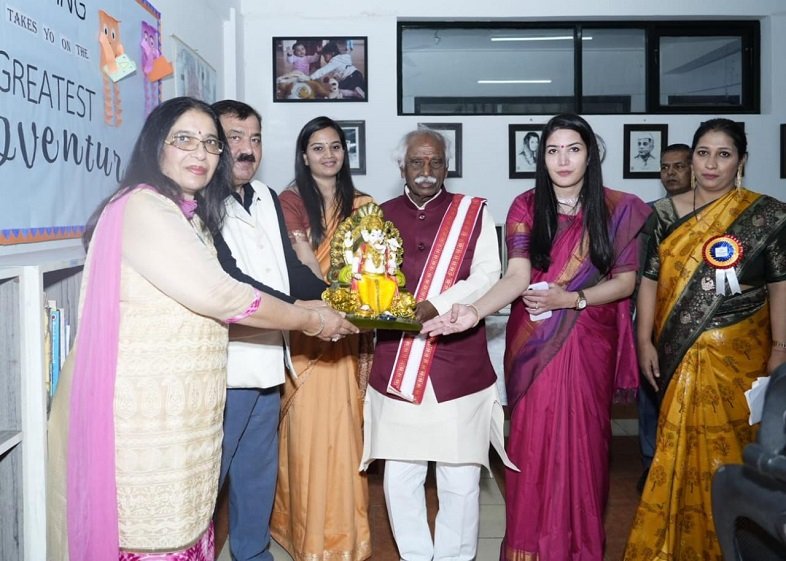
Shri Jitender Seghal, Chairman, Shri Ram Global School proposed the Vote of Thanks. The inauguration of Shri Ram Global School marks a significant milestone in the educational landscape of Gurgaon. The students enacted Ramayan on this occasion. With the blessings of the Governor and the dedication of its team, the school is poised to make a valuable contribution to the future of its students and the community.
24, Feb 2024
World’s First Multiomics Lab to be established in Bangalore: Vizzhy CEO Dr. Vishnuvardhan Unveils Groundbreaking Initiative
Bangalore, Feb 24: Vizzhy CEO, Dr. Vishnuvardhan, has announced the establishment of the world’s first Multiomics Lab in Bangalore, marking a significant leap in healthcare innovation. The announcement came during the soft launch event of the Vizzhy Multiomics platform, showcasing a pioneering approach to understanding and treating metabolic disorders.
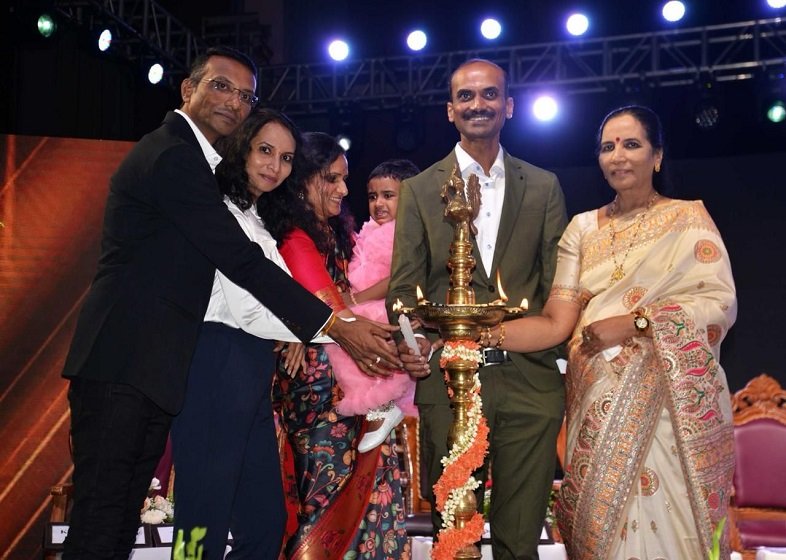
In his address, Dr. Vishnuvardhan highlighted the transformative potential of multiomics technology in deciphering the complexities of metabolic diseases. By integrating cutting-edge advancements and collaborations with esteemed institutions like the University of Illinois, Urbana-Champaign (UIUC), Vizzhy aims to revolutionize healthcare delivery.
The Vizzhy Multiomics platform promises a paradigm shift in healthcare management, offering precise insights into individual metabolic profiles. Utilizing state-of-the-art equipment and Health AI technology, the lab will empower physicians to identify root causes and provide tailored recommendations for patients.
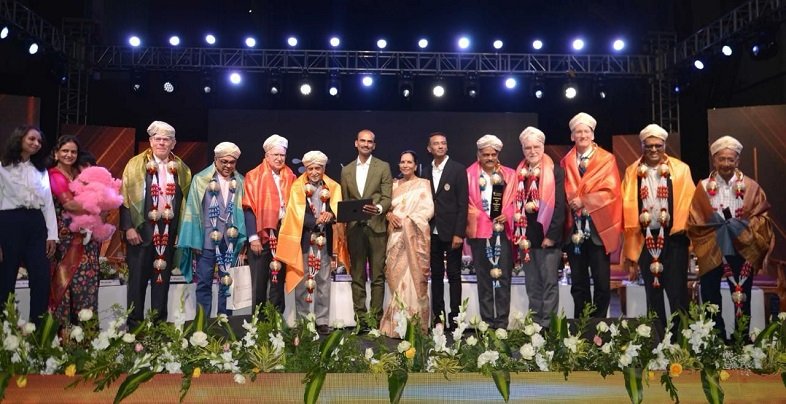
Moreover, the integration of AI-driven solutions, including digital signatures, will enhance medical decision-making and streamline health record management. Through the “Vizzhy GPT” platform, users can access comprehensive health summaries in multiple languages, facilitating informed healthcare interventions.
The initiative has garnered praise from UIUC, with President Timothy Laurence Killeen commending Vizzhy’s commitment to advancing healthcare through multiomics. Prof. Narendra Ahuja also lauded the potential of this groundbreaking technology in shaping the future of medicine.
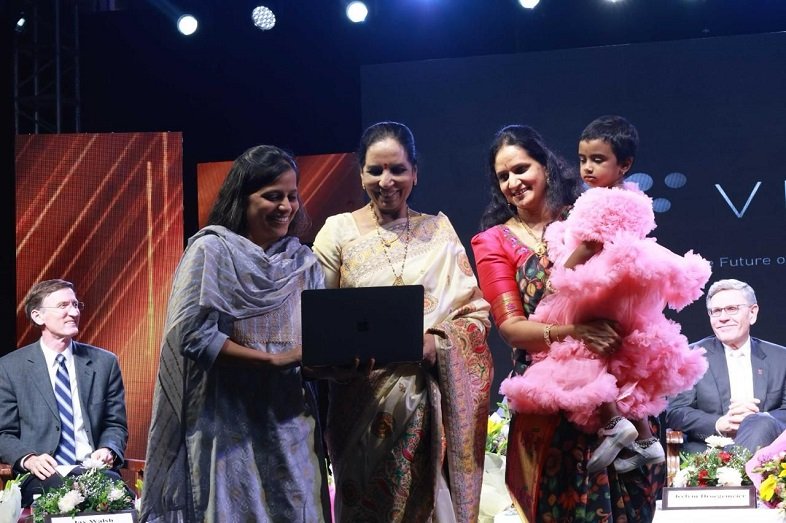
The presence of a distinguished delegation from UIUC underscores the global significance of Vizzhy’s initiative, heralding a new era of healthcare innovation.
23, Feb 2024
Hon’ble Prime Minister to dedicate Stage-I (2×800 MW) of NTPC’s Lara Super Thermal Power Station and lay foundation stone of Stage-II (2×800 MW) of NTPC’s Lara Super Thermal Power Project in Chhattisgarh
Mumbai, 23rd February, 2023: Hon’ble Prime Minister Shri Narendra Modi will dedicate Stage-I (2×800 MW) of NTPC’s Lara Super Thermal Power Station and lay the foundation stone of Stage-II (2×800 MW) of NTPC’s Lara Super Thermal Power Project through video-conferencing on 24th February 2024.

Located in the Raigarh district of Chhattisgarh, coal for this pit-head power station/project will be supplied from NTPC’s Talaipalli Coal block through a Merry-Go-Round (MGR) system, ensuring supply of low-cost power with 24×7 availability to the country.
Equipped with highly efficient Super Critical technology (for Stage I) and Ultra Super Critical technology (for Stage II), all the units will ensure lesser Specific Coal Consumption and carbon dioxide emission.
While 50% of power from both Stage I & II is allocated to the state of Chhattisgarh, the project will play a crucial role in improving the power scenario in several other states, such as Gujarat, Madhya Pradesh, Maharashtra, Goa, Daman & Diu, Dadra and Nagar Haveli.
Meanwhile, the installation of this project is creating direct and indirect employment opportunities in the region. Besides various Community Development initiatives are being taken up by NTPC in the nearby areas in the fields of education, drinking water, sanitation, health, and women empowerment.
23, Feb 2024
Maharashtra DCM Devendra Fadnavis at ‘Ideas of India’ Summit 3.0: We are in strategic alliance with NCP and in emotional alliance with Shiv Sena
Mumbai, February 23, 2024: ABP Network’s flagship event, the ‘Ideas of India’ Summit 3.0, was graced by Devendra Fadnavis, Deputy Chief Minister, Maharashtra, who participated in the session ‘Collaborative Federalism: View of the States’ in Mumbai, today.
Speaking about dynamics of electoral alliance in Maharashtra, Devendra Fadnavis, said, “We are in strategic alliance with NCP and with emotional alliance with Eknath Shinde ji’s Shiv Sena”
Showing confidence about the third term for Modi Government, Devendra Fadnavis, explained, ‘The General Election 2024 is not an election of negative mandate. BJP does not face by anti-incumbency. We don’t need to target the opposition.’
Speaking about Government formation in Maharashtra, Devendra Fadnavis, Deputy Chief Minister, Maharashtra, said, “Sharad Pawar ji nominated Ajit Pawar ji for leading alliance related talks. Later on Ajit ji couldn’t back out from the commitments he had made to BJP”
Sharing his views about whether the BJP will do better in Maharashtra from the previous time, Shri Fadnavis remarked, “There are challenges but we will only do better than our performance from the last two times”
Devendra Fadnavis commented about the change in his role in the Government, said, “The Agenda that I drove during my tenure as Chief Minister, and I am able to deliver upon that even as Deputy CM”
“We have treated them as brothers for 25 years. It was Uddhav Thackeray ji who closed all doors”, Devendra Fadnavis further remarked talking about his relationship with the current leader Vidarbha Shiv Sena (UTB),
Talking about BJP’s strength, Devendra Fadnavis, said, “The ground cadre of BJP is inspired and driven by thought and not by expectations. BJP’s workers are the biggest Asset of the party. When Congress workers look at their leaders, they get worried.”
Talking about the upcoming state elections in Maharashtra, Devendra Fadnavis, Deputy Chief Minister, Maharashtra, said, “The coalition with NCP and Shiv Sena will continue in the upcoming elections. Eknath Shinde ji is our leader and we will fight the assembly election under his leadership”
The ABP Network’s ‘Ideas of India’ Summit 3.0 spotlighting the ‘The People’s Agenda’ brought a confluence of ideas and ideators to a common platform celebrating the country’s people and its plurality. The two-day summit hosted policymakers, cultural ambassadors, industry experts, celebrities, business leaders, economists, and leading luminaries to delve into the fundamental ideas of liberty, justice, equality, and diversity that define India, its society, culture, and politics. The meaningful deliberations on diverse topics had the brightest minds across sectors providing insights about the nation’s trajectory and its journey to become Viksit Bharat.
23, Feb 2024
Chandrayaan Soft landing of India sent a strong message to the world not to take Indians light: Dr Prakash Chauhan
Chandrayaan Soft landing of India sent a strong message to the world not to take Indians light: Dr Prakash Chauhan, Director National Remote Sensing Center
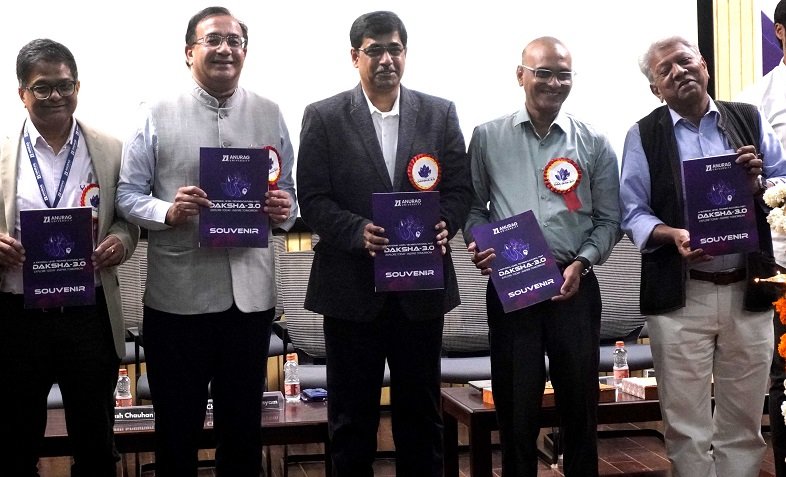
Hyderabad, February 23, 2024….….A two-day, February 23rd and 24th, National level Techno-Cultural Fest, DAKSHA 3.0, hosted by Anurag University kicked off at its campus in Medipally on Friday in the city.
Chinta Subrahmanyam, Senior Director Engagement, Delivery Partner, Cognizant Technology Solutions, Guest of Honour; Dr. Prakash Chauhan, Director National Remote Sensing Center, Chief Guest formally inaugurated the two-day fest.
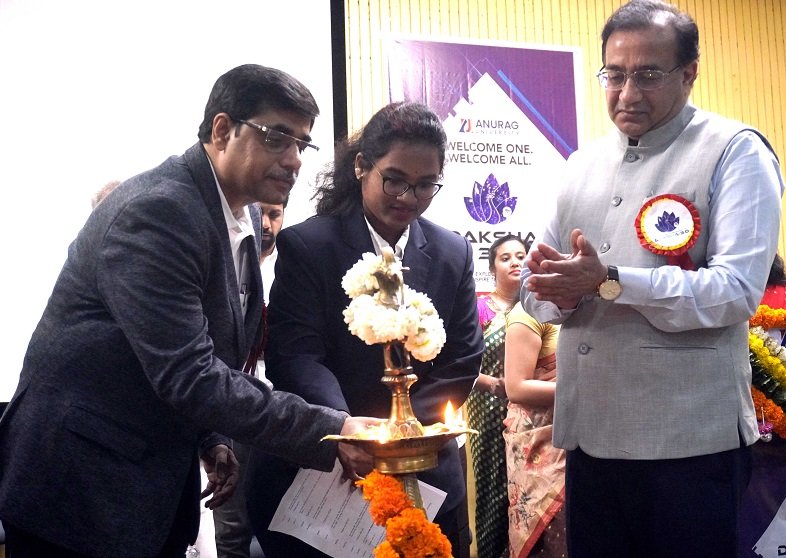
Addressing the gathering Dr Prakash Chauhan said the soft landing of the Chandrayaan Mission of India sent a strong message to the world not to take India and Indians’ capabilities lightly. The countries which stopped us from getting the latest technologies in this area soon after the success of Mission Chandrayaan started reaching out to ISRO for collaboration ” said Dr Prakash Chauhan, Director of National Remote Sensing Center.
Don’t underestimate Indians’ capabilities. Before the Britishers invaded India our GDP used to be over 20%, when they left us, we were less than 1%.
Speaking further he told youth to be well educated. The future of the world will be ruled by educators. He told them to practice digital fasting. Whatever you do give your 100% he told them. He highlighted the importance of Mental and physical health and a good eight-hour sleep.
He has done lead work in using the hyperspectral satellite data for Indian Planetary Missions such as Chandrayaan-2 and Chandrayaan-1 for lunar surface composition mapping. He had been the Principal Investigator for the Infrared Imaging spectrometer (IIRS) instrument onboard the Chandrayaan-2 mission. More recently his work on Chandryaan-2 IIRS spectrometer data has resulted in unambiguous detection of H2O and OH on the surface of the Moon. His findings have conclusively established the presence of water molecules at different locations on the Moon.
Teachers’ role is as much important as students’ efforts in the success. Participation is more important than success. You must present well not just in job market but in every aspect as well as this festival. You must dare to dream big Chinta Subrahmanyam told the students
Anurag University will organize international conference on failures. There is no success without failure. Failures are stepping stones for success. Yet, failures are taken very seriously. Failures are considered as end of life. Students must be prepared to handle failures. Keeping this in mind, the Telangana’s first private university, Anurag University is embarked on a plan to organize an international conference on failures, disclosed its Registrar, Prof.Balaji Utla.
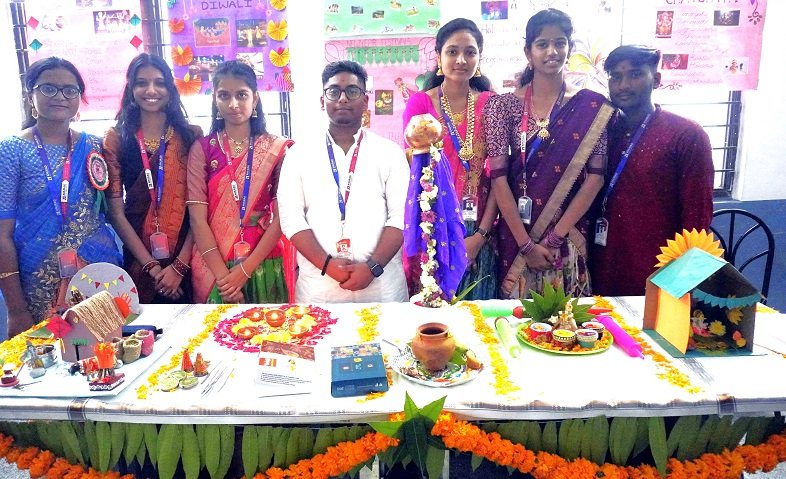
Techno-Cultural Fest DAKSHA-3.0 was started in the year 2021-2022 with a vision to provide all Undergrads all over the country to come together to network and compete against each other. Now in its 3rd edition, Daksha promises to Bring young talents together with participation from around 120+ Colleges/Universities from all over the country informed P.Rajasekhar Reddy, Convener Daksha 3.0;
The theme of the 3rd edition is Explore Today Inspire Tomorrow. The objective behind hosting Techno-Cultural Fest DAKSHA-3.0 is to create a bond with students of different Colleges/Universities and to test their skills and abilities in different fields.
Over 120 colleges from nine states from across India and nearly 12000 students are participating in over 175 events in this unique program being organized by 450 organizers.
The fest comprised of Project Expo, showcasing products invented/developed by students; Paper and Poster presentations; Literary and Skill Events, Startup Expo, Technical Quiz, Musical events, Art Competitions, Blind Art, Tug of War; Tambola Thrill;
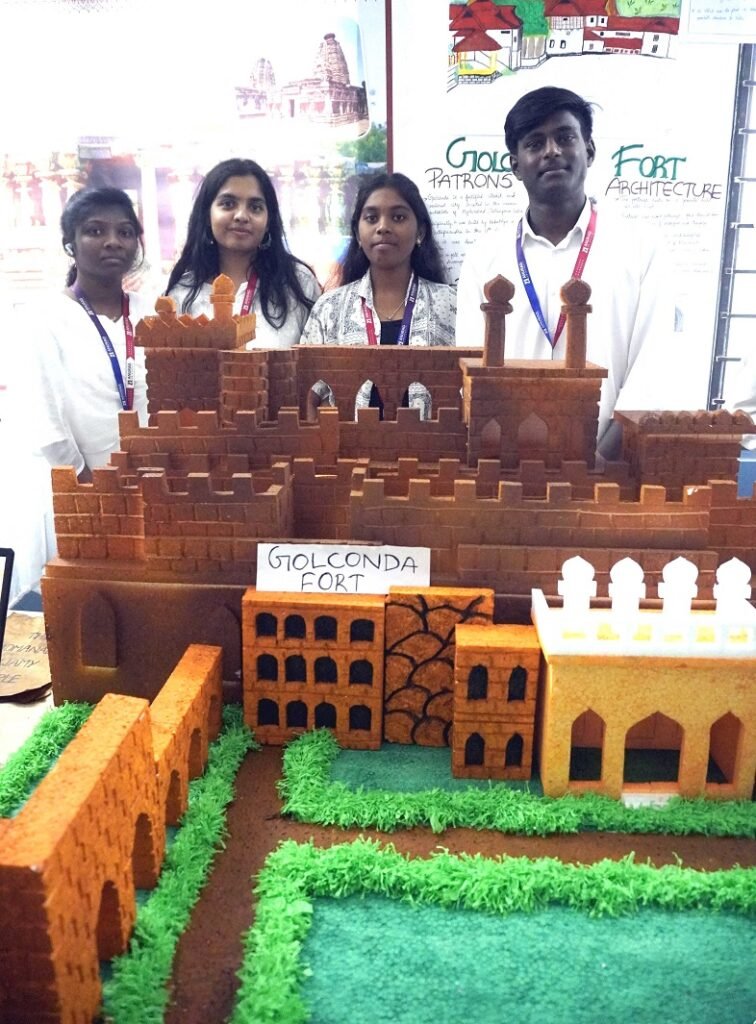
A real beauty of this festival Technical Events held along with fun and frolic non-technical events as well. It is a good mix of learning and pleasure. A blend of competence and entertainment.
Dr Balaji Utla, Registrar of Anurag University (AU); Mrs S. Neelima, CEO, AU; Dr P. Rajeshwar Reddy, Chairman, AU; P.Rajasekhar Reddy, Convener Daksha 3.0; Dr Vijaya Kumar, Dean SoE, AU; Dr G.Vishnu Murthy, Dean CSE AU; Dr Vasudha Bakshi, Dean SoP, AU and Anurag Palla, Director Strategy & Digital Learning graced the occasion.
23, Feb 2024
Centre for Knowledge Sovereignty (CKS) and Esri India Enter the Pilot Phase of the MMGEIS Program
23 February 2024, Bengaluru: The Centre for Knowledge Sovereignty (CKS) and Esri India announced today the launch of the Pilot program of the Master Mentors Geo-enabling Indian Scholars (MMGEIS) program. Shri A. S. Kiran Kumar, Former Chairperson, ISRO addressed the media along with Dr K. J. Ramesh, Former Director General of Meteorology, IMD, Lt. Gen. Girish Kumar (Retd), Former Surveyor General of India, Shri Vinit Goenka, Secretary, CKS and Shri Agendra Kumar, Managing Director, Esri India. The pilot phase of the program will cover 1000 students across India.
MMGEIS is an online program that aims to inculcate geospatial thinking and develop a research-oriented mindset amongst students from 8th grade to undergraduate level who will form the future workforce of the country. The program aims to engage up to 5,00,000 students over the next five years. In 2022, India saw over 66,400 patent applications including 140 Geospatial patents. The program will work towards fostering a strong IP framework to enable more patents from India in its journey towards becoming a global geospatial innovation hub. Since the launch of the program, both organizations have given shape to their commitment towards stimulating geospatial thinking amongst students thereby accelerating the creation of Intellectual Property in the geospatial sphere in India.
A series of activities have been conducted to lay the groundwork for the MMGEIS program. Some of the notable activities include organizing a roundtable discussion of industry leaders in Delhi on 11 December 2023, facilitating the visit of 42 students from 10 cities to the ISRO Telemetry Tracking and Command Network (ISTRAC) centre in Bengaluru on 13 December 2023, and launching the MMGEIS website in Delhi on 10 January 2024.
With these essential groundwork activities completed, the MMGEIS program is now entering its pilot phase. The pilot program will initially be rolled out in select schools and educational institutions, with plans for a wider implementation from June onwards this year. The MMGEIS team is committed to facilitating a transformative learning experience for students and preparing them for the and opportunities of the current digital age.
Addressing the media, Shri A S Kiran Kumar, Member, Space Commission and Former Chairman, Indian Space Research Organization (ISRO) said, “It is important to enable and empower curious young Indian minds with the tools and knowledge to understand the use of geospatial technology which is rapidly encompassing all aspects of human endeavors. MMGEIS is a powerful medium that will bring to these bright minds the right guidance and skills to usher in an era of innovation in use of geospatial technology.”
Shri Agendra Kumar, Managing Director, Esri India, shared, “After successfully completing the essential groundwork activities, we are proud to launch the pilot program for MMGEIS. This pioneering initiative represents our commitment to nurturing the next generation of geospatial innovators and leaders. By equipping students with geospatial awareness and skills, we believe they will be well-prepared to tackle the challenges of the future and make a positive impact on society.”
Shri Vinit Goenka, Secretary, CKS said, “We are extremely proud that within such a short span of time, we are in a position to take MMGEIS to students across India. We are certain that MMGEIS will bring about a revolutionary change in our country. The mentorship that this program will provide to students will change their approach towards education and the focus will be more on understanding and discovering new areas. The day is not far when India will be a world leader in innovation.”
Lt. Gen. Girish Kumar VSM, Advisor, Government of Haryana and Former Surveyor General of India highlighted, “MMGEIS program is designed to set the stage for the next level of geospatial research and innovation in our country. By mentoring promising students under the guidance of leading scientists and innovators, we are seeding for a future rich in geospatial expertise and innovation. The goal is to inculcate a way of thinking that encourages students to think differently and take up research and development in the geospatial sphere.”
Dr K. J. Ramesh, Advisor, Regional Integrated Multi-Hazard Early Warning System (RIMES) and Former Director General of Meteorology, India Meteorological Department (IMD) shared, “MMGEIS program aligns with India’s goal of becoming a developed knowledge-driven economy, recognizing that development is not just economic growth but also building human capital having innovative and analytical strengths. By equipping our youth with advanced innovative and knowledge skills, we invest in our most valuable asset – our people. These skills are essential for preparing students to become potential future contributors, responsible inventors, entrepreneurs, and citizens of a knowledge-driven country.”
23, Feb 2024
Backing films like The Kerala Story is essential for filmmakers’ integrity’, says Film Producer & Director Vipul A Shah at Ideas of India Summit 3.0
Mumbai, February 23, 2024: In a key session at Ideas of India Summit 3.0, Bollywood Film Producer and Director Vipul A Shah who is also known for the much discussed, The Kerala Story, shared his perspective on the changing landscape of Indian Entertainment Industry.
“The rise in political consciousness among Indians has significantly influenced the content of films we make and the stories
we tell. Supporting films like ‘Kerala Story’ is important, it speaks to the filmmaker’s integrity and the importance of diverse voices and narratives,” he said.
Vipul Shah, further remarked, ‘As individuals with political leanings, our religious practices should not be misconstrued as communal. It is a fundamental aspect of personal identity.’On the inaugural day of ABP Network’s flagship event, the ‘Ideas of India’ Summit 3.0, celebrated filmmakers shared their views on ‘Anatomy of Art: Are Our Movies Dividing or Uniting Us?’ shedding light on controversial topics and the quest for authenticity in storytelling.
Explaining the complexities within the Indian film industry, Vipul A Shah, expressed, “Despite perceptions of division, the film industry remains a complex ecosystem, where narratives often become politicised. Today, the success of a film hinges not on its controversy, but on its ability to resonate with audiences through genuine, thought-provoking content. Projects like ‘Animal’ challenges societal norms and sparking important discussions. It is through daring, unconventional narratives that we provoke change and global influence.”
Sharing his take on whether polarizing movies are a recent trend, Madhur Bhandarkar, Filmmaker, Producer and Script Writer, remarked, “There is no division in the film industry; it remains unified, despite varied political and non-political leanings. While some artists are open and vocal, others choose discretion, a natural aspect of the industry. My films, like ‘Chandani Bar, Traffic signal etc.,’ have addressed issues like poverty and have always maintained a secular stance. However, my personal political alliance led to sidelining and questioning of my secularism. I am a proud practicing Hindu. Our films consistently promote unity between Hindu and Muslim communities. The success of films like ‘Animal’ has revolutionized industry norms, despite controversies surrounding their content. However, actors often hesitate to endorse politically charged projects due to fear of social media backlash and its repercussions on their careers.”
Known for movies like Parched and OTT series ‘House of Secrets’, Leena Yadav, Filmmaker and Storyteller, put forth a women’s perspective, stating, “Films cannot be made without politics. The lack of real dialogue between filmmakers is missing, and the social media is creating pressure for people to take action. It is impossible for makers not to include their political bias. Films are driven by commerce, and sentiment-driven cinema is becoming a part of mainstream and social media discussion. There are films with controversial angles which get financing and not all of them are made with conviction.”
The ABP Network’s ‘Ideas of India’ Summit 3.0 spotlighting the ‘The People’s Agenda’ brought a confluence of ideas and ideators to a common platform celebrating the country’s people and its plurality. The two-day summit hosted policymakers, cultural ambassadors, industry experts, celebrities, business leaders, economists, and leading luminaries to delve into the fundamental ideas of liberty, justice, equality, and diversity that define India, its society, culture, and politics. The meaningful deliberations on diverse topics had the brightest minds across sectors providing insights about the nation’s trajectory and its journey to become Viksit Bharat.
23, Feb 2024
Parents should stop treating young minds as ‘Project Children’: Prof. Vijender Singh Chauhan
Mumbai, February 23, 2024: Highlighting the importance of listening to the aspirations of young minds and their idea of India, in a session titled ‘Yearning to Learn: What Young People are Telling Us’ at the ‘Ideas of India’ Summit 3.0 in Mumbai, eminent academicians Prof. Vijender Singh Chauhan, Associate Professor at Zakir Husain Delhi College, University of Delhi, and Neetu Singh, Founder of KD Campus & KD Live, elaborated on the need for creating career opportunities, the role of parents in supporting their dreams, and the impact of social media algorithms and AI disruption on their future.
Known as the man who helps civil service aspirants crack interviews, Prof. Vijender Singh Chauhan said, “We need to understand that 25-year-olds are the most populous demographic in India globally. And we need to ask ourselves whether, as a society, we are preparing to sustain them when this population turns 50. Today, we are witnessing a decline in the diversification of dreams among young minds. There are only 800 jobs available in UPSC, yet 8 lakh people are applying for them. This clearly indicates that young people are not getting their desired career choices. Parents should stop treating their children as mere projects, pushing them towards preparing for IITs, then sending them to IIMs, and finally aiming for a UPSC clearance. Getting a government job should not be the sole aspiration of young minds.”
Sharing her thoughts on the importance of parents’ role in shaping the future of children, Neetu Singh, widely renowned for having developed her own style and method for English coaching, added, “We need to understand that there are still values in our society, and many students go through hardships only to fulfil the dreams of their parents. Students come from the lower economic sections of society, and the job opportunities are fewer for them. So, parents should not burden children with the weight of their expectations and dreams, so they get shattered. It is essential for students to know what is essential for them and they need to engage in grooming and self-improvement, giving their heart and soul properly.”
Elaborating on the risks of AI disruption and algorithms, Prof. Chauhan added, “Engineers doing basic coding jobs will soon find AI taking over these roles. Are we preparing them for the jobs that will emerge 10 years down the line? Also, we need to be aware of how social media algorithms and persuasive technology are making us believe in collective dreams or choices that are not our own. Algorithms are influencing career choices, personal, social, and most importantly, our political choices, which is dangerous.”
The ABP Network’s ‘Ideas of India’ Summit 3.0, spotlighting ‘The People’s Agenda,’ brought a confluence of ideas and ideators to a common platform celebrating the country’s people and its plurality. The two-day summit hosted policymakers, cultural ambassadors, industry experts, celebrities, business leaders, economists, and leading luminaries to delve into the fundamental ideas of liberty, justice, equality, and diversity that define India, its society, culture, and politics. The meaningful deliberations on diverse topics had the brightest minds across sectors providing insights into the nation’s trajectory and its journey to becoming Viksit Bharat.