


8, Feb 2024
VP inaugurates the World Sustainable Development Summit 2024 at TERI today
India, February 08, 2024: The Vice-President, Shri Jagdeep Dhankhar today emphasised the need for global leadership to drive the mainstreaming of environmental protection and climate justice at all levels, embedding these principles in the very fabric of our societies. Listing out India’s initiatives initiatives that balance economic growth with ecological preservation, he said that “India serves as a beacon of inspiration for nations around the world.”
Addressing the World Sustainable Development Summit 2024, at TERI in New Delhi today Shri Dhankhar said that in an interconnected world, “we must recognize that the challenges we face – know no borders.” The impact of our actions reverberates across nations, affecting the most vulnerable communities and ecosystems, he stressed while calling for formulation and adoption of people and nature-centric approaches.
Noting that one of the cornerstones of sustainable development is the transition to clean and renewable energy sources, VP highlighted that our commitment to renewable energy not only mitigates the impacts of climate change but also opens avenues for economic growth, job creation, and technological innovation. “India’s commitment is evident not only in words but in action, with the implementation of policies that reflect a dedication to the principles we advocate,” he added.
Expressing concerns over the looming threat of climate change, the Vice-President further emphasised that our economic progress must be harmonized with a commitment to sustainable development, ensuring that we leave a legacy that our future generations can inherit with pride. The challenges we face are daunting, but they are not insurmountable, he said while underlining that by joining forces, embracing innovation, and fostering international cooperation, we can pave the way for a sustainable and secure future for all.
H.E. Brigadier (Retd) Mark Phillips, Prime Minister, Guyana, Shri Bhupender Yadav, Union Minister for Environment, Forest and Climate Change, Shri Nitin Desai, Chairman, The Energy and Resources Institute, Dr. Vibha Dhawan, Director General, TERI, Dr. Shailly Kedia, Curator, World Sustainable development Summit, and other dignitaries attended the event.
- 0
- By Rabindra

8, Feb 2024
AIMEP Organised Grand Nari Shakti National Conclave in New Delhi
New Delhi, Feb 8, 2024: The All India Mahila Empowerment Party (AIMEP) organized a grand “Nari Shakti National Conclave” on the theme of “Nari Shakti: Towards Women-led Development” on Wednesday in New Delhi.
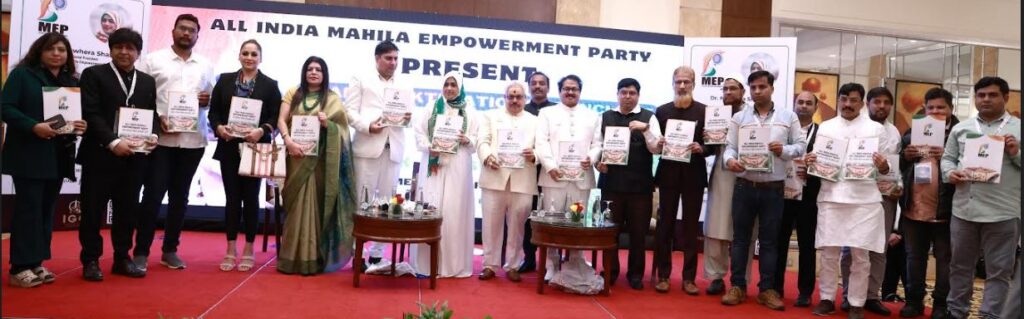
The conclave was a momentous celebration of women’s achievements and the impact of the Women’s Reservation Act (Nari Shakti Vandhan Adhiniyam 2023), which was passed by the Parliament last year.
The conclave witnessed the participation of over 350 eminent personalities from various fields, such as politics, academia, media, arts, sports, and social work. The conclave also witnessed the release of “Viksit Bharat Vision Documents”.
The conclave hosted a panel discussion led by Dr. Nowhera Shaik, Founder and National President of AIMEP, centred around the theme “From Women’s Development to Women-led Development: A Tectonic Shift in the Development Discourse of India.”
The conclave was followed by keynote speeches which were delivered by prominent figures including, Dr. Ramdas Athawale, Union Minister of State for Social Justice and Empowerment.
The speakers praised the AIMEP for its efforts to empower women and to promote their participation in governance. While addressing to gathering Dr. Ramdas Athawale said, “AIMEP is the first political party to organize such a momentous national conclave to celebrate and empower Nari Shakti. It is a historic and visionary initiative that will inspire and transform the nation,” he said.
While praising President AIMEP, he said that Nowhera Shaik stands as the epitome of Women Empowerment. Through her vision and actions, she has become a symbol of strength and women empowerment for organizing such a groundbreaking event.
A documentary was also featured in the conclave which showcases the contributions, struggles and achievements of Dr. Nowhera Shaik, Founder AIMEP.
All Members of Parliament who played a pivotal role in supporting the Women’s Reservation Bill, were commended during the grand “Nari Shakti National Conclave”.
Dr. Nowhera Shaik, who is the President of AIMEP presented awards on their behalf as a token of recognition for their dedication and commitment to empower women and advancing gender equality.
Dr Nowhera Shaik congratulated them for their courage and conviction and urged them to continue their efforts to uplift the status of women in the society. She said that the Women’s Reservation Act was a historic step towards achieving gender equality and social justice in the country.
“The Women’s Reservation Act is not just a law, but a revolution of amritkaal. It is a tribute to the sacrifices and struggles of millions of women who fought for their rights and dignity,” she said.
Sameer Khan , Political Analysts & Social Worker said “The Mahila Empowerment Party is not just a political party, but a movement. It is a movement of women, by women, and for women. It is a movement that seeks to transform the society and the nation by empowering women and by ensuring their participation in decision-making and policy-making. It is a movement that strives to create a new India, where women are respected, valued, and celebrated,”
“The AIMEP is the voice of Nari Shakti. It is the voice of Viksit Bharat. It is the voice of Bharat – Loktantra ki Matruka. It is the voice of the people,”
8, Feb 2024
Stable Repo Rates to Keep Residential Momentum Going

Anuj Puri, Chairman – ANAROCK Group
With the fundamentals of the Indian economy remaining strong despite all global headwinds and inflation well under control, the RBI once again decided to keep the repo rates unchanged at 6.5%, thus extending the festive bonanza that it gave to the homebuyers in its last two policy announcements. Thus, homebuyers retain their advantage of relatively affordable home loan interest rates.
If we consider the present trends, the housing market has been unstoppable, and unchanged home loan rates will help maintain the overall positive consumer sentiments. Given that housing prices have risen across the top 7 cities in the last one year, this breather by the RBI is a distinct advantage to homebuyers.
As per ANAROCK Research, 2023 saw average housing prices rise by anywhere between 10-24% in the top 7 cities, with Hyderabad recording the highest 24% jump. The average prices in these markets stood at approx. INR 7,080 per sq. ft., while in 2022 it was approx. INR 6,150 per sq. ft. – a collective increase of 15%.
Going forward, we can expect the momentum in housing sales to continue, significantly aided by the unchanged repo rates which will keep home loan interest rates attractive and also signal ongoing robustness of India’s positive economic outlook.
8, Feb 2024
Balu Forge Industries Earnings press release Q3 FY24
Management Commentary:
Commenting on the performance of Q3 FY24, Mr. Trimaan Chandock, Executive Director of BFIL stated:
“We are happy to share our financial and business performance for Q3 FY24, we witnessed healthy revenue growth of 55.7% and revenue from operations stood at ₹1,470.75 Mn in Q3 FY24 compared to ₹893.92 Mn in Q3 FY23. This growth was led by our constant focus on client addition and continued demand for our products in the existing and new industries like railways, defense and heavy commercial vehicles. EBITDA grew by 72.1% and margins improved from 19.58% in Q3 FY23 to 22.24% in Q3 FY24 owing to increase in scale of operations and increased demand for heavier products which tend to yield better margins. PAT margins improved from 12.81% in Q3 FY23 to 17.31% in Q3 FY24.
In terms of 9M performance, revenue from operations increased by 96.5% and stood at ₹3,986.85 Mn in 9M FY24 compared to ₹2,028.58 Mn in 9M FY23. EBITDA increased by 191.1% from ₹291.08 Mn in 9M FY23 to ₹847.36 Mn in 9M FY24, and margins improved to 21.25% from 14.35%. PAT increased by 176.2% and stood at ₹653.95 Mn in 9M FY24 compared to ₹236.74 Mn in 9M FY23, margins improved from 11.67% to 16.40% during the same period.
Consolidated P&L Statement
| Particulars (Rs. Mn) | Q3 FY24 | Q3 FY23 | YoY% | Q2 FY24 | 9M FY24 | 9M FY23 | YoY% | |
| Revenue from Operations | 1,470.75 | 893.92 | 55.7% | 1,392.25 | 3,986.85 | 2,028.58 | 96.5% | |
| Other Income | 18.64 | 26.23 | 40.61 | 60.32 | 120.97 | |||
| Total Income | 1,489.39 | 920.15 | 55.7% | 1,432.86 | 4,047.17 | 2,149.55 | 88.3% | |
| Total Expenses excl. D&A & Finance Cost | 1,143.61 | 718.86 | 1,090.99 | 3,139.49 | 1,737.50 | |||
| EBITDA (Excluding Other Income) | 327.14 | 175.05 | 72.1% | 301.25 | 847.36 | 291.08 | 191.1% | |
| EBITDA Margin (%) | 22.24% | 19.58% | 21.64% | 21.25% | 14.35% | |||
| Depreciation & Amortization | 5.13 | 3.16 | 4.59 | 14.32 | 8.91 | |||
| Finance Cost | 38.63 | 27.56 | 37.65 | 101.07 | 70.16 | |||
| PBT before Exceptional Item | 302.01 | 170.56 | 299.62 | 792.29 | 332.98 | |||
| Exceptional Items | – | – | – | – | – | |||
| PBT | 302.01 | 170.56 | 299.62 | 792.29 | 332.98 | |||
| Tax | 47.47 | 56.04 | 66.92 | 138.35 | 96.24 | |||
| PAT | 254.55 | 114.52 | 103.2% | 232.70 | 653.95 | 236.74 | 176.2% | |
| PAT Margin % | 17.31% | 12.81% | 16.71% | 16.40% | 11.67% | |||
| Other comprehensive (profit)/ loss | -0.34 | -0.16 | 0.57 | 0.28 | 0.524 | |||
| Net PAT | 254.21 | 114.36 | 233.27 | 654.22 | 237.27 | |||
| Diluted EPS (In Rs.) | 2.57 | 1.37 | 2.47 | 6.61 | 2.84 |
BFIL’s dedication to prioritizing customers and fostering growth has not only bolstered our market position but has also led to the cultivation of strong relationships with clients, positioning us as partner of choice for supplying critical components. A testimony of our client centricity is evident in our recent additions of 3 new OEM clients.
Further, the development of our newly acquired Mercedes Benz unit is also progressing well on expected timelines and the full fledged operations are expected to commence from Q4 FY24. This unit will enable us to produce heavier and more complex components having better realizations and margins. Currently the same is partly operational and is aiding us in achieving good revenue growth along with superior margins.
On the industry front, we are seeing immense opportunity in various sectors like defense, railway, sustainable green energy components, and commercial vehicles. To seize these opportunities, we are leveraging our strong inhouse R&D capabilities to expand our product offerings and the testimony to same is depicted by our broad product range. Furthermore, we are spearheading investments to transform into a more integrated company. These investments will enable to us to acquire new clients, expand our presence in untapped regions and enhance our product portfolio.
In summary, our readiness for the future is characterized by a comprehensive strategy that harmoniously blends different facets. This encompasses ongoing expansion of our capacities to meet anticipated demand, alongside the implementation of new technologies to improve operational efficiency and cost-effectiveness. Furthermore, our dedication to pioneering innovation and careful cost management assures us to increase our prominence in the competitive landscape, paving the way for sustained revenue growth and enhanced profitability.
Management Guidance:
- Revenue is expected to conservatively grow in the range of 40.0%-45.0% in FY24 over FY23, led by new customer addition in sectors like railway and defence.
- EBITDA margins are expected to be in the corridor of 23.0%-24.0% in the upcoming quarter on the back of increasing scale of operations and efficiencies thereon
8, Feb 2024
Primus Partners Survey Reveals Optimistic Outlook for Viksit Bharat
Mumbai, 08 February 2024: In their latest report titled, “India’s Turn To Lead By 2047,” Primus Partners has unveiled findings that paint an optimistic picture of India’s journey towards becoming a developed nation by 2047. The report, which synthesizes insights from 33 experts and the perspectives of Indians across 25 states, underscores a complex landscape of hope, ambition, and apprehension as the country navigates its socio-economic trajectory.
The report, with a foreword by Amitabh Kant, unveils compelling insights garnered from a diverse range of respondents across 25 Indian states and union territories, shaping the vision for “New India”. Among the key findings, citizens believe in India’s emergence as one of the largest economies, self-reliant, and leading in the new world order. Amongst the surveyed people, 16% of respondents across geographies envision a developed India as one of the largest economies globally and one with a higher GDP per capita.
“Backed by civilizational ethos and confidence, the nation is on a mission to constructively reform itself and harness its strengths. India seeks to propel itself toward a future that not only uplifts its own people but resonates with the betterment of all humanity—because when India grows, the world grows.” – Amitabh Kant, G20 Sherpa, Former CEO NITI Aayog.
It further goes on to outline the nation’s developmental aspirations and the hurdles it must overcome. A robust 70% of respondents express confidence in the vision of Viksit Bharat, anticipating India’s emergence as a global leader by 2047. This optimism is mirrored in the 63% who envision India as a powerhouse in global trade, technology, and economy.
The survey also sheds light on public engagement with governmental visions for the future, revealing that 42% of respondents are already familiar with the government’s plans for 2047. This level of awareness suggests a significant portion of the population is engaged and interested in the country’s developmental direction. However, on the other side of the spectrum, 27% of respondents believe rural India remains disconnected from urban centres, pointing to a critical need for improvement in connectivity and infrastructure to bridge this divide.
The complexity of India’s aspirations is further illustrated by the diverse expectations of its population. While aspirations for luxury living, global connectivity, and technological advancement drive the middle class, pressing challenges remain. Security concerns and gender equality emerge as significant issues, with 10% of the surveyed population viewing lack of security as a threat and 18% highlighting concerns over women’s safety.
Primus Partners’ survey methodology, employing a mix of qualitative and quantitative analysis across 24 personas and 2047 interviews, ensures a comprehensive view of trends and perspectives across different demographics. This detailed approach reveals not only the nation’s collective vision but also the nuanced apprehensions about the rapidly evolving job market, exacerbated by technological advancements like AI.
“The survey aimed to bring to the forefront the voices from the ground, particularly those less talked about, to create a document centred on inclusivity. The report goes beyond just capturing the hopes, challenges, and aspirations of Bharat; it includes expert insights on the pathways forward. There are plans to develop more detailed roadmaps for each area in the future.” – Nilaya Varma, CEO & Co-Founder, Primus Partners
The report concludes with a call to action, urging policymakers, industry leaders, and the public to engage in a constructive dialogue about the future of work in an AI-driven economy. It advocates for upskilling and reskilling initiatives as essential strategies to mitigate the perceived threat of AI on employment, ensuring that India’s workforce remains competitive and adaptable in the face of technological change.
As India stands on the cusp of a transformative era, “India’s Turn To Lead By 2047” offers a critical reflection on the hopes and challenges that define its path toward development. By highlighting the apprehension towards AI among job seekers, the report underscores the urgent need for a balanced approach to technological adoption—one that harmonizes innovation with job creation and inclusivity. It not only serves as a roadmap for navigating the complex socio-economic landscape of India but also as a catalyst for national discourse on crafting a future that leverages technology for growth while ensuring no one is left behind.
8, Feb 2024
UB40’s Ali Campbell will perform in Delhi midst of his RELIVE TOUR
New Delhi, February 2024 – Prepare to groove as the legendary Ali Campbell spins an unforgettable evening of timeless classics and musical nostalgia, as the lead voice behind the iconic band UB40. The event is set to take place at the India International Convention and Expo Centre (Yashobhoomi), Dwarka on 16th February, promising a night of pure entertainment and nostalgic Music.

This concert is a part of his World tour and after performing to Sold out shows in Hawaii, New Zealand and Australia they are making their way to India for the RELIVE Tour, an initiative of Asset and Joint Initative in Delhi of Eva Live, Hungama Digital Entertainment & Ten Events & Entertainment.
Ali Campbell, the charismatic and soulful lead singer of UB40, renowned for hits like “Red Red Wine” and “Can’t Help Falling in Love,” will take centre stage to captivate audiences with his distinctive voice and infectious energy. With a career spanning decades, Campbell continues to be a force in the Reggae & Pop genre and his live performances are nothing short of electrifying
The tour is a journey through the golden era of reggae and pop. Attendees can expect a carefully curated setlist featuring UB40’s greatest hits, as well as other chart-topping favorites from the era. The event promises to transport the audience back in time, allowing them to relive the magic of the ’80s and ’90s while creating new memories.“We are thrilled to curate this elite experience with Asset, for Ali Campbell fans who have grooved to his music all through the 80s and 90s as well as those who have followed legendary musicians and give them this once a lifetime experience. Delhi as a city offers a vast variety of audiences especially those who appreciate classics and finer tastes in all aspects of life! We promise to deliver Ali Campbell to the city of Heart, Delhi amidst a specially crafted experience” says Deepak Choudhary, founder Eva Live LLP.
“This event is a celebration of timeless music that transcends generations. Ali Campbell’s presence is sure to make it a night to remember for all attendees” he said.
UB40 feat. Ali Campbell’s setlist is a treasure trove of classic tracks that rekindle memories and emotions. From favorites like “Red Red Wine” to “(I Can’t Help) Falling In Love with You,” “Don’t Break My Heart,” “Purple Rain,” “Kingston Town” and “I Got You Babe,” the audience is in for one amazing nostalgic trip.
The principal promoter of the India tour, Mr. Sanjay M Lal, MD & CEO Asset said, “ASSET is proud to have associated with Industry stalwarts Eva Live, Hungama Digital Entertainment & Ten Events & Entertainment who share its vision of delivering an unparalleled experience that revolutionizes the concert & engagement landscape in India. This tour, featuring an exceptional band performance and many premium services, aims to set new entertainment standards which will be seen for the 1st time in India”
Tickets for this one-of-a-kind event are now available on Paytm Insider. Don’t miss your chance to be part of #RelivetheGoldies and experience the magic of Ali Campbell live in concert.
8, Feb 2024
Collective efforts, frontline leadership, technology and innovation can give to achieve SDGs and Climate Justice
New Delhi, February 08, 2024: The world has crossed the midpoint timeframe of the Sustainable Development Goals (SDGs) implementation, only to face a grim reality that it is falling short of meeting most of the SDGs by 2030.
Recognizing that SDGs are not isolated objectives, but a cohesive and interconnected framework designed to tackle the multifaceted challenges confronting our planet, the 23rd edition of the World Sustainable Development Summit, organized by The Energy and Resources Institute (TERI), hosted a series of sessions on sustainable development, energy transitions and climate justice today.
In this backdrop, the proceedings started with a session focused on climate action, peace, and spirituality. Highlighting the need to connect self with nature, BK Shivani, Rajyog Teacher, Brahma Kumaris, World Spiritual Organization during the invocation session pointed out, “Somewhere something has not gone the right way, otherwise a lot of efforts, results should have been a happy planet, and a happy planet would have been a healthy planet. But a stressed, depressed planet cannot create a happy and healthy environment.”
During the session on ‘Integrating Sustainable Development for Collective Action,’ experts on the panel deliberated on the tools that can further vertical and horizontal integration of sustainable development goals. The panelists called for global solutions, collaborations, and partnerships to advance SDGs and climate action at all levels, emphasizing the need to translate policies into ground-level projects.
H.E. Mr Ban Ki-moon, 8th Secretary-General of the United Nations, and President, Global Green Growth Institute, through a video message appealed, “Science has made it clear that political will is urgently needed. I encourage major economic powers to show leadership. Industrialized countries have historical responsibilities in addressing climate change, thus they must equitably lead the charge in solving this deepening global crisis.
“Without robust global action and elevated global will, the climate crisis will only worsen further. No one nation can combat climate change or accomplish green growth alone no matter however rich and powerful he may be,” he added.
COP29 President Designate, H.E. Mr Mukhtar Babayev, Minister, Ministry of Ecology and Natural Resources, Republic of Azerbaijan through a video message reaffirmed his commitment to better global climate. “Our focus is on a clear and actionable roadmap outlining steps to triple energy capacity and double energy efficiency. I am dedicated to securing strong commitment from nations and stakeholders translating ambitious targets into tangible realities,” he averred.
“Our decision to host COP29 arises from our strong belief in the power of international collaboration to address complex global issues. We recognize the interconnected nature of climate challenges and firmly believe that by fostering cooperation and dialogue on a global scale we can collectively work out impactful solutions.”
Prof Hoesung Lee, Former Chair, Intergovernmental Panel on Climate Change, warned, “The Global Stocktake of last year laid bare the stark reality of our insufficient progress in limiting warming to 1.5 degrees Celsius.
“While the prevalence of gaps in policy, ambition, implementation, finance, and technology is not new, what is truly surprising is the economic opportunity that lies in closing these gaps. Recent studies suggest that taking additional actions could yield a net economic benefit of up to 7 per cent of world GDP by 2015.”
Ms Jennifer Morgan, State Secretary and Special Envoy for International Climate Action Federal Foreign Office of Germany felt, “To pave the way for a sustainable future, let’s abandon the notion of a climate versus economic dynamic. Embrace the potential of climate-efficient and renewables-based energy systems, ushering in new industries, technologies, and ways of living.”
Dr Achim Steiner, Administrator, United Nations Development Programme, emphasized, “With key partners like India, UNDP is working to support digital public infra across the globe, which is becoming the basis of new digital solutions, could accelerate progress on 70% of the SDG targets and indicators.”
Addressing the audience through a video message, H.E. Mr Andreas Bjelland Eriksen, Minister, Ministry of Climate and Environment, Norway said, “Investing trillions of dollars, particularly in sectors like solar and transmission signifies our commitment to fostering climate resilience. Prioritizing talent, channeling funds through initiatives like the Climate Investment Fund, with India playing a crucial role, exemplifies our collective effort.”
Dr Ajay Mathur, Director General, The International Solar Alliance, said, “There is also need for advocacy, providing information for countries to make an informed choices based on what their own projected roadmaps are.”
Lord Adair Turner, Chair, Energy Transitions Commission, opined, “The biggest single thing we need to do is to improve energy efficiency across the world and to reduce the energy demand to electrify.”
Dr Prodipto Ghosh, Distinguished Fellow, TERI, emphasized, “The main point is realizing that the SDGs must not be a peripheral activity for the collectives. It should be part of the main agenda.”
India’s development trajectory matters globally: Mr Martin Raiser
Complimenting India’s development record, Mr Martin Raiser, Vice President for South Asia Region, The World Bank, during a session on ‘Financing Climate Action and Sustainable Development’ said, “India’s track record puts it on a much lower carbon emissions path than other major economies. Its climate vulnerability, deep domestic capital markets and its domestic innovation capacity may also position it as a leader in developing and funding smart climate adaptation.
Mr Raiser was optimistic that despite the challenges of decarbonizing India’s industrial sector, investment in green technologies could help the country achieve its energy goals. “We project industries alone will account for 50 percent of India’s carbon emissions by 2050. But here too, building on the success in renewable energy India’s policy could further encourage investments in green technologies to de-carbonise its industrial sector to advance towards net zero.
“The right policies could help accelerate India’s energy transition,” Mr Raiser stressed.
The day also saw the release of the policy brief titled, “SDG Blueprint on Sustainable Agriculture”. The study finds that 135 out of 169 targets of SDGs have synergies with sustainable agriculture, making the sector vital to fast-tracking the sustainable development agenda. The publication provides cross-cutting recommendations such as addressing data gaps, strengthening policy coherence, and considering systems’ approaches in decision-making.
8, Feb 2024
CM Naveen Patnaik inaugurates 5th Odisha Travel Bazaar 2023-24
Bhubaneswar, 08 February 2024: Chief Minister of Odisha Shri Naveen Patnaik today virtually inaugurated the 5th Edition of Odisha Travel Bazaar at Eco Retreat Konark. This 3-day extravaganza opened to huge responses with more than 70 Domestic Tour Operators from 18 states participating in the Exhibition and showcasing their tourism products.
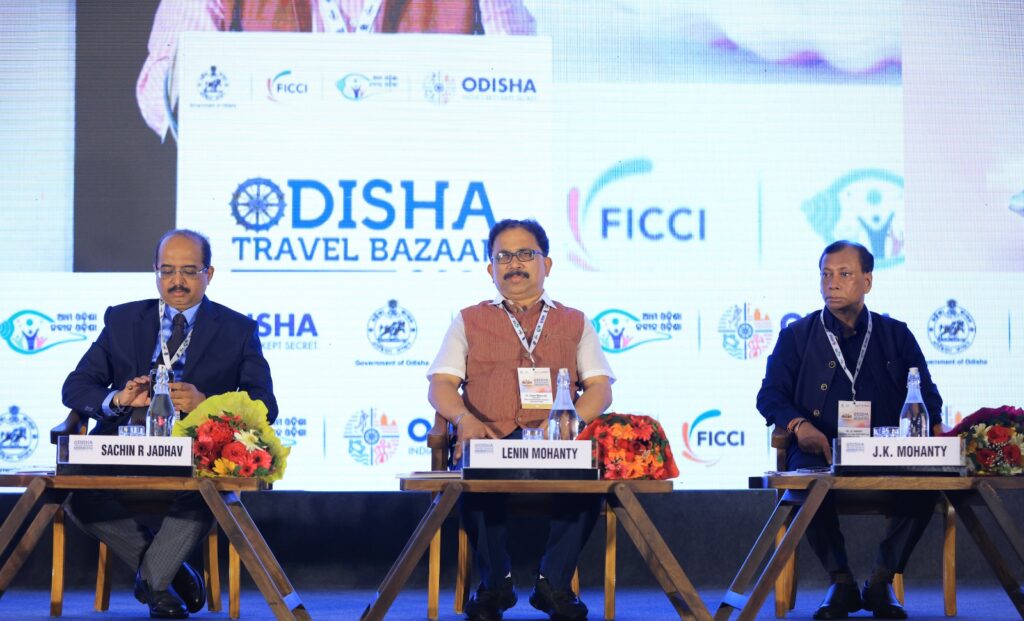
Speaking on the occasion, Chief Minister Shri Naveen Patnaik said, “In the recent past, Odisha has taken focused strides to develop and introduce several niche tourism experiences. With products which are centered around key tourism offerings to match global standards, Odisha will be able to attract not just the finest brands in business of travel and hospitality but also tourists looking for experientials that are bespoke with a fresh perspective.”
Deliberating on the many tourisms offerings Odisha has to offer, Shri Patnaik welcomed the tourism fraternity and sought their active contribution in marketing the State.
On this occasion, Director-Tourism Shri Sachin Ramchandra Jadhav made a presentation on Odisha Tourism’s initiatives for promotion of the State and said, “The State is focusing on new and innovative products such as Eco Retreats, Boat Clubs, Yachts, Caravans, Camping etc. to lure the new-age travelers to the State. Eco Tour nature camps being operated by Forest Department through local community participation are the State’s offerings on Sustainable and Responsible Tourism.
Dr. Lenin Mohanty, Chairman, Odisha Tourism Development Corporation (OTDC) and CMD Swosti Group also spoke on the importance of Odisha Travel Bazaar about providing a platform for interacting with stakeholders of travel & tourism industry from across the globe and also to help them in experiencing the tourism products of the state thus resulting in efficient marketing of Odisha to the target audience, be it the travel community or the investors.
CMD Swosti Group Dr. JK Mohanty spoke about the importance of the tour operators and travel agents’ fraternity and how their participation in this event will enable many business opportunities and offer a bouquet of exciting tourist destinations and experiences for the travel community.
Senior Advisor FICCI, Shri Manab Majumdar said in his welcome address, ‘’This 5th edition of Odisha Travel Bazaar is a platform to not only interact with the stakeholders of travel and tourism industry from across the globe but make them experience our products so they can efficiently market our State to the target audience.”
An insightful panel discussion on “UNLOCKING ODISHA’S TOURISM POTENTIAL” was led by Director Tourism Shri Sachin R Jadhav, IAS. The session boasted of panelists from domains like MICE, Luxury Cruises & Houseboats, Heritage Palaces and DMCs. CMD Swosti Group Dr. J.K. Mohanty, Atmosphere Hotels & Resorts Shri Souvagya Mohapatra, Director Kamat Hotels Shri Vishal Kamat, President and Director, Mayfair Hotels & Resorts Shri Manoj Kumar Gouda, MD, A.T. Seasons & Vacations Travel Pvt. Ltd Shri Amaresh Tiwari, Chairman, IATO Odisha Chapter Shri Gagan Sarangi and Director, Belgadia Palace Ms Mrinalika Bhanj Deo were part of the panel discussion.
A cultural programme showcasing Odisha’s performing arts such as Odissi, Chhau and Sambalpuri folk dance was organized post the interactive session.
Earlier in the day, Dr. Lenin Mohanty, Chairman, Odisha Tourism Development Corporation (OTDC) and Director Tourism Shri Sachin R Jadhav, IAS inaugurated the B2B exhibition at Eco Retreat Konark. 70 buyers from cities like Assam, Chhattisgarh, Delhi, Goa, Gujarat, Jammu and Kashmir, Jharkhand, Karnataka, Kerala, Madhya Pradesh, Maharashtra, Rajasthan, Tamil Nadu, Telangana, Tripura, Uttar Pradesh, Uttarakhand, West Bengal participated in the event. Pre-Scheduled, Structured B2B meetings between the Buyers and Sellers were carried out.
8, Feb 2024
Banaswadi Traffic Police and Traffic Warden Organisation Conduct Traffic Awareness Program
Bengaluru,8th February 2024: In a proactive effort to enhance road safety and raise awareness about traffic regulations, the Banaswadi Traffic Police in collaboration with the Traffic Warden Organisation conducted a comprehensive Road Safety and Traffic Awareness Program at Trilife Hospital today. The awareness program was conducted by Traffic Warden Mr. Satish Rao and Mr. Chetan, in the presence of Mr. Manjunatha, Inspector, Banaswadi Traffic Police Station, Mr. Muralidhar, Chief Warden, Bangalore City Traffic Warden Organisation, Asst. Sub Inspector Mr. Srinivas and Dr. Shafiq A M, Director and CEO, Trilife Hospital.
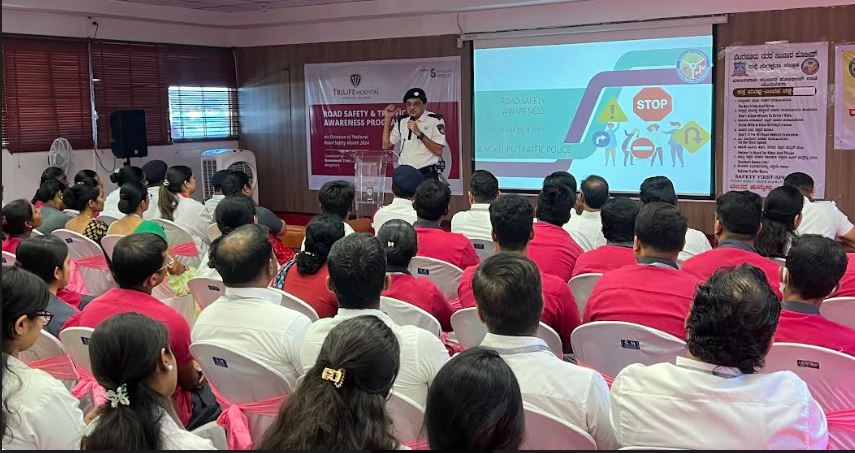
With the objective of reducing road accidents and promoting responsible driving behaviour, the training program featured informative sessions led by dedicated traffic wardens who enlightened the audience about crucial traffic rules and emphasized the importance of adhering to them for the safety of all road users. During the program, participants were educated on essential do’s and dont’s while driving and riding, emphasizing the significance of defensive driving techniques, adherence to speed limits, proper lane discipline, and the importance of using safety equipment such as helmets and seat belts.
One of the key highlights of the session was the discussion on the Good Samaritan Law, which encourages bystanders to offer immediate assistance to accident victims without fear of legal repercussions. This law serves as a vital tool in fostering a culture of compassion and prompt response during emergencies on the road.
Mr. Manjunatha, Inspector, Banaswadi Traffic Police, said “We believe that education and awareness are fundamental pillars in our efforts to reduce road accidents and ensure the well-being of our citizens. Through collaborative initiatives like today’s program, we aim to empower individuals with the knowledge and skills necessary to navigate our roads safely. The Banaswadi Traffic Police and Traffic Warden Organisation remain committed to organizing similar initiatives in the future, as part of our ongoing efforts to create a safer and a more secure environment for all road users”.
Dr. Shafiq A M, Director and CEO Trilife Hospital, said, “We extend our heartfelt thanks to the Banaswadi Traffic Police and Traffic Warden Organisation for conducting this important educative program at Trilife Hospital. Their dedication to promoting road safety and raising awareness about traffic regulations is commendable, and we are proud to have played a part in this initiative.”
The Road Safety and Traffic Awareness Program received positive feedback from the participants, who appreciated the opportunity to enhance their understanding of traffic regulations and road safety practices. The program was attended by around 200 people including the public, family, and staff of the hospital.
7, Feb 2024
Quess Corp Divests Qdigi Services to Onsitego
Mumbai, India, February 7, 2024: Quess Corp Ltd, India’s leading business services provider, announced today that it has agreed to divest its wholly-owned subsidiary, Qdigi Services Limited, to Onsitego, India’s #1 device-care provider.
As part of the transaction, the entire team and business of Qdigi will be transferred to Onsitego. Quess will receive total cash consideration of ₹80 cr., subject to customary closing adjustments. Quess will be acquiring a minority stake in Onsitego. The transaction is expected to be completed over the next 2-3 months.
Speaking on the occasion, Guruprasad Srinivasan, ED & CEO, Quess Corp Ltd, said, “In line with the Corporate structure simplification process of business lines, we have divested our stake in Qdigi. Quess Corp helped Qdigi team to scale and create an unparalleled pan India customer reach and service capabilities. We believe that going forward the Qdigi business is hugely complimentary to the offerings of Onsitego, while Onsitego will provide the platform for the next level of growth in Qdigi business.”
Deven Sharma, CEO, Qdigi Services Ltd., said, “Being a part of the Quess family since 2018 has helped us build scale by leveraging Quess’ platform and the management expertise. Integration of Qdigi services with Onsitego will help both businesses accelerate growth and create a more enriching service experience for our customers.”
Kunal Mahipal, Founder & CEO, Onsitego said, “Onsitego has been a leader in the protection plan business owing to its excellent customer service. Over the past decade, we have been able to build a strong service network. The acquisition of Qdigi will further add to our service capabilities and market offerings. While we will expand Qdigi’s existing relationships, we are also looking to target new OEM partners and retailers to accelerate growth. I am sure together we will be able to create India’s largest and the most customer-obsessed service company.”
Rationale for Transaction
For Quess, the transaction is aligned to overall strategy of corporate structure simplification. Whereas, Qdigi’s capabilities will highly complement the device protection business of Onsitego. It will allow Onsitego to enrich its customer service experience and also open up new areas of growth