


15, Feb 2024
We need to work towards a future where no region in India is without internet access – Dr Anil Sahasrabudhe, Chair NAAC, NBA, NETF
Bangalore, 15th February 2024: The Institution of Engineering and Technology, a leading global engineering body, successfully concluded its academic round table on ‘Changing face of global engineering – calibrating India’s response’. The roundtable witnessed the successful convergence of industry leaders, academicians and regulatory bodies to chart a standardized industry-first, solution-oriented roadmap for the future of engineering education. The event featured three impact-driven panel discussions focused on paving the way for a more outcome-oriented Indian engineering education system, as per the NEP 2020. The discussion was chaired by Dr. Anil Sahasrabuddhe, Chairman – Chair NAAC, NBA, NETF, and also featured notable speakers such as Dr Amit Dutta, Director, AICTE; Dr Atul Chauhan, Chancellor, Amity University; Prof (Dr) Indranil Manna, President – Indian National Academy of Engineering and Vice Chancellor, BIT, Mesra, Ranchi and Mr Abhijeet Sinha, Program Director, Ease of Doing Business and National Highways for EV (NHEV))
“The IET is dedicated to fostering important discussions that lead to positive changes in the industry. India is rapidly becoming a top choice for Global Capability Centres, thanks to our skilled engineers. But there’s a big problem: the gap between industry and academia is getting wider, hindering our progress. India is also becoming a global powerhouse for engineering education but the quality of this education needs to be world class. This Roundtable will curate a roadmap to bridge this gap and navigate the changing streams of engineering education. These insights will greatly contribute towards shaping the future of engineering education for the next generation of aspiring technologists and thereby the country.”, said Shekhar Sanyal, Country Head and Director, IET India.
The event began with a discussion around ‘Where is Global engineering going and what is the skill gap?’, followed by conversations on ‘Outcome-based Education: Why is it critical?’. Speaking at the event, Dr Anil Sahasrabudhe, Chair NAAC, NBA, NETF, said “We need to train engineers to become lifelong learners and self-learners, as technology developments are advancing at an exponential rate. The digital revolution has greatly improved the accessibility of engineering education. Today, Indian students have access to free courses from leading global institutes like MIT and Harvard, as well as Indian platforms like SWAYAM. We are seeing innovative startups by high-school graduates from non-engineering backgrounds, who have acquired all their knowledge from YouTube. Therefore, we need to work towards a future where no region in India is without internet access, and therefore no region is deprived of learning opportunities.”
“There is still a dire requirement for more hands-on learning opportunities for students through industry-collaborative products and internships. We currently have 1.7 crore students and 75,000+ internship providers on a portal, which uses modern tools like AI to suggest internship opportunities based on the student’s interests, their locality/hometown and the opportunities available in the region. This is particularly essential for students in remote areas and Tier 2/Tier 3 cities.”, he added.
The second panel discussion highlighted that the engineering education system is a victimisation of meritocracy, and raised an important question – “What are we awarding as merit – rote learning or independent thinking?” It further highlighted that teachers are also under immense pressure to deliver learning in just 60 minutes. Additionally, the panel deliberated on the need for institutions to create a formal and transparent student feedback mechanism to assess the efficiency of teachers, rather than simply evaluating them as ‘researchers’. It emphasized the necessity for a revamped evaluation system that considers not only the quantity of research conducted by a professor but also the quality of their teaching.
Speaking on the steps taken by AICTE to bridge learning gaps, Amit Dutta, Director, All India Council for Technical Education, said “We have introduced an intervention through a portal called ‘Parakh’, which serves as a gap analysis tool for both students and faculty members. I’m pleased to share that currently, over six lakh students have registered, and more than 2.5 million students have completed their gap analysis tests. The portal identifies gaps in students’ knowledge before they graduate from the institution, enabling the implementation of necessary remedial measures to address these gaps before the students graduate.”
To address the role of technology in delivering engineering education, the third panel discussion explored how technological advancements shape the methods and approaches used in engineering education, in the context of a dynamic global paradigm. It also identified key initiatives and measures that can position India as an appealing destination for prospective engineering students globally, fostering an environment that nurtures excellence and innovation in the field.
The Institution of Engineering and Technology will present the outcomes and conclusions of the day-long discussion as a policy recommendation roadmap to the Ministry of Education. Additionally, the global engineering body will issue an advisory note to educators and higher education institutes to initiate an actionable roadmap towards improving India’s engineering education ecosystem.
- 0
- By Rabindra

14, Feb 2024
Aditya Institute of Management Studies and Research hosts Academic IT & Operations Conclave
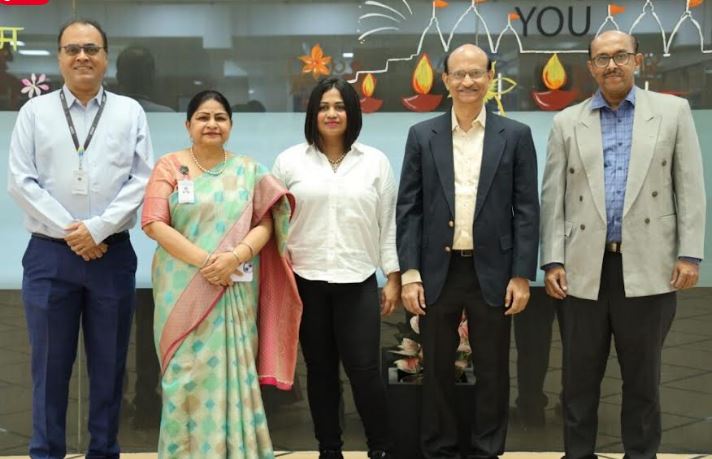
Mumbai, 14th February’24: The 2024 IT & Operations Conclave was skillfully organised by AIMSR & ASBM, with the theme:
“Emerging Technologies: Operations & Beyond” and visionaries from a variety of backgrounds debating the direction of education in India.
The panel discussion, moderated by Mr. Rishi Sareen, Director-Technology at DTDC Express Ltd, featured esteemed speakers: Mr. Rajesh Patil, CTO, Asfaleia Information Systems; Mr. Kiran Belsekar, EVP, CISO & IT Governance, Aegon Life; Mr. Vinod Marar, Head Supply Chain, CEAT Ltd.; and Mr. Ajinkya Vaze, Associate Program Manager, Merkle Pvt. Ltd. They delved into the topic “Exploring Ethical Frontiers: AI in Modern Business Operations.”
The insightful and thought-provoking speech by Capgemini India’s Senior Director, Dr. Prasad Ramanathan, focused on how evolving technology impacts people and processes. A special thank you to Mr. Sreenivas Rao of Sun Pharmaceutical Industries Ltd., Global Head of Supply Chain, for his insightful presentation on incorporating artificial intelligence and machine learning into daily operations.
Commenting on the conclave, Dr. Sunita Srivastava, Dean Management and Director, AIMSR said, “The common buzzword in the boardroom of organizations is Industry 5.0 which is all about data and platforms. She introduced the theme of the IT and Operations Conclave as: “Emerging Technologies, Operations and Beyond”. She also added that from enhancing operational efficiency to creating entirely new business models, technologies are driving unprecedented transformations across industries. AI and ML enable businesses to automate processes, analyse vast amounts of data and derive actionable insights. IoT enhances visibility and responsiveness in various operational aspects. The decentralized nature of blockchain technology reduces the risk of fraud and errors, promoting trust among stakeholders. AR and VR technologies are transforming the way businesses operate by providing immersive experiences. Robotics and automation technologies are reshaping industries by replacing repetitive and manual tasks.”
14, Feb 2024
Exicom Unveils “Spin Air EV AC Charger”: EV Chargers with New Features

Mumbai, 14 February 2024: Exicom, an EV charger manufacturer in India and a partner for automobile players and other ecosystem stakeholders, has unveiled its latest innovation – the Spin Air EV AC Charger.
As individuals and businesses increasingly embrace electric mobility, Exicom’s strategic response comes in the form of the Spin Air EV AC Charger, to cater to residential electric vehicle charging.
This solution integrates technology, user-friendly features, and design. The Spin Air EV AC Charger offers a charging solution, ranging from 7.5kW 1-phase to 22kW 3-phase power levels. Spin Air offers personalized charging tailored to individual EV owners’ needs, fitting into daily routines at home or on the go.
The compact design is intended to blend into residential settings. Solar compatibility and intelligent features like load balancing and power-sharing enhance energy efficiency. The integration with Exicom’s SPIN mobile app enables remote monitoring, scheduling, and real-time updates, providing users with convenient and controlled charging management. Its robust construction ensures reliability, even in regions with unstable power supply.
Anant Nahata, Managing Director of Exicom, commented, “Since our inception, our focus has been on driving the EV adoption through, setting inspiring examples, and addressing the key hurdle – a robust charging infrastructure – that often holds people back from making the switch. This is why we are working towards a future where electric vehicles (EVs) are a common sight, and everyone feels empowered and confident to go electric. Our goal has always been to influence sustainability at scale, both in India and globally. Leveraging the country’s technological advancements, our Spin Air EV AC Charger is a testament to this commitment, exemplifying the Indian tech built for the global stage.”
In the current fragmented EV market, Exicom is strategically expanding its product range to reach a more extensive EV customer base. Furthermore, the Company is expanding its customer base to overseas market in the EV charger business capitalizing on the growing EV adoption in Southeast Asia and Europe and other geographies. Simultaneously, Exicom prioritizes technological advancements to introduce additional features in their EV chargers, including design, smart charging features and integrated mobile charging application. This approach seeks to make EV charging faster but also more accessible, convenient, and smart.
14, Feb 2024
75.2% In-House Counsel Believe That Technology Adaption Will Yield Significant Gains: Khaitan & Co Survey
Mumbai, 14 February 2024: Industry-specific regulations, and data protection and privacy rules pose some of the biggest challenges to in-house legal teams in India as per the latest survey by Khaitan & Co, a leading full-service law firm. The ‘In-House Counsel Survey 2024’ highlights how the role of in-house legal functions is rapidly transforming amidst changing business and regulatory requirements in a digital economy. Organisations and their in-house counsel teams are increasingly recognising the potential of technology to enhance efficiency, with 75.2% acknowledging that technology and innovative legal tech products can result in significant gains. 90.3% of respondents emphasise the role of technology in improving the efficiency of legal operations, whereas 84% highlight technology’s potential in process standardisation and consistency.
Rabindra Jhunjhunwala, Partner, Khaitan & Co said, “As businesses navigate an era defined by digital evolution and regulatory complexities, in-house counsel teams must gear up to play an active role to build future ready organisations. Our survey aims to serves as a guide and throw light on the transformative journey of in-house counsel as C-suites and Boards increasingly turn to them for guidance, assurance and security. The survey further underscores our commitment to providing insights for organizations to grow and thrive in this dynamic legal environment.”
The survey comprises insights from over 400 in-house counsel across India. It outlines the evolving roles and responsibilities of in-house counsel, and emerging risks, challenges, and priorities for organisations which will shape India’s legal landscape.
Key highlights:
Confronting industry-led legal challenges: Amidst rising global volatility and a fluctuating regulatory regime, businesses operating in India are faced with intricate legal challenges. 65% of the respondents identified industry- specific regulations as the primary challenge for in-house legal teams.
Organisations and their in-house counsel in healthcare can anticipate a slew of reforms due to a surge in demand from global and domestic stakeholders. India’s fintech industry has also recently garnered regulatory attention, with the Reserve Bank of India (RBI) introducing several regulations related to digital lending, payments, and Central Bank Digital Currency. In-house counsel are also charting the course for the renewable energy sector, given the government’s formulation of various regulations, policies, and guidelines to regulate the sector.
Data privacy regulations: As India enters a new era of digital regulation with the Digital Personal Data Protection Act 2023 and the upcoming Digital India Act, the onus on organisations and their legal teams to elevate data privacy standards, mitigate liabilities, and comply with evolving regulations has increased significantly. The survey highlights that the majority of the respondents are responsible for managing their organisation data privacy and protection, and cybersecurity functions. 44% of respondents identified data privacy and protection laws as one of the key legal concerns, while 65.5% have data privacy, protection, and cybersecurity within the ambit of in-house legal teams. Additionally, 54% foresee the need for external legal support on data privacy laws in the next 12 months.
Widening ambit of in-house legal teams: Legal teams have an expanded role and focus, with 77.9% respondents prioritising compliance, 65.5% addressing data privacy and protection, cybersecurity, 61% focusing on governance and ethics, and 29.2% exploring environmental, social and governance (ESG) and corporate social responsibility (CSR).
Uptick in litigation, and mergers and acquisitions (M&A) transactions: The evolving legal landscape has witnessed an increase in litigation and M&A activities, prompting 65.5% of respondents to seek external legal expertise for areas such as compliance, tax laws, and reputational risk.
Rising white collar crime concerns: Post-COVID-19, there has been an uptake in the number of internal investigations and other regulatory and white-collar crime issues. In line with this, 77.9% respondents identified overseeing compliance and 61% highlighted governance and ethics among their key responsibilities. Most In-house counsel identified that their key roles include monitoring ethical conduct, ensuring regulatory compliance, and risk management and planning.
Enhanced role of external legal advisors: External legal advisors play a pivotal role for businesses. According to the survey, 65.5% of respondents sought their expertise in litigation and dispute resolution, 64.6% in assisting on significant transactions including M&A, and 54% in tackling new data privacy and protection rules.
In-house counsel can consider four critical success factors as they strive to become future ready. The first is adapting to the evolving regulatory landscape and second is leveraging technology, including generative artificial intelligence (Gen AI) to enhance efficiency and navigate complexity. The third key area is enhancing compliance assessments, with heightened attention on net-zero goals and increased ESG compliance. Lastly, fostering strategic partnerships with external legal counsel for specialized guidance is crucial. This multifaceted approach will position in-house counsel to tide over legal challenges and thrive in a transforming business landscape.
14, Feb 2024
Pega Introduces Pega GenAI Blueprint to Automate Enterprise
India – February 14, 2024 – Pegasystems Inc. (NASDAQ: PEGA), the leading enterprise AI decisioning and workflow automation platform provider, today introduced Pega GenAI Blueprint™ – a collaborative application that combines the power of generative AI with Pega’s industry best practices to turbocharge the app design process.
Traditional design processes sabotage success and innovation from the start by not stimulating design thinking or driving stakeholder alignment. And while generative AI helps, most approaches focus solely on churning out software code instead of optimizing application workflows for efficiency or industry best practices. It’s no wonder that, according to McKinsey, 70% of transformational projects fail.
Available today for early adopters, Pega GenAI Blueprint empowers business leaders to transform app ideas into interactive ‘application blueprints’ that are easily understood and collaborated on by all stakeholders. It quickly and easily creates the blueprints by leveraging generative AI and Pega’s deep industry expertise gained from working with leading global organizations for decades. The resulting blueprints can be deployed to Pega’s industry-leading automation platform to create a running enterprise-grade application. By intuitively guiding them through the process, Pega GenAI Blueprint helps broaden access to app design, enabling clients and partners to more quickly learn how to design optimized applications and bring them online.
How it works
Pega GenAI Blueprint enables teams to accelerate the journey from idea to implementation. Users briefly describe the app’s purpose, and the intuitive interface guides them by laying out the workflow elements and captures all feedback while facilitating collaboration. The Pega GenAI™ engine leverages Pega’s decades of industry knowledge to design optimized application blueprints, which incorporates best practice workflow processes, data models, and integrations. Once the design is finalized, the blueprint seamlessly feeds into the Pega Platform™, transforming it into an enterprise-grade, cloud-architected workflow application that is optimized for their business.
Here’s a deeper look at the unique benefits of Pega GenAI Blueprint to radically change the way organizations create new workflow apps:
Agile, optimal workflow design: Unlike other generative AI app development tools that just create more code, Pega GenAI Blueprint focuses on delivering optimized workflow designs and decisions. By simply describing the application’s purpose, Pega GenAI powers Pega GenAI Blueprint to suggest optimal designs, eliminating weeks of circular stakeholder conversations. The blueprints encompass all workflow stages and steps; data models and objects; and user experiences for all workflow personas.
Deep industry expertise: Powered by Azure OpenAI, Pega GenAI synthesizes Pega’s vast repository of workflow best practices, garnered from 40 years of experience working with global leaders in financial services, healthcare, government, telecommunications, and more. These best practices, supplemented by knowledge from Azure OpenAI, produce a nearly-there design starting point. Future Pega GenAI Blueprint releases will allow enterprises to publish their own best practices into their private environments, promoting consistency and adherence, even when working across distributed teams.
Smoother team collaboration: Pega GenAI Blueprint fosters deep collaboration between business leaders and IT, aligning teams toward a common business goal. Application architects can invite collaborators into any blueprint to easily modify, add, delete, or save different workflow stages. They can also process steps, data models, or user personas and share them as PDF documents. This effective alignment during the initial design phase reduces errors and delays in later build and deployment phases.
Rapid app deployment: Once finalized, it’s a simple jump to app deployment by importing the blueprint into Pega Platform. The application structure is automatically generated, and Pega GenAI guides users through the final steps, such as connecting to existing data sources and finalizing the interface layout. If further changes are needed, the blueprint can be easily modified in Pega GenAI Blueprint and then deployed in Pega Platform for continuous improvement.
An initial version of Pega GenAI Blueprint is available today for early adopters, allowing users to create workflows and share with colleagues. By the end of Q2, the tool will be generally available and enhanced with additional capabilities such as inviting collaborators, importing blueprints into Pega Platform, and deploying applications.
13, Feb 2024
EV Pioneer and Architect of the Statue of Unity to Headline illuminate 2.0
Bangalore/Mysore, February 13, 2024: illuminate 2.0 – A tribute to engineering innovation, an initiative by L&T Technology Services Limited (BSE: 540115, NSE: LTTS), and the esteemed National Institute of Engineering (NIE) in Mysuru, is excited to announce its highly anticipated second edition. Scheduled for Saturday, February 17, at the Karnataka State Open University (KSOU) Convocation Hall, the event promises to be a grand showcase of India’s trailblazing innovations and technological marvels.
illuminate’s speaker lineup boasts of Ramesh KS, Senior Vice President of Ather Energy, who will decode the Cornerstones of Ather Energy’s Electric Vehicle Design, and Mukesh Raval, Advisory Specialist at Larsen & Toubro, who will reveal the intriguing narrative behind the design and construction of the world’s tallest statue – The Statue of Unity. The event is set to draw a diverse and distinguished audience comprising scientists, engineers, industry leaders, government dignitaries, academia, students, and representatives from the media.
Ranked amongst the top engineering colleges in India, The National Institute of Engineering has established 14 Centres of Excellence (CoE) in collaboration with the industry and alumni to enrich research and consultancy activities and to make the course curriculum more contemporary and effective. illuminate 2.0 marks a collaboration between LTTS, an established leader in engineering and R&D services, and NIE, fostering a spirit of excellence that aims to highlight modern engineering advancements and offer insights from both industry and academia. This platform provides a unique opportunity for sharing technical knowledge and expertise from leading practitioners reshaping the global engineering landscape.
Abhishek Sinha, Chief Operating Officer and Board Member at L&T Technology Services stated, “Engineering innovation plays a critical role in shaping our collective future. With iIlluminate, our aim is to shine a light on the exemplary efforts of national trailblazers who are driving forward these technological advancements. Following a successful inaugural edition, both L&T Technology Services and the National Institute of Engineering are poised to propel this celebration of engineering excellence to even greater heights.”
Dr. Rohini Nagapadma, Principal, NIE – Mysore “illuminate serves as an influential platform for students to gain insights from leading practitioners who are redefining the global engineering landscape. The direct industry-academia engagement fostered by this event is invaluable for budding engineers. Collaborating with L&T Technology Services to drive illuminate towards what promises to be an enlightening second edition is indeed a pleasure.”
In its inaugural edition in 2023, illuminate featured the esteemed Padma Shri Dr. Mylswamy Annadurai, the renowned former ISRO scientist affectionately known as the ‘Moon Man of India’, and the innovative Sudhanshu Mani, the genius behind the conceptualization of the revolutionary ‘Vande Bharat’ express trains.
13, Feb 2024
39% Indians’ potential love interest turning out to be scammers
India – February 13, 2024 — Today, McAfee, a global leader in online protection, unveils its second annual “Modern Love” study, about the role of Artificial Intelligence (AI) tools in online dating, and the implications this has for increased catfishing and romance scams. This study surveyed 7,000 people in seven countries worldwide, including India. The rise of powerful AI tools complicates the online dating landscape. By leveraging easy-to-use AI tools, romance scammers can craft convincing messages and realistic profile images to trick people looking for love online.
The key findings of this study revealed that 77% of Indians said they’d come across fake profiles and/or photos that look AI-generated on dating websites or apps, or on social media. Further, the prevalence of romance scams emerged with 39% of Indians saying their conversations with a potential love interest online turned out to be with a scammer. 26% said they’d talked with a potential love interest, to discover it was actually an AI-generated bot and not a real person.
91% of Indians revealed they, or someone they know, have been contacted by a stranger through social media or text message and started to “chat” with them regularly to know them better. With that in mind, those looking for love are often more vulnerable to scams when connecting with strangers, and cybercriminals use that vulnerability to their advantage by engaging in long and sophisticated attempts to steal from victims.
Furthermore, the study also discovered that more than half, 65% Indians have used ChatGPT/AI to help create pics or other content for a dating app. Specifically this Valentine’s Day, 56% of Indians are planning to or considering using AI to write messages for their love interest as it helps boost their confidence. However, this contrasts sharply with people’s feelings about receiving AI-generated content: 60% of people said they would be hurt or offended if they found out their Valentine’s message was written by a machine / Artificial Intelligence.
Despite mixed feelings and experiences, the effectiveness of AI is undeniable: 81% of people reported receiving more interest and better responses using AI-generated content than when they drafted or used their own original content.
And if you’re not on dating apps/sites, the McAfee Labs team reveals you still need to exercise caution online with an increase in Valentine-related scams. This includes Valentine-related malware campaigns (25% surge), malicious URLs (300% increase), and a variety of romance-themed spam and email scams (a staggering 400% increase), with the majority focused on Valentine’s shopping and gifts. McAfee Labs expects these numbers will continue rising as February 14 gets closer, urging vigilance.
“The possibilities of AI are endless, and unfortunately, so are the perils. For people who are shy about starting conversations, short on time to craft the perfect message, or whose photos could be brightened, AI offers tools to help enjoy all the fun and excitement that comes with online dating.,” said Steve Grobman, McAfee’s Chief Technology Officer.
“Unfortunately, we know cybercriminals also use AI to scale malicious activity. With love-seekers spending more time online leading up to Valentine’s Day, scammers are using AI to pose as love interests to steal your money or personal information. We encourage people to balance romantic hope with healthy skepticism, to pause before sharing sensitive information online, and to ensure they use the right tools to protect their privacy, identity, and personal information,” continued Grobman.
Steps for protecting yourself from online romance and AI scams.
People can help prevent financial and emotional heartbreak by taking the following steps:
- Scrutinize any direct messages you receive from a love interest, via a dating app or social media. One way to spot a scammer is to watch for consistent, AI-generated messages. These are often quite generic or lack substance. Additionally, it’s important to be sure not to click on any links in messages you receive from someone you have not met in person.
- Do a reverse-image search of any profile pictures the person uses. If the search results show that your love interest is associated with another name or with details that don’t match up with what they’ve told you, you may be chatting with a scammer.
- Never send money or gifts to someone you haven’t met in person, even if they send you money first. Scammers often send money to soften up their victim and build trust, so don’t share personal or account information, even if the other person is forthcoming with theirs.
- Talk to someone you trust about this new love interest. It can be easy to miss things that don’t add up when you are feeling hopeful and excited. So, pay attention to your friends or family when they show signs of concern, and take the relationship slowly.
- Invest in tools to help identify online scams. McAfee’s portfolio of products includes innovative protection features, such as McAfee Scam Protection, that detects and protects you in real time from never-before-seen threats and scams – whether that’s dangerous links shared on text, email, search results, or social media. In addition, McAfee recently announced deepfake detection is on the horizon, furthering McAfee’s commitment to use AI to fight AI scams and help arm consumers with the ability to detect deepfakes.
Survey Methodology
The survey was conducted online in January 2024 by Market Research Company, MSI-ACI via email inviting people 18 years and older to complete an online questionnaire. In total 7,000 adults completed the survey from 7 countries included the United States, United Kingdom, France, Germany, Australia, India, and Japan.
13, Feb 2024
HCLTech placed in Customers’ Choice quadrant in 2023 Gartner® Peer Insights™ for Voice of the Customer
NEW YORK, US and NOIDA, India, Feb 13, 2024—HCLTech, a leading global technology company, received the highest number of overall responses and was placed in Customers’ Choice quadrant in November 2023 Gartner® Peer Insights™ for Voice of the Customer: Data Center Outsourcing and Hybrid Infrastructure Managed Services, Worldwide.
HCLTech is also a Leader in the 2023 Gartner® Magic Quadrant™ for Data Center Outsourcing and Hybrid Infrastructure Managed Services Worldwide (DCO & HIMS), making it the only Global IT service provider to be recognized in both the 2023 Magic Quadrant report and the November 2023 Gartner® Peer Insights™ for Voice of the Customer: Data Center Outsourcing and Hybrid Infrastructure Managed Services, Worldwide.
HCLTech received 43 reviews with 88% of the respondents to Gartner® ‘Voice of the Customer’ survey expressing their willingness to recommend HCLTech, underscoring the trust HCLTech enjoys among global enterprises for enabling digital transformation.
“This recognition is an acknowledgment of our sharp focus on customer excellence and is a testimony of our strategic partnership with G2000 companies for Digital Foundation services, underpinning our strategic ecosystem and integrated portfolio of sustainable hybrid cloud solutions powered by intelligent automation, AI and differentiated consumption models,” said Jagadeshwar Gattu, President, Digital Foundation Services, HCLTech.
13, Feb 2024
Five-day hands-on-Training Programme on Tools and Techniques of Water Quality Monitoring, Sampling, Analysis, and Quality Assurance
Amity Institute of Environmental Sciences organized a five-day, hands-on Training Programme on “Tools and Techniques of Water Quality Monitoring, Sampling, Analysis, and Quality Assurance”, from 12th-16th February 2024, sponsored by Science & Engineering Research Board (SERB). 25 participants from institutions such as Institute of Advanced research, Graphic Era University, Dehradun, IP University, Delhi, Central University Haryana, Gurukul Kangri University Haridwar and J.C. Bose University Faridabad, participated in the Training programme. The primary objective of the training programme is to provide participants with hands-on skills and knowledge on the tools and techniques of water quality monitoring, sampling, analysis, and quality assurance.
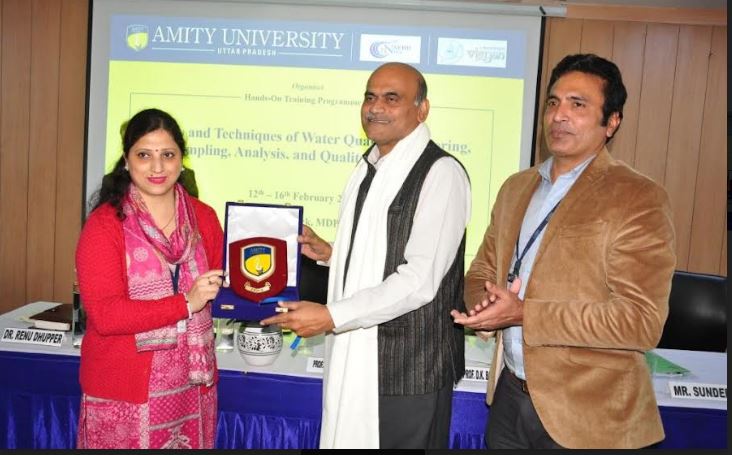
Addressing the participants, Mr. Sundeep, Director (Control of Pollution) & Additional Project Director – Society of Integrated Coastal Management (SICOM), Ministry of Environment, Forest and Climate Change of India, averred, “The training program will help in devising new research strategies for quality assurance and sampling of water. The participants should be clear about why they are collecting samples and must have the knowledge of the mediums and techniques used in the process. The corporate sector, policy makers, government and administration need scientific advice on water quality monitoring, therefore the participants must take full advantage of this opportunity and attain maximum practical knowledge through this training program.”
Dr. Himanshu Shekhar Mandal, Scientist-F/Project head, National centre for seismology, Ministry of Earth Sciences, said, “Assuring good water quality is a big challenge and the training programme will provide participants with an understanding of water quality parameters and their significance in relation to human health and the environment, equip them with practical skills on the sampling of water for quality analysis and provide them with knowledge on the analytical methods and techniques for water quality analysis, including the use of laboratory equipment and reagents. Technology should be used not only to check the quality of water but also to do research to improve the quality of water, thereby ensuring that safe drinking water is available for all.”
Prof. (Dr.) Balvinder Shukla, Vice Chancellor, Amity University Uttar Pradesh, stated, “Water is an essential resource for all living organisms, and its quality plays a critical role in the environment and human health. The increasing pollution and contamination of water have made it necessary to monitor, sample, analyze and assure its quality. The training program will provide an opportunity for participants to learn about the principles and concepts of water quality parameters, sampling techniques, analytical methods, and quality assurance measures.”
Highlighting the significance of the Training Programme, Prof. D. K. Bandyopadhyay, Mentor, Amity Institute of Environmental Sciences, said, “The participants must remember the purpose of participating in the programme and focus on attaining knowledge and developing their skills. Clean drinking water must be accessible to all, and this training program is ideal for water quality professionals, environmental officers, scientists, laboratory technicians, and researchers in the water sector, who will be able to equip themselves with the necessary skills to ensure the safety of water for human consumption and ecosystem health.”
Welcoming the guests on this occasion, Dr. Renu Dhupper, Assistant Director, Amity Institute of Environmental Science, said, “The training programme will be highly interactive and will involve hands-on practical sessions, group discussions, case studies, and presentations and it will cover pertinent topics including “Laboratory equipment and reagents for water quality analysis”, “NABL Accreditation: Ensuring Quality in Laboratories” and “Data analysis, interpretation, and reporting.”
During the five- day Training Programme, Technical Sessions on “Overview of water quality parameters and their significance”, “Sampling techniques and procedures for water quality analysis”, “Hands-on practice in using laboratory equipment”, “Demonstration of various Analytical Methods”, “Resource Recovery in Wastewater Practices”, “Analysis of physical Parameters, “Analysis of organic parameters”, and “Analysis of microbiological parameters, Crucial Role of Sustainable Water Management in Achieving SDGs”, will also be conducted, wherein various experts will train the participants.
12, Feb 2024
Kramer Unveils Advanced AVoIP Solutions KDS-17 and KDS-100 at ISE 2024
Bengaluru, February 12th, 2024: Kramer, the leading company in audio-visual experiences, proudly announces the expansion of its AVoIP portfolio at Integrated Systems Europe (ISE) 2024. This expansion features the introduction of two innovative products – KDS-17 and KDS-100 – designed to provide high-performing, scalable solutions for diverse AVoIP streaming needs.
Kramer’s Approach to AVoIP: Tailored, Secure, and High-Quality Streaming Solutions
Kramer is committed to offering a comprehensive range of AVoIP solutions, including advanced options for 1GE (1 Gigabit per second) networks. These solutions ensure a superb user experience, enterprise IT-grade security, and intuitive yet advanced management, allowing customers to select solutions that align with their specific needs for audio and video quality, bandwidth, latency, and more.
A Comprehensive Range of Solutions for Varied Needs
Kramer’s AVoIP solution portfolio includes a full array of decoders, auto-switcher encoders in various form factors, and a dedicated cloud-based device manager. These versatile solutions cater to enterprises, educational institutions, homeland security, military, and government applications, allowing for flexible deployment in any quantity.
Introducing the KDS-17: A Benchmark in High-Performance AVoIP Streaming
The KDS-17 offers ultra-high performance and scalability, utilizing JPEG2K-like compression for superior video and audio streaming over 1GE networks. Ideal for spaces requiring 4K60 4.4.4 video quality with minimal latency, it supports up to 1,000 video sources, making it suitable for command centers, meeting rooms, digital signage, and more.
The KDS-100: Versatility and Efficiency in AVoIP Streaming
The KDS-100 leverages the H.264/265 open standard for efficient bandwidth usage and interoperability. Its dual streaming capabilities make it perfect for environments requiring live recording. Suitable for operations rooms, university auditoriums, and command centers, the KDS-100 provides high-quality 4K60 4:2:
2 video streaming and supports up to 1,000 video sources, facilitating easy deployment and scalability for any network AV installation size.
Reflecting on the Launch
Dorit Bitter, Kramer’s EVP of Product and Technology, comments: “The expansion of our AVoIP portfolio with KDS-17 and KDS-100 represents a pivotal step in our ongoing commitment to innovation and excellence. These products exemplify our dedication to providing intuitive, scalable, and secure solutions. Our unique technological approach has successfully decoupled high latency from open standards, allowing customers to enjoy the benefits of the 264/265 codec without compromising on performance. With these additions, we are setting new standards in the AVoIP domain, ensuring our customers have access to the most advanced technology, easy to deploy and manage, regardless of the scale or complexity of their needs”.


