


25, Feb 2025
Venus Remedies Acquires Exclusive In-Licensing Rights to MET-X, Boosting India’s Pharma Portfolio
Mumbai, February 25, 2025: Venus Remedies Ltd. a leading Indian pharmaceutical company renowned for its longstanding expertise in combatting antimicrobial resistance (AMR), today announced that it has entered into an exclusive license agreement with Infex Therapeutics, a UK-based anti-infectives specialist for the clinical development of MET-X. This agreement authorizes Venus Remedies to spearhead the clinical development, registration, and commercialization of MET-X, an innovative metallo-beta-lactamase (MBL) inhibitor. The initial development phase will focus on integrating MET-X with meropenem to tackle drug-resistant Gram-negative bacteria, with Venus Remedies holding exclusive marketing rights within India.
In India, meropenem resistance is reported to be as high as 62-87% in WHO critical priority pathogens like K. pneumoniae and A. baumannii as per the ICMR’s Antimicrobial Resistance Research and Surveillance Network-Annual report 2023, with as high as 50% being directly attributable to MBL prevalence.
Under the terms of the agreement, Venus Remedies will commence with a Phase I trial involving healthy volunteers in India, evaluating MET-X in combination with meropenem. Following successful Phase I outcomes, the focus will shift to Phase II/III trials targeting drug-resistant Complicated Urinary Tract Infections (cUTIs), prevalent in hospital settings.
This strategic move is aligned with Venus Remedies’ extensive experience in antibiotic R&D and critical care, enhancing its leadership in the Indian critical care landscape. The company’s formidable position in meropenem marketing and manufacturing will facilitate the integration of MET-X into existing and prospective antibiotic strategies.
All trials conducted in India will adhere to international standards, compliant with regulations from the FDA, EMA, and MHRA, which will also support further development and global commercialization efforts for MET-X. The agreement grants both Infex Therapeutics and Venus Remedies the option to expand their collaboration to include other MET-X/beta-lactam combinations under mutually agreed terms.
MET-X is Infex Therapeutics’ broad spectrum MBL-inhibitor, targeting Gram-negative bacteria. These pathogens produce MBL enzymes to deactivate beta-lactam antibiotics, such as meropenem, and evade antibiotic clearance of disease. MET-X blocks MBL resistance, restoring antibiotic activity. The drug is being developed to be one of the first broad-spectrum MBL inhibitors to address a wide range of bacterial species and MBL-resistant strains, such as E.coli and K.pneumoniae. The treatment has shown best-in-class performance in animal studies to date. The development of new agents to overcome MBL antibiotic resistance in such Gram-negative bacteria is a World Health Organisation (“WHO”) critical priority.
Mr. Saransh Chaudhary, President, Global Critical Care, Venus Remedies Ltd and CEO, Venus Medicine Research Centre, said: “This early-stage introduction of MET-X into the Indian market leverages our decades-long dedication to AMR-focused R&D and our prominent role in critical care and antibiotic therapies. This partnership is perfectly poised to enhance our antibiotic arsenal with meropenem and explore further beta-lactam combinations, ensuring high-quality research and a significant market presence.”
Mr. Pawan Chaudhary, Chairman and Managing Director, Venus Remedies Ltd, added, “The in-licensing of MET-X is a major step forward in providing breakthrough solutions for drug-resistant infections, a serious threat to India’s healthcare ecosystem. Our aim is to develop an effective solution against MBL-producing pathogens, fulfilling a critical healthcare need and continuing our commitment to transformative therapies and sustained innovation in critical care.”
India faces a significant burden of MBL-producing pathogens in hospital settings, and no approved MBL inhibitors currently exist in the country. The development and exclusive in-licensing of MET-X underscores Venus Remedies’ commitment to providing a cutting-edge solution where it is needed most and creating long-term value for stakeholders.
Dr. Peter Jackson, CEO of Infex Therapeutics, said: “I am delighted about this agreement with Venus Remedies, which will facilitate the comprehensive clinical development of our MET-X program in India. By leveraging Venus Remedies’ robust expertise in critical care antibiotics, we can accelerate MET-X as our second clinical-stage drug program. Crucially, the international standards of these trials will also support future regulatory filings in the UK, U.S., Europe, and other global markets. MET-X has shown best-in-class performance in preclinical studies and could be game-changing for patients suffering from Gram-negative, MBL-resistant infections.”
- 0
- By Team

25, Feb 2025
The Sock Street Partners with Blinkit for Speedy Delivery of Fashionable Socks
Gurgaon, 25 Feb 2025– The Sock Street, as a trendsetter in cool and stylish sock designs, excitedly introduces its exclusive launch with Blinkit. This exciting collaboration brought premium, fashion-forward socks directly to customers’ doorsteps, merging convenience with cutting edge style.
In a fast-paced world where fashion met function, The Sock Street’s curated collection was designed to elevate every step—whether at work, at the gym, or during a casual day out. By partnering with Blinkit, renowned for its swift and reliable delivery service, The Sock Street set out to redefine the way consumers shopped for everyday essentials.

We are excited to join forces with Blinkit,” said Saurabh Srivastava, The Business Head at The Sock Street. He further said “Our mission had always been to merge style with comfort, and this partnership allowed us to deliver our unique socks collection to customers quickly and efficiently. It wasn’t just about socks—it was about making a statement with every step.”
Sock Street’s objective of providing stylish, appealing, and well-regarded apparel is in line with Blinkit’s dedication to quick delivery and simple customer support.
Get your hands on Blinkit’s latest collection, which features a wide range of designs for various situations and people. Customers will be able to enjoy quick delivery without incurring additional fees and avoid the inconvenience of physically visiting stores thanks to this service’s addition to the platform. strolling in something composed of comfort, quality, and contemporary design.
25, Feb 2025
Skyscanner’s DROPS Feature Makes Snagging the Best Flight Deals Quick and Easy
India, 25 February 2025: Leading global travel app, Skyscanner, which scours more than 80 billion prices daily, has announced the launch of a new app-exclusive feature, DROPS, accessible to users in Hindi and English. Designed to inspire and help travellers find the best flight deals for their 2025 trips, travellers can discover flights that have seen price drops of over 20% compared to their lowest point in the last 7 days with this latest feature.
According to Skyscanner’s Travel Trends 2025 Report, cost remains a key factor for value-conscious Indians, with 62% stating that flight prices play a crucial role in their decision-making process. Skyscanner’s new feature offers a smart way to discover and secure the best deals.
By logging in to the Skyscanner app, travellers will automatically have access to new DROPS every day – a collection of flights from a nearby airport that have dropped in price by at least 20% or more, compared to the flight’s lowest price point in the last 7 days. With Skyscanner relentlessly on the hunt for DROPS across the globe, travellers can feel confident they’ll never miss a deal again.
To celebrate the launch of the DROPS feature, Skyscanner’s data gurus have crunched the numbers to share their top DROPS insights (based on all DROPS served to Indian travellers in January 2025):
- Friday was the most popular DROPS day: Helping Indian travellers kickstart their weekends with some savings, Skyscanner has highlighted the most DROPS on Fridays this January*.
- Early birds catch the most DROPS: 38% of all DROPS were published before the workday even started (before 9:00 AM) in January**.
- Goa had the most ‘Drops’ in January: Culturally rich and popular tourist destinations saw a high number of DROPS, with Goa emerging as the top destination with the most number of drops this January**. Full top ten list here:
| Ranking | Destination |
| 1 | Goa, India |
| 2 | Bangkok, Thailand |
| 3 | Prayagraj, India |
| 4 | Almaty, Kazakhstan |
| 5 | Dubai, UAE |
| 6 | Singapore |
| 7 | Mumbai, India |
| 8 | New Delhi, India |
| 9 | Ahmedabad, India |
| 10 | Colombo, Sri Lanka |
- TOKYO ranks No.1 for the Biggest Dropped Destination: The average saving from DROPS in January was INR 8635 but Tokyo took the crown for the biggest average saving (based on all destinations from India with a minimum of 50 DROPS in January 2025). Check out the top five here:
| Ranking | Destination | Avg Saving from DROPS |
| 1 | Tokyo, Japan | INR 20,988 |
| 2 | Dubai, UAE | INR 15,304 |
| 3 | Prayagraj, India | INR 13,008 |
| 4 | Singapore | INR 11,587 |
| 5 | Colombo, Sri Lanka | INR 10,603 |
Mohit Joshi, Travel and Destinations Expert, Skyscanner, said, “Helping cost-conscious travellers plan and book their trips with ease and confidence is at the heart of Skyscanner. That’s where features like DROPS come into play—making it easier than ever to discover the best deals and take the stress out of trip planning. With more Indians prioritising travel in 2025, this new feature ensures they never miss out on great savings. Whether it’s a spontaneous weekend getaway or a long-awaited bucket-list adventure, DROPS helps travellers catch the perfect deal at just the right time.”
25, Feb 2025
Blaupunkt Debuts Atomik OMG Boombox – A Mind-Blowing Portable Power Speaker

National: Blaupunkt, a global leader in audio innovation, has pushed the boundaries of sound technology with the launch of the Atomik OMG. This cutting-edge portable power speaker revolutionises the concept of boomboxes by delivering an unmatched combination of powerful sound, stunning design, and advanced connectivity. Designed for music lovers who crave high-quality audio and immersive experiences, the Atomik OMG is set to become the ultimate sound companion for any setting—indoors, outdoors, and everywhere.
At the heart of the Atomik OMG is its 75-watt output, produced through a dynamic combination of two high-end speaker drivers and a dedicated woofer that delivers deep bass and crystal-clear highs. Blaupunkt’s signature sound technology ensures that every beat, note, and bass drop is reproduced with absolute precision. Whether placed upright, on its side or even hung up, the speaker’s innovative 360-degree design allows for versatile placement without compromising on sound quality. Accompanying its stellar audio performance is a visually striking neon lighting system, which replaces outdated RGB lighting with a seamless and modern glow that enhances any atmosphere.
Built to perform in all conditions, the Atomik OMG comes with IPX6 water and dust resistance, making it the perfect companion for outdoor adventures, beach parties, and rugged road trips. Its massive 7200mAh quad-battery system, which is 1800mAh x 4 batteries, ensures extended playtime, fast charging, and superior efficiency, setting a new benchmark for portable speakers in its class. Equipped with the latest Bluetooth 5.4 technology, the speaker delivers seamless wireless connectivity with extended range, minimal lag, and instant pairing, ensuring a hassle-free listening experience. Additional connectivity options, including TF card support, USB port, Aux input, and TWS connect, make it a future-ready audio powerhouse.
As Blaupunkt celebrates over 100 years of global audio excellence, the launch of the Atomik OMG underscores the brand’s commitment to innovation and high-performance sound engineering. With a legacy built on quality and reliability, this latest offering stands as a testament to Blaupunkt’s vision for the future of portable audio. The Atomik OMG is more than just a speaker—it’s a statement of power, style, and technological prowess. Experience the next generation of boomboxes with Blaupunkt’s Atomik OMG, now available for music enthusiasts worldwide.
25, Feb 2025
Myntra Launches MynShakti Program, Empowering Women Entrepreneurs in e-Commerce for International Women’s Day
Bangalore, February 25, 2025: As the world gears up to celebrate International Women’s Day, Myntra, one of India’s leading fashion, beauty, and lifestyle destinations, is taking yet another significant step towards empowering women entrepreneurs and driving inclusivity in the e-commerce space with the launch of its dedicated Women Seller Program titled ‘MynShakti’.
MynShakti is designed to empower women entrepreneurs across India by providing the tools, resources, and mentorship needed to scale their businesses in the ever-evolving e-commerce space. Open to women-led businesses in fashion, beauty, and home categories, the program offers the following support:
Seamless Onboarding & Dedicated Account Management: Women-led brands will receive end-to-end support, ensuring a smooth onboarding process with dedicated account managers to help optimise business performance.
Operational Training & Business Optimisation: Participants will gain access to hands-on training sessions covering catalogue optimisation, pricing strategies, and operational best practices to enhance their efficiency and competitiveness.
Expert-led Webinars & Mentorship: Through a series of interactive mentorship sessions and expert-led webinars, brands will receive strategic recommendations on marketing, order fulfillment, and leveraging Myntra’s platform for maximum impact.
Insights and Analytics: Insights to help brands on the latest customer trends and preferences.
Marketing & Growth Support: MynShakti brands will benefit from recommendations on best practices that would help improve visibility, enhance discoverability, and drive higher engagement on the platform.
Women entrepreneurs looking to scale their businesses can apply by accessing the survey link available in Myntra’s LinkedIn post about the program. The program will begin with a webinar, where shortlisted participants will gain insights into Myntra’s seller ecosystem. In its debut edition, Myntra plans to onboard ~100 women sellers, providing them with personalised support to ensure a seamless integration onto the platform. Based on the success of the initial phase, Myntra plans to scale the initiative, extending support to a larger set of women entrepreneurs across India.
MynShakti builds on the success of ShECommerce, Myntra’s flagship initiative launched in August 2024 to foster women’s participation in e-commerce. With a thriving community of over 6,000 members, ShECommerce has been instrumental in leadership dialogues, mentorship, and career-building opportunities. Key programs include:
• ShE-roes Unplugged: Periodic webinars featuring industry leaders sharing insights and experiences to inspire and guide aspiring women entrepreneurs.
• Internship & Mentorship for College Students: Focused on Tier 2 and 3 cities, this initiative bridges gaps in access to role models and career opportunities for young women.
• A Day in the Life at Myntra: A recent experience at Myntra’s Bangalore HQ, where 5 selected students explored Myntra’s culture, innovation, and leadership, gaining first-hand exposure to the e-commerce industry.
Govindraj MK, CHRO Myntra, said, “MynShakti is a natural extension of Myntra’s ShECommerce initiative. Through MynShakti, we are creating a dedicated support system for women entrepreneurs, equipping them with the right resources to navigate in the e-commerce space. This initiative is not just about business growth—it’s about playing a part enabling financial independence, fostering leadership and driving meaningful change. We are excited to welcome a new wave of women-led brands to Myntra and look forward to seeing them flourish.”
25, Feb 2025
5 Daily Habits You Can Follow for Healthy, Pain-Free Joints

By-Dr. Kumardev Arvind Rajamanya, Head of Department (HOD) & Lead Consultant – Orthopaedics, Aster Whitefield Hospital, Bengaluru
Think about the last time you went up the stairs, bent down to grab something, or even just lifted your arms above your shoulders. You probably didn’t even think about your joints – until they started hurting. The truth is, we overuse our joints, assuming they’ll just keep on running smoothly for years to come. But like the rest of our body, our joints need attention and care as well to stay healthy. Whatever your age, joint pain can sneak up on you. It doesn’t just happen to athletes or the elderly—it can happen to anyone who isn’t taking proper care of their body.
Mentioned are 5 simple habits that should be practiced daily to have healthy and pain-free joints for years.
1. Stay Active with Low-Impact Exercises – Exercise prevents stiffness and strengthens the muscles that protect your joints. A 30-minute walk, swim, cycle, or yoga loosens up your joints without overdoing it. If you work at a desk all day, get up and stretch every hour to loosen your joints.
2. Maintain a Healthy Weight to Reduce Joint Stress – Being overweight puts pressure on your joints, especially the hips and knees, leading to faster wear and tear. Eat healthy by including plenty of whole foods in your diet and exercise regularly to maintain a healthy weight. Losing a few kilos reduces joint stress by a significant proportion.
3. Stay Hydrated to Maintain Joint Lubrication – Cartilage, which cushions the joint, is made up of 70-80% water and dehydration leads to stiffness and pain. Drink 8-10 glasses of water daily, consume water-dense foods like cucumbers and oranges, and reduce caffeine as well as alcohol, which dehydrate the body.
4. Develop Muscles Around Your Joints – Stronger muscles act as shock absorbers for your joints, reducing stress and risk of injury. Train your muscles 3-4 times a week with resistance bands, dumbbells or bodyweight exercises like squats and lunges. Having a strong core also assists in posture, avoiding unnecessary joint stress.
5. Stretch Daily and Rest Appropriately – Stretching increases flexibility and reduces joint stiffness while resting enables joints to heal and recharge. Stretch for 5-10 minutes in the morning and before bed. Prioritize quality sleep and rest when needed to avoid overuse injury.
Joints are similar to the hinges on a well-used door – if cared for, they allow movement effortlessly and comfortably. Neglect, on the other hand yields stiffness, creaking and pain. How can joint problems be most effectively avoided? Take small steps, be consistent and create healthy habits. Regular exercise, healthy weight, proper hydration, muscle strength development, and providing joints with sufficient rest are all contributing elements to a lifetime of pain-free movement. There is no need for expensive supplements or radical exercise routines. Instead, incorporate a few well-thought-out daily habits that can help the body improve.
25, Feb 2025
Rose Audio Visuals Expands with the Launch of Connect NXT, Its Branded Content Division
Mumbai, 25 February 2025: Rose Audio Visuals Pvt. Ltd. has announced the launch of Connect NXT, a dedicated branded content division.
As audiences increasingly move away from traditional advertising, Connect NXT focuses on crafting meaningful branded narratives that not only communicate the brand’s message but also foster a strong emotional connection with consumers.
Key Pillars of Connect NXT:
● Story-Driven Content: Creating compelling narratives that prioritize emotional resonance over clickbait and instant gratification
● End-to-End Execution: Leveraging Rose Audio Visuals’ robust production and distribution networks to both design and deliver content
● Innovation-Focused Approach: Championing new tools and formats to create a richer storytelling experience. Exploring new technologies and formats in the service of effective storytelling
Connect NXT will be led by two industry stalwarts:
Megha Desai, appointed as Head of Connect NXT has over 25 years of experience in IP and content creation. Megha has been instrumental in shaping brand partnerships at companies like Chernin Asia Media Digital, Bling Entertainment and Fountainhead MKTG. She brings a proven track record of driving brand growth through innovative storytelling.
Commenting on the launch, Megha Desai said, “We are living in a world where content is in high demand & attention in, short supply. As brands, it is important to reach the consumer where they already are – in the world of stories. That’s what we aim to do with Connect NXT.
Advising Connect NXT on the creative front is Arvind Menon, who brings years of expertise and is known to merge creativity with strategic objectives. His previous stints include his role as Executive Creative Director at BBH India and his work spans across brands like Mercedes Benz, HDFC Ergo and CaratLane amongst others.
Arvind Menon added, “Today’s audiences are smarter and harder to impress. Our goal with Connect NXT is to push creative boundaries while ensuring that every story we tell adds value to both, the audience and the brand.”
Goldie Behl, Founder of Rose Audio Visuals, said, “With Connect NXT, we’re blending entertainment with brand narratives in a way that feels organic and immersive because, in the end, people don’t just buy products, they buy into stories.”
25, Feb 2025
TVS Emerald Acquires Prime Land in Bengaluru, Propelling FY 2024-25 Revenue Potential to INR 5300 Crore
Bengaluru, 25 February 2025: TVS Emerald, a leading real estate developer, has purchased a 10-acre land parcel in Sathnur, Bengaluru. The acquisition comes with a development potential of 1.4 million sq ft and a revenue potential of INR 1600 Crore. With this acquisition, TVS Emerald has added land deals with revenue potential of INR 5300 crore to its portfolio in FY’25. The overall potential of projects under development by the brand now stands at 8.2 million sq ft.
This deal marks the fourth land acquisition by TVS Emerald in FY’25. The Company had earlier acquired 2 land parcels in Chennai (a 12-acre land parcel on Radial Road & a ~4.8-acre land parcel in Padur) and a 4-acre parcel in Thanisandra, Bengaluru.
Sriram Iyer, Director and CEO, TVS Emerald, said, “We have been growing steadily with multiple acquisitions across Chennai & Bengaluru. The acquisition of this land parcel – our 4th this year – will only help us further consolidate our position in the market. Our presence in key micro-markets will help us move closer to a leadership position and reinforce our position as a trusted brand in the residential space.”
25, Feb 2025
CDSL Investor Protection Fund Teams Up with Branding Edge for Innovative Nukkad Natak at Maha Kumbh
Mumbai, February 25, 2025: Central Depository Services Limited Investor Protection Fund (CDSL IPF) and Branding Edge successfully conceptualized and executed an engaging Nukkad Natak campaign at Maha Kumbh Mela 2025, Prayagraj. centred around CDSL’s campaign of #BanoAI – Yaani Atmanirbhar Investor, the initiative reached over 3-4 million people in a span of three days, raising awareness about investment scams and the importance of making informed financial decisions.
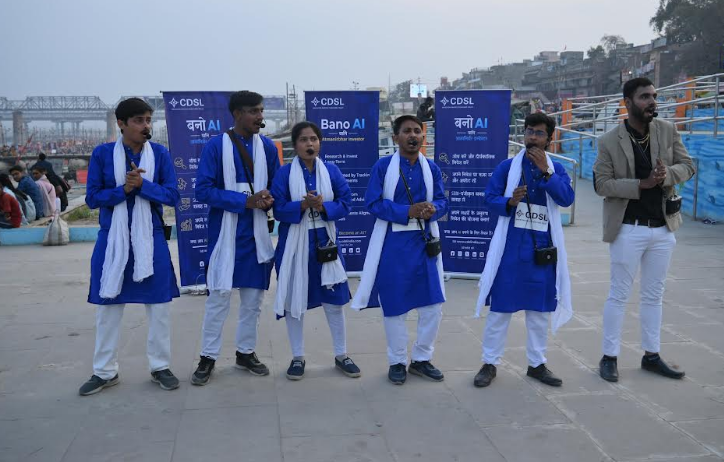
The Bano AI campaign by CDSL IPF delivers a powerful message to the masses through Nukkad Natak, encouraging informed decision-making and investments via SEBI-registered platforms, while making financial information simpler and more accessible. Performed by professional theatre artists, the plays, based on the theme “Scam Ki Chhoti Si Baat”—used humor, wit, and relatable scenarios to educate the audience. One play followed an investigator uncovering financial scams, while the other depicted a chai-stall discussion among three investor archetypes, highlighting the importance of vigilance in financial decisions. In addition to scripting and organizing the performances, Branding Edge also designed and developed on-ground promotional materials to amplify the campaign’s reach.
Speaking on the initiative, Mr. Rahul Tekwani, Managing Partner, Branding Edge Strategic Communication and Advisory, said: “ “CDSL IPF’s commitment to investor protection perfectly aligned with our philosophy at Branding Edge—leveraging innovative storytelling to create meaningful impact. Nukkad Natak, a powerful yet underutilized medium by brands, proved to be an incredibly effective way to engage and educate audiences at the Maha Kumbh. Unlike traditional advertising, street plays create an immediate and personal connection, making complex topics like financial security more relatable and easy to understand. With our deep expertise in financial communication, we crafted a compelling narrative that resonated with the diverse crowd, ensuring that essential investor protection messages reached people at the grassroots level. This initiative not only raised awareness about financial safety but also showcased how creative storytelling can transform investor education. We take immense pride in executing this for CDSL IPF and remain committed to exploring new, impactful ways to communicate critical financial knowledge.”
25, Feb 2025
ESSCI and POSSPOLE Partner to Strengthen Skill Development Initiatives in the ESDM Sector

The Electronics Sector Skills Council of India (ESSCI) has signed a Memorandum of Understanding (MoU) with POSSPOLE to collaborate on skill development initiatives in the Electronics System Design and Manufacturing (ESDM) sector. This partnership aims to address the growing demand for skilled professionals in the ESDM sector by providing training and upskilling programs aligned with industry requirements.
The MoU outlines a comprehensive framework for collaboration, including the establishment of a Center of Excellence (CoE), development of training programs, and facilitation of industry partnerships. The manufacturing industry has been facing a shortage of skilled workers, and through this collaboration, ESSCI and POSSPOLE aim to bridge the industry’s skill gap with innovative solutions. The key focus areas of this partnership include Skill Development Programs, Sustainability, Resource Sharing, and Continuous Improvement.
“We believe that this partnership will have a transformative impact on the ESDM sector by equipping professionals with industry-relevant skills, fostering innovation, and driving sustainable growth. By leveraging our expertise and resources, we aim to bridge the existing skill gap and create a workforce that is future-ready and globally competitive,” said Saleem Ahmed, Officiating Head of ESSCI.
As part of the MoU, ESSCI will support POSSPOLE in setting up the CoE, aligning training curriculum with industry standards, and guiding CSR initiatives. POSSPOLE will facilitate the establishment of classroom and laboratory facilities, operate the CoE, and deliver skilled manpower to the industry. The collaboration will also emphasize sustainability, resource sharing, and continuous improvement to ensure that the skill development initiatives remain effective and relevant to the industry’s needs.
“We are excited to partner with ESSCI to bridge the skill gap in the ESDM sector. This collaboration will enable us to provide high-quality training programs that meet the industry’s requirements, thereby enhancing the employability of our trainees,” said Kiran Rudrappa, CEO & Co-Founder of POSSPOLE.
ESSCI is a cutting-edge business accelerator and incubation ecosystem driving innovation in IoT, Smart Kiosks, Smart Cities, and Semiconductors. This collaboration focuses on workforce development in ATMP and IoT domains and is committed to empowering innovative enterprises and capacity building to match the requirements in technology and manufacturing within the ESDM sector.


