


11, Dec 2024
Massive USD 40 Billion EV Investment Forecast by 2030, Paving the Way for Real Estate Growth
Gurugram, 11 December 2024: Around USD 40 billion of investments are envisaged over the next 5-6 years for the development of Electric Vehicles (EV) & ancillary industries in India. However, the deployment of these funds will rely upon successful implementation of government policies, charging infrastructure ramp-up and domestic manufacturing capacity scale-up. As per Colliers’ latest report “EVs in India: Renewed Vigour in Electric Mobility”, about two-thirds of the planned investments, can potentially materialize in the lithium-ion battery segment alone. Interestingly, despite slower than anticipated EV adoption, investment commitments in the EV industry rose over 3X times in the last 3 years. This in itself is a testament to the immense potential, which electric mobility holds in the country.
Share of planned investments for EV over the next 5-6 years
| Type of Plants | Planned Investments
(USD billion) |
Percentage Share |
| Lithium-ion battery manufacturing | 27.0 | 67% |
| OE and EV manufacturing | 9.0 | 23% |
| Others | 4.0 | 10% |
| Total | 40.0 | 100% |
The planned investments can potentially open up multiple real estate opportunities. It would accelerate land acquisition for setting up of EV and Original Equipment (OE) manufacturing units including lithium-ion batteries. At the same time, with an uptick in EV adoption, increasing need for charging infrastructure would potentially translate into real estate demand for more than 45 million sq ft by 2030.
Amidst slower than anticipated adoption levels, quantum growth in EV sales highly unlikely
With an overall EV penetration rate of 8% in India, Colliers estimates sales of around 2 million EVs in 2024. Although the pace of EV adoption in the country has been commendable, it has not been as brisk as anticipated. Given the tardy progress, especially when compared with the ambitious desire of having 80 million EVs on road by 2030, attainment of set targets looks far-fetched. Although a 6x growth in average annual EV sales (2025-30) is highly optimistic, an eventual realization of EV goals necessitates concentrated efforts in overhauling the EV landscape of the country.
Growth required in EV sales to achieve 2030 targets
| Vehicle category | Current penetration levels
(2024) |
Targeted penetration levels
(2030) |
Estimated annual sales in 2024 (million) | Required average annual sales during 2025-30 (million) | Required growth in average annual sales | |
| 2-Wheelers | ~6% | 80% | 1.2 | 7.3 | 6X | |
| 3-Wheelers | ~55% | 80% | 0.7 | 4.3 | 6X | |
| 4-Wheelers | ~3% | 30% | 0.1 | 0.9 | 9X | |
| Heavy Vehicles | ~3% | 40% | 0.01 | 0.04 | 4X | |
| Total | ~8% | 30% | 2.0 | 12.6 | 6X |
Factors such as significantly higher EV prices (compared to Internal Combustion Engine vehicles), import dependencies and inadequate public charging infrastructure have limited the EV adoption in the country. Thus, in addition to continued government impetus through subsidies and incentives, it becomes highly critical to significantly improve domestic EV manufacturing capabilities. Moreover, it is imperative to focus on lithium-ion battery & ancillary segments and public private partnerships in augmentation of charging infrastructure on highways, expressways and urban agglomerations across the country.
“Although the demand for EVs has picked up in recent years, the target of achieving 30% penetration by 2030 looks like an uphill task. While demand and supply incentives will continue to play a pivotal role in faster adoption of EVs, a multifold increase in EV sales can be fast-tracked by the reduction in production costs and improving affordability with respect to EV price points. Additionally, high-capacity original equipment manufacturing units and large-scale production of lithium-ion battery variants must be high on the EV priority list.” said Badal Yagnik, Chief Executive Officer, Colliers India.
Potential development of ~13,000 acres of land can materialize by 2030
With the rise in domestic production of EVs, about 13,000 acres of land acquisition and development plans can potentially materialize by 2030. Of the potential land development opportunities, more than 80% is likely to come from lithium-ion battery manufacturers. This will provide a significant boost to the EV industry in the country and open multiple real estate opportunities. With growing demand, the industrial and warehousing segment is likely to benefit the most. The segment is likely to witness surge in built-to-suit developments curated for both global and domestic EV manufacturing firms. Technology adept warehouses and automation is likely to become more pervasive and accentuate integration across the EV value chain in India.
“Accelerated growth in the EV industry is bound to positively impact the Indian real estate sector. Supported by supply-side incentives from the government, leading developers are likely to increase their focus on state-of-the-art warehouses. Additionally, over 45 mn sq ft of real estate will be required for building extensive network of public charging stations over the next 5-6 years. Residential and commercial developers too are likely to increasingly integrate dedicated charging stations and parking spots for EVs within their projects. Such practices will provide a competitive edge, aligning with the requirements of corporate occupiers and homebuyers.” says Vimal Nadar, Senior Director and Head of Research, Colliers India.
- 0
- By Rabindra

11, Dec 2024
Executive Chef Lalit Kumar Unveils ‘Baked Trio’ at Skyview By Empyrean
Baked trio (Baked Tiranga Halwa) is the maharastrian desserts. It made with three types of halwa like carrot, Cucumber Halwa and beetroot halwa. The word halwa comes from the Arabic word for “sweet,” and refers to desserts that are cooked with ghee and sugar.
Whether made with noodles (vermicelli), lentils (moong dal), grains (like semolina), or vegetables (like carrots or beets), Indian halwa is a pudding that is absolutely delectable.
Contrary to popular belief, Indian halwa is different from Middle Eastern halva, which is a candy made primarily from sesame seeds.

Ingredients of Baked Trio
For Beetroot Halwa:
4 Beetroot
3 cup Milk
6 tbsp Sugar (sugar free)
2 tsp Ghee
Cardamom powder
For garnishing Dry fruits
For Cucumber Halwa:
3 cup Cucumber
3 cup Milk
1 tbsp Khoya
6 tbsp Sugar
2 tsp Ghee
Cardamom powder
For garnishing Dry fruits
For Carrot Halwa:
1 cup Carrot (English carrot), grated
1 cup Milk
6 tbsp Sugar
2 tbsp Ghee
Cardamom powder
For garnishing Dry fruits
How to Make Baked Trio
Beetroot Halwa:
1.Wash and grated the beetroot, run through the cold water and make a puree of it to get one cup of puree. We have used one bunch of grated beetroot to get one cup.
2.Heat ghee in a wok and add the caramelize beetroot, sauté for 5 minutes and add milk, sugar and stir till it forms a thick mixture. Keep stirring so it does not stick to the wok.
3.When it is done, remove and arrange in a plate at the bottom side.
Prepare Cucumber Halwa:
1.Wash and peel one cucumber. Grate it and squeeze out the water.
2.Heat ghee in a wok and add the cucumber to sauté for 5 minutes.
3.Add the milk, sugar and keep on stirring. Once the milk dries up, add khoya and mix well till it starts to make a thick mixture.
4.Remove when it is done and arrange in the plate for the second layer i.e. white.
Prepare Carrot Halwa:
1.Wash, peel and grate the carrot in a bowl.
2.Heat ghee in a wok and add the carrots to sauté for 5 minutes.
3.Now add the milk and sugar to it. Stir till it forms a thick mixture. Keep stirring to avoid sticking of the mixture.
4.Remove and arrange this above the cucumber halwa i.e. the white layer.
5.Your Tiranga halwa is ready. Garnish with dry fruits of your choice.
11, Dec 2024
ZELIO Ebikes and LoanTap Join Forces to Simplify Financing for Electric Two-Wheelers
11 December 2024: ZELIO Ebikes, a leading player in India’s electric two-wheeler market, has announced a strategic partnership with LoanTap, a leading online personal loan platform, to provide hassle-free financing options for customers. This partnership aims to enhance accessibility and affordability for customers across the country, enabling more EV enthusiasts to purchase ZELIO Ebikes’ diverse range of low and high-speed electric two-wheelers, including the popular X-Men, Gracy, Eeva, and Mystery models.
The collaboration with LoanTap offers a range of customer-friendly benefits that will make the purchase of ZELIO electric scooters more accessible. LoanTap’s flexible repayment plans allow customers to choose repayment terms that best suit their financial situation. The competitive low-interest rates ensure affordable monthly payments, and there are no hidden fees, providing transparency for customers. The quick approval process enables customers to get on the road with minimal delay, while customizable EMI options make it easier for customers to budget their payments. LoanTap also offers grace periods, providing greater repayment flexibility, and the easy-to-use app allows customers to manage their loan details from anywhere, anytime.
ZELIO Ebikes’ partnership with LoanTap will have a direct positive impact on dealers by boosting sales and enhancing customer engagement. Notably, LoanTap has set simple eligibility criteria to make it easier for a larger segment of customers to apply for financing. To be eligible, customers must be at least 21 years old and an Indian citizen.
Mr. Kunal Arya, Co-Founder and Managing Director of ZELIO Ebikes, stated, “As the electric vehicle market in India matures, we are seeing a growing number of consumers who are ready to embrace EVs and are actively seeking financing options to make the transition. This partnership with LoanTap allows us to meet that demand, offering customers accessible and flexible financing solutions. With this collaboration, we’re helping more people make the shift to sustainable transportation while expanding the reach of electric mobility across the country.”
Satyam Kumar, CEO and Co-Founder of LoanTap, added, “We are thrilled to partner with ZELIO Ebikes in promoting electric two-wheelers as the future of sustainable transportation. LoanTap’s flexible, transparent, and customer-first approach to financing makes this collaboration a perfect fit. We are excited to be part of ZELIO’s journey in making electric mobility accessible to more customers across India.”
ZELIO Ebikes dealers will be equipped with all the necessary tools and resources to effectively promote and explain the LoanTap financing options to their customers. This includes training sessions on financing details, dealer engagement activities, and the development of Standard Operating Procedures (SOPs) to ensure dealers are well-prepared to assist customers in making informed purchasing decisions. To further incentivize customers, LoanTap will run special promotions and limited-time offers, ensuring that more customers can benefit from attractive financing deals when purchasing ZELIO Ebikes.
In addition to these efforts, ZELIO Ebikes is committed to closely monitoring the success of its partnership with LoanTap to ensure it drives sales and enhances customer satisfaction at dealerships. This will be done through monthly reports, frequent meetings with dealerships, sales growth tracking, and by gathering dealer feedback and customer satisfaction surveys.
Since its inception, ZELIO Ebikes has quickly become a frontrunner in the Indian electric two-wheeler market, with an extensive network of over 273 dealerships and a growing customer base of more than 200,000 satisfied riders. With plans to expand its dealership network to 400 by March 2025, the company remains committed to providing eco-friendly, sustainable transportation solutions, further driving the adoption of electric mobility across the country.
11, Dec 2024
MAHE Shines at International Folklore Film Festival with Two Documentaries Chosen for Screening
Manipal, 11th December 2024: Manipal Academy of Higher Education (MAHE) has added another feather to its cap with the official selection of two of its documentaries for the 8th edition of the International Folklore Film Festival (IFFF) in Thrissur, Kerala. IFFF is a prestigious global event that celebrates folklore and cultural heritage through cinema. The festival receives more than 800 films from worldwide and this year it will screen over 200 films from around the world that offer a unique glimpse into the rich diversity of folklore-based storytelling. MAHE is proud that two of its documentaries will be screened in the festival during 10 -15 January 2025.

The festival organized by the International Film Festival of Thrissur (IFFT), Bhoumam Social Initiative, the Centre for Media Studies at St. Thomas College, Thrissur, and International Folk Films India, The selected documentaries, Pilivesha of Tulunadu and Satyada Siri: A Woman’s Tale, are a testament to MAHE’s commitment to showcasing the vibrant cultural heritage of the region to the global audience. Pilivesha of Tulunadu explores the deeply rooted tradition of Pilivesha, or the Tiger Dance, a symbolic and artistic practice central to the cultural identity of Tulu Nadu. The film highlights its significance in promoting harmony and unity among diverse communities while preserving a unique artistic expression. On the other hand, Satyada Siri: A Woman’s Tale presents a moving narrative about faith and spirituality, reflecting the profound connection between individual belief systems and the collective well-being.
Satyada Siri: A Woman’s Tale has already garnered international acclaim, having been screened at the Multicultural Film Festival 2024 in Perth, Australia, and the Cinemaking International Film Festival 2023 in Dhaka, Bangladesh. Pilivesha of Tulunadu has made MAHE proud with its recent official selection at the Tokyo Documentary Film Festival 2024. The documentary was screened under visual anthropology category at Tokyo, Japan on 05 December 2024.
Both films were directed by Dr. Praveen K. Shetty, Coordinator of the Centre for Intercultural Studies and Dialogue (CISD) at MAHE, and Nitesh Anchan, Research Associate at CISD. The documentaries are part of the larger project Discerning India: Living Cultures of Tulunadu, an initiative by MAHE. Launched in September 2021, this project aimed to bring the cultural heritage of Tulunadu—a region encompassing Udupi, Dakshina Kannada, and Kasargod districts—to a global audience through an online course. The self-paced online course offered under Directorate of Online Education, MAHE includes documentaries, expert lectures, and academic readings, providing an immersive experience into Tulunadu’s living traditions. The course has already been completed by 450 participants, primarily students, enriching their understanding of the region’s heritage. The next batch of the online course will be open for registration in the last week of December 2024.
MAHE’s consistent efforts through CISD reflect its dedication to preserving and disseminating the intangible cultural heritage of Tulu Nadu. These documentaries celebrate the region’s cultural richness and position MAHE as an international academic institution with strong regional rootedness.
11, Dec 2024
Chhathi Maiyya Ki Bitiya Actor Ashish Dixit Hails Abha Parmar as the Heart of the Show
In every family, there’s always one person whose warmth and love hold everything together, making the home a special place. In Sun Neo’s Chhathi Maiyya Ki Bitiya, that person is none other than Abha Parmar, who plays the beloved character of Dadi. Recently, Ashish Dixit, who portrays Kartik in the show, expressed his admiration for Abha Parmar, calling her the backbone of the entire cast and crew and highlighting how she has fostered a family-like bond off-screen.

Sharing his heartfelt thoughts about his on-screen Dadi, Ashish said, “Our Dadi on the show, Aabha Ma’am, is not just the head of the family on-screen but also off-screen. She’s the one who has brought our entire team together like a real family. She is such a warm and loving person, and we all respect her deeply. Every day, we have lunch together in her room, just like a family would. If there’s ever a small disagreement between any of us, she steps in like a true elder, patiently explaining things and ensuring both sides apologize and make up. It’s beautiful how she creates harmony on set, just as she does in her character on the show.”
The Chhathi Maiyya Ki Bitiya actor further added, “She truly is the backbone of our team, the thread that binds us all together. Her positive energy and wisdom inspire everyone to give their best, and her presence makes the set feel like home. Whether it’s guiding us with her experience or sharing a laugh during breaks, she’s a constant source of warmth and guidance. We’re so lucky to have her as part of the team. She holds a special place in all our hearts, both as a colleague and as a family member in this journey.”
Abha Parmar plays the role of Dadi to Kartik (Ashish Dixit), the head of the family, in Chhathi Maiyya Ki Bitiya. Airing on Sun Neo at 7 PM, the show is an emotional family drama revolving around Vaishnavi (Brinda Dahal), an orphan who considers Chhathi Maiyya her mother and holds a deep reverence for her.
11, Dec 2024
WhatsApp Kicks Off ‘Bharat Yatra’ Initiative to Boost Small Business Growth in India
Bengaluru, December 11, 2024: WhatsApp today kicked off WhatsApp Bharat Yatra, a first-of-its-kind initiative aimed at providing on-ground, in-person training to small businesses across India. The mobile bus tour is designed to help small businesses fully leverage the capabilities of WhatsApp, enhancing their digital skills and business growth potential.
Starting with Delhi-NCR, the bus will visit some of the region’s most popular and busy markets such as Laxmi Nagar, Rajouri Garden, and Nehru Place, Malviya Nagar, Amar Colony, and Safdarjung Enclave. The journey will also cover key hubs in Gurgaon and Noida, including Sapphire Mall and Atta Market.
Following its tour in Delhi-NCR, the WhatsApp-branded bus will travel across India, reaching cities like Agra, Lucknow, Kanpur, Indore, Ahmedabad, Surat, Nashik, Mysore, Vijayawada. Through this initiative, small and medium businesses (SMBs) will benefit from interactive demos, hands-on personalized training – to get support creating their Business Profile, setting up a catalog and creating an ad that clicks to start a WhatsApp chat – and expert guidance on leveraging the WhatsApp Business app’s key features to establish their WhatsApp presence, better connect with their customers, close sales and grow their business. enhance their operations.
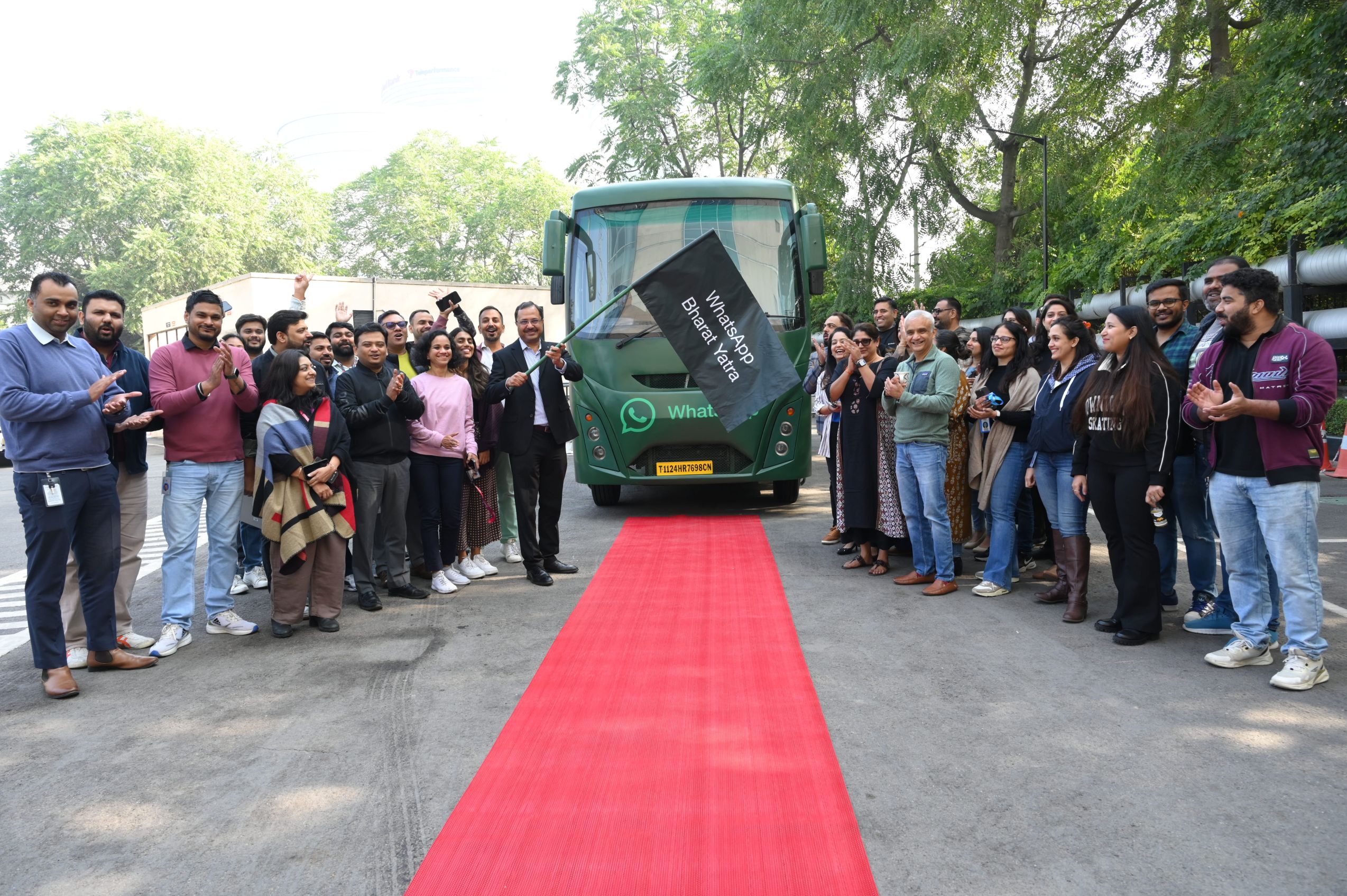
Ravi Garg, Director, Business Messaging, Meta in India said, “Small businesses are the backbone of India’s economy, and with the right digital tools, they have the power to supercharge the country’s digital transformation. The WhatsApp Bharat Yatra is our commitment to helping these businesses unlock their full potential by providing them with the skills and knowledge they need to digitally connect with their customers, grow and succeed. By meeting businesses where they are—both physically and digitally—we aim to create a meaningful, long-lasting impact across India’s entrepreneurial landscape.”
Recently, WhatsApp introduced some new updates for small businesses, including Meta Verified, which helps businesses build credibility with customers. Additionally, businesses can now send customized messages to their customers, such as appointment reminders, birthday greetings, or even updates on a holiday sale, all in a faster and more efficient way.
For small businesses, WhatsApp has also started testing Meta AI, making it easier for them to activate AI directly from the WhatsApp Business app and engage with their customers more efficiently. The WhatsApp Bharat Yatra will provide in-person training across various tools and features on the WhatsApp Business app, helping businesses make the most of these updates. The WhatsApp Bharat Yatra will help businesses provide in- person training across various tools and features on the WhatsApp Business app. The WhatsApp Bharat Yatra will help businesses provide in- person training across various tools and features on the WhatsApp Business app.
WhatsApp Bharat Yatra is the latest in a series of transformative initiatives by the brand aimed at empowering small businesses in India. With programs such as WhatsApp Se Wyapaar with CAIT to upskill 10 million traders, Digishaastra, powered by WhatsApp was launched by India SME Forum, Meta’s strategic partnership with ONDC, WhatsApp continues to champion digital transformation, ensuring India’s small businesses are at the forefront of the nation’s growing digital economy.
11, Dec 2024
‘Angreji Beat’ Takes the Internet by Storm with Groundbreaking New Music Video
“Angreji Beat” by Yo Yo Honey Singh and Gippy Grewal, one of Punjabi music’s biggest anthems, has made a major comeback. Times Music, in association with Speed Records, has dropped the long-awaited original music video of this iconic hit. After more than a decade, the never-seen-before footage, shot in 2011 but never released, is now available on Speed Records’ YouTube channel. The music video has already taken the internet by storm, trending at the top on YouTube and reigniting nostalgia among fans worldwide.

Gippy Grewal, the legendary Punjabi singer, shared his excitement, “‘Angreji Beat’ was a game-changer for me. Seeing the video finally drop after so many years feels surreal. The song still holds a special place in my heart, and it’s amazing to see how fans are embracing it once again.”
Mandar Thakur, CEO of Times Music/Junglee Music, expressed his thoughts saying, “‘Angreji Beat’ has been a party anthem for over a decade, and bringing back this raw, unfiltered footage will keep fans hooked. The response has been overwhelming – the energy from the fans is electrifying, and the video is buzzing everywhere!”
The video’s release has caused a wave of excitement online, with fans flooding social media to share their reactions, making it clear that Angreji Beat is more than just a song – it’s a cultural moment that refuses to fade.
11, Dec 2024
TiE Global Summit 2024 Kicks Off with Focus on Collaboration, Innovation, and Global Growth
Bengaluru/Mumbai, December 11, 2024: The TiE Global Summit 2024 (TGS24) commenced today at the Bangalore International Exhibition Centre (BIEC), bringing together distinguished global leaders, entrepreneurs, investors, and policymakers. Organized by TiE Bangalore, the summit brings together global entrepreneurs, investors, and thought leaders to explore key themes of innovation, collaboration, and the future of entrepreneurship. It is Supported by the Government of Karnataka (Department of E, IT, BT) as the State Partner and co-hosted by the Ministry of Electronics and Information Technology (MeitY), Government of India, and Software Technology Parks of India (STPI), the summit aims to redefine the global entrepreneurship landscape under the theme “Putting Entrepreneurship First.”
The summit began with the Antraprerna Summit on December 9, which laid the foundation for discussions on sustainability, innovation, and building entrepreneurial ecosystems. The sessions provided actionable insights into tackling global challenges and fostering sustainable growth.

The inauguration ceremony witnessed participation from an illustrious panel of dignitaries, including Shri Priyank Kharge, Hon’ble Minister of IT, BT, RDPR, Government of Karnataka; Lt. Governor Tahesha Way, New Jersey and Secretary of State; Shri Arvind Kumar, Director General, STPI; Dr. Ekroop Caur, IAS, Principal Secretary to Government, Department of E, IT, BT & S&T, Government of Karnataka; Mr. Chris Hodges, U.S. Consul General, Chennai; Shri Prashanth Prakash, Chairman, Karnataka Vision Board and Founding Partner, Accel India; Shri BV Naidu, Chairman, Karnataka Digital Economy Mission; Dr. Sanjay Tyagi, Jurisdictional Director, STPI; Mr. Ashish Chauhan, MD & CEO, NSE; Shri Sanjeev Gupta, CEO, Karnataka Digital Economy Mission (KDEM); Mr. Amit Gupta, Global Chair, TiE Global; Mr. A.J. Patel, Chairman, TiE Global; Mr. Akhilesh Tuteja, Global Cyber Security Leader, KPMG; Mr. Madan Padaki, President of TiE Bangalore and Chair of TGS24; and Ms. Lakshmi Pratury, CEO, INK Talks.
On the inauguration day, the summit featured an engaging session titled “Entrepreneurship Through the Lens of Storytellers,” where Mr. Madan Padaki, President of TiE Bangalore and Chair of TiE Global Summit 2024, conversed with renowned Indian film actor Vidya Balan and film producer Siddharth Roy Kapur. The session delved into their unconventional journeys, exploring the resilience required to overcome setbacks and the power of persistence. Vidya shared her belief in staying grounded and approaching every opportunity with a fresh perspective, while Siddharth highlighted the importance of intentionality and adapting to challenges. Both speakers drew fascinating parallels between storytelling and entrepreneurship, emphasizing the highs, lows, and the constant drive to innovate and learn.
In another captivating session at the TiE Global Summit 2024, legendary tennis champion and philanthropist Andre Agassi took the stage for the FutureSparks session, themed ‘Marathon Mindset.’ He shared his remarkable journey, from dropping out of 8th grade to pursue tennis full-time, to becoming a transformative figure in education by building 130 schools that have benefited over 80,000 children in the past decade. Agassi emphasized the value of hard work and work-life balance, explaining that while his father valued success through winning and money, he focused on listening to his children and holding them accountable. He spoke about the importance of curiosity in education and the willingness to take risks, which has allowed him to learn and grow throughout his life. He also highlighted the role of sports in shaping creativity, problem-solving skills, and the ability to thrive in high-pressure environments, stressing that losses are only valuable when you learn from them.
During the inauguration of the TiE Global Summit 2024, the KPMG-TiE report “Democratisation of Entrepreneurship” was unveiled, highlighting key insights such as 20% of MSME startups being women-led, 45% emerging from Tier II/III cities, and the important role of government-supported incubation programs in fostering entrepreneurship. Lt. Governor Tahesha Way, New Jersey and Secretary of State delivered a speech emphasizing the strong ties between New Jersey and India. She highlighted the state’s $11.3 billion in two-way trade and a 2,025% increase in Indian business interest since 2019. With its world-class universities, skilled workforce, and history of innovation, New Jersey offers ample opportunities for Indian entrepreneurs. Also, Mr. Ashish Chauhan, MD& CEO, National Stock Exchange, spoke about the transformative role of technology in India’s financial markets, with the NSE empowering millions and driving wealth creation, underlining technology’s central role in India’s growth.
A major highlight of TGS24 is the TGS100 initiative, which showcases 100 early-stage startups selected from over 1,300 applications across 17 countries. These startups, spanning sectors like AI, Healthcare, Climate, and Social Impact, will pitch to a super-jury of investors and industry leaders for a chance to win a prize pool of INR 50 lakhs. Additionally, the TiE Women Global Pitch Competition, with 3,100+ women-led startups from 62 countries, will culminate with 43 finalists competing for top honors and a USD 50,000 prize pool.
Speaking at the inaugural session of the TiE Global Summit, Shri Priyank Kharge, Hon’ble Minister for IT, Bt, RDPR, Government of Karnataka said, “Karnataka views entrepreneurs as innovators and disruptors, whose transformative ideas are not only creating new markets and job opportunities but also shaping a more sustainable future. By equipping entrepreneurs with essential tools like mentorship and incubation, we aim to make entrepreneurship a natural choice, not just an aspiration. The Elevate program, run by the Government of Karnataka, supports startups with 50 lakh rupees in funding, with zero equity taken. To date, 983 startups have been funded through this initiative, with 32% hailing from Tier-1 and Tier-2 towns and 24% being women-led. I invite global entrepreneurs and think tanks to join hands with the Government of Karnataka in building a better, brighter, and bolder world.”
“Entrepreneurship is a transformative force—it’s not just about starting businesses, but about shaping the future. Reflecting on the growth of India’s financial markets, particularly with the Bombay Stock Exchange and the National Stock Exchange, technology stands as the driving engine behind this transformation. The NSE revolutionized the market with screen-based trading in 1994, and today it empowers millions of Indians to participate in wealth creation. As our nation continues to evolve, technology will remain the cornerstone of our growth. Whether you’re a small business owner or a large corporation, India’s capital markets offer a platform for all, driving innovation and opportunity. The future belongs to those who innovate, and in India, that future is bright for entrepreneurs and investors alike.” — Ashish Chauhan, MD&CEO, National Stock Exchange.
Speaking on the occasion, Madan Padaki, President of TiE Bangalore and Chair of TGS24, said, “As we gather here today, let us celebrate the energy and aspirations that drive us forward. Over the past 32 years, TiE has been a beacon of purpose, fostering entrepreneurship and building a better world. This journey has been fueled by the incredible power of our ecosystem – a collective force of government leaders, academia, financial institutions, investors, and entrepreneurs. Together, we have proven that nothing is impossible when the right minds come together. The connections we create here, the ideas we ignite, and the passion we share make TiE a global phenomenon. Today, we don’t just light a lamp; we light the path for future entrepreneurs. It is the spirit of TiE – uniting the world, empowering innovation, and elevating entrepreneurship to new heights.”
At the inauguration ceremony Amit Gupta, Global Chair of TiE Global said, “The TiE Global Summit 2024 marks a significant milestone in our ongoing mission to empower entrepreneurs across the globe. This summit is not just a platform for networking, but a catalyst for innovation, collaboration, and growth. Entrepreneurship is the heartbeat of innovation, transforming global challenges into opportunities, creating jobs, and driving sustainable economic growth. By harnessing technology and fostering collaboration, we are shaping a more inclusive and prosperous future for communities worldwide. Its transformative power lies in empowering millions, sparking groundbreaking ideas, and uplifting underrepresented voices. Together, we turn aspirations into impact, enabling communities to rise and thrive.”
11, Dec 2024
MIT-WPU Revolutionizes Mobility with Patent-Backed 5G Vehicle Tracking System
December 11, Mumbai: With the ever-growing demand for logistics, commercial operations, and traffic management, there is an increasing need for efficient vehicle monitoring systems to ensure smoother operations that are fast, safe, and reliable. In a significant achievement in this direction, a team of professors and students at MIT World Peace University (MIT-WPU), Pune, has developed an advanced vehicle data tracking system, backed by 5G and the latest technologies, for real-time vehicle monitoring, safety, and enhanced operational efficiency.
The team, comprising Ashutosh Solanke, Malhar Jojare, Hrushikesh Kalamkar, and mentor Prof. Shweta Kukade, has secured a patent for the novel integration of 5G technology, real-time tracking, and enhanced safety features into vehicle data monitoring systems. This system will now enable fleet operators, automotive manufacturers, insurance companies, logistics firms, smart city planners, and others to benefit from its real-time tracking, geo-fencing, and emergency alert capabilities.
The MIT-WPU team is now focusing on commercializing the system through partnerships with automotive manufacturers, fleet management companies, and logistics firms. The goal is to integrate the system into both commercial and public sector vehicle fleets, enhancing their operational efficiency and safety. Furthermore, the team plans to explore consumer applications by developing a version for individual vehicle owners, which would offer enhanced security and tracking capabilities.

Speaking about the unique features and importance of the system, Prof. Shweta Kukade, Assistant Professor at MIT World Peace University shared, “Traditional systems often lack the high-speed connectivity and precise location tracking necessary for modern applications. Our system leverages 5G technology and enhanced GPS/GLONASS accuracy, providing faster, more reliable tracking, making it invaluable for sectors like fleet management, logistics, insurance, and public transportation. We are also considering scaling the system for use in smart cities, potentially integrating it with IoT infrastructure for real-time urban mobility management, ensuring continuous product innovation and development.”
The system overcomes the limitations of existing vehicle tracking systems that operate on 2G or 3G networks, which have limited data transfer speeds and reduced accuracy in pinpointing a vehicle’s location. The integration of 5G addresses issues such as delayed tracking data, unreliable connectivity in rural areas, and weaker precision. This is a game-changer, enabling real-time data transfer and reliable tracking, particularly in rural, remote, or challenging environments, with accurate and fast location tracking through technologies like GPS and GLONASS.
Additionally, the system includes geo-fencing, allowing for virtual boundaries to be set and providing alerts if vehicles leave designated areas. The emergency button feature enables immediate alerts in critical situations. The automatic switch to open Wi-Fi networks ensures that the system maintains connectivity even when 5G isn’t available. These improvements offer greater speed, precision, and safety compared to legacy systems that rely on 2G/3G networks with only GPS tracking.
The system is designed to automatically connect to authorized, open Wi-Fi networks, typically in public spaces, without breaching any legal or network boundaries. It does not access private or password-protected networks without permission. This feature ensures continuous connectivity, especially when vehicles enter areas where 5G signals may be weak or unavailable, all while respecting the integrity of secured networks.
With its cutting-edge technology and versatile applications, the MIT-WPU team’s vehicle data tracking system has the potential to bring a significant change in fleet management, logistics, and urban mobility. As they move towards commercialization, the team is confident that this innovation will set new standards for safety, efficiency, and real-time monitoring in the transportation sector.
11, Dec 2024
Manappuram Foundation Recognized with Eco-Friendly Skill Development Award
Valappad/ Thrissur: Manappuram Foundation, the CSR wing of Manappuram Finance Ltd. has received the National Awards on Eco-Friendly Skill Development for its exemplary efforts in sustainable skill development initiatives. The award was presented at a grand ceremony held in Bengaluru and was received by Mr. George D. Das, CEO of Manappuram Foundation, and Mr. K.M. Asharaf, Senior PRO of Manappuram Finance. This recognition highlights the foundation’s skill development programs aimed to support the education of economically underprivileged children. As part of the commitment to social responsibility, the Manappuram Foundation spends over ₹6 crore annually in the education sector.
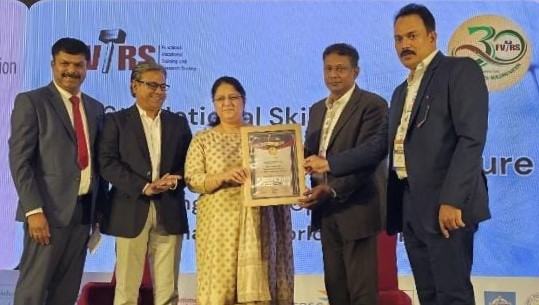
Expressing his contentment on receiving the award, Manappuram Foundation Managing Trustee, Mr. V.P. Nandakumar said, it is great honour to receive this award for Manappuram Foundation”. “It is crucial to implement learning methods that encourage students to explore their multifaceted skills. Equipping our children with world-class knowledge in modern technologies is a necessity. This award serves as an inspiration to strengthen our ongoing skill development projects in the education sector,” he added.
The foundation’s continued focus on empowering education through innovative and inclusive initiatives that align with our vision to create healthy, educated and happy communities


