


13, Aug 2026
AAEON Release PICO-ADN2, a Robust 2.5” Single-Board for Space-Constrained Rugged Deployments
Targeting transportation, automation, and outdoor kiosk deployment, the PICO-ADN2 is designed for stable operation in unpredictable environments.
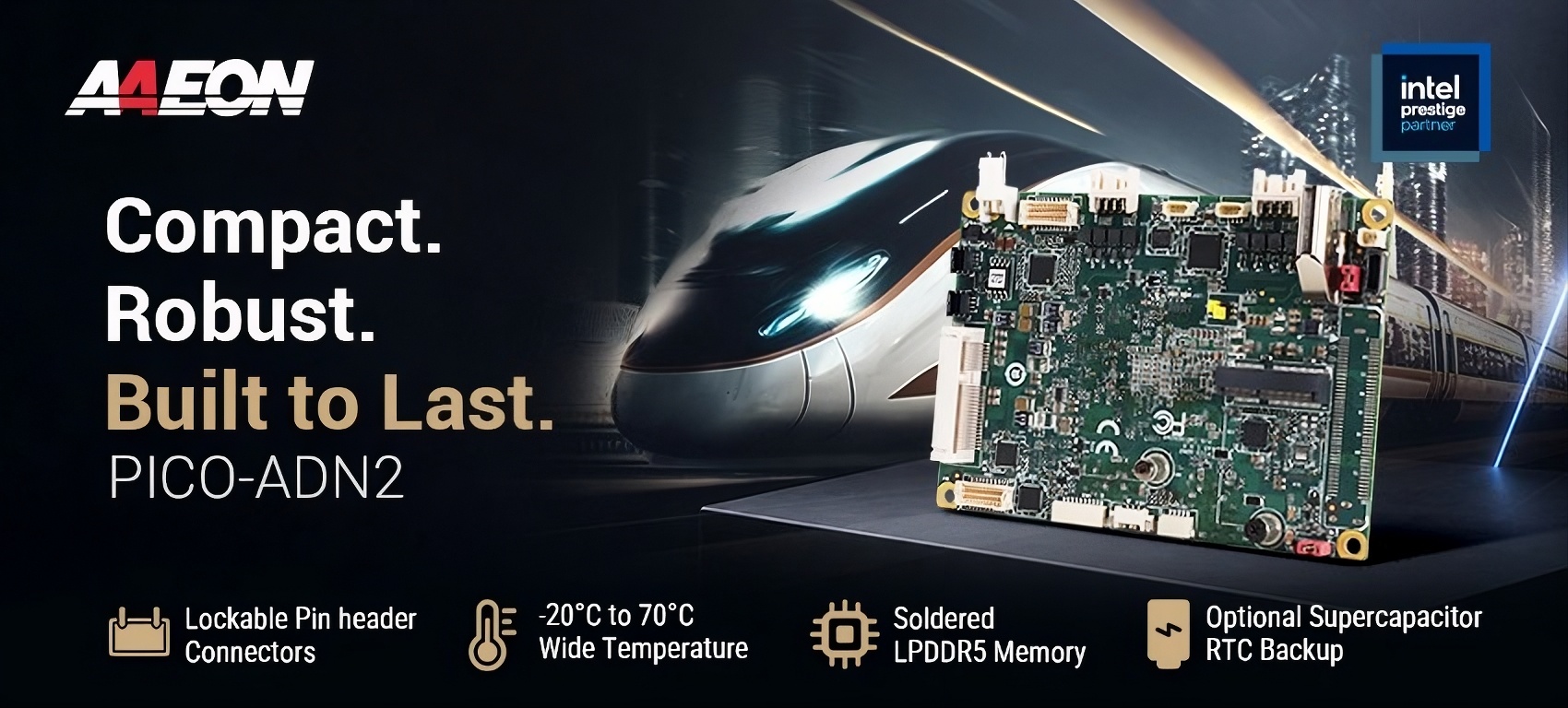
Taipei, Taiwan – Aug 13: AAEON, an industry-leading provider of embedded solutions, has released the PICO-ADN2, the latest addition to its line of Pico-ITX boards. The board is available with a choice of the 15W Intel Core i3-N305 or 12W Intel Processor N97, the board is designed to balance performance, thermal efficiency, and energy consumption in unpredictable environments. In line with this, AAEON has positioned the PICO-ADN2 as a platform well-suited for deployment in transportation, digital signage, industrial automation, and smart kiosk applications.
Of particular note is the PICO-ADN2 offers the option of a 2-pin header for an external supercapacitor that can be sized to provide at least 48 hours of RTC runtime, which may make it an attractive option for integrators that require an alternative to conventional battery-based backup, especially in environments that encounter power interruptions.
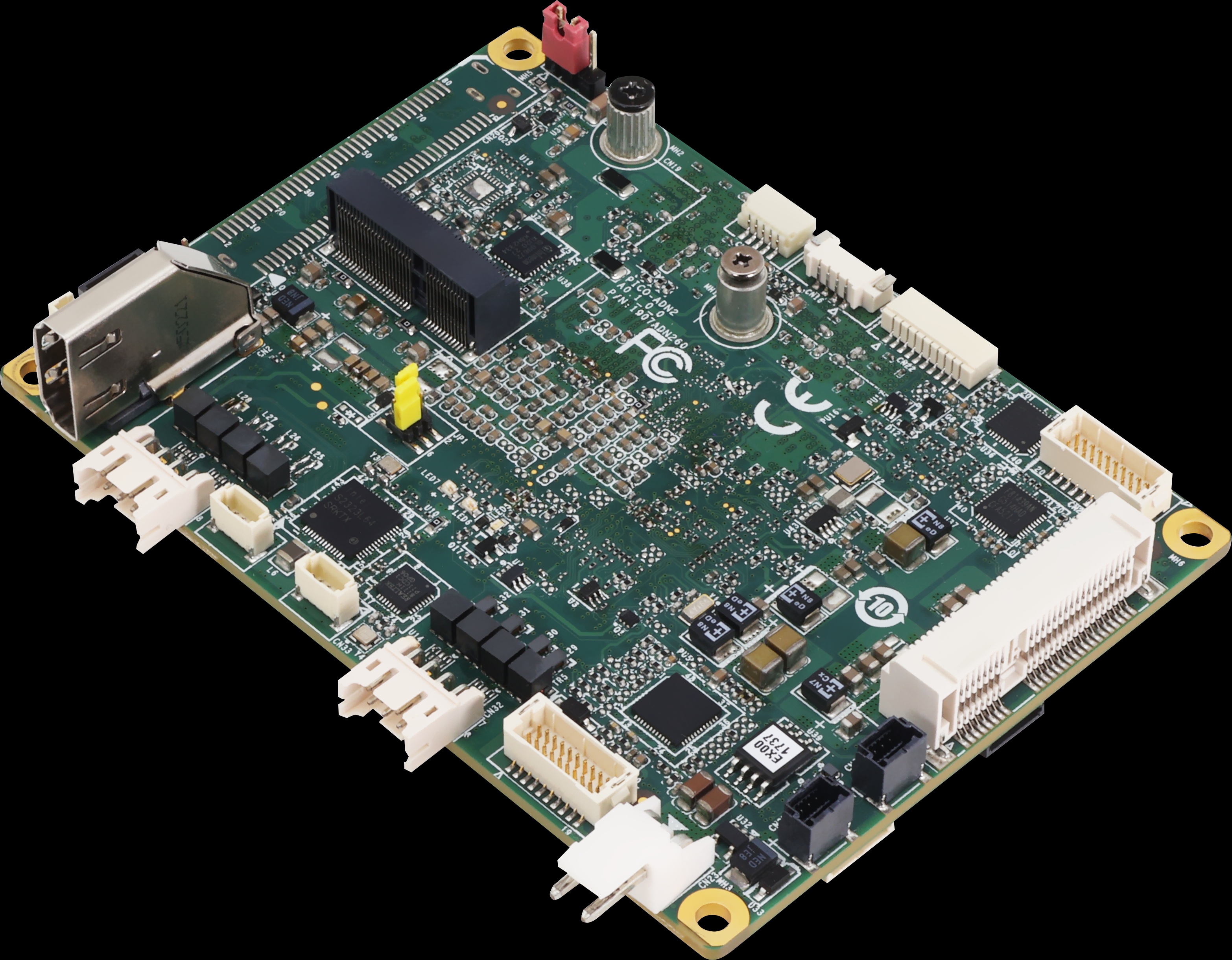
While the PICO-ADN2’s I/O is primarily connector-based, aside from a single HDMI 1.4 port, AAEON notes that it features lockable pin headers. This is to provide greater stability when the board is installed in high-vibration environments, a design philosophy that extends to the board’s system memory, which is 16GB of soldered LPDDR5.
The PICO-ADN2’s I/O provides an 8-pin header that exposes two LAN interfaces (one Intel Ethernet Controller I226-IT, one Realtek RTL8111H-CG), four USB headers (two for USB 3.2 Gen 1, two for USB 2.0 signals), and two serial port headers for RS-232/422/485. In addition to these, the PICO-ADN2 hosts a GPIO 4-bit and SMBus header (co-lay I2C).
As noted, the primary display option for the board is an HDMI port. However, an LVDS connector, co-laid with eDP, is also available, offering 1920 x 1200 at 60 Hz and 3840 x 2160 at 60 Hz, respectively.
Where expansion is concerned, the PICO-ADN2 supports the installation of Wi-Fi add-on cards via an M.2 2230 E-Key, as well as storage modules via a full-size mSATA slot, which can also accommodate an mPCIe module, configurable through the system’s BIOS settings.
- 0
- By Neel Achary



