


16, Sep 2026
PM Vishwakarma Scheme Reaches 30 Lakh Registrations, Strengthening India’s Traditional Artisan Economy
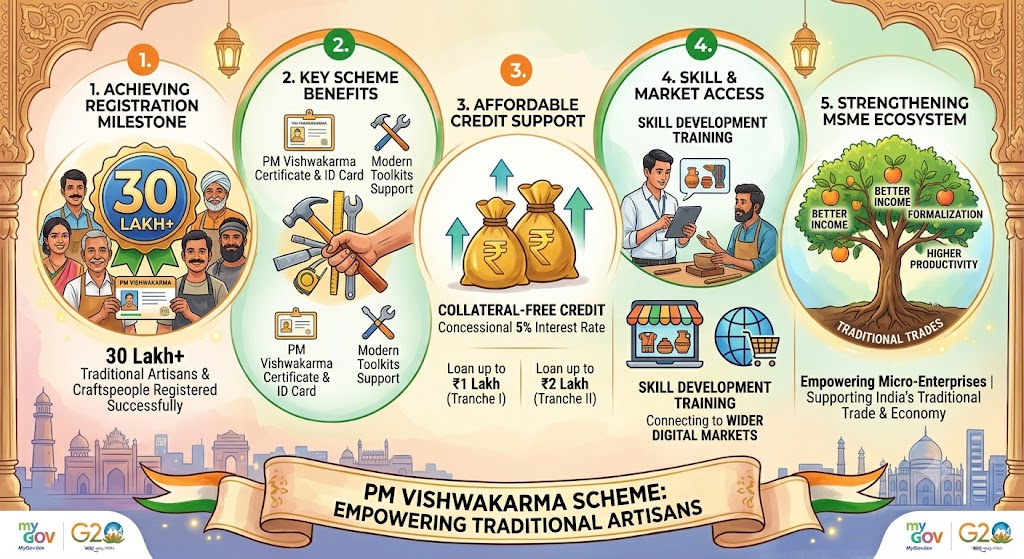
The PM Vishwakarma Scheme has reached a major milestone with 30 lakh traditional artisans and craftspeople successfully registered under the programme, highlighting the growing focus on strengthening India’s traditional trades through skills, modern tools, affordable credit and wider market access.
Launched in September 2023, the PM Vishwakarma Yojana was designed to provide end-to-end support to artisans and craftspeople who depend on traditional skills and hand-based work for their livelihoods. The scheme covers a wide range of traditional occupations and aims to help these workers improve productivity, product quality and income opportunities.
The official PM Vishwakarma Scheme status currently shows that the target of 30 lakh successful registrations has already been achieved. The milestone is significant because many traditional artisans operate as very small businesses and often face challenges in accessing formal finance, modern equipment, training and organised markets.
PM Vishwakarma Scheme Benefits
One of the key features of the scheme is its focus on improving the business capabilities of artisans. Beneficiaries can receive skill training, support for modern toolkits, recognition through the PM Vishwakarma Certificate and ID Card, and access to collateral-free credit at a concessional interest rate.
The scheme provides credit support in two stages, with eligible beneficiaries able to access loans of up to ₹1 lakh in the first tranche and up to ₹2 lakh in the second tranche, subject to the applicable conditions. The loans are offered at a concessional interest rate of 5 per cent to the beneficiary.
For artisans, access to better tools and affordable finance can make a direct difference to their businesses. A carpenter, potter, tailor, blacksmith or other traditional worker can use improved equipment and working capital to increase production, improve quality and respond to changing customer demand.
PM Vishwakarma and Skill Development
Skill development is another important part of PM Vishwakarma Yojana. Traditional knowledge has often been transferred from one generation to another, but changing consumer preferences and technology are creating new requirements for small businesses.
The scheme combines traditional skills with formal training and modern tools, allowing artisans to strengthen their existing capabilities while adapting their products and production methods to contemporary markets.
The government has also been working to connect artisans with wider markets. Greater access to digital platforms and organised marketing channels can help traditional products move beyond local customers and reach buyers in other parts of the country.
Business Impact of PM Vishwakarma Scheme
From a business perspective, the expansion of the PM Vishwakarma Scheme could strengthen India’s grassroots enterprise ecosystem. Traditional artisans are often micro-enterprises in practice, with production, employment and income closely linked to individual families or small community-based businesses.
Improved access to credit and tools can help these businesses increase their capacity without making large upfront investments. As production expands, demand can also increase for raw materials, packaging, transportation, retail services and other supporting activities.
This creates a wider economic effect beyond the individual beneficiary. Stronger artisan businesses can contribute to local employment, rural incomes and the development of small markets around traditional manufacturing and handicraft activities.
Digital Markets Create New Opportunities
Digitalisation is also changing the way traditional artisans can reach customers. Online marketplaces and digital payment systems can reduce the geographical limitations that have traditionally affected small producers.
For artisans, the ability to showcase and sell products beyond their immediate locality can open access to a larger customer base. It can also encourage businesses to improve product presentation, packaging, pricing and inventory management.
This combination of skill development, digitalisation, financial support and market access makes the scheme relevant not only as a welfare initiative but also as a small-business development programme.
PM Vishwakarma Scheme and India’s MSME Sector
The 30-lakh registration milestone also connects with the broader formalisation of India’s MSME sector. Traditional artisans frequently operate at the smallest end of the enterprise spectrum, and bringing more of them into organised support systems can improve their access to institutional finance, government programmes and markets.
India’s MSME ecosystem is increasingly being supported through formalisation, technology, finance and market-linkage initiatives. Government data shows that Udyam Registration and the Udyam Assist Platform together crossed 8.7 crore registrations by June 2026, reflecting the expanding formal enterprise base.
For the artisan economy, the challenge is now to ensure that registration translates into actual business improvement. Training, access to tools, timely credit, digital adoption and market opportunities will determine how effectively beneficiaries can use the support available under the scheme.
The PM Vishwakarma Scheme therefore represents an important link between India’s traditional skills and its evolving micro-enterprise economy. With the 30-lakh registration target achieved, the programme has created a large base of registered artisans, while continued implementation will be important for turning formal registration into stronger businesses, better livelihoods and wider market participation.
- 0
- By Neel Achary



