


17, Sep 2026
Vishwakarma Puja: When Workers Pause To Honour The Tools Of Their Craft
Bhubaneswar, Sept. 17 (UDN): Across Odisha, the rhythm of work changes on Vishwakarma Puja. Factories fall quiet, workshops close for the day, vehicles remain parked and machines that operate throughout the year are cleaned, decorated and worshipped.
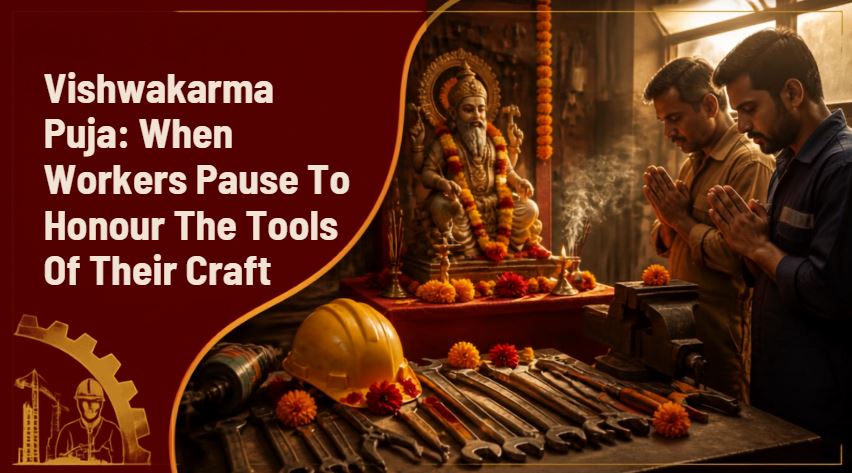
Celebrated when the Sun enters Virgo, Vishwakarma Puja is more than a religious observance for workers and craftsmen. It is a day that places work, skill, tools and gratitude at the centre of the celebration.
The Divine Master Craftsman
In Hindu tradition, Lord Vishwakarma is revered as the divine architect and master craftsman. He represents the ability to design, create and transform an idea into something tangible.
Traditional accounts associate Vishwakarma with the creation of several divine weapons and objects, including Vishnu’s Sudarshan Chakra and Shiva’s Trishul.
In Odisha, the deity’s significance is closely linked with the Jagannath tradition. According to popular belief, Vishwakarma appeared in the guise of an aged sculptor to carve the sacred wooden forms of Lord Jagannath, Lord Balabhadra and Devi Subhadra.
This association gives Vishwakarma Puja a distinctive cultural resonance in the state.
Tools Become Objects Of Reverence
One of the defining features of the festival is the worship of tools and machinery. Workers clean their workplaces, wash machines, polish equipment and arrange their tools before the puja.
Hammers, saws, wrenches, agricultural implements, vehicles and industrial machinery may all become part of the ritual. Flowers, sandalwood paste, incense and other offerings are placed on or around the equipment.
The practice reflects the belief that tools are an extension of human skill and effort. They help workers build, repair, produce, transport and create, making them an important part of everyday livelihood.
Prayers For Safety And Skill
The festival also brings the practical concerns of working life into its rituals. Workers seek blessings for safety, prosperity, skill and success.
For someone working with heavy machinery, safety may be the foremost concern. For an artisan, it may be precision and craftsmanship. For farmers, shopkeepers, mechanics and other workers, the prayers often reflect the particular demands of their professions.
In this sense, Vishwakarma Puja connects spirituality with the realities of work, recognising the effort and expertise required to earn a livelihood.
A Pause From Production
In many workplaces, machinery remains switched off after the puja. The temporary halt provides a break from the routine of production and offers workers an opportunity to step away from their daily responsibilities.
The pause also carries a broader message: productivity is not the only measure of work. Rest, reflection and appreciation have a place alongside labour.
Dignity In Every Form Of Work
At the heart of the festival is the idea that skill and honest labour deserve respect. Vishwakarma, as the divine craftsman, represents the value of creating something through knowledge, patience and practice.
A carpenter, mechanic, welder, farmer, driver, artisan or factory worker may use very different tools, but each depends on experience and skill to perform the job well.
Vishwakarma Puja therefore offers a cultural reminder that the dignity of work does not depend solely on status or profession. The act of creating, repairing, building or serving others through honest effort carries its own value.
A Festival Of Gratitude
When flowers are placed on a machine or a worker folds their hands before a set of tools, the ritual symbolises more than worship. It expresses gratitude for the means through which people earn their livelihoods and contribute to society.
For one day, machines stop and tools are set aside. Workers gather to acknowledge the skills they possess, the equipment they rely on and the labour that sustains everyday life.
That is the enduring message of Vishwakarma Puja: work can carry dignity, skill can command respect, and gratitude can transform ordinary tools into reminders of human creativity and effort.
- 0
- By Neel Achary



