


23, Sep 2026
Sceye Supports SoftBank Corp. in World-First Demonstration of Laser Ranging by Tracking a HAPS from the Ground
SoftBank Corp.’s ground team tracked Sceye’s stratospheric platform in real time and continuously received reflected laser signals, advancing future free–space optical (FSO) communications between ground, stratosphere, and space
MORIARTY, N.M., Sept. 23, 2026 /PRNewswire/ — Sceye, a U.S. aerospace and material science company building High Altitude Platform Systems (HAPS) for stratospheric infrastructure, today announced the world-first stratospheric laser tracking demonstration. The demonstration was part of Sceye’s historic month-long ST1 flight and was conducted by SoftBank Corp. (TOKYO:9434, “SoftBank”) in collaboration with Hitotsubashi University and the National Institute of Polar Research (NIPR), with Sceye supporting the demonstration through the use of its HAPS platform. It aimed to examine how optical wireless communication equipment should be installed on a Sceye HAPS, as well as to collect data toward realizing future optical wireless communications between satellites, HAPS and the ground.
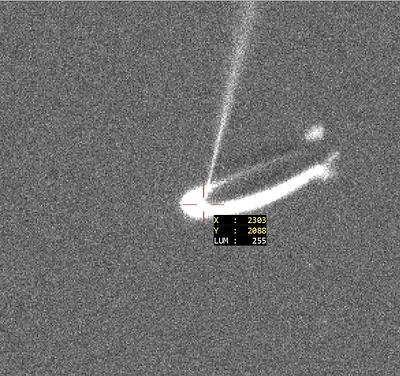
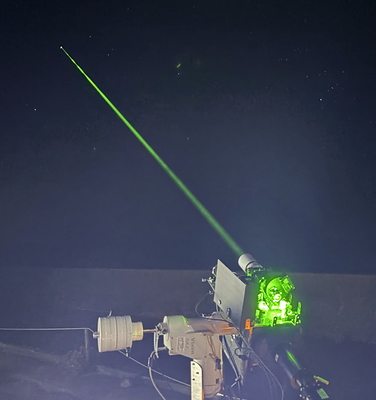
NIPR designed a corner cube reflector (CCR) for installation on a HAPS, and SoftBank developed a reflector assembly incorporating the CCR. Sceye installed and carried the CCR on the first-ever HAPS flight over Japan. For the ground-based equipment, the team built a compact, portable laser ranging system capable of tracking a HAPS, based on “Omni-SLR,” a compact satellite laser ranging system designed by Hitotsubashi University.
Using the corner cube reflector installed on Sceye’s HAPS and the compact, portable laser ranging system deployed on the ground, the team directed laser pulses toward the platform as it operated in the stratosphere. The system successfully conducted real-time tracking of Sceye’s HAPS and continuously received laser signals reflected back to the ground.
“This demonstration shows what becomes possible when we establish a reliable layer of infrastructure in the stratosphere,” said Mikkel Vestergaard Frandsen, Founder and CEO of Sceye. “During a single mission, our first Service Test flight supported direct-to-device connectivity, edge computing, communications with drones, and now a world-first laser-ranging demonstration. The ability to connect ground, stratosphere, and space through optical links could fundamentally change how information moves securely around the world, and Sceye is proud to provide the platform helping make that future possible.”
The ability to acquire and track a moving HAPS with a highly directional laser beam is an important step toward future optical wireless communications. The data acquired, including the attenuation of light as it traveled through the atmosphere between the ground and the stratosphere, will help define operational requirements for optical communications technology to be installed and operated on Sceye’s HAPS.
Optical wireless communications are emerging as a next-generation technology for high-speed, high-capacity non-terrestrial networks connecting satellites, HAPS, and terrestrial infrastructure. Applications include the rapid transmission of Earth observation data, connectivity in underserved areas, restoration of communications following disasters, and low-latency intercontinental network links.
“Tracking a HAPS from the ground with a highly directional laser is like trying to keep a laser pointer centered on a moving coin ten miles away, through an atmosphere that is constantly shifting the beam,” said Johnny Truong, Chief Technology Officer at Sceye. “The system had to locate the platform, precisely direct each laser pulse toward it, and continuously receive the reflected signals at the same location on the ground as the HAPS moved through the stratosphere. Successfully doing that demonstrates the precision required to build future optical links between ground, stratosphere, and space.”
The demonstration was completed as part of Sceye’s recent ST1 flight, which launched from New Mexico on August 9 and traveled nearly 30,000 km on a round-trip journey in the stratosphere to Japan and back. The mission lasted 30 days and included operating over Japan for over seven days. While over Japan, Sceye and SoftBank proved direct-to-device connectivity to unmodified devices through SoftBank’s core network, including text messaging, voice calls, internet access, and video streaming. Testing also included emergency communications, HAPS-based communications with drones, and edge computing performed directly aboard the platform.
About Sceye
Founded in 2014, Sceye (pronounced “sky”) is an aerospace company dedicated to advancing stratospheric infrastructure to connect people and protect the planet. Sceye leads the High Altitude Platform Systems (HAPS) industry, focusing on universal connectivity, climate monitoring, natural resource management, and disaster prevention.
 View original content to download multimedia:https://www.prnewswire.co.uk/news-releases/sceye-supports-softbank-corp-in-world-first-demonstration-of-laser-ranging-by-tracking-a-haps-from-the-ground-302886833.html

- 0
- By Sai Krishna



