


31, Oct 2026
Amata reports 67 percent lower repair costs in 130-bathroom waterproofing project
Completed in 15 days without removing existing tiles, the silent waterproofing intervention also avoided an estimated 223 tonnes of demolition debris.
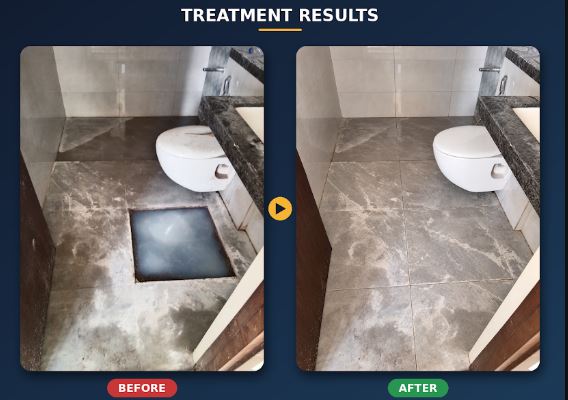
Repairing leaking bathrooms can mean dismantling finishes that are otherwise fit for use. In a project covering 130 finished bathrooms, Amata used its silent waterproofing approach without removing existing tiles, completing the work in 15 days. The company’s calculations put the cost approximately 67% below the estimated cost of full demolition and retiling.
For developers and facility managers, a leak in a completed building can trigger work well beyond waterproofing. Removing fixtures, breaking tiles and restoring finishes all add to the cost. Where rooms are occupied or handover is approaching, the time needed to make them usable again becomes equally important.
Repairing without removing the finish
For the project where silent waterproofing was employed in 130 finished bathrooms, Amata applied its own novel approach. Diagnosis of how water was travelling through the floor guided the selection of in-house formulations and their application sequence. The treatment addressed leakage through the existing tiled assembly, followed by ponding tests and inspection to verify performance.
The company places its treatment cost at approximately ₹76.1 lakh for the 130 bathrooms, against an estimated ₹2.34 crore for full demolition and retiling to comparable specifications. This represents an estimated saving of about ₹1.58 crore. The comparison excludes ceiling repairs common to both options, as well as delay and penalty costs. Amata estimates that the conventional alternative would have taken four to six months.
Less rebuilding and less waste
Amata’s indicative environmental assessment for the same 130-bathroom scope estimates that retaining the finishes avoided approximately 223 tonnes of demolition debris and 62.7 tonnes of carbon dioxide equivalent emissions compared with the modelled rebuilding alternative. The emissions comparison accounts for the treatment materials and curing energy used in the intervention. These are company estimates based on stated material quantities and emissions factors, rather than an independently verified carbon assessment.

The wider material footprint makes this relevant beyond a single project. UNEP and GlobalABC’s 2025–2026 Global Status Report for Buildings and Construction identifies the sector as responsible for nearly half of global material extraction. This provides a broader context for examining how repair choices affect demand for replacement materials and the waste generated by rebuilding.
Different defects require different interventions
The same emphasis on diagnosis guided a basement intervention in which Amata reports recovering more than 10,000 square feet of space without excavation. The team implemented a mix of technologies, including an array of in-house formulations combined with carefully planned sequencing. Ground treatment and waterproofing worked together to address the leakage under the conditions identified at that site.
In a residential project involving below-strength concrete columns, Amata used proprietary formulation and application technology developed around the diagnosed problem. The intervention combined polymer impregnation with a site-specific application method and subsequent core testing, while retaining the columns’ original dimensions. Project identities remain confidential, and the reported outcomes are specific to the conditions and scope of each intervention.
The World Bank’s July 2025 report, Towards Resilient and Prosperous Cities in India, estimates that over half of the urban infrastructure India will require by 2050 is still to be built. For project teams, that creates an opportunity to plan for durability, maintenance access and repairability before finishes and subsequent construction make corrective work more difficult.
Diagnosis before formulation
Amata describes its approach as Precision Intervention Engineering. Investigation of the site determines the treatment, with in-house formulations and innovative application methods selected to suit the cause of failure and the constraints on execution. Trials, testing and observation establish whether an intervention is suitable before wider implementation.
For developers and facility managers, the repair bill extends beyond the waterproofing treatment to dismantling, replacement materials and downtime. Amata’s case studies make a practical case for diagnosing the defect before deciding what needs to be removed. Where technically appropriate, preserving finished construction can be a significant part of the saving.
- 0
- By Neel Achary