


29, Oct 2026
Tata Communications to Build India’s AI Super Highway
Planned USD 400 – 450 million investment to create 10,000 km of AI-ready connectivity infrastructure linking India’s key data center and AI hubs
NEW DELHI, Oct. 29, 2026 /PRNewswire/ — Tata Communications, a leading global communications technology player, today announced strategic investments of close to USD 450 million to build an AI super highway in India – a high-speed, low-latency network fabric connecting India’s key AI data-centre corridors. The company will build around 10,000 kilometers of the new long-haul fiber across India, creating one of the country’s largest AI-ready connectivity network. Integrated with Tata Communications’ global network backbone, the AI super highway will provide customers with a seamless, end-to-end connectivity fabric, supporting the performance, resilience and scale required for next-generation AI workloads.
India’s data centre industry is poised for significant growth in the near future, driven by accelerating cloud adoption, AI deployment, increasing data localisation requirements, and growing enterprise demand for resilient, high-capacity digital infrastructure. As data centre capacity expands rapidly across the country, connectivity is becoming as critical as compute power and energy availability in enabling the next generation of digital services.
Rupesh Chokshi, Chief Product and Technology Officer, Executive Vice President & Global Business Head – Network Services, Tata Communications, said, “The AI economy needs more than compute. It needs a network built for speed, scale and resilience. Tata Communications has long played a foundational role in enabling India’s digital economy, and our AI Network Fabric builds on that legacy. Our AI Network Fabric will give our global customers the ultra-low-latency, high-capacity and resilient connectivity they need to scale AI with confidence. By connecting India’s AI and data center hubs to the world, we are enabling our customers to grow and helping fuel India’s next chapter of economic growth.”
The investment aims to strengthen India’s emergence as a global AI and cloud connectivity gateway, intending to meet the unprecedented demand from hyperscale and neocloud providers, AI workloads, digital-native businesses, Global Capability Centres (GCCs), enterprises and emerging cloud platforms. It will enable global hyperscalers, digital platforms and multinational enterprises to scale their operations in India with confidence as the country enters its next phase of digital transformation.
The first phase of the program will focus on the Mumbai-Pune-Hyderabad-Chennai corridor, one of India’s most important AI and hyperscale growth routes. Subsequent phases will expand connectivity into emerging East Coast and Western India data centre ecosystems, including Vizag, Bhubaneswar, Jamnagar, GIFT City and other strategic locations. By linking the key AI corridors and data centre clusters with international cable landing stations, Tata Communications will enable seamless connectivity between India and major global AI hubs across, positioning India as a strategic gateway in the global digital infrastructure landscape.
In parallel, Tata Communications will continue to support existing enterprise and data centre connectivity requirements by scaling its current National Long Distance and metro network footprint, ensuring continued support for current growth while building capacity for future demand.
 View original content:https://www.prnewswire.com/in/news-releases/tata-communications-to-build-indias-ai-super-highway-302922213.html

- 0
- By Sai Krishna

29, Oct 2026
Total Investment of Approx. USD 6.8 Million in Product Development for Malaria, NTDs and Other Emerging & Re-emerging Infectious Diseases Such as Ebola Disease
TOKYO, Oct. 29, 2026 /PRNewswire/ — The Global Health Innovative Technology (GHIT) Fund announced today a total investment of approximately JPY 1.06 billion (USD 6.8 million1) in nine R&D projects for the development of drugs, vaccines and diagnostics for malaria, neglected tropical diseases (NTDs) and emerging & re-emerging infectious diseases such as Ebola disease. 2
Investment of approx. JPY 450 million (USD 2.9 million1) for Clinical Validation, Regulatory Approval and Programmatic Launch of Rapid Diagnostic Test for Trachoma
Trachoma is an NTD caused by infection with the bacterium Chlamydia trachomatis. It remains a public health problem and is responsible for causing blindness or visual impairment in approximately 1.9 million people globally. Currently, nearly 92 million people live in endemic areas and remain at risk of blindness due to trachoma3.
Trachoma control programs currently rely on Mass Drug Administration (MDA) of antibiotics. This creates a critical demand for a point-of-care rapid diagnostic test (RDT) to guide timely and accurate field-level decision-making on when to start or stop MDA.
The GHIT Fund has decided to invest approximately 450 million yen in a project to develop a rapid diagnostic test for trachoma, led by Drugs and Diagnostics for Tropical Diseases (DDTD), Medical & Biological Laboratories Co., Ltd. (MBL), The Carter Center, and Big Eye Diagnostics, Inc. Supported by the GHIT Fund since 2024, the project aims to establish a diagnostic test that fully complies with the WHO Target Product Profile (TPP). This new investment will further accelerate clinical evaluations, regulatory approvals, and programmatic launch.
The GHIT Fund Invests Approximately JPY 210 Million (USD 1.3 million1) to Meet Urgent Need for Rapid Diagnostic Development for Ebola Disease
Ever since the World Health Organization (WHO) declared a Public Health Emergency of International Concern (PHEIC) on May 17, 2026 (Japan time) in response to the outbreak of Ebola disease caused by the Bundibugyo virus in the Democratic Republic of the Congo (DRC) and Uganda, the GHIT Fund has focused its support on product development for rapid diagnostic technologies and point-of-care (POC) testing for filovirus infections, including Ebola disease.
An outbreak with over 4,500 deaths as of October 21, 2026, has been reported in the DRC4. Rapid diagnosis is essential to prevent transmission, and the GHIT Fund has decided to invest a total of approximately JPY 210 million (USD 1.3 million1) in three projects for the rapid diagnosis of Ebola disease. For details, please refer to Appendix 1.
1) Development of a new RT-LAMP/nucleic acid chromatography diagnostic device for rapid screening of for the Bundibugyo virus led by Medical & Biological Laboratories Co., Ltd. and Nagasaki University in Japan.
2) Development and field investigation of a lateral flow immunoassay for the Ebola hemorrhagic fever Bundibugyo strain in the DRC led by Saitama University in Japan.
3) Development of a LAMP-based assay for detection of Bundibugyo virus (BDBV) led by Eiken Chemical Co. Ltd. in Japan.
In addition, the GHIT Fund will invest a total of approximately JPY 400 million (approx. USD 2.5 million1) in the following five R&D projects. These include a project to develop a next-generation vaccine against Lassa fever, which is widespread in West Africa, as well as rapid antigen tests (RAT) for high-priority zoonotic pathogens, specifically the Nipah and Hendra viruses, which pose a risk of severe outbreaks with potential “Disease X” pandemic capacity. Investment will also cover product development for malaria and neglected tropical diseases (NTDs), such as dengue fever, chikungunya, and Chagas disease.
- Construct and formulation optimization and efficacy evaluation of a bivalent mRNA-lipid nanoparticle vaccine for Lassa virus led by the University of Osaka (Center for Advanced Modalities and Drug Delivery System [CAMaD], Research Institute for Microbial Diseases [RIMD], and Graduate School of Medicine [UOsaka Med]) and The University of Texas Medical Branch (UTMB).
- Strategic high-performance immunoglobulins for epidemic and lethal diseases, and to develop a highly accurate rapid antigen test (RAT) for detecting Nipah virus (NiV) and Hendra virus (HeV) infections, both of which have the potential to cause severe outbreaks, led by PATH and iBody Inc.
- Improving antimalarial potency of antisense oligonucleotides through bioinformatics and machine-learning algorithms led by Eisai Co., Ltd. and Medicines for Malaria Venture (MMV).
- Innovative approaches to improve success rate in Chagas disease drug discovery led by Nagasaki University, Eisai Co., Ltd., Drugs for Neglected Diseases initiative and University of Dundee.
- Rapid whole-blood multiplex antigen test for serotype-specific dengue and chikungunya detection led by VisGene, Ltd., University of Miyazaki, Mahidol University, Universidad Nacional Mayor de San Marcos in Peru and Centro de Investigaciones Tecnologicas, Biomedicas y Medioambientales in Peru.
Please refer to Appendix 1 for detailed descriptions of these projects and their development stages.
As of September 30, 2026, there are 53 ongoing projects, including 26 discovery projects, 14 preclinical projects, and 13 clinical trials5 in the GHIT Fund’s portfolio. The total amount of investments since 2013 is JPY 48.1 billion (USD 305 million1) (Appendix 2).
1 USD 1 = JPY 157.31, the approximate exchange rate on Sep 30, 2026.
2 These awarded projects were selected and approved as new investments from among proposals to RFP2025-002 and RFP2026-001 for the Target Research Platform, the Screening Platform, the Hit-to-Lead Platform, and the Product Development Platform.
3 WHO: https://www.who.int/news-room/fact-sheets/detail/trachoma
4 Centers for Disease Control and Prevention https://www.cdc.gov/ebola/situation-summary/index.html
5 This number includes projects in the registration phase.
The GHIT Fund is a Japan-based international public-private partnership (PPP) fund that was formed between the Government of Japan, multiple pharmaceutical companies, the Gates Foundation, Wellcome, and the United Nations Development Programme (UNDP). The GHIT Fund invests in and manages an R&D portfolio of development partnerships aimed at addressing neglected diseases, such as malaria, tuberculosis, and neglected tropical diseases, which afflict the world’s vulnerable and underserved populations. In collaboration with global partners, the GHIT Fund mobilizes Japanese industry, academia, and research institutes to create new drugs, vaccines, and diagnostics for malaria, tuberculosis, and neglected tropical diseases. https://www.ghitfund.org/
Appendix 1. Project Details
ID: G2026-104
|
Project Title |
Progressing a Fully TPP-Compliant, Field-Validated, and Manufacturable Trachoma RDT to Regulatory Approval and Programmatic Launch. |
|
Collaboration Partners |
1. Drugs & Diagnostics for Tropical Diseases (USA) 2. Medical & Biological Laboratories Co., Ltd. (Japan) 3. The Carter Center (USA) 4. Big Eye Diagnostics, Inc. (BEDx/USA) |
|
Disease |
Trachoma |
|
Intervention |
Diagnostics |
|
Stage |
Clinical Validation, Registration |
|
Awarded Amount |
JPY 456,338,720 (USD 2.9 million) |
|
Status |
Continued project |
|
Summary |
[Project objective] The primary objective is to bring the new trachoma dipstick rapid test from an advanced, manufacturable candidate to regulatory acceptance and programmatic launch in 2028. The test is designed for high-throughput laboratory testing of dried blood spots and serum and has already demonstrated the performance, usability, heat stability, and affordability expected by trachoma programs. During this project, the consortium will establish a verification and validation (V&V) plan in consultation with relevant WHO and technical experts, conduct the required V&V studies both in the laboratory and in the field using production-quality pilot lots, compile a complete regulatory dossier, and support a launch decision by global trachoma stakeholders. A second objective is conditional on programmatic demand: the consortium is also evaluating a cassette version that uses the same assay strip but adds a blood filter, enabling testing with fingerstick blood at or near the point of care. Evidence on performance, cost, operational feasibility, and user and community acceptance will guide whether this format should also proceed through verification, validation, regulatory review, and launch. A third, objective is to advance pre-conjugated, freeze-dried Pgp3 multiplex bead assay (MBA) beads which have been shown in the precursor project, G2024-108, to maintain the same diagnostic performance as freshly prepared beads – yet with proven thermal stability for at least two weeks at room temperature. This project will optimize and scale the process, assess reproducibility and thermal stability, obtain independent laboratory validation, and produce pilot lots. Together, these objectives aim to provide trachoma programs with practical diagnostic options spanning centralized laboratories, field settings, and integrated multiplex surveillance. Finally, this project will also continue manufacturing the new Pgp3 dipstick to cover immediate and pressing programmatic needs while waiting for regulatory approval to be secured. [Project design] |
|
Project Detail |
https://www.ghitfund.org/investment/portfoliodetail/detail/281/en |
ID: G2026-124
|
Project Title |
Development of a new RT-LAMP / nucleic acid chromatography diagnostic device for the rapid screening of Bundibugyo virus |
|
Collaboration Partners |
1. Medical & Biological Laboratories Co., Ltd. (Japan) 2. Nagasaki University (Japan) |
|
Disease |
Ebola Disease |
|
Intervention |
Diagnostics |
|
Stage |
Product design |
|
Awarded Amount |
JPY 171,000,000 (USD 1.1 million) |
|
Status |
New project |
|
Summary |
[Project objective] The objective of this project is to develop a novel diagnostic device for the rapid and, user-friendly detection of Bundibugyo ebolavirus. Given the limited availability of laboratory infrastructure and trained healthcare personnel in outbreak-affected regions, the project aims to establish a diagnostic system that can be used in field settings, including healthcare facilities and community clinics, without requiring sophisticated laboratory equipment. By enabling early identification of infected individuals and timely implementation of infection control measures, the proposed system is expected to contribute to reducing disease transmission and supporting outbreak containment. [Project design] Furthermore, the platform may be adaptable to the detection of other Ebola virus species, providing a valuable tool for preparedness against future outbreaks. |
|
Project Detail |
https://www.ghitfund.org/investment/portfoliodetail/detail/282/en |
ID: T2026-193
|
Project Title |
Development and field investigation of a lateral flow immunoassay for the Ebola hemorrhagic fever Bundibugyo strain in the Republic of Congo |
|
Collaboration Partners |
1. Saitama University (Japan) |
|
Disease |
Ebola Disease |
|
Intervention |
Diagnostics |
|
Stage |
Technical Feasibility |
|
Awarded Amount |
JPY 20,000,000 (USD 0.1 million) |
|
Status |
New project |
|
Summary |
[Project objective] The objective of this project is to develop a portable diagnostic kit capable of detecting Ebola virus infection with high sensitivity in less than 15 minutes. The test will be designed for use by frontline healthcare workers without requiring laboratory infrastructure, enabling earlier detection, patient isolation, and treatment. Ultimately, the project aims to support global Ebola control efforts and contribute to improved public health outcomes through faster and more accessible diagnosis. [Project design] |
|
Project Detail |
https://www.ghitfund.org/investment/portfoliodetail/detail/283/en |
ID: T2026-194
|
Project Title |
Development of a LAMP-based assay for detection of Bundibugyo virus |
|
Collaboration Partners |
1. Eiken Chemical Co. Ltd. (Japan) |
|
Disease |
Ebola Disease |
|
Intervention |
Diagnostics |
|
Stage |
Technical Feasibility |
|
Awarded Amount |
JPY 19,506,586 (USD 0.1 million) |
|
Status |
New project |
|
Summary |
[Project objective] The project aims to develop a prototype reverse-transcription LAMP reagent that can detect Bundibugyo (BDBV) rapidly and specifically. The target is to achieve a 15-minute result while maintaining sensitivity comparable to existing real-time PCR assays. The project will also evaluate whether the assay can be used with multiple real-time PCR instruments. Ultimately, the prototype developed through this project is intended to undergo external pre-evaluation by WHO or other public health organizations to demonstrate its potential utility for future clinical applications. [Project design] |
|
Project Detail |
https://www.ghitfund.org/investment/portfoliodetail/detail/284/en |
ID: T2025-257
|
Project Title |
Construct and formulation optimization and efficacy evaluation of a bivalent mRNA-lipid nanoparticle vaccine for Lassa virus |
|
Collaboration Partners |
1. The University of Osaka (Center for Advanced Modalities and Drug Delivery System, CAMaD) (Japan) 2. The University of Osaka (Research Institute for Microbial Diseases, RIMD) (Japan) 3. The University of Texas Medical Branch at Galveston (UTMB/USA) 4. The University of Osaka (Graduate School of Medicine, UOsaka Med) (Japan) |
|
Disease |
Lassa Fever |
|
Intervention |
Vaccines |
|
Stage |
Vaccine Design |
|
Awarded Amount |
JPY 100,000,000 (USD 0.6 million) |
|
Status |
New project |
|
Summary |
[Project objective] The objective of this project is to advance a safe, effective, and field‑deployable bivalent mRNA-LNP vaccine against Lassa virus (LASV) by encoding both LASV GPC and NPL within a single bicistronic mRNA construct. This approach aims to enhance antigenic breadth, improve protective immunity, and streamline manufacturing for future deployment in resource‑limited settings. During the project period, we will evaluate vaccine efficacy and immunogenicity in multiple animal models, including a bona fide LASV infection model, and optimize LNP formulations for improved thermal stability. These efforts will accelerate the transition toward clinical development of a thermostable, accessible LASV mRNA vaccine. [Project design] |
|
Project Detail |
https://www.ghitfund.org/investment/portfoliodetail/detail/285/en |
ID: T2026-152
|
Project Title |
Strategic High-Performance Immunoglobulins for Epidemic and Lethal Diseases (SHIELD) |
|
Collaboration Partners |
1. PATH (US) 2. iBody Inc. (Japan) |
|
Disease |
Nipah and Hendra virus Infection |
|
Intervention |
Diagnostics |
|
Stage |
Technical Feasibility |
|
Awarded Amount |
JPY 99,900,000 (USD 0.6 million) |
|
Status |
New project |
|
Summary |
[Project objective] Our goal is to deliver an affordable, robust, easy-to-use, and highly accurate RAT that detects and discriminates between Nipah virus (NiV) and Hendra virus (HeV) infections. This tool will enable early outbreak detection in rural and LRSs, reducing transmission and saving lives. [Project design] |
|
Project Detail |
https://www.ghitfund.org/investment/portfoliodetail/detail/286/en |
ID: S2025-211
|
Project Title |
Improving antimalarial potency of antisense oligonucleotides through bioinformatics and machine-learning |
|
Collaboration Partners |
1. Eisai Co., Ltd. (Japan) 2. Medicines for Malaria Venture (MMV/Switzerland) |
|
Disease |
Malaria |
|
Intervention |
Drug |
|
Stage |
Screening |
|
Awarded Amount |
JPY 24,031,200 (USD 0.1 million) |
|
Status |
New project |
|
Summary |
[Project objective] The primary objective of this project is to use bioinformatic approaches and machine learning algorithms to further expand on our previous findings and identify ASOs against Plasmodial genes with improved potency and broader target coverage that are active across multiple parasite species. [Project design] |
|
Project Detail |
https://www.ghitfund.org/investment/portfoliodetail/detail/287/en |
ID: T2025-261
|
Project Title |
Innovative approaches to improve success-rate in Chagas disease drug discovery |
|
Collaboration Partners |
1. Nagasaki University (Japan) 2. Eisai Co., Ltd. (Japan) 3. Drugs for Neglected Diseases initiative (Switzerland) 4. University of Dundee (UK) |
|
Disease |
Chagas disease |
|
Intervention |
Drug |
|
Stage |
Drug Discovery |
|
Awarded Amount |
JPY 99,910,714 (USD 0.6 million) |
|
Status |
New project |
|
Summary |
[Project objective] The main objective of this project is to increase the success rate of Chagas disease drug discovery by identifying promising drug candidates more reliably at an earlier stage. Specifically, the project aims to:
By achieving these goals, the project will help ensure that only the most promising compounds move forward in the drug development pipeline. This reduces the risk of late-stage failure and supports the development of treatments that are more likely to prove effective for patients. [Project design] First, a high-throughput laboratory test is used to rapidly measure how quickly compounds kill the parasites that cause Chagas disease inside human cells. This allows thousands of compounds to be screened efficiently and identifies those with strong anti-parasitic activity. Second, a complementary imaging-based test examines whether parasites return after treatment is stopped. This step is critical for identifying compounds that truly eliminate all parasites. Third, the project investigates why certain drug combinations work better than single drugs. By understanding the biological mechanisms behind these effects, researchers can design more effective combination therapies. Together, these steps form a screening ‘pipeline’ that moves from fast testing to deeper biological understanding, ensuring robust and reliable results. |
|
Project Detail |
https://www.ghitfund.org/investment/portfoliodetail/detail/288/en |
ID: T2025-283
|
Project Title |
Rapid Whole-Blood Multiplex Antigen Test for Serotype-Specific Dengue and Chikungunya Detection |
|
Collaboration Partners |
1. VisGene, Ltd. (Japan) 2. University of Miyazaki (Japan) 3. Mahidol University (Thailand) 4. Universidad Nacional Mayor de San Marcos (UNMSM/Peru) 5. Centro de Investigaciones Tecnologicas, Biomedicas y Medioambientales (CITBM /Peru) |
|
Disease |
Dengue, Chikungunya |
|
Intervention |
Diagnostics |
|
Stage |
Technical Feasibility |
|
Awarded Amount |
JPY 77,790,558 (USD 0.4 million) |
|
Status |
New project |
|
Summary |
[Project objective] The objective of this project is to develop and validate a rapid antigen test capable of simultaneously detecting and differentiating dengue virus serotypes 1–4 and chikungunya virus directly from whole blood within 15 minutes. Differences among dengue virus serotypes are known to influence clinical outcomes and the risk of severe disease. This test is intended to support early diagnosis, appropriate patient management, and effective outbreak response. [Project design] |
|
Project Detail |
https://www.ghitfund.org/investment/portfoliodetail/detail/289/en |
*All amounts are listed at an exchange rate of USD 1 = JPY 157.31, the approximate exchange rate on September 30, 2026.
Appendix 2. Investment Overview (as of September 30, 2026)
Investments to date
Total investments: JPY 48.1 billion (USD 305 million1)
Total invested projects: 158 (53 active projects and 105 completed projects)
To learn more about the GHIT Fund’s investments, please visit
Investment Overview: https://www.ghitfund.org/investment/overview/en
Portfolio: https://www.ghitfund.org/investment/portfolio/en
Advancing Portfolio: https://www.ghitfund.org/investment/advancingportfolio/en
Clinical Candidates: https://www.ghitfund.org/investment/clinicalcandidates/en
For more information, contact:
Katy Lenard at +1-202-494-2584 or klenard@burness.com
Eriko Mugitani at +81-36441-2032 or eriko.mugitani@ghitfund.org
 View original content:

29, Oct 2026
VeriSilicon Introduces GLTiny™ 3D GPU Programming Model for Ultra-Low-Power, Memory-Efficient Wearable Devices
Optimized GLTiny Model Brings Rich 3D Graphics to Resource-Constrained Wearable Devices Powered by OpenGL ES GPUs
SHANGHAI, Oct. 29, 2026 /PRNewswire/ — VeriSilicon (688521.SH) announced GLTiny, an innovative 3D Graphics Processing Unit (GPU) programming model designed for wearable devices with stringent power and memory constraints. Featuring a streamlined Application Programming Interface (API) and an ultra-lightweight driver, GLTiny enables developers to leverage the 3D graphics capabilities of VeriSilicon’s Nano OpenGL ES GPU IP series for next-generation smartwatches, smart glasses, and other resource-constrained wearable devices.
Based on VeriSilicon’s extensive experience in wearable graphics applications, GLTiny incorporates configurable rendering functions that enable developers to easily define their rendering requirements while efficiently utilizing the underlying OpenGL ES GPU capabilities. This streamlined approach dramatically reduces driver memory footprint and CPU overhead, delivering improved power efficiency and optimized performance for resource-constrained wearable devices.
GLTiny provides native rendering support for standard glTF™ 3D models, allowing developers to directly import glTF content and render it through GLTiny APIs. It supports key features such as lighting models, skeletal skinning, and morph targets, as well as full glTF animation support, including flexible playback, switching between animation clips, and playback speed control. GLTiny also supports visual effects such as Gaussian blur and ripple effects, with simplified APIs designed to streamline 3D graphics development. In addition, GLTiny can be combined with VeriSilicon’s VGLite vector graphics driver to form an innovative hybrid driver, enabling coordinated rendering of 2.5D vector graphics and 3D models within the same frame.
“Power consumption and memory footprint are two of the most critical considerations in wearable devices, where delivering rich visual experiences within stringent resource constraints is essential,” said Weijin Dai, Chief Strategy Officer, Executive Vice President and General Manager of the IP Division at VeriSilicon. “Leveraging our extensive experience in wearable graphics and close collaboration with leading wearable SoC and device manufacturers, we developed GLTiny to address these challenges. Building on the success of VeriSilicon’s VGLite 2.5D GPU programming model, which has become a de facto industry standard for lightweight 2.5D graphics, GLTiny represents another important advancement in our graphics technology portfolio. Designed for seamless integration with the established wearable graphics content development ecosystem, GLTiny operates on VeriSilicon’s Nano OpenGL ES GPU IP series, enabling device manufacturers to deliver increasingly sophisticated visual experiences while meeting the stringent power and memory requirements of next-generation wearable devices.”
About VeriSilicon
VeriSilicon Microelectronics (Shanghai) Co., Ltd. (VeriSilicon, 688521.SH) is a leading publicly listed provider of custom silicon solutions, with a comprehensive and proprietary portfolio of semiconductor IPs, and a long-standing focus on AI ASIC custom silicon. For more information, please visit: www.verisilicon.com
Media Contact: press@verisilicon.com
glTF™ is a trademark of The Khronos Group Inc.
 View original content:https://www.prnewswire.co.uk/news-releases/verisilicon-introduces-gltiny-3d-gpu-programming-model-for-ultra-low-power-memory-efficient-wearable-devices-302922093.html

29, Oct 2026
Casio to Release Lightweight Mechanical Watch with Excellent Readability
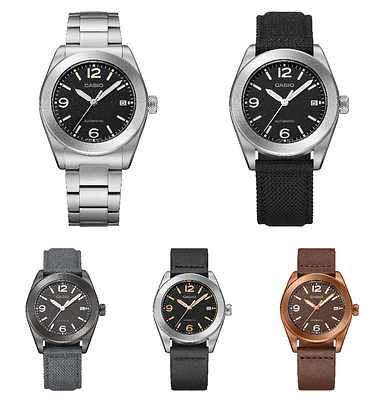
TOKYO, Oct. 29, 2026 /PRNewswire/ — Casio Computer Co., Ltd. announced the release of the CMK‑100, a lightweight mechanical timepiece with excellent readability. Combining comfort and practicality, the watch is suitable for a variety of occasions, from everyday use to business settings.

The new CMK‑100, powered by an automatic movement, is designed for practicality in day-to-day life, with a lightweight construction and excellent readability. Developed in response to growing demand for mechanical watches, the watch is a handsome accompaniment to daily living.
The case is made with lightweight titanium, providing a comfortable fit even during extended wear. The case and bezel feature a hairline finish that gives the metal a refined appearance. A matte texture on the dial minimizes reflected light to ensure the time is easy to read. Raised indexes with multiple layers of phosphorescent paint create a strong contrast against the dial, ensuring excellent readability in the dark and in a wide range of other light conditions.
With 10-bar water resistance, the CMK‑100 is well suited for everyday use and outdoor activities alike. It is powered by a Made-in-Japan automatic movement.
Guided by the Casio Purpose — “Through the power to put wonder at hand, bring new levels of joy to lives one by one” — Casio has brought new value to the world in its timepiece business. Looking ahead, the company will continue to go beyond the practical function of timekeeping in watches, offering diverse functions and distinctive designs that deliver new joys of watch-wearing and thrills of discovery.
|
Model |
Dial |
Band |
|
CMK‑100TD‑1A |
Black |
Titanium |
|
CMK‑100TC‑1A |
Black |
Nylon |
|
CMK‑100TCC‑8A |
Gray |
Nylon |
|
CMK‑100TL‑1A |
Black |
Leather |
|
CMK‑100TCL‑5A |
Brown |
Leather |
 View original content to download multimedia:https://www.prnewswire.co.uk/news-releases/casio-to-release-lightweight-mechanical-watch-with-excellent-readability-302921631.html

28, Oct 2026
Hexaware Reports Q3CY26 Revenue at USD 411.9 Mn, Up 4.3% YoY
Q3CY26 Adjusted EBIT Margin at 13.8%, Increase of 17 bps QoQ
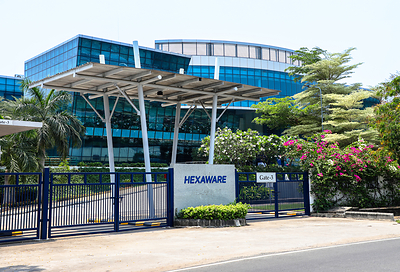
MUMBAI, India and ISELIN, N.J. and LONDON, Oct. 28, 2026 /PRNewswire/ — Hexaware Technologies (NSE: HEXT), a global provider of IT solutions and services, today announced financial results for the third quarter of calendar year 2026 ended Sep 30, 2026.
Financial Summary and Highlights
|
USD Mn |
INR Mn |
||||||
|
Q3CY26 |
QoQ (%) |
YoY (%) |
Q3CY26 |
QoQ (%) |
YoY (%) |
||
|
Revenue |
411.9 |
1.6 % |
4.3 % |
39,331 |
2.3 % |
12.9 % |
|
|
EBIT |
50.2 |
(9.3 %) |
(13.5 %) |
4,791 |
(8.5 %) |
(6.5 %) |
|
|
PAT |
44.9 |
28.8 % |
7.2 % |
4,294 |
30.0 % |
16.1 % |
|
|
Constant Currency Growth
|
Q3CY26 |
|
|
QoQ % |
YoY % |
|
|
Revenue |
1.7 % |
4.5 % |
Revenue:
- Q3CY26: USD 411.9 Mn | INR 39,331 Mn
- USD: +1.6% QoQ and +4.3% YoY | INR: +2.3% QoQ and +12.9% YoY
- Constant Currency: +1.7% QoQ and +4.5% YoY
Profitability:
- Adjusted EBIT (1):
- Q3CY26: 13.8% | +17 bps QoQ and (88 bps) YoY in % terms
- +2.9% QoQ and (1.9%) YoY in absolute terms
- Basic EPS:
- Q3CY26: INR 7.06 | +30.5% QoQ and 15.9% YoY
Key Client Metrics
- Added one customer in the USD 20Mn+ category (LTM basis), increasing the total to 17 (from 16 in the previous quarter)
- Top 10 customer revenue concentration at 35.4% in Q3CY26 (LTM basis)
Key People Metrics
- Closing Headcount: 35,887, QoQ net addition of 1,381 with 386 net addition in IT
- Voluntary Attrition for IT(2): 11.1%
- Q3CY26 Utilization Rate for IT(3): 84.9%
Other Key Metrics
- DSO (Billed + Unbilled) at 77 in Q3CY26, of which Billed is 41
- LTM Q3CY26 Operating Cash Flow (OCF) to Reported Profit % at 109.6%
- Cash and Cash Equivalents Position as of Sep 30, 2026, is USD 199 Mn(4) (5)
Leadership Speak
“I am delighted to join Hexaware at an exciting time for the company and our industry. What attracted me to Hexaware is its talented people, deep client relationships, and entrepreneurial culture. With AI creating new possibilities for enterprises across industries, I believe we have a tremendous opportunity to build on these strengths, deepen the impact we create for our clients, and shape the next phase of Hexaware’s growth.”
Vivek Jetley, CEO
“Q3 reflected continued progress across several key financial and operating metrics. Revenue grew sequentially, accompanied by a higher adjusted EBIT margin and strong cash conversion. Our focus now is to carry the momentum from our stronger businesses into broader growth while staying disciplined and investing in the capabilities that build lasting value.”
Vikash Jain, CFO
Financial Performance
Revenue Performance by Vertical
|
In USD Million |
Q3CY26 |
Q3CY26 |
|
Financial Services |
3.0 % |
2.4 % |
|
Healthcare and Insurance |
(0.4 %) |
6.3 % |
|
Manufacturing and Consumer |
1.8 % |
3.0 % |
|
Professional Services |
0.3 % |
7.8 % |
|
Banking |
6.6 % |
13.5 % |
|
Travel and Transportation |
(3.5 %) |
(8.5 %) |
|
Technology, Products & Platforms |
7.2 % |
9.7 % |
|
Total Revenue |
1.6 % |
4.3 % |
Revenue Performance by Geography
|
In USD Million |
Q3CY26 |
Q3CY26 |
|
Americas |
1.5 % |
1.1 % |
|
Europe |
3.1 % |
12.8 % |
|
Asia Pacific |
(1.6 %) |
20.0 % |
|
Total Revenue |
1.6 % |
4.3 % |
Key Wins
- Selected by a smart home and property technology platform to deliver AI-native customer experiences
- Partnered with a large US infrastructure provider for legacy modernization and an AI use case factory
- Engaged by a leading Australian bank to enable data modernization
- Engaged by a global pharmaceutical player for AI application and agentic development
- Selected by a US biopharmaceutical company to lead its S/4HANA upgrade
- Chosen by a Middle East-based bank to execute its Sitecore migration
- Selected by a global data storage company to build end-to-end factory IT for its new production line
- Chosen by a UK utility company to drive its modernization program
About Hexaware
We are a global digital and technology services company with artificial intelligence (“AI”) at our core. We leverage technology to deliver innovative solutions that help our customers in their digital transformation journey and subsequent operations. We embed AI into every aspect of our solutions and have created a suite of platforms and tools that allow our customers to adapt, innovate, and optimize in this AI-first era. We serve a diverse range of customers, including 30+ Fortune 500 organizations. With a team of 35,887 employees in 30+ countries, our presence is spread across major countries, nationalities, languages, time zones, and regulatory zones. For more information, please visit https://hexaware.com/.
Forward-looking Statements
Certain statements in this press release concerning our future growth prospects, litigations are forward-looking statements, which involve a number of risks and uncertainties that could cause actual results to differ materially from those in such forward-looking statements. The risks and uncertainties relating to these statements include, but are not limited to, risks and uncertainties regarding fluctuations in earnings, our ability to manage growth, intense competition in IT services including those factors which may affect our cost advantage, wage increases, our ability to attract and retain highly skilled professionals, time and cost overruns on fixed-price, fixed-time frame contracts, client concentration, restrictions on work visa ,immigration, our ability to manage our international operations, the effect of current and any future tariffs, reduced demand for technology in our key focus areas, disruptions in telecommunication networks, technological disruptions and innovations such as Generative AI ,our ability to successfully complete and integrate potential acquisitions, liability for damages on our service contracts, the success of the companies’ products and platforms in which Hexaware has made strategic investments, withdrawal of governmental fiscal incentives, political instability, legal restrictions on raising capital or acquiring companies, the outcome of pending litigation and unauthorized use of our intellectual property and general economic conditions affecting our industry. The Company may, from time to time, make additional written and oral forward statements. We do not undertake to update any forward statements that may be made from time to time by us or on our behalf unless required under the law.
Disclaimer
Use of Non-GAAP Financials
Hexaware has included certain non-GAAP financial measures in this Press release to supplement Hexaware’s consolidated financial statements presented on a GAAP basis. These non-GAAP financial measures may have limitations as analytical tools, and these measures should not be considered in isolation or as a substitute for analysis of Hexaware’s results as reported under GAAP. The non-GAAP financial information that we provide also may differ from the non-GAAP information provided by other companies. We compensate for the limitations on our use of these non-GAAP financial measures by relying primarily on our GAAP financial statements and using non-GAAP financial measures only supplementally. We believe that providing these non-GAAP financial measures in addition to the related GAAP measures provides investors with greater transparency. We further believe that providing this information better enables investors to understand Hexaware’s operating performance and financial condition
Rounding Off
Certain amounts and percentage figures included in this Press Release have been subject to rounding adjustments. Accordingly, figures shown as totals in certain tables may not be an arithmetic aggregation of the figures preceding them

 View original content to download multimedia:https://www.prnewswire.co.uk/news-releases/hexaware-reports-q3cy26-revenue-at-usd-411-9-mn-up-4-3-yoy-302922631.html

28, Oct 2026
KPM Analytics Introduces UCAL™ 5, a Guided NIR Calibration Platform for SpectraStar™ XT Analyzer Users
New NIR calibration platform for SpectraStar™ XT analyzers reviews every calibration against ASTM and ISO recommendations as the user works, builds a comparison calibration automatically, and teaches with built-in lessons. A 30-day free trial of UCAL 5 Pro is available today.
WESTBOROUGH, Mass., Oct. 28, 2026 /PRNewswire/ — KPM Analytics today announced UCAL 5, a near-infrared (NIR) calibration customization platform for SpectraStar XT Series analyzers. Its patent-pending guided workflow lets users start from KPM calibration libraries with spectra, add their own samples, and publish a calibration for their own products in four steps. As they work, UCAL Insight™ reviews the data, calibration, and validation results using recommendations from ASTM E1655 and ISO 12099 for developing and validating NIR calibrations. It highlights items the user may want to check before publishing the calibration.
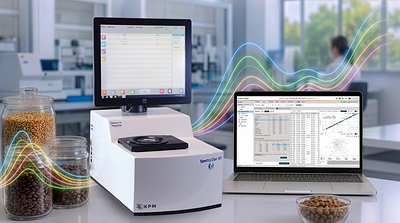
UCAL 5 comes in three editions: Lite, currently included with new SpectraStar XT analyzers, which provides guided calibration development with the essential methods and tools; Pro for the analyst who builds and maintains calibrations; and Enterprise for teams that share projects on a company server.
A reviewer, a builder, and a coach inside the platform
In practice, a user imports spectra and laboratory values, builds the calibration in the Workbench, and sees UCAL Insight’s marks on the screen as each step is completed. With UCAL Autopilot switched on, the software builds its own calibration alongside the user’s from the same data, and the two appear side by side with the settings that differ. The lessons open from inside the software whenever they are needed.
UCAL Insight is the reviewer. At each step it checks whether there are enough samples, how well the laboratory values cover the required range, and whether new samples confirm the calibration. Each point is marked green, yellow, or red with an explanation of what it means and what to check. They are suggestions, not rules: the user always decides.
UCAL Autopilot™ is the builder. It tries several methods, presents the best, and lists every setting that differs from the user’s choices. After validation, the user compares the two calibrations property by property and decides which to publish.
Built-in lessons are the coach. Fifteen lessons inside the software explain what a calibration is, how it is judged, and why calibrations go wrong, then walk through the real UCAL 5 screens, from adding spectra to publishing a validated calibration. A separate introduction helps experienced UCAL 4 users move over. No previous calibration experience is needed.
“Most calibrations do not fail because the math is wrong. They fail because the samples did not cover the range, or because nobody checked the calibration against new samples before it went on the instrument,” said Yuegang Zhao, President of KPM Lab Solutions and Chief Commercial Officer at KPM Analytics. “UCAL 5 puts those checks in front of the user at every step, in the language of the standards the industry already trusts.”
Start from a proven KPM calibration
The KPM Analytics Web Store offers over 250 calibrations built and maintained by KPM’s application laboratories for food, feed, and agricultural products, from alfalfa hay and canola meal to cheddar cheese. They are sold by the property measured, such as moisture or protein, or in one of 15 ready-made bundles. A calibration is ready to use: it loads directly onto a SpectraStar XT analyzer, for one instrument or as a single file for a full fleet. Optionally, the same calibration can be bought as a calibration library with its spectra. The library opens in UCAL 5, where users add their own samples and keep the calibration current for their own products. The result is published as the user’s own calibration and loaded onto one analyzer or the whole fleet, like any KPM calibration.
“Our calibration library represents many years of application work with food, feed, and agricultural products,” said Zhao. “UCAL 5 is how a customer takes one of those calibrations and makes it their own.”
Four steps from data to a published calibration
UCAL 5 works in four steps: collect the data; clean the data and build the calibration in the Workbench; validate it against samples it has not seen; and combine and publish the final calibration. Every adjustment is saved apart from the original files, so any decision can be reversed. Users can try different settings on the same data, compare all results in one table, and publish the best result for each property as a single calibration file. Projects can be reopened and updated as crops, suppliers, and processes change. Through KPMLink® cloud-based management software, a finished calibration can be loaded onto every connected SpectraStar XT analyzer in the organization.
Editions for individual users and laboratory teams
UCAL 5 Lite provides guided calibration development: the lessons, UCAL Insight, UCAL Autopilot, and four calibration methods, with up to 500 samples per calibration from the user’s own files and no limit from KPM library files. It is currently included with new SpectraStar XT analyzers, available at an introductory price to other SpectraStar XT owners, and upgrades to Pro with a license key.
UCAL 5 Pro gives one analyst the full toolset: 18 calibration methods, including Modified PLS and three neural networks; advanced tools for sample selection and instrument standardization; and no limit on samples, so laboratories can build from years of historical data.
UCAL 5 Enterprise brings Pro to large teams. It installs on a company server, is used through a web browser, and is licensed per user, so data stays on the organization’s network. Each project can be private or shared.
UCAL 5 opens UCAL 4 files directly, and calibrations already on SpectraStar XT analyzers give the same results, so UCAL 4 users move their work without losing anything; they can upgrade to UCAL 5 Pro at a discount. Pro and Enterprise licenses include yearly maintenance for new versions. All editions are available in 11 languages.
Availability
A 30-day free trial of UCAL 5 Pro, Lite licenses, and calibrations are available today for current SpectraStar XT Series Analyzer users at https://store.kpmanalytics.com/join. Pro and Enterprise licenses are available now from KPM Analytics and its authorized distributors. See UCAL 5 in action at https://www.kpmanalytics.com/lp/ucal-5 or contact sales@kpmanalytics.com.
About KPM Analytics
KPM Analytics is a global leader in scientific instrumentation, providing analytical and vision inspection solutions to laboratories and industrial operators in the food, feed, agriculture, industrial, and environmental sectors. KPM products have a long history of helping companies secure product quality, optimize production processes, and make confident, data-driven decisions through reliable solutions, supported by dedicated application expertise and local service. Visit https://www.kpmanalytics.com to learn more.
Media contacts:
Andy Dambeck
Product Marketing Manager
+1 774-399-0477
 View original content to download multimedia:https://www.prnewswire.co.uk/news-releases/kpm-analytics-introduces-ucal-5-a-guided-nir-calibration-platform-for-spectrastar-xt-analyzer-users-302920580.html

28, Oct 2026
Chinese and Foreign Translators and Media Figures Discuss New Drivers of Yantai’s Development
YANTAI, China, Oct. 28, 2026 /PRNewswire/ — The event “Where Mountains Meet the Sea, Intelligence Inspires New Voices—Yantai Tour for Chinese and Foreign Translators and Media Figures” was held in Yantai, Shandong Province, from Oct. 11-13, 2026. It was co-organized by the CICG Academy of Translation and Interpretation and the Publicity Department of the CPC Yantai Municipal Committee.
Translators and journalists from China, Germany, Egypt, Pakistan, Morocco and Russia gathered in Yantai for site visits and in-depth fieldwork, sharing their observations and discussing their work. The guests visited the Penglai Pavilion ancient architectural complex, RemeGen Co., Ltd. (Yantai), Yantai Gogetter Intelligence Technology Co., Ltd. and Kongtong Wonderland, China’s first offshore immersive fairyland eco-resort. The visits gave them a firsthand look at Yantai’s historical and cultural heritage, its strengths in biopharmaceuticals and intelligent manufacturing, and the appeal of its maritime cultural tourism. During the event, Chinese and international guests discussed cultural translation, narratives of scientific and technological innovation, and the international communication of cities from the perspective of maritime civilization.
Yantai’s achievements in preserving and developing its cultural heritage, upgrading its industries, and innovating in cultural tourism are attracting more and more people to visit, put down roots and help shape the city’s development.
 View original content to download multimedia:https://www.prnewswire.co.uk/news-releases/chinese-and-foreign-translators-and-media-figures-discuss-new-drivers-of-yantais-development-302922484.html

28, Oct 2026
Banks are connecting fraud and AML defenses but still missing links
71% of financial institutions are converging detection technology, yet 86% report missed links between fraud and money laundering, finds global survey by Datos Insights and SAS
CARY, N.C., Oct. 28, 2026 /PRNewswire/ — Financial institutions are increasingly integrating their fraud and anti-money laundering (AML) systems, but intelligence and governance gaps remain. New fraud and AML convergence research from Datos Insights, commissioned by data and AI leader SAS, finds 86% report missed links between fraud activity and money laundering.
Fraud and AML Convergence: Closing the Speed Gap – based on a survey of 165 fraud and AML executives across 21 countries in seven global regions – examines the convergence of fraud prevention and AML compliance, commonly called FRAML. The report argues that real-time payments now move funds faster than institutions can connect their fraud and AML intelligence and intervene. Experts from Datos Insights, SAS and Amazon Web Services (AWS) will discuss the study’s findings in a live “Future of FRAML” webinar on Nov. 2 (available later on demand).
“Fraud and AML teams can look at different pieces of the same risk and still miss the connection,” said Serpil Hall, Strategic Advisor for Fraud and AML at Datos Insights. “Technology can help bridge those gaps, but technology alone is not the answer. The institutions making progress are also connecting data, case management, investigations and information sharing so they can see more of the risk in broader context and act sooner.”
Shared infrastructure ≠ shared intelligence
Historically, banks’ fraud and anti-money laundering units were not designed to operate as a unified function. Each answers to different regulations and runs on different legal clocks. Institutions are closing the gap where it’s least disruptive: the technology. Meanwhile, changes that require people and process shifts lag behind. The result is connected systems but disconnected intelligence.
- 71% are actively converging fraud and AML detection and monitoring technology, but only 13% are doing the same for governance, policies and organizational structure.
- 72% run fraud and AML analytics on shared infrastructure but keep separate models and processes; just 1% report sharing data, models, infrastructure and governance across both functions.
- 87% describe their ability to build a unified view of customer risk across fraud and AML as partial, with significant gaps.
Silos remain the biggest barrier to greater alignment between fraud and AML. Nearly 9 in 10 (88%) institutions rate organizational silos, including separate reporting lines, as a primary or major barrier, ahead of technology limitations (73%) and data governance and quality issues (70%).
The strain is felt in day-to-day operations, too: 64% cite legacy technology among their biggest internal challenges, while 63% call out high false-positive rates.
Inside the speed gap: real-time payments, next-day detection
Fraud systems score transactions in milliseconds, while AML monitoring typically runs after the fact, often in overnight batches. As real-time payments become the norm, the margin between the two is fading.
Nearly three-quarters of institutions (73%) say their fraud and AML teams share data often or always during active investigations. That figure drops to just 17% for automated monitoring – the layer that works without someone needing to notice a problem first. The result is often a connection made after an investigation is initiated rather than one flagged automatically before money moves.
Operating separately carries measurable consequences, too, including duplicate alerts or cases, cited by 81% of institutions, and higher operating costs from duplicated teams or technology (71%).
“Financial crime convergence is a risk problem, not just a compliance exercise,” said Stu Bradley, Senior Vice President of Risk, Fraud and Compliance Solutions at SAS. “Regulators will increasingly expect institutions to identify and prevent illicit behavior before the money laundering even starts. That’s only possible when fraud and AML are working from the same strategic playbook and sharing data up front.”
FRAML, from concept to market reality
The research findings arrive as fraud and AML convergence evolves from a long-discussed industry concept into a real-world operating model. Urgency is increasing as AI-charged scams, deepfakes, mule networks and real-time payments further blur traditional boundaries between fraud and money laundering.
“Many of the banks I speak with are already sharing data or exploring common case management, with the aim of getting fraud and AML working closer to real time,” added Hall.
For institutions still early in the process, the report outlines practical first steps, such as connecting their existing fraud and financial crime compliance solutions rather than replacing them.
“Institutions don’t have to rip and replace their entire financial crime ecosystem to make progress,” said SAS’ Bradley. “Modernize step by step. Start with the risks that matter most, strengthen data sharing across the monitoring lifecycle and ensure a shared investigative environment.”
To explore how institutions can put the report’s findings into practice, AWS and Datos Insights will join SAS for the live webinar Breaking the Silos: What Global Banks Reveal About the Future of FRAML on Nov. 2 at 10 a.m. EST / 4 p.m. CET, with on-demand viewing to follow.
Experts will discuss how banks are approaching fraud and AML convergence, the barriers slowing progress, and where data, analytics and AI can help institutions connect signals and identify financial crime earlier.
The full report is available at sas.com/framlreport.
About Datos Insights
Datos Insights is the leading research and advisory partner to the banking, insurance, securities, and payments industries, both the financial services firms and the technology providers who serve them.
In an era of rapid change, we empower firms across the financial services ecosystem to make high-stakes decisions with confidence and speed. Our distinctive combination of expert advice, proprietary data, and community provides actionable insights that enable clients to accelerate critical initiatives, inspire decisive action, and de-risk strategic investments to achieve faster, bolder transformation.
About SAS
SAS is a global leader in data and AI, helping organizations make confident decisions with AI they can trust. For decades, SAS has set the standard for delivering software that drives meaningful impact, incorporating deep industry expertise, transparency and governance. SAS gives you THE POWER TO KNOW®.
SAS and all other SAS Institute Inc. product or service names are registered trademarks or trademarks of SAS Institute Inc. in the USA and other countries. ® indicates USA registration. Other brand and product names are trademarks of their respective companies. Copyright © 2026 SAS Institute Inc. All rights reserved.
Danielle Bates | danielle.bates@sas.com | 919-531-1959 | sas.com/news


 View original content to download multimedia:https://www.prnewswire.co.uk/news-releases/banks-are-connecting-fraud-and-aml-defenses-but-still-missing-links-302922286.html

28, Oct 2026
American Advanced Materials Raises $12.5 Million to Make Globally-Competitive Titanium Sponge in America and Announces Signed Letters of Intent with Industry Buyers Worth Over $1 Billion
Amity Ventures led the seed round for the advanced materials platform, with participation by Human Capital, Anti Fund, and Powerset
MOUNTAIN VIEW, Calif., Oct. 28, 2026 /PRNewswire/ — American Advanced Materials (AAM) today announced $12.5 million in seed funding led by Amity Ventures, with participation by Human Capital, Anti Fund, and Powerset. The company is developing an AI-native manufacturing platform for the advanced materials that underpin AI, energy, and defense, starting with titanium sponge. AAM will use the funding to grow its team and advance the front-end engineering and design of its manufacturing projects. The company plans to raise project financing to build and operate the integrated commercial facility. AAM’s founding team members have previously designed, built, and operated the world’s largest and most advanced titanium sponge and zirconium plants, both in the United States and abroad. They are joined by veterans of Tesla, ATI, TIMET, and Westinghouse.

Titanium sponge is the metal used by melters and alloy makers to manufacture America’s most important aerospace and defense programs. The United States is home to some of the world’s largest titanium melting operations, yet has produced no sponge since 2020. Meanwhile, titanium sponge imports hit a record 44,000 metric tons in 2025, according to the U.S. Geological Survey. Industry experts project domestic demand to reach 60,000 metric tons over the coming 18 months, leaving America’s industrial base fully exposed to foreign supply chains that are fragile, unreliable, and capacity constrained. AAM is supporting the most strategic interests of America and allies by restoring the critical midstream process manufacturing layer that sits between upstream mineral mining and downstream end-product fabrication.
“America has the feedstock, energy, and expertise to lead in manufacturing these materials again,” said Alex Liegl, co-founder and CEO of AAM. “We aspire to build a next-generation DuPont, with globally competitive quality and cost as the starting point. Our goal is to make advanced materials abundant again so that their supply no longer limits what we can build.”
AAM’s first facility is designed with a vertically-integrated approach around the commercially proven Kroll process, drawing on the team’s direct experience building and operating large-scale titanium sponge plants. It is the first step toward an integrated manufacturing platform for titanium group materials that can add related materials using shared feedstock, infrastructure, and process expertise.
In addition, AAM is developing zirconium oxychloride (ZOC), the key precursor for all zirconium and hafnium materials used in nuclear fuel, gas turbines, rockets, and AI chips. Today, America fully relies on Chinese imports of ZOC. Over time, AAM intends to extend this model to offer America and its allies an advanced materials platform that manufactures the building blocks for all of their most important strategic interests.
AAM has signed offtake letters of intent for its future production of titanium sponge and zirconium oxychloride materials worth over $1 billion. Its prospective customers include domestic melters and alloy makers that supply the aerospace, AI infrastructure, defense, and energy sectors.
“We’re combining decades of process knowledge with modern engineering, AI, and robotics automation,” said Diego Represas, co-founder, President, and Chief Technology Officer of AAM. “America doesn’t need to wait for new technologies to lead the world in production cost, quality, and volume. What it needs is to build quickly. For AAM, the factory is the product. We design the plant, its software, and its operations as one system to carry what we learn into every future facility we build.”
“The opportunity in advanced materials isn’t simply to invent a new process. It’s to rebuild the industrial capacity that America has lost,” said Patrick Yang, Co-Founder and General Partner at Amity Ventures, which manages more than $2 billion in assets. “Alex and Diego have brought together the rare team, technical ambition, and urgency required to do that, starting with titanium sponge. We believe AAM has the potential to become a cornerstone of the next generation of American reindustrialization.”
Liegl and Represas founded AAM in 2025 after years of considering solutions to the same problem: demand for AI, energy, and defense kept climbing, while the supply of the advanced materials required by America and its allies stayed flat or entirely vanished. Liegl previously founded Tenet Energy, a nationwide fintech platform for electric vehicles and home electrification backed by Human Capital, and Layer1, a renewable-energy bitcoin mining company backed by Peter Thiel. Represas, an officer in the U.S. Army Reserve, previously founded Able AI, an AI data platform backed by Human Capital and Canapi Ventures, that was acquired by Moody’s Corp. The two met as freshmen at Stanford University.
About American Advanced Materials
American Advanced Materials (AAM) is an AI-native advanced materials platform that manufactures the building blocks for AI, energy, and defense Our mission is to restore American leadership in the materials that underpin our most important strategic interests. Founded in 2025 and based in Mountain View, California and New York City, New York, AAM brings together America’s top industry experts, industrial engineers, and AI talent to enable globally competitive production in the United States. Titanium sponge is its first commercial project, followed by zirconium oxychloride. Learn more at www.americanadvanced.com.
Media contact
Garrett Marquis | Throughline Global Advisors
garrett@throughline.global
 View original content to download multimedia:https://www.prnewswire.co.uk/news-releases/american-advanced-materials-raises-12-5-million-to-make-globally-competitive-titanium-sponge-in-america-and-announces-signed-letters-of-intent-with-industry-buyers-worth-over-1-billion-302921594.html

28, Oct 2026
Equilend’s 1Source DLT Adds Goldman Sachs
Goldman Sachs joins BNY and National Bank of Canada on securities finance distributed ledger technology platform
NEW YORK, Oct. 28, 2026 /PRNewswire/ — Equilend, the global financial technology, data and analytics company for the securities finance industry, today announced that Goldman Sachs is utilizing Equilend 1Source, the distributed ledger technology (DLT) platform that increases efficiency, reduces breaks, and eliminates reconciliations in securities finance.

Goldman Sachs joins BNY and National Bank of Canada on 1Source. The two large securities lenders previously announced that they had begun transmitting live transactions onto the 1Source ledger last October.
1Source is transforming global securities finance workflows by establishing a single, golden source of truth for securities lending and financing transactions. The DLT-based platform was developed by Equilend with input and collaboration from a group of leading market participants to improve costs, automation, and overall efficiency in the market. 1Source directly improves users’ P&L by eliminating accrual errors, reducing third-party comparison fees, and improving settlement rates.
Additional counterparties are also in the process of adopting Equilend’s 1Source, which will benefit all members of the platform as inefficient reconciliation processes and transaction breaks are reduced.
“We are excited to welcome Goldman Sachs, one of the industry’s largest borrowers, onto the 1Source platform,” said Rich Grossi, CEO of Equilend. “Their involvement will drive greater platform benefit by reducing costs and increasing operational efficiency across the community of participants.”
According to third-party estimates, Equilend’s 1Source has the potential to save industry participants hundreds of millions of dollars through greater operational efficiency, optimized costs and resources, and improved profitability.
About Equilend
Equilend is a global financial technology firm offering Trading, Workflow Automation, Data & Insights, and Digital Solutions for the securities finance industry. With offices in North America, EMEA, and Asia-Pacific, Equilend operates across various jurisdictions worldwide, adhering to the highest regulatory standards.
The company is committed to excellence and innovation, with more than $55 trillion in notional transactions on its platform. Equilend is Great Place to Work Certified™ in the U.S., UK, Ireland, and India.
For more information, please visit www.equilend.com
Media Contact:
 View original content to download multimedia:https://www.prnewswire.co.uk/news-releases/equilends-1source-dlt-adds-goldman-sachs-302922238.html



