


30, Jul 2024
AI & Robotics Companies Led Absorption in the Silicon Valley of India – Bengaluru says Vestian
Bangalore, 30th July 2024: AI & Robotics companies accounted for 21% of Bengaluru’s absorption in Q2 2024, as per Vestian’s quarterly office market report, The Connect Q2 2024. Rapid global advancement of artificial intelligence, combined with a supportive ecosystem, has significantly driven the demand for office space in the city. Overall, IT-ITeS sector, including AI & Robotics, accounted for 69% of the city’s absorption in Q2 2024.
Bengaluru contributed the highest to pan-India absorption with 25% share in Q2 2024, followed by Hyderabad and Mumbai at 20% each. Pune reported the highest quarterly growth, around 307%, in value terms whereas absorption declined by 48% in Chennai during Q2 2024. NCR also witnessed a quarterly decline of 37% during the above-mentioned period. All the cities except Chennai and NCR reported an increase in absorption on quarter and on year.
Absorption:
| City | Q2 2024 | Q1 2024 | Q2 2023 | Q-o-Q Change | Y-o-Y Change |
| Bengaluru | 4.25 | 2.62 | 3.70 | 62% | 15% |
| Chennai | 1.75 | 3.35 | 2.20 | -48% | -20% |
| Hyderabad | 3.40 | 2.27 | 2.30 | 50% | 48% |
| Mumbai | 3.39 | 2.49 | 1.80 | 36% | 88% |
| Kolkata | 0.23 | 0.16 | 0.10 | 44% | 130% |
| Pune | 2.88 | 0.71 | 1.80 | 307% | 60% |
| NCR | 1.14 | 1.81 | 2.00 | -37% | -43% |
| Total | 17.04 | 13.40 | 13.90 | 27% | 23% |
Note: Data for Grade A Office Space
Source: Vestian Research
IT-ITeS sector dominated absorption with 38% share in Q2 2024, followed by BFSI and Consulting Services at 12% and 10% respectively. Flex Spaces accounted for 8% of the total absorption during the current quarter.
H1 2024 witnessed absorption of over 30 Mn sq ft, registering an uptick of 18% compared to H1 2023. As the demand for grade-A office spaces is robust across the top seven cities of India, the entire year (2024) is expected to cross the 60 Mn sq ft mark again after peaking in 2023.
Absorption reached 17.04 Mn sq ft in Q2 2024, registering an increase of 27% over the previous quarter and 23% over the same quarter a year earlier. The surge could be attributed to improved global macroeconomic scenario and India’s robust growth amid global geopolitical challenges.
Following a similar trend, new completions also increased by 17% in H1 2024 over H1 2023, reaching 23.2 Mn sq ft. Additionally, Q2 2024 witnessed a quarterly increase of 15% and a yearly rise of 10% in new completions. All the cities except Pune and Bengaluru witnessed an uptick in construction activities during the current quarter compared to the previous quarter. Moreover, Mumbai reported 3.3 Mn sq ft of new completions during Q2 2024, registering the highest quarterly rise of 230%.
Bengaluru dominated new completions with 28% share, closely followed by Mumbai with 27%. Southern cities (Bengaluru, Chennai, and Hyderabad) accounted for 57% of the total new completions reported in Q2 2024, however, the share has dropped from 63% a quarter earlier.
New Completions:
| City | Q2 2024 | Q1 2024 | Q2 2023 | Q-o-Q Change | Y-o-Y Change |
| Bengaluru | 3.50 | 3.70 | 3.50 | -5% | NIL |
| Chennai | 0.70 | 0.60 | 2.10 | 17% | -67% |
| Hyderabad | 2.90 | 2.50 | 4.10 | 16% | -29% |
| Mumbai | 3.30 | 1.00 | 0.30 | 230% | 1,000% |
| Kolkata | 0.00 | 0.00 | 0.00 | NA | NA |
| Pune | 0.50 | 1.70 | 0.80 | -71% | -38% |
| NCR | 1.50 | 1.30 | 0.50 | 15% | 200% |
| Total | 12.40 | 10.80 | 11.30 | 15% | 10% |
Note: Data for Grade A Office Space
Source: Vestian Research
Shrinivas Rao, FRICS, CEO, Vestian said, “Despite global geopolitical challenges, India’s office markets reported robust real estate activities during Q2 2024. The quarter has already set the tone for robust leasing and construction activities for the current calendar year.”
Mr. Rao further added, “Real estate activities are anticipated to increase further on the back of strengthened demand from IT-ITeS and BFSI sectors. Flex Spaces are also likely to play a pivotal role in the growth of office markets in India.”
- 0
- By Neel Achary

30, Jul 2024
Watermelon-Sized Uterine Tumor Weighing 2.2 Kgs Successfully Removed from 49-Year-Old Woman via Robot-Aided Surgery at Fortis Noida
Noida, 30th July 2024: Doctors at Fortis Hospital, Noida successfully operated and removed a watermelon sized non-cancerous tumor weighing 2.2 kgs from the uterus of a 49-year-old woman via Robot-aided surgery. The team of doctors led by Dr Anjana Singh, Director & HOD, Obstetrics and Gynaecology, Fortis Hospital, Noida conducted the complex surgery, which lasted for 3 hours. The patient was discharged in stable condition two days later.
Upon admission at Fortis Noida the patient complained of severe pain during her menstruation cycle, along with irregular and heavy bleeding for almost 2 years. An ultrasound revealed a large fibroid (tumour) measuring 17-18 cms in size along with other fibroids of 7-8 cm. Such fibroids typically form when the body secretes excessive estrogen, which causes the growth of fibroid tissues. The large mass of tumour had occupied the entire abdominal area, thus making it extremely difficult to operate. Additionally, the patient had undergone two prior C-sections, and her scars were vertical. In such cases, there is always a risk of injury to the vital organs during dissection of the adhesions. Hence, Robot-assisted surgery was adopted to better identify the anatomical structures and minimize the risk of unintended damage to the internal organs.

Giving details of the case, Dr Anjana Singh, Director & HOD, Obstetrics and Gynaecology, Fortis Hospital, Noida said, “The patient had travelled from Aligarh, as there she was advised to undergo traditional open surgery by multiple gynaecologists, which the patient did not want to opt for. That’s when she came to Fortis. In this case, the tumour had grown to the sizeof a watermelon. We had to be extremely careful while operating to save the vital organs, and that’s where robot-assisted surgery provided enhanced precision. The surgery involved very little intraoperative bleeding with no requirement for blood transfusion, owing to high precision. The most challenging part of this surgery was to retrieve such heavy tumour from 8 mms miniature incisions on abdomen used for the robotic arms and camera. We decided to break down the tumour in a bag inside the abdomen followed by removal of small pieces of fibroid from the very small incision. Had the surgery not been performed on time, the fibroid would have grown immensely in size and would have put pressure on surrounding organs such as bowel and bladder, causing intestinal obstruction and urine retention. Bleeding and pain during menstruation cycle would also have increased and excessive bleeding could have made the patient severely anaemic. Such cases are rare as tumours weighing 2.2 kgs are found in only 10-20% cases and in 1% of such cases, a massively growing fibroid can become malignant.”
Mohit Singh, Zonal Director, Fortis Hospital Noida said, “This was a very critical and challenging case considering the size and weight of the tumour, along with two c-section surgeries in the past. Despite the challenges, the surgery was successfully conducted owing to the correct medical assessment and the patient was able to resume her daily routine in just one week of surgery. Clinical expertise and best-in-class care to manage such cases are the hallmarks of Fortis Hospital Noida, and we continuously endeavor to provide highest level of care to save lives and get improved outcomes.”
30, Jul 2024
Data Patterns reports a 33 percent growth in EBITDA and 27 percent in PAT for Q1 FY 2024-25
Chennai, July 30, 2024: The Board of Directors at atData Patterns (India) Limited (NSE: DATAPATTNS | BSE: 543428), a strategic Defense and Aerospace Electronics Systems provider, today approved the limited review financial results for the quarter ended June 30, 2024.
Performance Highlights
INR in Cr.
| Particulars | Q1 FY 24-25 | Q1 FY 23-24 | Growth |
| Total Income | 116.4 | 101.3 | 15% |
| Revenue from Operations | 104.1 | 89.7 | 16% |
| Operational EBIDTA | 37.2 | 27.9 | 33% |
| Profit Before Tax (PBT) | 43.5 | 34.9 | 25% |
| Profit After Tax (PAT) | 32.8 | 25.8 | 27% |
Q1 (2024 – 2025) Highlights
- Total Revenue for Q1 increased by 15% from Rs. 101 Cr in quarter ended June 30, 2023 to Rs. 116 Cr in quarter ended June 30, 2024.
- Revenue from operations increased by 16% from Rs. 90 Cr in Q1 FY 2024 to Rs. 104 Cr in Q1 FY 2025
- The Company’s Earnings before Interest, Tax, Depreciation and Amortization (Operational EBITDA) increased by 33% from INR 28 Cr for the quarter ended June 30, 2023 to INR 37Cr in the corresponding quarter ended June 30, 2024
- Profit Before Tax (PBT) improved by 25%, from INR 35 Cr for the first quarter of FY23to INR 44Cr in the first quarter of FY25
- Profit After Tax (PAT) increased by 27% from Rs. 26 Cr in Q1 FY 2024 to Rs. 33Cr in Q1 FY 2025.
- Orders book position
- Orders on hand as on June 30, 2024 – INR 1017.08 Cr
- Including orders negotiated, pending receipt of formal orders – INR 1,147 Cr
- Order book as on March 31, 2024 was Rs. 1083 Cr and as on June 30, 2023 was Rs. 967 Cr.
Mr. Srinivasagopalan Rangarajan, Chairman &Managing Director, Data Patterns (India) Limited commenting on the company’s performance said,“This has been an encouraging start to the financial year 2025 with revenue growth of 16%, gross margins at 72% and EBITDA margins improved by 465bps at 36%reflecting operational excellence. Our current order book crosses 1100crs with an optimal production and development mix. We anticipate strong and steady order inflow for the full year given the government’s emphasis on ‘Made in India’ defence solutions. We are excited about the opportunities ahead and remain dedicated to driving continued growth and value for our stakeholders.
30, Jul 2024
World Day Against Trafficking in Persons (July 30): ADRA Reaffirms Global Prevention Efforts
SILVER SPRING, MD (July 30, 2024) – The Adventist Development and Relief Agency (ADRA) joins global communities on July 30 to commemorate World Day Against Trafficking in Persons and reinforce eradicating child trafficking. This year’s theme, “Leave No Child Behind in the Fight Against Human Trafficking,” highlights the significant proportion of female trafficking victims globally.
According to the United Nations, more than 1.2 million children are trafficked each year, and minors are twice as likely as adults to endure violence during trafficking. In regions like Sub-Saharan Africa, North Africa, Latin America, and the Caribbean, the incidence of child trafficking is disproportionately high, with minors constituting 60 percent of the detected victims.
“Human trafficking is a serious and widespread crime affecting millions of men, women, and children worldwide. ADRA is highly aware of the crucial nature of this crisis, particularly child trafficking, as minors account for a sizable proportion of global victims. ADRA is at the forefront of providing support services and programs to victims, many of whom have been subjected to violence, forced labor, sexual exploitation, and recruited as child soldiers in armed conflicts. ADRA will continue raising awareness, advocating, and promoting action globally to educate and engage communities to protect children and adults from falling victim to trafficking,” declares ADRA International’s Vice President for Humanitarian Affairs, Imad Madanat.
ADRA Child Protection Programs
ADRA spearheads programs in different regions of the world specifically to support children at risk for human trafficking by addressing the root causes like poverty and inequality to reduce children’s vulnerability.
ADRA Bangladesh
ADRA implements a project in Bangladesh to prevent forced child labor. According to UNICEF, three million children in the country are forced to work, and many of them become victims of human trafficking. The young people who live in Bangladesh’s urban slums are the most vulnerable. To address the problem, ADRA established a school in a low-income neighborhood, and the Chalantika Slum Children Development Project (CSCDP), which has been offering high-quality education and social services to prevent malnutrition, since 1972.
Keep Girls Safe in Thailand
ADRA’s Keep Girls Safe (KGS) project in Thailand, collaborates with government agencies, local organizations, and community groups to improve awareness and reduce women and girls’ vulnerability to sexual exploitation and human trafficking. Keep Girls Safe (KGS), which has a shelter for high-risk girls, and offers education scholarships to 100 young women, is marking its 20th year of success. The project also partners with the Chiang Rai Secondary Education Department to train students, high school teachers, and counselors on how to raise awareness and encourage reporting of online exploitation, abuse, and human trafficking.
ADRA and Refugee Children
ADRA works with refugee and displaced children in a variety of settings to ensure their safety and protection, as they are targets of human traffickers. According to UN reports, an increasing number of refugee and migrant children are taking exceedingly dangerous routes, frequently at the behest of smugglers and traffickers, and being sold into slavery or prostitution.
To safeguard children, ADRA runs educational initiatives in many refugee camps around the world. ADRA’s Learning Center in Baalbek, Lebanon, offers education to children who fled the Syrian conflict and connects them and their families to crucial services.
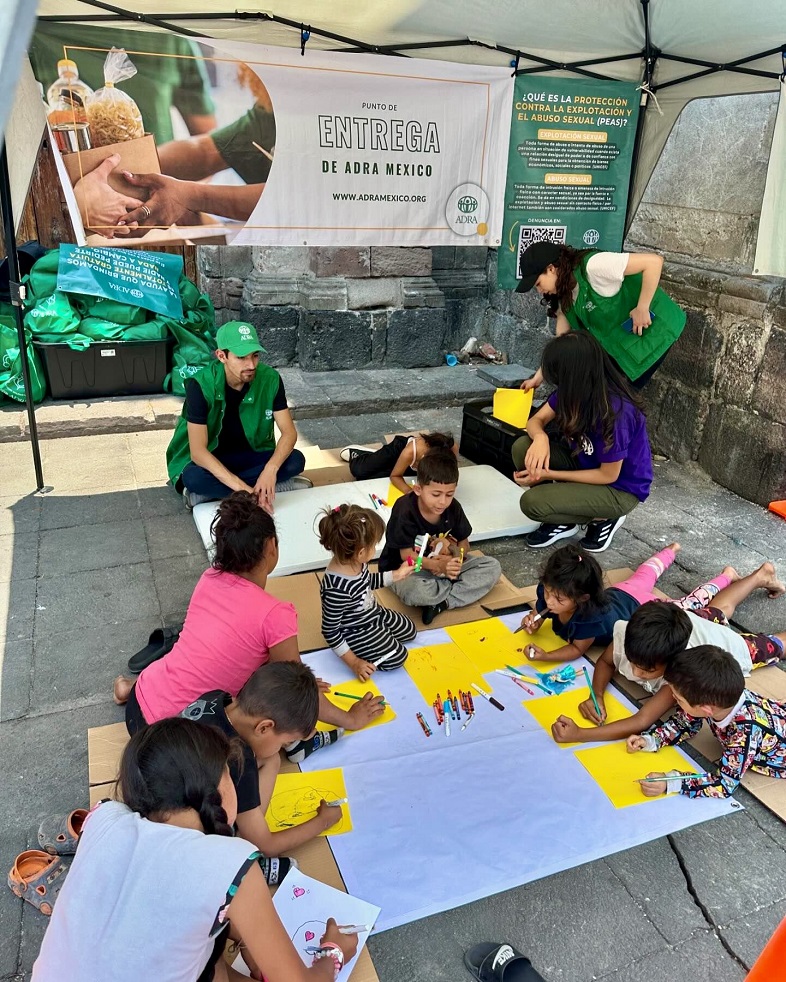
In Mexico, ADRA assists refugee families and children who flee from violence and conflict zones by providing food, shelter, health services, and counseling.
ADRA has also launched extensive response operations to protect refugee children and families who escape the fighting in Ukraine. Several ADRA country offices including Austria, Belgium, Romania, and Slovakia, offer numerous social services, such as food, cash assistance, access to education, shelter, psychosocial support, and protection at border crossings.
Help ADRA create a safer world by joining the battle against human trafficking. Visit https://adra.org/child-protection to discover more about ADRA’s global trafficking prevention efforts, as well as ways to help survivors and protect vulnerable people from this heinous crime.
Secure interviews and more information on this story by contacting Iris Argueta at iris.argueta@adra.org or calling 301-332-3880.
29, Jul 2024
Edible palm oil refiners to see revenue spurt 10 percent this fiscal
Favourable prices to drive recovery in operating profitability; credit profiles to be stable
For domestic refiners of edible palm oil, revenue is expected to grow ~10% this fiscal on steady demand and higher realisations. Operating profitability is seen rising 40-50 basis points (bps) to ~3.5% owing to favourable prices and continuation of duty-free imports.
Healthy balance sheets and the absence of major debt-funded capital expenditure (capex), over the medium term, will keep the credit risk profiles of palm oil refiners stable.
A study of nine companies rated by CRISIL Ratings, accounting for a third of the industry revenue of ~Rs 75,000 crore, indicates as much.
Palm oil dominates edible oil consumption in India, with 38-40% share in volume. Palm oil is used largely in the food processing and hotels, restaurants and catering (HoReCa) segments, which account for 45-50% of the overall consumption. The household and industrial segments consume the rest.
Rising urbanisation and increased consumption of processed and outside food will keep palm oil demand firm. Hence, the industry is set to witness volume growth of 3-4% this fiscal to ~93 lakh tonne.
India has ample refining capacities but does not produce much crude palm oil (CPO) to feed the refineries and is dependent on the world’s largest producers — Malaysia and Indonesia — for over 90% of its CPO requirement. Over the years, the global palm acreage has stagnated owing to sustainability and environmental concerns, ultimately leading to price rise.
Says Rahul Guha, Director, CRISIL Ratings, “In the latest budget, the Government’s endeavour to strengthen the domestic production of oil seeds to support domestic availability was amply clear, but the outcome could be little long drawn. In the meantime global CPO output is expected to remain stagnant at 78-79 million tonne, leading to price rise of 7-8% this fiscal. Along with steady volume increase, this will lead to Indian edible palm oil industry revenues rising ~10% this fiscal.”
The operating margins of Indian refiners are set to improve 50 bps to ~3.5% on account of increased economies of scale, firm commodity hedging policies and continuation of duty-free imports of CPO.
Says Rishi Hari, Associate Director, CRISIL Ratings, “In fiscal 2023, the Government of India had extended the zero import-duty structure for CPO for two straight years until March 2025. The duty structure was earlier set to expire in March 2024. The import duty for CPO was as high as 40% pre-pandemic. The extension will help regulate domestic supplies and keep prices in check, whilst supporting profitability this fiscal.”
29, Jul 2024
Strat-O-Matic Clubs Mark One Year With Huge Player Interest, Growth
More than 20 Clubs Active with 50+ in Formative Stages; Connecticut and New Jersey Clubs First to Surpass 12 Months
GLEN HEAD, N.Y, July 29, 2024—Last summer, Strat-O-Matic (@strat-o-matic), the market leader in sports simulation games, announced Strat-O-Matic Clubs, its first ever unified national club program. Players from across the U.S. got on board, with groups quickly forming.
A year later, more than 20 Strat-O-Matic Clubs, including the charter Clubs in Connecticut, New Jersey, Detroit, Philadelphia, Kansas City and Long Island (N.Y) are thriving, with hundreds of participants across all the Clubs. And more than 50 are developing, with fans inquiring about beginning their own in new locations daily.

“When we launched the Clubs program, we were confident that Strat-O-Matic players were looking for like-minded fans who enjoy getting together to enjoy their favorite game,” said Adam Richman, CEO, Strat-O-Matic Media. “We have been overwhelmed with the tremendous feedback, with many referencing the social nature of the Clubs, how they have met new players and how their groups continue to expand, with some participating in multiple Clubs every month.”
Fans interested in leading or joining a Strat-O-Matic Club are encouraged to email StratClub@Strat-O-matic.com, and check out details of current clubs and locations at https://www.strat-o-matic.com/strat-clubs. Club members receive discounts on game sets and other SOM merchandise, a personalized game card, exclusive Zoom with a Strat-O-Matic personality and other perks.
In addition to the Connecticut, Central New Jersey and Long Island locations, some of the most popular and active Strat-O-Matic Clubs are running in Florida, Tennessee, South Carolina, North New Jersey, North Kentucky, Georgia and California. Interest has been shown in more than 30 other states.
29, Jul 2024
Share India IBT Introduces 50 Market Depth Feature Amidst Post-Budget Market Volatility
India, 29th July 2024 – Share India IBT, a new-age Indian broker firm, becomes the first and only platform to introduce a ground-breaking 50 Market Depth tool that empowers traders with cutting-edge solutions. Following the announcement of the 7th Union Budget, the market has experienced notable fluctuations and will continue to change in the coming days
With this feature, an equity trader would be adequately informed about comprehensive insights of the market liquidity and depth. Traders can, therefore, command over the particulars of buy and sell orders up to 50 levels beyond the best bid and ask prices.
Mr. Abhinav Gupta, President at Share India Securities said, “Announced in the Budget yesterday, the new fiscal policies compel equity traders to navigate the market volatility with informed decision-making. With our 50 Market Depth, traders could view real-time market dynamics and order flow to be able to capitalize on opportunities and cover risks much more effectively, making it an essential asset.”
In view of the evolving financial market, Share India IBT continues to enhance its platforms with robust features that meet the demands of modern traders. As the Union Budget aftermath is upon us, the company encourages traders to use the 50 market depth feature to stay ahead of market trends and make data-driven decisions.
29, Jul 2024
Need for simplified regulations and enhanced logistics to boost MSME participation in global e-commerce: ISF
India, 29th July: E-commerce exports offer tremendous growth potential for Indian MSMEs, but currently see only 1% engaging in direct exports. To achieve the government’s ambitious target of $200-300 billion in e-commerce exports by FY 2030, it is essential to adopt more flexible policies and address existing challenges in customs, payments, and logistics. India SME Forum, the largest not-for-profit organization for MSMEs in India, hosted a ‘FireSide Chat’ titled “Plugging MSMEs in Global Markets: Harnessing the potential of B2C Exports” which explored the role played by e-commerce in enhancing the export potential of MSMEs and the imperatives for conducive regulatory policies.
E-commerce provides a unique opportunity for MSMEs, requiring minimal initial investment and enabling participation from diverse sellers across India. As awareness and interest grow, driven by ease of entry and global reach potential, businesses are increasingly embracing this avenue. To further accelerate growth, simplifying regulations is crucial. Experts commend the Central Government for promoting MSME e-commerce exports through new policies, including establishing e-commerce export hubs. These hubs, offering services like warehousing, packaging, and shipping, reduce operational costs and provide essential regulatory and compliance assistance, easing international trade navigation. However, despite these initiatives, challenges remain, particularly due to financial and regulatory barriers. High EDPMS closure charges can consume up to 50% of shipment value, making exports unviable for small parcels. The RBI’s 25% variation limit on payment reconciliation is often insufficient for transactions with high price variability. Increasing this limit to 50% and extending payment realization periods to 18 months would better support MSMEs and align with best global practices.
Additionally, customs reforms are essential to facilitate e-commerce exports. The primary policy proposal is to simplify and expedite the customs clearance process for certain low-risk shipments through pre-emptive assessments and automated procedures. This includes establishing separate customs supervision codes specifically for cross-border e-commerce trade to ensure faster clearance, streamline payment procedures, and enhance data collection for policy making.
Mr. Bipin Sapra, Partner, EY – “Indian MSMEs have tremendous potential to excel in global e-commerce markets, but they encounter several challenges, including high shipping costs, complicated customs procedures, and cumbersome returns management. To address these issues effectively, we must implement global best practices and establish dedicated export facilitation mechanisms. This includes adopting forward-deployed strategies to streamline returns, leveraging digital tagging for better tracking and management of shipments, and enhancing our overall logistical infrastructure. By tackling these challenges head-on, we can simplify the export process and significantly boost the ability of our MSMEs to compete and thrive on the international stage.”
Mr. Bhupen Wakankar, Director – Global Trade, Amazon, said, “E-commerce is unlocking vast global opportunities for Indian MSMEs to tap in large consumer demand across the world. This demand stretches across categories like Home & Kitchen, Apparels & Textiles, Consumable Products, Toys and many more categories. The application of technology in cross border logistics, payments as well as in areas like market access and market intelligence has been instrumental in helping Indian MSMEs expand their reach beyond domestic borders. The government’s proactive measures, including the recent announcement of Ecommerce Export Hubs and ongoing investments in digital infrastructure, are pivotal to this growth. These initiatives are set to provide essential support for businesses navigating international trade complexities. Continued support and simplification in areas such as customs compliance, cross-border payments, and logistics will further accelerate the growth of this sunrise sector.”
Mr. Vinod Kumar, President, India SME Forum, said, “In today’s interconnected world, the global marketplace offers unprecedented opportunities for Indian MSMEs to thrive. The path to successful international expansion lies in addressing key challenges like customs compliance, logistics, and cost management. By harnessing the power of digital tools to understand and meet customer preferences, and by advocating for policy reforms to ease export processes, we can empower our small and medium enterprises to compete and excel on the global stage. It is through such concerted efforts that we can transform the potential of Indian MSMEs into tangible success stories across borders.”
29, Jul 2024
5 Ways Universities Can Foster An Entrepreneurial Mindset In Students
In a rapidly developing country like India, entrepreneurship is a vital driver of economic growth and innovation. According to a report by the Global Entrepreneurship Monitor (GEM) India 2023-24, the entrepreneurial activity rate in India has been steadily increasing, with 15% of the adult population engaged in early-stage entrepreneurial activities. This indicates a growing interest in entrepreneurship among young people in India. This eventually brings us to the conclusion that universities play an extremely crucial role in shaping the entrepreneurial mindset of students, equipping them with the skills and knowledge that is necessary to thrive in a competitive market.
Educational institutions play a very important role in shaping the next generation of entrepreneurs. Hence, here are five ways in which universities in India can foster an entrepreneurial mindset in their students:
Make Entrepreneurship A Part Of The Curriculum
One of the most effective ways to cultivate an entrepreneurial mindset is by integrating entrepreneurship into the university curriculum. This can be done through dedicated entrepreneurship courses, modules, or even degree programs that cover various aspects of starting and running a business, such as ideation, business planning, marketing, finance, and legal issues. This not only provides students with foundational knowledge and skills in entrepreneurship but also encourages them to think critically and creatively about solving real-world problems and prepares them for the challenges of starting and running a business.
Start Incubation Centers and Accelerators
Universities should establish incubation centers and accelerators to support students in transforming their ideas into viable businesses. These centers can provide resources such as office space, funding, mentorship, and access to networks of investors and industry experts. These kind of centers provide a supportive environment for students to develop and test their ideas and offer access to essential resources and mentorship from experienced entrepreneurs. Students can actually navigate the early stages of starting a business through the help of such establishments. For example, the Indian Institute of Technology Madras (IIT Madras) has set up the IIT Madras Incubation Cell (IITMIC), which is recognized as one of the top deep-tech start-up hubs in India that supports start-ups through seed funding, mentoring, and infrastructure. As of 2023, IITMIC has incubated over 200 start-ups, and is targeting to incubate at least 100 start-ups across various sectors next year in 2024.
Promote Collaboration Between The Academia & Industry
Collaboration between academia and industry is crucial for developing an entrepreneurial mindset among students. Universities need to encourage partnerships with industries to provide students with real-world experience, internships and opportunities to work on live projects. This exposure helps students understand market needs and challenges, making them better equipped to develop innovative solutions. It not only provides students with practical and hands-on experience in real-world settings but also bridges the gap between academic knowledge and industry requirements.
Organize Competitions & Hackathons
Competitions and hackathons are excellent platforms for students to showcase their innovative ideas and entrepreneurial skills. These events encourage creative thinking, problem-solving, and teamwork. They also provide students with the opportunity to receive feedback from experts and gain recognition for their efforts. Since 2005, the National Institute of Technology Trichy (NIT Trichy) has been hosting the ‘Pragyan Innovation Summit’, an annual event that includes hackathons, pitch competitions, and workshops. This summit attracts participants from across the country, providing students with a platform to present their ideas and compete for funding and support.
Encourage A Culture Of Entrepreneurship
Creating a culture of entrepreneurship within the university is essential for encouraging students to pursue their entrepreneurial ambitions. This can be achieved by organizing events such as guest lectures, panel discussions, and networking sessions with successful entrepreneurs and alumni. Universities should also celebrate entrepreneurial successes and provide recognition and incentives for innovative ideas. It inspires students by exposing them to successful entrepreneurs and their journeys as well as helps build a supportive community of like-minded individuals. The Indian School of Business (ISB), for example, organizes the ‘ISB Leadership Summit’ every year which personifies ISB’s vision of leadership, excellence, and diversity. They host a plethora of stalwarts who are exemplary leaders in their respective fields to add valuable insights into the holistic education ecosystem that ISB has successfully built over the years.
Additionally, Indian government’s initiatives like ‘Start-up India’ and ‘Atmanirbhar Bharat’ also aim to create a conducive environment for start-ups and entrepreneurship. These initiatives offer various benefits, including tax exemptions, funding opportunities and ease of doing business, which educational institutions can leverage to provide additional support and resources to student entrepreneurs. With the right support and encouragement, students can develop the skills and confidence needed to turn their innovative ideas into successful ventures, contributing to the global economy and addressing societal challenges. Institutions like BMU University are at the forefront of this movement, providing a nurturing environment that encourages innovation and entrepreneurial thinking among students. By fostering such mindsets, universities play a crucial role in shaping the future leaders and innovators of tomorrow.
29, Jul 2024
How AI can save business owners up to £3900 and ease workload
As of July 2024, only 29% of startups / small businesses worldwide have adopted AI in their operations, citing lack of expertise as their main reason for not doing so.
Christoph C. Cemper, an AI expert on behalf of AIPRM, provided his insight on how artificial intelligence can easily act as a crucial tool for entrepreneurs, easing the burden on small business owners, in honour of Stress Awareness Month.
Ease the load: Five ways AI can assist your startup or small business
Harnessing AI effectively can significantly alleviate stress for business owners, with a recent AIPRM survey revealing that one in eight businesses have saved between £780 and £3900 by replacing simple tasks with AI.
-
Marketing
Marketing is a crucial element for any startup or small business, not just for building brand awareness, credibility and trust, but also for positive customer retention and long term-growth.
Using AI in your marketing strategy doesn’t have to be overly complex, and it’s usually very accessible – with free to use tools such as Chat GPT. With over three in five (61%) of marketers now using AI to save time and resources, it’s clear to see how AI can work as a trusty sidekick to assist your natural workflow of content creation, analysing performance and predicting improvements for better engagement.
In fact, a global study by Statista reported that 47% of marketers trust the use of AI for generating target ads, 42% use the tool for personalising content, 33% for optimising subject email lines and 32% for conducting live chat sessions with customers.
-
Understand consumer behaviour
If you’re just starting out your business, you’ll want to understand your consumer pretty quickly. You can even use AI to develop a personalised customer avatar to target potential customers through AI-based ad tools, such as social media or Google Ads.
Although AI can assist with data-driven approaches, there still needs to be oversight from human beings, and the people maintaining these datasets have to be diverse so that the data sets are also diverse enough to reach a wider audience whilst still targeting your ideal customer.
-
Competitor analysis
AI can assist in analysing not only your own customer behaviour, but competitor trends, which can be used to adapt your own strategies accordingly. You can use AI to gain large amounts of data at the drop of a hat, and use this as a benchmark for your own strategies, and analyse how you measure against the competition.
To do this is actually relatively easy. You can use quick analytic tools such as Hootsuite or Brandwatch to generate reports on your competitors’ social media, engagement and growth, as well as their websites and any industry news sites to identify emerging patterns and trends. This can help you identify any gaps in the market, and leverage any customer feedback and satisfaction.
-
Product development
If you have a startup or small business, you also have a product it revolves around. Using AI for improving product design, development processes, prototyping and testing lands you with a good chance of a product that’s likely to perform.
You can leverage AI from day one by using market intelligence tools to analyse how similar products are performing on the market, and use this to one up your competitors. Easy to use, free tools such as Figma can also assist prototyping, which instantly converts concepts into visual product prototypes.
-
Security
Reports show that small businesses and startups are THREE TIMES more likely to be targeted by cyber crime than larger companies, with threats including phishing, malware attacks, social engineering, data theft, and insider threats. 60% of SMEs that suffer cyber attacks also go out of business within six months.
Despite this,security within startups and small businesses are often overlooked. Recent reports found that 51% of small businesses don’t utilise any IT security measures – with 36% of small businesses having no concern whatsoever about cyberattacks.
So how can AI help? AI can analyse vast amounts of data in real time to identify any suspicious patterns or anomalies associated with cyber security threats, and block any attempts to cause harm. AI can also scan your systems for any vulnerabilities and manage this accordingly. You can even utilise AI platforms for training up employees on best practices, and reducing human error that can lead to vulnerabilities in security.