


22, Jul 2026
iPhone 17 Series Powers Apple’s India Growth with 44 pc Shipment Share
New Delhi, July 22: The iPhone 17 series accounted for 44 per cent of Apple’s smartphone shipments in India during the second quarter of 2026, highlighting strong demand for the company’s latest flagship devices, according to industry data.
The impressive contribution from the iPhone 17 lineup reflects growing consumer preference for premium smartphones in India, supported by advanced features, improved technology, and increasing demand for high-end devices.
Market analysts said Apple’s continued expansion in India has been supported by rising purchasing power, wider retail availability, attractive financing options, and growing interest among consumers in premium digital ecosystems.
The company’s performance also highlights the increasing importance of India as a key market for global smartphone brands, with consumers showing greater adoption of premium devices and advanced mobile technologies.
Industry experts noted that Apple’s focus on local manufacturing, stronger supply chains, and enhanced customer reach has further strengthened its presence in the Indian market.
The growth of the iPhone 17 series underscores the changing dynamics of India’s smartphone sector, where premiumisation and technology-driven experiences are becoming major factors influencing consumer choices.
- 0
- By Neel Achary

22, Jul 2026
Bharat Forge And FLYING WHALES Sign Strategic MoU To Develop And Manufacture Heavy-Lift Airships For Sovereign Applications In India
July 22: Bharat Forge Limited, through its Aerospace Division, has signed a Memorandum of Understanding with FLYING WHALES, a French-Canadian global pioneer in heavy–lift airship technology, to jointly develop, manufacture and field, advanced airships for India’s defence and strategic operational requirements. The MoU was signed by Mr. Guru BISWAL, CEO Aerospace, Bharat Forge Limited, and Mr. Sébastien BOUGON, President, FLYING WHALES, at the Farnborough International Airshow 2026.
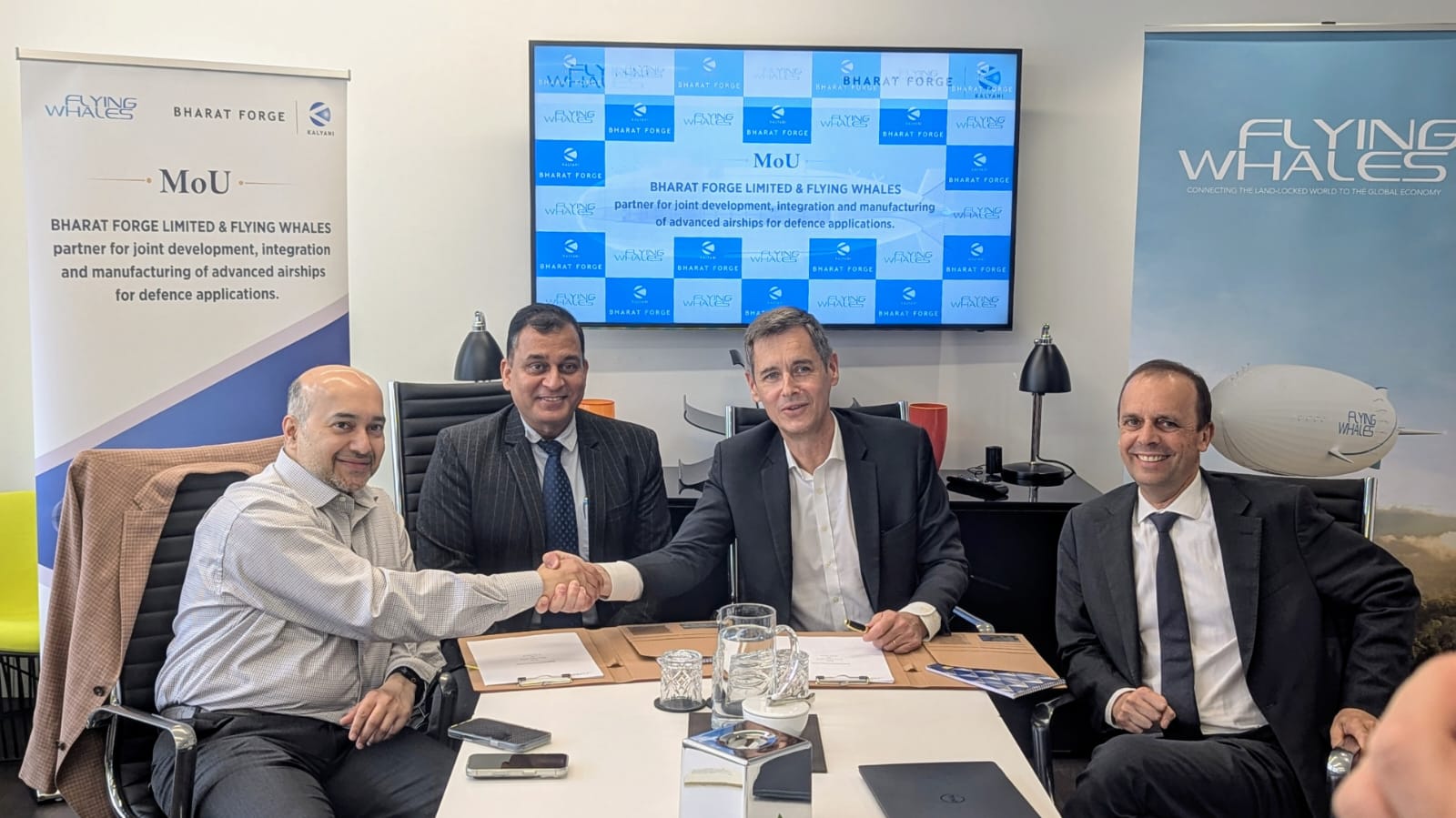
The partnership marks a decisive step towards building an indigenous airship ecosystem in India, aligned to the Government’s Aatmanirbhar Bharat and Make in India initiatives. The two companies will work towards establishing in India the manufacture, integration and production of FLYING WHALES–Bharat Forge airships for Defence applications, creating sovereign capabilities in a strategically important aerospace segment.
At the core of the collaboration is the LCA60T platform- FLYING WHALES next-generation heavy–lift airship capable of transporting up to 60 tonnes of cargo with vertical take-off and landing capability, minimal ground infrastructure requirements, and hybrid-electric propulsion. Designed for point-to-point operations in challenging and remote environments, the platform opens new possibilities for military logistics, strategic mobility and disaster response.
The partnership will explore defence applications including logistics support to forward operating bases, transportation of oversized equipment and critical military supplies, intelligence, surveillance and reconnaissance missions, communication relay systems, humanitarian assistance and disaster relief operations, and rapid deployment in remote border regions and difficult terrains.
“Airships will redefine how nations move, supply and sustain their forces, and India will lead that change. This strategic partnership places India among a select group of nations with the capability to design, build and field heavy–lift airships, bringing together FLYING WHALES‘ pioneering technology and Bharat Forge‘s six decades of advanced engineering strength and deep understanding of India‘s defence needs. Aligned to the spirit of Aatmanirbhar Bharat, we are creating a sovereign capability, a new industrial ecosystem and an entirely new dimension of strategic mobility for the nation,” said Mr. Amit Kalyani, Vice Chairman & Joint Managing Director, Bharat Forge Limited.
“The LCA60T was conceived to reach the world’s most remote and demanding locations, and that promise finds its fullest expression in India, with its vast geography, challenging terrain and extraordinary ambition. We are delighted to partner with Bharat Forge, whose engineering depth, defence expertise and shared vision make this a true strategic alliance to take the programme to scale. Together, we will build in India, for India and for the world, laying the foundations of an airship industry that will serve this region for generations,” said Mr. Tanguy Lestienne, Chief Executive Officer, FLYING WHALES SERVICES.
The proposed localisation programme is expected to generate high-technology employment, develop an advanced supply chain and create future export opportunities, further strengthening India‘s position as a global aerospace manufacturing hub.
22, Jul 2026
Adani Electricity Team Shines at National 5S Conclave with Excellence in Workplace Innovation
Mumbai, July 22: Adani Electricity’s workforce has been recognised for its excellence in workplace management and operational efficiency at the 12th National Conclave on 5S, held in Varanasi.
The achievement highlights the organisation’s commitment to fostering a culture of quality, innovation, and continuous improvement through the adoption of globally recognised 5S workplace practices.
The company’s employees demonstrated best practices in workplace organisation, process optimisation, safety, and operational excellence, earning appreciation for their efforts to enhance productivity and service delivery.
Officials said the recognition reflects the dedication and teamwork of Adani Electricity’s workforce in implementing efficient systems that improve workplace standards while promoting a safe and sustainable working environment.
The National Conclave on 5S brings together industry leaders and professionals from across sectors to share best practices in workplace management, efficiency, and organisational excellence.
The recognition reinforces Adani Electricity’s focus on building a high-performance work culture driven by innovation, employee engagement, and operational excellence, while supporting its commitment to delivering reliable services to consumers.
22, Jul 2026
Kharchi Puja Begins in Tripura, Blending Centuries-Old Traditions with Green Mission
Agartala, July 22: The centuries-old Kharchi Puja, one of Tripura’s most significant religious and cultural festivals, began on Wednesday with a strong message of environmental responsibility under the theme ‘Ek Ped, Maa Ke Naam’.
The week-long festival brings together devotees, priests, and visitors from across the region to participate in traditional rituals that celebrate Tripura’s rich cultural heritage. This year, the celebrations have been aligned with the nationwide tree plantation campaign, encouraging people to contribute to environmental conservation by planting trees.
Organisers said the green theme aims to connect faith with sustainability, promoting awareness about ecological preservation while preserving the spiritual essence of the festival. Tree plantation drives and public awareness initiatives are expected to complement the religious observances throughout the celebrations.
Kharchi Puja is regarded as a symbol of Tripura’s cultural identity and communal harmony, attracting thousands of devotees every year. Along with traditional rituals, the festival also showcases the state’s vibrant heritage through cultural programmes and community participation.
The initiative reflects a growing effort to integrate environmental consciousness into traditional festivals, reinforcing the importance of sustainable living while preserving centuries-old customs and values.
22, Jul 2026
India’s Primary Energy Supply Hits 39,055 Petajoules, Signalling Strong Economic Momentum
New Delhi, July 22, 2026 – India’s total primary energy supply has reached 39,055 petajoules (PJ), highlighting the country’s expanding energy capacity and its ability to meet the growing demands of a rapidly developing economy, the government informed Parliament.
The milestone reflects sustained growth in energy consumption across key sectors, including industry, transport, agriculture, and households, supported by continued investments in power generation, fuel supply, and energy infrastructure.
The minister said the government remains committed to strengthening India’s energy security through a diversified energy mix that combines conventional resources with renewable energy. Ongoing initiatives to expand clean energy capacity, modernise infrastructure, and improve energy efficiency are helping build a more resilient and sustainable energy ecosystem.
India’s rising primary energy supply also underscores the country’s progress in supporting industrialisation, urbanisation, and digital growth while ensuring reliable energy access for businesses and citizens.
With a continued focus on innovation, domestic resource development, and sustainable energy solutions, the government aims to create a future-ready energy sector capable of supporting long-term economic growth and meeting the nation’s evolving energy needs.
The latest figures reinforce India’s position as one of the world’s fastest-growing energy markets and reflect its ongoing efforts to balance economic development with energy security and environmental sustainability.
22, Jul 2026
India’s Auto Sector Gears Up for FY27 Growth as Revenue Seen Rising 8 pc
New Delhi, July 22: India’s automobile industry is expected to maintain its growth momentum in FY27, with operating revenue projected to increase by 8 per cent, according to a report.

The positive outlook is driven by healthy domestic demand, rising sales of premium vehicles, growing adoption of electric vehicles (EVs), and continued investments in manufacturing and innovation.
The report noted that strong consumer sentiment, improving infrastructure, and favourable policy support are expected to sustain demand across passenger vehicles, commercial vehicles, and two-wheelers.
Automakers are also focusing on expanding their EV portfolios, improving operational efficiency, and introducing technology-driven products to cater to changing consumer preferences and strengthen profitability.
Industry experts believe the sector’s steady growth reflects the resilience of India’s automotive market and its increasing contribution to the country’s manufacturing and economic development.
With sustained demand and continued investments in advanced mobility solutions, India’s auto industry is expected to remain on a strong growth trajectory in the coming fiscal year.
22, Jul 2026
India’s Data Centre Boom Poised to Power Digital Future, Capacity Seen Reaching 6.5 GW by 2030
New Delhi, July 22: India’s data centre industry is poised for significant expansion, with installed capacity expected to quadruple to 6.5 gigawatts (GW) by 2030, according to a new report, underscoring the country’s emergence as a global digital infrastructure hub.
The projected growth is being driven by rapid digital transformation, increasing adoption of artificial intelligence (AI), cloud computing, 5G services, data localisation requirements, and rising demand for secure digital storage across industries.
The report noted that India’s expanding digital economy, supported by growing internet penetration, e-commerce, fintech, and enterprise digitisation, is creating unprecedented demand for world-class data centre infrastructure.
Industry experts believe continued investments in advanced technology, renewable energy, high-speed connectivity, and reliable power infrastructure will be key to sustaining this growth while improving operational efficiency and environmental sustainability.
The expansion of data centre capacity is expected to strengthen India’s technology ecosystem by supporting innovation, enhancing cloud capabilities, enabling AI-driven applications, and attracting greater domestic and global investments.
The report highlights that the sector is set to play a pivotal role in India’s digital growth story, reinforcing the country’s position as one of the world’s fastest-growing destinations for digital infrastructure and technology investment.
22, Jul 2026
Introducing SunRay: S Hotels & Resorts Unveils a New Social & Swim Club Concept Inspired by Life Under the Sun
Bangkok, Thailand| July 22 – S Hotels & Resorts, the hospitality group known for its wellness-minded approach to leisure, has announced the launch of SunRay Social & Swim Club. This new concept blends social connection, all-day dining and drinks, and vibrant poolside and beachfront experiences into a fresh new offering for guests. The concept will debut with a soft launch on August 1 at SAii Koh Samui Villas, the brand’s adult-only retreat, where SunRay will be exclusively available to adult guests, offering the ideal setting for meaningful connections and quality time together.
Designed around a growing shift from late-night revelry to soulful daytime connection, SunRay introduces a new kind of beachside gathering, programmed by the rhythm of the sun rather than the intensity of nightlife. The concept celebrates a more effortless way of socialising, centred on the simple pleasure of being together by the water, elevated through curated programming, music, playful activities and relaxed poolside dining, whether sinking into a corner with a stack of vinyls, picking up a game, or slipping into the pool.
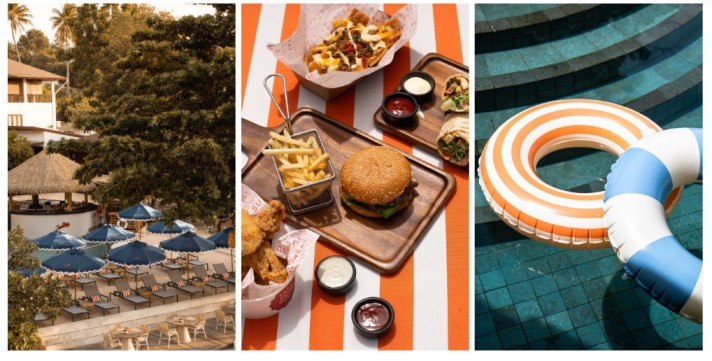
A fresh take on the seaside social experience, SunRay Samui follows the natural progression of daylight, moving from gentle awakening to relaxed sundowners via four distinctive moods while avoiding the intensity of high-energy partying.
First Light sets a serene tone for the day with sunrise wellness sessions, including yoga and Pilates, designed for early risers. As the morning unfolds, Morning Drift invites guests to ease into the day with pool floats, board games that spark connection, and dedicated listening corners curated in partnership with Gadhouse, the Bangkok-born turntable label known for their chic retro designs. Featuring the Henry turntable collection, the feather-light ’80s-inspired Wesley headphones and a thoughtfully selected vinyl library spanning moods and eras, guests can unwind to SunRay-inspired sounds or discover specially curated Gadhouse playlists every Saturday, perfectly attuned to the rhythm of the shore.
Peak Sun brings a sociable energy centred around food, drinks and shared moments. The culinary experience embraces a relaxed, pool-friendly approach, bringing together globally inspired comfort dishes, SunRay signatures and local favourites are designed for leisurely grazing or lingering lunches and dinners by the water. A drinks programme centred on refreshing, sun-ready cocktails and easy-going serves encourages enjoyment throughout the day, leading into a daily Happy Hour from 3–5PM as the afternoon settles into golden hour.
Playful programming, from poolside games, waterproof uno cards and poolside Jenga to creative, sustainable DIYs, keeps the atmosphere spirited yet unforced, where nothing runs on a clock and every moment unfolds at its own pace.
From sunset onwards, Golden Hour sets the mood with downtempo beats and sunset anthems, creating the perfect atmosphere as day turns to night. Enhancing the experience is a vibrant entertainment line-up, featuring mesmerising fire dance performances every Thursday and Sunday, live DJ and saxophone sessions every Wednesday, Thursday, and Saturday, and dynamic Muay Thai dance showcases every Saturday.
Following its debut in Koh Samui this August, SunRay will celebrate its official global debut this October, expanding to SAii’s beachfront resorts in Phuket and the Maldives.
“SunRay marks the next step in our evolution towards experience-led hospitality,” said Michael Marshall, CEO of S Hotels & Resorts. “It gives us a new way to bring people together in the hours when the day feels its best, with food, music and atmosphere guided by the sun rather than the clock. It is relaxed, unpretentious and designed for guests to settle in, slow down and feel at ease.
GHA DISCOVERY members can enjoy an exclusive SunRay Day Pass for THB 1,500, including pool access, signature activities and THB 2,000 in food and beverage credit to spend throughout the day.
22, Jul 2026
Markets End Deep in the Red as Sensex Tumbles 715 Points, Nifty Slips Below 24,000
Mumbai, July 22: Indian equity markets ended sharply lower on Wednesday, with the Sensex falling 715 points and the Nifty closing below the 24,000 mark, as heavy selling in realty and public sector banking stocks dampened investor sentiment.
The decline was driven by broad-based weakness across key sectors, with realty and PSU bank stocks emerging as the biggest laggards during the trading session. The sharp fall reflected cautious market sentiment amid concerns over global economic developments and sector-specific pressures.
Market participants remained watchful of domestic and international cues, including movements in global markets, commodity prices, and expectations surrounding monetary policy, which influenced trading activity.
Analysts said profit booking in rate-sensitive sectors and risk-averse investor sentiment contributed to the market decline, even as select defensive stocks offered limited support.
Despite the day’s losses, market experts noted that investors continue to closely monitor macroeconomic indicators, corporate earnings, and global developments for clearer direction in the coming sessions.
The benchmark indices ended the session under pressure, highlighting continued volatility in the equity markets as investors assess evolving economic and financial conditions.
22, Jul 2026
IPL Franchises and ICC Celebrate Iconic Leaders Winning Global Recognition

The top Indian Premier League (IPL) franchises and the ICC took to social media to honour the visionary women shaping their teams. Tributes from Mumbai Indians, Punjab Kings, Kolkata Knight Riders, and ICC poured in following the release of the inaugural Women’s Power 50 by cricexec, a premier global cricket trade publication.
The first-of-its-kind list honours the 50 most influential women driving the commercial ecosystem of cricket worldwide, with India securing the highest representation of any country.
IPL franchises and the ICC acknowledged the list from their official accounts. They celebrated the visionary women shaping their teams.
- Mumbai Indians congratulated Mrs. Nita Ambani on Instagram for securing the No. 1 spot, celebrating her visionary leadership across Mumbai Indians, Reliance Foundation, and India’s Olympic movement in spearheading a transformative sports ecosystem (View Post).
- Punjab Kings took to Instagram to congratulate Co-owner Preity G. Zinta on her feature, celebrating her as one of the women making the biggest impact on the global cricket landscape (View Post).
- Kolkata Knight Riders celebrated a proud moment for the Knight Riders family on X, congratulating Juhi Chawla Mehta on her recognition in the global power list (View Post).
- ICC (LinkedIn): Acknowledged the trailblazers driving the global game of cricket forward. View post
Both Juhi Chawla Mehta and Preity G. Zinta were jointly ranked at No. 3 globally, marking a historic sweep for Indian sports leadership, with four of the global top five spots held by Indian women.


