


22, Jul 2026
AVILOO Battery Warranty now available in Norway and Denmark
Industry-first, financially backed EV battery warranty extends into two more European markets
Oslo/Copenhagen, 22 July 2026 – AVILOO, the global leader in independent EV battery diagnostics, today announced that its Battery Warranty is now available to used EV buyers in Norway and Denmark.
The AVILOO Battery Warranty gives buyers of used electric vehicles a genuine, financially backed guarantee on battery health, based entirely on independent diagnostic data rather than manufacturer claims.
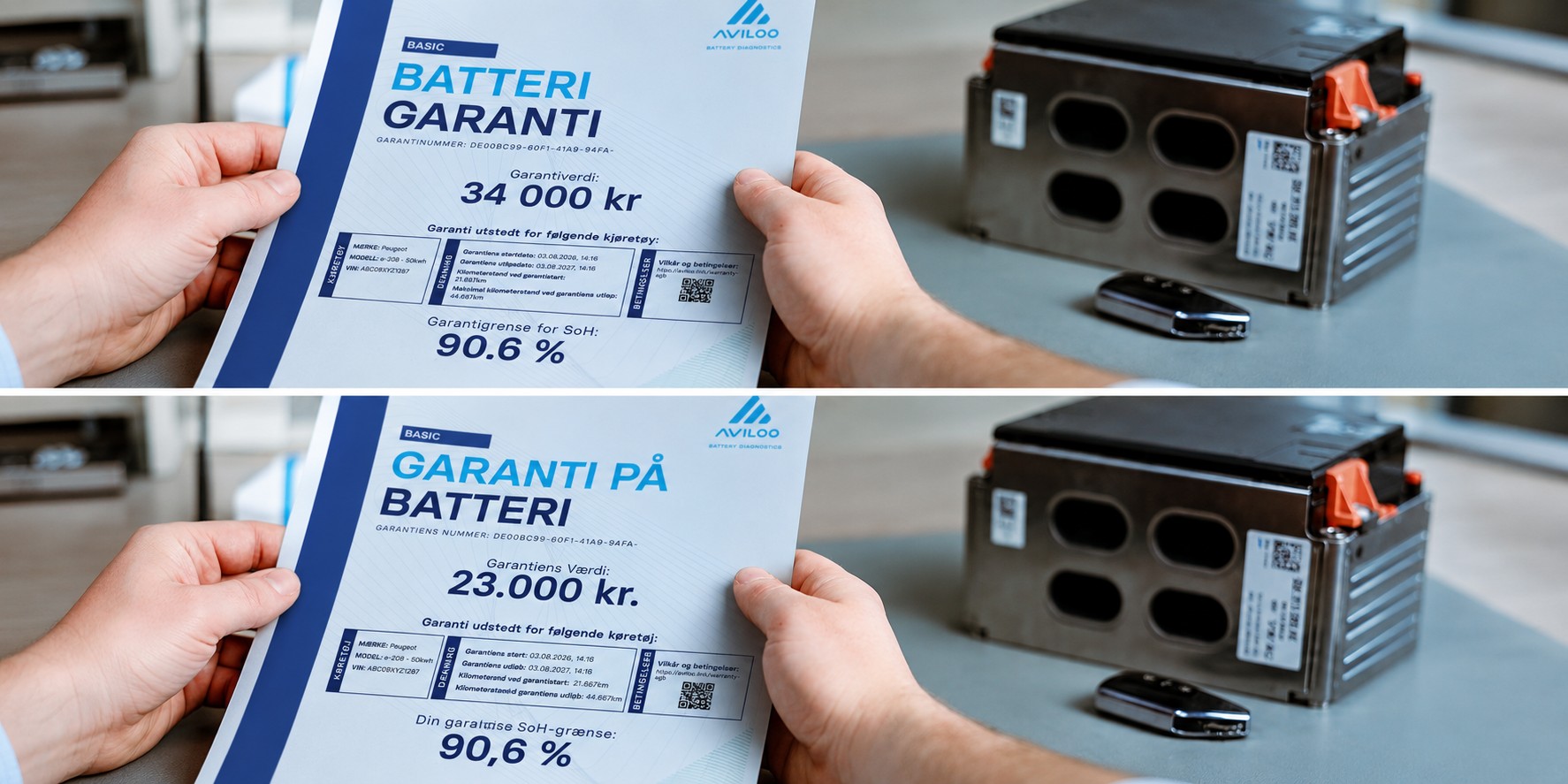
For each vehicle, AVILOO uses its global diagnostics database to calculate an individual State of Health limit – the minimum the battery must maintain at 20,000 kilometres within the one-year warranty period. If the battery falls below that limit, buyers receive 23,000 kr in compensation in Denmark, or 34,000 kr in Norway, plus a full refund of FLASH Test costs.
The warranty is built on the AVILOO FLASH Test, a three-minute, manufacturer-neutral battery health check that assesses real battery capacity, thermal management and charging performance, covering 96% of EV models currently on the road.
Norway and Denmark add to the growing list of European markets where the warranty is already available, including the UK, Germany, the Netherlands, Finland, Austria, Belgium, Ireland, Switzerland, France and Sweden.
Marcus Berger, CEO of AVILOO, said:
“Norway and Denmark are two of the most mature EV markets in the world, so bringing the Battery Warranty here is a natural next step. Buyers deserve real certainty on the single most expensive part of their car, backed by data, not guesswork. This is about giving Nordic dealers and drivers the same level of protection and trust we’ve already built across the rest of Europe.”
- 0
- By Neel Achary

22, Jul 2026
India Calls for Stronger ASEAN Partnership to Navigate Emerging Global Challenges
New Delhi, July 22: External Affairs Minister S. Jaishankar emphasised the need for stronger India-ASEAN cooperation as countries navigate growing global uncertainties and evolving geopolitical challenges.
Addressing key regional developments, the External Affairs Minister highlighted the importance of closer collaboration between India and ASEAN nations in areas such as trade, connectivity, security, technology, and sustainable development.
Jaishankar’s engagements in Manila included discussions with regional counterparts on issues affecting the Indo-Pacific region and the broader international landscape. The talks focused on strengthening partnerships, maintaining regional stability, and promoting greater coordination among like-minded countries.
During his meetings with foreign ministers, including discussions on global developments and bilateral relations, the External Affairs Minister underlined India’s commitment to constructive engagement and dialogue to address shared challenges.
The discussions also reflected the growing importance of the Indo-Pacific region amid changing global dynamics, with countries seeking stronger partnerships to enhance economic resilience, maritime cooperation, and security frameworks.
India and ASEAN share longstanding ties based on mutual respect, economic cooperation, and cultural connections. Both sides have been working towards expanding collaboration across multiple sectors, including supply chains, digital technology, education, and infrastructure.
Jaishankar said deeper cooperation among regional partners would be crucial in building a stable, open, and inclusive Indo-Pacific while addressing common concerns in an increasingly complex global environment.
The latest diplomatic engagements underline India’s continued focus on strengthening regional partnerships and promoting collective solutions to emerging global challenges.
22, Jul 2026
Petros Stone LLP Delivers Specialized Natural Black Slate Solution for Monastery Project in Bhutan
Pune, 22nd July: Petros Stone LLP, one of India’s leading manufacturers and exporters of premium natural stone products, has successfully supplied and installed a specially engineered natural black slate solution for a prestigious monastery project in Bhutan, overcoming significant technical and logistical challenges.
The monastery required a 100% natural black slate with an anti-skid surface finish, exceptional weather resistance, and a consistent visual appearance suitable for long-term outdoor use. Conventional slate materials available in the market were unable to meet these stringent requirements, as they either exhibited excessive natural variation or developed foliation and cracking after surface finishing.
To address these challenges, Petros Stone LLP engineered a specialized processing method to manufacture thick natural black slate slabs with a durable anti-skid surface finish. The surface was carefully treated to provide enhanced slip resistance while maintaining the stone’s natural texture and aesthetic appeal, making it ideal for outdoor pathways and high-traffic areas exposed to varying weather conditions.
The project also required precise fabrication of the slate slabs with both round and square cuts using advanced water jet technology. This high-precision cutting process ensured accurate dimensions, clean edges, and a seamless fit for the monastery’s architectural requirements, while preserving the integrity of the natural stone.
In addition, Petros Stone LLP incorporated advanced resin impregnation technology to enhance the stone’s structural stability while preserving its natural character. This innovative approach significantly minimized the risk of cracking and ensured the material’s long-term performance in harsh outdoor conditions.
The project involved a complex supply chain operation, with the finished slate material transported nearly 4,000 kilometers from India to Bhutan. Despite the demanding journey and challenging terrain, Petros Stone LLP ensured that the material reached the project site safely and was successfully installed at the monastery.
Commenting on the achievement, Rishabh Jain, Director – International Business, Petros Stone LLP,Petros Stone LLP, said, “This project reflects Petros Stone LLP’s commitment to delivering highly customized natural stone solutions for architecturally and culturally significant projects. By combining traditional natural stone aesthetics with advanced processing technology, including precision water jet fabrication and specialized surface finishing, we were able to create a product that met the monastery’s exact requirements for safety, durability, and visual consistency, while also withstanding the challenges of long-distance transportation.”
The successful completion of the Bhutan monastery project underscores Petros Stone LLP’s expertise in developing innovative natural stone solutions tailored to specialized applications. It also reinforces the company’s growing reputation as a trusted partner for premium stone projects across international markets.
22, Jul 2026
India’s Solar Power Story Reaches New Heights as Clean Energy Capacity Surges 57 Times in a Decade
New Delhi, July 22: India’s journey towards a cleaner and more sustainable energy future has achieved a major milestone, with the country’s installed solar power capacity rising nearly 57 times since 2014 to 162.15 GW, the government informed Parliament.
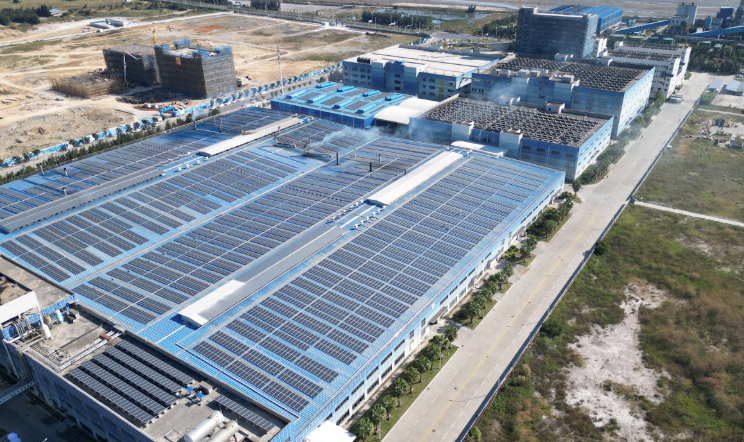
The remarkable growth reflects India’s strong commitment to expanding renewable energy, strengthening energy security, and creating a greener power ecosystem for the future.
Over the last decade, solar energy has emerged as a key pillar of India’s clean energy transformation. From large-scale solar parks and rooftop installations to growing adoption of renewable solutions across sectors, the country has steadily expanded its solar infrastructure.
The government highlighted that a combination of supportive policies, technological advancements, increased investments, and wider participation from industry stakeholders has helped accelerate solar power development across the country.
The expansion of solar capacity is not only helping India move towards cleaner energy but is also creating new opportunities in manufacturing, employment, research, and innovation. The growing renewable energy sector is contributing to economic development while supporting efforts to reduce carbon emissions.
India’s solar growth story also reflects the increasing importance of sustainable energy solutions in meeting the rising power needs of a growing economy. With continued focus on renewable energy projects and infrastructure development, solar power is expected to play an even larger role in the country’s future energy landscape.
The latest milestone reinforces India’s position as one of the world’s leading renewable energy markets and highlights the nation’s progress towards building a more sustainable and resilient energy system.
22, Jul 2026
The AI Investment Paradox: Asset Managers Divided Over Whether They Are Spending Too Much or Too Little, Global Research Reveals
BOISE, Idaho, NEW YORK, CHICAGO, LONDON and HONG KONG, July 22 — A striking investment paradox is emerging at the heart of the asset management industry’s AI revolution, new research from Clearwater Analytics reveals.
While AI budgets across the fund management industry are growing at an extraordinary pace — with 63% of firms increasing AI spending by more than 50% in the past 12 months and not a single firm reporting a budget decrease — the industry is deeply divided about whether it is spending the right amount.
One in four (25%) fund managers believe their organisation is still not investing enough in AI. Yet a striking 66% say they fear their firms are already over-investing. Together, these findings expose a fault line running through the industry: for all the conviction that AI is essential, there is no consensus on what the right level of commitment looks like in practice — and for an industry where capital allocation decisions carry significant weight, that lack of consensus carries real risk.
A Maturing Industry, Not a Late One
Contrary to the narrative of an industry playing catch-up, the research reveals that AI adoption in asset management is more mature than commonly assumed. The majority of fund managers (56%) began integrating AI four to five years ago, and a further 34% started their journey two to three years back. Only 9% have begun AI integration within the past year.
This means the industry is not at the beginning of its AI journey — it is in the middle of it. The challenge is no longer whether to adopt AI, but how to scale it effectively, govern it responsibly, and calibrate the right level of investment to deliver measurable returns.
The Spending Surge Is Extraordinary and Showing No Signs of Slowing
Whatever the debate about whether investment levels are right, the direction of travel is unambiguous:
· 13% of fund managers report AI investment increased by over 100% in the past 12 months
· 50% saw expenditure rise between 50% and 99%
· Not a single firm reported a decrease in AI spending
· Only 4% held budgets steady
This is an industry-wide acceleration, driven by competitive pressure, client demand, and the growing recognition that AI is a core operational imperative.
AI Is Already at the Operational Core
The research makes clear that AI has moved well beyond pilot programmes and proof-of-concept projects. It is already embedded in the engine room of fund management operations, in investment decisions, risk management, and day-to-day workflows:
· Investment Decisions: 43% of managers now use AI for 25–49% of their investment decision-making; 10% rely on it for the majority of their investment calls
· Risk Management: 38% apply AI to 25–49% of their risk processes; 8% use it for the majority of risk assessments
· Operations: 34% integrate AI into 25–49% of operational decisions; 6% use AI for over half of their operational workflows
The message is clear: AI is already shaping how fund managers make decisions, manage risk, and run their operations today.
The Real Challenge: From Spending to Institutionalisation
The paradox the research reveals points to a deeper challenge. The industry has moved past the question of whether to invest in AI. The new question is how to institutionalise it effectively: building the data infrastructure, governance frameworks, talent capabilities, and operational processes that allow AI investment to translate into measurable outcomes.
Firms that solve this challenge — moving beyond the anxiety of calibrating spend to the discipline of deploying AI systematically across their investment lifecycle — will be the ones that pull ahead.
Souvik Das, CTO at Clearwater Analytics, said: “What our research reveals is an industry wrestling with how to get AI right. Increasing the budget is the easy part. The harder challenge is institutionalising AI in a way that drives genuine alpha and operational excellence, rather than simply adding cost and complexity.”
“At Clearwater, we are helping clients navigate exactly this challenge, by embedding AI directly into our platform and automating the data reconciliation and investment accounting lifecycles that form the foundation of everything else,” continued Das.
“When the infrastructure is right, AI doesn’t just work, it compounds. It identifies data anomalies in real-time, reduces the manual burden on risk and operations teams, and frees people to focus on the high-value strategic work that actually moves the needle.”
22, Jul 2026
Crude Oil Prices Climb as Middle East Tensions Spark Fresh Market Worries
New Delhi, July 22: Global crude oil prices moved higher as rising tensions between the United States and Iran triggered concerns over possible disruptions to energy supplies, pushing Brent crude to a five-week high near USD 92 per barrel.
The increase in oil prices reflects growing caution among investors and energy traders, who are closely monitoring developments in the Middle East and their potential impact on global crude supply chains.
The Middle East remains one of the world’s most important energy regions, and any uncertainty surrounding production or transportation routes can significantly influence international oil markets. The latest developments have increased concerns about supply stability, leading to upward pressure on crude prices.
Market analysts said the movement in oil prices will depend on the evolving geopolitical situation, global demand trends, and the availability of supplies. Continued tensions could keep markets volatile, while easing concerns may help bring some stability.
The rise in crude prices has also drawn attention from oil-importing economies, where higher energy costs can affect fuel prices, transportation expenses, inflation, and broader economic conditions.
Energy experts highlighted the importance of maintaining diversified energy sources and strengthening supply resilience to manage fluctuations in the global oil market.
The latest surge in crude prices underscores the close connection between geopolitical events and global economic stability, with energy markets continuing to remain sensitive to international developments.
22, Jul 2026
Gem and Jewellery Exports Regain Momentum with Strong June Growth
Mumbai, July 22: India’s gem and jewellery export sector witnessed a strong recovery in June, recording a 26.5 per cent rise in exports, driven by renewed demand from international markets and improved business sentiment, according to industry data.

The growth marks a positive turnaround for the sector, reflecting the resilience of Indian exporters and the continued global appeal of the country’s craftsmanship, design capabilities, and jewellery manufacturing expertise.
The Gem and Jewellery Export Promotion Council (GJEPC) said the rise in exports was supported by stronger demand across key international markets. The improvement indicates renewed confidence among buyers and provides fresh momentum to exporters after a period of global uncertainty.
India’s gem and jewellery industry, one of the country’s important export sectors, plays a significant role in employment generation and economic growth. The sector has been focusing on innovation, technology adoption, quality enhancement, and expanding its presence in global markets.
Industry representatives said the positive export performance highlights the strength of India’s jewellery ecosystem, supported by skilled artisans, established manufacturing capabilities, and growing international partnerships.
The industry expects continued growth opportunities as global demand improves and Indian exporters strengthen their position in overseas markets through new designs, sustainable practices, and enhanced competitiveness.
The latest export performance reflects the sector’s ability to adapt to changing market conditions and reinforces India’s position as a leading global hub for gems and jewellery.
22, Jul 2026
Gujarat Takes a Step Towards Addiction-Free Communities with New De-Addiction Centres
Gandhinagar, July 22: In a major push to strengthen addiction treatment and rehabilitation services, the Gujarat government has approved Rs 14.90 crore for setting up de-addiction centres in all district hospitals across the state.
The initiative aims to bring professional support closer to people and families affected by substance abuse by providing easier access to counselling, medical assistance, rehabilitation, and recovery services at the district level.
The upcoming centres will focus on early intervention, awareness, and personalised care under the guidance of trained healthcare professionals. The facilities are expected to help individuals seek timely support while creating a more supportive environment for recovery.
Health officials said addiction impacts not only individuals but also families and communities, making awareness, prevention, and accessible treatment essential. Strengthening district-level services will help reduce barriers to care and encourage more people to come forward for assistance.
The government’s move reflects its commitment to improving public health infrastructure and addressing social health challenges through a combination of medical care, counselling, and community awareness programmes.
By expanding de-addiction services across all districts, Gujarat aims to build a stronger support system that promotes healthier lives and helps individuals overcome addiction with dignity and care.
22, Jul 2026
Delhi Metro Shuts 16 Stations Amid Jantar Mantar Protest, Security Measures Intensified
New Delhi, July 22: Several Delhi Metro stations were temporarily closed on Wednesday as security arrangements were tightened in view of the ongoing protest at Jantar Mantar. The Delhi Metro Rail Corporation (DMRC) took the step as a precautionary measure to manage crowd movement and ensure passenger safety.
The closures affected 16 metro stations, including key locations in central Delhi such as Rajiv Chowk, Janpath, Patel Chowk, and Central Secretariat. Metro services continued to operate on the network, but trains were not stopping at the affected stations until further notice.
The security measures were implemented amid the ongoing protest at Jantar Mantar, where demonstrators gathered as part of their campaign. Authorities increased security deployment in central Delhi areas to maintain law and order and manage public movement around the protest site.
Commuters faced inconvenience due to the temporary station closures, with passengers advised to check updates before travelling and consider alternate routes where required. Officials said the restrictions would remain in place as a precaution until the security situation improves.
Delhi authorities continue to monitor the situation closely, with security agencies and transport officials coordinating efforts to ensure smooth movement of commuters while maintaining safety around the protest area.
22, Jul 2026
realme NARZO 100x 5G first sale goes live on July 22
New Delhi, July 22: realme, the most popular smartphone brand among youth, announced the first sale of the realme NARZO 100x 5G. The smartphone will be available for purchase starting July 22, 2026, across Amazon.in and realme.comThe realme NARZO 100x 5G is engineered to deliver ‘Non-Stop Power. Non-Stop Fun’, featuring the segment’s biggest 8000mAh Titan Battery with 45W Fast Charge for extended, worry-free usage. Powered by the MediaTek Dimensity 6300 6nm Octa-Core Processor, the smartphone combines a 6.8-inch 144Hz Ultra Bright Display and the segment’s largest 5300mm² AirFlow Vapour Chamber Cooling System, ensuring smooth gaming, immersive entertainment, and reliable everyday performance.

The smartphone also features a 50MP Dual AI Camera with intelligent features such as AI Portrait Lighting and AI Eraser, along with Gemini Live for a smarter user experience. Wrapped in a sleek 8.8mm Floating Light Design, the realme NARZO 100x 5G comes with AI Pulse Light, offering 9 colour options and 5 glowing modes, along with game and music synchronization for a more personalized experience. It has also passed a rigorous 48-month fluency test for long-lasting smoothness. Built to last, it features ArmorShell™ Protection, MIL-STD-810H military-grade shock resistance, and IP65 dust and water resistance, offering the perfect combination of power, durability, and style.


