


15, Jul 2026
India leads global online interest in Dubai real estate
New fäm Properties data shows UK and Egypt in top three countries generating biggest share of international search traffic

Dubai, UAE, July 15: India is producing the most overseas online interest in Dubai’s property market as the city’s real estate appeal remains strong among prospective buyers worldwide.
According to new international web traffic data revealed today by fäm Properties, India accounted for 20.59% of international search traffic over the last three months, followed by the United Kingdom (13.26%) and Egypt (12.60%).
The data, which excludes UAE-based traffic and reflects only international visitors, shows the United States (8.99%) and Pakistan (6.94%) rounding out the top five.
Saudi Arabia, Australia, Germany, France, and Canada complete the leading ten of countries producing the most search traffic for Dubai property.
India’s top spot reflects its long-standing position as one of the biggest sources of overseas buyers of Dubai property, based on established trade links, a large Indian expatriate population in the UAE, and continued appetite for real estate as an investment and diversification vehicle.
“The online search data that we’ve compiled doesn’t guarantee sales, and should be treated as a directional indicator of potential buyer interest rather than a precise forecast of future transactions,” said Firas Al Msaddi, CEO of fäm Properties.
“But what it does show is where global attention is genuinely concentrated right now. Search behaviour is an early signal, often months ahead of when that interest shows up in official transaction records.
“For a market as internationally driven as Dubai’s, understanding where that demand is building can be just as important as tracking where it’s already landed.”
Notably absent from the top rankings is China, long considered one of the most active buyer nationalities in Dubai’s property market.
“This should be attributed to a difference in buying behaviour rather than any decline in interest,” explained Msaddi. “Chinese buyers tend to transact through agent networks, developer relationships, and word-of-mouth referrals rather than independent online research.”
A similar factor could explain why Russia, traditionally one of the top five buyer nationalities in Dubai’s property market, is in 12th place with 2.50% of international search traffic.
TOP 10 COUNTRIES BY SHARE OF INTERNATIONAL
SEARCH TRAFFIC
|
Rank |
Country |
Share |
|
1 |
India |
20.59% |
|
2 |
United Kingdom |
13.26% |
|
3 |
Egypt |
12.60% |
|
4 |
United States |
8.99% |
|
5 |
Pakistan |
6.94% |
|
6 |
Saudi Arabia |
5.72% |
|
7 |
Australia |
5.11% |
|
8 |
Germany |
4.16% |
|
9 |
France |
3.77% |
|
10 |
Canada |
3.05% |
- 0
- By Neel Achary

15, Jul 2026
Industry leaders mark World Youth Skills Day with focus on AI, digital readiness and future-ready talent
Dr. B.K Chakravarty, Dean, School of Design Innovation, Mahindra University
“’Skills for a Shared Future’ goes beyond preparing students for their first job; it is about equipping them to address challenges that have yet to emerge. Technological competence with creativity, empathy, critical thinking, sustainability and an entrepreneurial mindset must be combined by graduates to make them future-ready. A new model making strong industry partnerships, experiential learning, interdisciplinary collaboration the norm is vital. Continuous learning and adaptability will be the defining skills of the future as digital transformation reshapes every sector. At Mahindra University’s School of Design innovation, we believe education must integrate academic rigour with real projects from industry, enabling students not only to succeed in a rapidly evolving global workforce but also to become innovators and responsible leaders who create meaningful impact for society.”
Dr. Sanjay Gupta, Vice Chancellor at World University of Design
“World Youth Skills Day is a reminder that the most valuable skills of the future will not simply be technical. They will be deeply human. As artificial intelligence automates routine tasks and even augments specialised knowledge, the real differentiators will be creativity, critical thinking, empathy, ethical judgement and the ability to solve complex problems across disciplines. The jobs of tomorrow will increasingly belong to those who can imagine possibilities, design meaningful experiences and translate ideas into innovations that improve lives.
At World University of Design, we believe creativity is not confined to the arts; it is an economic capability and a driver of entrepreneurship, sustainability and social transformation. Our responsibility is not merely to prepare students for existing careers, but to equip them with the mindset and skills to create entirely new opportunities in a rapidly evolving world. That, ultimately, is what future-ready education should aspire to achieve.”
Bhagwati Chhabbarwal Shetty, CHRO, Comviva
“The rapidly evolving digital landscape demands that we move beyond legacy, template-driven talent frameworks towards ecosystem-wide skill integration. We believe the focus now must be on equipping young talent to play on a world stage by building future-ready capabilities while moving beyond template careers to thrive in cross-functional innovation environments.
At Comviva, we are translating this philosophy into action by building sustainable talent pipelines through stronger industry-academia engagement. We hire extensively from leading institutions, including IITs, NITs, IIITs and other premier universities, bringing in talented young professionals who contribute across high-impact areas such as AI, data science, fintech and digital engineering. Through curated learning journeys and a culture of continuous skill reboot, we enable them to build future-ready capabilities, earn mobility with merit, collaborate across disciplines and solve for billions. The goal is not just to help the next generation adapt to technological change, but to empower them to shape the future of digital transformation.”
Agendra Kumar, Managing Director, Esri India
“Youth drive national development by acting as the primary engines of economic growth, technological innovation, and social change. To be able to create maximum impact, they need strong technical knowledge and skills in advanced technologies like GIS, AI, and machine learning. At Esri India, we are committed to empowering youth with industry-relevant knowledge, hands-on experience, and future-ready skills in geospatial and emerging technologies. Through initiatives like the GIS Academia Council of India (GACI), we bring academia and industry together to strengthen GIS education, shape industry-aligned curricula, and foster interdisciplinary learning, enabling students to develop innovative GIS- and AI-enabled solutions for governance, business, and sustainable development. We believe that investing in these capabilities today will enable India’s youth to build a more resilient, inclusive, and shared future.”
Manisha Dubey, Head of IDEMIA India Foundation
“On World Youth Skills Day, we must redefine how we measure the success of skilling initiatives. The true metric is not how many young people we train, but how many we empower with meaningful employment. Skills must translate into livelihoods, confidence, and long-term careers. At IDEMIA India Foundation, we are proud that 92% of the youth graduating from our employability programs have secured jobs. This reinforces our belief that industry-aligned, outcome-driven training can create lasting social impact.
Equally important is ensuring that no one is left behind. Our inclusive skilling programs for hearing-impaired youth and young adults on the autism spectrum are helping unlock talent that is often overlooked. Every young person deserves the opportunity to build a future with dignity and purpose.The future of skilling lies in continuously upgrading curricula, embracing emerging technologies, strengthening industry partnerships, and providing real-world exposure that prepares young people for evolving workplaces. Investing in quality, relevance, and inclusion is the key to building a workforce that is ready for tomorrow and an economy that leaves no talent behind.”
Navneet Kaushik, CHRO, Invenia-STL Networks
“World Youth Skills Day is a reminder that skills are the bridge between potential and opportunity. As industries evolve and technology reshapes how we work, the ability to learn, unlearn, and adapt matters more than any single qualification.
At Invenia-STL Networks, we have worked with our partner to rebuild a science lab from the ground up at a government school in Jammu and trained teachers on AI-assisted teaching tools. Real skilling means giving people the infrastructure and the confidence to solve problems with their own hands, not just theory on a page.
When we invest in young people’s skills, we’re not just preparing them for jobs of the future; we’re building more inclusive economies, stronger communities, and a generation capable of leading meaningful change. This is a responsibility every industry, institution, and individual must share.”
Gautam Sharma, Managing Director, Viasat India
“As India cements its position as a global hub for space technology and digital innovation, empowering young people with future-ready skills is no longer just an educational priority, it is an economic imperative. Satellite communications is emerging as a foundational technology for the future, enabling resilient connectivity across aviation, maritime, disaster response, remote communities, defence, IoT and the broader digital economy. Realizing this opportunity requires a workforce equipped with specialized, industry-relevant skills. At Viasat India, we are helping bridge the gap between academic learning and real-world application through our strategic partnership with BSNL at BRBRAITT, Jabalpur, where we have introduced specialized satellite communications courses for engineering students and early-career professionals.
Complementing this are initiatives such as our ‘Space for Good’ challenge and our upcoming Centre of Excellence focused on IoT and UAV innovations, which encourage young innovators to apply deep-tech solutions to real-world challenges. By embedding industry-grade satellite technology skills into India’s talent pipeline today, we are helping build a highly skilled, inclusive and globally competitive workforce that can power the country’s expanding space economy for decades to come.”
Mr. Diwakar Mehrotra, Vice President – GroupAR, Europe & Africa
“India’s automotive aftermarket sector is evolving faster with technological advancement and colour innovations in car manufacturing than our talent pipeline can keep pace with. We’re manufacturing more, and producing cars with advanced and vibrant hues, finishes and textures, but the country still faces a real shortage of trained paint and colour technicians i.e. the skilled and knowledgeable people who actually execute quality on the job. This isn’t a future problem; it’s already showing up as a bottleneck for manufacturers, bodyshops, and distributors today. At Nippon Paint India, we believe closing this gap is as much an industry responsibility as it is a CSR commitment. Through Project Rangshala, we are training underserved youth in practical application and colour matching skills including digital tools usage, and workplace readiness. If India wants its manufacturing ambitions to hold up, we need to invest in the hands that build it.”
15, Jul 2026
Tamil Nadu Accelerates EV Push with Plan for 20,000 Public Charging Stations by 2031
July 15: Tamil Nadu is stepping up its efforts to promote electric mobility with a strategic plan to establish 20,000 public electric vehicle (EV) charging stations by 2031. The initiative is aimed at creating a reliable charging network, improving accessibility for EV users, and supporting the state’s transition towards cleaner transportation.
The expansion of charging infrastructure is expected to play a key role in increasing consumer confidence and accelerating the adoption of electric vehicles across personal, commercial, and public transport segments. By improving charging availability in cities, highways, and key mobility hubs, the initiative seeks to address one of the major barriers to wider EV usage.
The move is part of Tamil Nadu’s broader clean energy and sustainable mobility strategy, focused on reducing carbon emissions, promoting innovation, and strengthening the electric vehicle ecosystem. The development of charging facilities is also expected to attract investments in EV-related technologies, battery solutions, and supporting infrastructure.
Industry experts believe that a strong public charging network will be essential for the long-term growth of electric mobility in the state. The initiative is expected to benefit consumers, businesses, and transport operators while contributing to Tamil Nadu’s vision of a greener and more sustainable future.
With its growing EV manufacturing base and focus on clean transportation, Tamil Nadu’s charging infrastructure expansion plan marks a significant step towards building a future-ready mobility ecosystem and supporting India’s broader electric vehicle transition.
15, Jul 2026
Tamil Nadu Tests AI-Powered Speed Control System to Strengthen Traffic Enforcement
July 15: Tamil Nadu’s pilot implementation of an artificial intelligence (AI)-based speed enforcement system on a Coimbatore flyover has highlighted the prevalence of speeding during its trial phase, reinforcing the importance of technology-driven solutions to improve road safety and traffic discipline.
The AI-powered system, introduced as part of efforts to modernize traffic management, monitored vehicle speeds and identified instances of motorists exceeding the prescribed speed limit. Although the initiative is currently in its testing phase, the findings have raised concerns over compliance with speed regulations on the busy flyover, prompting authorities to assess the effectiveness of automated enforcement in reducing road accidents.
Officials said the trial is intended to evaluate the accuracy and operational efficiency of the AI-enabled monitoring system before its wider implementation. The technology is designed to detect speeding vehicles in real time, support data-driven traffic enforcement, and assist authorities in promoting safer driving practices without relying solely on manual monitoring.
The pilot project forms part of broader initiatives to leverage artificial intelligence and smart surveillance technologies to strengthen urban traffic management. Authorities believe such systems can help curb dangerous driving behaviour, improve compliance with traffic regulations, and contribute to reducing accidents on high-risk road corridors.
The trial findings are expected to inform future policy decisions on the adoption of intelligent traffic enforcement systems across Tamil Nadu. If implemented on a larger scale, AI-based monitoring could play a significant role in enhancing road safety, streamlining traffic enforcement, and creating safer commuting environments for motorists and pedestrians alike.
15, Jul 2026
India and Belgium Agree to Deepen Cooperation in Trade, Investment, and Technology
July 15: India and Belgium have agreed to deepen bilateral cooperation across trade, investment, technology, and innovation, underscoring their shared commitment to strengthening economic ties and fostering sustainable growth. The renewed focus on collaboration is expected to open new avenues for businesses, promote innovation-driven partnerships, and enhance commercial engagement between the two countries.

Pic Credit: https://x.com/PiyushGoyal
During high-level discussions, both sides explored opportunities to expand trade, facilitate greater investment flows, and encourage collaboration in emerging sectors such as advanced manufacturing, digital technologies, clean energy, life sciences, semiconductors, and research and development. The dialogue also emphasized the importance of strengthening industrial partnerships and creating a conducive environment for businesses to explore new markets.
India and Belgium reaffirmed their commitment to enhancing cooperation through regular institutional engagement, business-to-business partnerships, and knowledge exchange. The discussions highlighted the potential to leverage each country’s strengths in technology, innovation, logistics, and skilled talent to drive long-term economic growth and competitiveness.
The two countries also recognized the importance of resilient supply chains, sustainable industrial development, and digital transformation in shaping the future of global trade. Efforts to promote collaboration in innovation, startups, and emerging technologies are expected to further strengthen bilateral economic relations and support the growth of high-value industries.
The renewed commitment reflects the growing strategic partnership between India and Belgium and reinforces their shared vision of expanding trade, attracting investment, and advancing technological cooperation for mutual prosperity. Both sides expressed confidence that closer economic collaboration would create new opportunities for businesses, generate employment, and contribute to stronger and more resilient bilateral ties in the years ahead.
15, Jul 2026
India-UK Free Trade Agreement Comes into Force, Strengthening Bilateral Trade and Economic Cooperation
July 15: The India-UK Free Trade Agreement (FTA) has officially come into force, ushering in a new phase of economic cooperation between the two countries. The agreement is expected to enhance bilateral trade, improve market access, and create fresh opportunities for businesses, exporters, investors, and professionals across a wide range of sectors.
Welcoming the implementation of the agreement, Commerce and Industry Minister Piyush Goyal said the FTA reflects India’s growing economic strength and its commitment to building strong global trade partnerships. He noted that the agreement has been realized under the leadership of Prime Minister Narendra Modi and is expected to deliver long-term benefits for businesses, workers, and consumers in both nations.
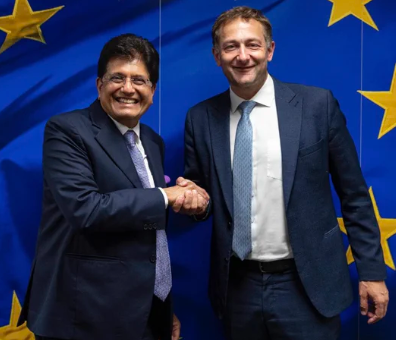
Pic Credit: https://x.com/PiyushGoyal
The FTA is expected to reduce or eliminate tariffs on a broad range of goods, simplify trade procedures, and promote greater collaboration in sectors including manufacturing, textiles, pharmaceuticals, engineering goods, information technology, agriculture, food processing, and professional services. It is also anticipated to encourage higher levels of investment, strengthen supply chains, and improve the ease of doing business between the two countries.
Industry stakeholders believe the agreement will enhance the global competitiveness of Indian exporters by providing improved access to the UK market while opening new avenues for innovation, technology partnerships, and skills development. The agreement is also expected to support employment generation and contribute to India’s long-term export growth strategy.
The coming into force of the India-UK FTA marks a significant milestone in the strategic partnership between the two countries, reinforcing their shared commitment to fostering sustainable economic growth, expanding commercial ties, and promoting mutually beneficial trade in an evolving global economy.
15, Jul 2026
Fintech Fusion India 2026 Returns to Power India’s Financial Architecture for a Viksit Bharat 2047

BENGALURU, July 15: Fintech Fusion India (FFI) returns on Thursday, 23 July 2026, for a single, concentrated day themed Building India’s Financial Architecture for 2047. Bringing together policymakers, regulators, banks, global institutions, investors and fintech innovators, the event will serve as a collaborative platform to shape the next generation of financial infrastructure that will underpin India’s economic growth as it approaches its centenary.
The 2026 line-up brings regulatory authority and market leadership onto one stage. Some prominent speakers include Shri Kamlesh Chandra Varshney, Whole Time Member, SEBI; Shri R. Gandhi, former Deputy Governor, Reserve Bank of India; Debajyoti Ray Chaudhuri, MD & Director, National E-Governance Services Ltd (NeSL); Rajiv Gupta, President, PB Fintech; Sanmesh Kalyanpur, Director, Finternet; Tanya Naik, Head – Online & Omnichannel, Pine Labs; Anurag Saxena, VP Asia & Regional Office Head, Accion; Kalpana Ajayan, Regional Head – South Asia, Women’s World Banking; Devie Mohan, Founder, Burnmark; and leaders from Emerging Payments Association of Asia, UIDAI, GIFT City, IFSCA, India Blockchain Forum, Digitally, MSME Forum, ICICI, HDFC, Xflow, Sumsub, and many more.
Built on a “Boardroom, Not Ballroom” philosophy, FFI 2026 runs a business stage, supported by an Innovation Zone, invite-only CXO Roundtables, a CXO + Investor Lounge, VC Office Hours, a Startup Clinic and the Pitcher & Pitches arena. Frontier themes on the agenda span AI-led lending, tokenized economies, digital public infrastructure and cross-border fintech corridors. Discussions around agentic AI, Finternet, MSMEs are on the list.
At its core, FFI 2026 is built around the questions that will shape the next decade of financial services: Who will own the next layer of India’s digital financial rails? How can artificial intelligence evolve from experimentation to responsible, enterprise-wide deployment? What will it take to build scalable MSME credit infrastructure? Can tokenisation unlock new models of ownership, liquidity, and capital formation? And how can fintech innovation built in India become foundational infrastructure for global markets?
“2047 sounds distant, but the financial architecture India will run on then is being decided in rooms like this one, now. FFI 2026 exists to make sure the people writing policy, building products and deploying capital are making those decisions together, not in parallel,” said Suman Bhowmick, Co-Founder & CEO, Idea Simplified.
FFI 2026 takes place on Thursday, 23 July 2026, from 8 am to 8 pm at Lalit Ashok in Bengaluru. Delegates passes are available; partnership and exhibitor opportunities are available at fintechfusionindia.com or via partnerships@fintechfusionindia.com.
15, Jul 2026
India Introduces New Services Index to Improve Economic Data Accuracy
July 15: India is set to strengthen its statistical framework with the introduction of a new Services Index aimed at bringing the country’s data systems in line with global standards. The initiative marks a significant step towards improving the measurement of the services sector, which has become a key driver of India’s economic growth.
The proposed index is designed to provide a more comprehensive and timely assessment of services sector performance by capturing trends across a wider range of industries. By adopting internationally accepted methodologies and best practices, the index will improve the reliability, consistency, and comparability of official statistics.
The enhanced statistical framework is expected to support evidence-based policymaking, facilitate more accurate economic analysis, and provide businesses, investors, and researchers with deeper insights into the performance of the services economy. It will also strengthen India’s ability to benchmark its economic data against global peers, improving transparency and reinforcing confidence in the country’s official statistics.
As the services sector continues to contribute a significant share of India’s Gross Domestic Product (GDP), the introduction of the new index is expected to play an important role in monitoring economic activity, identifying emerging trends, and supporting long-term development planning. The move reflects the government’s continued efforts to modernize the national statistical system and ensure that India’s economic data remains robust, credible, and aligned with evolving international standards.
15, Jul 2026
Indian Equity Markets Begin the Day on a Strong Note Amid Positive Global Sentiment
July 15: Indian equity markets opened higher on Wednesday, tracking gains in global equities and reflecting improved investor confidence. The benchmark indices witnessed a positive start as favorable international market cues, easing concerns over global economic uncertainties, and continued buying in heavyweight stocks boosted overall market sentiment.
Early trading saw broad-based participation across sectors, with financial services, information technology, automobiles, capital goods, and select consumer stocks contributing to the gains. Investors remained optimistic amid resilient domestic economic fundamentals and expectations of steady corporate earnings, while foreign market performance also provided support to the domestic indices.
Market participants are closely monitoring upcoming macroeconomic data, corporate earnings announcements, crude oil price movements, and global central bank commentary for further direction. Analysts believe that while global developments continue to influence near-term market trends, India’s strong economic outlook, healthy domestic demand, and ongoing investment activity remain supportive of the broader equity market.
Going forward, investors are expected to maintain a stock-specific approach while keeping a close watch on global market developments and domestic policy updates that could shape market sentiment in the coming sessions.
15, Jul 2026
Joyalukkas launches Old Gold Exchange Campaign with INR 150 extra per gram offer
Speaking on the campaign, Dr. Joy Alukkas, Chairman and Managing Director, Joyalukkas Group, said: “Gold has always been an integral part of every family’s legacy, and many customers hold jewellery that is no longer worn or suited to their current preferences. Through our Old Gold Exchange Campaign, we want to help customers maximise the value of their old gold by offering an additional ₹150 per gram over the prevailing exchange value. It is our way of ensuring they receive the best possible value while giving them the opportunity to choose from our latest collections.”


