


12, Aug 2026
Dubai’s luxury property market shows depth of investor confidence
Strength of demand goes beyond individual high value deals as developers record 244 off plan residential sales averaging AED14 million in July

Dubai, UAE, Aug 12: Dubai’s luxury residential sector is becoming an increasingly important indicator of investor confidence, with a market report today showing that buyers continued to make multi-million-dirham commitments throughout July.
Developers recorded 244 off-plan residential sales above AED5 million last month, with a combined value of AED3.42 billion. The transactions ranged from the AED5-10 million bracket through to the AED50-100 million range, showing that demand extends across a broad spectrum of the luxury market.
An analysis by Dubai luxury developer Keturah reveals there were 151 off-plan apartment sales amounting AED2.3 billion in July, while 93 villa transactions generated AED1.1 billion. The average value across last month’s residential off-plan deals was AED14 million.
While the AED5-10 million bracket accounted for the largest number of apartment transactions, with 81 sales worth AED552.6 million, a significant proportion of the total value came in the higher price brackets.
Data from DXBinteract shows there were 41 sales between AED10 million and AED20 million worth AED593.6 million, while a further 24 transactions between AED20 million and AED50 million generated AED708.5 million.
“Dubai’s luxury market is demonstrating a depth of demand that goes beyond individual high-value transactions,” said Talal M. Al Gaddah, CEO and Founder of the Keturah luxury brand.
“Investors are continuing to commit substantial capital to Dubai residential property because they see that the city’s long-term fundamentals, international appeal and investment proposition remains strong.”
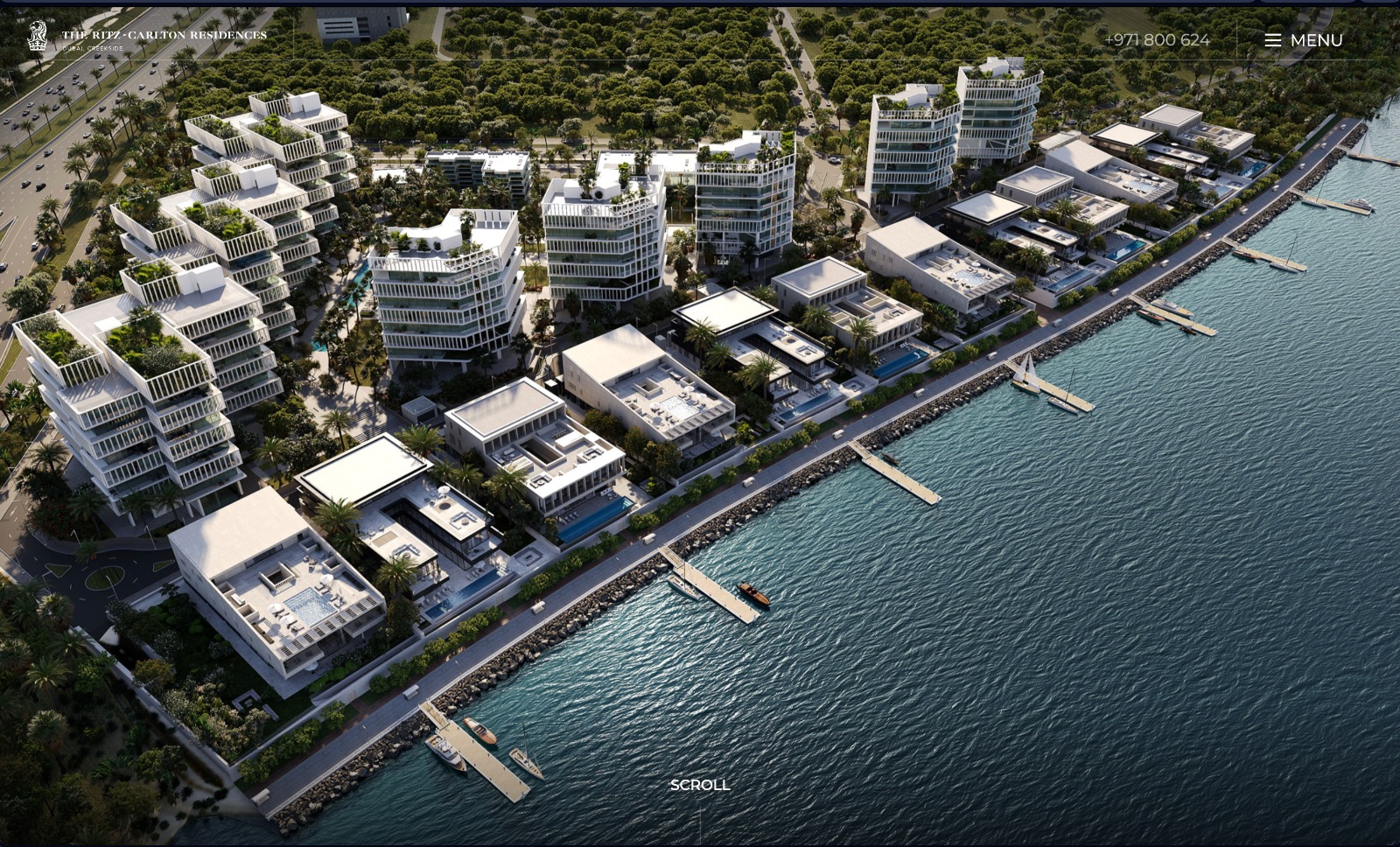
Keturah currently has two luxury communities under development in Dubai: Keturah Reserve, the AED5.7 billion bio-living community in Mohammed Bin Rashid City’s District 7, and the Ritz-Carlton Residences at Keturah Resort on the shores of Dubai Creek, adjacent to the Ras Al Khor Wildlife Sanctuary.
Off plan apartment sales by developers last month included four transactions in the AED50-100 million bracket at an average value of AED69.9 million, as well as one of AED166 million.
Villa demand showed a similar pattern, with 60 transactions in the AED5-10 million amounting to AED387.4 million, while 22 sales between AED10 million and AED20 million generated AED317.2 million. Ten further villa transactions in the AED20-50 million range were worth AED334.1 million, while another villa sold for AED 72.7M.
The latest figures add to a sustained trend. Over the past three months, Dubai developers have recorded 942 off-plan residential sales above AED5 million with a combined value of AED12.11 billion, at an average of AED12.9 million per property.
The luxury residential segment is also supported by demand for completed homes. In July, Dubai developers recorded a further 43 ready property transactions above AED5 million worth AED552.8 million, at an average value of AED12.9 million.
- 0
- By Neel Achary

12, Aug 2026
Emami Agrotech launches Emami Health & Tasty WeMe, Commits Rs 750Cr; Plans to build into a Rs 1000 Cr snacking brand

Kolkata, Aug 12: Emami Agrotech Limited (EAL), the branded foods business of the Rs. 30,000 crore Emami Group, today announced its strategic entry into India’s rapidly expanding packaged snacking market with the launch of WeMe, a digital-first snacking brand designed for the evolving lifestyles and consumption habits of modern Indian consumers.
The launch marks a significant step in Emami Agrotech’s strategy to diversify beyond edible oils and pantry staples under its Emami Healthy & Tasty portfolio, creating a dedicated platform focused on innovation-led snacking.
India’s snacking landscape is undergoing a structural transformation. While taste and affordability continue to remain fundamental, today’s consumers, particularly Gen Z and Millennials, are redefining snacking through the lenses of convenience, indulgence, quality and authenticity. These younger consumer cohorts, are increasingly embracing all-day snacking across work, travel, entertainment and social occasions, while quick commerce is accelerating product discovery and expanding nationwide access.
Introducing WeMe: A New-Age Snacking Platform
Built around the philosophy “Togetherness Always Tastes Better,” WeMe launches with three product categories:
· Choco Hazelnut Spread, including India’s first portable chiplet-format offering.
· Jhuri Aloo Bhaja, bringing a popular Eastern Indian favourite into the organised packaged foods segment.
· Potato Chips in flavours tailored to evolving consumer tastes.
Speaking on the launch, Mr. Aditya Vardhan Agarwal, Director, Emami Group said, ” At Emami Agrotech, we have always believed food is about more than satisfying hunger—it is about earning consumer trust through quality, relevance and innovation. Having built a strong foods portfolio under Healthy & Tasty, WeMe marks our strategic entry into one of India’s most exciting food categories. Backed by a planned investment of nearly Rs 750 crore, we aim to build WeMe into a Rs 1,000 crore brand over the next 5-7 years while generating over 1,000 direct and nearly 3,000 indirect employment opportunities in sales and other support services. This is an important milestone in our vision of building Emami Agrotech into a comprehensive food company.”
Mr. Manish Goenka, Director, Emami Group added, ” As consumers increasingly seek products that combine taste, convenience and innovation, WeMe reflects our confidence in the long-term growth of India’s snacking market. Backed by our trusted food credentials and deep understanding of Indian consumers, we see WeMe as a long-term growth platform of our foods business with a broader pipeline of more products planned across multiple snacking categories in its innovation journey.”
Digital First. National from Day One.
WeMe has been conceived as a digital-first brand, leveraging creator-led content, social media and quick commerce to engage younger consumers. As part of its digital-first rollout, WeMe will be introduced across quick-commerce channels, enabling immediate access for consumers across the nation in major cities like Kolkata, Delhi NCR, Mumbai, Bengaluru and Ahmedabad. While quick commerce will spearhead the initial rollout, WeMe will simultaneously begin its general trade expansion from Kolkata before progressively entering other markets.
“The new generation doesn’t simply buy products—they discover them through conversations, creators and communities. That’s why WeMe has been built as a digital-first brand where content, commerce and consumer engagement come together seamlessly. This distribution strategy will enable us to make WeMe instantly accessible across key cities while allowing us to continuously learn from consumers, innovate faster and respond to emerging trends. We want WeMe to become much more than a snacking brand—we want it to become part of the everyday moments that bring people together,” said Ms. Vidula Agarwal, Director, Emami Group.
The Road Ahead
Emami Agrotech expects WeMe to generate approximately Rs 1,000 crore in revenue within the next 5-7 years, supported by continued investments in product innovation, brand building, digital capabilities and distribution. The Company sees WeMe as its next major growth engine in foods, combining manufacturing strength, consumer insight and digital agility to participate in India’s evolving snacking landscape.
12, Aug 2026
Hawai’i High School Students Take Ideas to Launch at Hawai‘i Pacific University Entrepreneurship Bootcamp

HONOLULU | Aug 12: Nearly 60 Hawaiʻi high schoolers walked into HPU’s Sunset Ballroom at Aloha Tower Marketplace on July 27 with an idea and a laptop. By Friday afternoon, they had honed their “why,” their target market, and solution, walking out with a nascent venture and live websites they had built themselves.
The free HPU x Blue Startups Entrepreneurship Bootcamp, held July 27 to 31 and sponsored by HPU’s John F. Scarpa Entrepreneurial Pathway, brought together rising juniors and seniors from 18 public and private schools across the islands for five days of building. Working solo or in groups of two or three, students launched 40 ventures, each one identifying a business opportunity, designing a brand, building and publishing a live website (with AI tools), producing marketing assets and presenting the result to a panel of founders, mentors, and investors.
“What we saw this week is exactly why the Scarpa Entrepreneurial Pathway exists at HPU,” said HPU College of Business Dean Amy Nguyen-Chyung, Ph.D., lead of the Pathway. “At the start of the week, the students formed an initial idea of their business opportunity and by Friday, they had built real websites identifying the problem and solutions and stood up in front of founders and investors to defend their work. This group went further by envisioning their target customer’s key characteristics with an empathy map and turning those target customers into a virtual business advisor using AI. I am so impressed by their work and presentation skills. Investing in developing youth entrepreneurship and leadership skills is a worthwhile way in which HPU and the Scarpa Pathway can engage with the community.”
The Bootcamp was led by Alexi Drouin, an entrepreneur, HPU adjunct professor and academic director at Blue Startups, Hawaiʻi’s premier tech accelerator and a program ranked among the top 20 in the country by TechCrunch.
Each day carried a theme and ended with something shipped. Monday was Find Your Opportunity, when students landed on an idea and drafted a name, a logo and a one-liner. Tuesday was Design Your Solution, when they pressure-tested those ideas against AI-simulated customers and toured HPU’s waterfront campus and Makerspace. Wednesday was Build Your Website, a full day of production that ended with every student holding a public URL. Thursday was Launch Your Idea, devoted to social posts, short videos and slide decks. Friday was Present Your Business.
Guest speakers came from across the local startup community and, in one case, from the students’ own generation. Coen Cadinha of Keiki Rise and Big Boy Sweets opened the week as a peer-age founder.
Nalukai Foundation Board President Allen Murabayashi presented on Tuesday about the importance of talking to customers. Giovanna (“Gigi”) Scholbi (HPU ’25) of Cheeki Swimwear spoke about writing down goals and going after them while also giving tips about sourcing sustainable materials.
Miki Hardisty of Olelo Intelligence spoke Wednesday about building an AI company in Hawaiʻi and led the students in an exercise of using agentic AI.
ʻIolani School’s Gabriel Yanagihara spoke Thursday to talk about AI in the classroom and online. On multiple days, Nguyen-Chyung introduced additional examples to drive home the importance of problem identification, product market fit and writing down key components of the one’s plan using a simple canvas.
On Friday, presentation day filled the room with students, parents, teachers and HPU staff. HPU entrepreneurial coordinator and small business management instructor Richard Kebo listed the three key requirements needed before making a sale (business registration, bank account and general excise tax number). Individuals and teams took the front of the room in turn, speaking for 60 seconds, showcasing their business websites and presenting the overarching goals of their companies. After every four presentations, the expert panel offered feedback to the groups.
The panel included Blue Startups Program Director David Holt, Liya Safina of Hawaii Angels and Google, Murabayashi, and Nguyen-Chyung. It was not a pitch competition. Nobody won, and that was deliberate.
The companies took direct aim at problems the students’ families live with.
NāUlu, founded by Hanae Kauanoe and Sophia Tung will be a nonprofit that supplies basic phones with prepaid minutes and preloaded apps to unhoused families and people at risk of homelessness, with GPS directions to shelters and food sources and tools for finding work. Their premise is that staying reachable is often what separates crisis from stability.
May Shiraishi’s Ventur aims to connect Hawai’i students with internships and volunteer roles. Her website has now aggregated over a hundred available roles.
Emily Fukui and Kirah Wong built Brain Chain to address Hawaiʻi’s brain drain. Their job board aims to pair Hawaiʻi-born college graduates with local specialized roles that include subsidized housing. The founders said they talked to graduates stuck on the continental U.S. who wanted to come home and could not make the rent math work.
Trevor Chvosta’s Local Produce lets residents order specific crops directly from island farmers after harvest and pick them up at neighborhood drop points on Mondays and Thursdays, with leftover food routed to food banks. Lariah Trevenen-Ferreira built Hoʻihoʻi i ka ʻĀina as a portal connecting people to land and marine restoration projects grounded in Native Hawaiian practice.
A fan of Pokemon-Go, Kiva Ebert founded Malama Go, a real-world interactive game that incentivizes tourists to visit sites and learn about Hawaiian culture, earning points that could be redeemed with local merchants or for cultural figurines.
Aware that teens in hospitals have few options to keep them occupied, Thalia Grace Hoapili aims to stock hospitals with free Mālama Crafteen Kits for patients ages 12 to 19, pre-cut, so teenagers can start creating from a hospital bed.
Others tackled dementia care, teen mental health, permitting for first-time renovators and senior isolation.
Forty-five students who completed the full week, published their deliverables and finished both surveys will earn an HPU x Blue Academy Certificate of Completion, shareable on LinkedIn.
12, Aug 2026
Lufthansa Group Launches Free High-Speed Internet from Starlink
Frankfurt, Aug 12 – It’s the beginning of a new era: Next week, a Lufthansa Group aircraft will take off for the first time equipped with the fastest in-flight internet connection for passengers currently available. A Lufthansa Airbus A320neo will be the first to offer the new product. Guests will experience an internet bandwidth above the clouds that, in many cases, is faster than their internet connection at home or in the office.

The leading provider Starlink is collaborating with the Lufthansa Group to equip a total of 850 aircraft across all of its airlines. The system is supported by low-earth satellite technology and enables watching video content, cloud-based work, and other high-speed applications during the flight. This makes Lufthansa Group the largest airline group in Europe to equip its fleet with this modern high-speed internet product. With its ambitious project timeline, the Lufthansa Group is moving quickly to bring the new technology to guests.
The project is part of the Lufthansa Group’s extensive investments in new aircraft as well as product and service innovations across the entire travel chain. The group-wide rollout of the new high-speed internet service is intended to provide all passengers with a consistently high-quality online experience on board.
“I am excited to announce the launch of the new Lufthansa Group Wi-Fi on board our Group aircraft. With it, we’re making high-speed internet an integral part of the travel experience – across all travel classes and on all Lufthansa Group airlines: That is how we understand premium. By 2029, all of the Group’s approximately 850 aircraft will be equipped with the technology. Our product promise doesn’t end with the seats or the menu – today, connectivity is also an integral part of a truly outstanding onboard experience”, said Dieter Vranckx, Chief Commercial Officer of the Lufthansa Group.
In addition to Lufthansa, the other Group airlines SWISS, Austrian Airlines, Brussels Airlines, ITA Airways, Edelweiss, Discover Airlines, Air Dolomiti, Lufthansa City Airlines, and Eurowings are currently preparing to roll out the new technology.
The new Wi-Fi that is being installed will allow guests to browse the web and includes terms of use that all passengers must agree to. These were developed based on passenger surveys and thus reflect the wishes of the majority of Lufthansa Group customers. Among other things, passengers are required to always wear headphones when playing audio and video content, to refrain from making voice and video calls, and not to broadcast live streams from aboard the aircraft. The Lufthansa Group Wi-Fi portal is sponsored by Mastercard, which has already been a partner of the previous FlyNet.
The new internet service will be free of charge for all Miles & More customers and Travel ID users – across all travel classes.
Lufthansa’s inaugural flight featuring the new Lufthansa Group Wi-Fi powered by Starlink will take place on August 19.
12, Aug 2026
SKF India Limited announces financial results for Q1 FY2026-27
Pune, Aug 12: SKF India Limited , India’s technology and solutions provider of bearings and units, condition monitoring, and services, announced its financial results for the quarter ended June 30, 2026.
During this quarter, SKF India Limited reported revenue from operations of Rs. 9,707.7 million with profit before tax at Rs. 869.2 million, showcasing the company’s steady execution and resilience in a dynamic business environment.
FINANCIAL HIGHLIGHTS (Q1 FY 26-27)
|
Particulars (Rs. mn) |
Q1 FY27 |
Q1 FY26 |
YoY % |
Q4 FY26 |
QoQ % |
|
Revenue from Operations |
9,707.7 |
8,206.3 |
18.3% |
9,457.2 |
2.6% |
|
Profit before Tax |
869.2 |
970.9 |
-10.5% |
899.7 |
-3.4% |
|
PBT Margin (%) |
9.0% |
11.8% |
-288 bps |
9.5% |
-56 bps |
|
Profit after Tax |
619.2 |
718.6 |
-13.8% |
1,189.6 |
-47.9% |
|
PAT Margin (%) |
6.4% |
8.8% |
-238 bps |
12.6% |
-620 bps |
Mukund Vasudevan, MD, SKF India (Industrial) Limited and President – India, Southeast Asia and Middle East, said,
“FY 2026-27 begins from a position of strength. In our 3rd quarter as a focused, independent business, SKF India (Industrial) delivered 18.3% year-on-year Sales growth, while maintaining a healthy 9% PBT (in spite of headwinds from currency and demerger-related expenses). Growth was strong across most sectors including Wind, General Machinery and Agriculture (Tractors). We attribute this performance to staying genuinely close to our customers and maintaining a strong operational discipline.
India’s manufacturing and infrastructure sectors are still expanding and our performance is validation of our three-prongedstrategy – customer centricity, localization and innovation. At the core of everything we do is a simple goal: help our customers achieve more, with less friction.”
STRATEGIC OUTLOOK
As India’s industrial and economic landscape evolves, so does the company’s approach, with a growing emphasis on sustainable practices, manufacturing precision, and smarter, digitally-enabled operations. This shift is helping the company stay closely aligned with the needs of industries across India and Southeast Asia as they navigate their own periods of rapid change.
12, Aug 2026
InvoiceCloud Appoints Sharon Joy as India HR Head to Drive Talent, Culture, and GCC Growth

Aug 12: InvoiceCloud, a leading provider of digital billing and payment solutions, today announced the appointment of Sharon Joy as Head of Human Resources, India. Based in Hyderabad, Sharon will lead the people mandate for InvoiceCloud‘s Global Capability Centre (GCC), shaping the talent, leadership, culture, and employee experience agenda as the company enters its next phase of expansion in the country.
In her new role, Sharon will partner with Biju Davis, Senior Vice President and India Site Leader, and Jessi Marcoff, Chief People Officer at InvoiceCloud‘s Boston headquarters, to build an HR strategy that supports the company’s expanding innovation mandate. Her appointment comes as InvoiceCloud scales its Hyderabad GCC into a high-impact centre for technology, product development, and operational excellence.
Biju Davis, who has been leading InvoiceCloud‘s India site, sees the appointment as central to the company’s next phase, “Building a high-performing, values-led organisation is at the heart of where we are headed. Sharon brings the strategic maturity, global exposure, and people-first leadership we need, her experience across complex, technology-driven organisations will be invaluable as we strengthen the capabilities that power our innovation.”
Sharon brings over two decades of experience leading people strategy across technology, consulting, financial services, and product-led organisations. She joins InvoiceCloud from Centime Inc., a US-based fintech company, where she served as Senior Director of Human Resources for over six years, overseeing the HR function across India and the United States. Her earlier roles at Cognizant, Optum Global Solutions, Virtusa, DXC Technology, and Tech Mahindra built her expertise across talent strategy, employee lifecycle management, diversity and inclusion, HR operations, leadership development, and organisational transformation, working with cross-functional teams across India, the United States, Ireland, and the Philippines.
Jessi Marcoff, Chief People Officer, InvoiceCloud, said, “India is central to our future, and the people’s experience we build here matters enormously, not just for our teams in Hyderabad but for the company globally. Sharon brings exactly the kind of people-first leadership we need at this stage of our growth. She understands how to build culture intentionally, and that’s what will make the difference as we scale.”
Reflecting on her new role, Sharon said, “I am excited to be part of InvoiceCloud‘s growth journey and to help shape the Hyderabad GCC into a centre of real depth and impact. I look forward to partnering with Biju, Jessi, and the team to build a culture of trust, teamwork, and customer focus.”
Sharon‘s appointment further strengthens InvoiceCloud‘s India leadership team and reinforces its commitment to building a people-first, innovation-led organisation, while supporting continued hiring across product, engineering, AI, and specialised technology roles in India.
12, Aug 2026
Azul Names Kenny Johnston Chief Product Officer
Product leader with deep agentic AI and enterprise platform experience joins to accelerate Azul’s AI-first Java roadmap across performance, security, cost and productivity

SINGAPORE — Aug 12 — Azul, the trusted leader in enterprise Java for today’s AI -first world, today announced the appointment of Kenny Johnston as chief product officer (CPO). Johnston brings deep experience building agentic, AI-powered enterprise DevOps and observability tools and platforms and will lead product strategy for Azul’s AI-first Java platform — engineered to meet the performance, security and cost demands of running enterprise AI workloads at scale.
Most recently, Johnston served as chief product and technology officer at Luciq, an agentic AI observability platform built for enterprise mobile app teams, where he led global product, design, customer success and engineering functions delivering agentic capabilities such as SmartResolve and Agentic Mode. Earlier in his career, Johnston was senior director of product management at GitLab, where he led product management for all operations and infrastructure products including GitLab CI/CD, Infrastructure as Code, Package & Release Management as well as Observability and Incident Response. At Rackspace, he served as director of product management for Rackspace Private Cloud, more than tripling annual revenue and earning recognition as HPE’s Global Service Provider Partner of the Year.
As CPO at Azul, Johnston will lead product strategy and execution across Azul’s AI-first Java platform — Azul Prime, Azul Core, Azul Intelligence Cloud, Azul Payara Micro and Azul Payara Server, the latter two added to the Azul platform through Azul’s December 2025 acquisition of Payara. His mandate is to advance the roadmap around the demands AI is placing on every enterprise Java estate: cost, performance, security, modernization and productivity.
“Java is the backbone of the world’s most critical enterprise systems, and AI is amplifying the pressure on all of it,” said Johnston. “The opportunity is to bring an AI-first, DevOps-centric vision to how Java is developed, deployed, secured and monitored in the enterprise. I’ve spent my career helping world-class teams accelerate through transformative moments like this, and I’m excited to build on the strong foundation Azul has already established.”
“Kenny’s track record of scaling enterprise product organizations to build products that address business-critical use cases makes him exactly the right product leader as AI reshapes the performance, security and cost demands of every enterprise Java estate,” said Scott Sellers, co-founder and CEO. “Under his leadership, we’re focused on continuing to build out our AI-first Java platform and helping drive Azul into its next phase of growth.”
FAQs
What is an AI-first Java platform?
An AI-first Java platform is a Java runtime and application platform built and optimized to support AI-driven, agentic software development, with the performance, observability and security enterprises need to run AI-driven workloads at scale. Azul’s AI-first Java platform spans Azul Prime, Azul Core, Intelligence Cloud, Payara Micro and Payara Server, added through its December 2025 acquisition of Payara.
Why do enterprises use Java for AI applications?
Java’s maturity, portability and performance make it a common foundation for the enterprise systems that AI capabilities access and integrate with, and modern JVMs can be tuned to meet the low-latency, high-throughput demands of AI workloads. Azul’s AI-first Java platform is designed to deliver that performance, strengthen security and help reduce the cloud costs AI workloads add, giving enterprises a meaningful advantage as they bring agentic AI into mission-critical Java environments.
Why does Java performance matter for AI applications?
The enterprise systems AI depends on are mostly written in Java, and AI is putting new pressure on them. Agentic workflows call Java services at far higher volume, and those services increasingly sit in the critical path of AI interactions. Throughput, garbage collection pauses, warm-up and memory overhead in the JVM turn into slow or inconsistent performance and response times, and the usual fix is to add capacity. Azul Prime is built to attack these bottlenecks in the runtime instead, giving enterprises a faster, more predictable Java runtime for AI-driven workloads.
What will Azul’s product roadmap focus on?
Azul’s product roadmap focuses on alleviating the pressures AI places on enterprise Java: absorbing AI workload demand and optimizing cloud cost (Azul Prime), narrowing the AI-era security and patch-velocity gap (Azul Core), enabling AI-driven modernization (Azul Intelligence Cloud, Azul Payara), and giving AI-modernized workloads the scalability, security and automation they need (all Azul products).
11, Aug 2026
ISPP and Cheistha Kochhar Foundation Celebrate Behavioural Innovation at the Inaugural Cheistha Kochhar Nudge Awards 2026
New Delhi, Aug 11: The Indian School of Public Policy, in partnership with the Cheistha Kochhar Foundation, hosted the inaugural Cheistha Kochhar Nudge Awards 2026. The event brought together policymakers, behavioural scientists, academics, social entrepreneurs, and public leaders to celebrate innovative applications of behavioural science that address real-world public policy and development challenges across India.
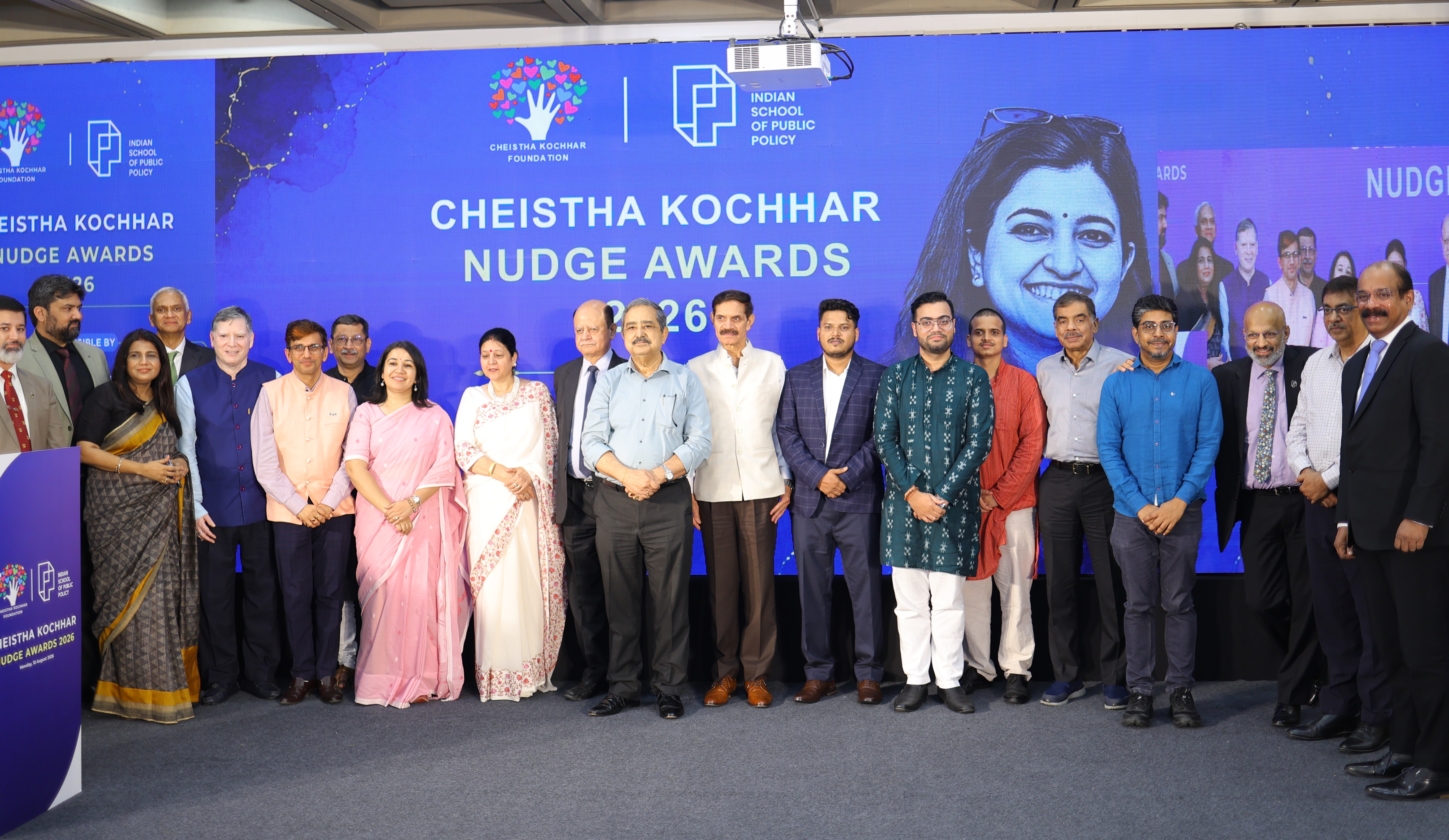
The Awards honour the life and legacy of Cheistha Kochhar, a dedicated public policy professional committed to using behavioural insights and evidence-based policymaking to drive change. Through this annual initiative, ISPP and the Cheistha Kochhar Foundation seek to recognise and encourage scalable, practical behavioural nudges, interventions rooted in psychology and economics, that simplify decision-making, improve citizen outcomes, and preserve individual choice.
The ceremony was graced by Dr. Ashok Lahiri, Hon’ble Vice Chairperson, NITI Aayog, as the Chief Guest, alongside Guests of Honour Gen. Dalbir Singh Suhag (Retd.), former Chief of the Army Staff and former High Commissioner of India to Seychelles, and Prof. Dr. Pulkit Khanna, Dean, Jindal Institute of Behavioural Sciences.
Reflecting on the role of behavioural science in policymaking, Dr. Ashok Lahiri said,
“India’s next frontier in public policy is not merely designing better schemes, but designing schemes around how citizens actually behave. Nudges can help bridge this gap by subtly changing the way choices are presented without taking away individual freedom.” He highlighted the potential of behavioural audits, field experiments and digital public infrastructure to test, measure and rapidly scale interventions that work, making governance more citizen-centric, outcome-oriented and fiscally efficient.
Speaking about Cheistha’s legacy, Gen. Dalbir Singh Suhag Retd. remembered her as
“God’s child, a wonder child and an angel,” whose energy, warmth and intellect left an impression wherever she studied and worked. “What she achieved in just 33 years, most of us cannot achieve in a lifetime. She has left a legacy behind,” he said, adding that while Cheistha may not be physically present, “she is within our hearts.”
Emphasising the human dimension of behavioural science, Prof. Dr. Pulkit Khanna said,
“Before you try to change behaviour, please try a little more to understand it.” She observed that a good nudge is “not necessarily the most clever one or the smartest one, but one that is grounded as much in empathy as in evidence.” Looking ahead, she said the future of behavioural science lies in bringing together “evidence, empathy, ethics and impact,” while remembering that “behind every data point there is a human being.”
The evening opened with welcome remarks by Luis Miranda, Chairperson and Co-Founder of ISPP, followed by a special address by Lt. Gen. Dr. S. P. Kochhar, Director General, Cellular Operators Association of India , reflecting on Cheistha’s life, values, and vision.
The Future of Nudging
A panel discussion titled “The Future of Nudging: Behavioural Economics and Public Impact in India”, moderated by Dr. Sujoy Chakravarty, Professor of Economics, JNU, featured Biju Dominic, Chief Evangelist, Fractal Analytics & Chairperson, FinalMile Consulting; Ruby Sinha, Founder, sheatwork.com & President, BRICS CCI Women’s Vertical; and Rama Shankar Pandey, CEO, Work With Dignity Foundation.
The panel explored the expanding role of behavioural architecture in modernising service delivery, citizen engagement, and administrative efficiency in India.
Celebrating the Award Winners
The Cheistha Kochhar Nudge Awards 2026 recognised three impactful initiatives, presenting each with a cash prize of ₹10 lakh to support their continued innovation:
- ThinkZone, represented by Binayak Acharya: PRAKASHAK: A government-embedded digital parental engagement programme in Odisha that delivers bite-sized, curriculum-aligned micro-learning activities to rural, low-income parents via WhatsApp, SMS, and automated calls to boost foundational literacy and numeracy.
- NammaKasa, represented by Jyothish V.M.: A frictionless, public civic-tech platform in Bengaluru that changes the default of civic reporting from private to public accountability, enabling citizens to report uncollected waste in under 30 seconds without downloading an app or creating an account.
- Project Mumbai, represented by Shishir Joshi: Plastic Recyclothon: A large-scale community recycling movement across Maharashtra that bridges the intent-to-action gap by establishing clear, scheduled plastic collection drives and turning recycled waste into public amenities such as park benches and bins.
Driving the Future of Policy
By spotlighting evidence-backed, citizen-centric innovations, the Cheistha Kochhar Nudge Awards aim to serve as a catalyst for mainstreaming behavioural science in governance, public policy, and social development across the nation, carrying forward Cheistha Kochhar’s legacy of thoughtful, evidence-based public service.
11, Aug 2026
Sense International India Opens Hyderabad’s First Dedicated Centre for Persons with Deafblindness and Multiple Disabilities
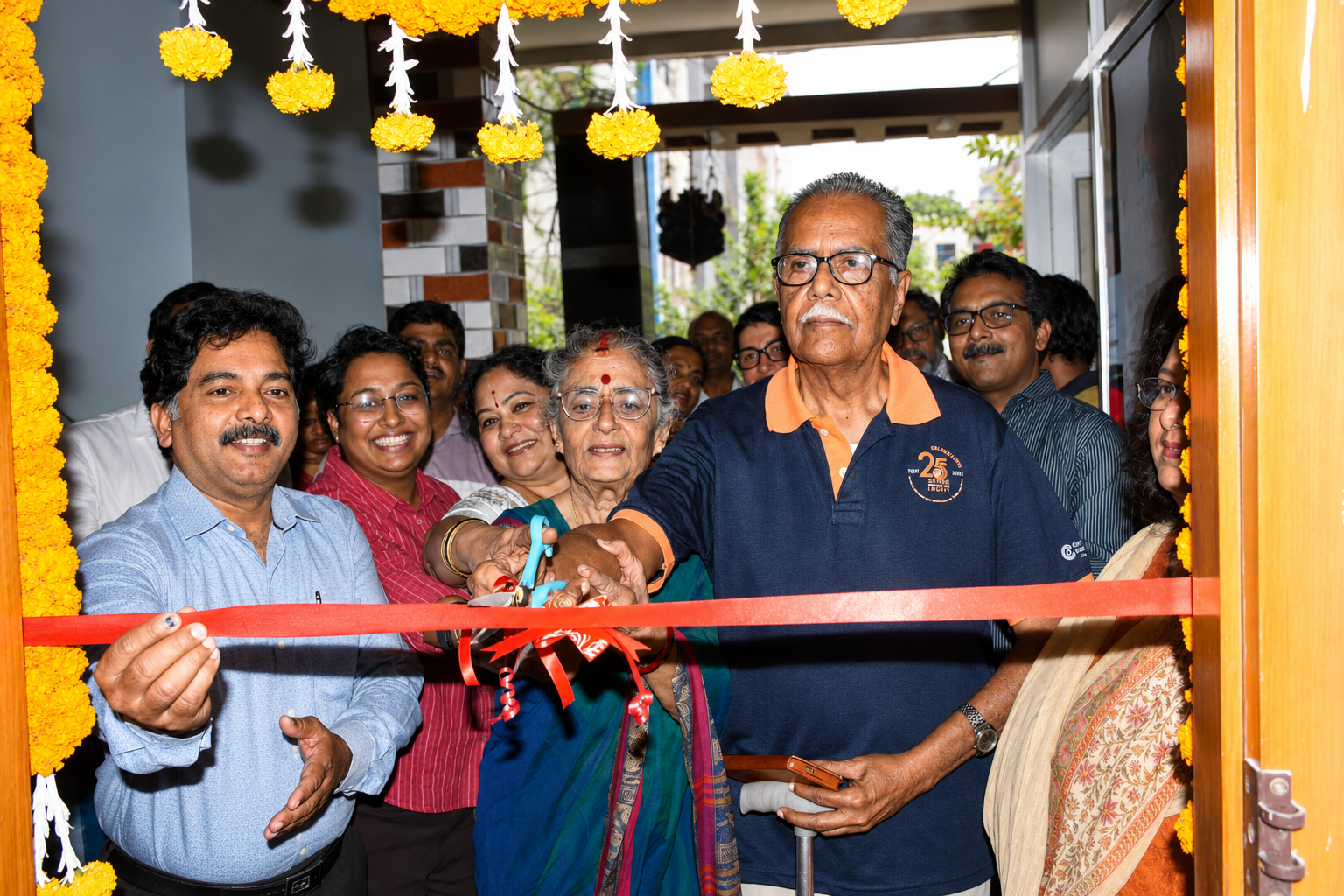
Hyderabad, Aug 11: Sense International India, the country’s only national organisation exclusively supporting persons with deafblindness and multiple disabilities, today inaugurated ‘Sparsh, Centre for Persons with Deafblindness and Multiple Disabilities’ in Hyderabad. Supported by the National Payments Corporation of India (NPCI), Sparsh is Hyderabad’s first dedicated centre offering comprehensive services for children and adults with deafblindness and multiple disabilities.
The inauguration marks a significant milestone in Sense International India’s journey of expanding access to specialised care for one of India’s most underserved communities. Sparsh is the Sense International India’s seventh direct centre in the country, adding to a growing infrastructure of dedicated facilities that works in tandem with the organisation’s established centres in partnership with 72 organisations across 25 states, together reaching more than 84,000 children and adults with deafblindness and multiple disabilities. The two models are complementary, with Sense International India’s direct centres enabling comprehensive, integrated service delivery in regions where specialised deafblindness services remain scarce, while the partner network continues to extend the organisation’s reach across the country.
The new centre will provide a range of services under one roof, including screening and assessment, early intervention, special education, home-based intervention, vision and speech therapy, physiotherapy, occupational therapy, orientation and mobility training, and counselling for parents and caregivers. By bringing these services together, the centre aims to help children and adults with deafblindness and multiple disabilities develop communication, mobility, learning and independent living skills while reducing the need for families to travel to multiple locations for support.
Speaking on the occasion, Uttam Kumar, CEO, Sense International India, said, “The inauguration of Sparsh marks an important milestone in Sense India’s journey to expand access to specialised services for persons with deafblindness and multiple disabilities across the country. For nearly three decades, our network of 72 partner organisations across 25 states has enabled us to reach thousands of families across the country. Sparsh, our seventh direct centre, complements this strong partner network by providing comprehensive, integrated services in Hyderabad, ensuring that individuals with deafblindness and multiple disabilities receive specialised support closer to where they live. We are grateful to NPCI for their support in making this possible, and remain committed to ensuring that every individual with deafblindness has the opportunity to communicate, learn, live independently, and realise their full potential.”
The inauguration ceremony brought together representatives from the disability sector, government, corporate organisations, special educators, volunteers, and families of persons with deafblindness and multiple disabilities. Guests toured the newly inaugurated facility and interacted with beneficiaries, caregivers, and professionals, reaffirming a shared commitment to strengthening inclusive services and expanding access to quality care across the region.
With the opening of Sparsh, Sense India is expanding access to specialised services, ensuring that more children and adults with deafblindness and multiple disabilities can receive timely support closer to home.
11, Aug 2026
MRF Reports Q1 Results as Strong Vehicle Demand Drives Operations
Chennai, Aug 11: MRF Limited has reported a consolidated total income of ₹8,610.56 crore for the quarter ended June 30, 2026, compared with ₹7,804.23 crore recorded in the corresponding quarter ended June 30, 2025.
The company’s consolidated profit before tax stood at ₹649.69 crore in the first quarter of FY2026-27, compared with ₹671.83 crore in the same quarter of the previous financial year.
Provision for tax for the quarter stood at ₹154.34 crore. After accounting for tax, MRF’s consolidated net profit for the quarter ended June 30, 2026, stood at ₹495.35 crore, compared with ₹501.82 crore in the corresponding quarter of FY2025-26.
Operations
MRF delivered a resilient operating performance during the first quarter, supported by healthy demand for its products. Demand from original equipment (OE) manufacturers remained buoyant, with vehicle sales across segments witnessing strong growth.
Replacement sales also remained healthy, supported by robust demand during the quarter. However, higher input costs continued to put pressure on profitability.
During the quarter, the company implemented price increases and undertook cost management measures, which helped partially offset the impact of rising costs. Raw material prices continued to remain firm amid the ongoing conflict in the Middle East.
MRF expects the impact of elevated input costs on margins to continue and will continue to focus on pricing and cost management measures to navigate the prevailing cost environment.


