10, Jul 2026
Delhi Hosts Global Environment Workshop to Strengthen Sustainable Development Efforts
New Delhi, July 10: Delhi Chief Minister Rekha Gupta on Friday inaugurated a World Bank-supported workshop aimed at promoting environmental sustainability and strengthening collaboration on climate action and sustainable urban development.
The workshop brought together policymakers, government officials, environmental experts, and development partners to exchange ideas and explore practical solutions to pressing environmental challenges. Discussions focused on improving environmental governance, enhancing climate resilience, and encouraging sustainable development practices.
Addressing the gathering, the Chief Minister highlighted the importance of partnerships and knowledge sharing in tackling environmental issues. She stressed the need for innovative approaches to protect natural resources, improve urban ecosystems, and build a cleaner and more resilient future.
The World Bank-supported initiative is designed to strengthen institutional capacity and encourage the adoption of global best practices in environmental management. The workshop also serves as a platform for collaboration on policies and projects that promote long-term ecological sustainability.
The initiative reflects the continued emphasis on integrating sustainable development into urban planning while fostering cooperation between governments, experts, and development agencies.
- 0
- By Neel Achary

10, Jul 2026
Assam Boosts Tourism with New Initiatives
Guwahati, July 10: Assam has outlined an ambitious strategy to transform its tourism sector, with the state government announcing a host of measures in the Budget to improve visitor infrastructure and elevate the state’s profile as a premier travel destination.
Among the key proposals are the expansion of homestays across the state and the development of luxury hotels through public and private investment. The initiatives are aimed at enhancing tourist experiences while creating sustainable livelihood opportunities for local communities.
The government believes that strengthening tourism infrastructure and promoting Assam’s natural beauty, wildlife, cultural heritage, and unique traditions will help attract more domestic and international visitors. Community-led homestays are expected to play a vital role in showcasing authentic local experiences while supporting rural economies.
The latest measures reflect the state’s long-term vision of making tourism a key driver of economic growth, employment, and investment. By improving hospitality facilities and encouraging greater participation from the private sector, Assam hopes to emerge as one of the country’s most sought-after travel destinations.
10, Jul 2026
India Moves Closer to an AI-Ready Digital Future, Report Highlights
July 10: India is making significant progress toward building an artificial intelligence (AI)-ready digital ecosystem, according to a new report highlighting the country’s growing technology capabilities, digital infrastructure, and innovation landscape.
The report notes that India’s rapid adoption of digital services, expansion of data networks, and increasing focus on AI research and skills development are creating a strong foundation for the next phase of technological growth.
With investments in digital infrastructure, emerging technologies, and workforce training, India is positioning itself as a key player in the global AI transformation. Businesses, startups, and public institutions are increasingly adopting AI-driven solutions to improve efficiency, enhance services, and address complex challenges across sectors.
The report also emphasizes the importance of responsible AI development, including stronger digital skills, data security, and ethical technology practices, to ensure that the benefits of AI reach communities across the country.
As India continues to strengthen its digital capabilities, the country is moving toward a future where artificial intelligence plays a central role in economic growth, innovation, and social development.
10, Jul 2026
From Farm Waste to Flight Fuel: India’s Crop Residue Could Power a Cleaner Aviation Future
July 10: India’s mountains of agricultural residue, once seen as a major environmental challenge, could become a valuable resource for producing sustainable jet fuel, according to a new report.
Every year, large quantities of crop waste are generated across the country, much of which is burned after harvest, contributing to air pollution. New technologies are now showing that this biomass can be converted into sustainable aviation fuel (SAF), offering a cleaner alternative for the aviation industry.
The transformation of crop residue into jet fuel could create new opportunities for farmers, reduce waste burning, and help India move toward its clean energy goals. With advances in biofuel technology and renewable energy, agricultural waste could play an important role in building a more sustainable future for air travel.
Experts believe that turning farm leftovers into fuel could help India address two major challenges at the same time: managing agricultural waste and reducing carbon emissions from aviation.
10, Jul 2026
Mutual Fund Investments Gain Momentum with 26 pc Jump in Equity Inflows
July 10: Investors continued to show strong confidence in equity mutual funds, with inflows rising 26 per cent to Rs 28,973 crore in June, according to data released by the Association of Mutual Funds in India (AMFI).

The increase reflects growing participation from investors despite changing market conditions. Equity mutual funds have remained a preferred investment option for many individuals seeking long-term wealth creation through market-linked instruments.
The data showed continued interest across different categories of equity schemes, supported by regular investments through systematic investment plans (SIPs). The steady flow of funds highlights the growing acceptance of mutual funds among retail investors.
Industry experts said the rise in inflows indicates improved investor awareness and confidence in disciplined, long-term investing. Mutual funds have increasingly become an important avenue for households looking to participate in India’s capital markets.
The latest figures underline the expanding role of mutual funds in India’s financial landscape and the increasing involvement of individual investors in equity markets.
10, Jul 2026
India, Australia Sign Agreement to Strengthen Protection of Traditional Knowledge
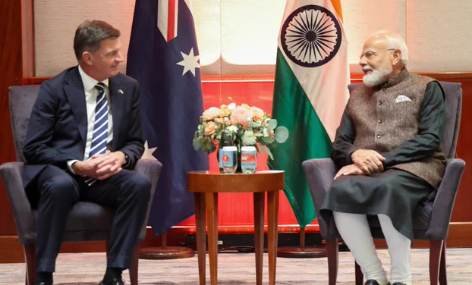
Pic Credit: https://x.com/PMOIndia
July 10: India and Australia have signed an important agreement to improve the protection of traditional knowledge and strengthen the patent examination process.
The agreement allows Australia’s patent authorities to access India’s Traditional Knowledge Digital Library (TKDL), a specialised database that documents India’s centuries-old knowledge systems, including Ayurveda, Yoga, Siddha, Unani and other traditional practices.
The move will help patent examiners identify existing traditional knowledge while reviewing applications, reducing the chances of patents being granted for knowledge that is already part of India’s cultural and scientific heritage.
The agreement marks a new step in India–Australia cooperation in the field of intellectual property rights. It reflects both countries’ shared efforts to promote fair recognition of traditional knowledge and ensure that valuable heritage is protected in the global innovation system.
India’s TKDL has become an important tool in preserving traditional knowledge by making documented information available to patent authorities in a structured and accessible manner. Through this partnership, India and Australia aim to build a stronger and more transparent patent system while respecting the contributions of traditional communities.
10, Jul 2026
Government’s Customs Duty Rationalisation Strengthens India’s Electronics Manufacturing Ecosystem: IESA
The India Electronics and Semiconductor Association (IESA) has welcomed the Government of India’s decision to rationalise customs duties on capital equipment and critical inputs used for manufacturing lithium-ion battery cells, display assemblies and critical inputs used in the manufacture of wireless charging inductor coil modules, calling it a strategic policy measure that will accelerate India’s transition from an assembly-led economy to a globally competitive electronics manufacturing hub.
The customs duty relief is expected to reduce capital costs, improve project viability and catalyse investments across the electronics value chain. The policy complements the Government’s Electronics Component Manufacturing Scheme (ECMS) and Semicon India Programme, which together are aimed at deepening domestic manufacturing capabilities and increasing value addition.
India’s electronics market is projected to exceed US$400 billion by 2030, while semiconductor demand is expected to cross US$103 billion during the same period. Simultaneously, India is building a multi-hundred GWh lithium-ion battery manufacturing ecosystem to support the rapid growth of electric mobility and energy storage. Lower duties on manufacturing equipment will improve the competitiveness of these investments and strengthen supply chain resilience.
The announcement will benefit a wide range of sectors, including electric vehicles, smartphones, laptops, consumer electronics, telecom equipment, wearable devices, medical electronics, industrial electronics, drones, renewable energy and Battery Energy Storage Systems (BESS). Domestic manufacturing of display assemblies and wireless charging modules will also increase local value addition in high-volume products, particularly smartphones and other smart devices.
Although the measure does not directly target semiconductor fabrication, it will have a strong multiplier effect by expanding domestic electronics manufacturing, increasing demand for semiconductor devices and encouraging deeper integration of India’s electronics and semiconductor value chains.
Ashok Chandak, President, IESA, said:
“This is much more than a customs duty rationalisation—it is a strategic investment in India’s manufacturing future. By reducing the cost of producing three of the most critical building blocks of modern electronics—advanced batteries, display assemblies and wireless charging modules—the Government is enabling higher domestic value addition, improving global competitiveness and making India a more attractive destination for electronics manufacturing investments. Every smartphone, EV, telecom system, medical device and energy storage solution built in India creates demand for semiconductors. A stronger component ecosystem today lays the foundation for a stronger semiconductor ecosystem tomorrow. This is another important step towards making India not just a market for electronics, but a globally trusted hub for product creation and advanced manufacturing.”
10, Jul 2026
New Initiative Seeks to Empower India’s Next Generation of Scientists
New Delhi, July 10: RSI-India, supported by the Adani Group, has announced efforts to encourage scientific learning and nurture the next generation of Indian scientists through advanced educational opportunities and research exposure.
The initiative aims to identify and support talented students by providing them with access to mentorship, innovation platforms, and opportunities to engage with scientific research.
Through its programmes, RSI-India seeks to strengthen India’s science and technology ecosystem by encouraging curiosity, creativity, and problem-solving among young learners.
The initiative highlights the importance of developing scientific talent and creating a strong foundation for future innovations in areas critical to the country’s growth.
RSI-India’s efforts are expected to inspire more students to pursue careers in science, research, and technology while contributing to India’s vision of becoming a global hub for innovation.
10, Jul 2026
Assam Budget 2026 Prioritises Youth, Infrastructure and Healthcare Expansion
Guwahati, July 10: The Assam government has presented a budget focused on employment generation, infrastructure development, healthcare improvement, and overall economic growth, outlining 10 major initiatives aimed at strengthening the state’s development agenda.
The budget places strong emphasis on creating new job opportunities, supporting youth, and enhancing skill development programmes. It also prioritises infrastructure expansion, including improvements in connectivity and public facilities to support long-term growth.
Healthcare remains another key focus area, with proposed measures aimed at improving medical services, strengthening healthcare infrastructure, and making quality treatment more accessible to people across the state.
The government said the initiatives are designed to promote inclusive growth, improve public services, and create better opportunities for citizens. The budget also reflects Assam’s focus on strengthening key sectors while addressing the needs of different communities.
Officials highlighted that the planned measures will support economic development, improve living standards, and accelerate Assam’s progress in the coming years.
10, Jul 2026
The UAE’s aviation sector showed its resilience and ability to effectively manage operational challenges and disruptions