


30, Jun 2026
India’s GDP Growth Likely to Reach 7 pc in FY26: Report
June 30: India’s Gross Domestic Product (GDP) is projected to grow by around 7 per cent in the current financial year, marking an upward revision from earlier estimates, according to a recent report.
The improved outlook is attributed to sustained strength in domestic demand, higher investment activity, and consistent performance across key sectors such as services, manufacturing, and infrastructure. The report highlights that consumer spending has remained resilient, supported by stable macroeconomic conditions and gradual improvement in employment trends.
Experts noted that India continues to stand out as one of the fastest-growing major economies globally, even amid ongoing global economic uncertainties and uneven recovery patterns in advanced economies. Strong policy support and continued capital expenditure have also contributed to the positive growth trajectory.
However, the report also cautioned that external risks remain, including global economic slowdown concerns, geopolitical tensions, and fluctuations in commodity prices, which could influence growth momentum in the coming quarters.
Overall, the revised estimate reflects sustained economic resilience and reinforces confidence in India’s medium-term growth outlook, supported by structural reforms and improving investment sentiment.
- 0
- By Neel Achary

30, Jun 2026
Gold and Silver Prices Fall as Federal Reserve Rate Concerns Weigh on Markets
June 30: Gold and silver prices extended losses as investor sentiment remained under pressure amid growing expectations around Federal Reserve monetary policy and potential interest rate adjustments.
Precious metals faced selling pressure as market participants weighed the impact of higher interest rates, which typically reduce the attractiveness of non-yielding assets such as gold and silver. A firmer US dollar also contributed to the downward trend in prices.
Analysts said uncertainty over the Federal Reserve’s future policy direction has led to cautious trading in commodity markets, with investors shifting toward yield-bearing and safer alternative assets.
Despite short-term volatility, experts noted that long-term demand for precious metals continues to be supported by global economic uncertainty and inflation-related concerns.
Market movements are expected to remain sensitive to upcoming macroeconomic data and policy signals from the US central bank.
30, Jun 2026
Gen Upendra Dwivedi Bids Farewell as Army Chief, Hands Over to Gen Dhiraj Seth
June 30: General Upendra Dwivedi has formally stepped down as the Chief of the Indian Army, bringing to a close a distinguished military career spanning over four decades.

On Tuesday, he handed over the command of the Indian Army to General Dhiraj Seth in a smooth and ceremonial transition of leadership. The change marks an important moment in the armed forces, reflecting the Army’s tradition of structured succession and continuity at the highest level.
In his farewell remarks, Gen Dwivedi described his long service in the Indian Army as the “greatest privilege” of his life. He expressed deep gratitude to the soldiers, officers, and families who supported him throughout his journey, and reflected on years spent in service of the nation under challenging and evolving security conditions.
His tenure as Army Chief saw him at the helm of key operational and strategic responsibilities, guiding the force through a period focused on readiness, modernization, and strengthening national defence capabilities.
With his departure, General Dhiraj Seth now assumes charge as the new Chief of the Army Staff. He takes over leadership at a time when the Army continues to focus on operational preparedness, technological advancement, and maintaining high levels of combat readiness.
The transition marks both an emotional farewell and a seamless handover, underscoring the professionalism and institutional strength of the Indian Army.
30, Jun 2026
General Dhiraj Seth Assumes Charge as 31st Chief of the Army Staff
June 30: General Dhiraj Seth has formally assumed charge as the 31st Chief of the Army Staff of the Indian Army.
He took over the command of the Indian Army following the retirement of the outgoing Chief of Army Staff. His appointment marks an important leadership transition in the Indian Armed Forces.
Gen Seth brings with him extensive operational, command, and staff experience gained over decades of distinguished service. Throughout his career, he has held several key leadership appointments contributing to operational preparedness and organisational development.
As the new Army Chief, he is expected to guide the force with continued emphasis on modernization, operational readiness, and strengthening national defence capabilities.
30, Jun 2026
GST Appellate Tribunal Appeal Filing Deadline Extended to July 31
New Delhi, June 30: The Government has extended the last date for filing appeals before the GST Appellate Tribunal to July 31, providing additional time to taxpayers and businesses to complete the appellate process under the Goods and Services Tax framework.
According to official sources, the extension has been granted to ensure wider compliance and to facilitate taxpayers who were unable to meet the earlier deadline. The decision is aimed at reducing procedural pressure and allowing sufficient time for the filing of pending appeals.
Tax professionals and industry stakeholders have welcomed the move, stating that it will help businesses engaged in dispute resolution and compliance-related matters under GST.
Authorities have advised eligible taxpayers to make use of the extended timeline and complete filings within the revised deadline to avoid last-minute delays or complications. Further procedural guidelines and notifications are expected from the concerned department.
The move is part of ongoing efforts to improve ease of compliance and streamline the GST dispute resolution mechanism.
30, Jun 2026
Traffic Restrictions Announced in Jammu Ahead of Amarnath Yatra from July 2
Jammu, June 30: In preparation for the annual Amarnath Yatra, the Jammu Traffic Police have announced strict route restrictions and traffic regulation measures beginning July 2 to ensure smooth and safe movement of pilgrims.

According to officials, the restrictions have been put in place to manage the expected increase in pilgrim vehicles and to prevent congestion on key routes leading to the Yatra base camps. Certain roads and stretches will be regulated or diverted as per convoy movement and traffic requirements.
Authorities have advised commuters, transport operators, and local residents to plan their travel accordingly and strictly follow traffic advisories during the Yatra period. Priority movement will be given to emergency and essential service vehicles.
The traffic department has also urged pilgrims to cooperate with on-ground personnel and adhere to instructions to ensure uninterrupted and safe travel along the designated routes.
Further detailed traffic arrangements and route plans are expected to be issued by the authorities in the coming days.
30, Jun 2026
Gi Group Holding, India Appoints Manish Singh as Senior Vice President to Drive Growth and Workforce Solutions
New Delhi, June 30: Gi Group Holding, India a player in staffing solutions, today announced the appointment of Manish Singh as Senior Vice President. In his new role, Manish will focus on strengthening Gi Group’s staffing operations, deepening client partnerships, and driving innovative, solution-led workforce strategies across industries.
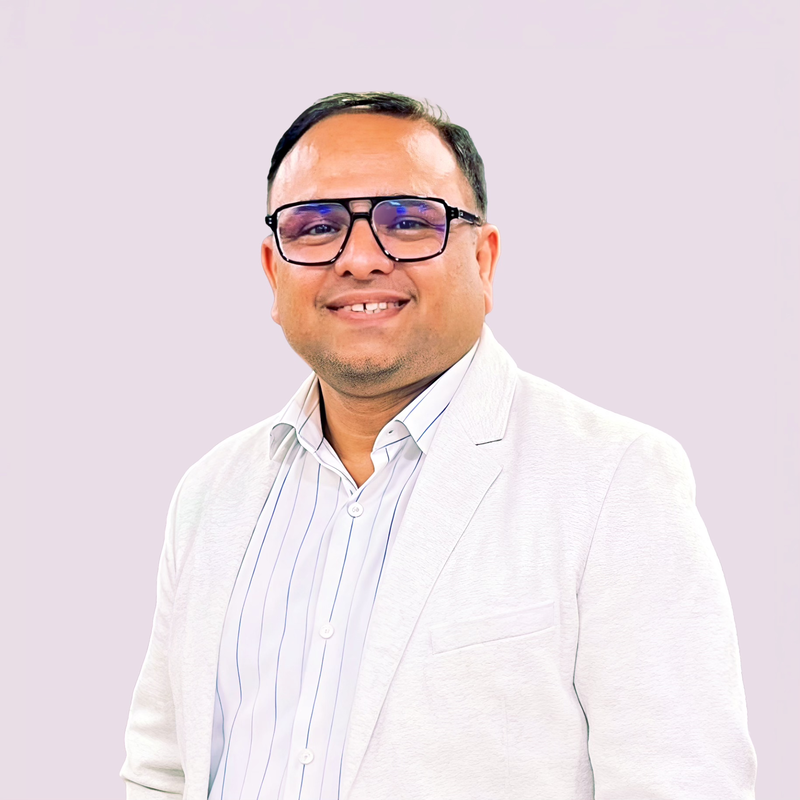
With over 18 years of leadership experience, Manish brings extensive expertise in building high-performing teams, scaling operations, enhancing business performance, and working closely with CXOs to develop impactful talent and workforce solutions. His experience in driving operational excellence and fostering strategic partnerships will play a key role in advancing Gi Group India’s growth journey.
His appointment reinforces Gi Group India’s commitment to building a strong leadership ecosystem that enables business transformation, enhances service excellence, and creates greater value for clients and candidates across sectors.
30, Jun 2026
HighPoint Partners with Insyde® Software to Deliver Secure, OOB OpenBMC Management for Disaggregated NVMe-oF Storage Platform
FREMONT, CA & TAIPEI, TAIWAN –June 30 2026– HighPoint Technologies, Inc., a leading provider of next-generation high-performance storage and connectivity solutions, has announced a partnership with Insyde® Software, a leading provider of UEFI BIOS, OpenBMC and platform root-of-trust firmware. This collaboration introduces enterprise-grade, out-of-band (OOB) OpenBMC management capability to HighPoint’s newly launched RocketStor 4243AS, a 24-bay Composable Disaggregated Infrastructure (CDI) NVMe-oF rackmount storage platform.
As modern data centers face unprecedented demands, the simultaneous, aggressive scaling of both raw performance and massive storage capacity has pushed traditional server architectures past their physical limits. To prevent resource bottlenecks in AI, machine learning, and High-Performance Computing (HPC), data centers are rapidly shifting toward composable architectures that decouple these assets—allowing ultra-dense flash pools to scale capacity and performance independently over Network / PCIe Fabrics, while making out-of-band management a mission-critical requirement.
The RocketStor 4243AS features Dual 100GbE connectivity network connectivity, native support for both RoCE (RDMA over Converged Ethernet) and TCP network protocols, and a built-in hardware BMC baseboard. By integrating Insyde’s mature OpenBMC system management software, the RocketStor 4243AS offers fully compliant Redfish® framework, giving operators complete infrastructure visibility, strict security controls, and intelligent thermal defense systems.
“The RocketStor 4243AS represents a major architectural milestone for HighPoint as we expand our lane-optimized heritage into networked fabric storage,” said May Hwang, Director of Marketing at HighPoint Technologies, Inc. “By combining our line-rate Dual 100GbE hardware bridging architecture with Insyde’s secure OpenBMC solution, we are effectively eliminating the ‘enterprise tax’ that has historically plagued CDI deployments. Data center operators are no longer forced into costly, vendor-locked storage ecosystems. With this unified platform, they can deploy a completely hardware-neutral, ultra-dense flash pool that scales performance and capacity independently over Network/PCIe Fabrics, while fitting seamlessly into their existing automated management frameworks.”
“Data center teams deploying CDI at scale need both performance and manageability on the same platform,” said Bryant Lee, AVP of Product Marketing, Server & AI Infra, Insyde Software. “Supervyse brings Insyde’s production-proven OpenBMC expertise to HighPoint’s RocketStor 4243AS — delivering Redfish-native orchestration, hardware-anchored secure boot, and real-time thermal control without touching the high-speed storage network. That’s the out-of-band management hyperscale environments now demand.”
Synergized Solutions & Core Benefits
Purpose-engineered for hyperscale storage workloads, Insyde’s Supervyse® OpenBMC architecture transforms HighPoint’s high-density NVMe-oF platform into a fully orchestrated infrastructure asset—resolving the operational bottlenecks that have long constrained large-scale CDI deployments:
- Uncompromised Fabric Performance via True OOB Isolation: The RocketStor 4243AS offloads storage traffic entirely to its hardware fabric engine, achieving line-rate Dual 100GbE speeds. Insyde’s OpenBMC operates on a completely independent management plane, ensuring that continuous real-time telemetry polling, asset discovery, and user authentication never interrupt or add latency to the high-speed storage network.
- Effortless Scale-Out via Network Switches: Because the RocketStor 4243AS operates as an autonomous networked target rather than direct-attached storage (DAS), capacity grows by plugging additional units into existing leaf-spine fabrics. Supervyse handles the rest—zero-touch discovery, policy-driven remote provisioning, and lights-out commissioning of new pools, with no physical access or host reboots required.
- Proactive Thermal & Dynamic Cooling Defense: Driving 24 high-performance NVMe SSDs in a compact rackmount chassis generates significant heat under sustained workloads. Supervyse draws on Insyde’s deep firmware engineering capability to continuously sample slot-level thermal sensors and dynamically tune fan PWM curves in real time—preempting NVMe thermal throttling and locking in IOPS consistency through the most demanding AI and HPC ingest cycles.
Key Technical Features of Supervyse OpenBMC Solution
Supervyse OpenBMC provides the RocketStor 4243AS with a suite of enterprise-grade features designed to optimize data center orchestration and asset security:
- Full Redfish® API Compliance: Supervyse delivers a fully DMTF-compliant RESTful API surface, enabling DevOps and infrastructure teams to integrate the RocketStor 4243AS directly into market-leading software-defined storage (SDS) platforms and private cloud operating systems—out-of-the-box interoperability with industry-standard orchestration stacks.
- Hardware-Root-of-Trust (RoT) Secure Boot: Implements comprehensive cryptographic validation of BMC firmware images to shield out-of-band management interfaces from sophisticated supply-chain attacks and unauthorized local modifications.
- Slot-Level Drive Presence & Dynamic LED Drive Controls: Interfacing directly with the RocketStor 4243AS backplane via low-level management buses to log NVMe drive placement changes and command the physical drive tray LEDs (fault, identify, activity), minimizing repair windows for field technicians.
- Advanced Out-of-Band Remote Access: Offering a clean, intuitive web-based GUI with an encrypted Secure Shell Protocol (SSH), Supervyse give operators a secure remote path to configure low-level parameters, cycle device power, and flash firmware—even when the primary 100GbE storage interfaces are down.
Market Impact and Availability
By combining HighPoint’s ultra-dense CDI hardware storage infrastructure with Insyde Software’s hardened management expertise, the joint solution redefines what data center architects can expect from open, disaggregated storage. The RocketStor 4243AS effectively democratizes high-performance NVMe-oF deployments, delivering a scalable, vendor-agnostic architecture that drops seamlessly into modern automated infrastructures without the burden of proprietary storage costs.
The HighPoint RocketStor 4243AS NVMe-oF target platform, fully integrated with Insyde’s secure OpenBMC solution, is available for order immediately through HighPoint’s global network of authorized distribution, resale and system integration partners.
RocketStor 4243AS MSRP USD$ 8,999.00
Learn More
HighPoint RocketStor 4243AS NVMe-oF CDI NVMe Hardware Storage Platform
30, Jun 2026
Devotees Gather at Alarnath Temple as Lord Jagannath Enters Anasara
Brahmagiri (Puri), June 30 (UDN): Thousands of devotees converged at the Alarnath Temple in Brahmagiri on Tuesday as the annual Anasara period of Lord Jagannath commenced following the Snana Purnima rituals at the Shree Jagannath Temple in Puri.

According to temple tradition, Lord Jagannath, Lord Balabhadra and Devi Subhadra remain in seclusion at the Anasara Ghara for a fortnight after the ceremonial Snana Purnima, as they are believed to undergo treatment following the elaborate ritual bath. During this period, devotees are unable to have darshan of the Holy Trinity at the Srimandir.
As per centuries-old belief, Lord Jagannath manifests as Lord Alarnath, an incarnation of Lord Vishnu, at the Alarnath Temple, located about 23 kilometres from Puri. Devotees consider darshan of Lord Alarnath during the Anasara period to be spiritually equivalent to having the blessings of Lord Jagannath.
The temple witnessed heavy footfall from the early hours of the day, with pilgrims standing in long queues to offer prayers. Temple authorities conducted the Mangala Alati in the pre-dawn hours before opening the shrine for public darshan. Elaborate arrangements, including crowd management, security and other essential facilities, were put in place to ensure the smooth conduct of the rituals and the convenience of devotees.
“We performed the Mangala Alati at 4 a.m., following which the temple was opened for public darshan. Necessary arrangements have been made for devotees,” a temple servitor said.
Expressing their devotion, several pilgrims said the opportunity to have darshan of Lord Alarnath during the Anasara period is considered highly auspicious and attracts devotees from across Odisha and other parts of the country despite long waiting hours.
The Alarnath Temple, a centuries-old monument built in the traditional Kalinga architectural style, houses a four-armed black stone idol of Lord Vishnu holding the conch, discus, mace and lotus, with Garuda depicted in a seated posture at the deity’s feet.
The Anasara period will continue until the Holy Trinity reappears before devotees during Nabajouban Darshan, ahead of the annual Rath Yatra.
30, Jun 2026
Six Fishermen Saved as Indian Coast Guard Battles Rough Seas in Rescue Near Mangaluru
Mangaluru, June 30: In a swift and courageous response at sea, the Indian Coast Guard successfully rescued six fishermen from the distressed fishing vessel IFB Manju Matha off the coast of Mangaluru on Monday evening.

The emergency unfolded when the Coast Guard Ship ICGS Sachet received a distress call at around 1600 hrs from a fishing vessel located approximately 33 nautical miles off the Suratkal coast. The crew reported severe flooding and damage to the hull caused by rough sea conditions, leaving them in a dangerous situation.
Acting immediately, the Coast Guard diverted its ship and navigated challenging seas to reach the distressed vessel within 90 minutes. The rescue operation was carried out in extremely difficult conditions, including high waves, strong winds, poor visibility, and fading daylight.
Despite these harsh conditions, the rescue team successfully evacuated all six fishermen safely. The operation reflects the bravery, dedication, and readiness of the Indian Coast Guard in safeguarding lives at sea, even in the most difficult circumstances.