


14, Oct 2026
56 percent of Multilingual Consumers Have Walked Away From a Purchase Over Poor Website Localization, Liferay Survey Finds
New report finds consumers are confident they can spot machine-translated content, while better localized digital experiences can influence trust, loyalty and which brands they choose
LOS ANGELES – AI and automated translation have made it easier than ever for brands to deliver websites, product information and digital experiences in multiple languages. But as translation becomes easier to scale, brands face more pressure to maintain quality and local relevance across every market. Liferay, a leading provider of Digital Experience Platforms (DXPs), released new research examining where multilingual digital experiences are falling short and what consumers notice when localization misses the mark.
The Liferay 2026 Website Localization Report, conducted in September 2026 via the third-party platform Pollfish, surveyed 800 U.S. adults who had used a website, app or digital service in a language other than English in the past 12 months. The report examines how multilingual consumers experience translated and localized digital content, which mistakes they notice and how those mistakes affect trust, purchase decisions and brand loyalty.
Key findings include:
- Poor localization is costing sales. 56% of multilingual consumers have decided not to buy from a company because its website or app felt poorly adapted to their language.
- Good translations can still hide a bad experience. 54% of consumers who rate brands’ non-English translations as good or excellent have still walked away from a purchase over poor localization.
- Most translated websites still don’t feel truly local. Only 23% say non-English websites usually feel like they were written for them.
- Consumers think they can spot machine translation. 82% are confident they can tell when content was machine-translated rather than written or reviewed by a fluent speaker.
- Localization problems are nearly universal. 90% have noticed at least one localization problem on a website or app.
- Better localization can win business. 48% have chosen one company over a competitor because its website or app felt better adapted to their language and culture.
- Consumers associate better localization with human review. Only 20% credit AI alone for strong localization, while 43% credit human involvement.
“You can translate every page and technically have everything working, but that doesn’t mean the experience feels natural to the person using it,” said Bryan Cheung, co-founder and CMO at Liferay. “That’s where a lot of companies can underestimate the difference between translation and localization. Translation gets the content into another language. Localization is what makes it feel natural to the people using it.”
The findings show that consumers notice when a translated experience doesn’t feel natural. As brands expand multilingual content, getting the wording, tone and cultural context right can make the difference between a site that simply does the job and one that feels made for the people using it.
Visit the Liferay 2026 Website Localization Report on Liferay’s website for the complete survey results and additional insights.
- 0
- By Neel Achary

14, Oct 2026
Founder Shield Rebrands as The Baldwin Group
Founder Shield Unifies with Parent Firm’s Brand and Becomes its Innovation Practice
NEW YORK – Oct. 14, 2026 – Founder Shield, a risk management partner for rapidly evolving, high-growth companies, announced today that it will complete its rebrand to The Baldwin Group and become the firm’s Innovation Practice.
“Founder Shield brings capabilities and talent that make The Baldwin Group a stronger, more integrated firm,” said Michael Robinson, President, Innovation Practice at The Baldwin Group. “As our Innovation Practice, we are adding momentum to a firm built for what’s ahead, and we couldn’t be more excited to finalize the brand transition.”
Founder Shield will continue to deliver cutting-edge solutions, specialized expertise, and exceptional service to clients reimagining business models across industry sectors. It’s insights, resources, and client portals will be available through foundershield.com and baldwin.com.
Kyle Jeziorski, Managing Director, Innovation Practice at The Baldwin Group added, “The Founder Shield name may be changing, but its commitment to clients remains as strong as ever. This transition opens the door to broader capabilities, greater collaboration, and a forward-thinking approach to risk and insurance that helps protect the possible for clients.”
For well over a decade, Founder Shield has built a digital insurance platform featuring a broad range of competitive and specialized insurance products designed to meet the unique risk management and client experience needs of emerging companies in sectors including Life Sciences, Tech and Media, Financial, and Small Business. To date, it has served more than 20,000 clients. Since Founder Shield joined the firm in 2021, The Baldwin Group has expanded its capabilities exponentially, offering rapidly growing businesses more solutions at every stage of their growth journey, as they vault from concept to funding to scaling rapidly and into maturity.
14, Oct 2026
Kira AI Launches AI Workspace that Thinks and Acts Across Everything Users Do, Say, and Decide
“Life Operating Software” acts like a capable chief of staff for every person and team, handling the email, scheduling, calls, and follow-ups that stand between the users and the work only they can do
DOVER, Del.—October 14, 2026—Kira on Oct 13 announced the launch of a multi-part AI workspace that functions as an “operating intelligence” of the user’s life. Kira does more than just answer questions. Built to think, remember, and act, Kira learns about the user and his or her business, recalls every detail, and takes action across calls, emails, content, and workflows.
“Kira came to life based on an insight that most of the workday doesn’t involve actual work,” explained a spokesperson for Kira. “Instead, we spend huge amounts of time coordinating the work, chasing replies, moving meetings, writing the same email in five different ways, and so forth. This is the problem we are solving with Kira. Kira exists to close that gap. Kira acts as a capable chief of staff for every person and team. It handles the email, scheduling, calls, and follow-ups that stand between you and the work only you can do.”
Kira brings the user’s tools into one place and gives AI agents the ability to act on his or her behalf, but always with the user in control.
Key features include:
- Email Agent, which drafts, triages, and sends, with the user’s sign-off on anything that matters.
- AI Call Agents, which place and take calls, then hand the user the summary, not the transcript.
- Smart Calendar, which schedules, reschedules, and preps the user’s life before the day begins.
- Voice Command, which runs the dashboard hands-free.
- Connected integrations, which link the tools the user already works in.
Kira is a connected workspace that includes My Brain, My Files, and My Workspace. These are where the user’s notes, tasks, and documents live together.
Kira runs on a loop built to keep the user in charge while cutting out manual steps in various work tasks. “We connect the tools you already use, from email to calendar, and beyond,” the spokesperson added. “You delegate a goal, in plain language or by voice, but you get to review what Kira proposes before anything goes out.” As Kira executes, it learns the user’s preferences so the next round takes less time.
14, Oct 2026
Mayors of Kochi, Renca, and Gdańsk Join Board of the Global Covenant of Mayors for Climate & Energy
World’s Largest City Climate Alliance Appoints Mayor V.K. Minimol, Mayor Claudio Castro, and Mayor Aleksandra Dulkiewicz to Expand Regional Leadership Across South Asia, Latin America, and Europe
BRUSSELS, BELGIUM (October 14, 2026) – On Oct 12, the Global Covenant of Mayors for Climate and Energy (GCoM), the largest global alliance for city climate leadership built upon the commitment of over 14,000 cities and local governments from 150 countries representing more than 1.2 billion people, announced the appointment of three new mayors to its Board of Mayors and Leaders: V.K. Minimol, Mayor of Kochi, India; Claudio Castro, Mayor of Renca, Chile; and Aleksandra Dulkiewicz, Mayor of Gdańsk, Poland. This year, GCoM is celebrating a decade of helping cities translate global climate commitments into local action. The addition of these three mayors will reinforce representation in the regions of South Asia, Latin America, and the European Union & Western Europe, respectively, bringing frontline leadership and regional credibility to drive climate progress through finance, resilience, and multilevel partnerships.
Working alongside co-chairs Michael R. Bloomberg, UN Special Envoy on Climate Ambition and Solutions and founder of Bloomberg LP and Bloomberg Philanthropies, and Teresa Ribera, Executive Vice President of the European Commission for a Clean, Just and Competitive Transition, the three mayors will elevate city climate leadership and strengthen multilevel collaboration worldwide.
“Cities are leading the way in the fight against climate change – developing and testing ambitious ideas that are improving the lives of their residents. We are glad to welcome Mayors Minimol, Castro, and Dulkiewicz to our Board of Mayors and Leaders and look forward to working with them to accelerate the progress cities are making,” said Michael R. Bloomberg, GCoM Co-Chair, UN Special Envoy on Climate Ambition and Solutions, and Founder of Bloomberg L.P. and Bloomberg Philanthropies.
In her new role as GCoM Board Member, Mayor Minimol will represent GCoM signatories in South Asia, encouraging mayors across the region to accelerate their commitment to addressing climate change. With over 30 years in public service and grassroots governance, Mayor Minimol brings deep expertise in climate justice, equitable growth, and urban resilience to the Board. She previously chaired key standing committees, including Public Works and Health, and has been part of the political leadership team from Kochi Municipal Corporation that supported the development of the city’s Local Biodiversity Strategy and Action Plan. As Mayor, she has championed climate-resilient urban development, sustainable mobility, and gender-responsive governance.
“As mayor of Kochi, I have a deep understanding of the vulnerabilities and the innovative potential of cities in the Global South. Cities are leading the transition toward a low-emission future, and as a member of the GCoM Board, I am eager to bring my perspective to ensure that global climate strategies are both equitable and representative of diverse urban realities,” said V.K. Minimol, Mayor of Kochi, India. “Climate goals are best met when local, regional, and national policies are in sync, and I look forward to strengthening collaboration with multi-level organizations and enhancing access to climate finance.”
Mayor Castro brings ten years of ambitious climate leadership in Renca and across Chile to the GCoM Board. Under his leadership, Renca secured the permanent closure of its 62-year-old thermoelectric plant and has planted more than 85,000 trees in the Cerros de Renca Metropolitan Park. He has developed projects spanning adaptation, nature-based solutions, and sustainable energy, and has supported innovative institutional and financing mechanisms, including La Fábrica de Renca, a municipal corporation focused on local development and innovation that enables the municipality to build productive partnerships with public and private entities. Mayor Castro serves on the CHAMP Subnational Advisory Council and has championed Renca’s engagement in the Urban Transitions Mission and the OECD Champion Mayors program.
“In Renca, we have built a climate agenda that links mitigation, adaptation and energy to territorial justice and social cohesion. In a region facing structural drought, extreme heat and unequal access to green spaces, we have shown that climate action is also a policy of equity.” said Claudio Castro, Mayor of Renca, Chile. “As a GCoM Board Member, I will work to expand access to climate finance for Latin American cities, so that the nature-based solutions and projects our cities already have can finally be funded.”
Mayor of Gdańsk, Mayor Dulkiewicz is actively engaged in European subnational diplomacy and city networks, championing an integrated approach to climate action spanning mitigation, adaptation, and access to clean and affordable energy. Her work has included sustainable mobility, air quality, waste management, water resilience, green spaces, and energy efficiency, all supported by long-term planning and stakeholder engagement. As a member of the Commission for the Environment, Climate Change and Energy (ENVE) of the European Committee of the Regions, Mayor Dulkiewicz works on the role of cities in meeting EU climate and energy goals and contributes directly to shaping EU legislation in this area. Gdańsk is a national pioneer in blue-green infrastructure and has developed one of Poland’s most advanced rainwater retention systems, an approach recognized internationally with second prize at the MERLIN Innovation Awards in 2025.
“I am honored to serve on the Board of GCoM, an initiative that embodies the collective leadership of cities advancing ambitious, locally driven climate action worldwide. Local governments play an essential role in safeguarding the well-being of our communities and building long-term urban resilience,” said Aleksandra Dulkiewicz, Mayor of Gdańsk, Poland. “I am fully committed to advancing GCoM’s mission and contributing our region’s experience to foster scalable, inclusive climate solutions across the global network.”
The appointments come at a critical moment, as national governments are increasingly engaging cities and local governments as critical actors in addressing the global climate emergency. As members of GCoM’s Board, Mayors Minimol, Castro, and Dulkiewicz will help deepen regional engagement with GCoM cities, guiding thousands of cities and local governments worldwide in setting bold targets, implementing scalable solutions, and unlocking critical financing to turn climate ambition into tangible action.
14, Oct 2026
Kimpton Everly Hotel Appoints New Food & Beverage Leaders to Elevate Hollywood Dining Experiences
13, Oct 2026
As OECD PISA Scores Hit Record Lows, JA Europe and UniCredit Foundation Renew Partnership to Keep At-Risk Students Learning
ROME, 13 October 2026 – Junior Achievement Europe (JA Europe) and UniCredit Foundation today announced the renewal of their “Re-Power Your Future” partnership through 2029, as part of a new three-year commitment by UniCredit Foundation to tackle Europe’s growing education challenge. The next phase will focus on helping young people in high dropout-risk schools build the confidence, skills and motivation to stay engaged in learning and prepare for their future.
The renewal was announced during Beyond Academic Performance. A European Dialogue on the Future of Education, held at the Foreign Press Association in Rome and bringing together UniCredit Foundation, OECD, Teach For All and JA Europe, alongside education leaders and experts, including Andreas Schleicher, OECD Director for Education and Skills. The discussion took place against the backdrop of OECD evidence pointing to declining learning outcomes, persistent inequalities and the need to look beyond academic attainment alone.
The partnership builds on three years of collaboration during which Re-Power Your Future reached more than 390,000 students and 5,900 schools across Europe, with a deliberate focus on those facing the greatest barriers to education. In the new phase, JA Europe and UniCredit Foundation aim to deliver more than 500,000 additional learning experiences and reach over 2,000 additional schools, while concentrating support where dropout risk is highest.
PISA also underlines that performance gaps are closely connected to students’ sense of opportunity, growth mindset and academic resilience. For young people facing socio-economic challenges, unequal access to opportunities can compound gaps in academic performance. Re-Power Your Future responds to this challenge through practical, hands-on learning that helps students connect education to real life, develop entrepreneurial ideas and build the agency to shape their own future.
“Young people rarely leave school in a single day; they drift away when learning stops feeling relevant to their lives and future. The latest PISA results make clear that Europe must act earlier. At JA Europe, we see that hands-on learning, real-world challenges and an entrepreneurial mindset can re-engage students, strengthen their sense of belonging and help them believe in what they can achieve. Together with UniCredit Foundation, we are focusing on the areas where dropout risk is highest—turning proven experience into evidence and making early prevention standard practice across Europe,” said Salvatore Nigro, CEO of JA Europe.
“At UniCredit Foundation, we believe that every young person should have the opportunity to fulfil their potential, regardless of background or circumstances. This is why we are committed to supporting those facing the greatest barriers, helping them develop not only academic skills, but also the confidence, resilience and sense of purpose needed to thrive in an increasingly complex world. Through our partnership with JA Europe, we provide practical learning experiences that enable young people to discover their talents, broaden their horizons and prepare for the future, while bringing together schools, local communities, non-profit organisations and corporate volunteers to expand opportunities and contribute to lasting, systemic change”, said Silvia Cappellini, General Manager of UniCredit Foundation.
Evidence from the programme points to impact beyond academic attainment. In Romania, the 2024–2025 randomised controlled trial found a 24% increase in school engagement among participating students. In the 2025–2026 randomised controlled trial, conducted across three countries — Romania, Serbia and Hungary — 65% of participating students successfully developed a concrete entrepreneurial idea. The renewed phase will continue to strengthen measurement of long-term impact, reinforcing a shared focus on understanding not only how many young people are reached, but what changes as a result.
Through the renewed partnership, JA Europe and JA Members in Europe will span 11 countries: Austria, Bulgaria, the Czech Republic, Germany, Hungary, Italy, Poland, Romania, Serbia, Slovakia and Slovenia. The approach combines direct support for young people with mentoring, career readiness, entrepreneurship education and the mobilisation of UniCredit volunteers and local networks to support schools and communities.
Together, JA Europe and UniCredit Foundation aim to translate the challenges highlighted by PISA and Education at a Glance into concrete action: addressing educational inequality through sustained investment in young people and in the educators, organisations and systems that can help them succeed.
Watch the recording: Beyond academic performance: a European dialogue on the future of education
13, Oct 2026
CM Majhi Opens 1,608 Affordable Homes in Bhubaneswar, Launches Housing Scheme for Migrant Workers
Bhubaneswar, Oct 13 (UDN): Odisha Chief Minister Mohan Charan Majhi on Sunday inaugurated 1,608 affordable housing units across two residential projects in Bhubaneswar and launched a new housing initiative aimed at migrant workers and economically weaker families.

Pic Credit: x.com/CMO_Odisha
The programmes, held in Ghatikia, also saw the inauguration of 12 modern playgrounds developed by the Bhubaneswar Development Authority (BDA). In addition, shelter was provided to 962 families in Budha Vihar, Nilamadhav, Subudhipur and Shantipalli.
Addressing the gathering, Majhi said the government aimed to build a city where economically disadvantaged families could live with dignity, workers could find affordable housing and young people could access facilities to develop their talents.
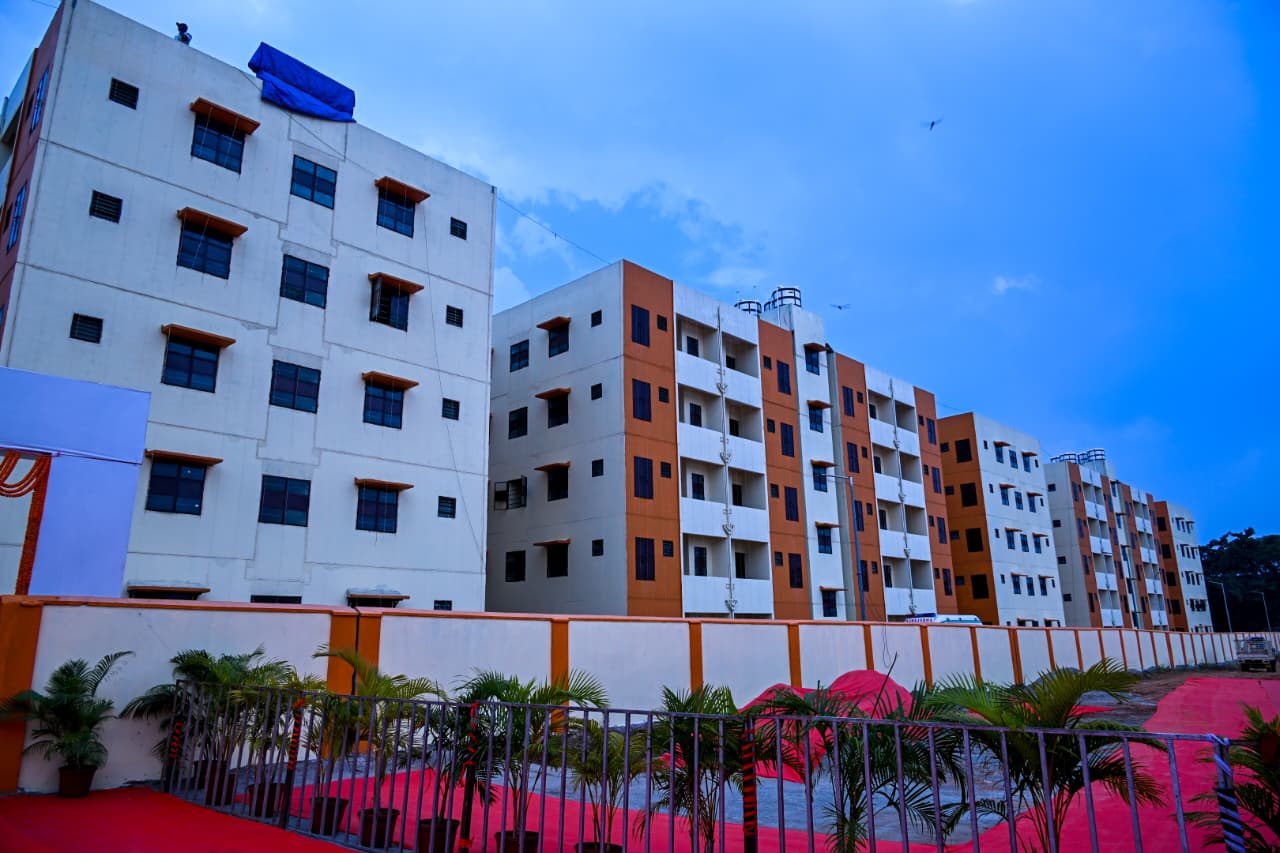
Two Housing Projects Add 1,608 Affordable Homes
The Chief Minister inaugurated Nilakanteshwar Residency in Ghatikia, comprising 928 houses built on more than five acres at a cost of Rs 66.48 crore.
He also opened Muktaswar Residency in Gadakana, which has 680 houses spread across more than six acres and was developed at an estimated cost of Rs 95 crore.
Together, the two projects provide 1,608 affordable housing units for eligible beneficiaries.
During the programme, Majhi handed over allotment letters to selected beneficiaries of both projects. Bank loan assistance ranging from Rs 1.20 lakh to Rs 1.35 lakh was also distributed to several beneficiaries to support their housing needs.
PMAY-Urban BANDHU Targets Migrant Workers
A major highlight of the event was the launch of PMAY-Urban BANDHU, a housing initiative designed to help migrant workers and lower-income families find affordable accommodation close to their workplaces.
The scheme aims to reduce housing difficulties for workers who move to urban centres for employment. Affordable rental housing is expected to help beneficiaries access work opportunities without facing excessive accommodation costs.
The government has also facilitated housing loans through banks and financial institutions. Majhi laid the foundation stone for an affordable housing project at Gadakana under the initiative.
Highlighting the importance of secure housing, the Chief Minister said a roof over one’s head was among the most fundamental necessities after food. He also referred to the benefits of the Pradhan Mantri Awas Yojana, which supports housing alongside basic amenities such as toilets, piped drinking water, electricity and cooking gas.
According to Majhi, more than two lakh houses have been sanctioned under PMAY-Urban in Odisha, while the State government aims to provide around five lakh houses through the Antyodaya Griha Yojana.
12 Modern Playgrounds Opened Across the City
Alongside the housing initiatives, the Chief Minister inaugurated 12 modern playgrounds developed by the BDA at locations across Bhubaneswar.
The facilities are situated at Bajrangi, K-4, Kolathia, Tamando, Nakhara, the CBSE Regional Office area, Yadupur, Damana High School, Unit-2 Girls High School, Bhubaneswar Central UP School, Ghatikia, Unit-8 Boys High School and Shaheed Nagar High School.
The playgrounds are intended to expand access to recreational and sports facilities for children and young people across different neighbourhoods.
Ministers and Elected Representatives Attend
Housing and Urban Development Minister Dr Krushna Chandra Mohapatra said the new housing facilities would help slum residents secure permanent addresses and could positively influence their educational opportunities and social standing.
Ekamra-Bhubaneswar MLA Babu Singh also welcomed the initiatives, while Khurda MLA Prashant Jagdev, Bhubaneswar Mayor Sulochana Das, BDA Vice-Chairman and Bhubaneswar Municipal Corporation Commissioner Chanchal Rana, and BDA Secretary Manas Ranjan Padhi were among those present.
The projects represent a combined push towards affordable housing, improved public spaces and urban welfare. Through new residential facilities and targeted support for migrant workers, the government aims to make Bhubaneswar more inclusive and improve access to essential urban amenities.
13, Oct 2026
42-Year-Old Man with Severe Heart and Leg Artery Blockages Undergoes Complex Angioplasty at Manipal Hospital, Salt Lake
Mumbai/Kolkata, 13th October 2026: A 42-year-old man, Gaurav Mehta, from Kolkata presented with shortness of breath on exertion and severe calf muscles pain while walking, was found to have significant blockages not only in the arteries of his heart but also in both lower limbs. Dr Prof. Partha Sarathi Banerjee, Senior Interventional Consultant Cardiology, Manipal Hospital, Salt Lake, successfully performed complex angioplasty using a stent and drug-eluting balloon, restoring normal blood flow within the arteries. The operation lasted for more than 3 hours.
Mr Mehta had multiple cardiovascular risk factors, including high blood pressure, smoking and excess weight. His hearts pumping function was around 40%, while his ECG did not show any critical changes. However, clinical examination revealed very weak pulses in both lower limbs, raising suspicion of serious peripheral arterial disease. Considering his symptoms and examination findings, it was decided to perform angiography to evaluate both the coronary arteries supplying the heart and the arteries supplying the legs.
His angiography revealed extensive vascular disease. The left anterior descending (LAD) coronary artery had a long-segment blockage of approximately 90%, while the right coronary artery was completely blocked. Further evaluation showed that the renal arteries were normal. However, the right superficial femoral artery was completely blocked, while the corresponding artery in the left leg was also critically narrowed.
Dr Prof. Partha Sarathi Banerjee said, The patient came with Leg muscles pain on walking & chest discomfort with history smoking & Hypertension. His angiography revealed one major coronary artery (LAD) 90 % Block & Right coronary artery 100% block (CTO), LOWER LIMB arteries (SFA)on both sides were total & 95% blocked on right & left sides respectively. We successfully performed Balloon dilatation & stent deployment and DEB dilatation in LAD artery & Right SFA in same sitting. He is doing well and is recovering steadily. The patient with severe coronary artery disease and bilateral peripheral arterial disease was managed through a carefully same sitting interventional procedures, particularly because raised serum creatinine required doctors to balance vascular treatment with protection of kidney function, added Dr Prof Banerjee.
Since the patient had elevated creatinine, the medical team decided against treating both legs during the same sitting to minimise the amount of contrast dye used and reduce the potential risk to kidney function. Following the coronary intervention, doctors treated the completely blocked artery in the right leg. A guidewire was carefully passed across the blockage, followed by balloon dilatation. A drug-coated, self-expanding stent (ELUVIA) was then deployed across the long blocked segment, successfully restoring blood flow to the right lower limb.
The patient remained stable and comfortable following the procedure.
13, Oct 2026
IMD Issues Yellow Alert for Rain, Thunderstorms in Nine Odisha Districts
Bhubaneswar, Oct 13 (UDN): The India Meteorological Department (IMD) on Tuesday issued a yellow warning for nine districts of Odisha, forecasting light rain accompanied by thunder and lightning at isolated places over the next three hours.

Representational Image
According to a nowcast bulletin issued by the Meteorological Centre in Bhubaneswar at 4.20 pm, the alert covers Khordha, including Bhubaneswar, Cuttack, Kendrapada, Jagatsinghpur, Puri, Ganjam, Bhadrak, Kalahandi and Kandhamal.
The warning indicates the possibility of localised weather activity during the specified period, prompting the department to advise people to remain cautious and monitor changing conditions.
Bhubaneswar, Puri Among Areas Under Alert
The yellow warning covers coastal districts, including Khordha, Puri, Cuttack, Kendrapada, Jagatsinghpur and Bhadrak, as well as Ganjam, Kalahandi and Kandhamal.
Residents in the affected areas may experience brief spells of rain, thunder and lightning. Weather conditions could vary from one locality to another, as the forecast refers to isolated places within the districts.
IMD Advises Caution
The IMD has urged residents to keep track of weather updates and plan their outdoor activities accordingly.
People are advised to take shelter in safe buildings if thunderstorms occur and avoid open fields and exposed locations during lightning activity. Taking precautions during sudden weather changes can help reduce the risk of lightning-related incidents.
Residents are also encouraged to follow official weather bulletins for further updates on local conditions and any subsequent warnings.
13, Oct 2026
Odisha Wins Wind India 2026 Award for Advancing Wind Energy Investment
Bhubaneswar, Oct 13 (UDN): Odisha has received the Wind India 2026: Leadership in Wind Energy De-risking award in recognition of its initiatives to promote wind power development and accelerate the transition towards clean energy.
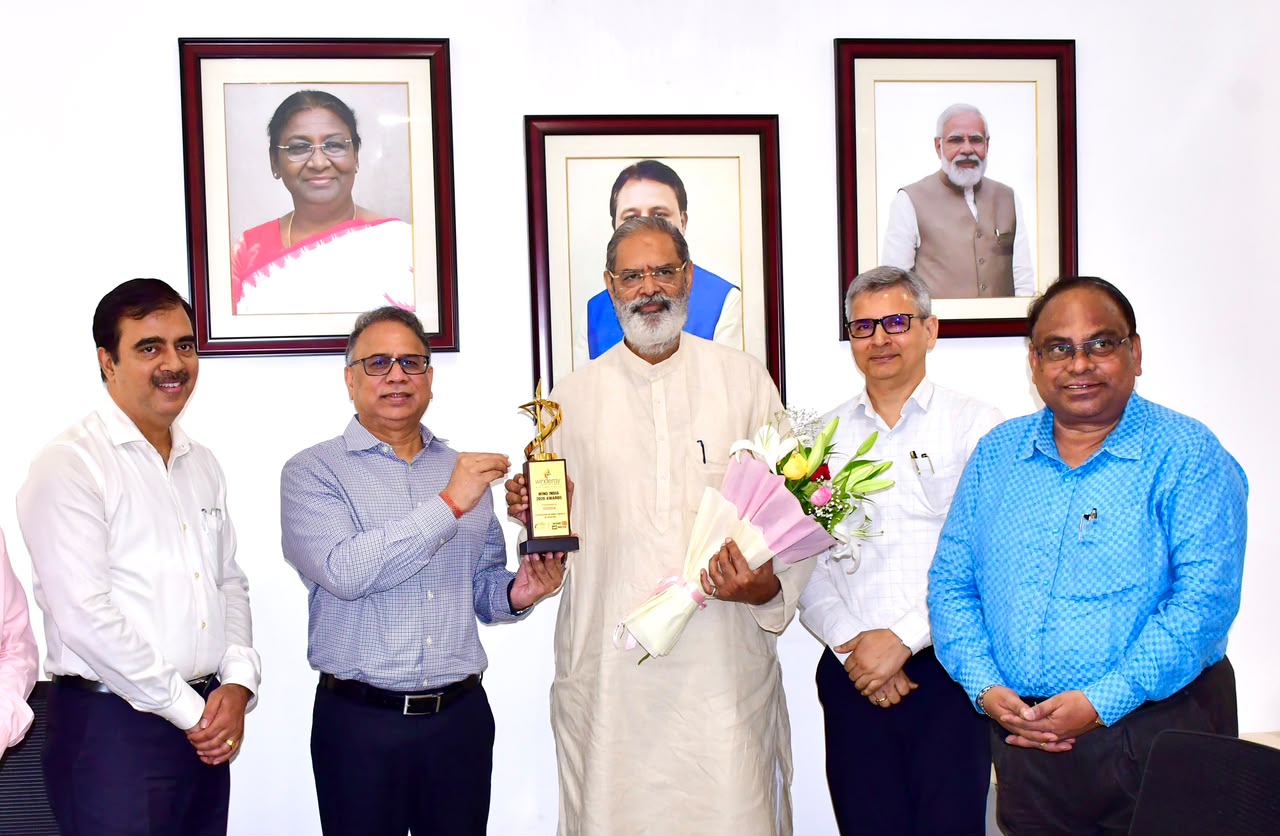
Pic Credit: x.com/EnergyOdisha
The award was presented at the Windergy India 2026 conference held in Chennai on October 8, bringing together government representatives and industry leaders from the renewable energy sector.
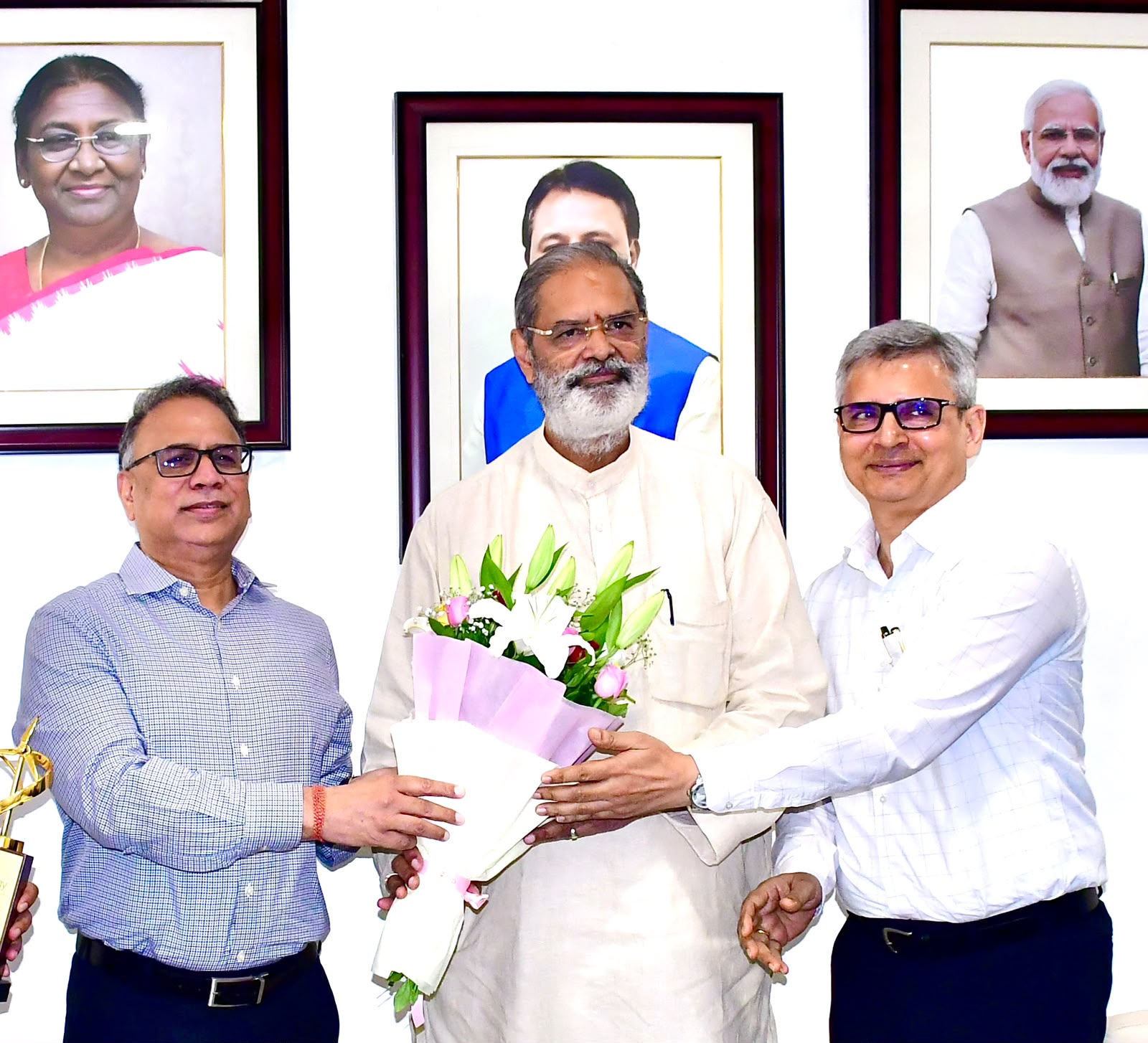
On Tuesday, Additional Chief Secretary of the Energy Department Vishal Kumar Dev formally handed over the award to Deputy Chief Minister and Energy Minister Kanak Vardhan Singh Deo.
The presentation ceremony was attended by Odisha Power Transmission Corporation Limited (OPTCL) Chairman and Managing Director Bhaskar Jyoti Sarma, GRIDCO Managing Director Dr Satyapriya Rath and other senior Energy Department officials.
Recognition for Renewable Energy Initiatives
Earlier, Dr Rath had received the award on behalf of Odisha from Union Minister for New and Renewable Energy Pralhad Joshi during the Chennai conference.
The recognition highlights Odisha’s efforts to create a more favourable environment for wind energy development and encourage investment in the renewable energy sector.
Congratulating Energy Department officers and staff, Singh Deo said the achievement reflected the State government’s commitment to accelerating the clean energy transition and attracting sustainable investments under the Odisha Renewable Energy Policy.
He also underscored the State’s ambition to expand its renewable energy sector and strengthen its role in India’s evolving clean energy landscape.
Odisha Showcases Wind Power Potential to Investors
As part of its efforts to attract investment, Odisha organised a dedicated session titled ‘Odisha: India’s Next Wind Destination’ at Windergy India 2026.
The session presented the State’s wind energy potential to national and international investors and highlighted opportunities for renewable energy projects.
The initiative was aimed at drawing greater attention to Odisha as a potential destination for wind power investment and encouraging wider participation in the State’s clean energy expansion.
Focus on Clean Energy and Sustainable Investment
The award is expected to enhance Odisha’s visibility among renewable energy stakeholders as the State pursues its clean energy ambitions.
By promoting investment opportunities and advancing its renewable energy policy, the government aims to encourage the development of cleaner power sources and support sustainable growth.
The recognition marks a significant milestone in Odisha’s efforts to position itself as an emerging participant in India’s renewable energy sector, with wind power identified as an important area of future development.


