


23, Oct 2026
Odisha Becomes First State to Introduce Dedicated Sickle Cell Pregnancy Protocol
Bhubaneswar, Oct 23: Odisha has become the first state in India to introduce a dedicated protocol for managing pregnancies in women with sickle cell disease (SCD), marking a significant step towards improving maternal healthcare and reducing complications associated with the condition.

The protocol was unveiled on Thursday at a state-level workshop on “Sickle Cell Disease during Pregnancy” in Bhubaneswar. The event was jointly organised by the National Health Mission (NHM), the Directorate of Blood Safety and UNICEF Odisha.
The initiative aims to establish standardised clinical practices and clearly define the responsibilities of healthcare providers involved in caring for pregnant women affected by the disease.
New Guidelines to Strengthen Maternal Care
Titled Protocol for Management of Pregnancy with Sickle Cell Disease, the document outlines clinical procedures for managing pregnancies complicated by SCD and provides guidance for healthcare professionals at different levels of the health system.
The guidelines were developed with contributions from experts representing state medical colleges, NHM programme divisions, the health directorate and UNICEF.
The introduction of a dedicated protocol is intended to support more consistent clinical management, strengthen coordination among healthcare providers and improve care for expectant mothers living with sickle cell disease.
Workshop Reviews Sickle Cell Elimination Programme
The one-day workshop also reviewed the implementation of the Sickle Cell Anaemia Elimination Programme in Odisha.
Senior health officials from 21 districts with a high burden of the disease participated in the meeting, where discussions focused on improving screening, treatment and follow-up services.
Officials also reviewed transportation support and other initiatives planned for the current year to strengthen access to healthcare for people affected by sickle cell disease.
Focus on Better Screening and Follow-Up
The discussions highlighted the importance of strengthening healthcare services and ensuring that patients receive appropriate support throughout their treatment.
With the new pregnancy management protocol, Odisha aims to provide a more structured approach to caring for pregnant women with sickle cell disease, while ongoing programme reviews are expected to help identify gaps in screening, treatment and follow-up.
The initiative places greater emphasis on coordinated care and improved clinical management, with the broader objective of reducing health risks for mothers and supporting better pregnancy outcomes.
- 0
- By Neel Achary

23, Oct 2026
Cyclone Threat in Bay of Bengal: Fishermen Told to Return to Shore by October 24
Bhubaneswar, Oct 23: The India Meteorological Department (IMD) has advised fishermen operating in the Bay of Bengal to return to shore by the morning of October 24 as a developing cyclonic system is expected to approach the north Andhra Pradesh and south Odisha coasts on October 28.

Representational Image
The warning comes amid forecasts of progressively worsening sea conditions across several parts of the Bay of Bengal over the next few days. Fishermen have been urged to follow the advisory and avoid venturing into the sea in the affected areas.
Sea Conditions Likely to Deteriorate
According to the latest IMD bulletin, the eastcentral and adjoining southeast Bay of Bengal is likely to experience moderate to rough sea conditions on October 23.
The sea is forecast to become rough to very rough over the central and adjoining southeast Bay of Bengal on October 24. By October 25, conditions are expected to worsen further, becoming very rough to high over the central Bay.
From the morning of October 26 to October 28, high to very high sea conditions are likely over the westcentral and adjoining eastcentral and northwest Bay of Bengal.
Along and off the Odisha and Andhra Pradesh coasts, rough to very rough seas are forecast between October 27 and 28.
Fishing Operations Restricted in Affected Areas
In view of the deteriorating conditions, the IMD has advised all fishermen currently at sea to return to the coast by the morning of October 24.
Fishermen have also been warned against venturing into the eastcentral and adjoining southeast Bay of Bengal from the evening of October 23 through October 26.
The advisory further prohibits fishing in the westcentral and adjoining northwest and southwest Bay of Bengal from October 26 to 28. Fishermen have also been asked to stay away from sea areas along and off the Andhra Pradesh and Odisha coasts from October 27 to 28.
Fishermen Urged to Prioritise Safety
The developing cyclonic system is being monitored as it moves over the Bay of Bengal, with its expected approach towards the north Andhra Pradesh and south Odisha coasts on October 28 raising concerns over maritime safety.
The IMD has urged fishermen and other members of the fishing community to take the warnings seriously and comply with the prescribed restrictions to avoid being caught in hazardous sea conditions.
Fishermen are advised to remain alert and follow official weather updates as the system develops and further advisories are issued.
23, Oct 2026
Jaishankar Meets Azerbaijan President Aliyev in Baku, Pushes for Stronger India Ties
Baku, Oct 23: External Affairs Minister S. Jaishankar met Azerbaijan President Ilham Aliyev in Baku on Friday, conveying greetings from India’s top leadership and discussing ways to strengthen bilateral relations between the two countries.
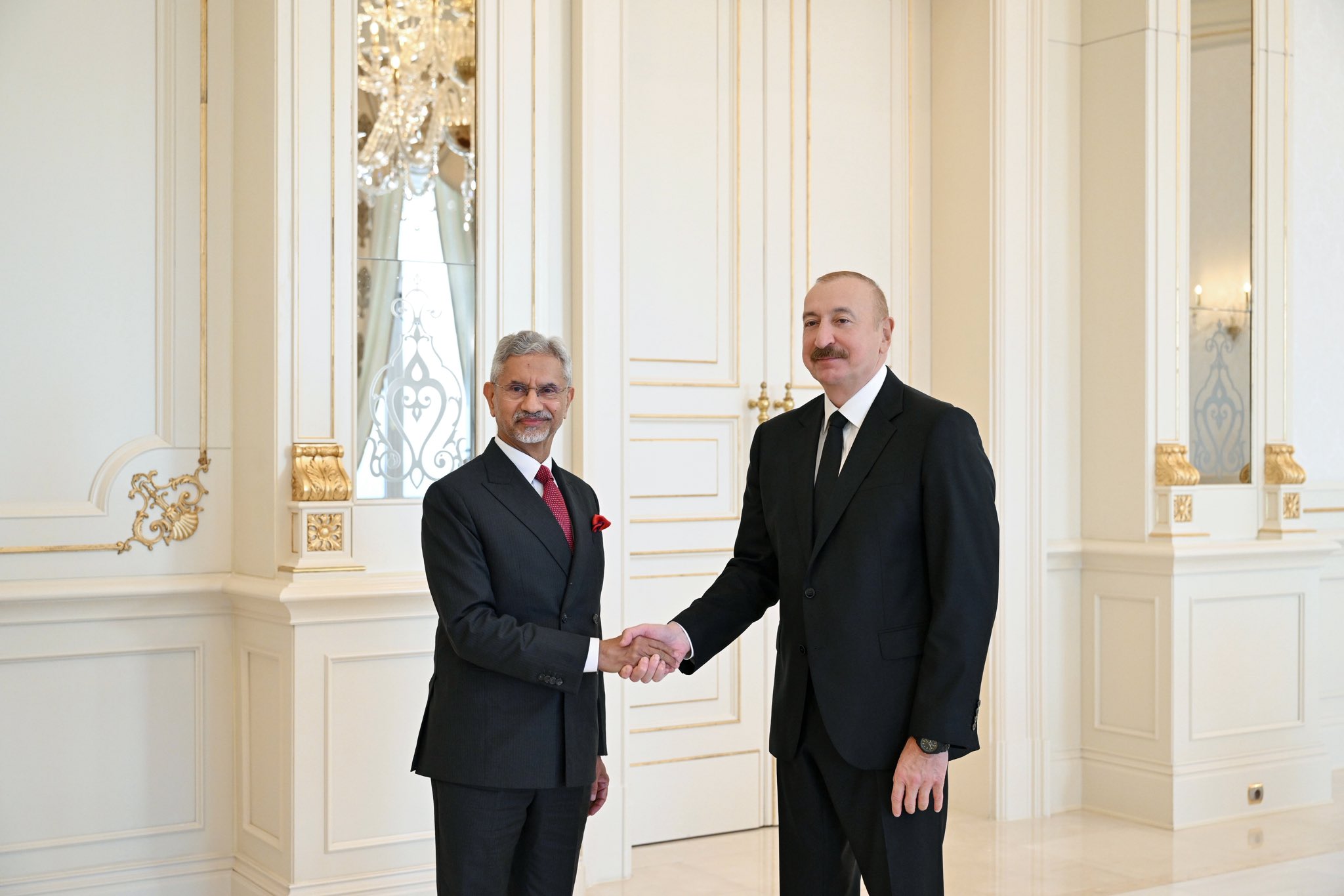
Pic Credit: x.com/DrSJaishankar
During the meeting, Jaishankar conveyed the greetings of President Droupadi Murmu and Prime Minister Narendra Modi to Aliyev. He later shared details of the interaction in a post on X, expressing appreciation for the Azerbaijani President’s positive approach towards strengthening ties.
The meeting comes as India and Azerbaijan continue diplomatic engagement to review their relationship and explore opportunities for expanded cooperation.
Jaishankar to Hold Talks With Azerbaijani Counterpart
As part of his visit, Jaishankar is scheduled to hold discussions with his Azerbaijani counterpart to review bilateral relations and consider areas of mutual interest.
The talks are expected to provide an opportunity for both sides to assess the current state of engagement and discuss ways to deepen cooperation through continued diplomatic dialogue.
Indian Ambassador Reaffirms Commitment to Stronger Relations
The latest meeting follows the presentation of credentials by India’s Ambassador to Azerbaijan, Abhay Kumar, to President Aliyev on October 16.
According to the Indian Embassy in Azerbaijan, Kumar reaffirmed India’s commitment to strengthening and expanding bilateral relations. He also emphasised the importance of closer cooperation and greater understanding between the people of the two countries.
The discussions highlighted longstanding historical and cultural connections between India and Azerbaijan, which both sides view as a foundation for contemporary engagement.
Kumar and Aliyev also referred to the meeting between Prime Minister Modi and the Azerbaijani President in Bishkek, reiterating their commitment to building on existing relations and exploring new avenues for cooperation.
Recent Diplomatic Engagements
Jaishankar’s visit follows a series of recent high-level interactions between India and Azerbaijan.
Last week, Union Minister of State for External Affairs Kirti Vardhan Singh visited Azerbaijan to attend the seventh summit of the Conference on Interaction and Confidence Building Measures in Asia (CICA).
Earlier, on September 1, Prime Minister Modi met President Aliyev on the sidelines of the Shanghai Cooperation Organisation (SCO) Summit in Bishkek.
These engagements have provided opportunities for both countries to maintain dialogue and discuss the future direction of their relationship.
Focus on Expanding Bilateral Cooperation
India and Azerbaijan have longstanding historical and cultural links, which continue to serve as a basis for diplomatic engagement. Recent meetings at the ministerial and leadership levels reflect ongoing efforts to maintain communication and identify opportunities for closer cooperation.
Jaishankar’s meeting with Aliyev marks another step in these diplomatic efforts. Further progress will depend on the discussions between the two countries and the initiatives they pursue to translate diplomatic engagement into concrete areas of collaboration.
23, Oct 2026
Steel Import Concerns: Centre to Hold Open House on October 28
New Delhi, Oct 23: The Union Ministry of Steel will hold an Open House on October 28 to address issues faced by companies and industry associations in importing steel, with a focus on regulatory procedures and compliance-related challenges.

Representational Image
According to an official statement issued on Friday, the session will take place from 11 am to 5 pm at the Steel Room, third floor, GPOA-3, Netaji Nagar, New Delhi.
The initiative is intended to provide a platform for businesses to raise concerns related to the Steel Import Monitoring System (SIMS), SARAL SIMS and exemptions from Quality Control Orders (QCOs).
Registration Deadline Set for October 26
Companies and industry associations seeking to participate must submit their requests by email no later than 12 noon on October 26, 2026, to obtain a confirmed time slot.
The Ministry said individual appointment timings would be communicated through email. Walk-in participation will not be permitted due to logistical constraints, and only one representative from each organisation will be allowed to attend.
Applicants must provide details of their industry and products, such as automotive, aerospace, telecommunications or defence. They must also briefly describe the issue they wish to raise in no more than 50 words and include the participant’s name, designation, mobile number and email address.
The Ministry has clarified that third-party representation will not be permitted.
Focus on SIMS, SARAL SIMS and QCO Exemptions
The Open House will address concerns relating to three key regulatory areas governing steel imports.
The Steel Import Monitoring System (SIMS) requires importers to comply with the applicable monitoring and registration procedures for specified steel products.
SARAL SIMS was introduced to simplify the registration process for eligible small consignments imported by micro, small and medium enterprises (MSMEs) and other small importers. It also covers eligible imports under routes such as Advance Authorisation, Special Economic Zones (SEZs) and Export Oriented Units (EOUs) for export-related purposes.
The session will also consider issues involving Quality Control Order (QCO) exemptions. QCOs prescribe mandatory quality requirements for covered steel products, with applicable Bureau of Indian Standards (BIS) certification and marking requirements.
By engaging directly with industry representatives, the Ministry aims to hear concerns about these procedures and the challenges businesses face in complying with the rules.
India’s Core Industries Record Strong Growth
The announcement comes as India’s core infrastructure industries reported a year-on-year growth rate of 7.9 per cent in September, according to the figures cited in the report. The performance marked a 30-month high and was supported by growth in sectors including iron ore, electricity, coal, refinery products, cement and steel.
Cement production recorded growth of 10.3 per cent, while steel production increased by 4.9 per cent during the month.
Demand for steel has been supported by infrastructure development and public investment in projects involving highways, ports and railways.
Industry Engagement Amid Expanding Steel Demand
As steel consumption and industrial activity remain important to India’s infrastructure ambitions, import procedures and quality compliance continue to be significant concerns for businesses that rely on overseas supplies.
The October 28 Open House will give eligible companies and industry associations an opportunity to present specific problems directly to Ministry officials. The effectiveness of the exercise will depend on how the concerns raised are addressed and whether practical solutions can improve clarity and ease of compliance for importers.
23, Oct 2026
FIA President Mohammed Ben Sulayem Says ‘Driver Experience and Passion of Race Fans’ Is the Force Behind V8 Return to Formula One
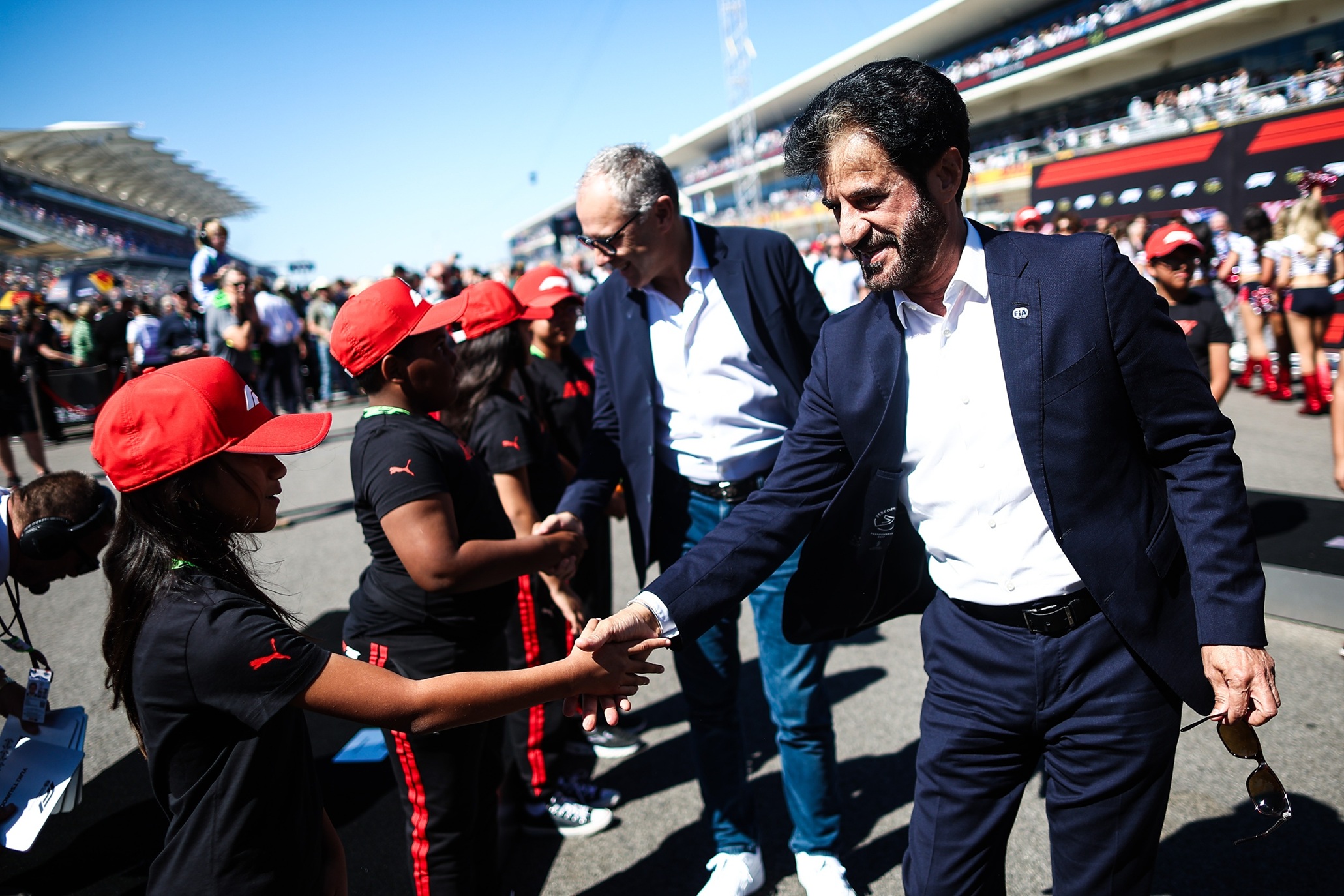
Dubai, UAE, Oct 23: Ahead of this weekend’s FIA Formula One United States Grand Prix, FIA President Mohammed Ben Sulayem says his experience as a driver combined with a desire to give passionate race fans around the world what they truly want, lies behind his commitment to bring back V8 engines to the FIA Formula One World Championship.
In collaboration with Formula One Management (FOM), the teams and the power unit manufacturers, Ben Sulayem says the FIA is pressing ahead with plans for the engine’s return.
“I believe the change will be felt by everyone, from the drivers to the fans, and it will usher in a thrilling new era for Formula One as the pinnacle of global motorsport,” said Ben Sulayem, who is attending this weekend’s FIA Formula One United States Grand Prix at the Circuit of The Americas in Austin, Texas.
“Rallying gave me a practical understanding of what drivers, teams and organisers need from the sport and that experience stays with me. It tells me that a lighter car, one a driver can push to the limit, is the foundation of great racing.”
The FIA President is targeting a Formula One debut in the 2030s that will include a weight saving of approximately 80 kilogrammes, with research and development and engine costs expected to be cut by at least 50%.

“Drivers want cars that respond to their skill and reward their commitment. Reducing weight and reintroducing the V8 factor is the most direct way to give them that,” said the FIA President.
“Fans experience Formula One with all their senses, and the sound of a V8 is part of what first drew so many people to the sport. Bringing that back allows us to reconnect with long-standing fans, while inspiring a new generation who have yet to hear it at a racetrack.”
He views the progress towards V8 reintroduction as a strong indication of a new understanding being built between the FIA as the governing body, and FOM as promoter, and their shared commitment to building the next golden era for the FIA Formula One World Championship.
The relationship was reinforced with the signing last December of the Concorde Governance Agreement by the FIA, FOM and all 11 Formula One teams. This crucial contract defines the regulatory framework and governance terms of the FIA Formula One World Championship to 2030.
It is one of four major deals secured by the FIA under Ben Sulayem’s Presidency inside the last 18 months. The first was a multi-year extension to the FIA’s agreement with Formula E Holdings Limited (majority owned by Liberty Global) for the continued promotion of the ABB FIA Formula E World Championship (Formula E) within the all-electric single-seater category.
In July this year, the FIA announced a historic long-term commercial rights agreement for the FIA World Rally Championship (WRC) and FIA European Rally Championship (ERC). It followed the acquisition of WRC Promoter GmbH by Cosmobilis and Park Square Capital.
In September, the FIA and the Automobile Club de l’Ouest (ACO), the founder and organiser of the 24 Hours of Le Mans, signed a major deal for the FIA World Endurance Championship, securing another decade of growth.
23, Oct 2026
Why October Is a High-Risk Month for Cyclones in Odisha: A Look at Past Disasters
Bhubaneswar, Oct 23: A low-pressure system is expected to develop over the Bay of Bengal on October 23 and may intensify into a depression by October 25, bringing the possibility of unsettled weather to Odisha. Although the formation of a cyclone is not yet certain, the evolving system has renewed attention on the state’s vulnerability to tropical storms during October.
Representational Image
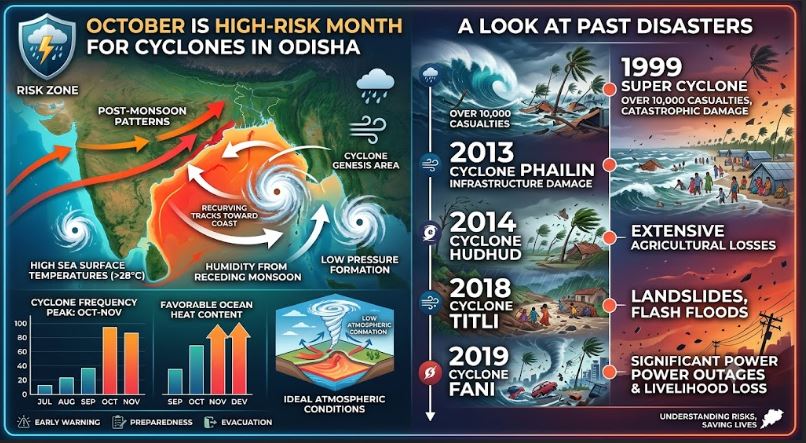
Odisha has experienced several destructive cyclones during the month, including the devastating 1999 Super Cyclone, Cyclone Phailin in 2013 and Cyclone Dana in 2024. The state’s location along the Bay of Bengal, combined with favourable atmospheric and oceanic conditions, makes the post-monsoon period particularly important for cyclone monitoring and preparedness.
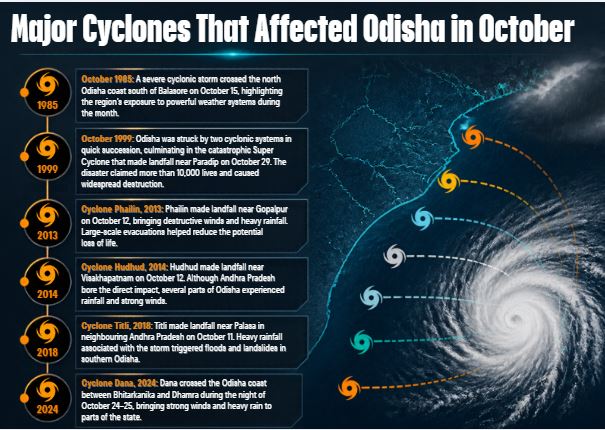
Major Cyclones That Affected Odisha in October
October 1985: A severe cyclonic storm crossed the north Odisha coast south of Balasore on October 15, highlighting the region’s exposure to powerful weather systems during the month.
October 1999: Odisha was struck by two cyclonic systems in quick succession, culminating in the catastrophic Super Cyclone that made landfall near Paradip on October 29. The disaster claimed more than 10,000 lives and caused widespread destruction.
Cyclone Phailin, 2013: Phailin made landfall near Gopalpur on October 12, bringing destructive winds and heavy rainfall. Large-scale evacuations helped reduce the potential loss of life.
Cyclone Hudhud, 2014: Hudhud made landfall near Visakhapatnam on October 12. Although Andhra Pradesh bore the direct impact, several parts of Odisha experienced rainfall and strong winds.
Cyclone Titli, 2018: Titli made landfall near Palasa in neighbouring Andhra Pradesh on October 11. Heavy rainfall associated with the storm triggered floods and landslides in southern Odisha.
Cyclone Dana, 2024: Dana crossed the Odisha coast between Bhitarkanika and Dhamra during the night of October 24–25, bringing strong winds and heavy rain to parts of the state.
These events demonstrate that Odisha can face both direct cyclone landfalls and significant weather impacts from storms that move across neighbouring coastal areas.
Why Is October Favourable for Cyclone Formation?
1. Transition from the Southwest Monsoon
October marks the transition from the southwest monsoon to the post-monsoon season. Changes in atmospheric circulation during this period can support the development of low-pressure systems over the Bay of Bengal, some of which may intensify under favourable conditions.
2. Warm Bay of Bengal Waters
The Bay of Bengal can retain substantial heat after the summer and monsoon seasons. Warm sea-surface temperatures provide moisture and energy that can help thunderstorms organise and strengthen into a tropical cyclone when other atmospheric conditions are suitable.
3. Favourable Wind Conditions
Vertical wind shear—the change in wind speed or direction with height—plays an important role in cyclone development. Relatively weak wind shear can allow thunderstorms around a developing system to remain organised, increasing the potential for intensification.
4. Odisha’s Vulnerable Coastline
Odisha’s long coastline along the Bay of Bengal exposes it to storms moving towards India’s eastern coast. Low-lying coastal areas are particularly susceptible to storm surges, heavy rainfall, flooding and damage caused by strong winds. Rivers and drainage systems can also contribute to flooding during prolonged rainfall.
Will the Latest Low-Pressure System Become a Cyclone?
The developing system may intensify into a depression by October 25, according to the forecast cited in the report. However, cyclone formation, the system’s eventual track and any potential landfall remain uncertain at this stage.
Its development will depend on evolving oceanic and atmospheric conditions. Residents should therefore avoid treating the possibility of a cyclone as a confirmed event and instead follow updated forecasts from the India Meteorological Department (IMD) and instructions issued by local authorities.
Preparedness Remains Key
Odisha’s history of October cyclones underlines the importance of timely warnings, evacuation planning and public awareness. Residents in coastal and low-lying areas should monitor official weather bulletins, keep essential supplies ready when advised and follow local administration instructions.
While October has historically been an important month for cyclone activity in the Bay of Bengal, not every low-pressure system develops into a cyclone. Accurate forecasts and timely preparedness remain essential to reducing risks to life and property.
23, Oct 2026
Raipur–Visakhapatnam Economic Corridor: 240-Km Odisha Stretch to Boost Connectivity, Trade and Tourism
Bhubaneswar, Oct 23: The ambitious Raipur–Visakhapatnam Economic Corridor is expected to transform road connectivity across Odisha, Chhattisgarh and Andhra Pradesh, opening up new opportunities for trade, tourism and regional development.

Representational Image
The Rs 20,000-crore project involves the construction of a 464-km, six-lane highway, of which approximately 240 km passes through Odisha. The corridor will traverse Koraput and Nabarangpur districts, improving access to markets and essential services for people living in southern Odisha.
According to National Highways Authority of India (NHAI) Project Director Prakash Kumar, the Odisha stretch is targeted for completion by December, as stated in the report.
The project is expected to strengthen links between the three states, reduce travel time and improve the movement of goods and passengers.
Travel Time Between Raipur and Visakhapatnam May Be Halved
One of the major anticipated benefits of the economic corridor is a significant reduction in travel time between Raipur and Visakhapatnam.
Once the entire route becomes operational, the journey, which currently takes approximately 12 to 14 hours, is expected to be reduced to around six to seven hours.
The improved road network could facilitate faster transportation of agricultural produce, raw materials and other goods, helping farmers, traders and local entrepreneurs reach markets across state boundaries more efficiently.
Better connectivity is also expected to support employment opportunities and encourage tourism in the region.
Twin Tunnels Emerge as Key Features in Koraput
The twin tunnels near Sunkhi Ghat in Koraput district are among the project’s prominent engineering features. Constructed through challenging hilly terrain at an elevation of around 3,000 feet, the tunnels have been named the Shabara Srikhetra Tunnel and the Koraput Tunnel.
The structures are designed to improve movement through the mountainous stretch, where difficult terrain can otherwise increase travel time and pose challenges for motorists.
Safety measures are also being incorporated into the project, including rock anchoring and slope stabilisation to minimise the risk of rockfalls.
Wildlife-friendly infrastructure, such as monkey canopies and underpasses, is being developed to facilitate animal movement and reduce the risk of wildlife entering the highway.
Advanced Safety Systems Planned Inside Tunnels
According to Jagannath, Safety Manager at Margdarshi Infra, several measures have been incorporated to improve passenger safety inside the tunnels.
These include CCTV cameras installed at intervals of approximately 100 metres, emergency vehicle cross-passages with a clearance of 5.5 metres, and lighting systems that automatically adjust to surrounding light conditions.
The lighting arrangement is intended to reduce the sudden change in visibility experienced by motorists when entering or exiting a tunnel, commonly known as the black-hole effect.
Air quality is also being monitored as part of the safety arrangements.
Improved Access to Healthcare and Essential Services
The economic corridor is expected to bring significant benefits to residents of southern Odisha, particularly those in remote and hilly areas of Koraput and neighbouring districts.
Improved road access could make it easier for people to reach hospitals, educational institutions and employment centres in larger towns and cities.
Local residents have reported improvements in connectivity along developed sections of the route. Rishikesh Behera said travelling to better healthcare facilities had become easier, while Pitambar Pujari noted that journeys that previously took four to five hours could now be completed in around one to two hours on certain stretches.
These accounts highlight the potential benefits of improved road infrastructure, although travel times will vary depending on the starting point, destination and operational status of individual sections.
Boost Expected for Local Businesses and Tourism
Beyond transportation, the corridor is expected to create fresh opportunities for local businesses, artisans and tourism-related enterprises.
Farmers could benefit from faster access to markets, while improved connectivity may help local products reach customers in neighbouring states. The highway could also make tourist destinations in southern Odisha more accessible to visitors.
The project’s overall impact will depend on the timely completion of the remaining work, the operational readiness of individual stretches and the extent to which local communities and businesses can take advantage of the improved infrastructure.
With around 240 km of the corridor passing through Odisha, the project represents a major investment in the state’s road network and could play an important role in strengthening economic links across eastern and central India.
23, Oct 2026
Indian Stock Markets Open Higher as IT Stocks Rally Despite Global Weakness
Mumbai, Oct 23: Indian equity benchmarks opened higher on Friday, supported by strong buying in information technology (IT) stocks and positive domestic factors, even as weak global market cues weighed on investor sentiment.

Representational Image
The BSE Sensex opened at 73,665.64, gaining more than 400 points, or 0.57 per cent. The NSE Nifty 50 started the session at 22,742.20, up 54.55 points, or 0.24 per cent.
IT Stocks Lead Market Gains
The technology sector emerged as the key driver of the morning rally, with the Nifty IT index rising nearly 3 per cent. The Nifty MidSmall IT & Telecom index also advanced by around 1 per cent, reflecting sustained buying interest in technology-related shares.
The Nifty Pharma and Nifty Healthcare indices traded marginally higher, providing additional support to the broader market.
However, selling pressure persisted in select sectors. The Nifty Metal, Nifty Realty and Nifty MidSmall Financial Services indices declined by up to 1 per cent.
Crude Oil Prices Remain a Concern
Market analysts cautioned that rising international crude oil prices could pose a significant challenge to the Indian economy and equity markets. Brent crude prices climbing to $114 per barrel have raised concerns about inflation, the country’s import bill and corporate profitability.
On the positive side, the US 10-year Treasury yield declined sharply to 4.96 per cent, while the Indian rupee appreciated to 94.70 against the US dollar, according to the market figures cited by analysts. These developments could help moderate foreign institutional investor (FII) selling pressure.
IPO Funds May Boost Liquidity
Analysts also expect a potential liquidity boost following the allotment of shares in the Jio Platforms initial public offering (IPO).
Of the Rs 3.73 lakh crore reportedly committed to the IPO, more than Rs 3 lakh crore is expected to return to the financial system after the allotment process, potentially by Monday. The release of these funds could improve market liquidity and support equities in the coming week.
However, the extent of any market impact will depend on how investors redeploy the released funds and on prevailing domestic and international conditions.
Nifty Technical Outlook
Technical indicators presented a mixed picture for the benchmark index.
The Nifty’s Relative Strength Index (RSI) stood at 43.98, above its average of 38.86, suggesting some improvement in momentum. Meanwhile, the Put-Call Ratio (PCR) eased to 0.82.
Analysts identified the 22,600–22,650 range as an immediate support zone for the Nifty, while resistance was seen between 22,900 and 23,000.
A sustained move above resistance could improve near-term sentiment, while a break below support may increase selling pressure.
FIIs Sell, Domestic Institutions Provide Support
Foreign institutional investors continued to remain net sellers on Thursday, offloading equities worth Rs 3,459 crore. Domestic institutional investors (DIIs), however, helped cushion the impact by purchasing shares worth Rs 2,891 crore on a net basis.
The divergence between foreign and domestic institutional flows remains an important factor influencing the direction of Indian equities.
Global Markets Weigh on Sentiment
Global market developments continued to pose challenges for investors. In the United States, the Nasdaq Composite fell 2.6 per cent on Thursday amid a technology sell-off linked to concerns surrounding artificial intelligence-related stocks.
Asian markets also opened lower on Friday, with Japan’s Nikkei 225 declining around 1.7 per cent.
Despite these external headwinds, buying in Indian IT stocks and expectations of improving liquidity helped domestic benchmarks begin the session in positive territory.
Market Outlook
Indian equities may remain sensitive to movements in crude oil prices, foreign fund flows, currency fluctuations and global technology stocks. The anticipated return of IPO-related funds could provide near-term support, although sustained gains will depend on broader market conditions and investor confidence.
Investors are likely to monitor the Nifty’s immediate support and resistance levels closely as the market seeks direction amid mixed domestic and international signals.
23, Oct 2026
ICBA, OpenAI Announce Strategic Alliance to Bring Frontier AI Cybersecurity Capabilities to Community Banks
Washington, D.C. | Oct 23 — The Independent Community Bankers of America (ICBA) and OpenAI today announced a landmark strategic alliance to help community banks access AI-enabled cybersecurity capabilities, training, and peer-to-peer engagement. The alliance builds on ICBA’s broader advocacy to ensure community banks are included as advanced AI capabilities are developed and deployed.
Earlier this year, ICBA led development of the Secure & AI-Ready America Action Plan, which called for federal action to address AI-enabled cybersecurity risks and expand access to advanced defensive capabilities for critical infrastructure providers. The partnership connects that priority with OpenAI’s Daybreak for Frontline Defenders, creating a pathway for community banks to access advanced cyber capabilities, training, and technical support.
“Community banks do not need to navigate the AI era alone,” ICBA President and CEO Rebeca Romero Rainey said. “Through our new alliance, ICBA and OpenAI are helping ensure community bankers have a seat at the table as some of the world’s most advanced cybersecurity capabilities are developed and deployed. Our members will have opportunities to learn directly from leading AI experts, explore defensive capabilities, and share lessons learned so they can make informed decisions that strengthen the resilience of their institutions and the communities they serve.”
“Protecting America’s financial infrastructure means making sure community banks have access to advanced tools to defend it,” said OpenAI Head of National Security Policy Sasha Baker. “Through Daybreak for Frontline Defenders and our work with ICBA, we’re helping put AI-powered cyber defenses within reach of the banks that Main Street depends on—with the training and support to use them effectively. The strength of a bank’s defenses shouldn’t depend on the size of its technology budget.”
What this Alliance Means for Community Banks
Through this alliance, eligible ICBA member banks will have a pathway to explore OpenAI’s Daybreak for Frontline Defenders, which is designed to support defensive cybersecurity work, including vulnerability identification and validation, threat investigation, authorized security testing, remediation support, risk prioritization, and other cybersecurity workflows.
The alliance will also provide ICBA-member community banks with:
Subsidized access to Daybreak for Frontline Defenders for eligible institutions in accordance with OpenAI’s program requirements.
ICBA member-exclusive education and training with OpenAI experts.
ICBA’s new AI Show-n-Tell sessions, providing a practical forum for community banks to demonstrate real-world AI use cases, discuss implementation challenges, and share lessons learned.
The AI Adoption group on ICBA Community, ICBA’s peer-to-peer network of more than 8,000 community bankers allowing members to exchange resources, questions, and practical experiences.
Together, ICBA and OpenAI aim to make advanced cybersecurity capabilities more practical and accessible for community banks, whether an institution is ready to explore frontier AI today or is still developing its AI strategy. As these technologies evolve, ICBA and OpenAI will continue working to identify sustainable, cost-effective approaches that enable community banks of varying sizes and technical maturity to participate and benefit.
23, Oct 2026
Dubai Supreme Council of Energy launches the sixth edition of the ‘Emirates Energy Award’, worth USD 1 million
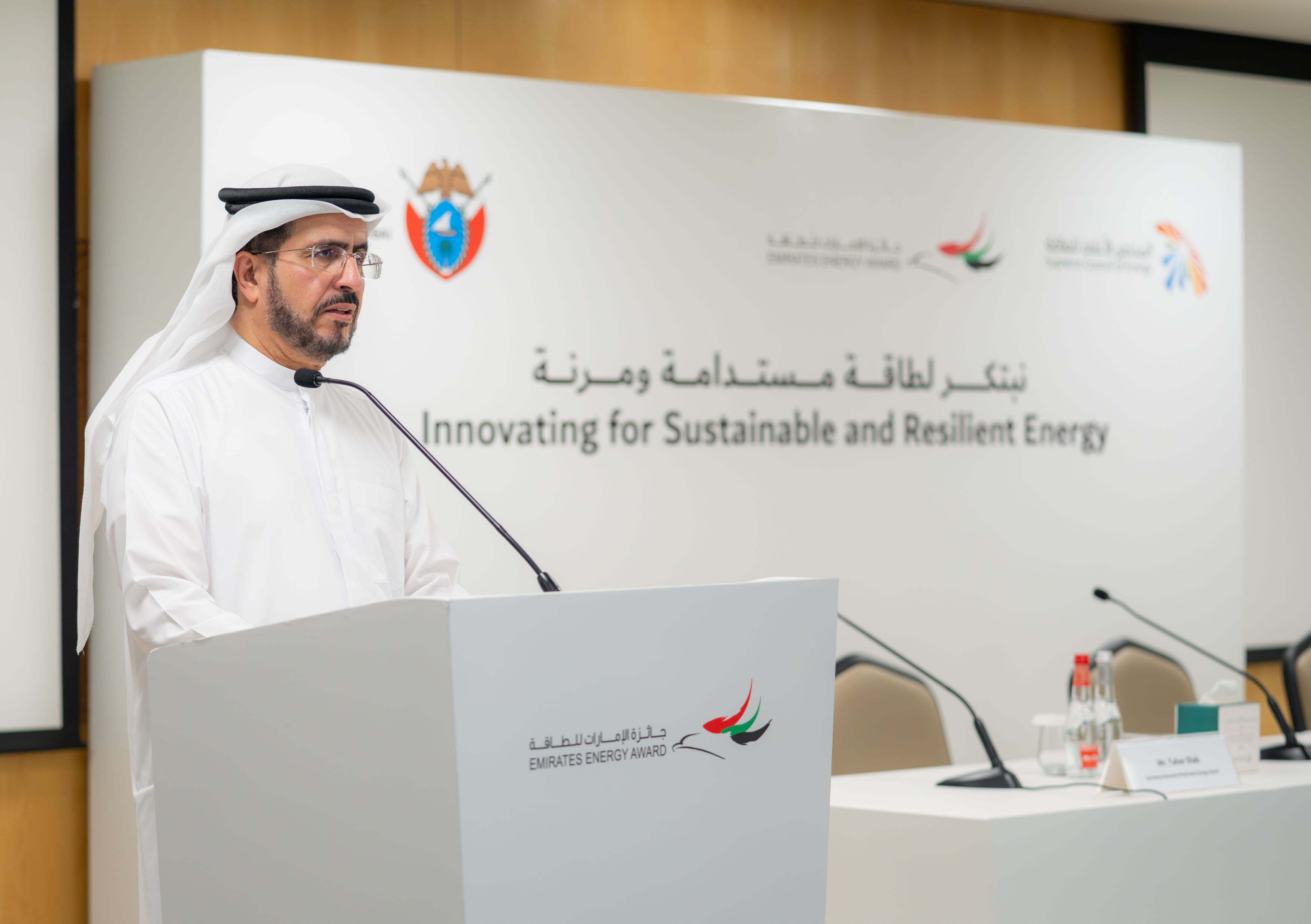
On the second day of the World Green Economy Summit (WGES):
Dubai Supreme Council of Energy launches the sixth edition of the ‘Emirates Energy Award’, worth USD 1 million, under the theme “Innovating for Sustainable and Resilient Energy”
Dubai, UAE, Oct 23: The Dubai Supreme Council of Energy launched the 6th Emirates Energy Award (EEA) 2026–2028 held under the patronage of HH Sheikh Mohammed bin Rashid Al Maktoum, Vice President and Prime Minister of the UAE and Ruler of Dubai, under the theme ‘Innovating for Sustainable and Resilient Energy’. This announcement was made by HE Saeed Mohammed Al Tayer, Vice Chairman of Dubai Supreme Council of Energy and Chairman of Emirates Energy Award, during the activities of the 12th edition of the World Green Economy Summit at Dubai World Trade Centre.
HE Saeed Mohammed Al Tayer, said: “I am pleased to announce the launch of the sixth cycle of Emirates Energy Award 2026–2028, organised by Dubai Supreme Council of Energy under the theme ‘Innovating for Sustainable and Resilient Energy’. This new theme aligns with the vision of the wise leadership of His Highness Sheikh Mohamed bin Zayed Al Nahyan, President of the UAE, and His Highness Sheikh Mohammed bin Rashid Al Maktoum, Vice President and Prime Minister of the UAE and Ruler of Dubai, to position the United Arab Emirates as a global hub for innovation in sustainable and resilient energy sector. The theme also reflects the Award’s direction to enhance the sustainability and resilience of energy systems, while strengthening their capacity to address climate change, thereby supporting sustainable development and strengthening global energy security.”
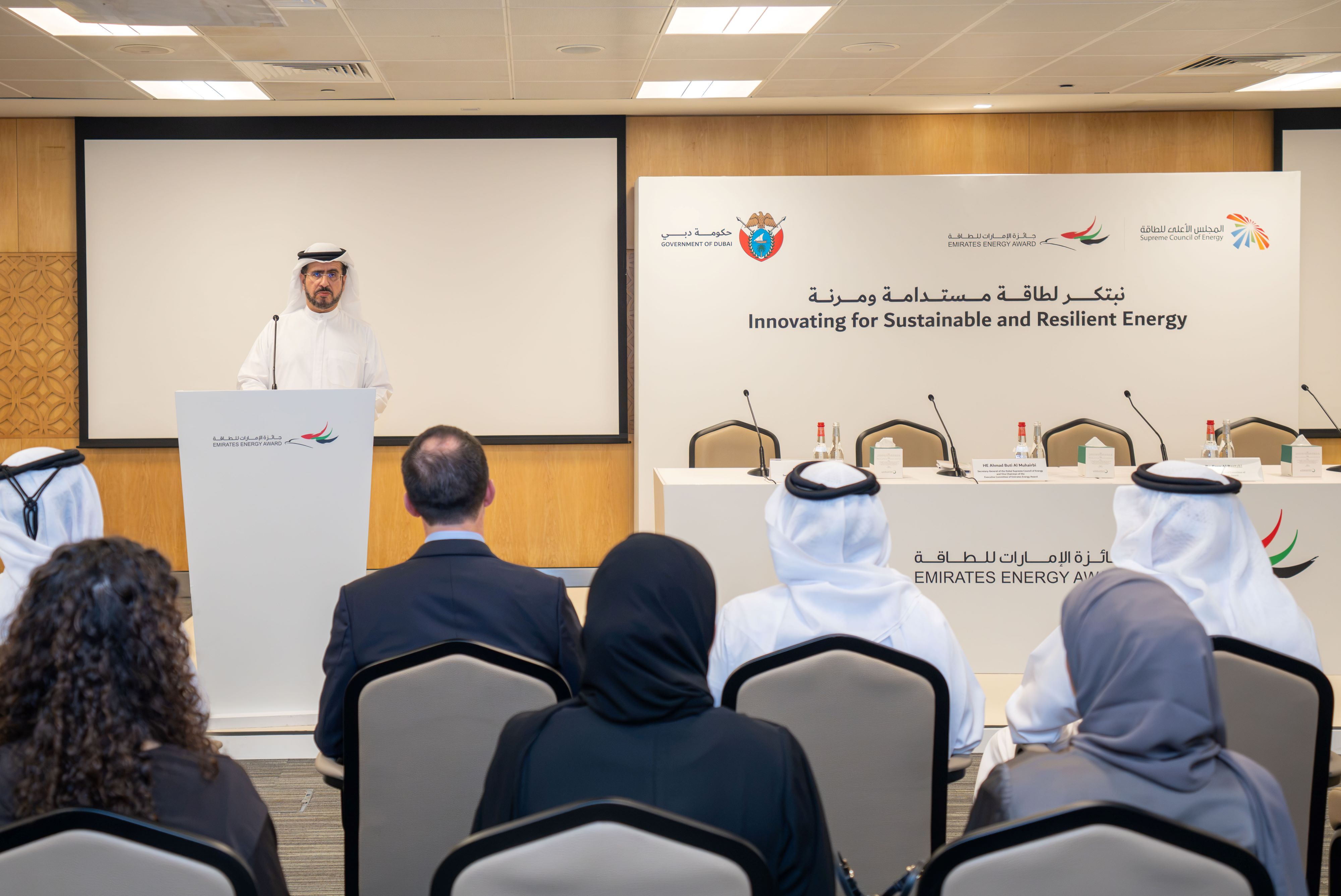
HE Saeed Mohammed Al Tayer added: “Emirates Energy Award is aligned with the objectives of the UAE’s Net Zero by 2050 Strategic Initiative, the Dubai Clean Energy Strategy 2050, and the Dubai Net Zero Carbon Emissions Strategy 2050. It also reflects our belief that innovation is a fundamental pillar in building an energy sector that is more efficient, resilient and better equipped to adapt to future changes. Through the forward-looking vision and sound directives of the wise leadership, Dubai is a leading global model in the transition towards clean and sustainable energy, and in consolidating innovation and resilience in the energy sector.The sixth cycle of the Award will continue to serve as a leading platform for recognising outstanding initiatives, projects and practices that deliver practical and innovative solutions, contribute to the advancement of the energy sector, enhance its sustainability and resilience, and support efforts to build a secure and sustainable energy system capable of keeping pace with global transformations.”
HE Al Tayer added: “Emirates Energy Award 2026-2028 carries a total award value of USD 1 million across ten categories, reflecting the breadth of the Award’s priorities, from advancing energy efficiency across the public and private sectors and supporting energy projects of different scales, to promoting the circular economy and the wider adoption of distributed solar energy solutions. The categories also highlight the importance of education and capacity building, research and development, innovation, and empowering young talent to contribute to the energy solutions of the future.”
HE Al Tayer added further: “We take this opportunity to invite institutions, organisations and individuals involved in the energy sector to participate in the sixth cycle of Emirates Energy Award and to present their experiences, solutions and outstanding projects that embody the spirit of innovation and respond to the requirements of the next phase. Moreover, we aspire for this cycle to serve as a catalyst for the development of more efficient, capable and resilient practices, while accelerating the adoption of solutions that enhance the reliability of the energy sector, strengthen its readiness for the future, and open new horizons for sustainable development. In conclusion, we hope that the sixth cycle of the Award will contribute to advancing the transition towards a clean and sustainable energy system, while safeguarding our planet’s resources and preserving them for generations to come.”
Emirates Energy Award has consolidated its position as an international platform that showcases best solutions and innovations made across the region and globally in the fields of renewable energy, energy efficiency, education, and research and development. Over its five previous cycles, the Award has recognised a diverse range of winners from government, private-sector and academic institutions, among others. These achievements reflect the cumulative efforts that have helped advance innovation and deliver more modernised solutions that address the needs of vital sectors, both regionally and globally.
Over its five previous cycles, Emirates Energy Award has honoured a total of 151 winners. The first four cycles recognised 118 winners, while the fifth cycle honoured 33 winners, reflecting the Award’s expanding reach and its continued role in highlighting outstanding initiatives and projects across the various fields of energy and sustainability.
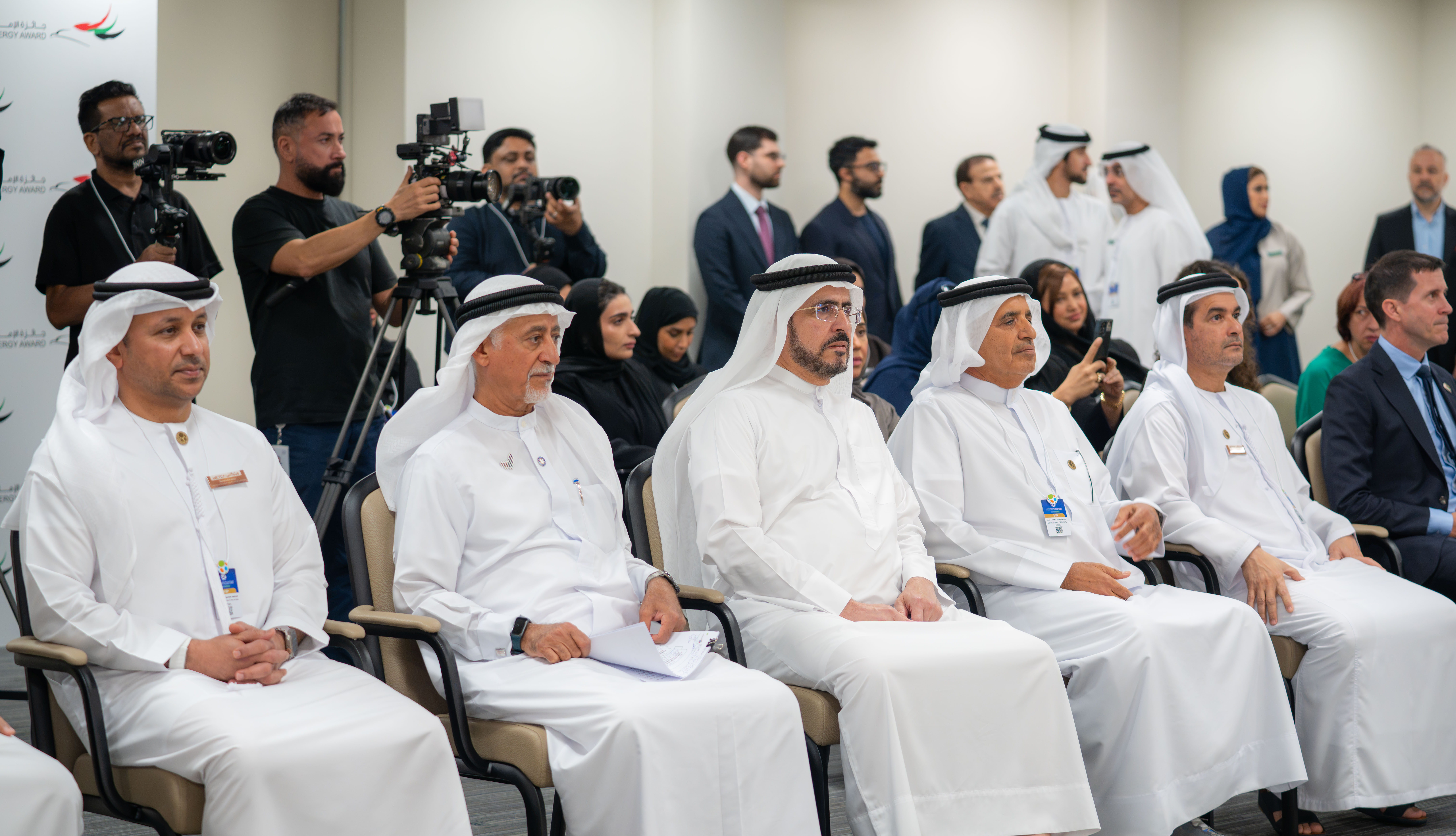
HE Ahmed Butti Al Muhairbi, Secretary-General of Dubai Supreme Council of Energy and Vice Chairman of the Executive Committee of the Emirates Energy Award said: “The sixth cycle of the Emirates Energy Award marks a new phase in the Award’s journey, guided by a vision focused on translating innovation into tangible impact across the energy sector. It seeks to encourage solutions that enhance efficiency, improve resource management, and strengthen the ability of systems and infrastructure to operate efficiently under varying conditions. The theme of this cycle, ‘Innovating for Sustainable and Resilient Energy’, reflects the need to move beyond conventional solutions towards more advanced models that are better equipped to respond to the rapid changes shaping the global energy sector.”
HE Al Muhairbi added, “We view the Award as an important platform for accelerating promising ideas and highlighting projects that deliver key value and demonstrate the potential for scalability and implementation, whether in energy generation, management, storage or efficiency. The Award also helps showcase experiences that harness technology, circular economy approaches and smart solutions to improve performance, reduce waste and enhance operational efficiency, thereby supporting the competitiveness of the energy sector and encouraging institutions and companies to adopt more advanced and future-ready solutions.”
Over the course of its five previous cycles, Emirates Energy Award has consolidated its role as an incubator for pioneering ideas. Innovative contributions in the field of clean energy demonstrate the Award’s ability to inspire creative minds to address global energy challenges. This direction also aligns with the UAE’s role in fostering an enabling environment for innovation across clean energy through initiatives and strategies that help create favourable conditions for transforming emerging projects into scalable and implementable models.
HE Al Muhairbi noted: “We expect strong participation from youth and entrepreneurs in the Award, which represents a key element in endorsing diversity and innovation through the development of practical and resilient solutions that keep pace with global transformations and support the UAE’s vision of achieving carbon neutrality. The ideas we have seen from these emerging projects in previous cycles open new opportunities for building a sustainable economy and a society that is more aware of clean energy.”
During the press conference, Taher Diab, Secretary-General of Emirates Energy Award, provided a detailed overview of the Award’s objectives and categories, which have reinforced its position as a platform for innovation in the energy sector by contributing to the advancement of clean energy and highlighting best practices and pioneering achievements in energy efficiency.
The Emirates Energy Award is granted across the Award’s 10 categories, including: Energy Efficiency – Public Sector; Energy Efficiency – Private Sector; Large Energy Project; Small Energy Project; Circular Economy; Large Solar Energy Project (Distributed Generation ≥ 500 kW); Small Solar Energy Project (Distributed Generation < 500 kW); Education and Capacity Building; Research and Development; and Young Energy Professional.


