


26, Jun 2026
AVer Receives 2026 Unified Communications Product of the Year Award from TMCnet

Taipei, Taiwan – June 26: AVer Information Inc., an award-winning provider of AI audio-video solutions, announced today that TMC, a global, integrated media company helping clients build communities via in person and digital marketing campaigns has named the VB150 as a 2026 Unified Communications Product of the Year Award winner.
“We are honored to receive TMC’s 2026 Unified Communications Product of the Year Award for the VB150,” said Marc Happes, Sr. Product Manager at AVer Information Inc. “The VB150 was designed to simplify hybrid collaboration in smaller meeting rooms while delivering exceptional video and audio experiences for every participant. TMCnet’s recognition reflects our commitment to creating innovative solutions that help organizations communicate and collaborate more effectively in today’s dynamic workplace.”
AVer’s VB150 is a next-generation USB video bar designed to make hybrid collaboration effortless, accessible and highly impactful. Built specifically for huddle rooms and small meeting spaces, the VB150 combines powerful 4K video performance, intelligent AI features and simple plug-and-play connectivity to deliver seamless hybrid meeting experiences for BYOD and PC-based room solutions.
The VB150 features a high-performance 4K camera with a 120° wide-angle lens, ensuring every participant is clearly visible and included in the conversation. The VB150 also includes intelligent features such as AI Voice Tracking, which automatically follows the active speaker, while Smart Composition frames all meeting participants for a balanced, engaging view. Together, these capabilities create a natural and inclusive meeting experience without requiring manual camera adjustments.
The VB150’s advanced audio system ensures every voice is heard clearly. Equipped with five beamforming microphones and AI noise reduction, the system captures speech accurately while minimizing background distractions. An optional expansion microphone can further extend audio pickup range, making the VB150 adaptable to a variety of room layouts.
“It gives me great pleasure to honor AVer as a 2026 recipient of TMC’s Unified Communications Product of the Year Award for their innovative solution, VB150,” said Rich Tehrani, CEO, TMC. “Our judges were very impressed with the ingenuity and excellence displayed by AVer in their groundbreaking work on VB150.”
Winners of the 2026 Unified Communications Product of the Year Award will be announced online and highlighted in INTERNET TELEPHONY magazine online.
- 0
- By Neel Achary

26, Jun 2026
itel Power 451 Debuts with AI ENC, Type C Charging and 2500 mAh Battery
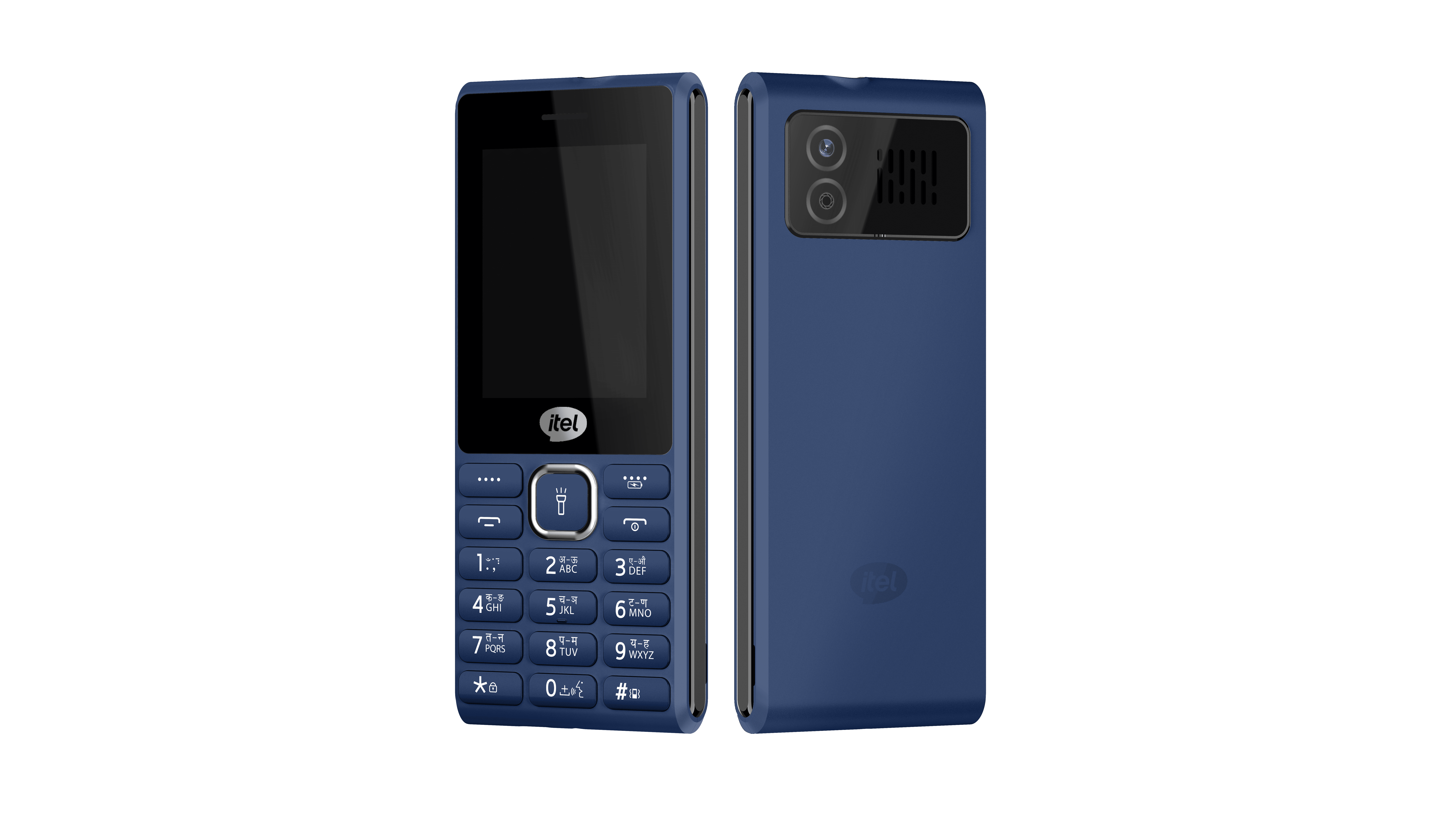
June 26: itel, one of the leading tech brands known for democratizing technology for Bharat, has recently launched its latest feature phone, the itel Power 451, bringing innovative technology generally found in premium smartphones to the feature phone category. With the introduction of AI Environmental Noise Cancellation (AI–ENC) – only provided by itel in Feature Phones in India – the itel Power 451 ensures clear and uninterrupted conversations by intelligently reducing surrounding noise from crowded markets, busy streets, workplaces and other noisy environments. The itel Power 451 phone is available in super stylish colours of Blue, Green, Purple and Black – now available at retail stores. itel also offers an exciting 1-year Counter Replacement offer for any manufacturing defect in feature phones
Commenting on the launch, Arijeet Talapatra, CEO of itel India, said, “At itel, our focus has always been to bring meaningful innovations that solve real consumer challenges while keeping technology accessible for every Indian. AI ENC technology was introduced in feature phones by itel and we are continuing this further with Power 451. For us, innovation has always has been about what makes the daily lives of consumers better.”
Continuing the brand’s commitment to delivering tangible benefits to consumers, the phone comes with a free back cover inside the box that is only offered by itel in the feature phone industry, allowing users to protect their device from day one without any additional expense. Further elevating the experience, the Power 451 features Type–C charging support, bringing the convenience of a universal, modern charging solution that is commonly associated with smartphones. It is also equipped with a powerful 2500 mAh battery that delivers up to 55 days of standby time with Super Battery Mode, ensuring uninterrupted connectivity for users who depend on their phones throughout the day. The latest Cyber Media Research (CMR) report on The Rising Role of Durability, Reliability, and Affordability in India’s Device Market has demonstrated strong all-round performance of itel – securing impressive scores of 0.65 in feature phones and 0.86 in smartphones – highest in the segment. Additionally, 85% of consumers feel they get great value for money, 81% associate itel with strength and durability, 79% appreciate its design, and 74% consider it a trustworthy and reliable brand.
The Power 451 is a well-rounded device, built for sustained outdoor use. Equipped with a big 2.4-inch display, Bluetooth connectivity, wireless FM radio with recording, 60 call logs, and 32GB of expandable storage, Built around the evolving needs of feature phone users, itel POWER 451 combines meaningful innovation, everyday convenience and exceptional value. By combining advanced call clarity, reliable battery life, modern charging convenience and thoughtful additions like a complimentary protective back cover, the device strengthens itel’s vision of making innovative technology accessible to millions of consumers across India.
26, Jun 2026
Crude Oil Extends Losses, Set for Weekly Drop

June 26: Crude oil prices fell by up to 2% in early trading on Friday, extending losses through the week amid concerns over supply-demand imbalances and shifting global market sentiment.
Benchmark crude contracts continued to remain under pressure as investors weighed expectations of steady production levels against uncertain demand outlooks in key consuming regions. The decline has put oil prices on track for their sharpest weekly losses in recent weeks.
Market analysts said the downward trend reflects cautious trading sentiment, with participants closely tracking global economic indicators, inventory data, and production signals from major oil-producing nations.
Despite short-term volatility, energy markets remain sensitive to geopolitical developments and policy decisions that could influence future supply dynamics.
Traders are expected to monitor upcoming economic data and industry reports for further direction in global crude price movements.
26, Jun 2026
India, UK Explore New Avenues to Strengthen Economic and Trade Partnership: Piyush Goyal
New Delhi, June 26: India and the United Kingdom are exploring new opportunities to further deepen their economic and trade partnership, Union Commerce and Industry Minister Piyush Goyal said on Wednesday.
Goyal said both countries are actively engaged in discussions aimed at expanding bilateral trade, enhancing investment flows, and identifying new areas of cooperation to strengthen the overall economic relationship.
He noted that the India–UK partnership continues to offer significant growth potential across key sectors, including technology, manufacturing, services, and innovation. According to him, ongoing engagements reflect a shared commitment to building a stronger, more balanced, and mutually beneficial trade relationship.
The minister added that closer economic cooperation between the two countries will help create new opportunities for businesses and contribute to long-term economic growth on both sides.
India and the UK have been regularly engaging through high-level dialogues to further deepen their strategic and economic ties.
26, Jun 2026
Muharram Holiday: Stock Markets to Remain Closed
Mumbai, June 26: The Indian stock markets will remain closed today on account of Muharram, a scheduled trading holiday.
Both the Bombay Stock Exchange (BSE) and the National Stock Exchange (NSE) will not conduct trading in equity, equity derivatives, securities lending and borrowing (SLB), and currency derivatives segments. Normal trading activities will resume on the next working day.
The closure is in line with the official holiday calendar issued by the stock exchanges. Investors and market participants have been advised to plan their trading and settlement activities accordingly to avoid any inconvenience.
While markets remain closed, investors can still access their trading platforms to view portfolios and place orders, which will be processed once trading resumes.
The exchanges periodically release trading holiday schedules to ensure smooth functioning and advance planning for all stakeholders in the financial markets.
26, Jun 2026
Daimler Truck Innovation Center India Pvt. Ltd. and United Way Bengaluru Restore 25-Acre Kithaganur Lake, Benefiting over 24,000 Residents
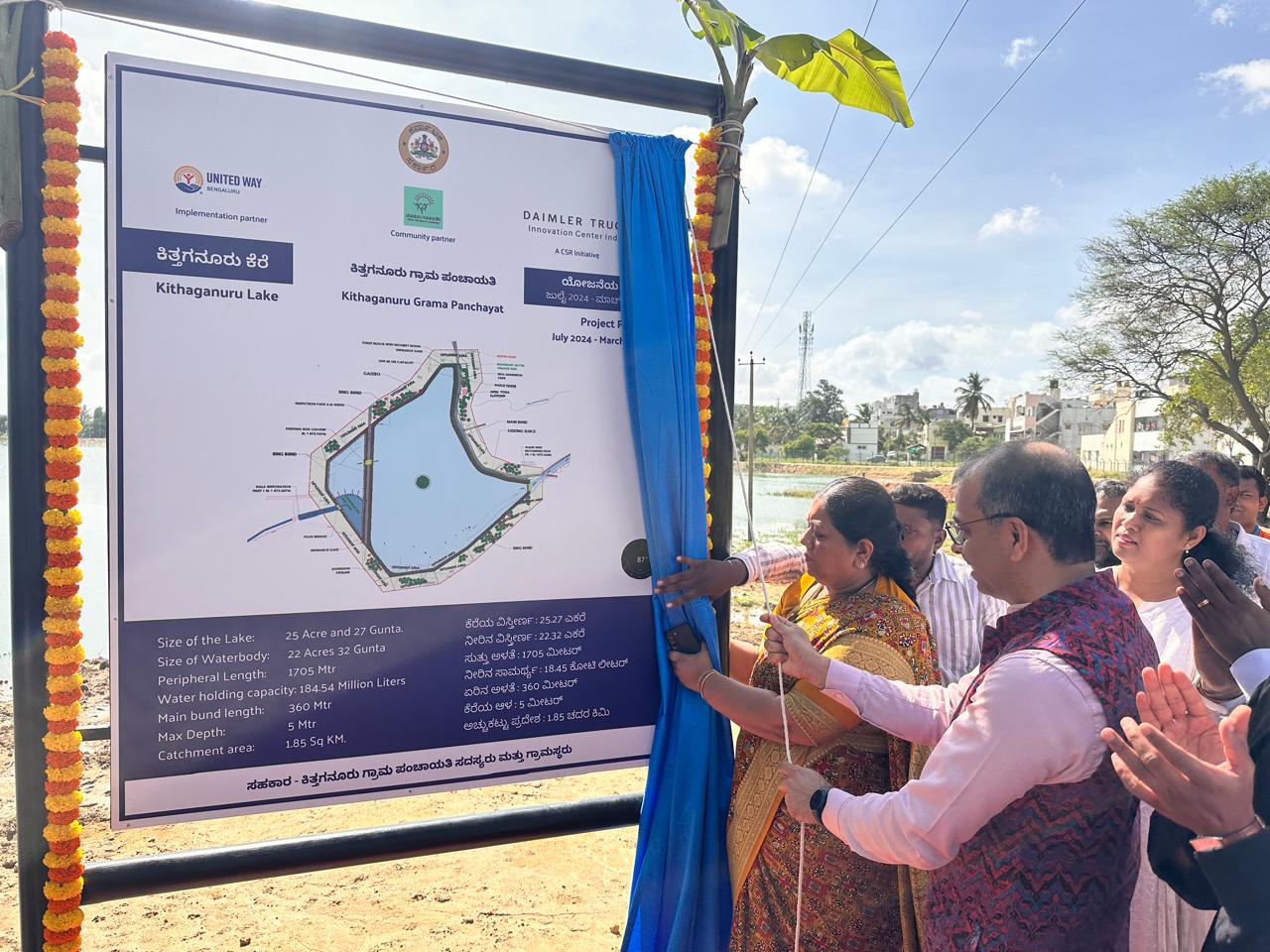
June 26: Daimler Truck Innovation Center India, in partnership with United Way Bengaluru (UWBe), has supported the rejuvenation of Kithaganur Lake, a 25-acre water body in East Bengaluru, under UWBe’s flagship Wake the Lake campaign. The rejuvenated lake was formally handed over to the gram panchayat on June 5, World Environment Day, reinforcing the shared vision of restoring Bengaluru’s vital water ecosystems.
The intervention has resulted in a 22% increase in the lake’s water-holding capacity, benefiting over 24,000 residents in the surrounding communities. The rejuvenated lake now supports approximately 65 species of flora and fauna and is expected to contribute nearly 9 tonnes of carbon sequestration annually.
Over the years, Kithaganur Lake has suffered from silt accumulation, sewage inflow, encroachments, and blocked feeder channels, reducing its water-holding capacity and affecting the surrounding ecosystem. The rejuvenation has involved scientific de-silting, fencing, clearing water channels, biodiversity enhancement, and community engagement to ensure long-term conservation.

Speaking at the handover ceremony, Smt. Manjula Arvind Limbavali, MLA, Mahadevpura Constituency, appreciated the collaborative efforts that brought Kithaganur Lake back to life and emphasized that lake rejuvenation is only the first step in a longer journey of environmental stewardship. She noted that the Solid Waste Management team must now play an active role in supporting the next phase of the lake’s development. She further urged the community, local authorities, and all stakeholders to take collective responsibility for protecting the lake, ensuring that it does not fall back into previous state. “A rejuvenated lake can remain healthy only when every citizen becomes its guardian. It is our shared responsibility to preserve this asset for future generations,” she said.
“The rejuvenation of Kithaganur Lake is a powerful example of how collaborative action can drive meaningful impact. Through our partnership with United Way Bengaluru, and a close collaboration with Shishu Mandir, Panchayath, we are proud to contribute to sustainable urban development and help create lasting benefits for both communities and the environment”, said, Mr. Radhakrishna Kodakkal – Managing Director and CEO, Daimler Truck Innovation Center India
“Lakes are among Bengaluru’s most valuable natural assets. Through the ‘Wake the Lake’ campaign, we are not only rejuvenating water bodies but also fostering community ownership and creating sustainable environmental impact. By bringing together committed partners such as Daimler Truck Innovation Center India, local communities, and government stakeholders, we are creating healthier ecosystems and a more water-secure Bengaluru, said Sriram Ananthanarayan, Director, United Way Bengaluru.
With the restoration of Kithaganuru Lake, Daimler Truck Innovation Center India strengthens its commitment to environmental conservation – Prakruthi Mitra, sustainable urban development, and creating lasting positive impact for communities through ecological restoration.
26, Jun 2026
Odisha Speaker Appoints Pramila Mallik to Head Public Accounts Committee for 2026–27
Bhubaneswar, June 26: Senior Biju Janata Dal (BJD) leader and Chief Whip of the BJD Legislature Party, Pramila Mallik, has been appointed as the Chairperson of the Public Accounts Committee (PAC) of the Odisha Legislative Assembly for the financial year 2026–27.
The appointment was made by Speaker Surama Padhy through a notification issued by the Odisha Legislative Assembly Secretariat. Mallik was nominated to head the committee under Rule 197(1) of the Rules of Procedure and Conduct of Business of the Odisha Legislative Assembly.
The 12-member Public Accounts Committee has been constituted under Rule 135(1) of the Assembly’s Rules of Procedure and Conduct of Business.
The committee comprises Chairperson Pramila Mallik along with members Rama Chandra Kadam, Dr. Aruna Kumar Sahu, Ganeswar Behera, Sanatan Bijuli, Akash Dasnayak, Kalikesh Narayan Singh Deo, Ashok Mohanty, Babu Singh, Santosh Khatua, Amar Kumar Nayak and Arabinda Mohapatra.
The Public Accounts Committee is one of the most significant financial oversight bodies of the Odisha Legislative Assembly. It examines the reports of the Comptroller and Auditor General (CAG) of India and scrutinises government expenditure to ensure that public funds are utilised in accordance with legislative approvals and established financial norms. The committee plays a crucial role in promoting transparency, accountability and fiscal discipline in public administration.
The constitution of the committee for 2026–27 is expected to further strengthen legislative oversight over the state’s financial management and expenditure.
26, Jun 2026
TDP MP Vijay Chinthakayala’s Oath Echoes Mangalagiri Weavers Legacy
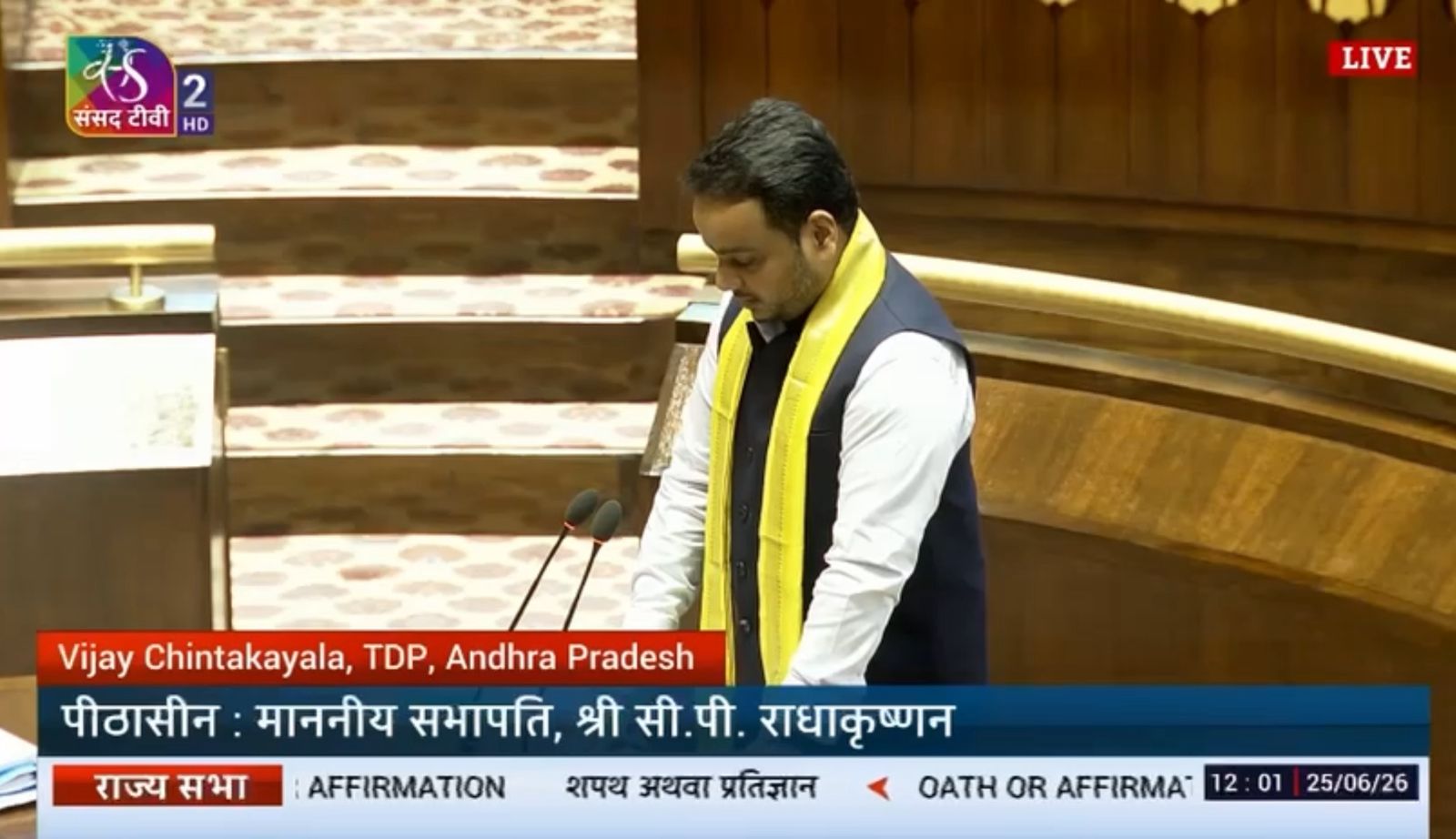
New Delhi/Visakhapatnam, June 26: On a historic day for Andhra Pradesh in the nation’s capital, newly elected Telugu Desam Party (TDP) leader Vijay Chinthakayala Ayyannapatrudu took oath as a Member of the Rajya Sabha on June 25. He was joined by fellow TDP MPs Sana Satish Babu and Bhashyam Rama Krishna, alongside Jana Sena Party’s Lingamaneni Ramesh, marking a significant sweep for NDA in Rajya Sabha.
Elected under the leadership of Andhra Pradesh Chief Minister Chief Minister N. Chandrababu Naidu and TDP Minister Nara Lokesh, MP Vijay marked the occasion by wearing a traditional Mangalagiri cotton shawl, bringing national attention to one of Andhra Pradesh’s most cherished handloom traditions.
The shawl carries a significance far beyond ceremonial attire. Every thread of that shawl traces its origins to Mangalagiri, the historic temple town in Guntur district and the Assembly constituency represented by Andhra Pradesh IT, Electronics and Human Resources Minister Nara Lokesh. Mangalagiri cotton carries over 500 years of recorded history.
During the Qutub Shahi period in 1593, heavy taxes on handloom products forced many weavers to leave the region, dealing a severe blow to the industry. Yet the craft endured. It adapted, recovered and continued to be passed down through generations. Today, Mangalagiri cotton enjoys Geographical Indication (GI) status, recognised for its distinctive weave and craftsmanship. Yet behind this celebrated legacy lies a painful reality.
In the early 1990s, Mangalagiri was home to nearly 20,000 weavers. Today, only about 6,000 active handloom weavers remain. Rising costs, shrinking margins and competition from machine-made imitations have steadily reduced the community that once made Mangalagiri one of India’s most vibrant weaving centres.
That is why Vijay Chinthakayala Ayyannapatrudu’s choice resonated far beyond symbolism. The gesture reflects the vision of TDP Minister Nara Lokesh who has been unambiguous about his commitment to this community. “Weavers are not workers. They are craftsmen. It is a God-given skill,” Nara Lokesh once remarked, announcing a Rs. 250 crore market intervention fund for international branding of Mangalagiri cotton back in 2019. “It will be my responsibility to attend the grievances of each and every weaver,” he pledged.
When Vijay Chinthakayala Ayyannapatrudu took oath in the Rajya Sabha, the shawl on his shoulders carried the hopes of thousands of weaving families, the pride of a centuries-old tradition and the promise that the voice of Mangalagiri’s artisans would be heard in the highest forums of the nation.
26, Jun 2026
As AI Concerns Grow, 66% of Enterprise Event Professionals Now Say AI Translation Outperforms Human Interpreters
New study finds AI translation exceeds human interpretation on quality, access, and cost as multilingual demand surges
LOS ALTOS, CA – June 26 – For years, human interpreters have been considered the gold standard for multilingual communication. New research suggests the standard is changing.
The “2026 State of AI Translation and Captions” survey, conducted independently by Dimensional Research and commissioned by Wordly, finds that two-thirds (66%) of enterprise event planners now say AI translation and captions deliver better quality than human interpreters. That shift strengthens with AI usage. Among regular users, 79% say AI performs better, while just 12% prefer human interpreters.
“Much of the public conversation around AI still focuses on risk, uncertainty, and what the technology cannot do,” said Lakshman Rathnam, Wordly Founder & CEO. “But research shows that organizations that use AI translation are making decisions based on outcomes, not assumptions. They’re seeing measurable gains in quality, accessibility, and scale and that is reshaping what they expect from language technology.”
Key Findings from the 2026 State of AI Translation and Captions Survey:
●A New Quality Standard: 66% of enterprise event planners report that AI translation and captioning delivers higher quality than human interpreters (compared to 25% who still prefer traditional interpretation services).
●High Satisfaction Across the Board: 79% of regular users say AI translation performs better than traditional options (with just 12% preferring human interpreters), while 61% of occasional users report a superior experience.
●Rapid Technology Advances: 93% of respondents state that AI translation quality has noticeably improved over the past year.
●Economics Driving Adoption: 95% of enterprise organizations find AI translation more affordable and easier to deploy than human interpretation, allowing them to expand language access within budget constraints.
●Surging Multilingual Demand: 88% of respondents report an increase in non-English-speaking participants, up from 77% the previous year.
●A Universal Corporate Priority: 96% of surveyed organizations state that providing comprehensive language access is now an official priority.
What’s Next: The Future Strategy for Enterprise Language Access
Despite near-universal adoption of AI interpretation (88%) and captioning (91%), 97% of respondents want capabilities beyond live translation, including:
●58% are interested in adding full multilingual transcripts
●53% would like to add subtitle and voice dubbing files
●51% are interested in creating meeting notes with action items
●50% would like to add marketing-ready summaries
A complete copy of the 2026 State of AI Translation and Captions can be found online at https://www.wordly.ai/research/state-of-ai-translation-2026. An infographic highlighting the biggest trends of the survey is also available.
Survey Methodology: The 2026 State of AI Translation and Captioning survey was commissioned by Wordly and conducted by Dimensional Research. The study surveyed 205 qualified meeting and event stakeholders from the United States and United Kingdom between May 11 and May 21, 2026. Participants were responsible for external events and/or internal meetings involving multilingual audiences at organizations with more than 1,000 employees.
26, Jun 2026
Kriti Sanon on Cocktail 2, comparisons with Deepika Padukone, and more in Filmfare’s June Cover Story

One of Bollywood’s most versatile and celebrated stars, Kriti Sanon, graces the latest cover of Filmfare, offering an unfiltered glimpse into her creative process, personal growth, and her transformative experience playing Ally in the highly anticipated Cocktail 2. In an expansive conversation, Kriti reveals how filmmaker Homi Adajania became the inspiration behind understanding Ally’s liberated and magnetic personality.
Speaking about preparing for the character, Kriti shares, “Homi Adajania. He’s obviously not completely Ally but I could draw some kind of Ally from him because he has a cool personality. He has lived and travelled a lot. His mindset is extremely liberated and free. He’s non-judgmental and has all those characteristics that Ally also has. I remember telling him, ‘I don’t think I’m cool as a person.’ There’s no preparation that you can do for coolness. It’s a state of mind.”
The actress candidly admits that stepping into Ally’s shoes required her to embrace a mindset vastly different from her own. Reflecting on the character, she says, “I’m not as unhinged as a person as Ally is. She’s lived a different life. She’s just so non-judgmental and I’m an overthinker by nature. I’m analytical and logical about things, whereas Ally is completely free-spirited, liberated and not bound by the norms of society.”
Addressing the much-discussed look of her character, Kriti credits the creative team behind the film, especially costume designer Anaita Shroff Adajania. “Absolutely no input. When I saw the kind of clothes that Ally was supposed to wear, I thought I needed to work hard on my body. Because I had to look fit and toned and have a beach body. That’s my only input,” she says, before adding with characteristic humor, “Homi made me cool and Anaita made me hot.”
The cover story also delves into Kriti’s successful on-screen partnership with Shahid Kapoor. Having previously shared screen space in Teri Baaton Mein Aisa Uljha Jiya, the duo reunite for Cocktail 2, and Kriti speaks highly of her co-star’s craft. “He’s such an intelligent actor. I genuinely believe that he can actually direct a film. I would love him to direct a film because he has so much knowledge of filmmaking,” she shares.
Talking about their chemistry, Kriti notes, “There’s something electric about it, which we got to explore a lot more in Cocktail 2, now that I was playing a human being. Ally and Kunal have this strong, electric and slightly sensuous chemistry where they can also have deeper conversations.”
The conversation also touches upon inevitable comparisons with Deepika Padukone’s iconic Veronica from the original Cocktail. Kriti approaches the discussion with confidence and clarity.
“No, I’m not, actually. Do I expect it? Yes, I do. It’s kind of obvious, as I’m doing a film which is a franchise to the film that she’s done before. The characters, somewhere, have a similar energy of being slightly disruptive, unhinged and free-spirited. But Ally and Veronica are so different and I’m glad that they’re different.”
Beyond films and performances, Kriti reflects on navigating industry pressures, comparisons, and her own evolution as an artist.
“If you’re secure in yourself, none of it matters. These are just traction-related conversations, which people use to make others feel insecure. Everyone brings something different to the table. The only race that I’m in is that I want to do better than what I have done before.”
Looking back on her journey, she acknowledges how confidence has replaced the insecurities of her early years.
“When you start off and you don’t come from a film background, you are hungry to prove yourself… Once that happens, you surpass the insecurity. Now, it’s more about the excitement of taking up the next challenge and doing something different.”
In one of the interview’s most vulnerable moments, Kriti reveals her deepest fears, saying, “Losing any loved one. And sometimes, I have a subconscious fear that one day I’ll be in front of the camera and I won’t be able to act.”
Honest, introspective and refreshingly candid, Kriti Sanon’s Filmfare cover story captures an actress at the peak of her powers secure in her journey, fearless in her choices, and eager to keep challenging herself with every new role.


