


13, Oct 2026
Rare Two-Headed Baby Born at Berhampur’s MKCG Medical College, Newborn Under Close Observation
A woman from Kandhamal district has delivered a baby with two heads and one body at MKCG Medical College and Hospital in Berhampur. The newborn has been admitted to the Special Newborn Care Unit, where doctors are closely monitoring the baby’s condition.
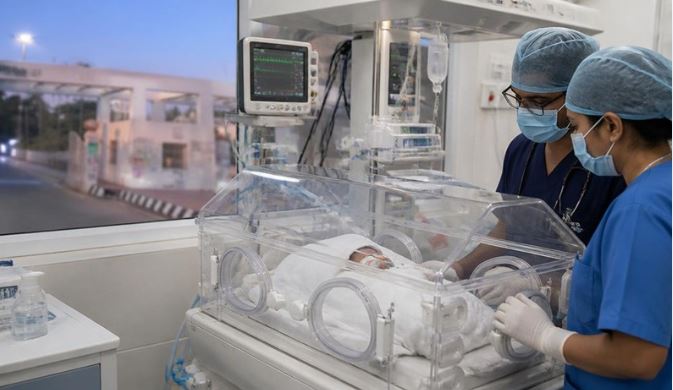
Representational Image
Berhampur, Oct 13 (UDN): A rare birth has been reported at MKCG Medical College and Hospital in Berhampur, Odisha, where a woman from Kandhamal district gave birth to a baby with two heads and one body.
According to reports, the newborn has one body and one heart, with two heads. The baby is currently receiving medical care at the hospital’s Special Newborn Care Unit (SNCU), where a medical team is keeping the condition under close observation.
The unusual case has drawn attention because of the rarity and medical complexity associated with congenital conditions involving the development of two heads.
Newborn Under Close Medical Observation
Following the birth, the baby was admitted to the advanced newborn care facility at MKCG Medical College and Hospital.
Doctors are reportedly monitoring vital health parameters, including breathing, heart rate and other essential indicators, to assess the newborn’s condition and provide appropriate care.
The medical team is continuing to observe the baby closely. Further details about the newborn’s condition and prognosis have not been provided in the available report.
What Is Craniopagus Parasiticus?
The condition has been identified in reports as craniopagus parasiticus, an extremely rare congenital abnormality associated with an additional head attached to another individual’s skull.
However, the precise classification of a two-headed birth depends on the baby’s anatomy, including how the skulls, brains, blood vessels and other structures are connected. A definitive diagnosis would require detailed medical evaluation.
Such cases are medically complex and require specialised assessment to understand the anatomy involved and determine the appropriate course of treatment.
Doctors Monitoring the Baby’s Condition
The newborn remains under medical supervision at MKCG Medical College and Hospital, with doctors monitoring vital signs and providing the necessary care.
The baby’s current clinical status, the detailed findings of medical examinations and the long-term prognosis remain unclear based on the information available so far.
Further updates from the hospital authorities may provide greater clarity on the newborn’s condition and the treatment being considered.
- 0
- By Neel Achary

13, Oct 2026
Modernisation of carry allocation is accelerating across private equity
Modernisation of carry allocations is set to accelerate over the next three years as private equity fund managers move to more flexible and inclusive models, new research* from Ocorian, a leading U.S. and global asset services provider, shows.
The study, which surveyed private equity managers across the U.S. and Europe collectively managing $3.511 trillion, found that 84% expect the pace of modernisation to increase, with fund structure complexity, regulation and tax issues being the key drivers of change.
Research across key U.S. markets, the UK, Switzerland, Germany, Italy, Spain, Poland, Sweden and Bulgaria found alternative phantom equity pools are currently the most widely used innovations, while points systems for legacy deal inclusion will see the most growth over the next three years.
More than half (54%) questioned currently use alternative phantom equity pools, while 53% use shorter vesting and retention hooks and 50% use points systems for legacy deal inclusion. Around two out of five (37%) focus on broader participation as an innovation to carry allocation.
Looking ahead, 60% expect a dramatic increase in the use of points systems for legacy deal inclusion over the next three years, while 56% expect the same for the use of alternative phantom equity pools
Fund complexity, regulation and talent are driving change
The study identified fund structure complexity, regulatory change and tax developments as the primary drivers of changes to carry allocation. More than a third (37%) say complexity of fund structures, including continuation vehicles and longer fund lives, is creating a need for more flexibility while 33% say regulatory and tax changes, including UK reforms, are making changes necessary.
Around 10% of firms are already using tiered performance-based carry, where carry rates can rise above 20% when higher return thresholds are achieved. depending on higher return multiples, while 90% are considering it.
Balancing broader participation with LP protection
The survey also found carried interest or other equity-linked compensation is increasingly being shared with non-principals, with 82% reporting a slight increase over the past three years and 11% reporting a significant increase.
However, there is also more demand from LPs for stronger protection against over-distribution with 92% reporting an increase.
Brendan Dowling, Head of Employee Incentive Services at Ocorian, said: “Carry allocation practices are continuing to evolve, and our research suggests this evolution is likely to accelerate over the next three years.
A range of factors are driving this shift. Chief among them are increasing regulatory and tax scrutiny, alongside the growing complexity of fund structures and incentive arrangements, all of which are creating a greater need for flexibility.
Competition for talent is also influencing how firms structure carry. There is an increasing focus on creating reward mechanisms that are more transparent and better understood by participants, contributing to a broader trend towards wider participation in carry programmes.”
The table below shows which innovations to carry allocations private equity fund managers expect the use of to increase the most over the next three years.
|
Carry innovation |
Percentage expecting use to increase dramatically over next three years |
Percentage expecting use to increase slightly over next three years |
Percentage expecting use to stay the same over next three years |
Percentage expecting use to decrease over next three years |
Percentage saying not applicable |
|
Broader participation |
25% |
53% |
22% |
Zero |
Zero |
|
Point systems for legacy deal inclusion |
60% |
17% |
20% |
1% |
2% |
|
Alternative phantom equity pools |
56% |
20% |
22% |
2% |
1% |
|
Impact-linked carry |
32% |
25% |
41% |
2% |
1% |
|
Dollars at work reporting |
23% |
38% |
32% |
1% |
6% |
|
Shorter vesting and retention hooks |
25% |
28% |
42% |
2% |
4% |
|
Portfolio level/deal specific allocation |
34% |
37% |
27% |
1% |
2% |
|
Earlier in fund life incentives |
23% |
55% |
20% |
2% |
Zero |
13, Oct 2026
Sunny Deol’s Intense New Look Unveiled in ‘Suryaa: Ant Se Aarambh Tak’; Crime Thriller to Hit Theatres on November 20
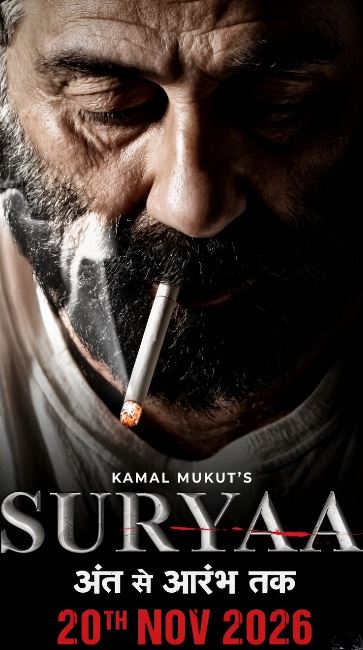
Mumbai, Oct 13: Sunny Deol is set to explore a darker side of his on-screen persona in Suryaa: Ant Se Aarambh Tak, the upcoming crime thriller whose first look and motion poster have now been unveiled.
Featuring Deol in a weathered, intense appearance, the poster hints at a character haunted by his past and drawn into a mystery with potentially far-reaching consequences. Directed by Malayalam filmmaker M. Padmakumar, the film is scheduled for a theatrical release on November 20, 2026.
The first-look poster carries the tagline, “Torn between his past and present, he uncovers the truth,” offering a glimpse into the emotional conflict at the heart of the story.
Sunny Deol Steps Into a Darker Role
Known for his commanding screen presence and action-driven performances, Deol appears in a markedly rugged look in the film’s promotional material. His unkempt appearance and brooding expression suggest a troubled character carrying the weight of unresolved events.
While the makers have kept several details under wraps, the first look points towards a tense narrative built around secrets, personal dilemmas and an investigation that forces the protagonist to confront his past.
The film is expected to combine crime investigation with an emotional storyline, placing its central character at the intersection of justice and difficult personal choices.
‘Suryaa: Ant Se Aarambh Tak’ Is a Hindi Adaptation of ‘Joseph’
The film, whose title translates to “From End to Beginning”, is a Hindi adaptation of the 2018 Malayalam crime thriller Joseph, written by Shahi Kabir.
The original film earned recognition for its gripping investigative narrative and exploration of disturbing criminal realities. The Hindi version is expected to bring the story to a wider audience, with Deol taking on a central role.
The project also marks Padmakumar’s Bollywood directorial debut. The filmmaker, known for his work in Malayalam cinema, will bring his storytelling approach to the Hindi-language thriller.
According to reports, Deol plays a retired police officer who becomes involved in an investigation that leads him into a web of crime and concealed truths. Further details about how the adaptation differs from the original remain undisclosed.
Ravi Kishan, Pragya Jaiswal Join the Ensemble
The film features a supporting cast that includes Ravi Kishan, Pragya Jaiswal, Jisshu Sengupta, Tinu Anand, Manish Wadhwa and Tanushree Chakraborty. Rohit Tiwari and Anoop Trivedi are also part of the ensemble.
Their involvement adds to the film’s cast as anticipation builds around the project and Deol’s transformation for the role.
Suryaa: Ant Se Aarambh Tak is presented by Kamal Mukut and produced by Deepak Mukut, Hemmant Mukut and Lokesh Mukut under the MM Moviez banner. Zee Music Company is associated with the film’s music.
November Release Raises Expectations
With its first-look reveal, Suryaa: Ant Se Aarambh Tak has begun building interest among audiences looking forward to seeing Sunny Deol in a crime thriller driven by mystery and psychological tension.
The film’s November 20 release will place the spotlight on how the director and cast reinterpret the acclaimed Malayalam original for Hindi-speaking audiences.
Although the promotional material establishes a sombre tone, the makers have yet to reveal the full storyline. For now, the film’s central promise rests on Deol’s new avatar, a layered investigative narrative and the mystery surrounding a man caught between his past and present.
13, Oct 2026
Jharsuguda Airport Set for Major Expansion as Centre Approves Rs 2,100 Crore, International Upgrade Planned
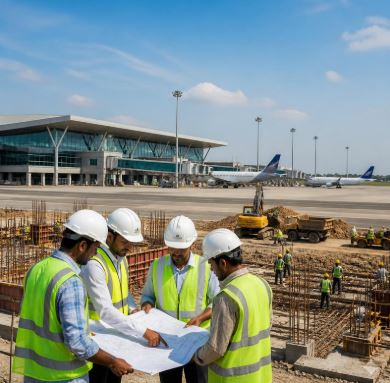
Representational Image
The proposed development of Veer Surendra Sai Airport includes runway expansion, a new terminal, land acquisition and improved passenger facilities. Authorities are also exploring direct flights to Chennai, Jaipur and Visakhapatnam.
Jharsuguda, Oct 13 (UDN): Veer Surendra Sai Airport in Jharsuguda is set for a major infrastructure upgrade, with the Centre reportedly approving Rs 2,100 crore for its expansion and development to international standards.
The proposed investment is expected to support improvements in airport infrastructure, including runway expansion, construction of a new terminal and facilities to accommodate larger aircraft. The development could strengthen air connectivity across western Odisha and create fresh opportunities for tourism, business and employment.
The announcement was made by Bargarh MP Pradeep Purohit, who also chairs the Airport Advisory Committee, following a meeting held on Monday to discuss the airport’s future expansion and operational requirements.
Land Acquisition Underway for Airport Expansion
According to Purohit, the process of acquiring nearly 350 acres of land is underway to facilitate the proposed expansion.
“Jharsuguda airport will become an international airport in the coming days. The Centre has approved Rs 2,100 crore to develop it to an international level. The acquisition process for nearly 350 acres of land is underway,” he said.
The proposed infrastructure upgrades are expected to enhance the airport’s operational capacity and improve its ability to handle larger aircraft. However, the project’s implementation timeline and the details of its proposed international operations have not been specified in the report.
Direct Flights to Chennai, Jaipur and Visakhapatnam Proposed
Improving flight connectivity was another key issue discussed at the Airport Advisory Committee meeting.
Jharsuguda MLA Tankadhar Tripathy said efforts would be made to introduce direct flights connecting the industrial town with Chennai, Jaipur and Visakhapatnam.
Better connectivity with these cities could benefit business travellers, industrial establishments, tourists and residents of western Odisha. The proposed routes, however, remain subject to further efforts and operational decisions by the concerned authorities and airlines.
The meeting also discussed the need to introduce morning flight services to improve travel convenience for passengers.
ATM, Food Services and Ambulance Facility Planned
Alongside infrastructure expansion, officials discussed several measures to improve passenger amenities at the airport.
Tripathy said an ATM would be installed at the airport at the earliest and that a restaurant-like facility would be introduced to provide food and other services to travellers.
The provision of a dedicated modern ambulance was also discussed as part of efforts to strengthen emergency response facilities at the airport.
These proposed additions are aimed at making air travel more convenient and ensuring better support for passengers.
Push for Tourism and Employment in Western Odisha
Airport Director Upendra Nath Dhaundia said the meeting focused on the airport’s expansion, regional development, tourism promotion and employment generation.
“Detailed discussions were held on how the airport can be expanded and upgraded, how development can be promoted in Odisha, particularly western Odisha, how tourism can increase and how local employment opportunities can be improved,” Dhaundia said.
The proposed expansion is expected to strengthen Jharsuguda’s position as an important aviation hub for western Odisha, a region with significant industrial and commercial activity.
Improved air connectivity could also make local tourist destinations more accessible, potentially supporting hospitality businesses and other tourism-related services.
While the reported Rs 2,100-crore approval signals a major development plan for Jharsuguda Airport, the project’s next stages will depend on land acquisition, infrastructure development and the implementation of the proposed connectivity and passenger-service initiatives.
13, Oct 2026
Senior Industry Leaders Set to Join Inaugural ALUMINIUM Arabia 2026


“ALUMINIUM Arabia is bringing together key stakeholders from across the aluminium value chain at an important time for the industry in Saudi Arabia,” said Amira El Daly, Event Director, ALUMINIUM Arabia. “With more than 120 exhibitors and over 30 speakers expected to participate, the event will provide a platform for industry leaders to exchange knowledge, explore new technologies and strengthen collaboration around the opportunities shaping the future of aluminium, from advanced manufacturing and downstream development to sustainability and recycling.”
13, Oct 2026
RAKEZ workshop helps entrepreneurs make smarter digital advertising decisions
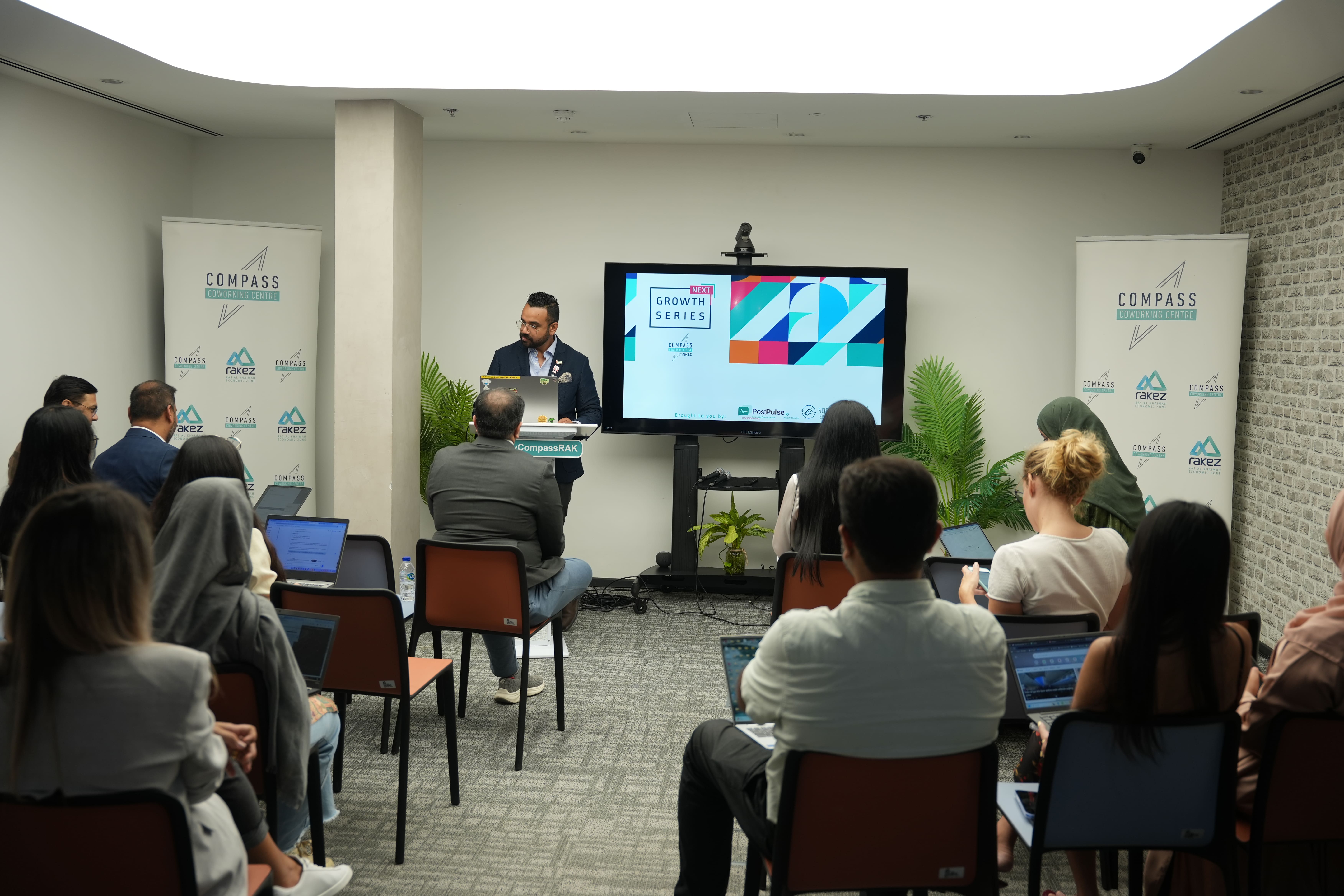
Ras Al Khaimah, Oct 13: Ras Al Khaimah Economic Zone (RAKEZ) recently organised a workshop at Compass Coworking Centre to help entrepreneurs and small business owners plan more focused digital advertising campaigns, manage their marketing budgets and evaluate the results.
Titled ‘Digital Advertising for Solo Business Owners: Running Meta Ads with Purpose’, the session addressed a common challenge for smaller enterprises: turning advertising expenditure into meaningful business results while working with limited resources. It explored how business owners can move beyond simply boosting social media posts and take a more structured approach to reaching potential customers.
The workshop was led by Abhishek Aditya Sharma, Founder and CEO of SocialCTR Solutions, who shared insights drawn from more than 18 years of experience in digital marketing, branding and performance advertising. He guided attendees through the key elements of Meta advertising, including campaign structure, audience targeting and budget allocation, explaining how these decisions should connect to a company’s business objectives.
Participants also explored how to use performance metrics to assess whether campaigns are delivering value and identify where adjustments are needed. Through practical examples and interactive discussions, the session encouraged business owners to make decisions based on campaign results, helping them direct their budgets more effectively and refine their advertising approach over time.
Building on these fundamentals, the workshop examined the growing role of artificial intelligence in digital marketing. Attendees saw how AI-powered tools can support the development of advertising content and streamline campaign preparation, offering practical ways to manage the time and effort involved in running campaigns alongside their day-to-day business responsibilities.
RAKEZ Group CEO Ramy Jallad said: “For many small businesses, reaching the right customers while managing costs is a constant challenge. Digital advertising offers opportunities to reach new audiences, but business owners need to understand how to plan campaigns and assess their results. By connecting entrepreneurs with relevant expertise, we aim to help them make better-informed marketing investments and develop the skills they need to support their growth.”
Alongside the learning sessions, participants had opportunities to connect with fellow entrepreneurs, exchange experiences and discuss the challenges of promoting their businesses. The workshop combined access to specialist expertise with peer interaction, helping business owners consider how to apply the learning to their own marketing priorities.
13, Oct 2026
Queue-Based Darshan System to Be Introduced Soon at Puri Jagannath Temple: Odisha Law Minister
A pilot model for the proposed queue-based darshan system at Puri Srimandir has been prepared. The arrangement will be implemented on a trial basis after consultations with servitor groups and approval from the temple management committee.
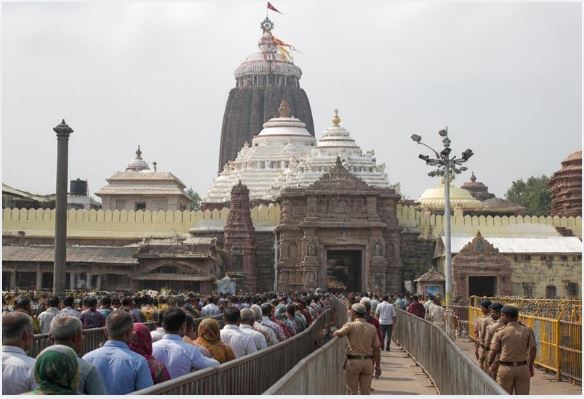
Representational Image
Puri, October 13: The queue-based darshan system at Puri Srimandir is expected to be introduced soon, Odisha Law Minister Prithiviraj Harichandan has said.
According to the minister, a pilot model has been prepared to streamline darshan and improve crowd management at the temple. However, the system will be introduced only after consultations with various servitor groups and the temple management committee.
Pratihari Nijog to Inspect Queue System Model
A ramp has been constructed in accordance with the proposed design for the queue-based darshan system. The Pratihari Nijog will inspect the arrangement first, following which the model will be presented to other Nijogs for their feedback and approval.
Once a consensus is reached among the servitor groups, the proposal will be placed before the temple management committee. The system will subsequently be introduced on a trial basis.
The Pratihari Nijog has also suggested using rope barricades or other physical barricades as an alternative to the proposed queue arrangement. The group has indicated its willingness to offer suggestions on managing the flow of devotees following discussions with the government and the Law Minister.
Law Minister Flags Challenges with Rope Barricades
Harichandan said rope barricades could create difficulties during periods of heavy footfall, underlining the need for a more structured queue management system.
“We had developed and reviewed a model for arranging queues using ropes. However, this could create problems when there is a heavy crowd. From that perspective, the first pilot model for the queue system has already been prepared,” the Law Minister said.
He added that members of the Pratihari Nijog had been requested to inspect the model at the earliest. Other servitor groups, including the Chhatisa Nijog, will also be consulted before the system is implemented.
“Once all the groups approve the arrangement and the Chhatisa Nijog gives its approval, we will begin the implementation process. I believe the queue system will be introduced very soon,” Harichandan said.
The proposed system is aimed at ensuring a more orderly darshan experience for devotees while improving crowd management at the temple. Its rollout will depend on consultations with the servitor groups and the approval of the temple management committee.
13, Oct 2026
Doomspeak Vs. Realty – Developers Not Stressed About Festive Season 2026

by Akash Pharande, Managing Director – Pharande Spaces
The news is suddenly filled with ‘worry’ pieces – the RBI has raised rates, the West Asia conflict continues to unsettle the economy, and one firm says that housing sales reduced. As developers, we read all of such news – but rest assured, we are still planning for a busy festive season. Why? Because our experience and also the evidence all tell us that such headlines do not sign cheques.
Why the Doomspeak?
It’s obvious why ‘doom and gloom’ stories about the residential property market get so much press. After all, housing touches close to every Indian household, so a story that implies scarcity of any kind – be it on the supply side, the demand side, or both, always have a ready audience. It literally tugs at the Indian heartstrings.
The fact is in real estate, fear-based articles work directly on basic human psychology. A ‘real estate downturn’ angle will always find readers regardless of whether the evidence supports it or not.
The recent rate hike also makes for a tight narrative with a date, a number, a ‘perpetrator’ and a ‘victim’. Nobody ever writes about a quiet strength or recovery in buyer intent, because it lacks sensationalism. You will never find ‘gradual recovery’ in any real estate-related headline.
That’s all fine – reporters have to write such articles to sell papers. The RBI decision does have implications. But when we make an immediate mental leap from rising costs to dwindling demand, developers tend to tune out not because they don’t like the evidence, but because there is no such evidence.

What the Numbers Say
Industry data for July–September 2026 puts housing sales across India’s major cities at roughly 1.02 lakh units. Depending on the tracker and the cities covered, that is anywhere from a 6% fall to a 3% rise over this period in 2025. It broadly averages out at about 1.5% lower. After a year of falling sales, a flat market is not falling but stabilising and as one firm correctly points out, the earlier moderation is cyclical, not structural.
Consider this – according to the data, new launches rose 18% in Q3 2026 and ask yourself – would builders add so much inventory if they expect the market to be declining? A recent survey found that 50% of prospective buyers plan to purchase homes within the next two years. Another 54% believe that macro-economic volatility will at best have a low impact on the Indian housing sector.
Last Year’s Evidence
The best test of the ‘doom’ theory is as recent as last year. Reports said that housing sales in the top cities fell by around 14% in 2025 and attributed it to ‘high prices, IT layoffs and geopolitical tension’. In other words, if there ever was a ‘doom’ year, it would have to be 2025.
However, during the Dussehra–Diwali festive season, most developers saw year-on-year sales shoot up by anywhere between 10–25% in the larger metros – after a sales drop of about 20% across the first nine months of 2025.
Consultancy reports disagreed widely when it came to the last quarter of 2025 – one found sales rising, and another showed a year-on-year drop of 15%. As developers, we do read the news and follow the data, but we also know that such figures are not necessarily the equivalent of the chemistry periodic table. We also follow our instincts, our own sales graphs, and what we know about our customers.
Years When Festivals Did Not Lift Sales
There are notable exceptions, of course. In 2016, demonetisation was announced on 8 November – bang in the middle of the festive quarter – and the market did grind to a halt. In fact, the major cities saw sales drop by anywhere between 35-45% in the October–December quarter (again, the data swings wildly depending on its source). It’s fair to say that housing sales fell by at least 42%, reaching their lowest level since 2010.
Another muted year was 2018., when the October–December quarter saw sales rise by a paltry 4% over the previous quarter thanks to the NBFC crisis. Media stories wrote about a ‘failed festive season’, even though sales still increased – albeit far below the usual festive boost..
In both instances, the market shocks were to money and credit – in 2016, a sudden cash withdrawal and in 2018, a lending squeeze on non-banking financial companies. Buyers found it difficult to pay, and lenders found it harder to lend.
These were not the only standout years for market slowdown, and there are no credible festive-by-festive records related to housing sales. However, even in the pandemic year of 2020, sales rose by well above 70% in the October–December quarter over the previous quarter, from a rather low base.
The point is that such reports completely discount or ignore the human factor, especially the hard-wired Indian drive to homeownership and the festive season spirit that drives housing sales in India. In the above instances, sales fell when homebuyers did not have access to cash or credit. We know that political instability or uncertainty can have a similar effect, though it tends to be more localised rather than nationwide.
Indian homebuyers do not cancel their purchase plans because they read doom-and-gloom reports in the papers.
Real Headwinds
Yes, we are dealing with actual, undeniable headwinds right now. With the RBI increasing the repo rate by 25 bps to 5.50% on 7 October – the first hike since February 2023 – many banks are already lifting their lending rates. On a Rs. 50 lakh loan over a 10-year tenure, this adds about Rs. 66 a month to the EMI, and this can have a real impact on household budgets among budget housing buyers.
The rate hike will cause some stress among affordable and mid-segment buyers, but not on those who are scouting the premium and luxury markets. The RBI’s move is a measured step, but it is not a credit squeeze – lenders continue to lend, banks are open for business, and there is no cash freeze. Most housing loans tend to have tenures of 15-20 years, and rates are bound to fluctuate over such a period. Few buyers set lending rates as perennial red flags. The current headwinds also eventually blow off.
Why Developers Are Calm
Winds, including headwinds, change – but India’s tradition-driven sentiment is not an unpredictable gust of hot or cold air. It is very real. Last year, we saw a ‘gloomy’ 2025 yield a healthy festive uplift. We don’t necessarily expect a bumper Diwali. Homebuyers make purchase decisions based on their current and anticipated employment status, property prices and location, on whether a project incites the necessary spark of decisiveness, and on whether the time is right for the family to take the plunge.
The Indian festive period continues to have a massive cultural relevance and we, as developers, are all geared up to welcome our customers at our sites and confirm bookings during this auspicious period.
About the Author:
Akash Pharande is Managing Dir
13, Oct 2026
GAIL Gas Pipeline Fire Guts Roadside Eatery in Cuttack’s CDA Sector 10, Two Injured
Cuttack, Oct 13 (UDN): A fire broke out in a GAIL gas pipeline in CDA Sector 10 of Cuttack on Tuesday morning, gutting a roadside eatery and leaving two people with minor injuries.
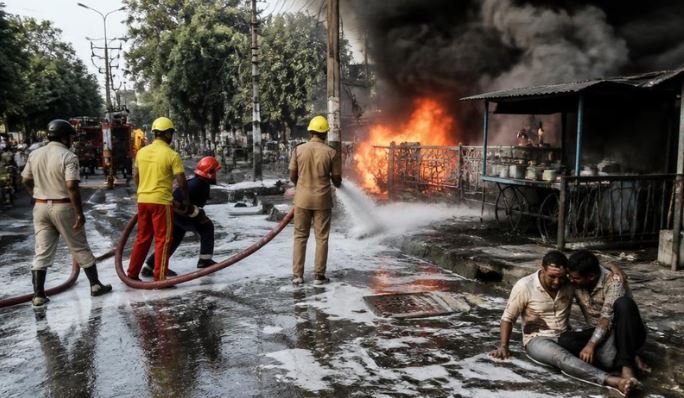
Representational Image
The incident occurred while the newly laid pipeline, intended to supply gas to households in the area, was reportedly undergoing testing. According to preliminary reports, the pipeline had been laid on Monday night, and the fire erupted during the testing process.
Two fire tenders were rushed to the spot to contain the blaze. Fire service personnel launched firefighting operations, while the affected area was barricaded to keep people away from the damaged pipeline and prevent further risks.
Roadside Eatery Reduced to Ashes
The fire spread to a nearby roadside eatery, completely destroying the establishment. Two people who were reportedly eating there at the time sustained minor injuries.
The incident triggered concern among local residents, as flames from a gas pipeline can pose a serious safety risk. Authorities restricted public movement around the site as emergency personnel worked to bring the situation under control.
Earlier Pipeline Incident Raises Safety Concerns
The latest fire has renewed concerns over gas pipeline safety in Cuttack’s CDA area. An earlier incident involving a GAIL pipeline reportedly caused gas to shoot high into the air, triggering panic among residents. No fire was reported in that incident.
The cause of Tuesday’s fire and the circumstances surrounding the pipeline testing were not immediately clear. Further details regarding the injured persons and any official response from GAIL were awaited.
The incident has underscored the need for stringent safety measures during pipeline installation and testing, particularly in areas close to roadside businesses and public movement.
13, Oct 2026
Government Targets Training of 6.35 Lakh Rural Youth Through RSETIs in 2026–27
New Delhi, October 13, 2026: The Ministry of Rural Development (MoRD) has partnered with the National Academy of RUDSETI (NAR) to strengthen rural skill development, promote entrepreneurship and improve livelihood opportunities, setting a training target of 6.35 lakh rural youth for the current year through Rural Self Employment Training Institutes (RSETIs).
The Ministry exchanged a Memorandum of Understanding (MoU) with NAR on October 12, 2026, to establish uniform training standards, improve administrative practices and facilitate systematic capacity building across RSETIs nationwide.
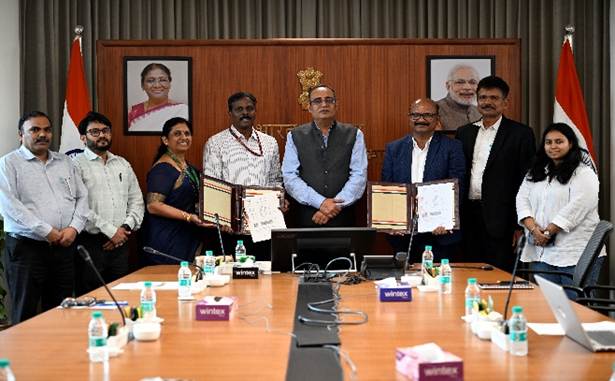
The MoU exchange took place in the presence of Rohit Kansal, Secretary, Department of Rural Development, Ministry of Rural Development. S. Sasikumar, Joint Secretary (Rural Skills), exchanged the agreement on behalf of the Department of Rural Development, while Raju N. Kori, Director General of NAR, represented the academy.
A key objective of the partnership is to enhance the quality, relevance and delivery of training programmes offered through the RSETI network. The initiative will focus on improving candidate registration through Kaushal Panjee and strengthening attendance monitoring through Aadhaar-based face authentication under the Aadhaar Enabled Biometric Attendance System (AEBAS).
The collaboration will also promote the introduction of new-age courses aligned with the National Skills Qualifications Framework (NSQF), alongside the adoption of industry-benchmarked training equipment and learning materials. RSETIs will implement core Entrepreneurship Development Programme (EDP) courses as notified by the Ministry to equip trainees with the skills needed to establish and manage their own enterprises.
The agreement further provides for strengthening the Training of Trainers (ToT) framework, improving the assessment and certification of trainers and candidates through the Unified Portal at kaushal.rural.gov.in, and ensuring compliance with the Common Norms prescribed by the Ministry.
For the current year, RSETIs have been assigned a target of training 6.35 lakh rural youth, exceeding the target set for the previous financial year, 2025–26. The programme will cover women, members of Scheduled Castes and Scheduled Tribes, persons with disabilities and other vulnerable sections of rural society.
The partnership is expected to improve institutional capacity, strengthen digital governance and establish more effective monitoring mechanisms across the RSETI ecosystem. By standardising training practices and aligning skill development with market and industry requirements, the initiative aims to help rural youth acquire practical skills and build sustainable self-employment opportunities.
The agreement reinforces the Ministry of Rural Development’s focus on connecting skill development with entrepreneurship and livelihood generation. It also supports the broader vision of Viksit Bharat by encouraging rural enterprise creation, expanding economic opportunities and promoting inclusive growth across rural India.


