


22, Jun 2026
Gold and Silver Prices Rise as Crude Oil Softens, Supporting Precious Metals
June 22: Gold and silver prices traded higher in global markets today, supported by easing crude oil prices and improved investor sentiment amid a calmer geopolitical backdrop.
Precious metals saw renewed buying interest as softer crude prices helped ease concerns over inflationary pressures, prompting investors to reassess their risk positions. The decline in energy costs has strengthened expectations of a more stable macroeconomic environment, which typically benefits demand for safe-haven assets such as gold and silver.
Market participants noted that fluctuations in global energy prices continue to play a key role in shaping commodity trends. Lower crude prices tend to reduce inflation expectations, while also influencing currency movements and broader financial market sentiment.
Silver also gained alongside gold, with industrial demand expectations providing additional support. Analysts point out that silver often benefits from both safe-haven demand and its industrial usage, particularly in sectors such as electronics and renewable energy.
Investors are closely monitoring further developments in global oil markets, central bank policy signals, and geopolitical conditions, all of which are expected to influence the trajectory of precious metal prices in the near term.
Overall, the movement in gold and silver reflects a broader shift toward stability in global commodity markets, driven by easing energy costs and cautious optimism among investors.
- 0
- By Neel Achary

22, Jun 2026
Australia Stands Ready to Respond to Possible H5N1 Avian Flu Outbreak
Canberra, June 22: The Government of Australia has stated that the country is “well prepared” to respond to any potential outbreak of H5N1 avian influenza, following recent global concerns over the spread of the virus.
Australia’s Environment Minister Tanya Plibersek said that national biosecurity systems are robust and capable of managing emerging animal health threats, including highly pathogenic bird flu strains. She emphasized that surveillance, preparedness measures, and response frameworks are already in place across relevant agencies.
Authorities noted that Australia maintains strict biosecurity protocols aimed at preventing the entry and spread of infectious animal diseases. These include monitoring wildlife populations, regulating poultry industry practices, and coordinating rapid response mechanisms in the event of an outbreak.
Officials also highlighted ongoing cooperation between environmental, agricultural, and health agencies to ensure early detection and containment of any potential cases. Public awareness efforts and contingency planning are part of broader national preparedness strategies.
While no widespread outbreak has been reported in Australia, officials continue to closely monitor global developments related to H5N1, which has affected bird populations in several regions worldwide.
The government reaffirmed its commitment to safeguarding public health, protecting the agricultural sector, and maintaining strong biosecurity standards to mitigate risks associated with emerging infectious diseases.
22, Jun 2026
Kamakhya Temple in Assam Hosts Start of Four-Day Ambubachi Mela
Guwahati, June 22, 2026: The annual four-day Ambubachi Mela has commenced today at the Kamakhya Temple, one of the most significant spiritual gatherings in Assam, drawing devotees, pilgrims, and visitors from across the country and abroad.
The festival, associated with the revered tradition of the goddess Kamakhya, is observed with deep religious significance and marks a period of intense devotion and ritual practices. The temple premises have been witnessing a steady influx of devotees since early morning as the sacred observances begin.
Authorities have made extensive arrangements to manage the large gathering, including crowd control measures, security deployment, sanitation facilities, and medical assistance to ensure the safety and comfort of pilgrims throughout the event. Special provisions have also been put in place to regulate movement and maintain order during peak visiting hours.
Local administration and temple authorities are working in coordination to facilitate a smooth experience for visitors, with emphasis on maintaining cleanliness, ensuring efficient crowd flow, and providing necessary amenities for pilgrims undertaking the journey.
The Ambubachi Mela is considered one of the most important annual festivals in the region, symbolizing deep-rooted cultural and spiritual traditions. The event also contributes significantly to local tourism and the economy, attracting visitors from various parts of India and overseas.
The celebrations will continue over the next four days, culminating in the reopening rituals that mark the conclusion of the sacred observance.
22, Jun 2026
Jaishankar Visit Signals Push to Strengthen India’s Ties with Mongolia and South Korea
New Delhi, June 22: India’s External Affairs Minister S. Jaishankar is set to undertake an official visit to Mongolia and South Korea aimed at reinforcing India’s strategic partnerships and expanding economic and diplomatic cooperation with both nations.
The visit is expected to focus on strengthening bilateral relations through high-level engagements with leadership in both countries. Discussions will cover a broad range of areas, including trade and investment, energy cooperation, connectivity initiatives, regional security, and cultural exchanges.
In Mongolia, the talks are anticipated to emphasize India’s continued commitment to deepening development cooperation and enhancing collaboration in sectors of mutual interest. The engagement also reflects India’s growing focus on strengthening ties in the Asia-Pacific and Central Asian regions.
In South Korea, the discussions are expected to build on the robust economic and technological partnership between the two countries, with particular attention to advanced manufacturing, digital technologies, supply chain resilience, and innovation-led growth.
Officials noted that the visit underscores India’s broader diplomatic strategy of expanding strategic partnerships while fostering stronger economic linkages with key regional partners. The engagements are also expected to provide momentum to ongoing initiatives and open new avenues for collaboration.
The visit reflects India’s continued efforts to enhance its global partnerships, strengthen regional cooperation, and support shared priorities in an evolving geopolitical and economic landscape.
22, Jun 2026
BRICS Nations Push for Greater Support and Growth of Small Enterprises
June 22: BRICS nations have reaffirmed their commitment to deepening cooperation and creating a stronger ecosystem for micro, small and medium enterprises (MSMEs), recognizing the sector’s critical role in driving economic growth, innovation, and employment across member countries.
During recent discussions, representatives from BRICS countries emphasized the importance of enhancing collaboration in areas such as access to finance, digital transformation, entrepreneurship development, technology sharing, and cross-border trade opportunities for small businesses. The initiative aims to help MSMEs become more competitive and resilient in an increasingly interconnected global economy.
The member nations acknowledged that MSMEs form the backbone of their economies, contributing significantly to job creation and local development. By strengthening partnerships and sharing best practices, BRICS countries seek to address common challenges faced by small businesses while unlocking new opportunities for growth and expansion.
The move is expected to encourage greater business collaboration among entrepreneurs across BRICS economies, facilitating knowledge exchange and fostering innovation. Improved cooperation could also help MSMEs gain better access to international markets, investment opportunities, and emerging technologies.
Industry stakeholders have welcomed the development, viewing it as a positive step toward building a more inclusive and sustainable business environment. Enhanced support for MSMEs is expected to contribute to economic resilience and strengthen the role of small enterprises in driving long-term growth.
The agreement reflects the shared vision of BRICS nations to empower entrepreneurs, support business development, and create a more dynamic and interconnected MSME ecosystem capable of meeting the challenges of a rapidly evolving global marketplace.
22, Jun 2026
VVIP Group Hosts Mega Real Estate Showcase at Yamuna Expressway Project

The occasion marked the introduction of the newly launched Tower E, along with exclusive offers on select inventory, generating strong interest among attendees.
The event was graced by Mr. Praveen Tyagi, CMD-VVIP Group, Mr. Vibhor Tyagi & along with several distinguished guests and industry dignitaries. Adding a cultural touch to the celebration, internationally acclaimed flute maestro Pandit Anurag Rastogi Ji delivered a captivating live performance that was highly appreciated by the audience.
Speaking on the occasion, Mr. Umesh Rathore, VP – Sales & Marketing, VVIP Group, said,
“The response received during the two-day event has been truly encouraging. The introduction of Tower E and our special offers have generated significant interest among customers and investors. We remain committed to delivering exceptional living experiences and creating long-term value for our buyers.”Visitors were given detailed project presentations, guided site tours, and insights into the project’s premium lifestyle offerings. The event further strengthened VVIP Group’s relationship with its valued channel partners while reinforcing confidence in the growing potential of the Yamuna Expressway corridor.
With its strategic location and thoughtfully planned development, VVIP Yamuna continues to attract discerning homebuyers and investors looking for quality residential opportunities in the region.
22, Jun 2026
India and US Accelerate Trade Deal Efforts Through Fresh Round of Strategic Talks
New Delhi, June 22: India and the United States are preparing for a series of high-level discussions this week aimed at advancing a long-awaited bilateral trade agreement, signaling renewed momentum in one of the world’s most important economic partnerships.
The planned meetings reflect a shared commitment to strengthening commercial ties and expanding opportunities for businesses and investors in both countries. Officials are expected to focus on resolving key trade issues, improving market access, and identifying areas for deeper economic cooperation.
The discussions come as India and the United States continue to build on their growing strategic and economic relationship. A potential trade agreement is expected to enhance bilateral trade, encourage investment flows, and support job creation across multiple sectors.
Business leaders have welcomed the continued engagement, noting that greater clarity and cooperation on trade matters could help unlock new growth opportunities and strengthen supply chain partnerships. The talks are also expected to reinforce confidence among investors looking to benefit from closer economic collaboration between the two nations.
Experts believe the upcoming negotiations could serve as an important step toward addressing long-standing trade concerns while laying the foundation for a more comprehensive economic framework. Progress in the discussions would not only benefit businesses on both sides but also contribute to greater stability and resilience in global trade.
As the talks get underway, stakeholders will be closely watching for signs of progress that could bring India and the United States closer to a mutually beneficial trade agreement and further strengthen their economic partnership.
22, Jun 2026
Coromandel International’s Arun Alagappan: India’s Fertilizer Sector Walks a Tightrope Between Supply Risks, Smart Farming and the Road Ahead
On raw material dependence, backward integration, and why India’s farms are going digital faster than anyone expected.
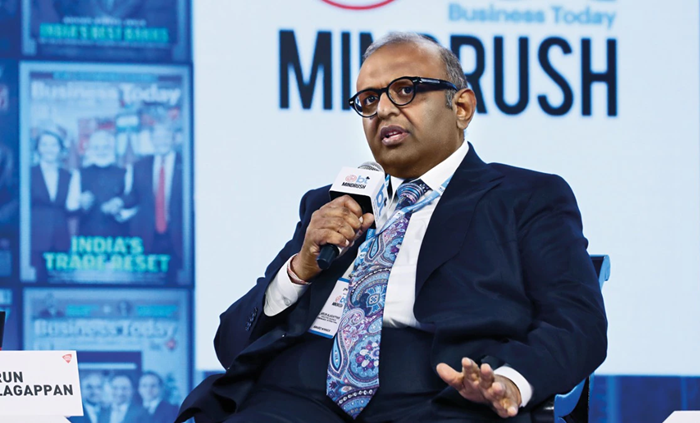
As geopolitical tensions ripple through global commodity markets, India’s fertilizer industry finds itself at a crossroads, navigating import dependence on one side and a rapidly modernizing agricultural landscape on the other. At the center of this story is Arun Alagappan, Executive Chairman of Coromandel International, the Rs 25,000-crore Agri-solutions giant, who says the sector’s single biggest vulnerability is the same as it has always been: raw materials.
“Whether we like it or not, the fertilizer industry imports most of its raw material. This comes with a certain amount of risk,” Alagappan said. The conflict in West Asia has put that risk under a harsh spotlight, raising concerns about supply disruptions just ahead of the kharif sowing season. Urea, a significant portion of which passes through the Strait of Hormuz, is particularly exposed. However, Alagappan remains measured in his outlook, noting that most companies, including Coromandel, are adequately covered for the immediate quarter, and the government is in regular contact with the industry to monitor the situation.
Building Backwards to Move Forward
Coromandel’s response to this structural vulnerability has been deliberate and long in the making. The company has pursued a backward integration strategy that is increasingly paying off. A key move was acquiring a phosphate mine in Senegal, securing a domestic supply of rock phosphate, a critical raw material for phosphoric acid.
The company now also manufactures sulphuric acid in-house, a significant shift from its previous position as one of the country’s largest importers of the chemical. At its Kakinada facility in Andhra Pradesh, set to become India’s largest phosphatic plant, operations run on steam generated through sulphuric acid production, eliminating any dependence on LNG entirely.
This integrated positioning, Alagappan argues, is not just an operational advantage but a strategic moat. Beyond fertilizers, Coromandel has fortified its crop protection business through the recent acquisition of Nagarjuna Agrochem, making it the third-largest player in that segment. Add to this its retail network, bio products and nano fertilizer range, and the company is betting on a full-spectrum farm solutions model.
Nano Fertilizers and the Drone Revolution
Perhaps nowhere is the transformation more striking than on the ground. Nano fertilizers, long discussed but slow to take off, are now finding genuine traction among Indian farmers, according to Alagappan. Easy to apply and effective when used correctly, they are increasingly being deployed via drones, a technology that has seen explosive adoption in recent times.
Coromandel’s own drone network tells the story plainly: two-and-a-half years ago, the company covered roughly 40,000 acres through drone-based application. This year, that number has crossed one million acres. “The farmers have used our nano fertilizers and continue to endorse its effectiveness,” Alagappan said.
A Generational Shift in Agriculture
This technological leap is being driven, in part, by demographic. Younger farmers are entering the sector with a fluency in digital tools, AI, IoT and drones, all of which are reshaping Indian agriculture. For Alagappan, who spent much of his career in financial services at Cholamandalam Investment and Finance before moving to Coromandel five years ago, this has been a revelation. “I did not expect it to be so interesting,” he admits.
The infrastructure is playing its part too. The Polavaram irrigation project in Andhra Pradesh is expanding the total arable land under cultivation, while state-level planning is pushing farmers towards diversified, higher-value crops, from fruits and vegetables in Rayalaseema to produce tailored to specific district-level demand profiles.
Cautious Confidence
For investors who have watched Coromandel stock deliver multi-bagger returns over the past fifteen years, the current environment warrants attention but not alarm, Alagappan suggests. Currency movements and import dependence remain variables to watch, but the company’s raw material coverage is solid for the near term. Seasonal panic-buying, the notes, can distort market signals. Fertilizers and crop protection products are uniquely time-sensitive inputs, and the fear of missing a narrow application window drives artificial stockings.
The broader message from Alagappan is one of cautious confidence: an industry grappling with real structural risks, but one that is simultaneously sitting on significant long-term opportunity, provided it continues to innovate, integrate and stay close to the farmer.
22, Jun 2026
Investor Confidence in AI Fuels SK hynix’s Rise Above Samsung Electronics
Seoul, June 22: In a landmark moment for South Korea’s technology sector, SK hynix has overtaken Samsung Electronics in market capitalization for the first time, reflecting the growing importance of artificial intelligence-driven demand in the global semiconductor industry.
The milestone highlights a dramatic shift in investor sentiment as SK hynix continues to strengthen its position as a leading supplier of high-bandwidth memory (HBM) chips, a critical component powering advanced AI systems and data centers. Strong demand from major technology companies developing AI applications has fueled the company’s rapid growth and boosted its market valuation.
Samsung Electronics, long regarded as South Korea’s most valuable company and a dominant force in the global semiconductor market, continues to hold a strong presence across memory chips, smartphones, and consumer electronics. However, investors have increasingly focused on companies that are directly benefiting from the surge in AI-related investments.
Industry observers view SK hynix’s rise as a reflection of broader changes reshaping the semiconductor landscape. As artificial intelligence becomes a key driver of technological innovation, companies with strong positions in AI-focused memory technologies are attracting heightened investor attention.
The achievement marks a significant chapter in South Korea’s corporate history and underscores the evolving competitive dynamics within the global chip industry. Analysts expect competition between the two semiconductor giants to intensify as demand for AI infrastructure continues to expand worldwide.
While Samsung remains one of the world’s leading technology companies, SK hynix’s ascent demonstrates how rapidly changing market trends can reshape industry leadership and investor expectations.
22, Jun 2026
Indian Stock Markets Rise in Early Trade as Global Tensions Ease
Mumbai, June 22: Indian benchmark indices Sensex and Nifty opened higher on Monday, reflecting improved investor sentiment after signs of easing geopolitical tensions in West Asia.
The positive mood in the markets was driven by hopes that diplomatic efforts in the region could help reduce uncertainty and stabilize global energy supplies. As concerns over potential disruptions eased, investors returned to equities, pushing major indices into positive territory during early trading hours.
Technology and banking stocks led the gains, while broader market participation indicated renewed confidence among investors. Market participants welcomed the possibility of a more stable global environment, which could support economic growth and reduce pressure on energy prices.
Analysts noted that India, being a major importer of crude oil, stands to benefit from calmer conditions in the region. Lower energy costs can help ease inflation concerns, improve corporate margins, and support overall economic stability.
While the strong opening reflects growing optimism, investors are expected to continue monitoring global developments closely. Any further progress toward regional stability could provide additional support to domestic markets in the coming days.
The upbeat start to the week highlights the resilience of Indian equities and the market’s sensitivity to global geopolitical developments, reinforcing investor confidence as trading activity gains momentum.


