
23, Feb 2026
Surya Brasil Accelerates India Expansion after 30% growth in the US; Launches New Hair Care Range
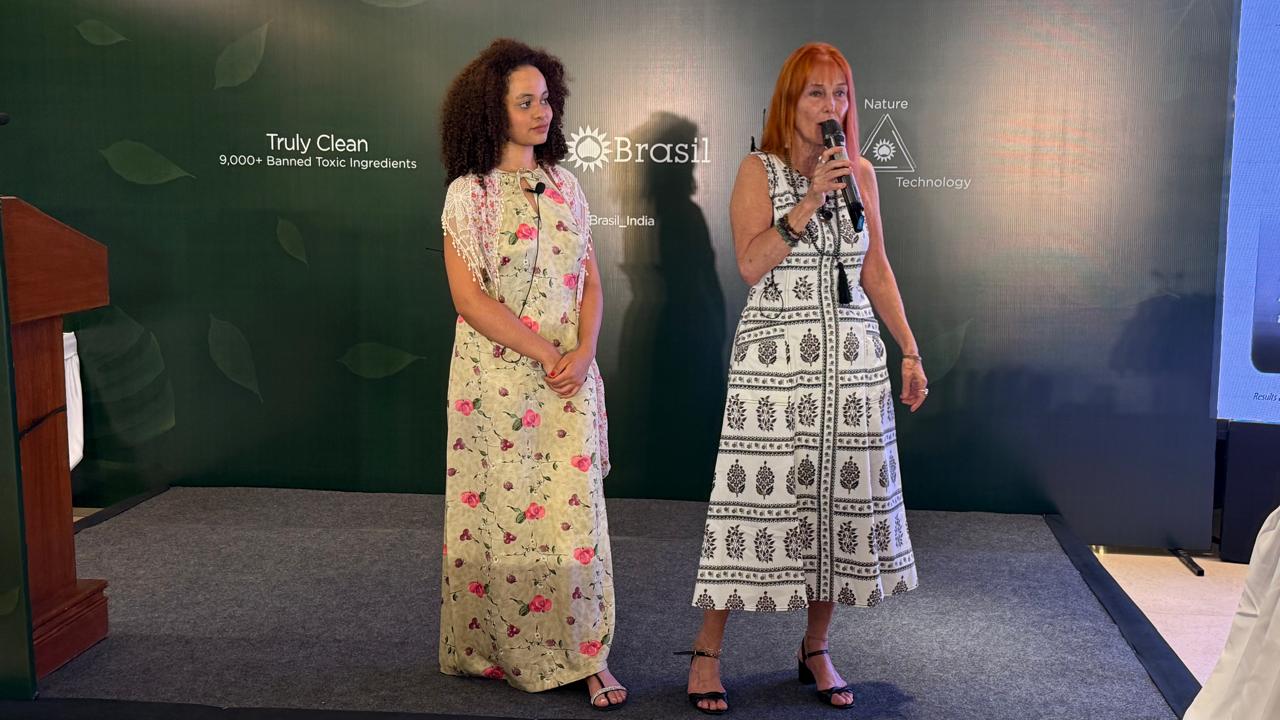
New Delhi: Feb 23:Surya Brasil, the Brazilian clean beauty brand known globally for its natural henna-based hair colour solutions, has announced the expansion of its product portfolio in India. The company aims to further reinforce and amplify its flagship Henna Cream while introducing a wider range of hair care and treatment products tailored for the Indian market.
With a presence in over 40 countries, Surya Brasil is strengthening its focus on key growth markets including India, supported by increased investments in marketing and trade engagement to deepen reach and visibility.
The expansion builds on Surya Brasil’s strong growth momentum in the United States, where the brand recorded 30% growth last year and outpaced the hair colour category by 16 percentage points, according to NielsenIQ data. This performance reflects rising consumer preference for natural and clean beauty alternatives.
The timing aligns with the rapid growth of the global natural cosmetics industry, which is projected to reach USD 74 billion by 2028. Increasing consumer awareness around ingredient transparency and sustainability is reshaping buying behaviour in India, particularly in the hair care segment. Surya Brasil’s expanded range aims to serve both professional salons and conscious consumers looking for effective, plant-based alternatives.
“At Surya Brasil, we have always believed that what you apply to your hair and skin matters,” said Clelia Angelon, Founder and CEO of Surya Brasil. “India has been an inspiration to us through Ayurveda, and expanding our portfolio here feels both strategic and meaningful.”
As part of its expansion, Surya Brasil is introducing a broader portfolio of complementary hair care and treatment products designed to create a complete clean beauty routine. The new additions include The Color Fixation line, The Hair Therapy range, The Balanced Cleansing Shampoo, The Nourishment & Protection conditioner, Brazilian Vegetable Keratin, The Force line and The Bio Finishers range. Henna Clean and Henna Force further extend the brand’s offering with treatment-focused solutions aimed at improving scalp health and strengthening hair from root to tip.
The flagship product Henna Cream remains at the centre of Surya Brasil’s India strategy. Formulated with up to 98% natural ingredients, the product offers full grey coverage while nourishing and strengthening the hair. Free from harsh chemicals such as ammonia and its by-products, including ethanolamine and triethanolamine, as well as PPD, Surya Brasil is aiming for a considerable market penetration in the natural hair care category with this flagship product.
With manufacturing headquartered in São Paulo and operations in Houston and Milan, Surya Brasil brings international quality standards and long-standing clean beauty credentials to the Indian market. The company says it remains committed to ethical formulations, responsible sourcing, and long-term investment in the region.
- 0
- By Neel Achary

22, Feb 2026
Dr. Bhargav Mallappa’s Reappointment as National Deputy Chairman Underscores Social Mission
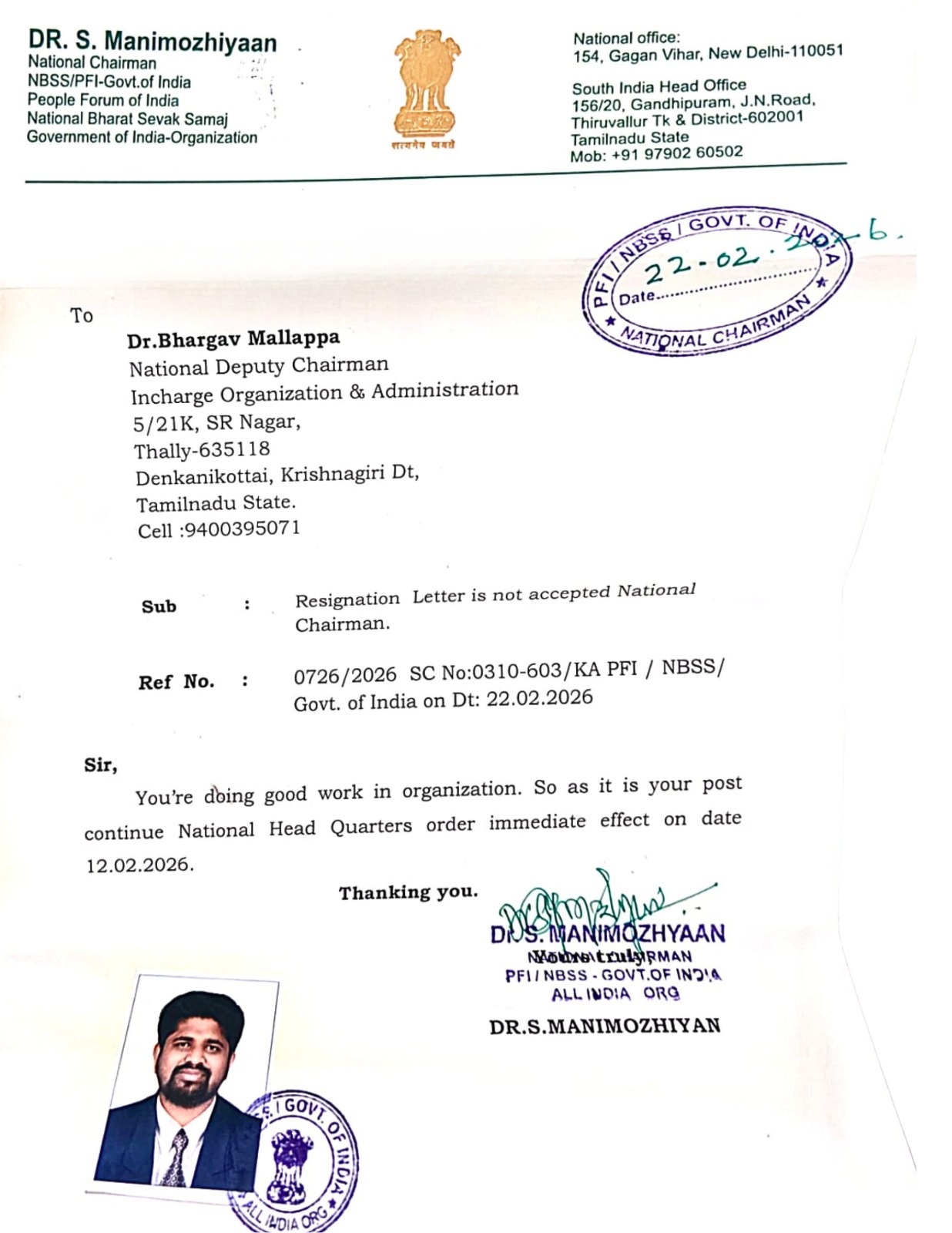
Delhi, Feb 22: Dr. Bhargav Mallappa will continue serving as the National Deputy Chairman of the People Forum of India after the National Chairman Dr. S. Manimozhyaan, formally declined to accept his resignation and urged him to remain in office in view of the organisation’s ongoing social responsibilities and long-term mission.
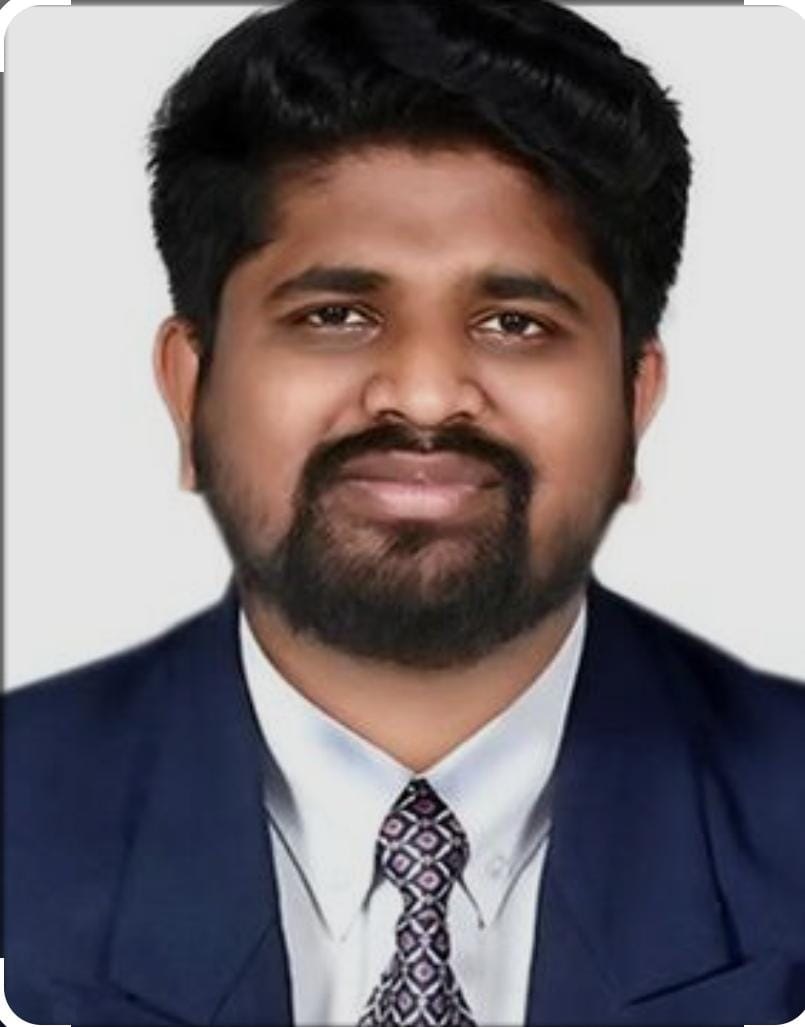
In an official communication issued on Sunday, the National Chairman acknowledged Dr. Mallappa’s sustained contributions to the organisation’s administrative strengthening and grassroots social initiatives, expressing confidence in his leadership and requesting him to continue his responsibilities in the larger interest of the mission.
Responding to the development, Dr. Bhargav Mallappa said the decision to step back from his resignation was guided not by position, but by purpose. He said, “Public service is not about titles; it is about responsibility. The trust shown by the organisation carries moral weight. After thoughtful reflection, I felt it was important to prioritise continuity and collective vision over personal considerations. Our shared objective remains the upliftment of society, and that commitment must remain uninterrupted.”
Dr. Mallappa further said that moments of introspection often strengthen institutions rather than weaken them. “This phase has brought clarity. It has reinforced why we began this journey — to build structured, accountable, and impactful social initiatives. With renewed focus and stronger coordination, we will move forward with greater discipline and deeper engagement at the grassroots level.”
He expressed optimism that the organisation will now work with sharper alignment and enhanced energy, ensuring that its social outreach efforts expand in both scale and substance.
Dr. Mallappa will continue to serve as National Deputy Chairman with immediate effect, reaffirming his dedication to strengthening institutional processes and advancing meaningful social change.
21, Feb 2026
Innovation Leaders of Tomorrow Emerge at Buildathon 2026 Grand Final
Hyderabad, February 21, 2026:
The grand finale of Radha TMT’s unique initiative, “Creators of Tomorrow – Buildathon 2026,” a first-of-its-kind Civil Engineering Innovation Platform organised exclusively for civil engineering students across Telangana, was held on Saturday evening at Shilpakala Vedika, Madhapur.
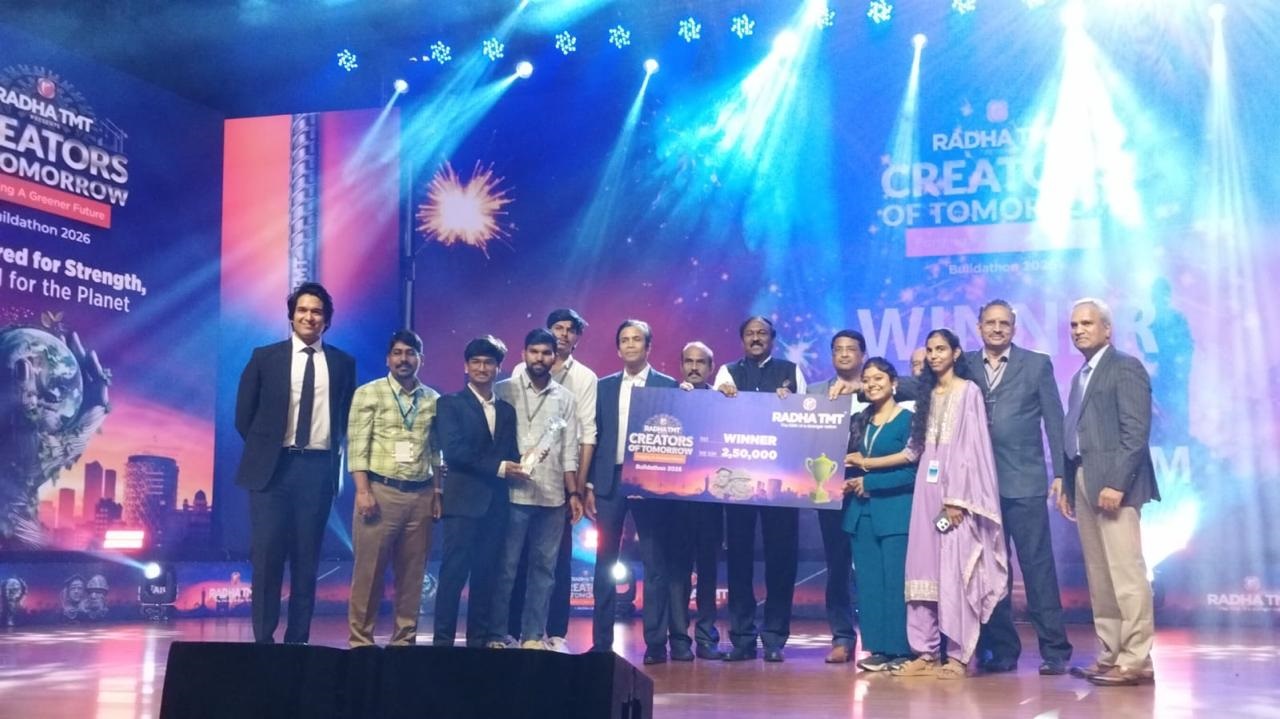
CVR College of Engineering emerged as the winner for their innovative proposal titled “Water Treatment Waste into Sustainable Building Solutions.” The team was declared the winner of the challenge and walked away with a cash prize of Rs 2.5 lakh.
Rajiv Gandhi University of Knowledge Technologies (RGUKT), Basara, secured the first runner-up position and bagged Rs 1 lakh, while JNTU Hyderabad was declared the second runner-up and received Rs 50,000. Consolation prizes of Rs 25,000 each were awarded to Sreenidhi Institute of Science and Technology (SNIST), University College of Engineering (Osmania University), Gokaraju Rangaraju Institute of Engineering and Technology (GRIET), and VNR Vignana Jyothi Institute of Engineering and Technology (VNR VJIET).
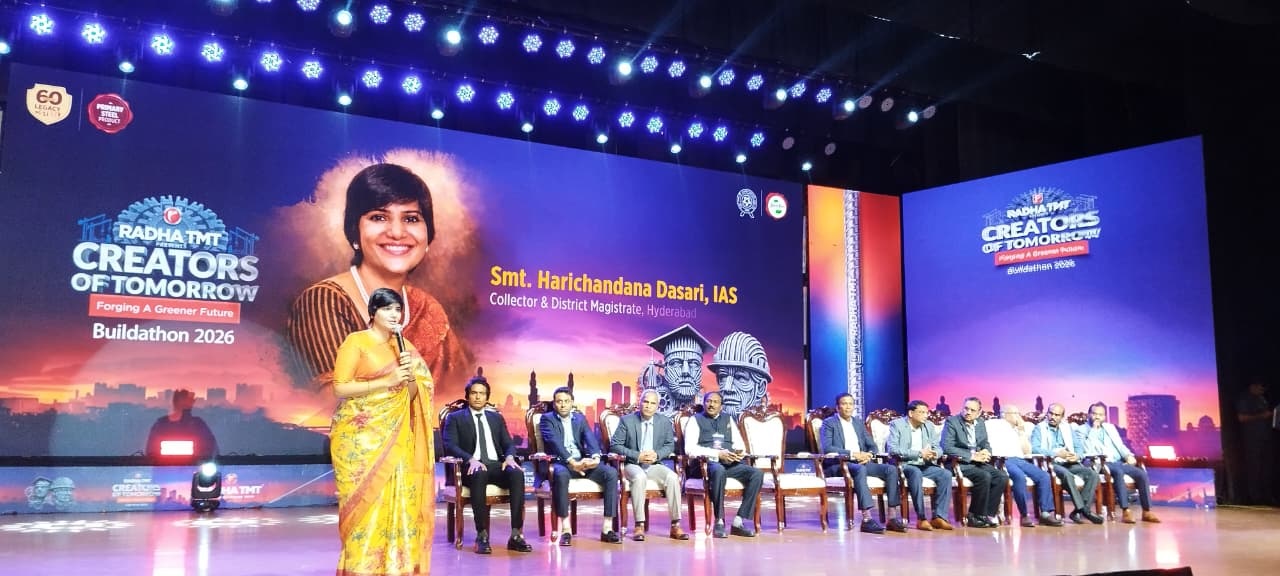
Over 100 engineering colleges and a couple of hundred civil engineering students participated in the multi-level competition, culminating in seven finalist teams. The finalists included teams from JNTU Hyderabad, University College of Engineering–Osmania University, GRIET, VNR VJIET, SNIST, RGUKT Basara, and CVR College of Engineering.
The competition showcased pioneering and practical ideas addressing real-world infrastructure challenges. One of the notable presentations focused on pothole-free roads. Highlighting that nearly 2,161 people die annually due to pothole-related accidents and that the government spends between Rs 1,000 crore and Rs 3,000 crore annually on maintenance, students proposed a preventive solution using micro-encapsulation technology with waste and used cooking oil. Their approach targeted micro-level cracks in roads, aiming to prevent crack expansion, block water penetration, maintain structural integrity, and eliminate the root causes of potholes.
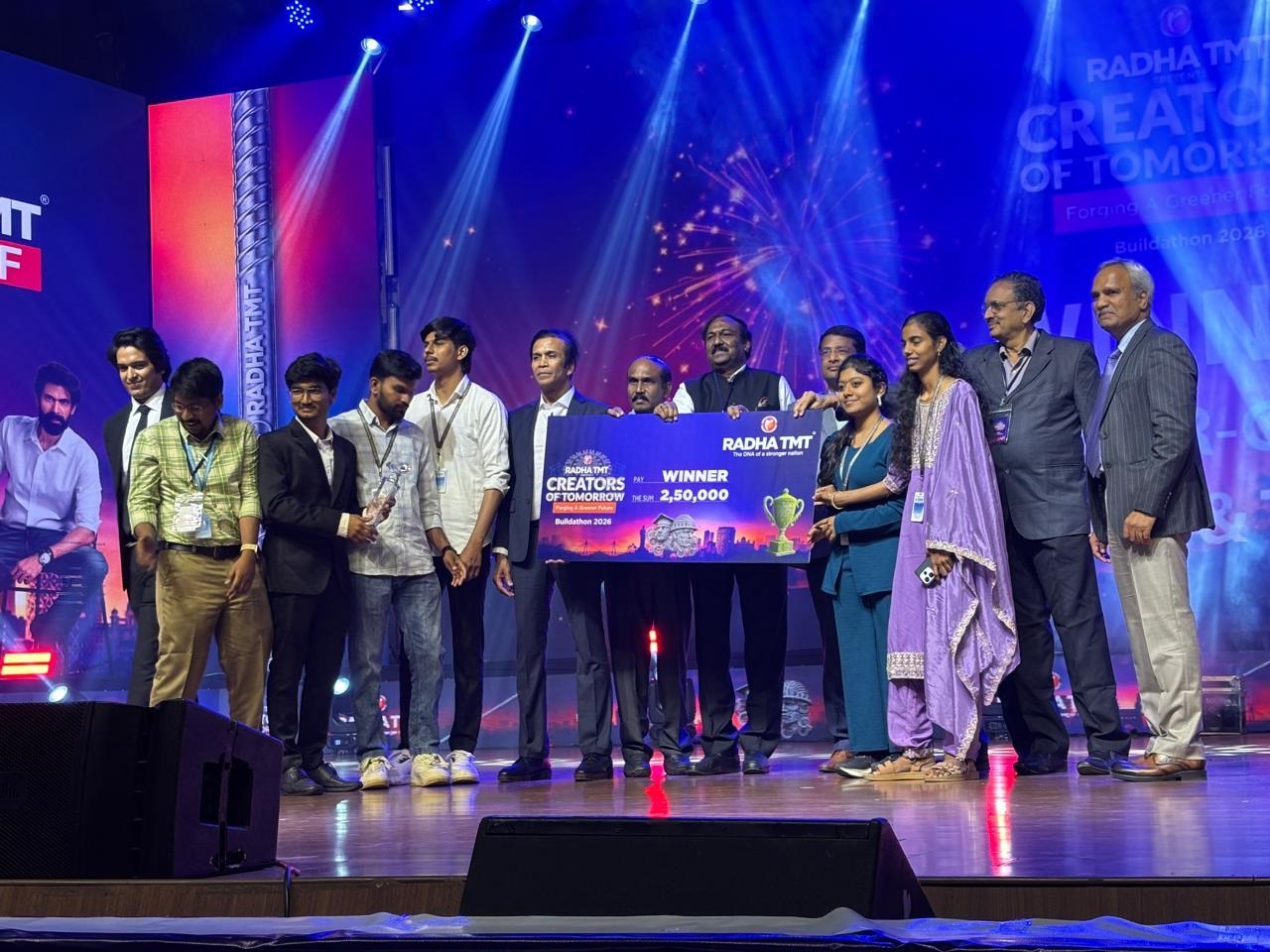
Students from OU College of Engineering presented “Alga Nova,” an algae-based cement additive that reduces cement usage by 2.5 percent. While not a complete replacement for cement, the team positioned it as a sustainable alternative component. A jury member remarked that while the Romans invented concrete, a well-developed alternative cement innovation could create history.
An all-women team from GRIET showcased “Sugarcrete,” lightweight bricks made from sugarcane bagasse, presenting it as a sustainable and viable construction material. The VNR VJIET team proposed algae-based sustainable paints, claiming the product to be 40 percent cheaper and a biodegradable alternative to conventional paints.
SNIST students proposed Geopolymer Concrete, a 100 percent cement-free concrete solution capable of reducing carbon emissions by 70–80 percent. Meanwhile, RGUKT students presented Green Concrete reinforced with natural bamboo fibre to reduce cracks and enhance structural performance. During the discussion, a jury member noted that bamboo has been recognised as a national building material and represents the future of sustainable construction.
Smt. Harichandana Dasari, IAS, District Collector of Hyderabad, graced the occasion as Chief Guest. Addressing more than 1,000 students, she said that the problems identified and solutions proposed by the finalist teams addressed real-life challenges awaiting scalable solutions. She expressed admiration for the innovative and industry-first nature of several ideas and said that with further development and persistence, many of these concepts could solve perennial infrastructure challenges in the country.
Describing the initiative as the need of the hour, she emphasised the importance of industry–academia collaboration and urged students to build a better tomorrow and a more liveable world. “Big buildings are not great buildings; buildings that are liveable are great,” she remarked, encouraging students to pursue their ideas with persistence until they are commercialised.
Sunil Saraf, Chairman of Radha TMT, stated that the Creators of Tomorrow initiative was conceptualised to celebrate young engineering talent and foster innovation. He highlighted that civil engineering forms the backbone of national development, as infrastructure such as roads, bridges, dams, buildings, and water systems is fundamental to trade, public health, water security, and economic growth. In this context, Radha TMT launched the Buildathon to inspire the next generation of nation-builders.
Akshat Saraf, Director of Radha TMT, added that centred on the theme “Green & Sustainable Construction for a Greener Future,” the competition aimed to bridge the gap between academic knowledge and real-world industry requirements. Students were encouraged to propose innovative, scalable, and practical solutions addressing modern infrastructure challenges.
The competition offered cash prizes worth over Rs 5 lakh, along with internship opportunities, industry-recognised certifications, factory visits, ISO training exposure, and direct interaction with leading construction professionals.
As a leading TMT bar manufacturer associated with the construction ecosystem, Radha TMT reaffirmed its commitment to nurturing future-ready civil engineers, promoting sustainable construction practices, strengthening industry–academia collaboration, and contributing responsibly to India’s infrastructure growth.
The jury members comprised:
Mr. Sridhar Gopisetti – Founder & Principal Architect, Team One India Pvt. Ltd.; Mr. Zaki Ahmed – Founder, Zaki & Associates; Mr. Surya Prakash – Managing Director, SatyaVani Projects & Consultants Pvt. Ltd.;
Dr. Mahendra Kumar Madhavan – Professor, Civil Engineering, Indian Institute of Technology Hyderabad;
Mr. C. Shekar Reddy – Vice Chairman, IGBC; Managing Director, CSR Estates Ltd.; Mr. Rajkumar Kancherla – Managing Director, Kancherla Projects Pvt. Ltd.
21, Feb 2026
Hon’ble Dr Justice (Retd.) Sanjaya Kumar Mishra, President of GSTAT, inaugurates the GSTAT Summit in Hyderabad
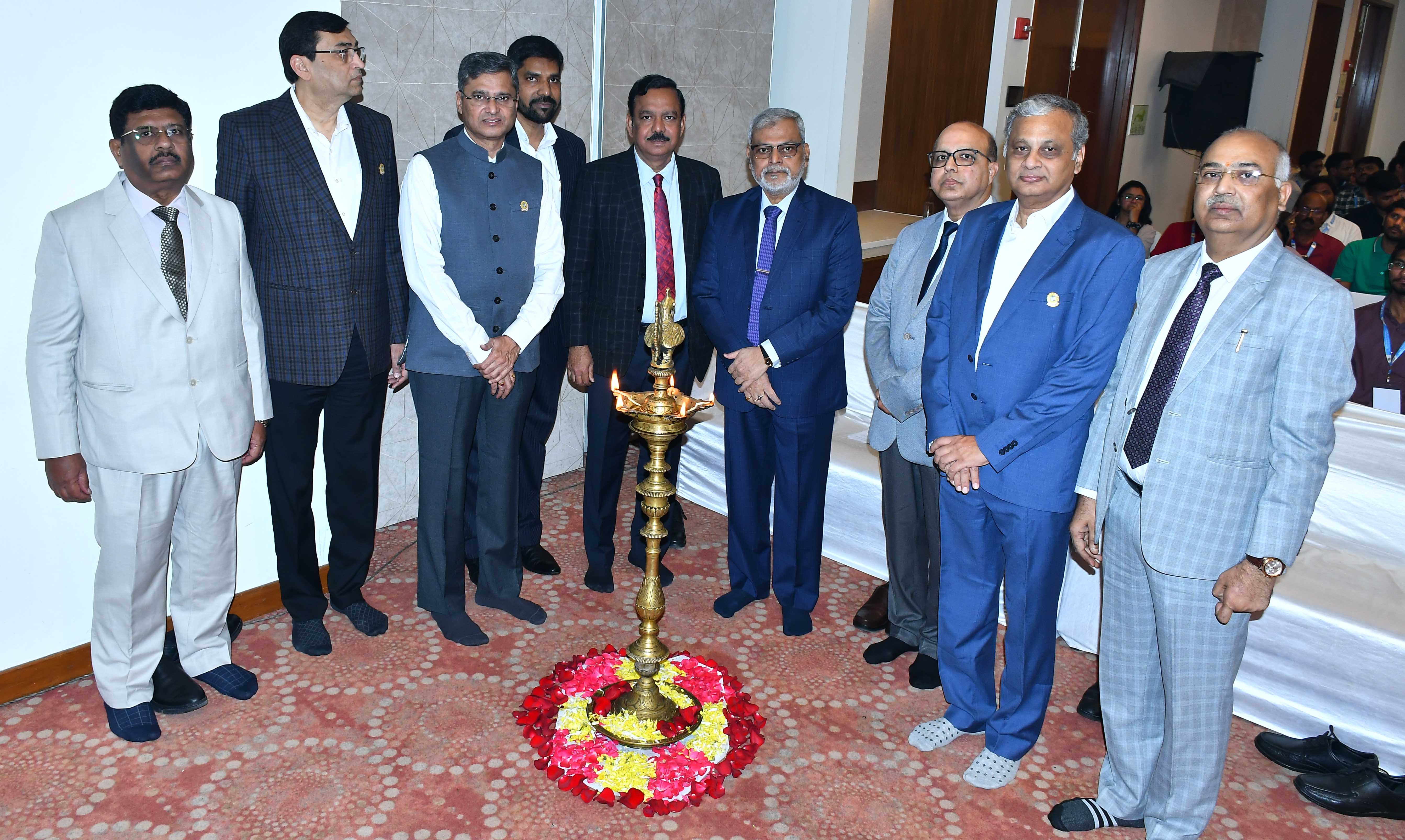
GSTAT is designed to provide a transparent, efficient and fully digital platform for GST appeals, says President, GSTAT
Hyderabad, Feb 21,: Hon’ble Dr Justice (Retd.) Sanjaya Kumar Mishra, President of the Goods and Services Tax Appellate Tribunal (GSTAT), inaugurated a half-day Summit on GST Appellate Tribunal in the city on Saturday.
Addressing the gathering as Chief Guest, he observed that multiple lakh appeals are expected to be filed before June 30, 2026, the notified cut-off date for filing appeals before GSTAT.
Creating awareness about the newly operational tribunal, Justice Mishra said that GSTAT is a specialised appellate body that hears disputes related to GST and functions as the second appellate authority in the GST dispute resolution mechanism.
The operationalisation of GSTAT marks a transformative step in India’s indirect tax dispute resolution framework. It is designed to provide a transparent, efficient, and fully digital platform for addressing GST-related appeals, he said.
He further urged taxpayers and practitioners not to wait until the last moment to file appeals.
With a significant number of appeals expected before the June 30, 2026 deadline, I strongly advise taxpayers and professionals to file well in advance. Early filing will ensure smoother processing and avoid unnecessary hardship, he said.
Explaining the appellate framework, he stated that under the GST Act, if a taxpayer is aggrieved by an order passed by a GST Officer, an appeal can first be filed before the First Appellate Authority. If still dissatisfied, the taxpayer can approach GSTAT.
Prior to GSTAT becoming operational, taxpayers had to approach High Courts directly after the first appeal, which led to delays and increased litigation costs.
Justice Mishra noted that GSTAT will handle tax demand disputes, Input Tax Credit (ITC) issues, refund claims, penalties, classification disputes, and interpretation of GST provisions. The tribunal offers a structured technical and judicial forum, speeds up dispute resolution, and reduces the burden on High Courts.
He informed that the system is transparent, paperless, and fully online, with appeals to be filed electronically through the designated GST portal.
Interacting with the media on the sidelines of the summit, Justice Mishra observed that the proposed simplification under GST 2.0 could potentially reduce litigation in the long run.
He earlier inaugurated the summit in the presence of several luminaries from the GST regime, R Ravi Kumar, KK Maheshwari, Srinivas Garimella, and the office bearers of the FTCCI
The operationalisation of the GST Appellate Tribunal marks a defining moment for the business and professional community. A structured and specialised appellate forum like GSTAT strengthens confidence in the GST framework by ensuring timely and expert resolution of disputes. As industry stakeholders, we welcome this development and encourage businesses and tax professionals to understand the procedures thoroughly and make proactive use of the system. FTCCI remains committed to creating platforms that bridge policymakers, administrators, and industry for a more transparent and efficient tax ecosystem, said R Ravi Kumar, President of FTCCI giving his welcome address
The summit was organised by the Federation of Telangana Chambers of Commerce and Industry (FTCCI) at Hyatt Place, Banjara Hills.
Titled “GSTAT: Navigating the New Era of GST Litigation,” the summit was conducted in the backdrop of the formation and operationalisation of GSTAT.
Members of GSTAT from Telangana and Andhra Pradesh participated in the programme, along with senior officials and experts from GSTN and the State GST Department.
In his opening remarks, Mohd. Irshad Ahmed, Chair, GST & Customs Committee, FTCCI, said that the summit was organised at a crucial juncture in the GST framework.
“With GSTAT becoming operational, it marks a significant step in strengthening the GST dispute resolution mechanism. The programme aims to equip professionals and businesses with clarity and practical insights into the functioning and procedures of the newly formed appellate body,” he said.
The half-day summit featured technical sessions on the structure and functioning of GSTAT, a practical walkthrough of the GSTAT e-filing system by experts from GSTN/NIC, and a panel discussion involving senior tax practitioners, legal experts, and departmental officials on emerging challenges and best practices in GST litigation.
Over 250 participants attended the summit, including Chartered Accountants, Company Secretaries, Cost Accountants, Advocates, tax practitioners, business executives handling GST matters, and finance professionals.
- –
21, Feb 2026
Climate Jobs Fair Under Delhi Climate Innovation Week Co-Hosted by CCF and TERI
Climate Jobs Fair under Delhi Climate Innovation Week, co-hosted by Climate Collective Foundation (CCF) and TERI School of Advanced Studies, to be held on 21 February 2026 in New Delhi
Feb 21: As India’s climate and sustainability sector continues to expand, the demand for skilled professionals across clean energy, climate technology, and sustainability roles is rising rapidly. Addressing this growing need, the Climate Jobs Fair — hosted under Delhi Climate Innovation Week (DCIW) and co-hosted by Climate Collective Foundation (CCF) and TERI School of Advanced Studies.
The event is designed as a focused hiring platform that connects climate-focused startups, SMEs, and mission-driven organisations with job-ready talent looking to build careers in India’s green economy. More than 20 climate-focused startups will participate, recruiting for diverse roles across the sustainability ecosystem.
Participating organisations include Enlog, TekUncorked, TRILLECTRIC, SmartJoules, and 3R Zerowaste Pvt Ltd., among others, showcasing the breadth of innovation emerging within India’s climate ecosystem.
Unlike traditional job fairs, the Climate Jobs Fair follows a curated and structured format, bringing together registered employers and shortlisted candidates to enable meaningful hiring conversations. The initiative aims to bridge a key gap in the sector — where startups often struggle to find climate-ready talent, while young professionals face unclear pathways into climate careers.
Alongside recruitment interactions, industry leaders and academic experts will share insights on emerging opportunities and the future of green jobs in India. The following spokespersons will be available for media interactions at the venue:
Prof. Sukanya Das, Dean (Research & Partnerships), Department of Policy and Management Studies
Dr Ranjana Ray Chaudhuri, Head & Associate Professor, Coca-Cola Department of Regional Water Studies, Department of Natural and Applied Sciences
Col. B Venkat, Registrar, TERI School of Advanced Studies
Dr Chandan Kumar, Assistant Professor, Department of Policy and Management Studies & Coca-Cola Department of Regional Water Studies
The event is supported by ecosystem partners including YuWaah! (UNICEF India) as Youth Engagement Partner and Euforbia as Ecosystem Partner, with TERI School of Advanced Studies serving as the Venue Partner.
Through structured interviews, curated participation, and continued hiring support via the Climate Jobs Board, the event aims to strengthen India’s green workforce and accelerate the country’s climate transition.
21, Feb 2026
Dibrugarh University International Literature Festival Kicks-off: Opening Two Days Set the Stage for an Even Bigger Literary Finale
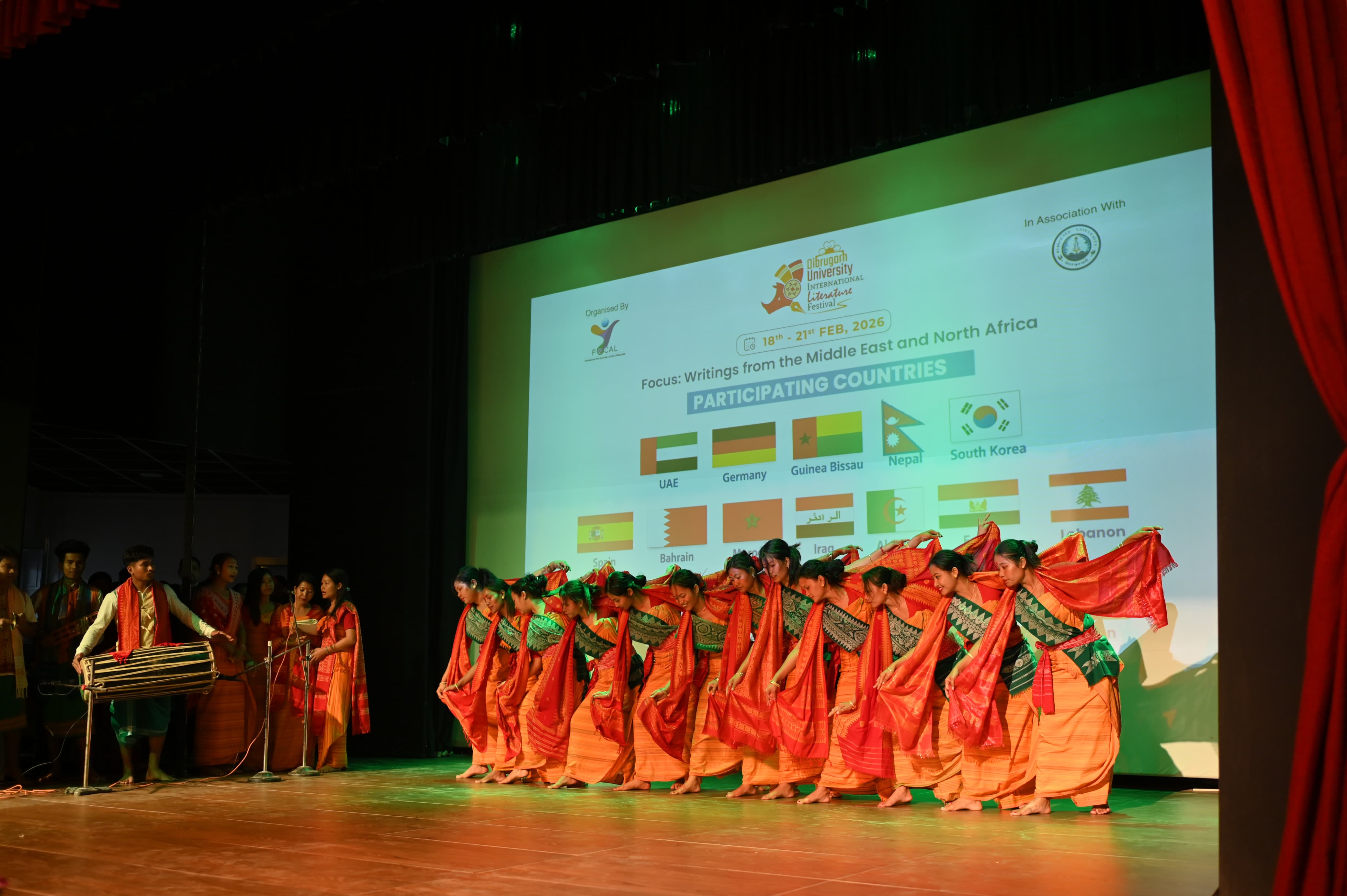
Feb 21: FThe much-awaited 3rd edition of the Dibrugarh University International Literature Festival (DUILF) commenced yesterday, marking the beginning of a vibrant four-day literary celebration. Organised by Dibrugarh University in association with the Foundation for Culture, Arts and Literature (FOCAL), a Guwahati-based non-profit Trust, the festival brings together over 150 authors from 25 countries and focuses on literature from the Middle East and North Africa (MENA) region, bringing global perspectives and cross-cultural narratives through diverse and engaging literary conversations.
The festival began on an inspiring note with the presence of Yeshe Dorjee Thongchi, an acclaimed Indian author, who graced the occasion as Chief Guest and formally inaugurated the event. The opening day of the festival witnessed a strong turnout, with engaging sessions that kept the audience captivated throughout.
The opening session, “The Middle East and North Africa: Within and Without An Insight into the Region,” chaired by Talmiz Ahmad, former Indian Ambassador to Saudi Arabia, the UAE and Oman, set a thoughtful and globally relevant tone for the day. Other highlights included an insightful session on “Life, Journalism & Literature” by Lucia Asue Mbomio, a Spanish journalist and author, as well as a compelling conversation on “Korean Literature and Society” with renowned Korean author Kyung-sook Shin and others. The day concluded on a vibrant cultural note with “BAZM-E-URDU,” featuring Minu Bakshi, a versatile artist, singer, poet and author, bringing together literature and performance in a fitting finale.
The second day of the festival continued with powerful conversations in sessions such as “Tea, Love and War: Searching for English Roots in Assam,” in conversation with David Mitchell, critically acclaimed English novelist and Ann Poyser, a British writer and editor based in Assam; “The Promise of India and its Prime Minister,” where Rahul Jain, the festival curator, was in discussion with Jaimini Bhagwati, former High Commissioner of India to the United Kingdom; and “Making Sense of Jal, Thal and Mal,” where Sopan Joshi, renowned writer and environmentalist, engaged with students on environmental issues.
Over the two days, the festival witnessed a footfall of approximately 4,000 attendees, reflecting strong momentum and an enthusiastic response.
Rahul Jain, Curator and Chief Coordinator, DUILF, said, “Seeing thousands of students and literary enthusiasts come together and attend the festival thus far has been incredibly rewarding. I am excited about the next two days of the festival, and look forward to even more meaningful conversations and inspiring moments from our sessions in the days ahead’’.
With a strong and positive start to the first two days of the festival, curiosity now builds for Day 3 and Day 4, which promise deeper literary engagements and thoughtful discussions. Day 3 will feature compelling sessions on “Family & the Intergenerational Novel,” where VK Karthika will be in discussion with Shahla Ujayli, Shubnum Khan, Nasmeem F. Akhtar and Gisela Casimiro; and “Borne on the Heartland,” where Sumana Ramanan will be in dialogue with Ghazala Wahab, an Indian journalist, editor, and author known for her work on politics, security, gender, and society. The day will conclude with a powerful session, “Red Means Stop”, where Vasundhara, a renowned actor and writer, will interact with Simala Prasad, a government official, on the issue of human trafficking.
Day 4 will bring the festival to a meaningful close, beginning with a session featuring acclaimed author Ann Morgan in conversation with Gisela Casimiro, Mai Khaled, Shubnum Khan, Reem Kais Kubba and Leila Al Mutawa on “Of Identity and Belonging.” The day will further feature engaging sessions on “Tales of Hope and Courage” which will include Yuliya Musakovska’s poetry performance; “The UPSC Dream”, which will have Priyanka Kakoti in conversation with Sajjan Yadav, an Indian Administrative Service (IAS) officer, educator and author; and “Challenges in Modern Assamese Literature” where Debabhuson Borah will be in conversation with Pankaj Kumar Dutta, Arpana Konwar and Pallavi Deka Buzarbaruah.
With diverse minds sharing their journeys and ideas, the final day promises to leave audiences inspired, enriched and eager for the next edition of the festival.
21, Feb 2026
Canara Bank to Host Canara Utsav 2026: A CSR Campaign dedicated towards women’s entrepreneurship, empowerment and preservation of cultural heritage
Bengaluru, Feb 21st: Canara Bank will host Canara Utsav 2026, a two-day exhibition celebrating entrepreneurship and art while empowering women and local artisans. The event is scheduled on 22nd and 23rd February 2026 at Jayamahal Convention Hall, Jayamahal Road, Bengaluru from 10:00 am to 8:00 pm.
Since its inception, “Women Empowerment” has always been a primary objective and commitment for Canara Bank. As a part of its corporate social responsibility and community development, Canara Bank continues to support women entrepreneurs and skilled artisans by providing them a platform to showcase their skills and promote their handmade products in the form of organizing “CANARA UTSAV” at multiple locations.
The exhibition will feature a variety of handcrafted items such as organic food, pottery, sweets, handcrafted jewellery, candles, and many more. Visitors can also get a hands-on experience at the live pottery and mehendi counters at the venue.
21, Feb 2026
From Burnout to Alignment: Why Inner Healing Is Gaining Attention in Uncertain Times
BLACK MOUNTAIN, N.C., Feb. 21 — Burnout, uncertainty, and a growing sense of disconnection have fueled a surge in spiritual curiosity — particularly practices that promise inner alignment rather than external fixes. In The Akashic Way: Living Through the Lens of the Akashic Records, three-time Emmy Award-winning director and advanced Akashic Records practitioner Mary Madeiras explores why so many people are searching inward for clarity, affirmation, and healing.
After decades spent shaping stories for millions of viewers, Madeiras now invites readers into a different kind of narrative — one rooted in the Akashic Records, a quantum divine field believed to contain the energetic imprint of every soul’s journey through time. Rather than offering another roadmap for self-improvement, The Akashic Way reframes healing as an act of remembering and reconnecting with the deeper truth of who we are and why we are here.
“We can actually access our own journey — our own soul’s imprint — for every incarnation,” Madeiras explained.
Drawing from her own Akashic experiences and client sessions, Madeiras shows how working within the Records consistently creates alignment — emotionally, spiritually, and energetically. “It’s like having a conversation with the higher, divine aspect of yourself,” she said. “And when we’re aligned, the world becomes more aligned.” The result, she believes, is clarity, affirmation, and self-empowerment — tools urgently needed in a fragmented, fast-moving world.
The Akashic Way touches upon the many challenges that pull people away from connecting with their intuition and inner love — relationship struggles, traumas, unresolved patterns, and health issues. Madeiras shows how anyone can access this deeper guidance to create meaningful change and awaken that inner love. Her personal Akashic exchanges — woven with messages for humanity — offer readers the opportunity to reflect on their life’s purpose. The wisdom from the Akashic Realm is a profound tool for rediscovering purpose, trusting intuition, and learning to live through love and intention.
As Madeiras writes, “I titled this book The Akashic Way because I believe that living life through the Akashic Records is a path back to ourselves — a way to remember who we are, why we chose to come here, and what we are here to do. When we view our life through our own Akashic lens, we experience self-empowerment in the most profound way.”
The Akashic Way: Living Through the Lens of the Akashic Records
Publisher: Precocity Press
ISBN-13: 979-8993115092 (Paperback)
ISBN-13: 979-8993115047 (Kindle)
21, Feb 2026
Archon Group Builds Grand Temple in Kakarai as Tribute to Faith and Community
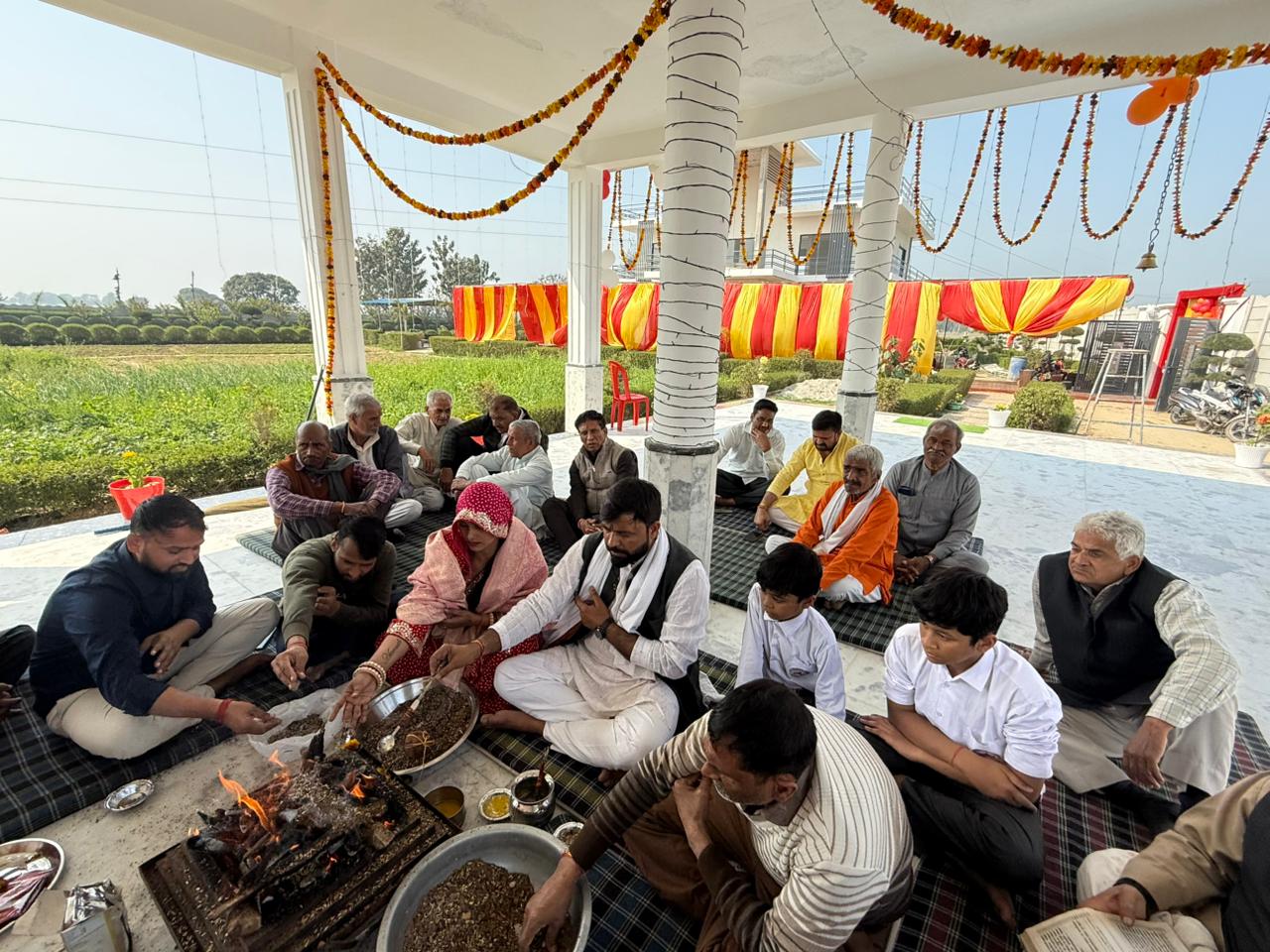
Feb 21: Bulandshahr: In a gesture rooted in social responsibility and deep spiritual devotion, Kapil Sharma, founder of Archon Group, along with his father Momraj Sharma, has constructed a grand new temple at Shankar Farm on the Jadol Canal in Gram Panchayat Kakarai, Bulandshahr.
The temple was officially inaugurated on February 20 through a traditional pran pratishtha (idol consecration) ceremony in accordance with the Vedic ritual. The event was attended by hundreds of followers of Kakarai and surrounding towns to observe the most impressive ceremony that consisted of mantras, havan and other religious rituals that gave the whole region a spiritual experience.
The new temple has idols of the Shiva family, Radha- Krishna, Ram- Lakshman, Maa Sita, Maa Durga and Lord Hanuman. Before the consecration, there was a colorful Kalash Yatra and a big procession, which was implemented throughout the village, and the women attended it in large numbers, contributing to the devotion.
A native of Bulandshahr (currently a renowned industrialist with his location being Ahmedabad) Kapil Sharma spoke of the temple as a simple form of paying a debt of gratitude to the town of his birth. The initiative also indicates how committed the family is towards spiritual values but also community development and social harmony.
After the rituals, a community feast (bhandara) was arranged, during which the villagers and the devotees attended the feast in huge numbers. The people in Kakarai praised the work done by Kapil Sharma and Momraj Sharma labeling the temple as an eternal beacon of beliefs, community and cultural identity
The locals assume that the temple shall be a spiritual and cultural center to the generations to come as a way of boosting the principles of devotion, unity and social accountability in the area.
20, Feb 2026
HE DATO Dr. Bhargav Mallappa & HE DATO Dr. S. Selvaganesh Selvaraj Ink Kampung Bharu 2.0 Twin-Tower MoU
Indian Investor & Entrepreneur HE DATO Dr Bhargav Mallappa & HE DATO Dr S. Selvaganesh Selvaraj Meets Yam Raja Izzuddin Iskandar Shah Al-Haj Ibni Almarhum Sultan Idris Afiffullah Shah, Seeks Blessings for Kampung Bharu 2.0 Project
Signs Major MoU to Speed Up Iconic Twin-Tower Plan, Boost FDI, Create High-Value Jobs, Modernize City Infrastructure, and Strengthen Malaysia–India Ties
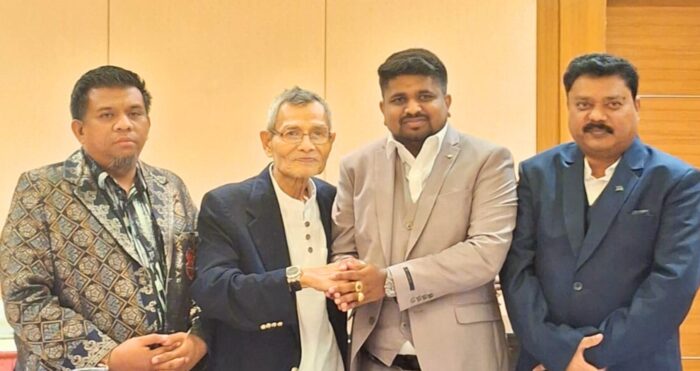
Malaysia / India, Feb 20: HE DATO Dr Bhargav Mallappa, a prominent Indian investor and entrepreneur from the MBRA Group, along with HE DATO Dr S Selvaganesh Selvaraj, recently met Yam Raja Izzuddin Iskandar Shah Al-Haj Ibni Almarhum Sultan Idris Afiffullah Shah, a Member of the Malaysian Royal Family (Perak), on February 15 at the Mid Valley Hotel in Kuala Lumpur.
During the meeting, HE DATO Dr Bhargav Mallappa sought His Highness’s blessings for the ambitious Kampung Bharu 2.0 redevelopment project. The discussion focused on shared vision, mutual respect, and long-term cooperation aimed at transforming one of Kuala Lumpur’s oldest and most historic neighbourhoods.
Following the meeting, a major strategic partnership was formalized with DSAT Private Equity Sdn. Bhd., under which HE Dato Dr Bhargav Mallappa is committing substantial investment to accelerate the redevelopment initiative. A key highlight of the project is the proposed iconic twin-tower development, designed to redefine the city’s skyline while carefully preserving the cultural and historical identity of Kampung Bharu.
As part of the agreement, HE DATO Dr Bhargav Mallappa has acquired equity in DSAT Private Equity Sdn. Bhd., a company licensed and regulated by the Securities Commission Malaysia. The regulated structure ensures that all investments follow strict legal, regulatory, and governance standards, maintaining full transparency and accountability.
Speaking about the initiative, HE DATO Dr Bhargav Mallappa said:
“Malaysia stands out for its economic resilience, stable governance, and vast opportunities in urban transformation. Kampung Bharu 2.0 presents a unique opportunity to create a landmark that honors heritage while embracing modern progress. Our commitment is to invest responsibly, transparently, and with a long-term development vision.”
Adding to this, HE DATO Dr. S Selvaganesh Selvaraj stated:
“This collaboration reflects the growing strength of Malaysia–India partnerships in strategic development. By combining international expertise with local vision, we aim to contribute meaningfully to sustainable growth, job creation, and long-term economic value.”
Welcoming the engagement, Yam Raja Izzuddin Iskandar Shah Al-Haj Ibni Almarhum Sultan Idris Afiffullah Shah said:
“We appreciate the confidence shown by international investors in Malaysia’s growth story. Development must be forward-looking while respecting our cultural roots. Initiatives like Kampung Bharu 2.0 have the potential to generate economic value, create skilled employment, and further strengthen Malaysia–India relations.”
The partnership is expected to attract foreign direct investment (FDI), create high-value jobs, upgrade urban infrastructure, and deepen economic ties between Malaysia and India, while supporting inclusive and sustainable national development goals.