


12, Oct 2026
Ambience Mall Gurugram Strengthens Fashion Offering with Expanded UNIQLO Store

Delhi NCR, 12 October 2026: Ambience Mall Gurugram has further strengthened its fashion and lifestyle offering with the reopening of its expanded UNIQLO store. The store, which has been part of the mall for over six years, has now expanded to approximately 28,000 sq. ft., making it UNIQLO’s second Super Large Format store in India. The expansion brings a wider selection of LifeWear and an enhanced retail environment to customers.
Arjun Gehlot, Director, Ambience Group, said, “At Ambience Malls, our vision has always been to create destinations that evolve with the changing aspirations and lifestyles of our consumers. The expansion of UNIQLO at Ambience Mall Gurugram reflects the strong response the brand has received from our customers over the years, while further strengthening our fashion and lifestyle offering. As consumers increasingly look for greater choice and more engaging retail experiences, we continue to curate a relevant mix of leading global and emerging brands across our destinations. We are delighted to see UNIQLO expand its presence at Ambience Mall Gurugram and look forward to continuing to offer our customers an enhanced experience through this expanded format.”
The expanded UNIQLO store offers more than 330 styles, along with additional trial rooms, self-checkout counters and UTme!, which allows customers to personalise selected products. The store also features the brand’s 2026 Fall Winter collection and a RE.UNIQLO Donation Box supporting clothing reuse and recycling initiatives.
The expansion further adds to Ambience Mall Gurugram’s diverse portfolio of international and Indian fashion and lifestyle brands, reinforcing its position as a leading destination for fashion, lifestyle and contemporary retail experiences.
- 0
- By Neel Achary

12, Oct 2026
IITM Pune Hosts APARC Early Career Researcher Workshop Ahead of ESTIC
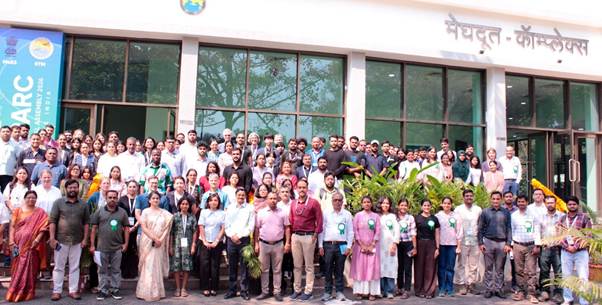
Pune, October 12: The Indian Institute of Tropical Meteorology (IITM), Pune, hosted the APARC Early Career Researcher (ECR) Workshop, titled “The ECR Nexus: Connecting Voices, Tools, and Science to Society,” at Meghdoot Hall, bringing together emerging researchers and international experts to discuss scientific collaboration, career development and the role of research in addressing societal challenges.
The workshop also served as a curtain-raiser for the upcoming Emerging Science, Technology and Innovation Conclave (ESTIC), highlighting the importance of connecting scientific research, technological advancement and policymaking to support India’s development priorities.
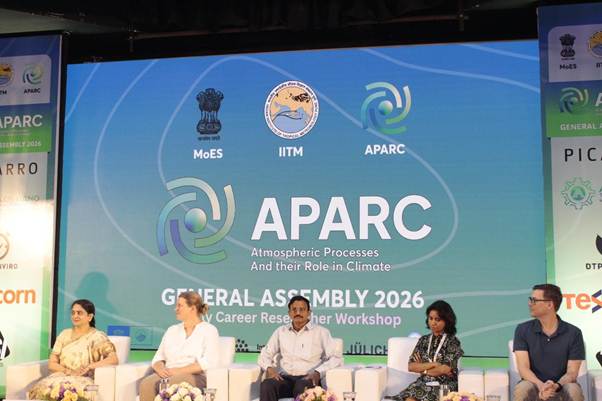
Dr. T. Srinivasa Kumar, Secretary of the Ministry of Earth Sciences, delivered the keynote address outlining ESTIC’s vision and strategic objectives. He highlighted the importance of strengthening collaboration across science, technology and policy, while encouraging the development of an innovation ecosystem capable of addressing emerging national and global challenges.
The address also highlighted the need for collaborative platforms that bring together researchers, policymakers and industry representatives to translate scientific advances into practical applications and support sustainable development.
The inaugural session featured a welcome address by IITM Director Dr. Suryachandra A. Rao. Additional addresses were delivered by Scientific Organizing Committee representatives Dr. Ines Tritscher, Director of the APARC Office in Jülich, Germany; Dr. Jonathon S. Wright of Tsinghua University, Beijing; and Dr. Hindumathi Palanisamy of the World Climate Research Programme (WCRP), World Meteorological Organization (WMO), Geneva.
Dr. Suvarna Fadnavis, a member of the Scientific Organizing Committee and Project Director of the Centre for Climate Change Research (CCCR) at IITM, delivered the vote of thanks. Workshop session convener Dr. Aditi Modi presented an overview of the programme and its key objectives.
A major highlight was a keynote presentation by Dr. Maria Molina of the University of Maryland on the applications of artificial intelligence (AI) and machine learning in Earth sciences. The session explored the growing relevance of advanced computational techniques in scientific research and their potential to improve the understanding of complex Earth system processes.
An interactive panel discussion brought together experts from NVIDIA, WCRP/WMO, Lawrence Livermore National Laboratory, the University of Tokyo and the Central University of Jammu to examine career pathways for early career researchers.
The discussion explored opportunities within academia and across industry, research laboratories and international scientific organisations. It provided participants with perspectives on professional development and the skills required to navigate an increasingly interdisciplinary research environment.
The workshop included collaborative brainstorming sessions designed to identify key research priorities and encourage cross-disciplinary exchange among participants.
An interactive “Meet the Editors” session featured representatives from Nature Portfolio and Springer Nature, offering early career researchers an opportunity to engage with scientific publishing professionals and gain insights into research communication and publication practices.
Participants also attended a technical tutorial on the Earth System Model Evaluation Tool (ESMValTool), coordinated by Dr. Birgit Hassler. The session focused on technical capabilities relevant to the evaluation and analysis of Earth system models.
The Young Earth System Scientists (YESS) community also presented opportunities for international networking, highlighting avenues for early career researchers to build professional connections and participate in global scientific initiatives.
The workshop sought to strengthen collaboration, technical skills and professional networks among emerging researchers working in atmospheric and Earth sciences. By combining expert presentations, interactive discussions and practical training, the programme provided a platform for participants to exchange ideas and explore emerging research opportunities.
The curtain-raiser also brought attention to ESTIC’s broader focus on advancing science, technology and innovation through collaboration among research institutions, industry and policymakers.
The initiative underscores the importance of supporting early career researchers as contributors to scientific discovery and technological development, particularly in fields such as climate science and Earth system research, where interdisciplinary expertise and international cooperation are increasingly important.
12, Oct 2026
Jyotiraditya Scindia to Visit Mizoram for Development Projects, Student Interaction and Banking Conclave
AIZAWL, October 12, 2026: Union Minister for Communications and Development of North Eastern Region Jyotiraditya M. Scindia is scheduled to visit Mizoram on October 12 and 13 to participate in development programmes, interact with students and engage with banking sector representatives.
The two-day visit marks Scindia’s second trip to Mizoram since assuming charge as Minister for Development of the North Eastern Region. His engagements will focus on infrastructure development, youth interaction and strengthening the role of financial institutions in the economic development of the Northeast.
On October 12, Scindia will arrive in Aizawl and proceed to Tuivamit, where he is scheduled to inaugurate development projects and lay foundation stones for new initiatives. The programmes are aimed at supporting development activities in the state.
The Union Minister will subsequently visit Mizoram University to interact with students, including participants of the Ministry of Development of North Eastern Region’s (MDoNER) Ashtalakshmi Darshan programme. The interaction is expected to provide a platform for discussions on educational opportunities, youth aspirations and development prospects in the Northeastern region.
On October 13, Scindia will return to Mizoram University to inaugurate the North East Bankers’ Conclave 3.0 and deliver its keynote address.
The conclave will bring together stakeholders from the banking sector to deliberate on ways to improve access to credit, expand financial inclusion and strengthen institutional support for economic activities across the Northeast.
Banking institutions are expected to play an important role in facilitating credit for entrepreneurs, small businesses and other economic stakeholders, particularly in regions where access to formal financial services remains a key development priority.
The visit forms part of the Centre’s engagement with Northeastern states on development initiatives, infrastructure expansion and economic opportunities. The scheduled programmes in Mizoram will bring together government representatives, students and financial sector stakeholders to discuss priorities for the state and the wider region.
12, Oct 2026
TDB Extends Rs.86 Crore RDI Support to Peptris for AI-Based Drug Development
Bengaluru, October 12: The Technology Development Board (TDB), under the Department of Science and Technology (DST), Government of India, has entered into an agreement with Bengaluru-based Peptris Technologies Private Limited to provide ₹86 crore in financial assistance for advancing artificial intelligence (AI)-driven drug discovery and development.
The funding, extended under the Research Development and Innovation (RDI) Fund, will support Peptris’ ₹172 crore project, titled VIGOR: Advancing AI-Discovered Molecules from Bench to Clinic. The programme aims to move four drug candidates from Technology Readiness Level (TRL)-4 to TRL-6 through preclinical research, experimental validation and preparation for clinical trials. The assistance will be provided through an Optionally Convertible Debt (OCD) arrangement.
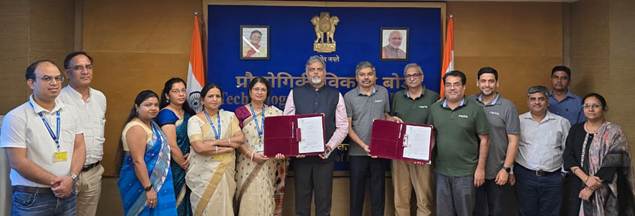
The initiative seeks to address a major challenge in AI-led pharmaceutical research: converting computationally identified molecules into potential therapeutic candidates that can progress through laboratory validation, preclinical testing and subsequent clinical development.
Peptris plans to use its proprietary AI-driven drug discovery platform alongside established drug-development processes to advance the selected candidates. The programme will focus on therapeutic areas with unmet medical needs and is expected to run over three years.
The four candidates included in the development programme are PEPR111, targeting neuromuscular disorders and oncology; PEPRX101, focused on alopecia; PEPR202, targeting neuropathy; and PEPR112, focused on Duchenne muscular dystrophy (DMD).
According to the project plan, the candidates are currently at TRL-4, with the objective of reaching TRL-6. Planned activities include advanced preclinical studies, investigational new drug (IND)-enabling research, formulation development and preparation for clinical trials. Progression will depend on scientific outcomes and applicable regulatory requirements.
The programme will also draw on global contract research organisation (CRO) networks to support development and validation. By pursuing four candidates under a common framework, Peptris aims to combine AI-enabled molecular discovery with experimental evidence and established pharmaceutical development practices.
Commenting on the agreement, TDB Secretary Shri Rajesh Kumar Pathak said AI could significantly change the process of identifying and developing new drug candidates. He noted that translating promising discoveries into validated therapeutic candidates requires sustained financial investment, rigorous scientific assessment and a structured development pathway.
Pathak said the RDI Fund was supporting technology-intensive initiatives to bridge the gap between innovation and clinical development while building India’s capabilities in biotechnology, pharmaceuticals and AI-enabled healthcare.
A representative of Peptris Technologies Private Limited said the financial support would help the company advance its VIGOR programme through important preclinical development milestones. The representative highlighted the integration of AI-based discovery, experimental validation and established drug-development methods as central to the company’s efforts to address unmet medical needs.
The agreement comes amid growing interest in the application of AI across pharmaceutical research, including molecular identification and the development of potential new therapies. However, drug candidates must still demonstrate safety, efficacy and compliance with regulatory requirements before they can be approved for clinical use.
Through the VIGOR programme, TDB and Peptris aim to accelerate the development of selected AI-discovered molecules and strengthen the translation of research into potential therapeutic products. The project’s eventual clinical and medical outcomes will depend on successful development, validation and regulatory clearances.
12, Oct 2026
Bhupender Yadav Calls for Technology-Led Forest Governance and Community-Driven Conservation
Environment Minister stresses innovation, scientific forest management and ecological security as India works towards Viksit Bharat@2047
New Delhi: Union Environment, Forest and Climate Change Minister Bhupender Yadav has urged Indian Forest Service (IFS) officers to strengthen conservation efforts through scientific decision-making, technological innovation and greater community participation. He emphasised that protecting India’s natural ecosystems must remain an integral part of the country’s long-term economic development strategy.
The Minister shared his views during an interaction with officers participating in the Mid-Career Training (MCT) Phase-III (19) programme of the Indian Forest Service in New Delhi. The discussion focused on India’s conservation priorities, the challenges confronting forest administrators and the need to strengthen institutional capabilities to address emerging environmental concerns.
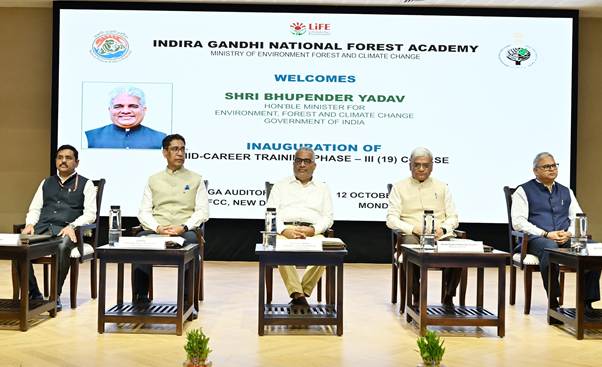
Senior officials attending the interaction included Narendra Bhooshan, Secretary of the Ministry of Environment, Forest and Climate Change (MoEFCC); Santosh Tiwari, Director General of Forests and Special Secretary; Ramesh Pandey, Additional Director General of Wildlife; and Rajendra Prasad Khajuria, Director of the Indira Gandhi National Forest Academy (IGNFA), along with other ministry officials.
Recognising the contribution of forest officers to protecting India’s ecological wealth, Yadav highlighted progress in wildlife conservation, forest and tree cover, carbon sequestration, wetland protection and landscape restoration.
He also drew attention to initiatives designed to combine environmental restoration with public participation. These include Ek Ped Maa Ke Naam, MISHTI, the Aravalli Green Wall Project and Nagar Van Yojana, which support tree planting, ecosystem improvement and the creation or restoration of green spaces.
The Minister stressed that the national objective of Viksit Bharat@2047 must be pursued alongside the protection of forests, wildlife and biodiversity. Integrating ecological considerations into development planning, he indicated, is essential to maintaining a balance between economic aspirations and environmental responsibilities.
The growing complexity of forest management requires officers to address challenges extending beyond conventional conservation activities. Yadav identified human-wildlife conflict, forest fires and climate change as major concerns requiring timely interventions and evidence-based solutions.
He underlined the importance of understanding local ecosystems and adapting management strategies to the diverse climatic and geographical conditions found across India.
Community participation was another key theme of the interaction. Working closely with local populations and drawing on traditional knowledge can help forest administrators develop practical responses to conservation challenges while encouraging wider public involvement in protecting natural resources.
The Minister encouraged the participating officers to approach field-level problems with fresh perspectives and devise solutions that reflect local realities.
GIS, Remote Sensing and AI Gain Importance in Forest Administration
As environmental pressures intensify, technology is creating new opportunities to improve forest monitoring, conservation planning and administrative efficiency.
Yadav highlighted the potential of Geographic Information Systems (GIS), remote sensing and artificial intelligence (AI) to support forest management and more informed decision-making. Such tools can help administrators assess landscapes, monitor environmental changes and strengthen the preparation and implementation of forest management plans.
He urged officers to develop the technical understanding needed to incorporate these capabilities into their work. At the same time, he emphasised that technological adoption must be supported by continuous capacity building, institutional strengthening and effective implementation at the field level.
The Minister called for a broader approach to forest administration, encouraging officers to move beyond traditional regulatory responsibilities and take on greater roles as innovators, institutional leaders and facilitators of sustainable development.
He highlighted the value of combining field experience with exposure to policy formulation at the ministry level. According to the Minister, this cross-functional understanding can help officers connect conservation priorities with wider governance and development objectives.
The emphasis on professional development also reflects the need for forest administrators to respond to emerging challenges with a combination of scientific expertise, administrative experience and an understanding of community needs.
The interaction reinforced the importance of strengthening India’s forest governance framework at a time when climate change, biodiversity protection and competing demands on land and natural resources are becoming increasingly significant.
For the Indian Forest Service, the challenge lies in translating conservation objectives into effective action through better planning, modern technology, stronger institutions and sustained public engagement.
Yadav’s message to the officers centred on the need to adopt innovative approaches while maintaining a clear focus on safeguarding the country’s ecological heritage. As India advances towards its 2047 development vision, the effectiveness of forest management and conservation programmes will remain an important component of its broader sustainability agenda.
12, Oct 2026
Coal Stocks at Power Plants Remain Above 18 MT as Supply Strengthens in October 2026
Daily coal dispatches rise to 2.49 MT, while stock depletion slows sharply amid increased railway rake loading
Coal availability at domestic thermal power plants has shown signs of improvement in October 2026, with stock levels remaining above 18 million tonnes (MT) since September 29. Higher coal dispatches and increased railway rake movement have helped moderate the decline in inventories, supporting efforts to maintain uninterrupted electricity generation.
Coal stocks, which stood at 18.932 MT on September 29, were recorded at 18.205 MT on October 10, 2026. The relatively stable inventory position reflects improved coordination between coal supplies and the daily consumption requirements of power plants.
The Ministry of Coal is also monitoring stations facing critical stock levels and facilitating the redistribution of coal according to operational requirements. The approach aims to address supply gaps at vulnerable power plants and maintain adequate fuel availability.
The reduction in coal stocks has slowed considerably compared with the previous month. In September 2026, inventories declined by approximately 7.28 MT, translating into an average daily depletion of around 0.24 MT.
During the first ten days of October, however, the total decline was limited to approximately 0.56 MT, with average daily depletion falling to around 0.06 MT.
Coal stock increases were recorded on October 2 and October 10, when inventories rose by 0.024 MT and 0.017 MT, respectively. These increases indicate that coal receipts outpaced consumption on the two days.
The slower rate of depletion suggests that higher dispatch volumes are helping power plants manage their fuel requirements more effectively.
Improved railway logistics have played a significant role in strengthening coal supplies to the power sector.
An average of 469 railway rakes per day was loaded for power plants between October 1 and October 10, compared with 426 rakes per day during September. The increase of approximately 10% has supported the movement of larger coal volumes to generating stations.
Daily rake loading during the first ten days of October ranged from 447 to 482 rakes, reflecting sustained transportation activity during the period.
The increase in rake availability and loading has contributed to higher coal deliveries, helping narrow the gap between fuel consumption and replenishment at thermal power plants.
Average actual coal supply to the power sector reached 2.49 MT per day during October 1–10, up from 2.21 MT per day in September 2026.
The October average exceeded the planned daily supply of 2.37 MT. Actual supplies were higher than the planned level on nine out of the ten days, highlighting the improvement in coal movement during the period.
Higher daily deliveries have helped moderate inventory depletion, although maintaining adequate stocks will continue to depend on consistent supplies and the distribution of coal according to individual power plants’ requirements.
The Ministry of Coal is working with Coal India Limited (CIL), Singareni Collieries Company Limited (SCCL), the Ministry of Railways and power utilities to maintain the flow of coal to thermal power stations.
The coordinated measures focus on strengthening coal evacuation, addressing the requirements of plants with low inventories and ensuring that transportation and supply arrangements remain aligned with power-sector demand.
The Ministry has acknowledged Indian Railways for its continued support and professional commitment in facilitating coal transportation.
The moderation in coal stock depletion during October marks a change from the sharper decline recorded in September. Higher railway rake loading and increased daily coal supplies have contributed to maintaining inventories above 18 MT.
Sustaining this position will require continued coordination among coal producers, railway authorities and power utilities, particularly in ensuring timely deliveries to plants with critical stock levels. Consistent replenishment and requirement-based distribution will remain essential to maintaining fuel security and supporting reliable electricity generation across the country.
12, Oct 2026
PACE IIT & Medical Opens Its Regional Centre in Bengaluru
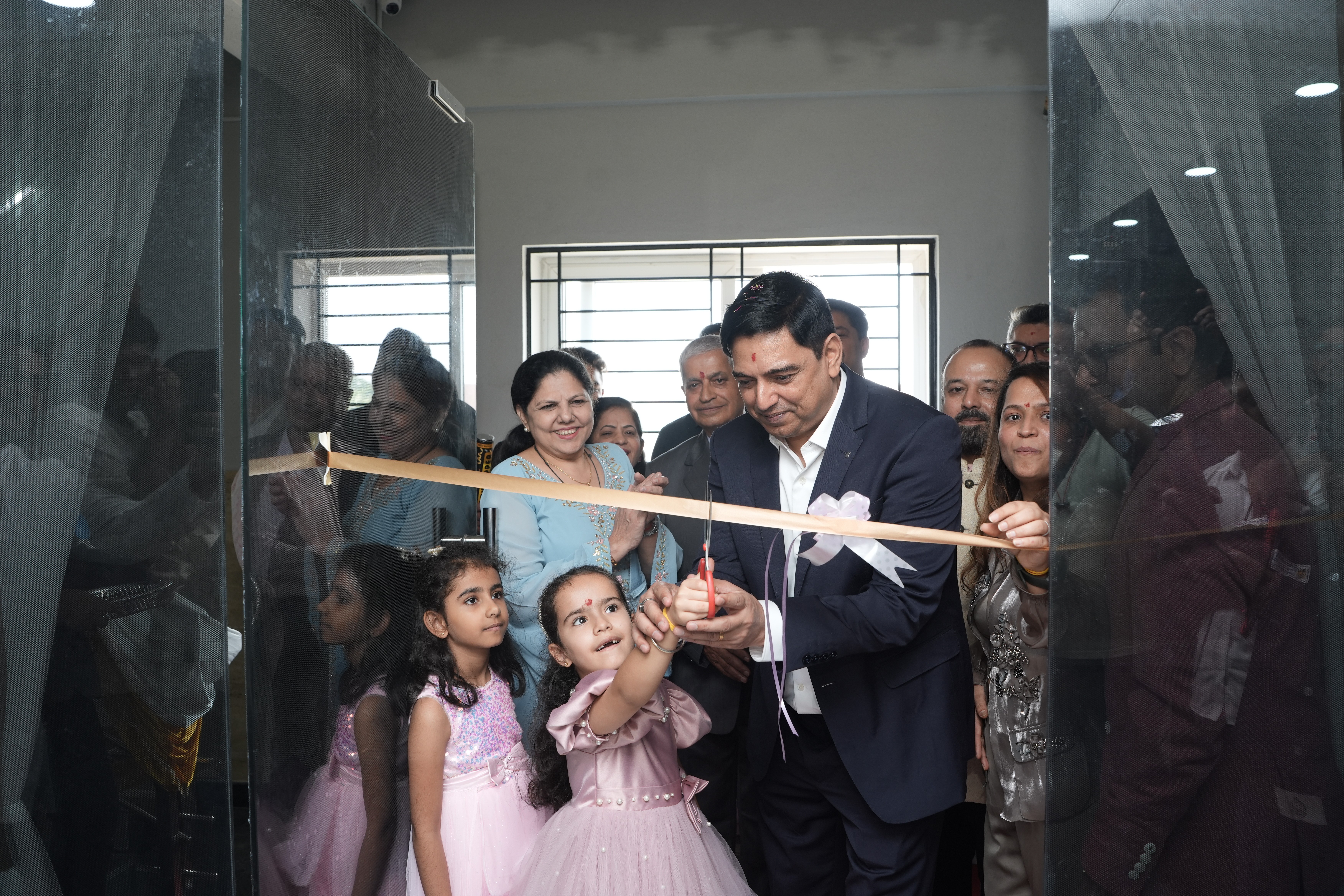
Bengaluru, 12 October 2026: PACE IIT & Medical, a leading coaching institute preparing students for JEE, NEET and Foundation-level competitive examinations, today inaugurated its new regional centre in Bengaluru at MG Square, 2nd Floor, Virgonagar Industrial Estate, Aavalahalli, Kurudusonnenahalli, near Belathur Main Road, Bengaluru – 560049.
The inauguration was marked by an open science and maths carnival held from 10:00 AM to 2:00 PM, welcoming students and parents to experience a day of discovery, experimentation and interactive learning.
The centre was inaugurated by Chief Guest Dr. Pawan Josh, Chairman, BRICS International and BRICS Pay India, and Guest of Honour Mr. Rafi Ahmed, Honorary Trade Commissioner. They were joined by Mr. Kuldeep Tyagi, Director, PACE IIT & Medical; Mr. Ankit Agarwal, Senior Faculty (Chemistry); and Mrs. Veena Rajai, Master Franchisee, PACE IIT & Medical, Bengaluru. Mr. Praveen Tyagi, Founder & Managing Director, PACE IIT & Medical, joined the ceremony virtually.
Organised in collaboration with PARSEC, Whitefield, the carnival featured hands-on science experiments, mathematical challenges, brain teasers and interactive activities designed to encourage curiosity, critical thinking and a practical understanding of scientific concepts. Students also toured the new centre, with prizes awarded to the winners of various activities.
A Shared Vision for Experiential Learning: PACE–PARSEC Collaboration
A key highlight of the launch was the announcement by Dr. Pawan Josh of a collaboration between PARSEC’s science laboratories and PACE IIT & Medical, Bengaluru. The initiative aims to provide students with opportunities for real-time, hands-on scientific learning, complementing classroom teaching with practical exploration and experimentation.
The collaboration reflects a shared commitment to making education more engaging, application-oriented and relevant to the needs of young learners.
Dr. Josh expressed his confidence in the initiative, recognising the vision of Mrs. Veena Rajai and the legacy of PACE IIT & Medical, Mumbai, as important factors in choosing to collaborate with the Bengaluru centre.
The partnership is expected to create opportunities for students to connect theoretical concepts with real-world applications, helping them develop scientific temper, analytical thinking and a deeper understanding of science.
Veena Rajai’s Vision: Building an Integrated Education Ecosystem
As Master Franchisee of PACE IIT & Medical, Bengaluru, Mrs. Veena Rajai envisions building a comprehensive education ecosystem that combines academic excellence, conceptual clarity, practical learning and individual student development.
Her vision extends beyond establishing a coaching centre. She aims to create an environment where students receive quality education, develop confidence in their abilities and gain access to meaningful learning experiences that prepare them for future academic and professional challenges.
Speaking about her vision, Mrs. Veena Rajai said:
“My vision is to build an education ecosystem where quality education goes beyond textbooks and examinations. I want students to experience learning, question concepts, experiment, explore and develop the confidence to pursue their aspirations. With the legacy and proven teaching approach of PACE IIT & Medical, Mumbai, our goal in Bengaluru is to take this brand to the next level, establish new benchmarks in academic excellence and create a learning environment that nurtures every student’s potential.”
She further emphasised the importance of collaboration with institutions such as PARSEC in bridging the gap between theoretical knowledge and practical application.
The Bengaluru initiative seeks to build on PACE’s established legacy while introducing collaborative learning opportunities and student-centric approaches suited to the evolving educational landscape.
Programmes at the Bengaluru Centre
The new regional centre will offer PACE IIT & Medical’s classroom programmes across Foundation and competitive examination preparation.
– Foundation Programme – Classes VII to X: Strengthening fundamentals in science and mathematics and developing analytical and problem-solving skills from an early stage.
– JEE and KCET Preparation: Supporting students aspiring to secure admission to IITs, NITs and leading engineering institutions, including colleges in Karnataka.
– NEET Preparation: Providing structured academic guidance for students aspiring to enter medical colleges.
The centre aims to combine concept-driven teaching, regular assessments, doubt-solving support and individual academic guidance to help students prepare with clarity and confidence.
Admissions for the new batches are now open. Students and parents can visit the centre or call +91 91877 02739 for counselling and admission information.
What the Leadership Said
Speaking virtually at the inauguration, Mr. Praveen Tyagi, Founder & Managing Director, PACE IIT & Medical, said:
“Bengaluru is home to some of the brightest young minds in the country. With this centre, we want to bring PACE’s teaching approach and results-focused guidance closer to students here, starting from the Foundation years right up to JEE and NEET.”
Mr. Kuldeep Tyagi, Director, PACE IIT & Medical, added:
“Today’s carnival demonstrates how we want students to learn: by asking questions, experimenting and enjoying the process. Our aim is to build strong concepts early so that students approach competitive examinations with confidence.”
Mr. Ankit Agarwal, Senior Faculty (Chemistry), said:
“Every student who walks into this centre will receive academic guidance, regular doubt-solving support and a structured plan for preparation. We want students to understand concepts deeply rather than simply learn them by rote.”
12, Oct 2026
Nigeria and WorldFish Sign Landmark Agreement to Expand Collaboration on Aquatic Food Systems

Caption: WorldFish Director General Dr. Essam Yassin Mohammed (left) and Nigeria’s Minister of Budget and Economic Planning, Senator Abubakar Atiku Bagudu, at the signing ceremony for the host country agreement in Abuja, Nigeria, on October 2, 2026. Photo: WorldFish.
The Government of Nigeria and WorldFish have signed a hosting agreement to establish a WorldFish country office in Nigeria, strengthening their partnership and paving the way for expanded collaboration to transform the country’s aquatic food systems to improve nutrition, create jobs, strengthen livelihoods and support sustainable economic growth.
Signed on October 2, 2026, in Abuja between WorldFish and the Federal Government of Nigeria, the agreement provides a framework for collaboration on the development, conservation and sustainable management of Nigeria’s aquatic resources to meet the country’s nutritional and economic needs. It enables WorldFish to establish a science and innovation platform that will support the development of an inclusive and sustainable blue economy in the country.
Speaking at the signing ceremony, Senator Abubakar Atiku Bagudu, the Minister of Budget and Economic Planning, welcomed the formalization of the host country agreement and outlined the Government of Nigeria’s objectives for working with WorldFish to advanceg aquaculture development across the country.
“Strengthening local aquaculture systems, improving productivity, and supporting enterprise development will be essential to meeting the country’s growing demand for fish while creating sustainable employment and income opportunities along the aquatic food value chain,” said Senator Bagudu, Minister of Budget and Economic Planning, Nigeria.
WorldFish has been active in Nigeria since 2019, enhancing national aquaculture productivity through its higher-performing fish breeds, particularly GIFT tilapia and private partnerships that have contributed to diversifying Nigeria’s aquaculture.
“In the short time WorldFish has operated in Nigeria, it has forged ties of trust with the government and become a valuable partner by working with local entities. Nigeria has a huge and untapped potential to grow its aquatic food systems and we look forward to further harnessing WorldFish’s innovations, evidence and knowledge to advance Nigeria’s goals,” said Dr. Essam Yassin Mohammed, WorldFish Director General.
Bagudu emphasized the importance of translating the new agreement into tangible benefits for Nigerians, particularly through initiatives that support aquaculture growth, improve livelihoods, and create economic opportunities. He encouraged WorldFish to leverage its global expertise, partnerships, and research capacity to help generate jobs for young people and women, who remain critical to the future of Nigeria’s blue economy.
Nigeria spends an estimated USD 1 billion annually on fish imports to meet domestic demand. With the country’s rapidly growing population, sustainable expansion of domestic aquaculture and fisheries will be critical to strengthening food security and reducing import dependence.
“The strengthened partnership through the newly signed agreement between WorldFish and Nigeria provides a foundation to work more closely with the communities and local partners in the country, needed to grow the country’s blue economy,” said Dr. Charles Iyangbe, WorldFish Country Representative for Nigeria.
12, Oct 2026
Festive Spread at Fillers Cafe and Corner Cafe

A Festive Feast of Favourites at Fillers Café
Kolkata: For those looking to add a delicious twist to their Puja outings, Fillers Café brings an enticing selection of vegetarian fast-food favourites to the festive table. Founded by Sandip Nowlakha , the brand has established a strong presence in Kolkata since 1992. With a free online home delivery.
The menu spans sandwiches , burgers and pizzas , including Mushroom Cheese Pizza , Baked Beans Pizza and Whole Wheat Pizza. The snack selection features Cheese Vada Pav, Cheese French Fries, Garlic Fries and Mexican Nachos, while the range of coolers and beverages includes Cold Coffee, Orange Blossom and American Ice Cream Soda and first to introduce different flavours of SLUSH.
Visit Fillers at: Jatin Bagchi Road, Golpark, Vivekananda Park, Keyatala and Salt Lake.
Corner Café Adds a Delicious Twist to Durga Puja
Kolkata: This Durga Puja , Corner Café invites revellers to take a delicious break from pandal-hopping with a tempting selection of burgers, pizzas and sandwiches, paired with refreshing beverages such as Cold Coffee with Ice Cream , Lassi and Cola Float . Perfect for a quick bite with friends or a relaxed catch-up with family, the café offers familiar favourites in a lively, contemporary setting.
Founded in 1985, Corner Café has built its presence in Kolkata with its youth-focused menu and quick-service format. Under the stewardship of founder Sandip Nowlakha , the brand continues to bring people together over satisfying food and refreshing beverages.
Visit Corner Café at: Lee Road, AJC Bose Crossing, Kolkata.
11, Oct 2026
Vodia Announces Vodia Wallboards

BOSTON: October 13, 2026 – Vodia Networks, Inc., a provider of unified cloud communications solutions to enterprises, contact centers, and managed service providers (MSPs), is pleased to announce Vodia Wallboards, a self-hosted platform for monitoring and displaying Vodia call queue activity.
When call queues build, teams need to see them immediately, not later on in a report. Vodia Wallboards gives supervisors, contact centers, service providers, and operations teams a live view of the queue activity that matters most; it connects one or more Vodia PBX servers, enables monitoring for the relevant tenants, and creates wallboards for a supervisor’s browser, an operations dashboard, or a dedicated TV display.
See Queue Activity as It Changes
Vodia Wallboards provides a live view of calls waiting, ringing, and active; agent availability and status; inbound and outbound call counts; service levels; abandoned calls; and average speed of answer. This is visibility built specifically around call queues. Teams can identify rising wait times, unavailable agents, or deteriorating service levels, all while there’s still time to respond.
Each widget can follow a wallboard’s queue filter or focus on a specific queue, allowing teams to move from a broad operational view to a more detailed queue view when necessary.
Ready-made layouts
Vodia Wallboards includes eight ready-made layouts for common operational needs, including NOC overviews, single-queue views, executive summaries, agent monitoring, multi-queue displays, and service-level trends. The drag-and-drop wallboard builder and library of 15 widget types make it easy to adapt a layout to the information each audience needs to see, including large KPI displays for a shared operations screen, detailed agent views for supervisors, or a focused wallboard for a particular queue. Widgets include queue-status cards, agent grids, active-call lists, service-level gauges, trend charts, alert feeds, and more.
Monitor queues across PBX systems
For service providers and larger deployments, one Vodia Wallboards instance can connect to multiple Vodia PBX servers. This makes it possible to display call queue activity from different customers, offices, or regions in one place, while keeping each tenant’s information appropriately scoped. Wallboards can also be branded per tenant with a logo and accent color, helping service providers present a consistent, customer-specific view.
Turn queue data into clear decisions
Vodia Wallboards helps teams move beyond raw metrics. AI Summary widgets can provide a plain-language assessment of current queue health using OpenAI, Claude, Gemini, or Ollama. Threshold alerts can notify teams by email when conditions such as waiting calls or abandonment rate exceed defined limits. For dedicated displays, TV Mode publishes a wallboard as a login-free URL. The display link provides read-only access to wallboard data without exposing settings or user management.
Secure, self-hosted deployment
Vodia Wallboards is self-hosted, giving organizations control over where the platform runs and how it is managed. Access can be scoped by PBX system, tenant, or individual queue. Administrator accounts use multi-factor authentication, and stored PBX credentials are encrypted at rest using AES-256-GCM. Vodia Wallboards requires Vodia PBX v69 or later with API access enabled.
Documentation is provided on the Vodia documentation website. Vodia reps can be reached via the Vodia website or via telephone at +1 (617) 861-3490.