
20, Feb 2026
Thermography helps leading bike fitter find optimal cyclist position
One of the most advanced bike-fitting studios worldwide is tapping into the benefit of Flir thermal imaging technology to push the boundaries of sports science and biomechanics at all levels of cycling.
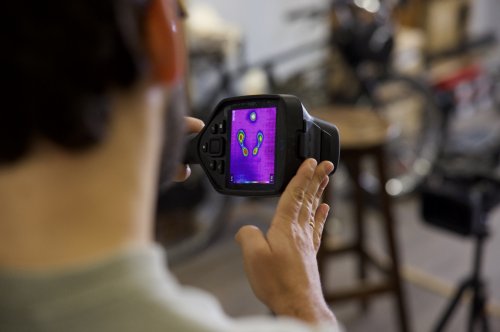
Located in Antwerp, Belgium, Bikefit Van Staeyen uses Flir-generated infrared images to visualize body heat and pressure distribution in real time, subsequently optimizing rider position and bike set up.
Bikefit Van Staeyen offers professional bike fitting based on more than 20 years of experience in cycling. Founded by brothers Kevin and Michael Van Staeyen (a former professional road racing cyclist), the business has built its success on extensive expertise in sports science, biomechanics and cycling. What started as a passion for precision and performance evolved into one of the world’s most advanced bike-fitting studios.
The principal differentiator of Bikefit Van Staeyen is its dual-expert approach: every bike fit is performed by both brothers working together, merging technical analysis and professional cycling experience with medical understanding.
“This synergy allows us to identify patterns and dysfunctions far beyond what conventional systems can capture,” explains Kevin.
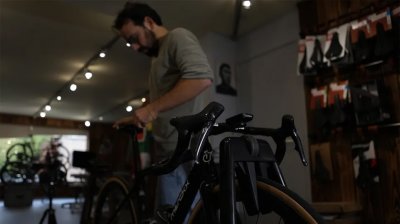
Real-time insight
Central to the process is the use of advanced thermal imaging technology from Flir, which provides a real-time view into physiological asymmetries, pressure distribution, and underlying muscular imbalances.
“We use a Flir infrared camera to study a heat map of a rider pedaling to optimize body position and bike set up,” says Kevin. “By combining thermography with motion tracking, force analysis, and EMG [electromyographic] data, we can see what others can only guess: how the rider’s body reacts, compensates, and adapts under load. We’ve named our thermography application ‘Lava.flow’, a process that allows us to understand and optimize injury-prone areas, muscle activation, and pressure points in a completely new way.”
Bikefit Van Staeyen initially used a Flir E76 thermal imaging camera but has since migrated to the newer E96. The E96 is Flir’s first pistol-grip camera with 640 × 480 thermal resolution, allowing users to survey targets safely and quickly. This advanced sensor offers complete coverage of near and distant targets through a range of lens options. In addition, Flir Ignite provides the automatic uploading of E96 images directly from the camera to the cloud for easy, secure storage and sharing.
As pioneers in thermal analysis for cycling applications, Bikefit Van Staeyen works in close collaboration with Thermal Focus, a Flir Platinum Partner and stockist of the largest selection of Flir infrared cameras in the Benelux (Belgium, Netherlands, Luxemburg) region.
Temperature in focus
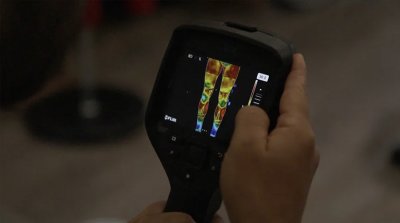
The hot spots and cold spots identified by Flir thermal cameras serve as direct indicators of how a cyclist’s body functions on the bike. An excessive temperature increase in certain areas can indicate overexertion, friction, or poor posture.
Using the Flir E96, Bikefit Van Staeyen can: detect hot spots and elevated pressure zones on the saddle, shoes, or handlebars; identify asymmetric muscle loading and unbalanced activation patterns; analyze vascular restrictions that may lead to numbness or reduced performance; and detect thermal irregularities that could indicate overload.
With this in-depth thermal analysis, the brothers are able to identify a range of issues that prompt adjustments for the optimal riding experience. For instance, asymmetric heat distribution around the kneecap points to a possible biomechanical problem, while too much heat in the ball of the foot typically means incorrect positioning of the cleat position. Similarly, increased temperature in the lower back could be the result of a compensatory mechanism or incorrect saddle adjustment.
“While traditional bike fits are often based on observation and feel, we use objective, data-driven measurements from the Flir thermal camera,” reveals Kevin. “Our Lava.flow process gives us unique, real-time insight into how a rider’s body responds while cycling. By way of example, we recently helped a cyclist experiencing unexplained knee pain during rides. Using our Flir infrared imaging technology, we observed excessive heat accumulation in the tibia [tibialis anterior muscle]. Thanks to the Flir imaging of this increased heat and our leg length software, we discovered that this leg was structurally shorter and that the rider had to pull the pedal excessively upward when cycling, resulting in knee pain.”
All levels of cyclist
Cyclists turning to Bikefit Van Staeyen for assistance range from dedicated amateurs to World Tour professionals. They trust the company for the same reason: attention to detail. From saddle pressure to neural load; from crank dynamics to thermal asymmetry – no variable is left unexplored. The company is also pioneering the bike-fit domain at university level, a first in Europe, by collaborating with the University of Antwerp to integrate data-driven approaches.
“We want to serve as the fundamental partner and reference point for thermal camera technology within the sport of cycling,” concludes Kevin. “Our ambition is to help shape the future of performance diagnostics, not just for our own athletes, but as a knowledge and technology hub for teams and riders worldwide. With our expertise and experience we can demonstrate the immense potential of thermography in biomechanical and performance analysis.”
- 0
- By Neel Achary

20, Feb 2026
UK Education Hub Launched at British Council to Advance India–UK Vision 2035
Kolkata, Feb 20 : Advancing the education objectives of the India–UK Vision 2035, David Lammy, UK Deputy Prime Minister inaugurated the UK Education Hub at the British Council, the UK’s international organisation for educational opportunities and cultural exchange, in the presence of Lindy Cameron OB CBE, British High Commissioner to India, Alison Barrett MBE, Country Director India, British Council, Prof. Eloise Philips, the Academic Provost of the Southampton University Delhi, and dignitaries from India and UK, including Sir Steve Smith, the UK’s Champion for International Education.
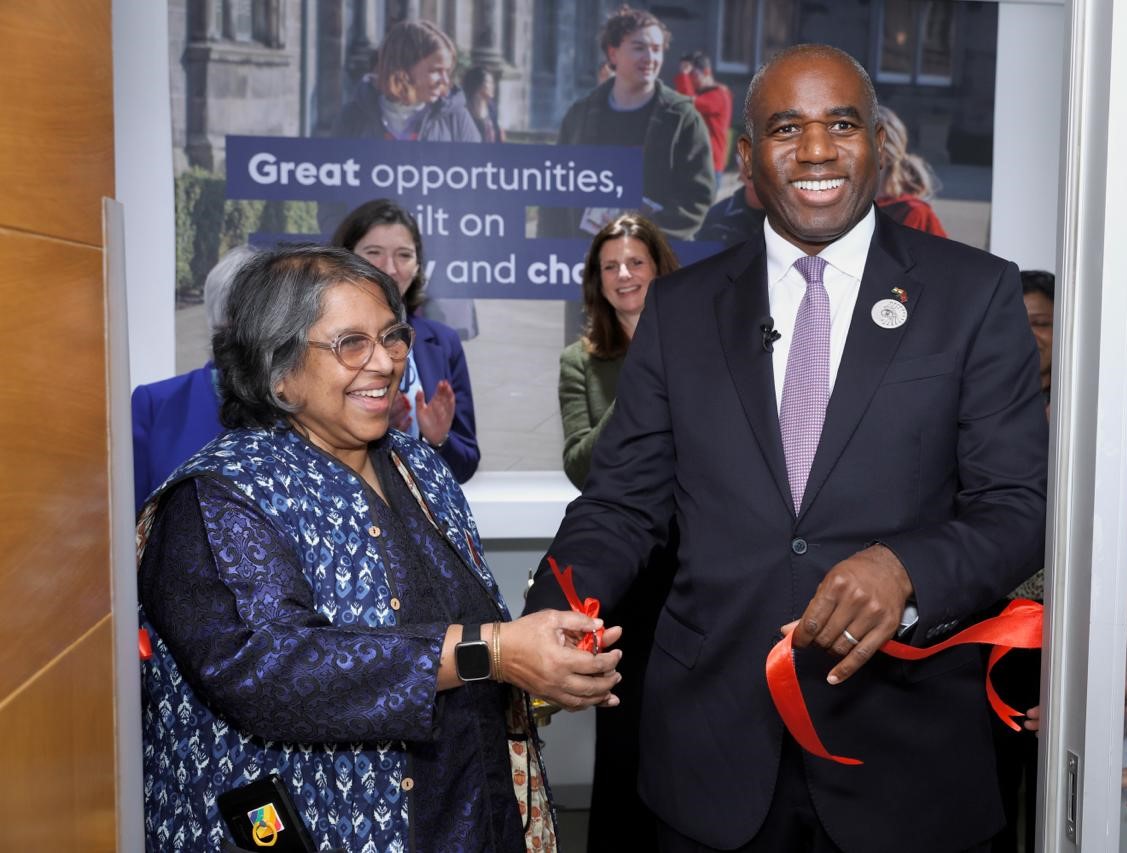
The British Council, with over 78 years leading education cooperation between the UK and India, has established the UK Education HUB to help deliver this shared vision – enabling engagement, collaboration, and alignment to India’s National Education Policy and the UK International Education Strategy through a single, structured platform.
UK Deputy Prime Minister David Lammy said:
“To build a better future, we must invest in the next generation who will shape it and expanding access to education will create lasting change.
“By bringing together governments, universities and institutions, the UK Education Hub in New Delhi will forge deeper partnerships with India – sharing expertise, sparking innovation and growing our economies. This demonstrates our shared ambition of turning the UK-India Vision 2035 into a reality.
“Delivering quality education today will change the world of tomorrow – empowering new ranks of entrepreneurs, scientists and leaders who will transform our shared future.”
The Hub will manage the Annual Ministerial India-UK Education Dialogue and support achievement of the education objectives of India-UK Vision 2035. It will act as a platform for structured engagement between UK universities, Indian government ministries, regulators, and sector bodies ensuring smooth two-way transfer of information and a stronger partnership between the education sectors of the two nations.
Looking ahead
The UK Education Hub will:
- support delivery of the Annual Ministerial India-UK Education Dialogue
- coordinate requests for information and support for all UK universities seeking to engage in India
- create and manage the UK Universities in India Members Programme
- support progress on mutual recognition of qualifications
- provide continued support for inward and outward education and skills missions between the two countries.
By creating a single, coordinated interface for engagement, the UK Education Hub reinforces India and the UK’s shared ambition to deepen collaboration in education, research, and skills development, strengthening people-to-people ties and supporting inclusive, sustainable growth.
20, Feb 2026
TATA.ev Accelerates EV Adoption with New Punch.ev
Chandigarh, Feb 20: In a decisive step towards accelerating EV mainstreaming, TATA.ev, India’s leading provider of zero emission personal mobility solutions, today launched the new avatar of its popular Punch.ev, ushering in the next wave of mass EV adoption in India. Designed to democratize entry level electric mobility, the new Punch.ev brings together everything customers seek in not just their first electric car but also their first household car, by holistically addressing the key barriers limiting EV ownership—affordability, range confidence, charging convenience, and battery assurance; thereby solving the full equation for mainstream EV adoption at scale.

Launched at an attractive introductory price of just INR 9.69 lakh the new Punch.ev brings EV ownership to near on‑road price parity with ICE offerings in the entry‑level small‑car segment
TATA.ev is also offering the option of BaaS, starting at INR 6.49 lakh with a Battery EMI of INR 2.6 / km, enabling an alternative financing option for customers.
Launching the new Punch.ev, Shailesh Chandra, Managing Director, Tata Motors Passenger Vehicle Ltd. and Tata Passenger Electric Mobility Ltd., said,
“The new Punch.ev, makes electric mobility truly accessible, practical and worry free for every household. With a real-world range of ~355 km, fast charging capability, a lifetime HV battery warranty and a highly accessible price point, it resolves the core concerns that have thus far held customers back from choosing an entry level EV as their primary car. By bringing together everything customers seek in their preferred car for both daily and long-distance travel, the new Punch.ev marks a significant leap forward in the democratization of electric mobility in India.”
Beyond Limits
Built on the advanced acti.ev architecture, the new Punch.ev takes pure EVs to the next level. Having pioneered the subcompact SUV category while retaining its spot as one of India’s most loved SUVs, the Punch in its EV avatar is an undeniable choice for a wide spectrum of buyers.
Addressing Range Anxiety with longer real-world range and a larger battery pack
With a larger 40 kWh LFP prismatic cell battery pack delivering a higher and more meaningful real-world C75 range ~355 km and ARAI certified (P1+P2) range 468 kms, the new Punch.ev is ideal for everyday city use and short intercity trips, with reduced need for frequent charging stops. Additionally, the new Punch.ev will also be offered with a new 30kWh battery pack option. With these two options combined, the new Punch.ev enables a seamless transition for customers from ICE to electric, delivering superior drive quality, lower running and maintenance costs, and uncompromised every day or long distance travel on a single charge.
Faster charging, more driving:
With fast charging support, the battery can quickly charge from 20% to 80% in just 26 minutes. Furthermore, it easily tops up the battery with 135 Km of real-world range in just 15 minutes, roughly the time of a quick tea or coffee break on long drives
Lifetime Battery Warranty covering unlimited km:
The new Punch.ev comes with a Lifetime HV Battery Warranty covering unlimited KM, providing long-term coverage on the most critical EV components, giving first time owner customers added reassurance during ownership.
Rapidly Expanding Charging Ecosystem:
TATA.ev’s charging network covers over 2.3 lakh charging points across 1,500 cities through home, community and partners’ public charging. TATA.ev has aggregated over 30,000 public chargers in collaboration with over 30 charge point operators. Customers can check for the real time availability/status of active chargers via IRA.ev app for seamless navigation and end to end payments. TATA.ev monitors the reliability of public chargers and has curated a ‘.ev Verified’ charger network, comprising of 2,500+ fast, secure and highly reliable charging points across 500 cities and towns. Elevating the charging experience to world class levels, TATA.ev has established India’s largest superfast charging network- 450+ charging points across 130+ Mega Charging Hubs on 80 highways- this footprint will expand to 800 charging points by FY26.
20, Feb 2026
Toyota Kirloskar Motor Conferred With Golden Peacock Award 2025 for Corporate Social Responsibility
Chandigarh, Feb 20: Toyota Kirloskar Motor (TKM) has been conferred with the prestigious Golden Peacock Award 2025 for Corporate Social Responsibility (GPACSR). The award recognizes TKM’s sustained commitment to environmental stewardship, community development and inclusive growth.
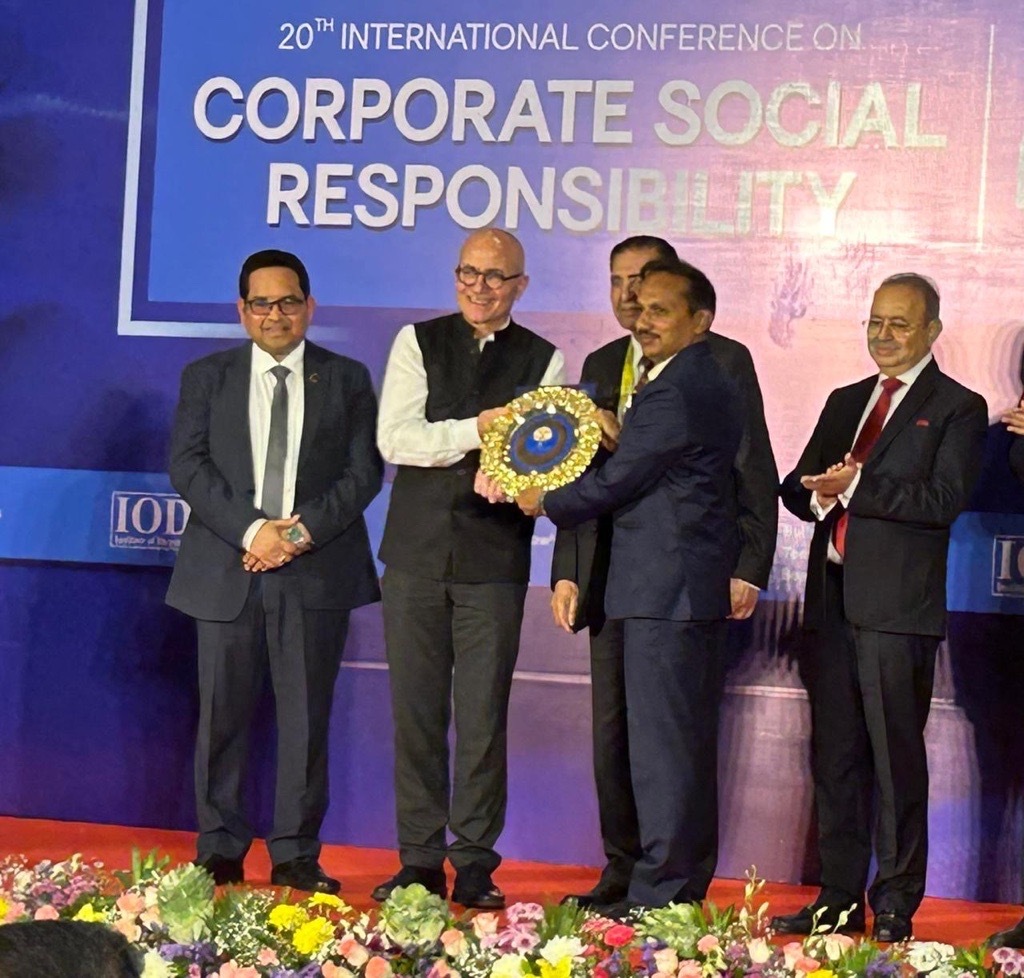
The Golden Peacock Awards, established by the Institute of Directors, recognizes excellence in the areas of Corporate Social Responsibility, HR Excellence and Innovative Management practices. The award was presented by Prof. Charlie Jeffery, Vice Chancellor and President, University of York, UK, at the 20th International Conference on Corporate Social Responsibility held at Hotel Taj Lands End, Mumbai.
Expressing delight on receiving the award, Mr. Vikram Gulati, Country Head & Executive Vice President, Corporate Affairs and Governance, Toyota Kirloskar Motor said,
“It is an honor to receive the Golden Peacock Award for our sustainable and meaningful CSR activations with measurable impact. Commitment to social responsibility is integral to our corporate philosophy, shaping the design and execution of community initiatives. This recognition reaffirms that our efforts toward inclusive growth, environmental stewardship and responsible business practices are creating tangible value while advancing Toyota’s philosophy of “Creating Mass Happiness for All.”
The Awards Jury was chaired by Hon’ble Justice Shri. Uday U. Lalit, former Chief Justice of India, along with other eminent personalities to shortlist finalists. For 2025, the Golden Peacock Awards Secretariat invited applications from corporates across public, private and government enterprises including large organizations and SMEs. This year, over 447 entries were received across categories. Following a rigorous three-tier assessment process, 157 applications were shortlisted across diverse business sectors for final evaluation.
Since 2001, TKM has been committed to uplifting communities across Education, Environment, Road Safety, Skill Development, Health & Hygiene, and Disaster Management. Its CSR reflects a strong focus on need-based initiatives that address local challenges and create meaningful socio-economic impacts. Guided by its “Child to Community” approach, the company implements inclusive interventions in healthcare and education that generate long-term benefits for communities.
20, Feb 2026
8 Things You Can Actually Do at Noida’s Most Colourful Festival This Weekend – Noida Flower Show

Noida’s annual 38th Vasant Utsav – Noida Flower Show 2026 is back at Shivalik Park (next to Noida Haat) from February 19 to 22, open from 10 AM to 7 PM with free entry. But if you think it’s just about admiring flowers, think again.
Here’s what visitors can experience beyond the blooms:
1. Walk Through a Tunnel Made Entirely of Flowers
One of the most photographed attractions at the venue is the immersive flower tunnel. Covered in vibrant seasonal blooms, it’s designed for slow walks, selfies and uninterrupted appreciation of colour and fragrance.
2. Explore Theme Gardens That Spark Home Décor Ideas
From compact balcony garden concepts to elaborate landscape displays, themed garden sections demonstrate how texture, colour combinations and plant layering can transform even small urban spaces. It’s an inspiration you can directly replicate at home.
3. Shop Directly From Nurseries
Plant parents, this is your zone. Multiple nurseries have set up stalls offering flowering plants, succulents, indoor greens, herbs and seasonal saplings. Visitors can also pick up seeds to start their own mini garden projects.
4. Upgrade Your Garden With Ceramic and Designer Pots
Beyond plants, the marketplace features ceramic planters, hanging pots, balcony-friendly containers and decorative garden accessories. It’s a great opportunity to refresh your home’s green corner with aesthetic upgrades.
5. Discover Herbal and Medicinal Plants
A dedicated section showcases herbal and medicinal varieties along with basic information on their everyday uses. For those curious about natural remedies or traditional plant knowledge, this zone adds an educational layer to the visit.
6. Learn Composting and Sustainable Gardening
Live demonstrations and interactive sessions focus on practical, city-friendly sustainability techniques from composting kitchen waste to water-efficient gardening and bonsai care. The festival reinforces that green living is achievable even in apartments.
7. Participate in Community Competitions
RWAs, institutions and gardening enthusiasts are showcasing their creativity through competitions in flower arrangement and garden design. Visitors can walk through these displays and observe how different communities interpret the idea of urban greenery.
8. Get a Floral Makeover to Match the Festival Mood
Adding a lifestyle twist to the celebration, Milano7 is offering basic salon services along with floral-inspired hairstyling. Visitors can opt for quick touch-ups or have fresh flowers woven into their hair, making it easy to step into the festival spirit quite literally.
It’s fast becoming a popular stop for those wanting a complete spring-ready look before heading back to explore the installations or click photos.
Why It’s More Than Just a Flower Show
At its core, the Noida Flower Show blends floriculture with sustainability, community participation and experiential activities. Whether you’re there to shop, learn, photograph, experiment or simply unwind, the event offers multiple ways to engage, not just observe.
For four days, Shivalik Park transforms into a space where nature, creativity and urban lifestyle intersect and visitors get to be part of the experience, not just spectators.
20, Feb 2026
Circle Awards shine spotlight on business partners driving long-term growth
Ras Al Khaimah, Feb 20: Circle Awards 2026 placed long-term partnership at the centre of recognition, honouring the individuals and organisations whose sustained contribution continues to shape the business community at Ras Al Khaimah Economic Zone (RAKEZ). As a flagship annual celebration, the Circle is rooted in the principles of consistency, credibility, and shared standards, standing as a symbol of enduring collaboration and meaningful growth across the economic zone.
The event recognises partners whose performance, integrity, and long-term commitment directly influence the economic zone’s growth trajectory, going beyond short-term targets to deliver lasting value to investors.

The 2026 edition of the awards reflected on key achievements recorded across the RAKEZ community in 2025, a year that delivered record-breaking results in both company formation and visa issuance, further reinforcing the economic zone’s position as one of the most sought-after business destinations in the UAE. The event also looked ahead to the year to come, signalling priorities and initiatives that will shape the next phase of growth across the RAKEZ ecosystem.
Close to 300 service providers and agents were recognised across a wide range of categories, including Compliance, Growth, Long-Lasting Contribution, Loyalty, Newcomer, Partner of the Year, Service & Renewal, Value Creation, and Volume Performance.
Today, RAKEZ is home to nearly 40,000 active companies and is supported by an international network of more than 1,200 active agents, reflecting the scale and global reach of its business community.
Commenting on the occasion, RAKEZ Group CEO Ramy Jallad said: “Circle Awards is designed to recognise partners whose contribution extends beyond short-term results. At RAKEZ, progress is built on consistency and credibility, and on partners who uphold the standards that investors expect. Through their professionalism, integrity, and market relationships, our partners play a vital role in strengthening confidence in the RAKEZ ecosystem. As we look ahead, it is these enduring relationships that will continue to shape our growth and direction.”
Stressing on the significance of the event, RAKEZ Chief Commercial Officer Anas Hijjawi, said, “Circle Awards represent more than recognition; they reflect the strength of the relationships we build and nurture throughout the year. Our partners are instrumental in translating RAKEZ’s value proposition into tangible results in the market. By working closely with our agent network and service providers, we ensure that investors experience consistency, responsiveness, and clarity at every touchpoint. This success is a shared achievement.”
The event also underscored RAKEZ’s focus on enabling sustainable commercial outcomes, with shared insights on strengthening investor engagement, improving cash flow performance, accelerating sales cycles, and introducing enhanced rewards aimed at supporting long-term business growth. Looking ahead to 2026, the economic zone’s objective is to further empower its partners by helping them maximise revenue opportunities, increase transaction volumes, and deliver higher levels of customer satisfaction across every stage of the investor journey.
Circle Awards reflect RAKEZ’s commitment to recognising partners who contribute to the ecosystem’s long-term resilience, credibility, and continued growth.
20, Feb 2026
Zee Business and BSE to Host 6th Edition of Bull Run 2026 in Mumbai
Mumbai, Feb 20: Zee Business in association with BSE will host the 6th edition of the Zee Business BSE Bull Run 2026, BSE’s flagship initiative promoting both financial and physical well-being. The event is scheduled to take place on Sunday, February 22, 2026, at R2, MMRDA Ground, located in Bandra Kurla Complex, Mumbai.
Event gates will open at 5:00 AM, with the run commencing at 7:00 AM. Participants can choose from multiple race categories, including a 5 km Fun Run, 10 km Fun Run, and a 10 km Elite Competition Run.
Over the years, the Zee Business BSE Bull Run has evolved into a marquee community platform, bringing together citizens, corporates, investors and fitness enthusiasts. The initiative highlights the powerful synergy between physical fitness and financial awareness, encouraging individuals to pursue balanced, goal-oriented lifestyles.
The upcoming edition is expected to witness strong participation from leaders across India’s financial sector, corporate community and fitness fraternity. As the event continues to grow in scale and impact, it reinforces its position as one of the most anticipated community-led initiatives within India’s financial ecosystem.
With its continued focus on promoting health, discipline and long-term financial thinking, the 2026 edition of the Bull Run aims to further strengthen engagement across diverse audiences while celebrating the spirit of resilience, growth and well-being.
20, Feb 2026
Tourism Western Australia unveils second iteration of Walking On A Dream
Feb 20: Tourism Western Australia unveiled the second iteration of ‘Walking On A Dream’, its immersive global tourism brand that celebrates the state’s spellbinding landscapes, vibrant culture and creative talent.
The campaign captures WA as a place where vast deserts glow beneath endless skies, coral reefs shimmer in turquoise seas, and ancient landscapes tell stories that stretch back millennia.
Filmed across iconic locations, including Ningaloo Reef, Margaret River, Rottnest Island, Perth, and the ancient beauty of Mirima National Park in the Kimberley, the cinematic series brings WA’s dreamlike spirit to life through five 30-second destination vignettes and a 60-second film.
\At its heart is the reimagining of Empire of The Sun’s hit song Walking On A Dream, overseen by WA–raised frontman Luke Steele, and performed by the West Australian Symphony Orchestra (WASO) Aboriginal artist and Karajarri man Billy-Jo Shoveller.
“Walking On A Dream has always been about a sense of wonder and escape,” said Steele. Working with Billy-Jo and WASO to create this new version was magical—it feels like WA itself, magical and otherworldly.”
Billy-Jo Shoveller said the collaboration was deeply personal and reflects his passion for sharing the Kimberley’s spirit with the world.
“I’m proud to be part of this campaign as a Karajarri man, working with Luke Steele on ‘Walking On A Dream’ gave me a chance to bring some of my culture and connection to Country into the project— WA is a special place, and it feels good to help show that to people everywhere.”
Starring Nyikina man Nelson Baker and emerging actor Angelica Blazeska, both of whom are Western Australian Academy of Performing Arts alumni, the films blurs the line between reality and reverie, celebrating Western Australia as a place where culture, creativity and nature are deeply connected.
Developed alongside Traditional Owners and WA’s Aboriginal tourism sector, the campaign celebrates culture, Country and connection. The campaign rolls out from February 2026 across key global markets.
First launched by Tourism WA in 2022, Walking on A Dream has played a key role in driving Western Australia’s tourism recovery, with WA welcoming just over one million international visitors in the year ending October 2025, surpassing the previous record of 996,000 international visitors set in 2019.
20, Feb 2026
Crude Oil Caught Between Political Deadline and Tight Spare Capacity
Oil markets are currently moving within a repricing framework to keep pace with geopolitical risks. Setting a time window of 10 to 15 days to reach an agreement on the Iranian nuclear program has created what can be described as a time-compressed risk window, which is an important point from a pricing and price-action perspective. The market is not dealing only with the probability of escalation and its continuation, but with a timeline that could shift the scene from political pressure to a field development within a relatively short period, especially given that military assets are already present in the Gulf. This time factor in itself justifies the move in prices to their highest in several months.
Price action indicates that Brent crude is not moving in a vacuum. It shows a transition since the January low near 60 dollars, where we see a sequence of higher highs and higher lows, reflecting a shift in investor behavior from selling rallies to buying dips. The return of price to test the 71 to 72 dollar range, a supply zone that previously formed a ceiling, suggests that consolidation below it is characterised by relatively lower volatility compared to prior rejection waves, pointing to an absorption of available demand. A break of this area would reflect a shift from a temporary risk premium to a broader repricing of the range, and the path toward 80 dollars per barrel appears to be a realistic target should geopolitical tensions evolve further.
The fundamental angle is more complex as the Gulf region represents around one third of global crude supply, a high geographic concentration of risk. A broad disruption could affect flows exceeding 15 million barrels per day in a severe scenario. On the other hand, data has shown Saudi exports declining to around 7 million barrels per day, a relatively low level compared to previous periods, implying available spare capacity to compensate for supply shortages.
Logistically, Saudi Arabia possesses important elements of flexibility. Ras Tanura port is capable of handling around 6 million barrels per day, and the East–West pipeline transports approximately 5 million barrels per day to Red Sea ports, reducing reliance on the Strait of Hormuz. Yanbu facilities also provide additional export alternatives. However, this flexibility remains within a normal operating framework. In the event of military escalation or a direct threat to routes, insurance risks and shipping costs could become independent pressure factors in their own right, potentially amplifying costs.
As for the world’s ability to absorb a major supply shock, the picture is less reassuring. Strategic reserves held by International Energy Agency countries are estimated at around 1.5 billion barrels but the actual daily draw capacity ranges between 4 and 6 million barrels only. If we assume a disruption exceeding 15 million barrels per day in a worst-case scenario, the theoretical gap between the shock and compensation capacity could reach roughly 9 to 11 million barrels per day before accounting for any spare production capacity. Even the US strategic reserve, at about 380 million barrels, provides relatively limited time coverage in the event of a severe disruption.
Therefore, the market is not currently pricing in a major supply outage, but it recognises that the margin of safety is not wide. The current risk premium reflects a mix of the political time factor, the geographic concentration of supply and the limited effective ability for rapid compensation. In the coming days, the price path will remain contingent on whether tensions shift from negotiated pressure to a material event affecting global oil flows.
20, Feb 2026
CISI awards three new Honorary Fellowships
The board of the Chartered Institute for Securities & Investment (CISI) is delighted to announce that three Honorary Fellowships have been awarded to:
- Paul Stockton
- Debbie Clarke CF Chartered FCSI
- Danny Corrigan MCSI
Honorary Fellowships are awarded annually by the CISI’s Board of Trustees to individuals who have made an outstanding positive contribution, both to the financial services profession and to the CISI. Honorary Fellowship carries the designatory letters FCSI(Hon).
CISI Chair, Michael Cole-Fontayn MCSI, said: “The CISI Board and I are delighted to announce our highest accolade this year is awarded to three accomplished and outstanding financial services professionals. They are consummate role models for our next generation of sector talent with their commitment to lifelong learning and the CISI community. We look forward to their inspiration and leadership over the years ahead.”

Paul Stockton (left) began his career as a chartered accountant in 1988 with Price Waterhouse (PW) in Windsor specialising in financial services. After four years Paul accepted a position with PW in New York where he worked closely with insurance and asset management companies before returning to London in 1996. In 1999 he joined Old Mutual Plc as group financial controller, becoming finance director of wealth manager Gerrard Limited in 2001. In 2005, two years after the sale of Gerrard to Barclays, he left to work initially for Euroclear and then subsequently, as a divisional finance director of the Phoenix Group. Paul joined Rathbones Group Plc as Group Finance Director in 2008, serving until becoming Managing Director of Rathbones Investment Management in May 2018. In May 2019 Paul was appointed as Group Chief Executive at Rathbones, a role he enjoyed until his retirement in September 2025, two years after completing Rathbones’ merger with Investec Wealth UK.
Alongside his executive career Paul has served as a non-executive director of the Financial Services Compensation Scheme, as a board member of the Personal Investment Management and Financial Advice Association (PIMFA), and as a member of the FCA Practitioner Panel. Paul is a Freeman of the City of London.
Prior to taking on a NED portfolio career Debbie Clarke CF Chartered FCSI (right) was working within financial services, corporate finance and M&A since 1996 and held a number of leadership roles within the accountancy practices where she was an equity partner. During this time she directed M&A and refinancing projects for a wide range of clients. As an adviser she worked with a wide range of investors and organisations both public and private, within the UK and internationally and has a strong regulated background. She regularly presented at industry conferences and training sessions and assisted student training and mentoring as part of her portfolio.
Her experience has been across a variety of industries from education, sports, technology, real estate, manufacturing and support services where she has provided a range of strategic advice to her clients. Across her NED portfolio she has been chairing and vice chairing various board and committees and continues to advise private companies and their boards on their strategic plans.

Debbie became a member of the Chartered Institute for Securities & Investment (‘CISI’) in 1999 and started volunteering with CISI in 2007 when she was asked by a fellow Corporate Financier, Frank Moxon to help set up what has become the Corporate Finance & Capital Markets Forum. Working together with Frank and others for many years in relaunching the Diploma in Corporate Finance and championing professionalism in wholesale markets has been a passion during her career. She became a non-executive Director of the CISI in 2017 a post she held for six years before stepping down to focus on her Trustee role on the Chartered Institute for Securities & Investment Future Foundation (‘Future Foundation ‘) which the CISI set up in 2022. In 2022 Debbie was awarded the Freedom of the City of London. Debbie has been and continues to be a mentor and supporter of many people throughout their careers in financial services.

Danny Corrigan MCSI (left) is a senior manager with 40 years’ experience of the wholesale financial markets as a London based Director, Managing Director, and CEO leading teams across a range of asset classes including fixed income and derivatives. He also has extensive international experience having worked locally in the markets of Moscow, Sydney, Tokyo, and others.
He has worked as a banker, trader, and broker, for a dozen firms, has written five books on the markets and has an extensive network in the city. He has sat on various central bank committees and was seconded to London Clearing House, a crucial part of the global market infrastructure, as part of an industry wide response to the default of Lehman Brothers to lead the closure of its trading books.
Danny and his co-founders launched London Reporting House, a fin-tech start-up in April 2023, has funding, wonderful employees, and a perfect little office in the alleyways of Bow Lane. He was also a Trustee and Board member of the Chartered Institute for Securities & Investment and chaired its International Committee. He spent years promoting the City of London with non-for-profit promotional bodies including the Lord Mayor / Mansion House and was formerly Chair of the Eurasia Group at TheCityUK.
He graduated in Economics from the University of Liverpool in 1981 and has an MBA (Finance) from City University. He is married to Kerrie, and they are proud parents of three sons; an actor James, Ben a co-founder of London Reporting House and an earlier survivor of ‘Dragon’s Den’, Luke an accomplished professional and are grandparents to Wren.
Danny is a retired Football Association coach having led Hampstead FC youth teams to glory in the 2000s and he was an occasional referee. He stood for the Brexit Party in the unwinnable seat of Hornsey & Wood Green in 2019 and came 5th.


