


9, Jun 2026
Tenable Partners with Anthropic for AI-Driven Exposure Management

Anthropic to help power Tenable Hexa AI and join EXPOSURE 2026 to discuss the future of AI and cybersecurity
Dubai, UAE June 9: Tenable® Holdings, Inc. (NASDAQ: TENB), the exposure management company, today announced new AI initiatives with Anthropic to accelerate agentic capabilities across the Tenable One Exposure Management Platform as organizations confront a rapidly evolving threat landscape shaped by frontier AI.
The initiatives include new Claude-powered workflows in Tenable Hexa AI. Anthropic will also participate in EXPOSURE 2026 this week in Boston, where industry leaders are discussing how frontier AI is reshaping both cyber risk and defense.
Tenable Hexa AI is the agentic engine of the Tenable One Exposure Management Platform, built to turn exposure intelligence into coordinated action at machine speed. Fueled by the Tenable Exposure Data Fabric, which combines native telemetry, third-party data, and insights from Tenable Research, Tenable Hexa AI helps organizations prioritize and remediate cyber risk across the modern attack surface.
The speed and scale of modern cyber risk has outpaced traditional security approaches, leaving organizations struggling to keep up. Tenable is advancing a future where AI doesn’t just identify risk, but helps organizations reduce it through intelligent orchestration and automated action.
“The volume of exposures is increasing, the time between discovery and exploit is shrinking, and security teams need a fundamentally different approach. That’s why Tenable has developed a deep working relationship with Anthropic,” said Mark Thurmond, co-CEO of Tenable. “With Claude-fueled innovations we are accelerating R&D and our exposure management roadmap, while rapidly advancing solutions like Tenable Hexa AI so customers can strengthen their preemptive security programs, powered by agentic workflows.”
Tenable will apply Claude to real-world cybersecurity operations, including prioritization, remediation orchestration, and exposure analysis across modern attack surfaces.
“As AI reshapes cybersecurity, organizations need to integrate AI into their security operations,” said Jason Clinton, Deputy CISO, Anthropic. “We’re excited to work with Tenable to apply Claude’s capabilities to help customers better understand risk, prioritize action, and respond faster.”
Today’s announcement builds on the general availability of Tenable Hexa AI, announced separately at EXPOSURE 2026.
- 0
- By Neel Achary

9, Jun 2026
Bengal’s Rarest Nawabi Mangoes Take Centre Stage at Murshidabad Mango Festival 2026
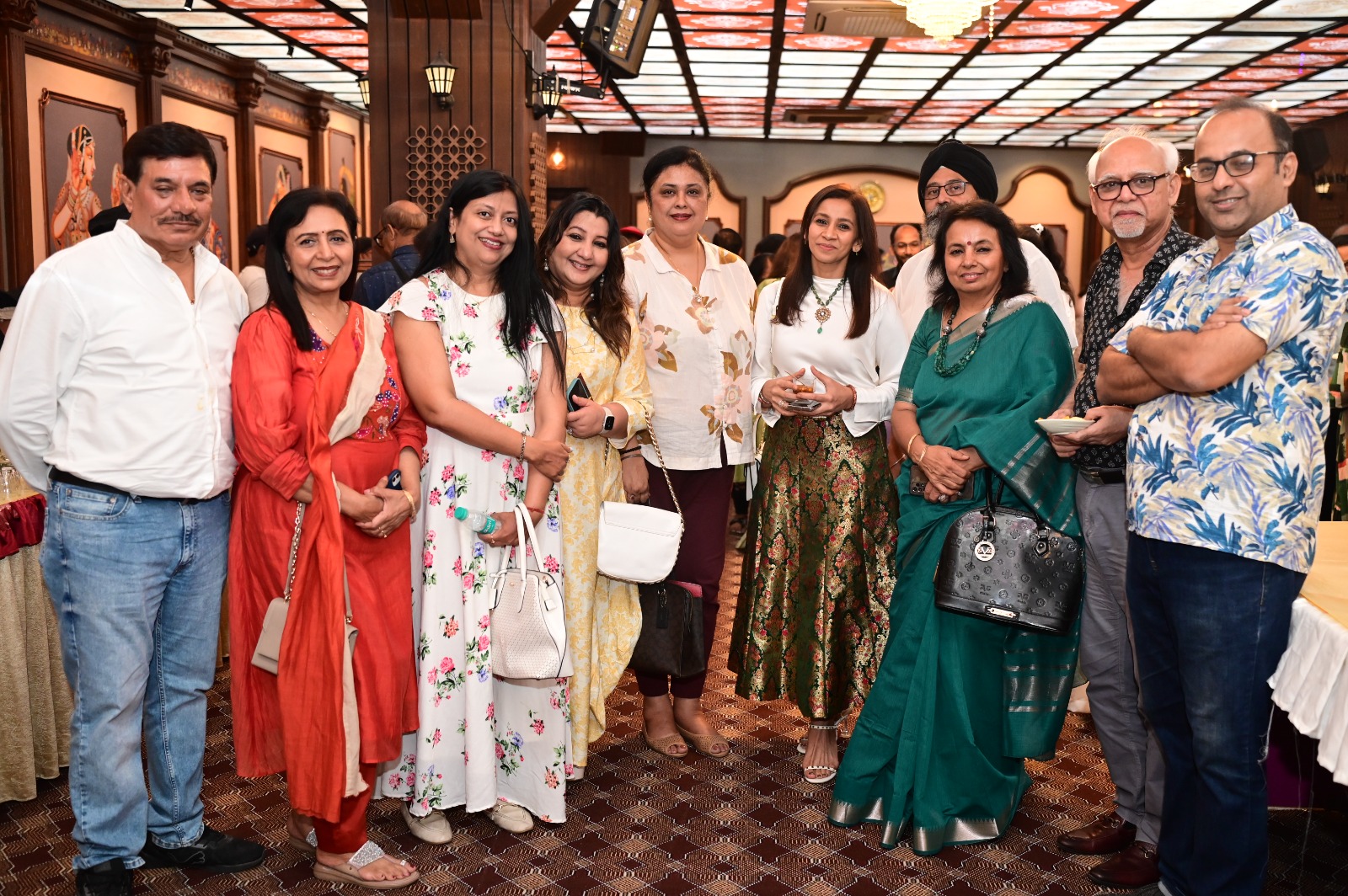
Kolkata / Murshidabad, June 09: The Murshidabad Mango Festival 2026 got off to a spirited start with its curtain-raiser at iLEAD, Kolkata, drawing heritage enthusiasts, food lovers and travellers for a preview of one of Bengal’s most distinctive seasonal celebrations. Presented jointly by the Murshidabad Heritage Development Society (MHDS) and House of Sheherwali, the month-long festival runs throughout June 2026 at Azimganj, Murshidabad.
The event brought Murshidabad’s legendary Nawabi mango culture to the city, showcasing rare cultivars seldom found beyond the district’s centuries-old orchards. Among the varieties on display were the Kohitur, once reserved for Nawabi courts, celebrated for its saffron-like aroma; the Rani, floral and known as the “queen” of local mangoes; Bimli, small and intensely sweet with paper-thin skin; and the bold and deep-hued Kala Pahar. Also present were the varieties Bombai, Champa, Mulayamjaam, Dilpasand, Anaras, Chandankosa, Rogni and Saranga providing a glimpse into Murshidabad’s extraordinary treasury of over 150 cultivars.
The event was graced by a distinguished gathering that highlighted the festival‘s growing significance. Among those present were the Honorary Consul Generals of Brazil, Bangladesh, Nepal, China, and Norway, alongside prominent restaurateurs, former District Governors of Rotary Club, and principals of prominent schools of Kolkata. They were treated to traditional mango delicacies prepared from age-old Sheherwali recipes like Aam Panna, Kacha Aam Kheer, Mango Sandesh, artisanal chutneys, and seasonal sherbets, each dish a testament to the community’s deep culinary legacy.
“Murshidabad‘s mangoes are not merely fruit they are living heritage, carrying centuries of royal patronage, artistic devotion, and cultural memory. Through this festival, we aim to preserve them and thus, preserve Bengal’s soul. We want people to experience these mangoes where they truly belong, in the orchards of Murshidabad.”, said Mr Pradip Chopra, President of Murshidabad Heritage Development Society (MHDS) and Founder of House of Sheherwali.
The festival is currently underway at the House of Sheherwali, a heritage mansion that stands as India’s first museum hotel, where you can stay. Its courtyards, galleries and rooms narrate centuries of Bengal’s Nawabi era from river trade and royal craftsmanship to architecture and sustainable living traditions of the historic Sheherwali Jain merchant community. The month-long festival, held throughout June, offers curated 2-night and 3-night immersive stay packages that include orchard walks, Sheherwali meals, cultural activities and complimentary pickup from Azimganj Railway Station.
Murshidabad is now conveniently accessible from Kolkata via the Vande Bharat Express, connecting Howrah to Azimganj in just 2.5 hours. Overnight express services from Kolkata also serve the route. With limited festival packages available, early booking is strongly encouraged.
9, Jun 2026
Synack Expands CREST Partnership with New Certification Pathways for the Synack Red Team
96% readBuilding on seven years of CREST accreditation, Synack deepens its commitment to independently verified security talent by adding two new CREST certifications to the SRT Pathways program
REDWOOD CITY, Calif.—Synack, the Human + AI penetration testing platform, today announced an expansion of its longstanding partnership with CREST , an international not-for-profit organization that sets the standard for technical security testing.
The expansion adds two new CREST certifications to the Synack Red Team (SRT) Pathways program , giving CREST-certified security researchers a direct route to join the SRT and giving enterprise customers additional assurance that the researchers behind their engagements hold independently verified credentials.
Synack has been a CREST Accredited Member Company for Penetration Testing since 2019, a designation that requires annual renewals and triennial full audits of the company’s methodology, data security handling, and technical operations. This expansion deepens that relationship by extending CREST’s independent standard to the individual researcher layer.
The SRT Pathways program now recognizes two additional CREST certifications:
– CREST Certified Tester Infrastructure (CCT INF) — mapping to host and infrastructure assessment
– CREST Certified Tester Application (CCT APP) — mapping to web application testing
They join the CREST Registered Penetration Tester (CRT), which has been recognized in SRT Pathways since the program launched. Researchers who hold any of these credentials receive expedited onboarding consideration and a reliable path for greater earning potential.
The SRT is one of the most selective communities in offensive security. Fewer than 10% of applicants are accepted, with each researcher passing background checks, technical assessments, skills validation, and ongoing performance review before touching a customer environment. CREST certifications sit alongside that as a second, independent benchmark — one that is increasingly meaningful for organizations operating under frameworks such as DORA, NIS2, and TIBER-EU, where vendor credentialing is becoming part of procurement diligence.
As a multinational company with customers and researchers spanning the globe, Synack recognizes that CREST carries particular weight in EMEA markets, where enterprise security teams and regulated organizations increasingly treat independent credentialing as an important procurement signal.
“A pentest is only as strong as the researchers running it,” said Ryan Rutan, Sr. Director of Community at Synack. “Expanding the CREST certifications recognized on SRT Pathways adds independent validation to the rigor our customers already count on from the Synack Red Team. And for CREST-certified researchers, it creates a clear, structured path to put those credentials to work on real engagements.”
“CREST has been valuable in my career, especially when working in the MEA and EU markets where it is widely expected,” said SRT member Nikhil K. “It makes it easier for recruiters and organizations to identify qualified talent because CREST is recognized and trusted. It is considered a gold standard in pentesting, so having it adds credibility and can help open up better opportunities.”
“Our partnership with Synack gives CREST-Certified penetration testers a direct path into one of the most selective research communities in the world,” said Michael Keen, Senior Product Manager – Workforce Development at CREST. “That’s good for researchers building careers in offensive security, it’s good for maintaining high standards to advance testing methodologies, and it’s good for the organisations that rely on independently credentialed talent to protect their most critical environments.”
CREST-certified researchers interested in joining the Synack Red Team can learn more and apply through the Synack Red Team Pathways program .
Enterprise customers looking to understand how CREST accreditation and independently verified researcher credentials strengthen their penetration testing programs can learn more at Synack or contact Synack to discuss their security testing needs.
9, Jun 2026
Synack Supports Majority of Cabinet-Level Federal Departments as New AI Executive Order Raises the Bar on Federal Security
New White House directive reinforces the need for AI-enabled, continuously validated security across federal networks and critical infrastructure
REDWOOD CITY, Calif.—June 9, 2026—Synack, the AI + human penetration testing platform, today highlighted how its FedRAMP Moderate Authorized PTaaS platform and Sara AI Pentesting align with the cybersecurity priorities outlined in the White House’s new Executive Order, “Promoting Advanced Artificial Intelligence Innovation and Security.” The order introduces a voluntary framework for testing frontier AI models before public release—and separately directs federal agencies to accelerate AI-enabled cyber defense, expand access to advanced cybersecurity tools, and coordinate vulnerability discovery and remediation at scale. Both priorities reflect a broader federal push to ensure AI is deployed securely. Synack already supports that mission for federal customers, including the majority of cabinet-level agencies.
Scaling Defenses to Match AI-Era Threats
The Executive Order directs the Cybersecurity and Infrastructure Security Agency (CISA) to establish or expand federal programs that enhance AI-enabled defensive cybersecurity tools to match the speed and scale of evolving threats. Sara AI Pentesting automates reconnaissance, attack surface mapping, and initial exploits at machine speed, while the Synack Red Team (SRT)—a globally vetted community of elite ethical hackers—validates what is real, exploitable, and relevant to the mission. This combination of agentic AI and human expertise enables federal agencies to test more frequently and cover more attack surface than either approach can achieve alone. AI finds more. Humans prove what matters.
“This Executive Order sends a clear signal: periodic testing and automated scanning alone are no longer enough to keep pace with AI-era threats,” said Jay Kaplan, CEO and Co-founder, Synack. “Federal security teams need continuous validation, AI-enabled scale, and human expertise to determine what is actually exploitable. That is exactly the model we have been building toward for 13 years, and what we deliver to federal customers today through our FedRAMP Moderate Authorized PTaaS platform.”
Securing Critical Infrastructure
As part of this order, CISA will facilitate access to cybersecurity services for operators of critical infrastructure—including rural hospitals, community banks, and local utilities. Synack has spent 13 years securing some of the most sensitive assets in these sectors, from the F-15’s Trusted Aircraft Information Download Station (TADS) to remote elections technology for Democracy Live. Synack’s continuous testing model ensures findings are validated and actionable.
Continuous Vulnerability Discovery for Federal Compliance
The Executive Order establishes a new AI cybersecurity clearinghouse to coordinate vulnerability scanning, validate findings, and prioritize remediation across federal networks and critical infrastructure—and directs the Office of Management and Budget (OMB) to identify grant funding for advanced AI vulnerability detection. Synack delivers precisely this model of continuous security validation. As documented in the 2026 State of Vulnerabilities Report, Synack tested for React2Shell across customer assessments—surfacing zero-day exposure at a frequency and scale that periodic testing cannot match.
As the Executive Order’s 30- and 60-day implementation timelines begin, federal agencies and critical infrastructure operators face real urgency to modernize their security testing programs and remediation process. Synack is ready to help them meet these mandates today. Schedule a readiness assessment at synack.com.
9, Jun 2026
The Park Navi Mumbai Presents ‘Dakshin Utsav’ – A Celebration of Southern India’s Rich Food Heritage

Mumbai, 09th June 2026 – The Park Navi Mumbai invites guests to discover the vibrant food traditions of Southern India through its specially curated South Indian Food Festival, a celebration of the authentic and diverse flavours of Tamil Nadu, Kerala, Andhra Pradesh, Chennai and the iconic Udupi region.
Bringing together time-honoured recipes, regional specialties and traditional cooking styles, the festival offers a unique opportunity to experience the essence of South India under one roof. From comforting classics and coastal favourites to aromatic biryanis and indulgent desserts, the festival promises a memorable dining experience inspired by the region’s rich heritage.
Adding an interactive element to the celebration, guests can enjoy live cooking stations featuring freshly prepared favourites such as Mangalore Bun with Kurma Curry, an assortment of Dosas, Appams, and Tawa Puttu Paratha, crafted to order by the hotel’s chefs.
The elaborate spread showcases a variety of signature dishes including Udupi Sambar, Kerala Style Sambar, Kirai Masiyal, Gongura Pappu, Urulai Poriyal, Madras Style Mutton Curry, Chicken Gassi, Mutton Gassi, Chettinad Mutton Sukka, Chicken Kurma, Malabar Fish Curry, Alappuzha Fish Curry, and Podi Roasted Fish, highlighting the distinctive flavours and traditions of each region.
The festival also features a selection of celebrated rice preparations and biryanis, including Ambur Biryani, Hyderabadi Chicken Biryani, and Udupi Style Vegetable Pulao, prepared using authentic ingredients and traditional spice blends.
Guests can conclude their journey through Southern India with an enticing dessert selection that includes a variety of Payasams, coconut-based delicacies, date-infused sweets, traditional regional favourites and contemporary desserts inspired by South Indian flavours.
Speaking about the festival, Rahul Makhija, General Manager, The Park Navi Mumbai, said:
“At The Park Navi Mumbai, we believe that food is one of the most authentic ways to experience a region’s culture and traditions. With Dakshin Utsav, our endeavour is to showcase the incredible diversity of Southern Indian cuisine by bringing together cherished recipes, distinctive regional flavours, and time-honoured cooking techniques from across Tamil Nadu, Kerala, Andhra Pradesh, and the Udupi region.
Beyond the food, we wanted to create an experience that celebrates the warmth, hospitality, and culinary heritage of South India. From live cooking stations and traditional specialties to iconic biryanis and regional desserts, every element of the festival has been thoughtfully curated to offer our guests a memorable journey through one of India’s richest and most celebrated culinary landscapes.”
Event Details:
Festival: Dakshin Utsav – Where every bite tells a story of tradition, spice and culture
Venue: The Park Navi Mumbai
Dates: 10th June – 13th June
Time: 7:30 PM onwards
Format: Chef-Curated Theme Dinner
Reservations: 7710098860
9, Jun 2026
Minds by Animoca Brands and HKSTP launch ‘Build East’ demo day to unveil Hong Kong’s top agentic AI builders
On 7 July 2026, eight local teams will pitch for access to the up to US$10M Minds Investment Programme in front of global delegates
HONG KONG — 8 June 2026 — Animoca Brands and Hong Kong Science and Technology Parks Corporation (HKSTP) today announced Build East, a premier demo day they are co-hosting on 7 July 2026 to showcase local talent focused on agentic AI. The initiative will see eight standout Hong Kong-based teams pitch their projects for potential access to the Minds Investment Programme.
The Minds Investment Programme was created to support early-stage builders integrating Minds by Animoca Brands (“Minds”) as their core product layer. Teams which are successfully accepted into the investment programme, subject to assessment from time to time, will receive an individually tailored mix of benefits, such as Cognition Credits, developer relations support, high-value ecosystem introductions across Animoca Brands’ portfolio of over 600 companies, and, where appropriate and subject to due diligence, capital investment from an aggregate pool of up to US$10M.

Building the agentic era
Minds by Animoca Brands is a persistent AI agent platform that removes complexity while preserving full control and customization for users of any knowledge or skill level. It enables anyone to quickly deploy and manage sovereign, always-on AI agents, called Minds, without having to operate local servers or manage any hardware or software.
Build East seeks to identify and support promising Hong Kong-based projects building with Minds, by evaluating them for eligibility for the Minds Investment Programme.
The cohort structure for Build East is evenly split: four demo slots are reserved for premier HKSTP Park companies, and four demo slots are open to the wider community. On demo day, the eight teams will pitch their projects to an audience of investors, ecosystem leaders, and global delegates, including a delegation from Saudi Arabia. Selected teams will be eligible for acceptance into the Minds Investment Programme, subject to further evaluation. Visit the Minds Builder Hub webpage for more details.
Build East will take place on 7 July 2026 from 1 to 6 p.m. at Hong Kong Science Park. HKSTP is the exclusive “Tech Ecosystem Partner” of LEAP East 2026, which begins the following day.
HKSTP has built a thriving innovation and technology ecosystem, supporting 13 unicorns and bringing together approximately 2,500 technology companies from 26 countries and regions, and over 17,000 research professionals.
Leadership perspectives
Yat Siu, co-founder and executive chairman of Animoca Brands, said: “As a global company headquartered in Hong Kong, we are absolutely thrilled to work with HKSTP to help accelerate the development of agentic AI in this vibrant and forward-looking city. Hong Kong’s combination of builder density, capital depth, and global connectivity render it uniquely well-suited to establish itself as a leading economic and development hub for the agentic era. Build East provides a timely platform enabling agentic AI builders in Hong Kong to connect with global investors as the city’s role in technology, entrepreneurship, and innovation continues to evolve.”
Eric Or, chief ecosystem development officer of HKSTP, said: “HKSTP is proud to co-host Build East alongside Animoca Brands and Minds. This event reflects our REIMAGINE AI+ commitment and our role as Hong Kong’s home for the founders building the next generation of intelligent agents.”
How to apply
Applications to Build East are now open. Hong Kong-based developers, founders, and early-stage teams who are leveraging Minds by Animoca Brands are encouraged to submit their projects to secure a demo slot at Build East. The deadline for applications is 22 June 2026. Teams can apply directly via the Minds Builder Hub at http://build.hellominds.ai/
9, Jun 2026
Vodia Networks Announces External Presence Sharing with Version 70 of the Vodia PBX

BOSTON: June 9, 2026 – Vodia Networks, Inc., a provider of unified cloud communications solutions to enterprises, contact centers, and service providers, is pleased to announce the newest version of the industry-standard Vodia PBX, V70, enables presence information sharing externally between tenants and across individual PBX systems, helping teams stay connected across distributed communication environments.
V70 introduces the ability to share presence information between two tenants on the same PBX, or across different PBX servers in separate locations. The PBX systems must be able to reach each other through the internet for the exchange of presence information across environments. Once configured, the external account can be monitored through multiple interfaces.
This feature extends BLF visibility beyond a single tenant or PBX system, creating new possibilities for organizations operating across multiple locations or managing distributed PBX deployments. V70 also creates a path for external applications to push presence information through the REST API, enabling additional flexibility for custom integrations and communication workflows.
External Presence Sharing is extremely useful for organizations operating across multiple offices, separate PBX systems, or multi-tenant deployments:
● businesses with users distributed across multiple locations
● organizations operating separate PBX systems by department or office
● service providers managing multiple tenants
● teams that require visibility into extension availability across environments
By extending presence visibility beyond a single PBX environment, V70 helps organizations maintain clearer communication visibility across users and locations.
V70 improvements for modern PBX deployments
Version 70 of the Vodia PBX introduces major architectural and usability improvements designed for modern business communication environments. In addition to External Presence Sharing, V70 also:
● introduces a completely refreshed admin interface built on new technology
● uses multiple CPU cores for media processing, enabling more than a thousand calls on a single server
● provides snapshot creation and restoration using a file system approach for rollback and recovery
● enables centralized remote provisioning
● supports cross-tenant BLF status sharing
For businesses and service providers managing larger deployments, these improvements provide greater operational flexibility, scalability, and visibility across multiple environments.
Documentation is available on the Vodia documentation website. For further information, sales@vodia.com, +1 (617) 861-3490.
8, Jun 2026
FSSAI Directs Food Business Operators to Stop Using Newspapers for Packing Food
FSSAI Bans Use of Newspapers for Food Packaging, Cites Health Risks
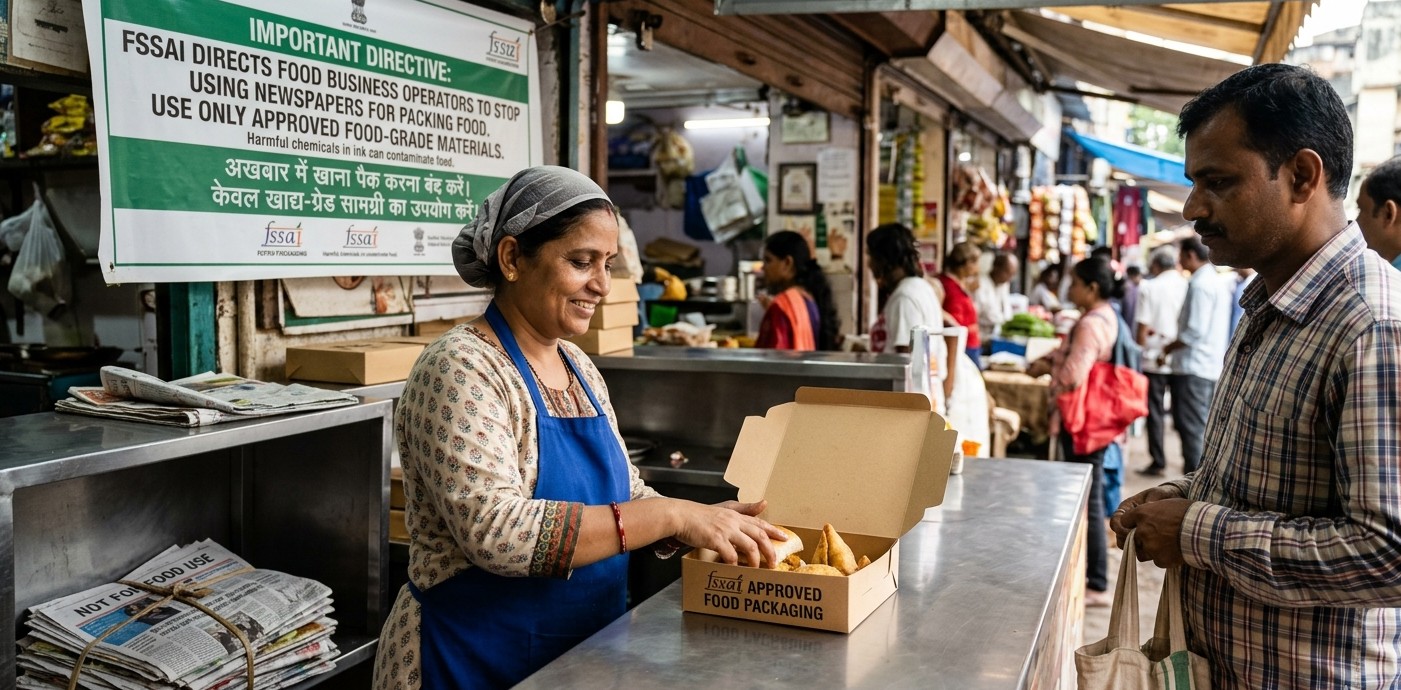
Representational image
New Delhi, June 8: The Food Safety and Standards Authority of India (FSSAI) has directed all Food Business Operators (FBOs) across the country to immediately discontinue the use of newspapers for packing, wrapping, and serving food items, citing serious health and safety concerns.
The food safety regulator has reiterated that newspapers are not suitable for direct contact with food as the printing ink used in newspapers may contain harmful chemicals, pigments, and contaminants that can migrate into food and pose health risks to consumers.
According to FSSAI, the use of newspapers for packaging hot, oily, or moist food products increases the likelihood of contamination. Chemicals present in printing inks, including heavy metals and other hazardous substances, can adversely affect human health when ingested over time.
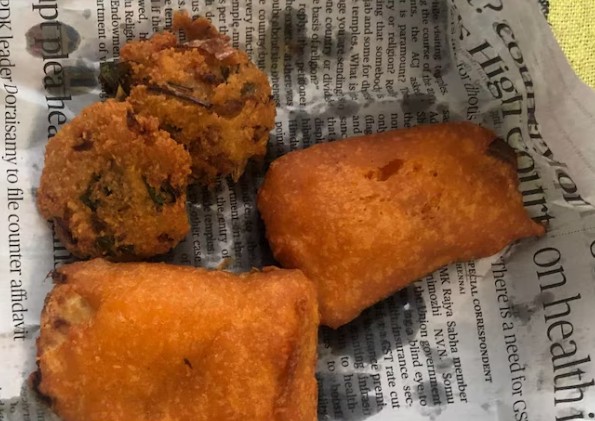
The authority has advised food vendors, restaurants, street food operators, and other food businesses to use only food-grade packaging materials that comply with prescribed safety standards. FSSAI has also urged consumers to remain vigilant and avoid purchasing food items wrapped in newspapers.
The directive forms part of the regulator’s ongoing efforts to strengthen food safety standards and promote hygienic food handling practices across the country. Food businesses found violating the guidelines may face regulatory action under the Food Safety and Standards Act.
The move is expected to improve consumer safety and encourage the adoption of safer and more hygienic food packaging practices nationwide.
8, Jun 2026
TCS Receives Special Recognition as Largest Employer Among IT/ITeS Exporters at STPI Tech Summit 2026
New Delhi: Tata Consultancy Services (TCS), India’s leading IT services and consulting company, has been conferred with the Special Recognition Award as the Largest Employer among IT/ITeS Exporters at the STPI Tech Summit 2026: India’s Next Leap.
The recognition highlights TCS’s outstanding contribution to employment generation, talent development, and the sustained growth of India’s information technology and IT-enabled services (IT/ITeS) export sector.
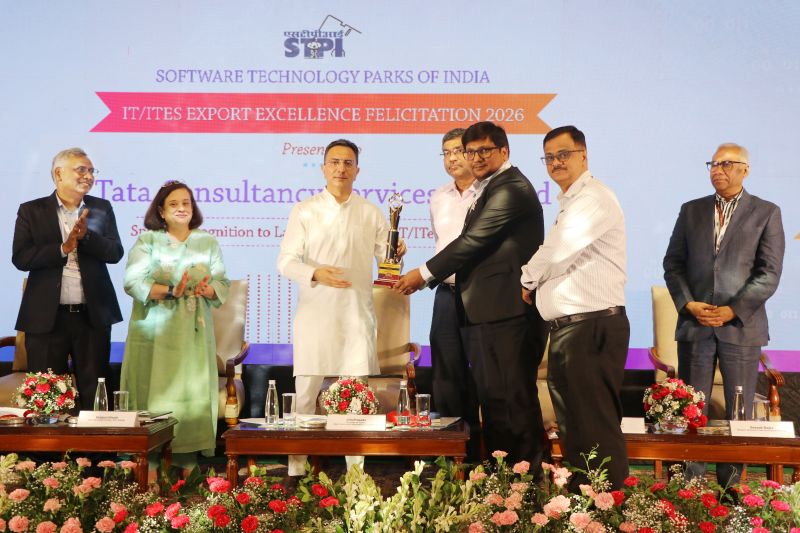
As one of the country’s largest private-sector employers, TCS has played a pivotal role in creating opportunities for technology professionals across India while fostering innovation, digital transformation, and skill development. The company continues to invest significantly in workforce training, emerging technologies, and future-ready capabilities, strengthening India’s position as a global technology powerhouse.
The award, presented during the STPI Tech Summit 2026, acknowledges TCS’s enduring commitment to nurturing technology talent and supporting the expansion of India’s digital economy. Industry leaders noted that the company’s large-scale employment initiatives have contributed substantially to enhancing the country’s competitiveness in global IT services and exports.
The recognition also underscores the critical role played by the IT/ITeS industry in driving economic growth, generating high-value employment, and advancing India’s vision of becoming a leading global digital innovation hub.
TCS’s achievement reflects the broader success of India’s technology ecosystem, which continues to attract global demand for digital services, innovation, and skilled talent. Through its sustained focus on workforce development and export excellence, TCS remains a key contributor to the continued growth and resilience of the Indian IT industry.
8, Jun 2026
Odisha Approves Rs.833.74 Crore Tourism and Hospitality Investments, Creating 1,823 Jobs
Bhubaneswar, June 8 (UDN): Odisha has taken another significant step toward strengthening its tourism and hospitality sector, with the approval of multiple investment proposals worth ₹833.74 crore during the 147th State Level Single Window Clearance Authority (SLSWCA) meeting. The approved projects are expected to generate 1,823 employment opportunities across the state.
The investments span several districts, reflecting the state’s growing appeal as a destination for tourism-led development. The approved projects include hospitality, resort, and tourism infrastructure ventures that aim to enhance visitor experiences while boosting local economies.
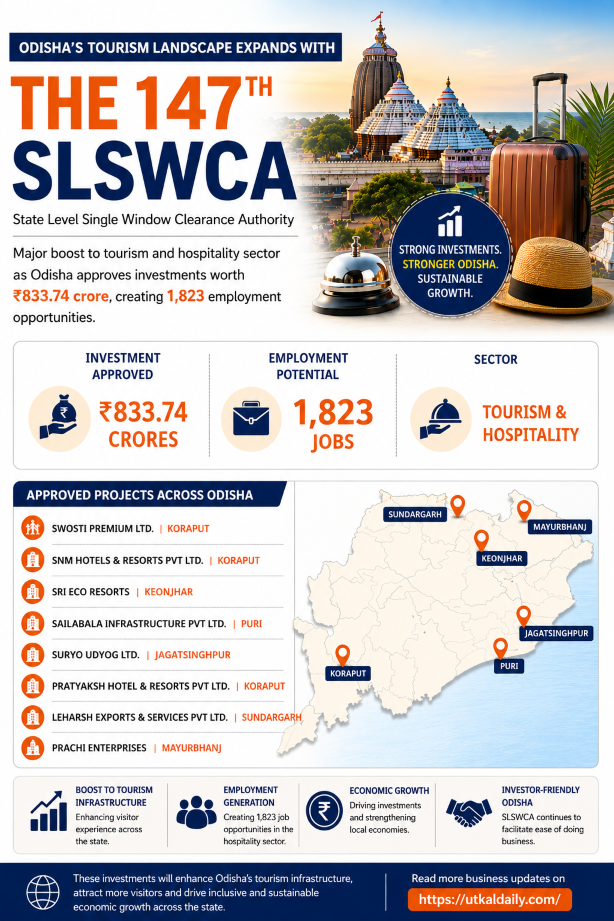
Among the key projects approved are those proposed by Swosti Premium Ltd. in Koraput, SNM Hotels & Resorts Pvt. Ltd. in Koraput, Sri Eco Resorts in Keonjhar, Sailabala Infrastructure Pvt. Ltd. in Puri, Suryo Udyog Ltd. in Jagatsinghpur, Pratyaksh Hotel & Resorts Pvt. Ltd. in Koraput, Leharsh Exports & Services Pvt. Ltd. in Sundargarh, and Prachi Enterprises in Mayurbhanj.
The approvals underline the Odisha government’s continued focus on promoting tourism as a key economic growth driver. By encouraging investments in hotels, resorts, and tourism infrastructure, the state aims to attract more domestic and international visitors while creating sustainable employment opportunities in both urban and rural regions.
Industry observers note that the fresh investments will strengthen Odisha’s hospitality ecosystem, particularly in emerging tourism destinations such as Koraput, Keonjhar, and Mayurbhanj, while further consolidating established hubs like Puri.
The latest approvals under the SLSWCA framework are aligned with Odisha’s broader vision of accelerating industrial growth, enhancing ease of doing business, and positioning the state as a preferred investment destination across sectors.


