
19, Feb 2026
Build Connect 2026 Highlights Industry Shift Toward a Next-Gen Dealer–Distributor Network
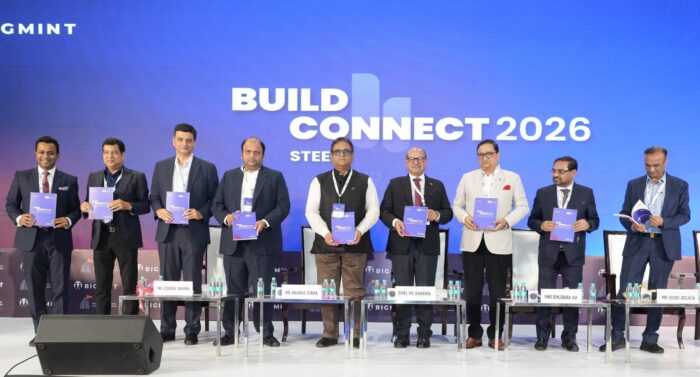
New Delhi, Feb 19 – As India’s steel production crosses 160 million tonnes and installed capacity moves toward 300 million tonnes by 2030, the industry’s growth narrative is entering a new phase. While capacity expansion remains strong, the focus is increasingly shifting to a critical pillar of the value chain — India’s dealer and distributor network.
With nearly 50 million tonnes of finished steel in FY26 flowing through trade-led channels, dealers and distributors now account for a significant share of market movement. As steel demand is projected to rise steadily in the coming years, industry leaders note that distribution capability, financial resilience, and digital readiness will determine how effectively this growth translates into market reach.
This industry-wide conversation took centre stage at Build Connect 2026, held on February 19–20 at Yashobhoomi, New Delhi. The platform was organised by BigMint, a commodity market intelligence firm, in association with the Akhil Bhartiya Loha Vyapar Sangh (ABLVS) as Supporting Association. The event recorded over 1,500 footfall, including 500+ confirmed participants and 1,000+ registered visitors, representing 400+ companies across 72 cities and 15+ states. Nearly 48% of attendees were senior decision-makers, including Directors, Managing Directors, and business owners.
The platform also saw participation from SAIL as Strategic PSU Partner, alongside institutional and industry support from the AIIFA Sustainable Steel Manufacturers Association, National Institute of Secondary Steel Technology (NISST), Bureau Veritas, and prominent trade and construction organisations including BAI, GISF, CFI, RISTA, and BIMA — reflecting broad alignment across manufacturing, trade bodies, and technical institutions.
The inaugural ceremony featured senior industry figures including Shri V. R. Sharma (Member Advisory Board, Jindal Steel & Power), Shri Bimlendra Jha (Ex-MD, JSP & Ambuja Cements Ltd.), Mr. Anurag Sinha (Executive Director, Engineers India Limited), Mr. Vishesh Shahra (Chairman, Shreeyam Power & Steel Industries Ltd.), Mr. Vivek Adukia (Chairman, SRMA), and Mr. Amit Gupta (President, ABLVS).
Across 12 focused sessions and 40+ expert addresses, discussions spanned infrastructure demand, GST compliance, green steel adoption, supply chain finance, digital transformation, e-commerce integration, quality standards, branding impact, and payment recovery mechanisms. A recurring industry view emerged: expanding production capacity must be complemented by a more structured and financially empowered distribution ecosystem.
The Build Connect Awards 2026 recognised excellence across India’s steel distribution landscape, honouring regional distributor leadership, dealer performance, and technology adoption.
As India’s steel demand moves toward higher consumption levels, industry stakeholders reinforced that sustainable sectoral growth will depend not only on manufacturing scale but on building a stronger, more organised, and next-generation dealer–distributor backbone. Build Connect 2026 reflected that shift in focus — from capacity expansion alone to ecosystem strengthening across the value chain.
- 0
- By Neel Achary

19, Feb 2026
Queensland Delegation Strengthens India-Australia Life Sciences Collaboration at BioAsia 2026
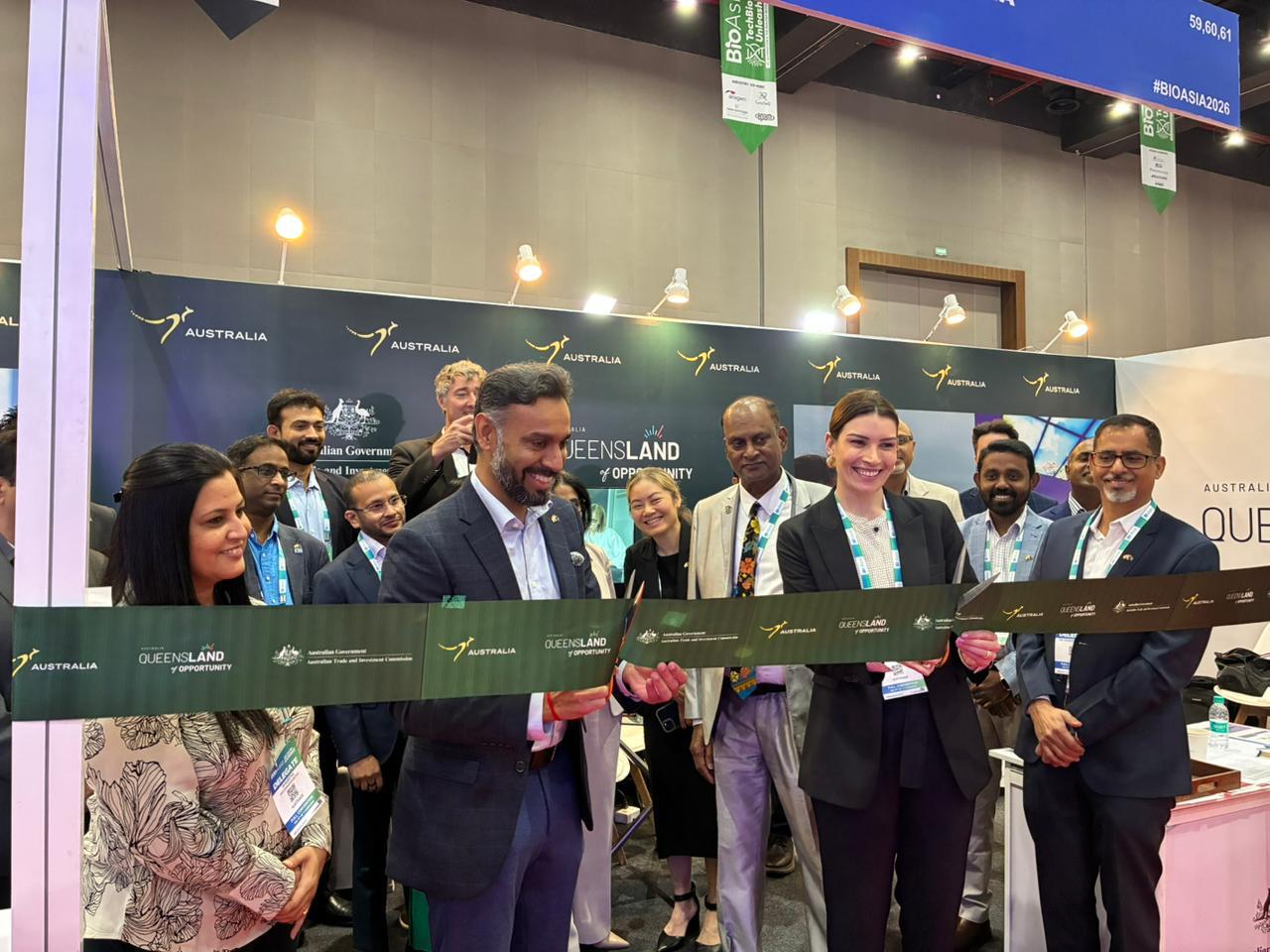
India, Feb 19th: Trade and Investment Queensland (TIQ), Queensland Government’s global business agency, in partnership with Australian Trade and Investment Commission (Austrade), concluded a successful mission at BioAsia 2026, Asia’s premier life sciences and biotechnology forum, organized annually by the Government of Telangana, India.
Aligned with the Queensland Government’s “QueensLand of Opportunity” vision, the delegation to India showcased the state’s capabilities in biotechnology drug discovery, clinical trials, and digital health. Strategic engagements across Hyderabad and Bengaluru enabled direct connections with India’s rapidly expanding innovation ecosystem, paving the way for deeper research, commercial, and investment partnerships.
India presents a high-growth market opportunity for Australian organisations across vaccine research and development, cell and gene therapy innovation, clinical trials, and MedTech, enabling deeper scientific collaboration and accelerated translational outcomes. Consequently, Australia remains a highly trusted clinical trial site for Indian biopharma and medical technology companies to conduct clinical trials with fast trial start-up options and high data acceptability worldwide, especially for early-phase studies and trials.
The mission involved participation of the delegates at the BioAsia conference and exhibition, and a dedicated Clinical Trials Roundtable, along with B2B meetings to facilitate commercial partnerships and enhance mutual market awareness.
Commenting on the visit, Abhinav Bhatia, Senior Trade & Investment Commissioner – South Asia, Trade and Investment Queensland, said, “India is the ‘Pharmacy of the World,’ but the next era of medicine is about moving from volume to value. At BioAsia 2026, we’ve demonstrated that Queensland is the ‘Strategic Lab’ for India’s ‘Global Factory.’ By combining our world-class research and 43.5% R&D tax incentives with India‘s manufacturing scale, we aren’t just cutting costs—we are cutting the time it takes to save lives.”
Reflecting on the depth of engagement at BioAsia 2026, Ms Mary Overington, Trade and Investment Commissioner, Australian Trade and Investment Commission said, “This visit demonstrated the complementary strengths of Australia‘s research-led innovation and India‘s scale in clinical research and manufacturing. Through focused roundtables and stakeholder meetings, the Australian delegation explored practical collaboration opportunities across clinical trials, biotech R&D and life sciences manufacturing. The strong industry response signals clear momentum towards deeper partnerships and commercial engagement between Australia and India in the health and life sciences sector.”
As India and Queensland bolster their commitment to building robust healthcare systems and leading-edge manufacturing capabilities, the visit paves way for new investments and foster deeper scientific cooperation.
19, Feb 2026
FedEx Breaks Ground on Fully Automated Air Cargo Hub at Navi Mumbai International Airport
Navi Mumbai, Feb 19: FedEx and Navi Mumbai International Airport today broke ground on FedEx’s fully automated air cargo hub, advancing capacity in India’s largest international trade corridor and strengthening its role as an integrated logistics and trade gateway for Western India.

The ₹2,500 crore long-term investment by FedEx will support the proposed 300,000 sq. ft. facility, designed as a regional consolidation and redistribution hub and developed in partnership with Adani Airport Holdings Ltd. (AAHL). The hub leverages NMIA’s multimodal infrastructure to strengthen Western India’s international trade corridor. Once operational, the hub is expected to create more than 6,000 direct and indirect employment opportunities across logistics, warehousing, transportation and allied services.
The ceremony was held in the presence of the Honourable Chief Minister of Maharashtra, Shri Devendra Fadnavis; Mr Raj Subramaniam, President and CEO, FedEx; Mr Richard Smith, CEO, Airline and COO, International, FedEx; Ms Kami Viswanathan, President, FedEx Middle East, Indian Subcontinent and Africa (MEISA); and Mr Jeet Adani, Director, AAHL.
Mr Jeet Adani, Director, AAHL, said
“This development reflects NMIA’s long-term vision of building integrated infrastructure that strengthens India’s trade competitiveness. With its proximity to Jawaharlal Nehru Port, industrial corridors and multimodal transport networks, NMIA is uniquely positioned to support high-growth export sectors and enhance Maharashtra’s role as a global logistics gateway.”
Ms Kami Viswanathan, President, FedEx MEISA, said
“India’s competitiveness in global trade will increasingly depend on the reliability and speed of its logistics infrastructure. Establishing this hub at NMIA allows us to integrate global network strength with India’s fastest-growing trade corridor, providing greater certainty, speed and efficiency to customers.”
The development will support trade flows across Southeast Asia, West Asia, Europe and the United States, embedding global network connectivity directly within India’s primary trade corridor. Equipped with advanced automated sorting systems, dimensional scanning, high-speed screening technology and dedicated aircraft parking bays, it will enable simultaneous processing of inbound and outbound shipments and enhance routing flexibility and transit time predictability, particularly for high-value and time-sensitive sectors such as electronics, engineering goods, pharmaceuticals and perishables. The improved reliability is also expected to strengthen export-import capabilities for micro, small and medium enterprises (MSMEs) while contributing to lower logistics costs and faster turnaround times.
NMIA’s cargo infrastructure is planned to commence with an initial handling capacity of approximately 0.5 million metric tonnes (MMT) annually, scaling in phases to around 3.25 MMT in its final development stage. This calibrated capacity expansion supports the airport’s long-term strategy of positioning the Mumbai Metropolitan Region (MMR) as one of India’s most advanced air freight and logistics gateways.
Building on nearly three decades of operations in India, the hub expands FedEx’s dedicated presence while supporting NMIA’s role as an integrated aviation and multimodal trade platform in global supply chains.
19, Feb 2026
Design and Develop in India and Deliver to the World holds the key: PHDCCI
The keynote address of the Prime Minister in AI Impact Summit 2026 in New Delhi, noted that the world economy is on an inflection point in artificial intelligence. “India is on the cusp of its own AI revolution, given the largest youth population and one of the most extensive technology talent pools”, says Mr. Rajeev Juneja, President, PHDCCI.
Artificial intelligence as a transformative force will reshape economic structures, governance systems, and patterns of work and given the exceptional speed, scale and depth sooner than we think, he said.
Prime Minister’s reiteration of Summit theme—Sarvjan Hitay, Sarvajan Sukhay (Welfare for All, Happiness for All) is the right step towards democratizing artificial intelligence for all, he added.
India’s AI-driven solutions in agriculture, national security, multilingual services, and accessibility for persons with disabilities reflects India’s growing capabilities in indigenous innovation and scalable public-interest technologies, he said.
India’s guiding framework for AI governance under the acronym M.A.N.A.V. (Human)—Human Vision for AI:
- M – Moral and Ethical Systems: Establishment of robust ethical guidelines for AI development and deployment.
- A – Accountable Governance: Transparent regulatory frameworks and institutional oversight.
- N – National Sovereignty: Protection of data rights and national interests in digital ecosystems.
- A – Accessible and Inclusive: Prevention of monopolization; ensuring AI serves as a multiplier for societal progress.
- V – Valid and Legitimate: Emphasis on verification, authenticity, and technical reliability.
Large-scale investment in skilling, reskilling, and lifelong learning to ensure workforce readiness has the capacity to take away the fear of unemployment and at the same time prepare India for next generation technology frontier, he added.
The Prime Minister’s articulation of India’s support for open collaboration in AI development, while at the same time recognising that AI-leading nations shall treat AI development as a collaboration effort with open standards, and shared code treating it as a Global Common Good, he added.
India is moving fast on its commitment to building a technological ecosystem encompassing semiconductor manufacturing, chip design, quantum computing, secure data centres, he said.
Prime Minister’s commitment to “Design and Develop in India” and “Deliver to the World” showcases emerging AI-led development opportunity for India rather than fear of job loss, and India will navigate this with confidence and with ethical governance, said Dr. Ranjeet Mehta, CEO & Secretary General, PHDCCI.
19, Feb 2026
Over 10 Lakh Customers Embrace Healthier Choices in Zomato’s Healthy High-Five Challenge
New Delhi, Feb 19: Two weeks into Zomato’s Healthy High-five challenge, the data shows a meaningful shift in how urban India orders food: making protein the priority, not an afterthought.
Since February 1, over 10 lakh Indians have collectively begun their High-five journey, ordering healthy meals with over 20 grams of protein more than 15 lakh times. Here’s what the data shows: people are going beyond the first milestone. Over 10,000 customers have earned their first free meal.
A customer from Bengaluru exemplifies this frequency, he has logged 33 high-protein orders in just two weeks, earning multiple free meals along the way. Since Healthy Mode launched in late 2025, a customer from Chennai has placed 811 orders through the feature. These patterns suggest sustained behavior change, not temporary experiments.
The geographic breakdown reveals expected metro dominance: Bangalore leads with 3.78 lakh high-fives, closely followed by Delhi and Mumbai. Interestingly, grilled chicken has emerged as the most-ordered dish in the challenge with over 1 lakh orders in February, suggesting customers are consciously switching to healthier options without sacrificing taste or familiarity.
Aditya Mangla, CEO, Zomato, said,
“We’ve always felt that people want to make healthier choices. They just need it to be simpler and more accessible. The Healthy High-five challenge was our small attempt to enable that. Two weeks in, with over 10 lakh customers participating, it’s encouraging to see not just orders come in, but early signs of habits taking shape.”
Since the launch of Healthy Mode on the Zomato app in late 2025, the feature has driven 74 lakh orders from 12 lakh customers, indicating growing user inclination towards healthy meal options. There’s been a 20% uptick in orders for dishes with ‘High’ healthy scores, compared to September’25.
The Healthy High-five challenge runs till the end of February 2026 on the Zomato app. To participate, order dishes that meet specific nutritional criteria: a minimum of 20g of protein and a high Healthy Score. Healthy Score evaluates dishes on protein, complex carbs, fibre, and micronutrients, and not just calories.
- Every qualifying order once delivered, earns the customer a ‘High-five’
- 4 High-fives unlock a free dish from a curated menu of high-nutrition options listed under the Healthy Mode.
19, Feb 2026
Concept Medical Group Hosts Momentum 6.0 Conference
Surat, Feb 19 : Concept Medical Group successfully concluded Momentum 6.0, its sixth annual sports fest, held in Surat, India. The two-day celebration brought together employees from across the organization for high-energy competition, camaraderie and connection.
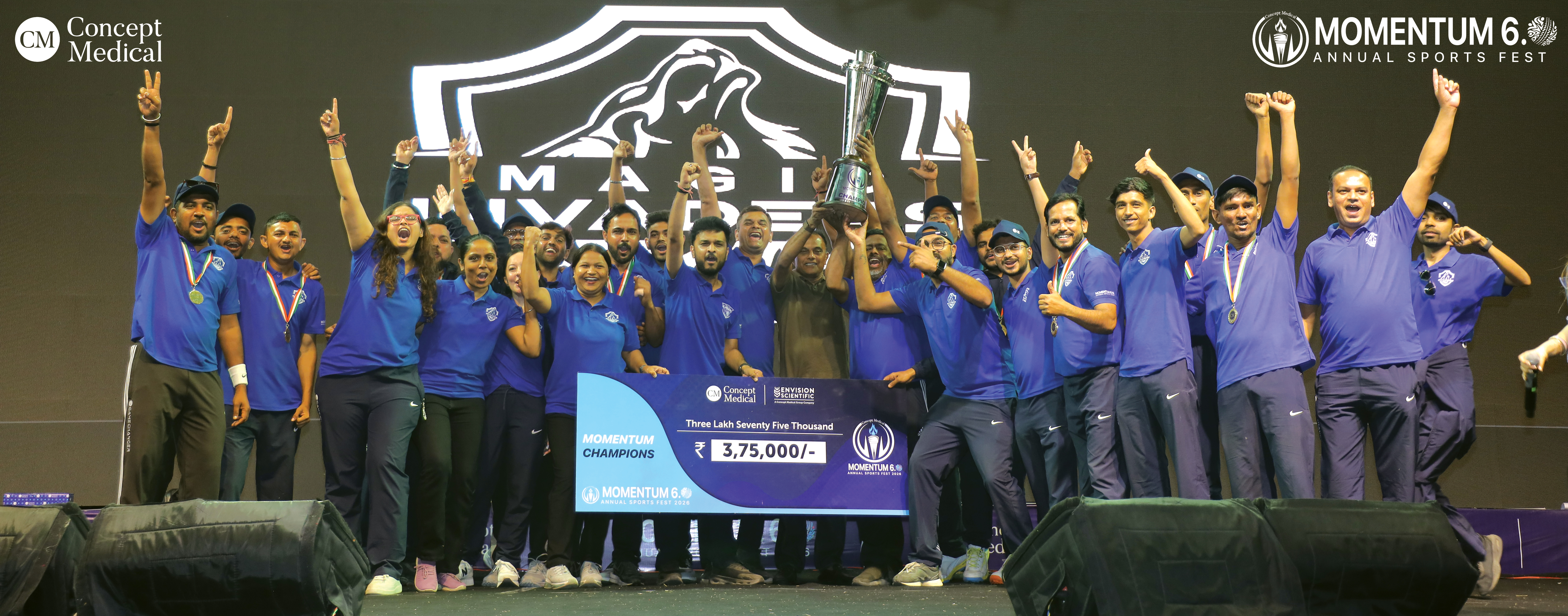
Momentum 6.0 featured tournament-style matches across Cricket, Volleyball, Badminton, Table Tennis, Chess and Carrom. The event opened with an Opening Ceremony and Team Flag March, setting the tone for two days of spirited participation and sportsmanship.
Evenings added a celebratory dimension through performances, employee recognition and Concept Got Talent showcase. The fest concluded with the recognition of winning teams and standout performers, including the Momentum 6.0 Champions.
Dr. Manish Doshi, Founder & Managing Director, Concept Medical Group, said,
“Momentum has evolved into more than a sports fest. It is a shared experience that strengthens bonds, deep-rooted camaraderie, nurtures leadership beyond the workplace, and reinforces the values that drive Concept Medical forward every day.”
Parth Doshi, Executive Director, Concept Medical Group, added,
“Momentum is about energy, unity and belief. What we witnessed over these two days was our people coming together with pride, passion and purpose. That spirit is what defines Concept Medical.”
Momentum 6.0 reflects Concept Medical’s commitment to building a people-first workplace grounded in trust, inclusion and a strong sense of belonging, demonstrating the organization continues to be recognized among the country’s top Great Place To Work year after year.
With support from volunteers, mentors and cross-functional teams, the event was delivered through structured coordination and a vibrant on-ground experience. Concept Medical will continue to invest in initiatives that promote wellbeing, collaboration and shared success.
19, Feb 2026
Netcore Honoured in G2’s 2026 Best Software Awards, Cementing Martech Leadership in APAC & India
Mumbai, Feb 19: Netcore a global leader in Agentic Marketing, today announced that it has been recognised on the 2026 Best Software Awards by G2, earning a place on the Best of APAC Software List and Best of India Software List.
The G2 Best Software Awards rank the world’s leading software companies and products based on authentic, timely reviews from real users. With over 2 million verified reviews across categories, G2’s annual lists are widely regarded as one of the most trusted buyer-led recognitions in the software industry.
Netcore’s inclusion in the APAC and India lists reflects strong customer validation across enterprise marketing teams using its Agentic Marketing platform to drive customer engagement, retention, and revenue growth.
Recognition Backed by Customer Voice
Unlike jury-based or nomination-led awards, G2 rankings are driven entirely by verified user feedback, product satisfaction scores, and market presence data. For B2B buyers evaluating technology partners, G2 recognition often serves as a key validation point during the shortlist and vendor selection stages.
“This recognition is especially meaningful because it comes directly from our customers,”
Rajesh Jain, Founder & MD, Netcore Cloud.
“As marketing moves toward more autonomous, AI-driven decision-making, our focus has remained clear to deliver measurable business outcomes. Being featured on G2’s Best Software list for APAC and India validates the impact our customers are seeing across engagement, personalisation, and retention.”
Strengthening Global Trust in Agentic Marketing
Netcore has been advancing its vision of agentic marketing systems where agents evaluate context, intent, and orchestrate outcomes in real time to drive the next best action across channels. This recognition further strengthens the company’s positioning among enterprise brands seeking scalable, outcome-focused marketing technology.
With enterprises increasingly relying on peer validation platforms during procurement cycles, the G2 Best Software badge enhances Netcore’s credibility across competitive evaluations, RFP processes, and AI-led discovery environments.
As enterprise marketing shifts toward autonomous, AI-driven systems, trust and proven outcomes are becoming the ultimate differentiators. Netcore’s recognition on G2’s 2026 Best Software Awards signals strong customer confidence in its platform and vision. Leading global and regional brands such as Crocs, Bajaj Allianz, and Hero MotoCorp are already leveraging Netcore’s Agentic marketing capabilities to drive deeper engagement, stronger retention, and measurable revenue impact. The company will continue investing in innovation, customer success, and agentic marketing systems that help brands move beyond campaigns toward intelligent, continuously optimising growth engines built for long-term profitability.
19, Feb 2026
PanIIT Alumni India Felicitates Rajesh Agarwal at Bombay Gymkhana
Mumbai, Feb 19: PanIIT Alumni India organised a distinguished felicitation ceremony at the iconic Bombay Gymkhana, honouring eminent IIT alumni and leaders who have made exceptional contributions in public service, industry, entrepreneurship, and academia.
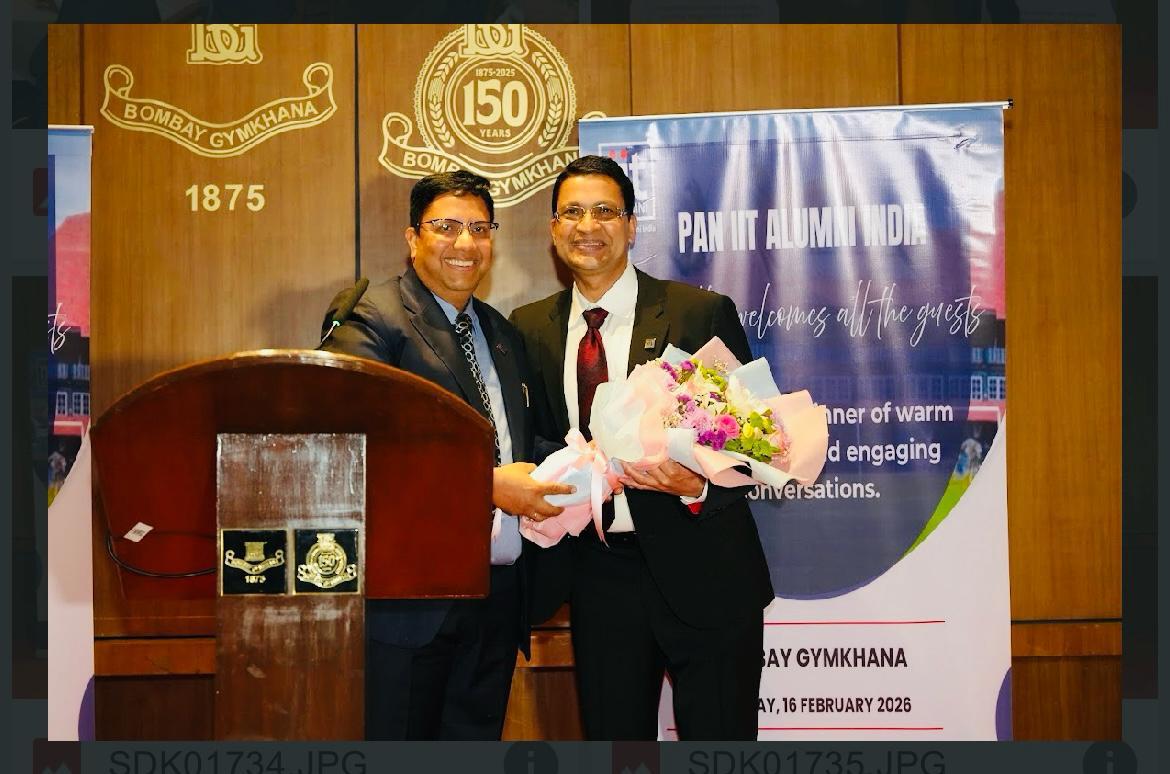
The highlight of the evening was the felicitation of Rajesh Agarwal, Chief Secretary of Maharashtra and distinguished alumnus of IIT Delhi. PanIIT Alumni India also felicitated Shashi Tripathi, Chairman of the upcoming IIT2026 global conference.
The event witnessed the gracious presence of several prominent IIT alumni and national leaders, including:
• Sharad Saraf, Member, Board of Governors – IIT Bombay & IIT Jammu
• Ashank Desai
• Sudhakar Gande
• Raj Nair
Senior leaders from government, industry, startups, and academia across multiple IITs joined the gathering, reflecting the strength and unity of the global IIT alumni network.
Prabhat Kumar, Chairman, PanIIT Alumni India, said
“PanIIT represents the collective strength of over 300,000 IIT alumni across the globe. Today’s felicitation is not just about honouring individuals, but about celebrating leadership that contributes to nation-building and global impact. IITians are playing transformative roles in governance, innovation, entrepreneurship, and global partnerships aligned with the vision of Viksit Bharat 2047.”
He emphasised that PanIIT will continue to act as a bridge between government, industry, academia, and the global alumni ecosystem to accelerate India’s growth story.
Rajesh Agarwal, Chief Secretary, Maharashtra, in his address, welcomed investors, entrepreneurs, and industry leaders to actively engage with Maharashtra’s fast-growing innovation and industrial ecosystem. He highlighted key initiatives of the Maharashtra Government aligned with the Viksit Bharat vision and assured full support to the PanIIT community to invest and collaborate in Maharashtra’s strategic sectors.
Update on IIT2026 – USA (April 22-25, 2026)
Shashi Tripathi shared insights about the IIT2026 Conference, a landmark global summit scheduled from April 22 to 25, 2026, in Long Beach, California, USA. IIT2026 is a three-day conference celebrating 75 years of IIT excellence, bringing together over 2,500 innovators, CEOs, thought leaders, and changemakers from around the world to explore innovation, investment, technology, and global collaboration.
He invited the entire PanIIT community—especially alumni and professionals in the USA and beyond—to participate in this historic event, engage in transformative dialogues, and build strategic partnerships that will shape the future of innovation worldwide.
The evening concluded with networking and discussions focused on strengthening alumni collaboration, fostering cross-border investments, and positioning the IIT ecosystem as a powerful driver of India’s and global innovation leadership journey.
19, Feb 2026
Ashoka University, École normale supérieure PSL Forge Strategic Academic Partnership
New Delhi, Feb 19 : Ashoka University, India’s leading interdisciplinary research university, today signed a Memorandum of Understanding (MoU) with École normale supérieure PSL Paris, one of France’s most prestigious higher education and research institutions. The announcement was made at the High Level Academic and Scientific Meetings in the presence of French President Emmanuel Macron, marking an important step in strengthening India–France collaboration in higher education, research, and innovation.
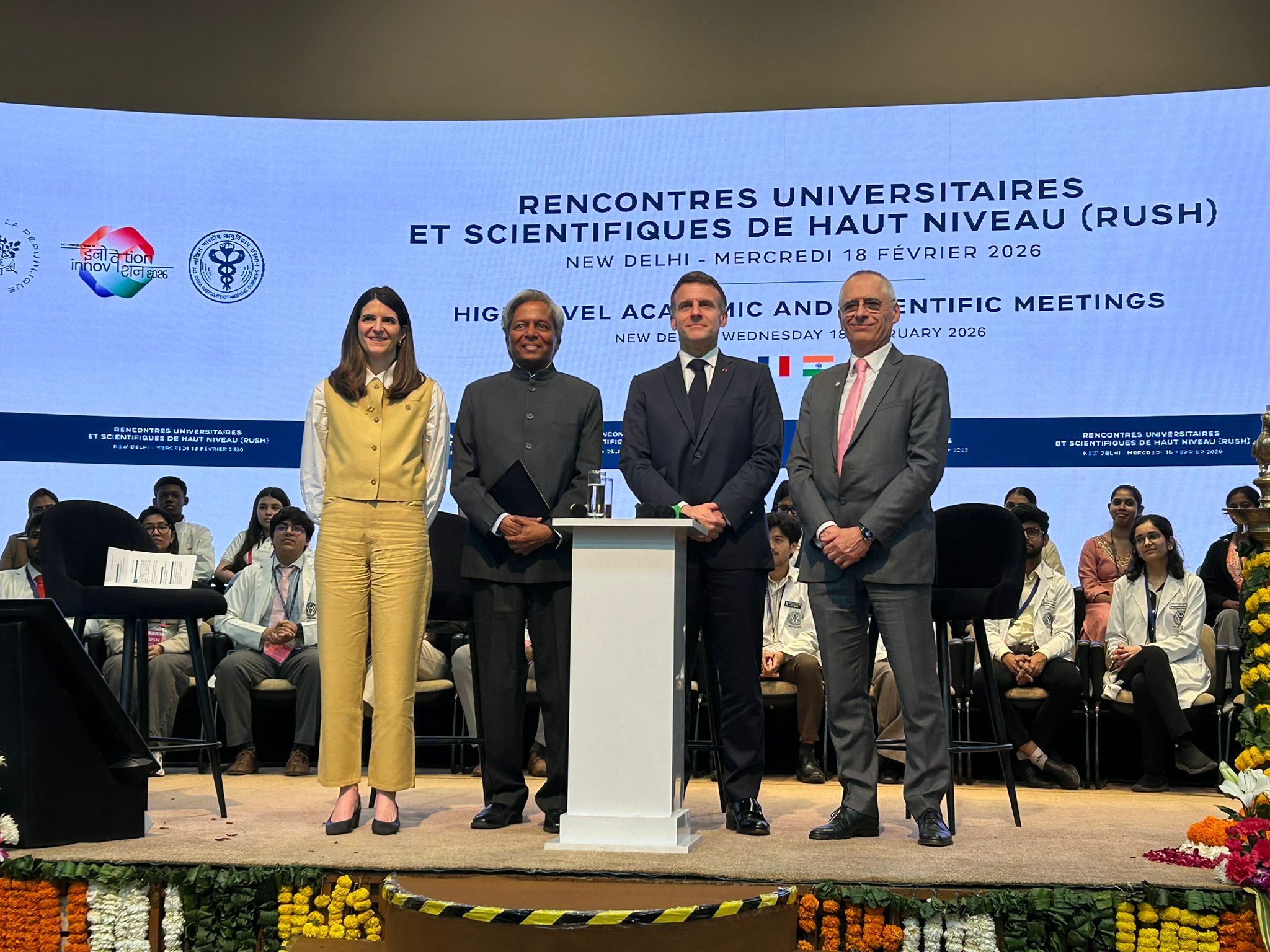
The MoU was formally signed by Somak Raychaudhury, Vice-Chancellor, Ashoka University, Delhi-NCR, and Frédéric Worms, Director, ENS-PSL. The partnership reflects a shared commitment to academic excellence, interdisciplinary learning, and global knowledge exchange between two leading institutions known for integrating teaching and research across disciplines.
Ashoka University’s Memorandum of Understanding with École normale supérieure – PSL establishes a deep, long-term partnership spanning joint research, faculty and student exchanges, and collaborative academic programmes in the sciences and humanities. This MoU will create shared research ecosystems, foster co-taught courses and workshops, and open opportunities for Ashoka students and scholars to engage with ENS–PSL’s renowned scientific community in Paris. Together, the two institutions aim to build a vibrant Indo-French intellectual corridor that advances fundamental science, interdisciplinary inquiry, and innovation with global impact.
K VijayRaghavan, Chair, Science Advisory Council, Ashoka University noted,
“France and India are already closely linked in science through bilateral structures such as the Indo-French Centre for Applied Mathematics (IFCAM), DST–India programmes in digital science and technology, and joint initiatives in neuroscience and engineering. Most recently, both countries have expanded this cooperation through new initiatives in AI, health, and digital science, including plans for Indo-French centres for AI in health and digital science and technology under the 2026 Year of Innovation”.
École normale supérieure – PSL is among France’s most prestigious higher education institutions and a globally recognised centre of academic excellence. Founded in 1794, the institution is known for its rigorous research culture and interdisciplinary approach, ENS-PSL has a distinguished legacy of producing leading scholars, scientists, and policymakers, including multiple Nobel laureates and Fields Medal winners.
For Ashoka University students, the partnership will play an important role in shaping research capabilities by providing access to advanced research networks, collaborative projects, and mentorship from internationally renowned scholars. The engagement is expected to strengthen Ashoka University students’ understanding of global techniques and methodologies used in research across multiple domains, thereby equipping them with better skills to carry deep research for better knowledge creation and innovation.
For students and experts of ENS-PSL, this collaboration will offer valuable opportunities to engage with India’s dynamic academic ecosystem, participate in interdisciplinary research initiatives, and gain deeper insights into diverse social, cultural, and scientific contexts of the country.
Both institutions are already connected through the Franco-Indian Campus in Life Sciences for Health, launched in 2022, and the MoU seeks further to deepen academic and research exchanges within this broader framework.
Frédéric Worms, Director, ENS-PSL, said,
“This agreement offers a unique opportunity to bring together École normale supérieure – PSL and Ashoka University, two institutions that share a similar academic model and a common commitment to excellence, interdisciplinarity, and the close articulation of teaching and research.”
Somak Raychaudhury, Vice-Chancellor, Ashoka University, said,
“This partnership marks an important step in strengthening global academic collaboration at a time when AI is reshaping industries and societies. Through our engagement with ENS-PSL, we aim to drive high-impact research, foster meaningful academic exchange, and equip our students and faculty with deeper global perspectives.”
19, Feb 2026
Rackspace and Palantir Partner to Run Foundry and AIP in Production with Governed Managed Operations
Customers to gain accelerated AI-driven business outcomes from implementation expertise, cloud hosting, and data migration support in a governed operating model
San Antonio, TX – Feb 19– Rackspace Technology® (NASDAQ: RXT), a hybrid multicloud and AI solutions company, and Palantir Technologies Inc. (NASDAQ: PLTR), a global leader in operational artificial intelligence platforms, today announced a strategic partnership to help enterprises rapidly deploy and operate Palantir’s Foundry and Artificial Intelligence Platform (AIP) in production to achieve measurable business outcomes.
Through this partnership, Rackspace’s governed operating model will provide consistent security, operating controls and compliance from edge to core to cloud enabling customers to deploy AI use cases with Palantir in production in weeks or months versus months or years. The companies are also collaborating to run Palantir software in Rackspace’s Private Cloud and UK Sovereign data centers. This is especially critical for regulated industries where AI deployments must meet strict data sovereignty and compliance requirements.
Organizations struggle to extract business value from AI and data platforms because deploying and operating these systems at scale requires specialized expertise they often don’t have in-house. As Palantir’s strategic partner in data migration and global implementation services, Rackspace will help customers prioritize their most high-impact business problems, then deliver implementation, including data readiness, hosting, and ongoing managed operations of Palantir’s platform to realize outcomes. As part of this collaboration, Rackspace has 30 Palantir-trained engineers to provide data migration and apply a forward deployed approach to solving high impact customer problems and is on track to scale to over 250 in the next 12 months.
“Organizations need AI that works in production, not just in demos,” said Gajen Kandiah, CEO of Rackspace Technology. “Palantir’s platform, combined with Rackspace’s governed cloud operations and our shared forward deployed engineering approach, enables customers to accelerate time to value and drive competitive business impact with governance and security. This is especially important in regulated industries.”
The partnership combines Rackspace’s 25 years of experience managing mission-critical enterprise workloads across hybrid environments with Palantir’s decision-intelligence platform. Customers can benefit from a turnkey deployment model designed to reduce risk and operational burdens and accelerates time to value. For regulated and data-sensitive organizations, this partnership aims to deliver greater confidence to deploy advanced AI capabilities in a private cloud environment that meets sovereignty, security, and residency requirements.
“Organizations that adopt our AI Operating Systems fundamentally change their unit economics. In the context of migrating complex data environments, Palantir AIP is taking completion timelines from years to days. Rackspace will help our customers accelerate their pace of adoption and as a result, lead their respective industries,” said Sameer Kirtane, Head of US Commercial at Palantir.
Integrated Service Delivery Across the Stack
Customers want a consistent way to deploy, govern, and operate AI across their data environments, with accountability and measurable outcomes. Unlike point solutions that require customers to manage infrastructure, data pipelines, and AI operations separately, this partnership is aimed at providing end-to-end infrastructure hosting, data migration, implementation services and ongoing managed operations as an integrated service.


