
19, Feb 2026
Is Humanity Sleepwalking Into a Digital Dark Age… Why Nearly All Knowledge Is Still at Risk…
PHOENIX, Ariz, Feb. 19— What if humanity’s greatest knowledge crisis isn’t in the past — but unfolding right now? In an age of cloud storage, artificial intelligence and instant information, global innovator and engineer Jack R. Bialik warns of the hidden risks of a fully digital society — and what history reveals about how knowledge is lost.
“A DVD or a CD … those only last 30 or 40 years,” Bialik said in a recent interview. “Thumb drives or USB drives or solid-state drives … how long do those last? How long does your computer last? Five or 10 years? We’re taking our information, putting it on denser things with no thought about how long it lasts.”
In his new book, Lost in Time: Our Forgotten and Vanishing Knowledge, Bialik reveals a startling reality: only 1.6 percent of our collective history has been preserved, and today’s preferred method of preservation — digital records — may be placing humanity’s memory on its most unstable footing yet.
Through bite-sized nuggets of wisdom, Lost in Time takes readers on a captivating exploration of humanity’s lost ingenuity and the forgotten knowledge that once shaped civilizations. Spanning centuries and continents, the book uncovers astonishing technologies, philosophies and cultural practices that have been buried under the sands of time — some of which are more advanced than what people use today. Bialik effortlessly confronts the assumption that only modern-day humans are capable of producing innovative feats of technology and brilliance.
With meticulous research that spanned over 10 years and compelling storytelling, Bialik highlights how these past innovations could still hold the potential to address modern challenges, from knowledge sustainability to societal resilience. Lost in Time unravels the intricate tapestry of human civilization, weaving together narratives of inventions of yesterday, overlooked pioneers and epoch-defining discoveries that have shaped the modern world.
Among the amazing facts readers will learn:
• Cataract surgery was being performed in India more than 2000 years ago.
• The first known fountain pen was created centuries before Europe “invented” it.
• Ancient civilizations debated waste disposal and sanitation solutions that rival or even surpass some modern systems.
Through thought-provoking analysis, Lost in Time examines the fragile nature of human knowledge and the forces — be they war, natural disasters or changing priorities — that contribute to its disappearance.
However, Lost in Time is more than an archive of historical losses. Bialik inspires readers to reconnect with the lessons of the past as a means of fostering a more informed and innovative future. He challenges readers to consider whether humanity is building a legacy of accessible wisdom — or an archive of forgotten lessons.
In Bialik’s own words: “We keep trying to save knowledge, and what we need to do is turn the knowledge into wisdom so that it can be saved from generation to generation.”
Both a cautionary tale and a celebration of resilience, this book illuminates the enduring power of human curiosity and determination. Readers will contemplate how much of humanity’s ingenuity has been left behind, urging them to consider the steps needed to safeguard knowledge for generations to come.
From history enthusiasts to curious thinkers to those passionate about reclaiming lost wisdom, this book offers a fascinating lens through which to view humanity’s enduring quest for progress. This book is appropriate for grade school children all the way to adults of all ages.
- 0
- By Neel Achary

19, Feb 2026
Mukta Arts and Green Gold Animation Partner to Create Animated Shows and Films from Mukta IP
Mumbai, Feb 19 : Mukta Arts Ltd. and Green Gold Animation have announced the signing of a Memorandum of Understanding (MOU) to collaborate on the development and production of animated shows and feature films based on Mukta Arts’ iconic intellectual property portfolio.
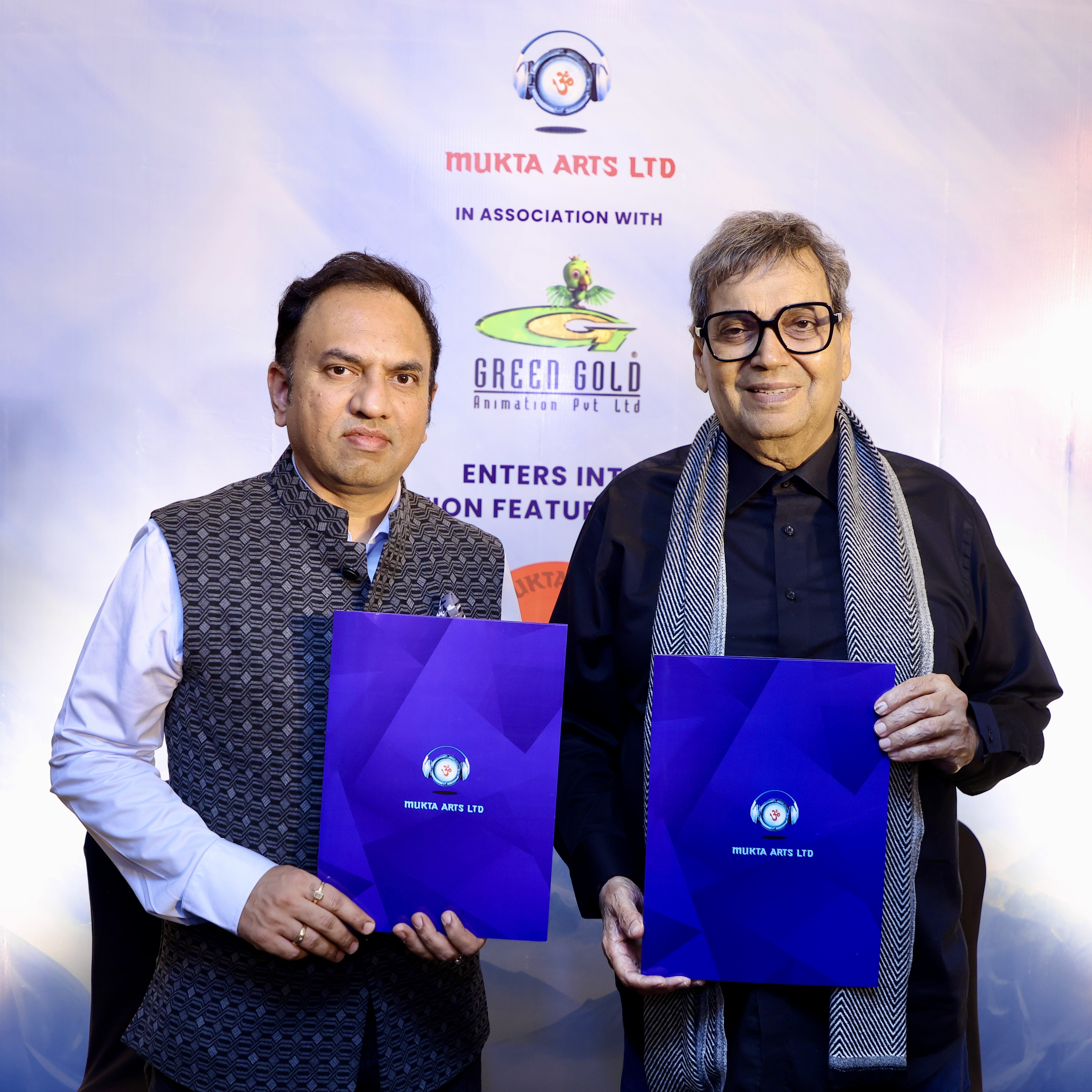
As part of its strategic expansion into animation, Mukta Arts launched SGM Animation Studio in 2025 as its dedicated Animation and Games division. The studio is focused on developing, producing and co-producing animated films, series, comic books and games, leveraging Mukta Arts’ rich IP library built over four decades, along with creating new original properties rooted in the company’s storytelling legacy.
Green Gold Animation, founded by Rajiv Chilaka, is India’s leading animation studio and the creator of some of the country’s most successful homegrown animation IPs, including the globally popular Chhota Bheem universe. With decades of experience and hundreds of hours of animated content, Green Gold brings deep expertise in building scalable, character-driven franchises for television, OTT and feature films.
Under the MOU, Mukta Arts and Green Gold Animation will work together to develop multiple animated IPs inspired by landmark films from Mukta Arts’ celebrated catalogue, including Kalicharan, Karz, Hero, Karma, Ram Lakhan, Khalnayak, Saudagar, Iqbal and more, along with character-led spin-offs from these universes.
Creative teams from Mukta Arts and Green Gold Animation have already initiated discussions, with the first project currently in development.
Commenting on the collaboration, Rajiv Chilaka, Founder and CEO, Green Gold Animation, said
“This partnership with SGM Studios allows us to apply our experience in building long-lasting animation IPs to a truly iconic film catalogue. Together, we aim to create animated worlds that are rooted in these legendary stories, yet designed to connect with today’s young, global audiences.”
Subhash Ghai, Filmmaker and Founder, Mukta Arts Ltd added,
“Mukta Arts has always believed in creating stories with lasting emotional value. Through animation, we are extending our IP into a new medium for the next generation.”
19, Feb 2026
chargeMOD Teams Up with Mercedes-Benz to Expand EV Charging Network in India
Kochi, Feb 19: chargeMOD, a pioneering Indian energy tech startup and a leading provider of electric vehicle (EV) charging solutions, collaborated with Mercedes-Benz India to integrate its expansive network of over 500 charging points directly into the MB.CHARGE Public digital ecosystem, offering a premium and seamless charging experience for Mercedes-Benz owners in India.
Through this partnership, Mercedes-Benz India customers can now enjoy a smarter way to charge as the chargeMOD network is now natively connected to the Mercedes-Benz digital ecosystem. This integration removes the common hurdles associated with public charging by providing a seamless EV charging ecosystem. Users can now access a comprehensive location finder and a unified payment gateway directly through the Mercedes-Benz App (MB.CHARGE Public) or the vehicle’s MBUX multimedia system.
“It’s a win for sustainable mobility. Through this partnership we are supercharging our growth and reaching even more drivers ready to go electric. It also motivates our mission to build India’s largest, most accessible charging infrastructure” said M. Ramanunni, Co-Founder and CEO of chargeMOD.
“Mercedes-Benz India is committed to accelerating India’s transition to sustainable mobility through strong ecosystem partnerships and our collaboration with ChargeMOD underlines this commitment. With MB.CHARGE Public, Mercedes-Benz is expanding hassle-free charging infrastructure by offering customers a fully integrated and seamless digital charging journey. This collaboration further strengthens our promise of delivering convenience, innovation and sustainable mobility to our discerning customers” said Santosh Iyer, MD and CEO of Mercedes-Benz India
This collaboration addresses all major concerns related to charging and payment for luxury vehicle owners, and as a startup, it sets chargeMOD’s position as a critical pillar of India’s EV infrastructure.
19, Feb 2026
Edge Announces Edge Elevate, Establishing Company as Unified Talent Network
New cohesive talent experience enables long-term workforce reliability and scale to address the rapidly escalating administrative capacity crisis
SAN FRANCISCO – Feb. 19 –Edge announced Edge Elevate, a significant evolution of its talent experience designed to support scalable growth across roles, markets, and categories globally. Employers are shifting from hiring for isolated roles to building ongoing, distributed workforces. This platform-level evolution addresses that shift, establishing Edge as a unified talent network built for scale and empowering customers with long-term workforce durability.
Most workforce platforms are based on transactional hiring models, which rely on static resumes, one-off applications, and opaque advancement paths. This clearly isn’t working, as the administrative capacity crisis is rising faster than organizations can adapt. More than three-fourths (75.5%) of healthcare leaders we recently surveyed reported that workload has increased over the last 12 months, and 56.3% are facing weekly or daily administrative backlogs.
Edge Elevate replaces this fragmented, suboptimal approach with a cohesive talent experience based on single, enduring talent profiles, standardized roles, structured development, and transparent progression.
“Fragmented hiring experiences no longer support the reliability or scale modern businesses require,” said Edge CEO Iffi Wahla. “As roles become more specialized and teams more global, companies need talent models that prioritize consistency, transparency, and long-term development. Edge is answering the call with a durable platform experience.”
Key elements of Edge’s unified talent network include:
- Talent Application 2.0 – Serving as a single, enduring talent profile that captures experience, feedback, certifications, and readiness
- Standardized role catalog – Clearly defining the roles supported by the platform
- Edge Edu integration – Tying Edge certifications directly to advancement
“Talent Application 2.0 is the anchor for our platform evolution,” explained Ghazanfar Idrees, Edge chief product officer. “Giving talent a persistent profile and clear visibility into roles, feedback, and growth creates better experiences for workers and a higher-quality network for Edge customers – empowering these organizations to conquer the administrative capacity crisis, effectively scale their operations, and grow stronger.”
Talent benefits from:
- Having one profile that carries forward, instead of having to reapply for jobs repeatedly
- Gaining clearer visibility into roles, expectations, and growth paths
- Accessing structured development tied directly to advancement
Customers benefit from:
- More consistent quality and role clarity
- Talent who are developed and progressed against defined standards
- Reduced variability as Edge scales across roles and markets
“After five years of rapid expansion, Edge is entering our next phase of growth,” said Wahla. “Far beyond job-by-job hiring, Edge Elevate reflects our deliberate shift toward a unified talent network, built to scale with clarity, consistency, and long-term development at its core.”
19, Feb 2026
Ministry of Ayush Marks Unani Day 2026 with National Conference on “Innovation and Evidence in Unani Practice” in Mumbai
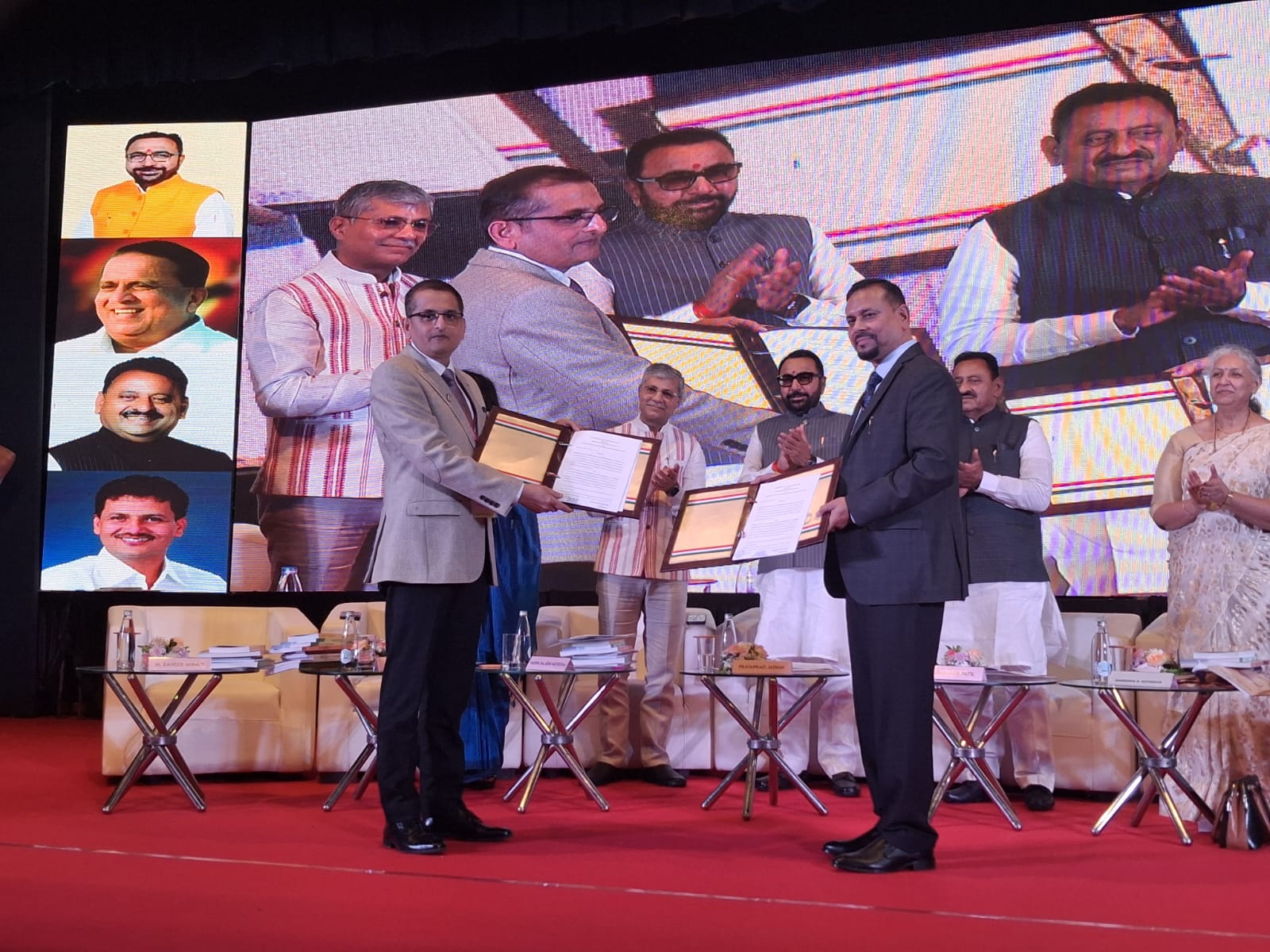
Mumbai, Feb 19: The Ministry of Ayush, Government of India, commemorated World Unani Day 2026 by organising a two-day National Conference on “Innovation and Evidence in Unani Practice” on February 14–15, 2026, in Mumbai. Held under the aegis of the Central Council for Research in Unani Medicine (CCRUM), the conference brought together policymakers, researchers, academicians, and industry stakeholders in a hybrid format.
Shri Prataprao Jadhav, Hon’ble Minister of State (Independent Charge), Ministry of Ayush and Minister of State, Ministry of Health and Family Welfare, Government of India, graced the occasion as Chief Guest. Shri Babasaheb Mohanrao Patel, Minister of Co-operation of Maharashtra, and Vaidya Rajesh Kotecha, Secretary, Ministry of Ayush were present as the Guests of Honour. The event was also attended by senior dignitaries including Ms. Monalisa Dash, Joint Secretary, Ministry of Ayush; Dr. M. A. Qasmi, Advisor (Unani), Ministry of Ayush; Dr. Syed Shah Alam, Director, NIUM, Bengaluru; and Dr. N. Zaheer Ahmed, Director General, CCRUM.
Observed annually on February 11 to commemorate the birth anniversary of Hakim Ajmal Khan, Unani Day highlights the legacy and contemporary relevance of Unani Medicine. The 2026 conference focused on strengthening scientific validation, promoting innovation in diagnostics and therapeutics, advancing clinical documentation, and fostering integration of traditional knowledge with evidence-based medical approaches.
The deliberations addressed the growing need for rigorous research, standardisation, and outcome-based studies to enhance the credibility and global acceptance of Unani practice, particularly in the context of rising chronic and lifestyle diseases.
An industry delegation led by Hamdard Laboratories also participated in the conference, represented by Mr. Abdul Majeed, Chairman and Managing Trustee, Hamdard Laboratories, along with other senior representatives. On the occasion, an MoU was exchanged between Hamdard Laboratories (India), represented by Dr. Santosh Joshi, Head, R&D, Hamdard Laboratories and Dr. N. Zaheer Ahmed, Director General, CCRUM, to strengthen collaborative research and innovation in Unani Medicine.
The conference served as a platform for knowledge exchange, thematic discussions, and showcasing research outcomes aimed at reinforcing the role of innovation and evidence in advancing Unani practice within India’s evolving healthcare framework and the broader vision of Viksit Bharat 2047.
18, Feb 2026
Aetna Donates $50,000 to Child Care Aware of Missouri
Contribution will strengthen infrastructure for the nonprofit’s new child care cost-sharing program.

(St. Louis, Mo., February 18, 2026) Child Care Aware of Missouri (CCAMO) recently received a $50,000 donation from Aetna to support Child Care Works, the newest initiative administered by CCAMO designed to increase family access to affordable, high-quality child care through locally coordinated cost-sharing exchanges.
The support from Aetna is important at a time when many Missouri families are struggling to balance the rising cost of child care with work and other basic needs. Aetna’s contribution will directly support Child Care Works in making child care more affordable, providing families with quality child care options, which can lead to greater employment opportunities, improved quality of life and overall health benefits. Child Care Works launched in late 2025 as Missouri’s first statewide child care cost-sharing initiative.
Modeled after the Tri-Share approach, Child Care Works divides the cost of child care among employers, families and either state government or a philanthropic partner, making it easier for working parents to find and afford reliable care while helping employers retain a stable workforce.
“Access to reliable, high-quality child care is directly tied to a family’s health and stability,” said Dr. Michelle Bucknor, Chief Medical Officer, Aetna Better Health. “When parents know their children are safe and supported, it is easier to stay employed, keep medical appointments and manage chronic conditions. Our support for Child Care Works reflects our commitment to addressing the real-life barriers that affect health, far beyond the walls of a clinic or hospital.”
“Child Care Works was created to make quality child care a realistic option for more Missouri families who don’t qualify for state child care subsidy,” said Robin Phillips, CEO of Child Care Aware of Missouri. “Aetna’s investment strengthens this new program by helping employers, families, and community partners share costs, stabilize the child care workforce, and keep parents connected to the jobs that power our state’s economy.”
Founded in 1999, CCAMO is a statewide nonprofit that focuses on a comprehensive early childhood education experience through impactful programs and partnerships. The organization’s services include resource and referral, workforce development, child care business supports, advocacy and policy work. For more information, call (314) 535-1458 or visit www.mochildcareaware.org .
18, Feb 2026
Xitus Names INTX as Core Insurance Operating System Supporting Global Portfolio and Captive Operations
AUSTIN, Texas– INTX Insurance Software, a complete Insurance Operating System for specialty P&C insurers, MGAs, reinsurers and captives, today announced that Xitus has selected INTX as its core insurance operating system to support and scale global run-off, LPT, IBT and captive (re)insurance- operations across its subsidiaries, Xitus Bermuda, Xitus UK, Xitus Europe including its latest acquisition of Chevron Captive, Insco.
Xitus expanded its use of the INTX platform for capital visibility across long-tail portfolios and faster execution of LPTs and acquisitions. INTX supports this work by enabling enhanced portfolio monitoring, reporting, and coordination tied to acquisitions and loss portfolio transfers.
“As an early adopter, we are growing the relationship with INTX because the platform gives us the control to manage our business at scale and as our transaction volume and geographic footprint expand, INTX is the core system we can rely on to operate with confidence and control,” said Benjamin Dovey, Head of Commercial & Operations at Xitus. “INTX brings structure to historically fragmented and manual processes and gives our team confidence to move quickly as we take on more transactions.”
Unlike general-purpose core systems, INTX is designed for the operational and financial realities of legacy and captive insurance. As transaction activity increases and management of reinsurance treaties becomes more complex, by implementing the INTX platform Xitus puts the operational structure in place to manage that evolution with a modern approach, combining specialized expertise with a unified technology designed to scale.
“Runoff and captive portfolios demand a level of financial control and the ability to utilize Predictive AI Actuarial modelling that legacy systems were never designed to deliver. INTX gives organizations like Xitus real-time visibility and governance across complex, multi-entity portfolios as they scale globally,” said Rob Lewis, CEO of INTX Insurance Software. “Our platform gives leadership real-time visibility into reinsurance and claims activity that provides clean data for their predictive AI Models and regulatory oversight.”
18, Feb 2026
Hyderabad Emerges as Eco-Friendly Packaging Capital Ahead of ICCA Global Summit 2027 in January 2027
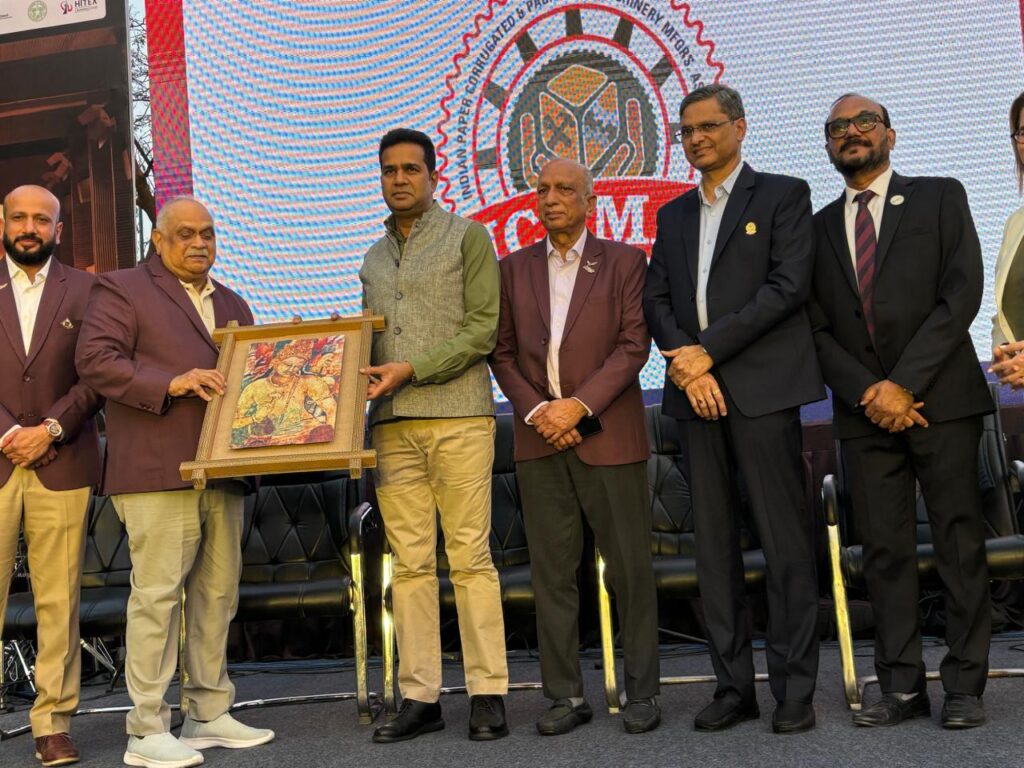
Mr Sanjay Kumar seen being presented a photo frame made out of corrugated boards
Hyderabad, Feb 18: Sanjay Kumar, Special Chief Secretary to the Government of Telangana, graced the curtain raiser programme of the forthcoming global event, the ICCA Global Summit 2027, held at Hitex on Wednesday evening.
Addressing the gathering, he said it was a matter of great pride that the ICCA Global Summit 2027 would be held in Hyderabad for the first time in the 64-year history of the global corrugated packaging body. He noted that this milestone would place Telangana firmly on the global industrial map and reflect Hyderabad’s rising stature as an international industrial hub.
Speaking on the occasion, Sanjay Kumar said he was amazed to learn about the versatility of corrugated packaging material, including its use in making makeshift hospital beds capable of supporting multiple adults. He referred to the innovative use of corrugated cardboard beds at the 2020 Summer Olympics held in Tokyo, where athletes were accommodated on sturdy corrugated cardboard frames at the Olympic Village. He also expressed surprise at seeing artefacts such as a statue of Mahatma Gandhi crafted entirely from corrugated packaging material.

Mahatma Gandhi made from Corrugated Packaging Material
“Corrugated packaging is not just a box — it is the backbone of modern supply chains. From farm produce and pharmaceuticals to e-commerce and electronics, corrugated packaging ensures products reach consumers safely, efficiently, and sustainably. Its strength-to-weight ratio, recyclability, and cost-effectiveness make it indispensable in today’s fast-moving economy,” he said. Emphasising sustainability, he added that corrugated packaging is biodegradable, largely made from renewable resources, and highly recyclable. “Every used carton can be converted back into paper and reintroduced into the value chain. That is true environmental responsibility in action,” he remarked.
He further stated that the corrugated packaging sector supports thousands of MSMEs, generates significant employment, and drives innovation in automation and design. As global trade expands and e-commerce accelerates, he observed, the importance of corrugated packaging will continue to grow. “It is not merely a packaging material — it is a strategic industry that powers economic growth while protecting the planet.” He assured full support from the Telangana Government and said the state would look forward to tangible outcomes from the summit, including new industrial investments.
ML Agarwal, Chairman of Central India Packaging and Chairman of the ICCA Board of Directors — the first Indian to hold this prestigious position in ICCA’s 64-year history — said corrugated packaging offers endless possibilities for innovation, sustainability, and growth. He noted that Hyderabad hosting the summit was the result of collective efforts by industry leadership.

Ankit Agarwal, Managing Director of Central India Packaging, India Director on the ICCA Board, and President-Elect of FCBM, said their coordinated efforts had been instrumental in securing Hyderabad as the host city for the ICCA Global Summit 2027, scheduled to be held from January 11 to 13, 2027.
Eleni Despotou, Chief Executive Officer of the International Corrugated Case Association (ICCA), said that whenever sustainability is discussed, corrugated packaging is the first material that comes to mind. She highlighted that corrugated packaging is approximately 95 percent recyclable and among the most recyclable packaging materials globally. Describing her visit as her second to India and first to Hyderabad, she said she was delighted to be in the country and impressed by its industry growth.
The speakers announced that Hyderabad will host three major corrugated packaging industry events in January 2027: the ICCA Global Summit 2027, the FCBM CorruPack Summit 2027 representing over 3,000 manufacturers with industry sales exceeding US$ 8.9 billion, and the CorruPack International Expo 2027, a global exhibition expected to feature more than 250 exhibitors, 1,500 delegates, and 300 international industry leaders. These events will position Hyderabad as a global hub for eco-friendly packaging innovation.
India’s corrugated packaging industry, currently valued at approximately ₹90,000 crore, is among the fastest-growing in the world. The global corrugated packaging market, valued at USD 170.96 billion in 2024, is projected to reach USD 179.5 billion in 2025, growing at a CAGR of 5.1 percent through 2030. India is expected to be a key growth driver, with the domestic market projected to expand from USD 7.8 billion to USD 18.6 billion by 2033 at a CAGR of 9.6 percent, driven by e-commerce, FMCG, food, pharmaceutical, electronics, and organised retail sectors.
Over 250 industry veterans attended the curtain raiser event. The organisers showcased artefacts made from corrugated packaging material, including the podium used for the function and a specially designed photo frame presented to the Chief Guest, demonstrating the creativity and strength of corrugated board applications.
18, Feb 2026
GNA Energy Launches ‘Vidyut AI’ at AI Impact Summit Under Ministry of Power Framework
Feb, 18 :Gurgaon-headquartered GNA Energy today launched ‘Vidyut AI’ at the India AI Impact Summit. The platform has been developed as an AI-enabled intelligence layer designed to work in sync with the government’s India Energy Stack (IES) framework.The India Energy Stack is the Ministry of Power’s proposed digital public infrastructure for the electricity sector aimed at enabling seamless data exchange, transparency and innovation across the power ecosystem.
GNA Energy, a Central Electricity Regulatory Commission (CERC)-regulated over-the-counter (OTC) platform, said Vidyut AI will transform structured power-sector datasets into real-time decision support for utilities, generators, traders and regulators.The company said the platform is aimed at accelerating data-driven decision-making across the electricity value chain at a time when India’s power markets are witnessing rapid structural shifts, increasing short-term trading volumes and growing regulatory oversight.
“India’s power sector generates enormous volumes of operational and market data every day. Vidyut AI transforms this complexity into clarity. By enabling instant access to actionable intelligence, we are empowering utilities, generators and market participants to make smarter, faster decisions,”
said Sanjeev Kumar, Managing Director, GNA Energy.
According to the company, Vidyut AI bridges the gap between granular system data and boardroom-level decisions by converting raw data into automated summaries, trend analyses and downloadable reports.For distribution companies (DISCOMs) the platform provides real-time access to procurement data, deviation settlement mechanism (DSM) exposure, open access transactions and demand forecasting analytics. Power generators can track bid performance, plant dispatch patterns, clearing prices and revenue optimisation metrics. Transmission utilities and system operators can gain simplified access to congestion patterns and grid performance analytics while traders and market participants can use natural-language search to compare contracts and track price trends.Regulators and policymakers can also leverage the system for automated trend analysis and faster regulatory impact assessment, the company said.
GNA Energy stated that Vidyut AI is been built on a secure and scalable architecture suitable for enterprise-grade deployment with a strong emphasis on transparency, compliance and market efficiency.The launch comes amid a broader push for technology-led reforms in India’s power sector including digitisation of operations, enhanced market transparency and data-backed governance.GNA Energy is a CERC-regulated OTC platform focused on building next-generation digital infrastructure for India’s electricity markets with expertise spanning market design, utility operations and data management.
18, Feb 2026
A Maldives Mushroom on a Mission

Mo is a mushroom on a mission. As the latest in a long line of Planetary Wellbeing pioneers at Four Seasons Resorts Maldives he is – in his own words – “tired of being kept in the dark.”
“We’re the evolution of two decades of earth-friendly initiatives here at Four Seasons Maldives, yet these Four Seasons people hardly ever talk about us, they just get on with it,” bemoans the outspoken oyster mushroom. “That’s why I’m taking a stand as Official Spokesmushroom.”
By “us,” Mo is referring to his fellow 150-strong United Featheration of chickens, ducks and quail; the 100-variety Garden Gang of herbs, vegetables and fruits; the 8,000 or so Orchid Crew and many more unsung island-based heroes.
Every day, some five kilograms (11 pounds) of Mo’s mushroom brethren, along with huge quantities of Garden Gang colleagues, put themselves forward as Zero-Mile Champions. They travel 200 to 400 metres (650-1,300 feet) by bicycle across sandy terrain to numerous on-site restaurants (within the Resort). Once there, they take star turns in a wide range of soups, salads, mains, desserts and drinks.

“It’s a tough job – we don’t ever get to see those who volunteer,” says Mo. “Unlike the lazy show-off orchids – there are 8,000 of those working here yet only 500 of them are ever on duty for a month at a time before taking a six-month break to revitalise; it’s a scandal.”
In the Blu Beach Club kitchen, Mo passes the time between arrival and evening service by chatting with his fellow Zero Mile volunteers. “There’re quite a bit of manhandling and hanging around,” he says, “but you could say it’s our life’s work so we don’t mind.”
Dinner is a taste explosion of signature dishes, packed with island-fresh flavours: Landaa Happy Egg served with local pumpkin cream, seeds and seaweed; White Snapper Carpaccio with Kulafilha leaf, melon and passion fruit; Slow-Cooked Rainbow Runner with cauliflower, dill and roasted lemon.

After dinner, Mo is unavailable for comment. But back in the Mushroom House, his son is not concerned: “If he’s not still in the kitchen he will have gone to the Compost Club to rest and regenerate. We honestly give our all; Four Seasons really should give us more credit.”
Watch this space for more on-the-ground updates from the Resorts’ Planetary Wellbeing pioneers as they reveal how Four Seasons is doing things differently in the Maldives.


