


7, Oct 2026
RBI Raises Repo Rate by 25 Bps to 5.50% Amid Rising Inflation and Global Uncertainty
New Delhi, Oct 7: The Reserve Bank of India (RBI) on Wednesday raised the benchmark repo rate by 25 basis points to 5.50 per cent, marking a significant shift in its monetary policy stance amid rising inflation, elevated crude oil prices and growing global economic uncertainties.
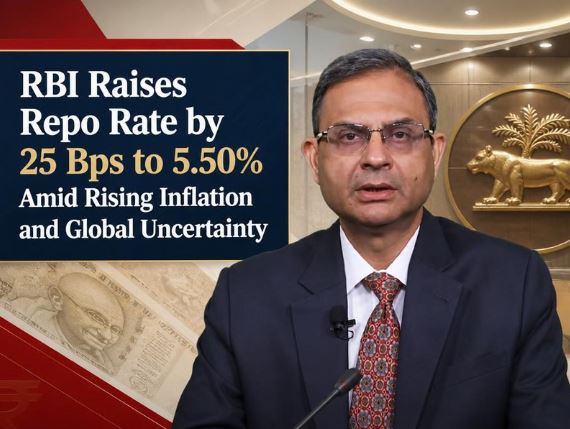
The decision was taken by the six-member Monetary Policy Committee (MPC) headed by RBI Governor Sanjay Malhotra after a three-day review of the domestic and global economic situation.
Following the hike, the Standing Deposit Facility (SDF) rate has been adjusted to 5.25 per cent, while the Marginal Standing Facility (MSF) rate and Bank Rate have been raised to 5.75 per cent.
Inflation, Crude Prices Drive Rate Decision
The RBI’s decision comes against the backdrop of intensifying inflationary pressures and a sharp rise in international crude oil prices, with benchmark prices moving above $100 a barrel amid the ongoing West Asia crisis.
The central bank had maintained the repo rate at 5.25 per cent for an extended period. The latest increase marks the first hike since February 2023, according to the policy assessment.
The MPC’s decision also reflects concerns over the global inflation outlook, with major central banks facing renewed pressure to tighten monetary policy.
Inflationary Risks Mount
India’s retail inflation has been moving higher, with Consumer Price Index (CPI) inflation rising to 4.82 per cent in August from 4.45 per cent in July.
Economists have warned that inflationary pressures could strengthen further due to higher energy costs and weather-related risks. Strong El Niño conditions and below-normal rainfall during October could also affect Rabi crop production, potentially adding to food-price pressures.
Rising global bond yields and tighter financial conditions have further complicated the RBI’s policy choices.
SBI Research Backs Pre-Emptive Action
SBI Research had projected a 25-basis-point rate increase, citing broadening inflationary pressures, worsening global macroeconomic conditions, changing liquidity dynamics and renewed repricing of risks in international markets.
“It would be prudent for us to act pre-emptively rather than be behind the curve,” SBI Research economists said.
With inflation approaching the 5 per cent mark and global uncertainties persisting, economists expect monetary policy to remain closely focused on price stability in the coming months.
The latest rate increase underscores the RBI’s effort to contain emerging inflation risks while navigating a volatile global economic environment.
- 0
- By Neel Achary

7, Oct 2026
Nobel Chemistry 2026: Henri Kagan, Kenso Soai Win Prize for Solving Century-Old Molecular Mystery
Oct 7: French chemist Henri B. Kagan and Japanese chemist Kenso Soai have been awarded the 2026 Nobel Prize in Chemistry for pioneering discoveries that helped explain how molecular asymmetry, or homochirality, can emerge naturally.

Representational Image
The Royal Swedish Academy of Sciences announced the award on Wednesday, recognising the scientists for their groundbreaking work on non-linear effects and autocatalysis in asymmetric organic synthesis.
The two laureates will share a prize of 12 million Swedish kronor.
Breakthrough in a Long-Standing Chemical Puzzle
Many molecules found in nature, including amino acids, occur in two forms that are mirror images of each other. Although these forms have nearly identical chemical properties, living organisms overwhelmingly rely on only one of them.
This phenomenon, known as homochirality, has puzzled scientists for more than a century.
In conventional laboratory reactions, chemists often obtain roughly equal quantities of both mirror-image forms. Kagan and Soai’s research demonstrated that chemical reactions can instead be directed to strongly favour one molecular form, and in certain cases produce virtually only one.
“Henri Kagan and Kenso Soai have provided a solution to a chemical mystery that is over a century old: how homochirality can emerge spontaneously. The chemical reactions they have developed are spectacular,” said Heiner Linke, Chair of the Nobel Committee for Chemistry.
Kagan, Soai Built on Decades of Research
Kagan made a major breakthrough in 1986 when he developed a method that could influence the outcome of chemical reactions and produce a significantly higher proportion of one molecular mirror image.
Soai later built on this work. In 1995, he demonstrated a remarkable chemical reaction capable of developing towards a homochiral state.
His research reached another milestone in 2003, when he reported a reaction that produced only one of two possible mirror-image molecular forms—a phenomenon previously observed primarily in biological systems.
The discoveries opened new possibilities for understanding how molecular asymmetry could arise and become amplified through chemical processes.
Importance for Modern Medicine
The Nobel Academy said the laureates’ work has had a major influence on modern chemistry, particularly in the pharmaceutical industry.
The ability to selectively produce the desired mirror-image form of a molecule can be crucial because different molecular forms may interact differently with biological systems, directly affecting the effectiveness of medicines.
About the Nobel Laureates
Henri B. Kagan, born in 1930 in Boulogne-Billancourt, France, received his PhD from the Collège de France in 1960. He is Professor Emeritus at the former Université Paris-Sud.
Kenso Soai, born in 1950 in Hiroshima, Japan, earned his PhD from the University of Tokyo in 1979 and is Professor Emeritus at Tokyo University of Science.
Their combined discoveries have helped transform scientists’ understanding of asymmetric chemical reactions and provided important insights into one of chemistry’s most enduring questions: how nature came to favour one molecular mirror image over the other.
7, Oct 2026
Odisha Braces for Three Days of Thunderstorms, IMD Issues Yellow Warning
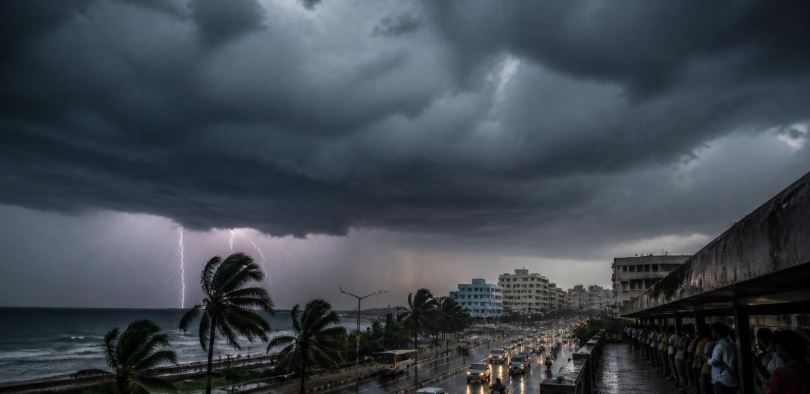
Bhubaneswar, Oct 7 (UDN): Odisha is likely to witness thunderstorms, lightning and gusty winds over the next three days, prompting the India Meteorological Department (IMD) to issue a yellow warning for several districts.
Representational Image
The weather office has advised people to remain alert as thunderstorms accompanied by strong surface winds are expected at isolated places between October 7 and 10.
Thunderstorm Alert for October 7-8
According to the IMD forecast valid until 8:30 am on October 8, thunderstorms with lightning and gusty winds reaching 40-50 kmph are likely at one or two places in Sundargarh, Jharsuguda, Bargarh and Sambalpur districts.
Thunderstorms accompanied by lightning and winds of 30-40 kmph are also likely at isolated places in Balasore, Bhadrak, Jajpur, Kendrapara, Jagatsinghpur, Cuttack, Deogarh, Angul, Dhenkanal, Keonjhar and Mayurbhanj.
More Districts Likely to See Thunderstorms on October 8-9
The weather activity is expected to extend to more parts of the State during the following 24 hours.
From 8:30 am on October 8 to 8:30 am on October 9, thunderstorms with lightning and gusty winds of 40-50 kmph are likely at isolated places over Sundargarh, Jharsuguda, Bargarh, Sambalpur, Deogarh, Angul, Dhenkanal, Keonjhar, Mayurbhanj, Subarnapur, Nuapada and Balangir.
Meanwhile, Balasore, Bhadrak, Jajpur, Kendrapara, Jagatsinghpur and Cuttack may experience thunderstorms with gusty winds of 30-40 kmph.
Thunderstorm Activity to Continue on October 9-10
The weather system is expected to remain active on the third day as well.
Between 8:30 am on October 9 and 8:30 am on October 10, thunderstorms accompanied by lightning and gusty winds reaching 30-40 kmph are likely at one or two places in Balasore, Bhadrak, Jajpur, Kendrapara, Jagatsinghpur, Cuttack, Sundargarh, Keonjhar and Mayurbhanj.
The IMD has advised people to remain cautious during thunderstorms, particularly when lightning and strong winds are occurring, and to follow official weather updates.
7, Oct 2026
KFON Connectivity Strengthens in Kozhikode; Connections Cross 17,000
Kozhikode, Oct 07, 2026: The number of KFON connections in Kozhikode has crossed 17,000, reflecting the growing acceptance of KFON services among households, offices, commercial establishments and government institutions.
The district currently has a total of 17,233 KFON connections, of which 13,744 are household (FTTH) connections. KFON has also provided 964 connections to economically disadvantaged families in the district.
The expansion of KFON connectivity also covers key IT and business destinations in Kozhikode, including Govt Cyberpark Kozhikode, UL Cyber Park and HiLITE Business Park, supporting seamless and reliable internet access for businesses and institutions.
Offering high-speed and reliable internet services at affordable rates, KFON has been playing a key role in strengthening digital connectivity across Kozhikode. By extending broadband services to households and institutions, KFON has helped expand access to digital connectivity across the district.
KFON also provides free or affordable internet services to economically disadvantaged families and government institutions, helping expand access to digital services. The optical fibre network spread across various parts of the district, along with the support of Local Network Providers, has further contributed to the expansion of services.
New household connections can be registered through the ‘Ente KFON’ mobile app or the KFON website. Registrations can also be made by calling the toll-free number 1800 570 4466. For more information on KFON plans and offers, visit KFON website or send a WhatsApp message with “KFON Plans” to 90616 04466.
7, Oct 2026
Odisha Man Quits IT Job, Rides Rapido in Bengaluru to Research Dairy Business
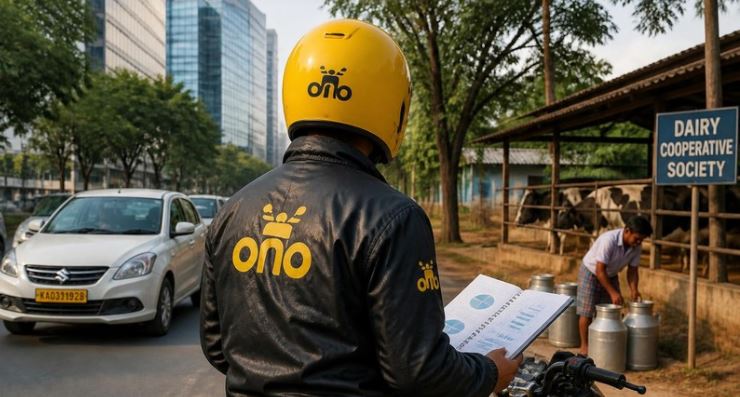
Bhubaneswar, Oct 7 (UDN): An Odisha man has taken an unconventional route to prepare for his entrepreneurial dream—quitting his IT job, moving to Bengaluru and working as a Rapido rider to understand what potential customers want from a dairy brand he plans to build back home.
Representational Image
The unusual approach came to light after a Bengaluru resident shared his interaction with the rider on LinkedIn, describing how a routine Rapido journey turned into a conversation about consumer preferences and business plans.
From IT Job to Bike Rides
The man, identified as Dinesh, comes from a family involved in dairy farming in Odisha. According to the LinkedIn post by Varun Raj, Dinesh wants to expand his family’s dairy operations and eventually develop a dairy-products brand.
Rather than conducting conventional market research, he decided to interact directly with consumers.
After leaving his IT job, Dinesh moved to Bengaluru and started working as a Rapido rider. The job, besides providing him with an income, gives him an opportunity to meet people from different backgrounds and learn about their buying habits.
Turning Passenger Conversations Into Market Research
During one of his rides, Dinesh reportedly asked Raj what dairy products he purchased apart from milk.
The simple question was part of a broader effort to understand consumer preferences, particularly among Bengaluru’s large population of IT professionals.
According to Raj, Dinesh regularly uses conversations with passengers to find out what dairy products they consume, what they look for when buying such products and what offerings might appeal to them.
Plans to Return to Odisha
Dinesh has reportedly given himself about one year to study the market and gather insights from his interactions with passengers.
Once he completes this period, he plans to return to Odisha and apply what he has learned to expand his family’s dairy business.
His approach has attracted attention on LinkedIn, with many users appreciating the practical nature of his strategy.
Instead of relying solely on surveys or market reports, Dinesh is using his everyday interactions with passengers to understand consumer behaviour firsthand—turning his work as a Rapido rider into an unconventional form of market research for the business he hopes to build in Odisha.
7, Oct 2026
Chakli, meet Schezwan: Chheda’s and Ching’s bring the OG snack pack a first ever combo

Mumbai, 07th October, 2026: Some food combinations are planned in research laboratories, others simply happen and become rituals. Chheda Specialities Foods Private Limited brings to you one such combination of two familiar favourites – Chheda’s Chakli and Ching’s Secret Schezwan Chutney as the ‘OG Snack Pack’.
The idea comes from a simple consumer truth: pairing the crunch of traditional chakli with the spicy, garlicky kick of Schezwan chutney. It is a combination that has found its way into homes, offices and snack breaks over the years, particularly in western India. The collaboration now takes that familiar pairing to consumers across the country in one convenient pack, the Chheda’s Chakli + Ching’s Schezwan Chutney pack will be available across all leading quick-commerce platforms such as Blinkit, Swiggy Instamart, Zepto, and modern trade, general trade outlets across India.
Commenting on the launch, Dharmik Chheda, Director, Strategy & Operations, Chheda Specialities Foods Private Limited, said, “Some of the best food combinations don’t come out of a boardroom; consumers create them . Chakli with Schezwan chutney is one of those pairings we have seen people enjoy for years. So, instead of trying to invent something new, we thought, why not give an existing favourite its moment? Chheda’s and Ching’s are both familiar names in Indian households, and bringing the two together felt like a very natural progression. It’s simple, fun and, most importantly, genuinely delicious.”
With the launch, the brands are putting the spotlight on something Indian consumers have long been good at – finding their own unexpected food combinations and making them stick.
7, Oct 2026
IMF-World Bank Annual Meetings: Debt, energy and climate crises loom large in Bangkok
IMF–World Bank Annual Meetings in Bangkok to Test Global Finance Response to Energy, Debt and Climate Pressures
BANGKOK, October 7, 2026: Just weeks after devastating floods hit Bangkok, the Thai capital is set to become the centre of global economic policymaking as finance ministers, central bankers and development leaders gather for the IMF–World Bank Annual Meetings from October 12 to 18.
The meetings come at a critical moment for the global economy, with countries facing a combination of fossil-fuel supply disruptions, rising debt burdens, higher financing costs and increasingly severe climate impacts. For many emerging and developing economies, particularly in Asia, limited fiscal space is making it harder to respond to immediate shocks while continuing to invest in long-term development.
Coming after Bangkok Climate Action Week, the Annual Meetings are expected to put international financial institutions (IFIs) and their shareholders under pressure to demonstrate how finance can be mobilised for economic investment, climate resilience and energy security.
The discussions will also carry significance ahead of COP31 in Antalya and the next replenishment of the World Bank’s International Development Association (IDA), the institution’s concessional financing arm for the world’s poorest countries.
Asia’s energy security takes centre stage
Bangkok’s hosting of the meetings will place Asia’s economic transformation firmly in the spotlight. Nearly three decades after the Asian Financial Crisis, Southeast Asia has emerged as an important engine of global growth, investment and job creation.
However, geopolitical volatility and energy-market disruptions are creating new vulnerabilities. Asia accounts for more than half of global emissions and has a large share of the world’s operating and planned coal capacity, while simultaneously driving a significant portion of the global clean-energy transition.
China has emerged as a major force in clean-energy manufacturing and deployment, while countries across the region are rapidly expanding renewable power, electrification and energy infrastructure.
The region’s dependence on imported oil and gas, particularly supplies from the Middle East, has also exposed economies to price shocks and supply disruptions. For governments dealing with high import bills, inflation and debt pressures, accelerating clean electrification is increasingly being viewed not only as a climate strategy but also as an energy-security and economic-resilience priority.
The Bangkok meetings could therefore see greater attention on country-led investment plans that connect energy security, economic resilience and climate objectives with commercially viable investment pipelines.
Climate finance under scrutiny
Climate finance is expected to be another major issue. Developing economies face rapidly increasing adaptation and resilience requirements, while many of the countries most vulnerable to climate impacts have limited access to affordable finance.
The meetings will provide an important test of how the IMF, World Bank and other multilateral development banks respond to countries simultaneously confronting debt distress and climate risks.
Key discussions are expected to centre on affordable finance, debt sustainability, resilience, concessional funding and the ability of multilateral development banks to mobilise additional private capital.
A major question will be how scarce concessional finance is allocated. Least developed countries and small island developing states often face particularly difficult financing conditions, with commercial borrowing either prohibitively expensive or potentially adding to already unsustainable debt burdens.
Mobilising private capital remains a challenge
While international financial institutions have increasingly highlighted private capital mobilisation, the focus in Bangkok is expected to shift from headline figures to the practical mechanisms required to unlock investment.
These include guarantees, risk-sharing instruments, project preparation facilities, policy support and local-currency financing.
Multilateral development banks will face pressure to demonstrate that these instruments actually attract additional private capital and improve financing conditions for developing economies.
The challenge is even greater in lower-income and fragile and conflict-affected countries, where political, currency and credit risks can discourage private investors.
IMF faces growing energy-transition questions
The International Monetary Fund is also expected to face questions about how it incorporates climate and energy risks into its macroeconomic assessments.
Climate-related disasters and physical risks are increasingly recognised as threats to fiscal stability and economic growth. However, the macroeconomic implications of the transition away from fossil fuels remain more contested.
For vulnerable economies, the ability to withstand shocks without sacrificing long-term investment will be crucial. Timely liquidity support, effective debt restructuring and pre-arranged crisis financing could help countries avoid allowing temporary energy or climate shocks to turn into prolonged development crises.
Pressure for measurable results
Another major theme will be accountability. As climate finance commitments grow, governments and institutions are likely to face increasing demands to demonstrate not simply how much money has been committed, but what that money has achieved.
This includes measuring improvements in clean-energy access, protection of infrastructure and livelihoods, and the distribution of benefits among women, poorer households and vulnerable communities.
The World Bank’s climate strategy will receive particular attention. In June 2026, the Bank extended its Climate Change Action Plan following difficult shareholder negotiations, while retiring its headline 45% climate-finance target.
The focus will now shift toward how the Bank demonstrates climate ambition through actual investments and measurable outcomes.
A broader financial agenda
The Bangkok meetings could also influence the global financial agenda beyond 2026. The final G20 Finance Ministers and Central Bank Governors Meeting of the year is scheduled to take place in Bangkok alongside the Annual Meetings.
Although climate has received less prominence in the formal G20 agenda in 2026, debt, energy security and economic resilience remain closely connected to the global financial outlook.
With the United Kingdom scheduled to assume the G20 presidency in 2027, discussions in Bangkok could help shape priorities for the next phase of international economic cooperation and build momentum toward future climate negotiations.
Experts call for stronger action
Jurei Yada, Associate Director, Finance and Resilience at E3G, said the meetings would be closely watched for signs that the international financial system can help countries strengthen energy security and resilience amid growing volatility.
“Amid a backdrop of multilateral fragmentation, eyes will be on the IMF and World Bank to see how countries can drive the conditions and finance to achieve energy security and resilience in the face of significant volatility,” Yada said.
Salvatore Serravalle, Programme Lead, Global Macro and Finance Resilience at E3G, warned that energy shocks could worsen existing debt and development challenges.
“The energy shock must not become a debt and development crisis,” Serravalle said, arguing for stronger liquidity support, debt restructuring and pre-arranged crisis finance.
Seleha Lockwood, Programme Lead, Public Banks and Development at E3G, stressed the need for public finance to leverage greater private investment while ensuring concessional resources reach the most vulnerable communities.
Danny Scull, Senior Policy Advisor, Public Banks and Development at E3G, said the World Bank would now need to demonstrate its climate ambition through tangible outcomes following the retirement of its headline climate-finance target.
The IMF–World Bank Annual Meetings in Bangkok therefore arrive at a pivotal moment. Beyond discussions about interest rates, debt and growth, the meetings will test whether the global financial architecture can adapt to an era in which energy security, climate resilience, development finance and economic stability are increasingly inseparable.
7, Oct 2026
Johan Sverdrup Crude Hits Record US$24/bbl Premium to Brent as Saudi Pipeline Suspension Tightens European Medium-Sour Supply
LONDON/HOUSTON/SINGAPORE, 7 October 2026 – As Saudi Arabia’s suspension of its East-West pipeline drives medium-sour crude prices above US$140/bbl and European refiners scramble for alternatives, a new Wood Mackenzie analysis finds Johan Sverdrup crude has hit a record US$24/bbl premium to Brent, putting field partners on course for a cashflow windfall of up to US$7.1 billion in 2026 against a US$500 million forecast made at the start of the year.
European refiners, including Poland’s Orlen, expect October Saudi cargoes to be disrupted. Johan Sverdrup, with 0.8% sulphur content, is a natural substitute for those barrels. Buyers bid aggressively for the North Sea grade, driving its price from a typical 3% discount to Brent to a record US$24/bbl premium. As Western Europe’s largest producing oil field and the source of around one third of Norway’s oil output, Sverdrup had the volume and crude quality to fill part of the gap.
Wood Mackenzie’s cashflow analysis is based on published price deck assumptions and field-level production data. At the start of 2026, combined company cashflow from Johan Sverdrup was forecast at US$500 million, based on a 2026 Brent price of US$62.90/bbl and a 3% discount on Sverdrup crude. These are gross pre-distribution cashflow figures at the field level. On the Q3 price of US$85/bbl, that figure rises to US$3.6 billion. If current prices hold through year-end, producing a full-year average of US$111.50/bbl, cashflow reaches US$7.1 billion. Each dollar per barrel adds approximately US$130 million. These projections are Wood Mackenzie estimates and have not been independently verified by the field’s operator or partners.
Norway’s public finances stand to gain significantly as tax receipts from the field are set to rise by US$3 billion to US$4 billion above Wood Mackenzie’s Q1 2026 forecast of US$12 billion. With around 50% of taxes paid the following year, 2027 state revenues are also in line for a boost. Those figures exclude the benefit flowing to the state through Petoro’s 16.94% direct interest in the field and its 67% shareholding in Equinor.
“The numbers here are clear, but so is the conditionality,” said Ross McGavin, Senior Research Analyst, Europe Upstream, Wood Mackenzie. “If current prices hold through year-end, Johan Sverdrup partners are looking at US$7.1 billion in cashflow against a US$500 million forecast made less than nine months ago. Even on our more conservative Q3 price deck of US$85/bbl, the figure is US$3.6 billion. The H2 question is whether the crude premium holds as refiners and Saudi Arabia respond. What is not in doubt is the structural point: Sverdrup’s production resilience and its deep integration into European refining supply chains have made it the default alternative for the continent when North African or Middle Eastern supply is disrupted. That role is unlikely to diminish.”
H1 2026 production averaged 690 kboe/d, 12% above Wood Mackenzie’s base-case forecast of 616 kboe/d, despite the field being expected to decline between 10% and 20% over the year. Full-year output could finish 4% above current estimates depending on how production performs in H2, implying a 12% year-on-year decline rather than 15%. That outperformance adds a further US$500 million to US$1 billion to company cashflows. Both projections remain conditional on H2 price and production outcomes.
For Aker BP, which owns a 31.72% stake, the financial turnaround is the sharpest among the listed partners and is potentially material to its investor guidance. Heavy capital commitments to its Yggdrasil development had been expected to push 2026 cashflow slightly negative. At current prices, Wood Mackenzie estimates the company is on track for a US$1.5 billion net cash inflow, a shift that investors and analysts will be watching against the company’s published outlook. Equinor (42.63%), Petoro (16.94%) and TotalEnergies (8.72%) share the remaining uplift.
Key details:
- 2026 combined cashflow (Wood Mackenzie estimate): US$500 million (start-of-year forecast, Brent at US$62.90/bbl) rising to US$7.1 billion (current-price scenario, full-year average US$111.50/bbl). Gross, pre-distribution, field-level figures
- Norwegian state tax uplift (Wood Mackenzie estimate): US$3–4 billion above the Q1 2026 forecast of US$12 billion; approximately 50% of taxes paid in the following year; excludes benefit via Petoro equity and Equinor shareholding
- Aker BP 2026 cashflow (Wood Mackenzie estimate): Shift from slightly negative to US$1.5 billion net cash inflow; investors should cross-reference against Aker BP’s published guidance
- Full-year production: Could be 4% above current estimate depending on H2 decline trajectory; implies 12% year-on-year decline vs. forecast 15%
–
7, Oct 2026
Odisha Landslide Disrupts Train Services; Several Koraput-Jagdalpur Trains Short-Terminated
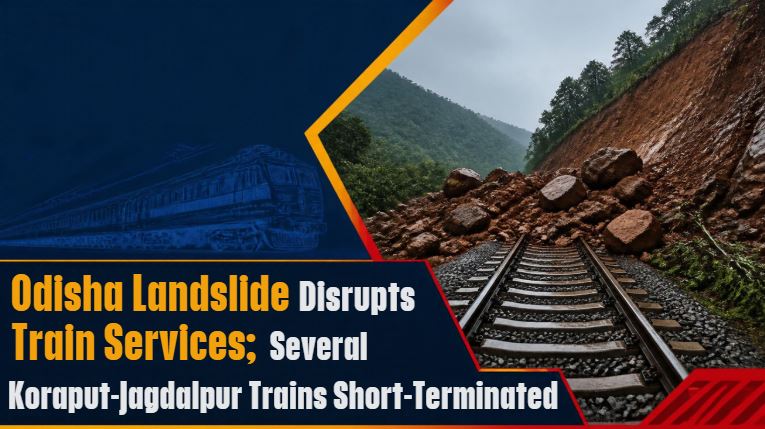
Bhubaneswar, Oct 7 (UDN): Train services on the Koraput-Jagdalpur section have been disrupted following a landslide between Maligura and Chhatariput stations in the Rayagada division.
Representational Image
In view of passenger safety and to facilitate restoration work on the affected stretch, the East Coast Railway has announced temporary changes to several train services.
Passengers travelling between October 8 and 14 have been advised to take note of the revised train schedules, as some services will be short-terminated at Koraput while corresponding return journeys will originate from the station.
Howrah-Jagdalpur Express
The Howrah-Jagdalpur Express (18005) will operate from October 8 to 12 but will terminate at Koraput instead of Jagdalpur.
The corresponding Jagdalpur-Howrah Express (18006) will originate from Koraput from October 10 to 14.
Hirakhand Express Services Affected
The Bhubaneswar-Jagdalpur Hirakhand Express (18447) will also be short-terminated at Koraput from October 8 to 12.
Meanwhile, the Jagdalpur-Bhubaneswar Hirakhand Express (18448) will originate from Koraput between October 9 and 13.
Passenger Train Services Also Hit
The disruption will also affect passenger train operations on the route.
The Visakhapatnam-Kirandul Passenger (58501) will terminate at Koraput from October 8 to 12.
Its return service, the Kirandul-Visakhapatnam Passenger (58502), will also originate from Koraput during the same period.
Restoration Work Underway
The temporary changes have been introduced to facilitate clearance and restoration work following the landslide and to ensure safe movement of passengers.
Railway authorities are expected to restore normal operations on the affected section once the track is cleared and declared safe for train movement.
Passengers planning to travel on the Koraput-Jagdalpur route during the affected period are advised to check the latest railway updates before commencing their journey.
7, Oct 2026
BIScience Partners with Maiden Century to Bring Global Web Traffic Data to IDEA
The partnership integrates BIScience global web traffic intelligence into Maiden Century’s IDEA platform, expanding KPI modeling and forecasting across hundreds of public companies and global markets.
NEW YORK, NY, Oct 07. BIScience, a global leader in digital and behavioral data intelligence, today announced a strategic data partnership with Maiden Century, a technology and analytics infrastructure provider for institutional investors and alternative-data providers. Through the partnership, BIScience global web traffic data is now available on Maiden Century’s IDEA platform, giving investors a new source of digital demand intelligence for company and KPI forecasting.
The new BSC TRFC dataset measures sessions and unique visitors across digital properties behind hundreds of publicly traded companies. Built on BIScience’s global human panel of 35 million opt-in users, the data is delivered weekly at the aggregate sub-domain level on a four-day lag. Maiden Century maps each property to the public companies that own or monetize it and models the associated business KPIs.
The initial integration covers 776 merchant properties mapped to 399 public-company tickers across 25 exchanges, including 116 companies listed outside the United States. It supports 887 distinct KPIs across 3,307 mappings, with 44 percent tied to segment, regional, or brand-level business lines.
“A decade ago web traffic told you something about a company’s marketing. Today, for a large share of the companies we cover, it is the transaction – the booking, the sign-up, the checkout, the renewal,” said Jack Killea, Head of Data Strategy & Partnerships at Maiden Century. “As more revenue moves onto digital properties, measuring those properties accurately stops being a supplementary signal and starts being a primary one. That shift is why we keep investing in this category, and why we’re thrilled to formally partner with BIScience and have their web traffic data on the IDEA platform.”
Initial backtesting in IDEA shows the dataset’s potential as a forecasting signal. Across 1,548 comparable ticker-and-KPI pairs, BSC TRFC ranked first on 178 and within the top two on 385, against a median comparison set of six datasets. On non-US listings, it ranked first on 19 percent of contested pairs, compared with 10 percent for US listings. Across the trailing reporting period, it also came closer to the reported company figure than sell-side consensus on 60 reporting events spanning 50 companies.

“Digital behavior increasingly reflects business performance directly,” said Assaf Toval, Co-Founder and General Manager at BIScience. “By combining BIScience’s large-scale, real-world behavioral data with Maiden Century’s company mapping and KPI forecasting capabilities, this partnership gives investors a powerful way to translate digital activity into actionable financial intelligence.”
BIScience’s web traffic methodology is grounded in real human behavior collected through its global opt-in panel and normalized to produce comparable estimates across markets, devices, and digital properties.