


20, May 2026
Histria Books Signs Former US Navy Commander Ron Terrell for Debut Thriller Book
Yemen-set political thriller draws on author’s years of US Navy service in the Middle East; publication scheduled for spring 2027 under the Histria Fiction imprint.
NEW YORK — Histria Books, an independent US publisher distributed by Simon & Schuster, has signed former US Navy Commander Ron Terrell for his debut novel, The Last Cocktail in Yemen. The book is the first installment in a planned trilogy and will publish in spring 2027 under the Histria Fiction imprint.
Set in Yemen during the rise of the Houthi movement, the novel follows Jack Marshall, a US Navy officer stationed in Sana’a, and Nur al-Sayed, an Egyptian journalist, whose relationship unfolds amid political turmoil and personal danger. Terrell draws on years of firsthand experience in Yemen and the Middle East region.

“Ron Terrell brings to the thriller shelf what most novelists have to research from a distance: actual experience on the ground in the country the book is set in. That shows on every page.” — Dr. Kurt Brackob, Director, Histria Books
A Foreign Area Officer specializing in the Middle East and Arabic language, Terrell retired from the Navy at the rank of commander. Originally trained as a civil engineer at Purdue University, he later earned a master’s degree in security studies from the US Naval War College, pursued advanced Middle East regional studies at the US Naval Postgraduate School, and studied Arabic at the Defense Language Institute.
He served across the Middle East, including an assignment with US Naval Forces Central Command, where he led maritime engagement with Yemeni and Omani naval forces. He lived in Bahrain during the Arab Spring and traveled frequently to Yemen during the rise of the Houthi movement, working alongside local naval forces and, at times, US special forces.
“I wanted to write the Yemen I knew, not the Yemen of the headlines. Everything Jack and Nur live through was inspired by something I saw or someone I met.”
— Ron Terrell
Now living in Puerto Rico, Terrell spends his time writing, diving, and enjoying family and coastal life. He is currently writing the second volume of the trilogy.
Firehouse Communications & Partners is the originating agency and publicist for Ron Terrell and The Last Cocktail in Yemen.
About Histria Books
Histria Books is an independent US publisher with twelve imprints spanning literary and commercial fiction, children’s, academic, romance, science fiction and fantasy, young adult, Christian, classics, and nonfiction, including the Center for Romanian Studies. Histria Books is distributed by Simon & Schuster. Learn more at histriabooks.com.
About Firehouse Communications & Partners
Firehouse is a leading independent reputation management and publicity firm with a track record of bringing first time authors to market.
Its principal, Simon Fowler is also a leading adviser to governments and global corporates.
Author website: ronterrell.com
MEDIA CONTACTS
Histria Books
Diana Livesay
Publicity
diana@histriabooks.com
Firehouse Communications & Partners
Simon Fowler
Publicist
simonbf@firehousecomms.com
+44 7717 393772
Histria Books
7181 N. Hualapai Way, Suite 130-86, Las Vegas, NV 89166 USA
HistriaBooks.com
(561) 299-0802
- 0
- By Neel Achary

20, May 2026
The Golem’s Holocaust by Scott Eveloff, now available from Histria Books
The Golem’s Holocaust by Scott Eveloff now available from Histria Books
Histria Books is pleased to announce the release of The Golem’s Holocaust by Scott Eveloff. This novel is published by Histria Fiction, an imprint of Histria Books dedicated to outstanding original works of fiction.
In The Golem’s Holocaust, Scott Eveloff merges the brutal reality of Nazi-occupied Europe with ancient Jewish mysticism. The novel follows Shayna, a young Jewish girl, and Emet, a mythical Golem summoned to protect his people from destruction.

What makes this approach stand out is how it reimagines history not just as a record of endurance, but as a site of supernatural defiance. Instead of focusing purely on tragedy, Eveloff gives physical form to cultural resilience and the desire for vengeance. Bringing folklore to life against the backdrop of the Holocaust shifts the lens away from victimhood and toward raw, mythical agency. The book asks difficult questions about survival, justice, and the moral weight of fighting back against absolute evil. Readers looking for historical fiction that takes bold risks will find a fresh, visceral exploration of collective trauma and the enduring power of myth.
Scott Eveloff MD is a retired pulmonary physician with thirty years of clinical experience and past appearances on The Dr. Oz Show, ABC’s 20/20, and Inside Edition. His writing is fueled by a fascination with historical mysteries, the supernatural, and a lifelong dedication to uplifting the disadvantaged. Now spending his retirement “resuscitating plot lines instead of patients,” Dr. Eveloff enjoys traveling with his wife and writes in enduring memory of his late son, Andrew, whose boundless enthusiasm continues to inspire his characters.
The Golem’s Holocaust by Scott Eveloff, 264 pp., ISBN 978-1-59211-722-2, is available at HistriaBooks.com and from all major book retailers. This title is also available as an ebook. Titles published under the imprints of Histria Books are distributed in the United States and Canada by Simon & Schuster and in the rest of the world through Unified Book Distribution. For information on publishing with Histria Books, please visit HistriaBooks.com or contact us at info@histriabooks.com.
Histria Books
7181 N. Hualapai Way, Suite 130-86, Las Vegas, NV 89166 USA
HistriaBooks.com
(561) 299-0802
20, May 2026
Hatsun Agro Product Announces Phenomenal 1000 percent Dividend
Mumbai, May 20: Hatsun Agro Product Ltd, India’s largest dairy company in the private sector, announced its FY 2026 results, marking another year of continuous profitable growth.
Revenue from operations for FY26 stood at ₹ 9,959.22 crores, compared to ₹ 8,699.76 crores in FY25, marking a growth of 14.48%. EBITDA for the year was ₹ 1,190.34 crores as against ₹ 1,029.67 crores in the previous year, registering a growth of 15.60%. Profit after tax for FY26 came in at ₹ 356.20 crores, up from ₹ 278.81 crores in FY25, reflecting a growth of 27.76%. These figures reflect a year of sustained progress, providing the momentum to scale impact while maintaining a steadfast commitment to operational excellence.
For the fourth quarter, HAP recorded revenue from operations of ₹ 2,577.63 crores. EBITDA for the quarter was ₹ 237.87 crores. Profit after tax stood at ₹ 50.89 crores.
Commenting on the performance of the year, Mr. R G Chandramogan, Chairman, Hatsun Agro Product Ltd said; “Our focus on operational efficiency has successfully reduced our debt-to-equity ratio from 1.44 in FY 2023-24 to 0.68 in FY 2025-26 in two years despite significant investments and also strategic acquisition. This strengthened financial position provides the company with the flexibility to invest in future projects while continuing to reward our stakeholders.
He also mentioned that the receivables as of 31st March 2026 stood at 0.17 days of sales as a benchmark to the industry allowing profitability with better liquidity.
Further, HAP’s long-term credit rating has been upgraded to AA (Stable) by the credit rating agency (CRISIL Ratings Limited), reflecting the Company’s consistent financial performance, prudent capital management, and strong operational efficiency.
He also added “Hatsun remains an industry outlier, delivering superior operating profits with efficiency. This success is driven by our market-leading consumer brands, namely, Arun, ibaco, Arokya, Hatsun, HAP Daily and Milky Moo. In line with our policy of providing consistent uninterrupted dividends for over two decades and the present reduced debt with potential to invest for the future, we are pleased to announce a record interim dividend of 1000%.”
HAP continued to strengthen its consumer brand portfolio across categories during the year. Sustained investments in product expansion, distribution and operational efficiency supported steady growth across markets while reinforcing the company’s long-term focus on scale, profitability, and value creation for shareholders.
20, May 2026
Kardome Voice AI Reaches Mass Market with LG OLED TV Deployments
May 20, 2026 – Kardome achieves a major consumer electronics footprint with LG TVs powered by Kardome’s Spatial Hearing AI for human-like voice localization and isolation.
Elevating the Home Entertainment Experience
Kardome’s Spatial Hearing AI technology is now commercially deployed in LG’s flagship OLED TV series, completing its pivotal transition from development to mass-market production. This deployment represents a significant leap in voice user interface (voice UI) performance, enabling LG’s OLED TVs to locate and focus on individual speech with human-like accuracy, even in high-background noise environments typical of modern living rooms.
By utilizing Kardome’s proprietary Spatial Hearing AI technology, LG can now provide its customers with:
- Unmatched Voice Isolation: The “No-Mute” Experience: Kardome’s technology locates and isolates individual voices in real-world settings, distinguishing the user’s voice from background noise, such as a vacuum cleaner, multiple people speaking at once, or even the TV’s own playback. For the customer, this means they no longer have to reach for the remote to mute the TV or shout over other people talking just to change a setting.
- Human-Like Spatial Awareness: Unlike traditional VUI, Spatial Hearing AI enables the TV to “hear” like a human by identifying the speaker’s location and focusing on their specific voice. This allows for natural, seamless interaction regardless of the number of people in the room or the complexity of the acoustic environment.
Global Reach and Expansion
The Kardome-powered LG OLED TVs are now available globally, with a projected target of millions of units for 2026, ensuring that customers worldwide can experience the next generation of voice-enabled interaction.
While the current TV integration focuses on Spatial Hearing AI technology for TVs, both companies continue to explore further expansion into smart appliances, audio products, and the automotive sector.
Leadership Perspectives
“Kardome’s Spatial Hearing AI has proven itself in real-world consumer environments, and we are proud to bring this capability to our OLED TV customers worldwide. The deployment reaffirms LG’s commitment to delivering intuitive, intelligent user experiences through cutting-edge technology partnerships.” — Jungho Kwak, Head of MS SW Platform Development Division, LG Electronics
“Reaching commercial deployment with LG at this scale is a defining moment for Kardome and for the voice AI category. Our Spatial Hearing AI technology is now in the hands of millions of consumers globally, and this is just the beginning. We are excited to continue expanding the scope of our collaboration with LG and to bring Spatial Hearing AI to even more product categories.” — Dani Cherkassky, CEO, Kardome
20, May 2026
PPDS lands experienced business leader Nicole Rutherford as new Event Marketing Specialist in North America

Amsterdam, May 20: PPDS, the exclusive global provider of Philips Professional Displays and complementary solutions, is excited to announce the latest key addition to its ever strengthening team in North America, with the appointment of Nicole Rutherford as new Event Marketing Specialist.
An accomplished business owner, leader, and marketing professional of over 10 years, multi talented Nicole brings a tidal wave of knowledge, experience, and entrepreneurial flair to PPDS’ thriving North America team with an influential role in the company’s local and international growth ambitions.
Based in Hudson, Florida, and reporting to Director of North America Marketing, Megan Lipinczyk, Nicole has enjoyed a broad and accomplished career. Beginning as a teacher, she transitioned into B2B marketing in 2021, specialising in project management, stakeholder communications, event execution, and more.
With a proud track record in delivering growth to local and international organisations, Nicole is also the co owner of a successful family fishing business, utilising her professional marketing skills – through digital and physical means – to drive awareness and support the growth of a successful tackle shop and charter business.
Buoyed by success / hooked on technology
Kicking off several key business announcements ahead of InfoComm 2026 (June 13-19), in her role as Event Marketing Specialist Nicole will support PPDS’ day to day marketing efforts with a strong focus on events, partner engagement, and sales enablement.
These responsibilities will incorporate coordinating logistics for trade shows and regional events, managing marketing assets, supporting digital and social content, and working with both national and regional partners to help drive brand awareness and engagement.
InfoComm 2026
Hitting the ground running, among Nicole’s first duties include supporting and planning PPDS’ exhibition activities (including stand design and logistics) at InfoComm. Nicole will be present on Philips Booth C9000 throughout the show, with her diary now open for meetings. Please drop by and say hello.
Discussing her new role, Nicole explained it was PPDS’ history of innovation and reputation for quality that attracted her to the role, describing it as the “perfect course” for the next stage of her career.
Nicole commented: “I am delighted to have become part of the PPDS family and to join the incredibly talented team on the next stage of the company’s growth journey.”
“While I’m new to the AV industry in a formal sense, I bring extensive hands on experience with technology and events that translates well to professional AV marketing. Much of my career has been centred around leading initiatives, guiding teams through change, coordinating large scale educational events, developing digital and social content, and translating technical information into clear, audience focused messaging. It feels like all my experience and everything I’ve learnt to date has been leading to this point.”
Megan Lipinczyk, Director of North America Marketing at PPDS, said: “Since walking through the door, Nicole has demonstrated a highly organized, proactive, and detail driven approach to marketing execution, with core strengths in event planning, cross functional communication, and attention to detail.
Bruce Wyrwitzke, Senior Director North America at PPDS, added: “As we grow and evolve as a business, so do our approaches to our communications and the way we present ourselves to the market. It’s not about bringing in the person with the most experience in AV; it’s about adding the best talent for our needs. Nicole’s background and extensive interchangeable skills made her the ideal candidate for this important role and have shone through ever since. On behalf of the team, I welcome Nicole to the company and wish her every success.”
20, May 2026
CaratLane Partners with Ashlesha Thakur to Spotlight Natural Diamond Jewellery

Chandigarh, May 20: CaratLane – A TATA Product has recently signed up Ashlesha Thakur for its latest campaigns spotlighting its accessible natural diamond jewellery range. Recognised for her compelling performances and relatability in popular OTT content, the young actress resonates strongly with a new generation of consumers who value authenticity, self-expression, and ease.
As part of this association, Ashlesha will front CaratLane’s campaigns spotlighting its range of accessible natural diamond jewellery — Shaya Diamonds crafted in 925 silver, and 9KT gold. These collections reflect the brand’s commitment to making fine jewellery more approachable, everyday, and relevant for a younger demographic.
Saumen Bhaumik, MD – CaratLane, said, “Natural diamonds are among the rarest creations of nature, formed over a billion years—making them truly precious. Yet, rarity and preciousness need not put them out of reach. Through our 9KT gold and Shaya Diamond range in 925 silver, we are making natural diamond jewellery more attainable, without compromising on its inherent value and beauty. Ashlesha’s genuine connect with younger audiences makes her an ideal face for this range.”
Ashlesha Thakur remarked, “I’m really excited to be associated with CaratLane. The brand has always felt ahead of the curve when it comes to design and variety. I was genuinely impressed by how beautifully the silver diamonds & 9KT gold have been brought to life. It’s stylish, accessible, and something I know so many girls my age would love to indulge in.”
Customers can explore these designs in any of the 370+ stores in India. Consumers seeking convenience can transact online on www.caratlane.com. The brand also offers a convenient 2-day fast delivery service in metro cities and Try-at-home and Live Video Call services across 100+ cities in India.
20, May 2026
AAEON’s EPIC-BTS9 Delivers Intel Core Series 2 Processing on a 4″ Single-Board
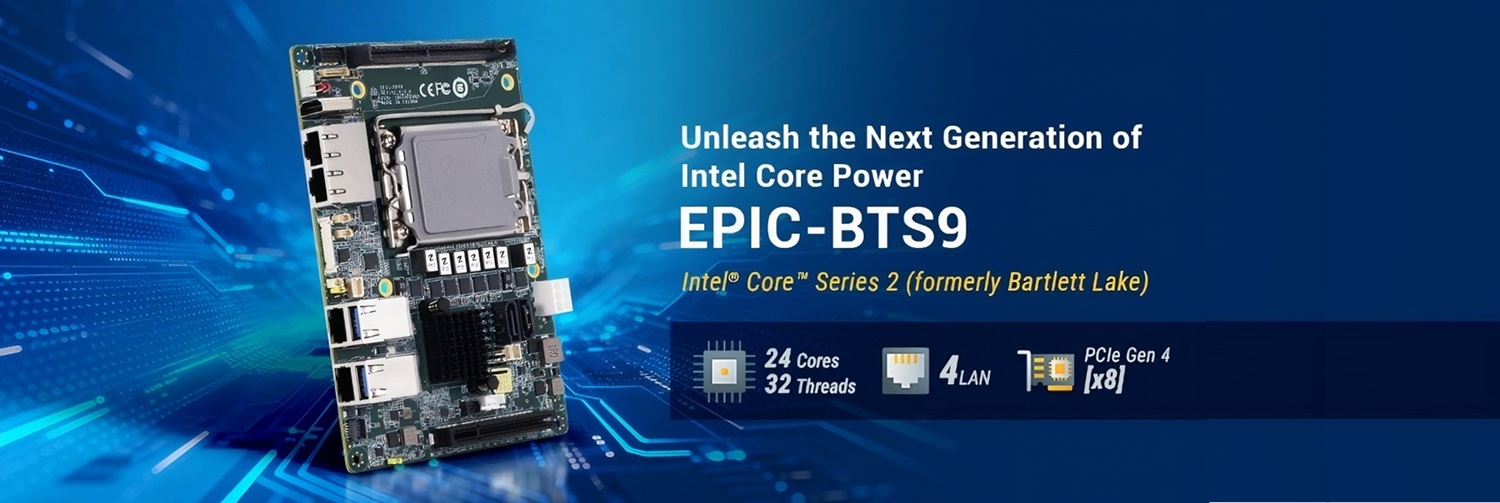
With up to 65W socket-type CPU support, quad-LAN, and eight-lane PCIe Gen 4 expansion, AAEON’s EPIC-BTS9 is positioned as a foundation for smart manufacturing and industrial robotics.
(Taipei, Taiwan – May 20, 2026) AAEON (Stock Code: 6579), a leader in industrial PC solutions, has released the EPIC-BTS9, the latest addition to its 4″ EPIC Board portfolio, making it the company’s first single-board to support up to 65W socket-type CPUs from the new Intel Core Series 2 socket-type processors (formerly Bartlett Lake).
While primarily developed for use with Intel Core Series 2 processor CPUs, which grant up to 24 cores and 32 threads of processing performance, the EPIC-BTS9 is also pin-to-pin compatible with 12th, 13th, and 14th Gen Intel Core processors, up to 65W.
In addition to its cross-generation CPU compatibility, the EPIC-BTS9 is available in SKUs equipped with a choice Intel R680E, Q670E, or H610E chipsets, with the board’s Intel R680E Chipset SKU offering ECC (Error-Correcting Code) support to the 64GB of dual-channel DDR5 system memory on offer via two SODIMM slots.
The EPIC-BTS9’s I/O comes with a total of four LAN ports, three running at 2.5GbE with hardware timestamping, and one at 1GbE speed. These are joined by two USB Type-A ports offering USB 3.2 Gen 1 and Gen 2 signals, respectively. Rounding off its physical I/O is a HDMI 2.0 port.
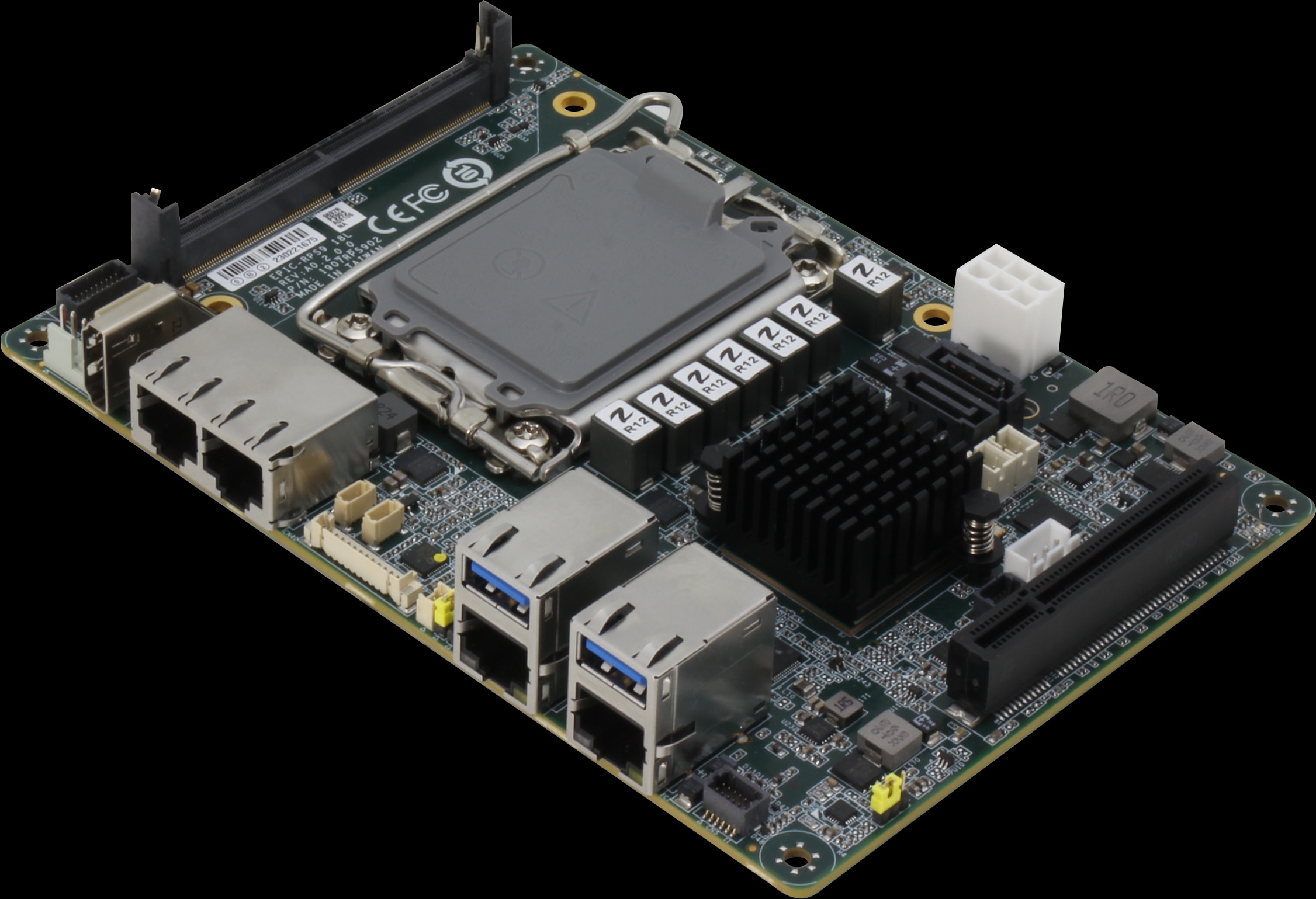
For internal connectors, AAEON’s positioning of the board for industrial AI and smart manufacturing makes sense, with dual COM connectors for RS-232/422/485, an 8-bit GPIO, and SMBus. I2C is also available when running Windows, rather than Ubuntu, and can be changed by BOM. The board also offers headers for both VGA and eDP 1.4, the reasoning for which being to allow simplified integration with existing industrial display panel setups.
The EPIC-BTS9 offers versatile expansion options, with the main standout being an eight-lane PCIe Gen 4 slot, which can be used for AI accelerators, graphic capture cards, or additional storage needs. Meanwhile, the board hosts M.2 2280 M-Key, M.2 3052 B-Key, and M.2 2230 E-Key slot for additional storage and wireless communication module installation.
The EPIC-BTS9 is now in mass production, with samples available for order on the AAEON eShop.
19, May 2026
Pooja A Gor Turns Fearless Cop in Hungama OTT’s Crime Thriller Looteri Dulhan

Hungama OTT, one of India’s leading digital entertainment platforms, is all set to premiere its gripping crime drama Looteri Dulhan on 19th May 2026. At the heart of the series is Sub Inspector Sandhya Yadav, portrayed by Pooja A Gor, a fearless and determined officer navigating a bizarre crime wave that has shaken Madhya Pradesh.
Sandhya Yadav, played by Pooja A Gor, is far from a conventional heroine. Sharp, disciplined, and emotionally layered, Sandhya finds herself investigating a string of mysterious cases where brides loot their grooms and disappear overnight.
Talking about her character, Pooja A Gor said, “What attracted me to Looteri Dulhan was how emotionally layered Sandhya is. She is strong and fearless on the outside, but internally she’s constantly battling judgment, expectations, and the pressure to prove herself. She isn’t just solving a case, she’s fighting for her own identity in a world that constantly tries to define women in limited ways.”
She further added, “The dynamic between Sandhya and Maya is what makes the story so gripping. They stand on opposite sides of the law, but both are shaped by survival and patriarchy in different ways. As an actor, it was exciting to explore a character who is ambitious, vulnerable, obsessive, and empathetic all at once. Sandhya’s journey is intense, emotional, and deeply human.”
Get ready for a thrilling cat-and-mouse chase packed with deception, emotion, and power as Looteri Dulhan premieres on Hungama OTT on 19th May 2026.
19, May 2026
US Approves Apache Helicopter, M777 Support Deal for India Worth $428 Million
New Delhi/Washington, May 19 (BNP): In a significant boost to bilateral defence cooperation, the United States has approved a military support package worth over USD 428 million for India, covering sustainment support for AH-64E Apache attack helicopters and M777A2 ultra-light howitzers, according to the US Department of State.

Representational image
The approved package includes an estimated USD 198.2 million for support services and related equipment for Apache helicopters, aimed at ensuring operational readiness through engineering, logistics, technical support, training, and maintenance assistance. Major US defence firms Boeing and Lockheed Martin are expected to serve as the principal contractors for the Apache support programme.
In addition, the US has cleared a USD 230 million long-term sustainment support package for India’s M777A2 ultra-light howitzers, which are already in service with the Indian Armed Forces. The package includes spare parts, repair support, technical assistance, training, and logistics services, with BAE Systems designated as the principal contractor.
The approvals were issued under the Foreign Military Sales (FMS) programme and notified to the US Congress. The US Department of State said the proposed support arrangements are intended to strengthen India’s defence preparedness and contribute to regional security and stability in the Indo-Pacific region.
Officials noted that the proposed support packages would not alter the military balance in the region and would further reinforce growing strategic and defence ties between India and the United States.
19, May 2026
AD Ports Group and Borouge Collaborate to Explore Alternative Export Hub on the UAE East Coast
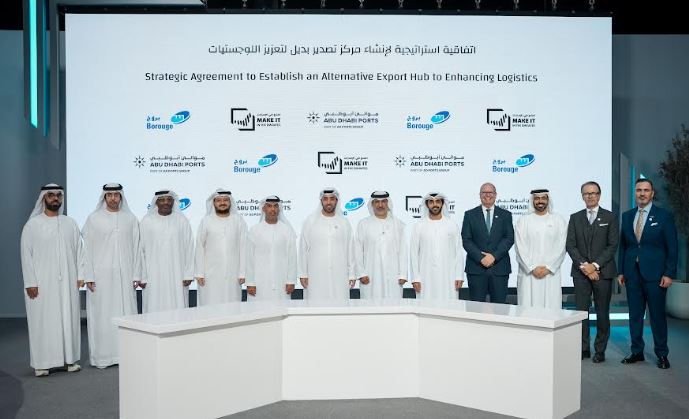
Abu Dhabi, UAE – 19 May 2026: AD Ports Group (ADX: ADPORTS), a leading global enabler of integrated trade, industry and logistics solutions, has signed a partnership agreement with Borouge Plc (ADX: BOROUGE), a leading petrochemical company providing innovative and differentiated polyolefin solutions, to explore expanded collaboration opportunities aimed at enhancing export resilience and operational flexibility.
The agreement paves the way for both parties to collaborate on the establishment of an alternative international export hub on the UAE’s East Coast, as an essential element of Borouge’s long-term export strategy. This initiative aims to strengthen export continuity while embedding resilience by design across Borouge’s logistics network.
The collaboration will leverage AD Ports Group’s strong marine connectivity and access to its comprehensive port services of Fujairah Terminals and Eastern ports facilities in the UAE, while assessing the development of dedicated polyolefins infrastructure on the East Coast.
Both parties will assess ways to reduce reliance on constrained maritime passages and enhance flexibility in vessel scheduling and routing through joint engagement with shipping lines to enable new routes via Fujairah Terminals. Together, these efforts aim to support stable and reliable export flows across a diversified portfolio of ports and logistics facilities.
Saif Al Mazrouei, Chief Executive Officer, Ports Cluster – AD Ports Group, said: “We look forward to collaborating with Borouge to explore opportunities that leverage AD Ports Group’s integrated port and logistics capabilities to support essential industrial exports and strengthen regional and global trade connectivity in line with the vision of our wise leadership.”
Hazeem Sultan Al Suwaidi, Chief Executive Officer of Borouge Plc, added: “This strategic partnership marks a significant step forward in Borouge Plc’s logistics capabilities, supporting our continued growth. Together with AD Ports Group, we are building a more flexible and diversified network that enhances reliability, ensures continuity of supply, and reinforces our position as a trusted global supplier, supporting the UAE’s industrial strategy.”
Borouge Plc is the largest exporter through AD Ports Group. This collaboration builds on a longstanding partnership between the two companies established in 2001, and reflects the shared ambition of AD Ports Group and Borouge Plc to strengthen supply chain resilience and reinforce the UAE’s position as a globally competitive logistics and industrial hub.


