


19, May 2026
University of Birmingham Dubai invites applications for BSc in Biomedical Science
The University of Birmingham Dubai is now inviting applications from Indian students for its BSc in Biomedical Science, a course that helps students embark on their journey in biomedical science by exploring the intricacies of the human body and the mechanisms underpinning disease.
The programme provides a strong foundation in biomedical science while preparing students to contribute meaningfully to the field. Alongside core scientific knowledge, students develop transferable research skills – such as data analysis and interpretation – and engage with the ethical and social dimensions of modern medical science. Teaching takes place in facilities designed to encourage collaboration and interdisciplinary learning.
Students study at the forefront of biomedical science and gain first-hand insight into how research drives clinical advancement. Delivered through a blend of online and in-person teaching by subject experts, the programme offers the same high-quality curriculum as the University’s UK campus. This unique approach provides access to state-of-the-art laboratory facilities in both Dubai and the UK.
Graduates earn the same University of Birmingham degree as UK-based students, develop strong research and transferable skills, and benefit from a continually updated curriculum that reflects the latest developments in biomedical science. Students may study in Dubai for the first two years and, if they choose, complete their final year in the UK. Throughout the programme they are guided by academic experts engaged in cutting-edge research.
Programme delivery:
Assessment is delivered through a range of formats to support students as they adapt to new modes of learning. At the beginning of each module, students receive clear information on assessment methods and timelines, and feedback is provided within four weeks to support ongoing development. Assessment varies by module and may include coursework such as essays, group and individual presentations, laboratory-based work and formal examinations.
Course dates: September 2026
Entry Requirements:
- Indian applicants should have an overall average of 85% – 90% in Class XII, with minimum 85% in two science subjects, one of which must be Biology or Chemistry, and the second from Biology, Chemistry, Mathematics, or Physics.
- For other state boards, applicants should have an overall average of 95% in Class XII, with minimum 90% in two science subjects, one of which must be Biology or Chemistry, and the second from Biology, Chemistry, Mathematics, or Physics.
English Language Requirements: Students will need standard XII English at 70% or 75% depending on the state board, or IELTS 6.5 overall.
Tuition: The annual tuition fee for 2026 entry is AED 156,718(INR 41,13,847 appx.) per year of study and can be paid in instalments.
Scholarship: Scholarship options at the University of Birmingham Dubai are designed to benefit all students, and the financial rewards can be carried forward through the entire programme across the foundation, undergraduate and postgraduate levels. For scholarships, please visit: https://www.birmingham.ac.uk/dubai/study/fees/scholarships
Application process: Applications for September 2026 are open. To apply for the programme, students need to submit their applications and supporting documents online.
- 0
- By Neel Achary

19, May 2026
HINDAMME and the Artisans at Madrasat Addeera Inspired by AlUla’s 7,000+ Years of Heritage in New Collection
| The collection draws inspiration from the destination’s ancient landscapes and legacy as a source of inspiration and creativity, translating heritage into wearable modern art |
Renowned Saudi Arabian fashion label HINDAMME and Arts AlUla’s Madrasat Addeera, a platform dedicated to creativity and traditional arts inspired by heritage, today revealed a limited-edition, slow fashion collection inspired by AlUla’s more than 7,000 years of continuous human heritage and iconic natural landscapes.
Designed by one of Saudi’s leading fashion names, Mohammed Khoja, and co-created with more than 26 local artisans from Madrasat Addeera, this exclusive launch champions Saudi craftsmanship and heritage with a distinctly modern take.

The collection features a refined selection of stylish abayas and shirts made from diverse materials capturing the essence of AlUla as the crossroads of ancient civilisations. Motifs reflect rock carvings – or petroglyphs – from AlUla’s millennia-old heritage sites, such as the open-air library of Jabal Ikmah known for its Dadanitic and Lihyanite inscriptions dating to the first millennium BCE. Intertwined with the petroglyphs are illustrations of indigenous flora and fauna, from the moringa plant to the Arabian oryx, translating AlUla’s natural and human heritage into contemporary wearable art.
Madrasat Addeera, located in the AlJadidah Arts District, was once home to the region’s first girls’ school. Today, its building has transformed into the first arts and design centre in AlUla where craft skills and practices are passed down and reimagined through immersive, hands-on training. A community-driven initiative, it provides vocational training in traditional arts to support AlUla and the region’s creative economy as well as a year-round public programme where visitors of all ages can attend traditional arts workshops.
The partnership underscores Madrasat Addeera’s role as a hub for heritage-driven creativity and artisan empowerment shaping AlUla’s cultural and creative landscape. Khoja worked directly with the school’s artisans to develop eight unique designs that authentically capture local identity and creative traditions, including block printing, hand embroidery, silk-screen printing and metalwork. Each piece took between one and two months to complete, demonstrating slow fashion principles and the meticulous labour of handmade products.
“AlUla has been a source of inspiration and creativity. This legacy, reflected across its heritage sites and natural landscapes, is brought to life through this collection by HINDAMME in collaboration with Madrasat Addeera’s skilled artisans,” said Hamad AlHomiedan, Director of Arts and Creative Industries, RCU.
“This collaboration embodies our commitment to transforming local heritage and craftsmanship into a vibrant creative economy that benefits AlUla and its people. Supporting local craftsmanship and handmade products, particularly as the world becomes more digitised and globalised, is key to preserving Saudi identity for generations to come. This collection celebrates this tangible heritage and how AlUla’s remarkable history continues to influence creative expression in the Kingdom and beyond.”
The HINDAMME and Madrasat Addeera collection builds upon a legacy of collaboration between Mohammed Khoja and AlUla. In 2019, the designer developed a bespoke collection inspired by the destination’s history as a crossroads of ancient civilisations, which was exhibited at the National Museum of Saudi Arabia.
“AlUla has always been a profound source of inspiration for me,” commented designer Mohammed Khoja. “It is a place where history feels alive, layered and deeply present. This collection is about proving that heritage is not something we preserve behind glass, but something we evolve, wear and carry forward. The artisans were central to this collaboration. Their knowledge, intuition and approach to craft added depth and authenticity, and learning about Madrasat Addeera building as the first girls’ school in the region added an emotional depth. The memory held within that space, and its transformation into a place of creation, is a powerful narrative within the collection.”
“It has been such an honour to be a part of this project,” said Mona Al Joud – Textiles Artisan at Madrasat Addeera. “There was so much to learn from someone as established as Mohammed Khoja, and it was exciting to share our knowledge and skills in exchange. This collection is a letter from the people of AlUla to Saudi and the world. A lot of love, precision and intention go into each stitch and cut. I hope that people can appreciate that every piece carries our story.”
19, May 2026
Planetcast Powers Apac Broadcasters With Region’s Largest Commercial Teleport to Scale Hybrid Distribution
SINGAPORE – May 19, 2026 – Planetcast, a global leader in media services and technology, today announced its expanding media delivery and distribution footprint ahead of BroadcastAsia 2026.
Anchored by the region’s largest commercial teleport and a hybrid delivery ecosystem spanning broadcast, IP, OTT and cloud-based workflows, Planetcast is helping media companies manage rising distribution complexity while improving flexibility, reliability and speed to market.
Backed by WTA Tier 4 certification and a Global Top 10 teleport ranking, Planetcast combines large-scale infrastructure with broadcast-grade reliability to support increasingly complex live and linear streaming operations. Today, Planetcast powers more than 450 channels worldwide, reaches 1.3 billion viewers and supports more than 50 leading media brands.
With facilities in Noida and Singapore, Planetcast’s infrastructure supports flexible delivery across the GSAT, Intelsat and AsiaSat networks, while enabling hybrid satellite, IP and OTT workflows designed for modern multi-platform distribution.
At BroadcastAsia 2026, Planetcast will demonstrate how its integrated technology ecosystem enables broadcasters and content owners to manage the content supply chain through a more unified operational model. Demonstrations at Booth 5C1-1 will feature Cloud.X for cloud playout, ReCaster for IP transport, MediaHQ for orchestration, Contido for media asset management and BATS for teleport operations.
ReCaster, Planetcast’s IP-based signal transport platform, now supports hybrid deployment models with SRT, RIST and UDP protocols, enabling broadcasters to deliver high-quality live content with approximately 2,500ms latency across distributed environments. The platform supports both SPTS and MPTS workflows, as well as mixed-mode operations for large-scale, multi-destination distribution. Today, ReCaster is deployed by more than 50 customers across Asia, the Middle East and the Caribbean.
Planetcast will also highlight real-world deployments that demonstrate the growing convergence of broadcast and streaming infrastructure.
beIN SPORTS Asia Pacific is using Cloud.X and ReCaster to support dynamic live sports workflows across APAC, including:
- 40+ simultaneous live sports events during peak periods
- 18 linear and 24 OTT channels across 12 APAC markets
- 99.99% uptime across playout and delivery
Planetcast also supports global live streaming and 24/7 channel operations for Willow by Cricbuzz, managing live ingest, multi-format distribution, ad insertion and compliance across international markets.
“Broadcasters across APAC must deliver more content to more endpoints without adding complexity,” said Mark Johns, Head of International Sales & Marketing at Planetcast. “At BroadcastAsia, we’re showing how hybrid infrastructure — spanning teleport, cloud, IP and OTT — helps customers scale faster, simplify operations and support both traditional broadcast and streaming.”
Together, these deployments reflect how broadcasters and streaming platforms are increasingly adopting hybrid infrastructure models that unify satellite, IP and OTT delivery into more scalable and efficient operational frameworks.
At BroadcastAsia 2026, Planetcast will showcase workflow demonstrations covering live ingest, cloud playout, IP transport, OTT packaging, ad insertion, compliance and multi-market distribution, highlighting how broadcasters and content owners can launch channels faster, simplify operations and deliver content more efficiently across satellite, IP and streaming environments.
To learn more or schedule a meeting, visit www.planetc.net or stop by Booth 5C1-1.
19, May 2026
Pune’s Northern Central Business District – The Next Growth Chapter

– by Anil Pharande, Chairman – Pharande Spaces
Pune has always been a city full of surprises. What started as a city’s retirement destination – remember Pensioner’s Paradise? – has become one of India’s top IT hubs. Now, Pune’s northern belt is following suit. Quietly, but very convincingly.
What is the NCBD?
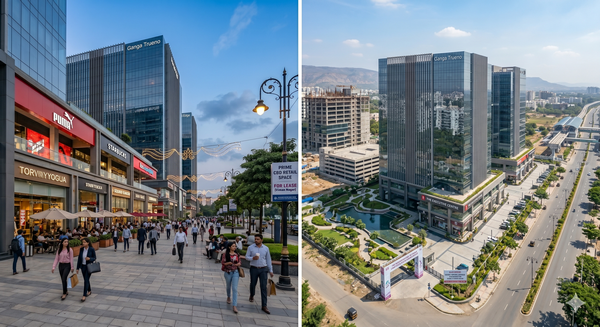
What most serious developers and institutional investors now call Pune’s Northern Central Business District (NCBD) is the stretch running through Baner, Balewadi, Wakad and into the outer ring of Hinjewadi. It is not gazetted by that name anywhere officially – but ask any Grade-A office developer where the action is, and they will unfailingly mention this corridor.
What Makes It Unique?
The traditional CBD – Koregaon Park, Bund Garden, and Camp – has long since matured into prime territory. In simple terms, this means they are high on values and short of space. In the last three years, the eastern SBD around Kharadi and Viman Nagar has been the engine of Pune’s commercial office leasing scene, with the area accounting for nearly 45% of net absorption in Q1 2025 alone.
Both corridors are remarkable, but they are also largely saturated. And in real estate terms, saturation means only two things – some strategic and limited redevelopment potential, and look elsewhere for growth.
The NCBD corridor is different – it still has plenty of ‘upside’. It has land availability and density, which is a rare combination. There’s a whole workforce sitting here that actually wants shorter commutes. Ask any IT guy staying in a 2BHK in Wakad why he didn’t choose Kothrud or Hadapsar, and the answer is almost always the same: “What matters most is getting to work and back.”
The entire NCBD story is based on the thesis that where people live and work are close enough to each other to open the next Puneri real estate goldmine.
The Infrastructure Turning Point
This is where it gets interesting. Pune Metro Line 3 (23.2 km) The 23.2 km Line 3 connecting Hinjewadi to Shivajinagar via Balewadi and Baner will be ready for partial commercial operations from June 2026, and full operations for all stations from October. It is India’s first metro on the public-private partnership model with Tata-Siemens JV backing. The project took more than a decade to build and cost INR 8,313 crores.
The impact on real estate is already priced in – but not entirely. A commercial hub of about 1.9 million sq ft at the Balewadi interchange will be developed on transit-oriented lines. Once the metro is up and running regularly, that footprint will draw anchor tenants, co-working operators and retail brands that have been waiting for this very moment.
PMRDA is also developing the 50 km road along the metro line from Maan (depot) to Shivajinagar. Concrete reconstruction, better drainage, wider lanes. The positive impact on commute times is not just theoretical anymore, it’s measurable.
Commercial RE Boom
Serious commercial investments are flowing into Pune’s northern corridor even before Metro Line 3 gets launched. In the first quarter of 2026 alone, Pune’s commercial real estate sector saw investments amounting to more than INR 600 crore. Pune was among the top three Indian cities for absorption of commercial real estate in 2025, and the trend is likely to persist in 2026-2027.
The Baner-Balewadi-Wakad corridor, which we can call the heart of the NCBD, has large IT parks, MNC campuses, and a growing GCC (Global Capability Centre) ecosystem. It is important to note that GCCs are not back office functions any longer.
Companies like Entrata have already established full GCCs in Pune’s premium commercial zones and the NCBD corridor is the next to see this sort of tenancy. These are multi-year leases, hundreds of staff, high quality fitouts. The grade of commercial office occupiers you find here are the kind that lift the whole micro-market. New supply is keeping pace with ambition.
The Residential Layer
Contrary to popular opinion, commercial real estate is not an island fed by residential density, and vice versa. Balewadi High Street is strategically located between Baner and Hinjewadi. Property rates here have been rising for the past five years. Limited land stock, strong demand for rentals from professionals based in Hinjewadi, and new projects in the premium residential segment are causing relevant inventory run out faster than many had anticipated.
With proximity to Hinjewadi and the NCBD belt, Wakad is also offering the highest rental yield of about 5.2% among Pune’s western micro-markets. That is a number serious investors will look at, especially when average capital values in western Pune are continuing to be below INR 8,000 per sq ft for most residential assets.
Why This Matters to Developers
At Pharande Spaces, we look closely at land acquisition data – and the NCBD corridor ticks most of the boxes that most of Pune’s emerging zones do not. That includes committed and partly delivered infrastructure spending and real-time occupier demand. Residential density is the work force pipeline. And the institutional capital – CapitaLand alone has committed INR 19,200 crore into Maharashtra by 2030 – validates the macro thesis.
Pune’s total commercial stock is expected to add 11 million sq ft of new supply in 2026, with vacancy levels likely to remain relatively contained at around 11%. This is a healthy market – not overdeveloped, and not in short supply.
The NCBD is not only a bet on future growth – it is already being developed. The Metro is the last step in the process of turning a strong micro-market into a defining one. Developers who get in front of the curve now, before full metro operations change pricing permanently, will look like accurate future gazers in just three years. The others will talk about what they almost did, but didn’t do.
19, May 2026
Altimetrik Recognized in 3 Categories in ISG Provider Lens 2026 for Life Sciences Digital Services
Bengaluru, India May 19: Altimetrik, an AI-first digital engineering company, has been recognized in three categories in the ISG Provider Lens™ 2026 Life Sciences Digital Services Global Report, earning Product Challenger designations in Manufacturing and Supply Chain and Commercial Operations: Digital Evolution, along with a Contender designation in Clinical Development.
The ISG Provider Lens™ 2026 report evaluates leading service providers and contract research organizations across the global life sciences digital services market. The study examines how AI-native, platform-driven approaches are reshaping the industry value chain as organizations move from fragmented digital initiatives to integrated, intelligence-led operating models.
“This recognition from ISG validates Altimetrik’s approach to embedding AI into enterprise workflows rather than treating it as a standalone capability,” said Ramji Vasudevan, Head of Life Sciences at Altimetrik.” By combining product engineering with strong data and platform foundations, and applying a practitioner-led, bite-sized approach focused on business outcomes, we help life sciences organizations move from fragmented initiatives to scalable transformation. This enables measurable impact across manufacturing, commercial, and clinical functions while maintaining the rigor required in regulated environments.”
In the Manufacturing and Supply Chain category, ISG cited Altimetrik’s ability to combine AI-led digital engineering with deep operational alignment. The firm’s approach includes control tower enablement for end-to-end visibility, predictive supply chain models powered by real-time data, platform-driven modernization for scalable operations, and workflow-embedded AI that connects insights directly to execution.
In Commercial Operations: Digital Evolution, ISG recognized Altimetrik for integrating AI into commercial ecosystems to drive measurable outcomes, including unified data across sales, marketing and engagement platforms, AI-driven targeting and personalization, and decision intelligence embedded into existing workflows.
In Clinical Development, ISG highlighted Altimetrik’s focus on workflow-driven approaches in regulated environments, including integration of clinical and enterprise data systems, AI-enabled workflows, and scalable platforms supporting clinical operations across the lifecycle.
“Altimetrik is building a more credible life sciences position around workflow-led digital engineering, with particular strength in manufacturing, supply chain, and commercial operations,” said Rohan Sinha, Lead Analyst at ISG. “What stands out is its effort to move beyond isolated AI pilots toward a more structured model that links use cases to business outcomes, supported by reusable platforms, agent-based orchestration, and a stronger digital core following the SLK acquisition.”
19, May 2026
Seagate Introduces Storage Built for Consumer Data Explosion
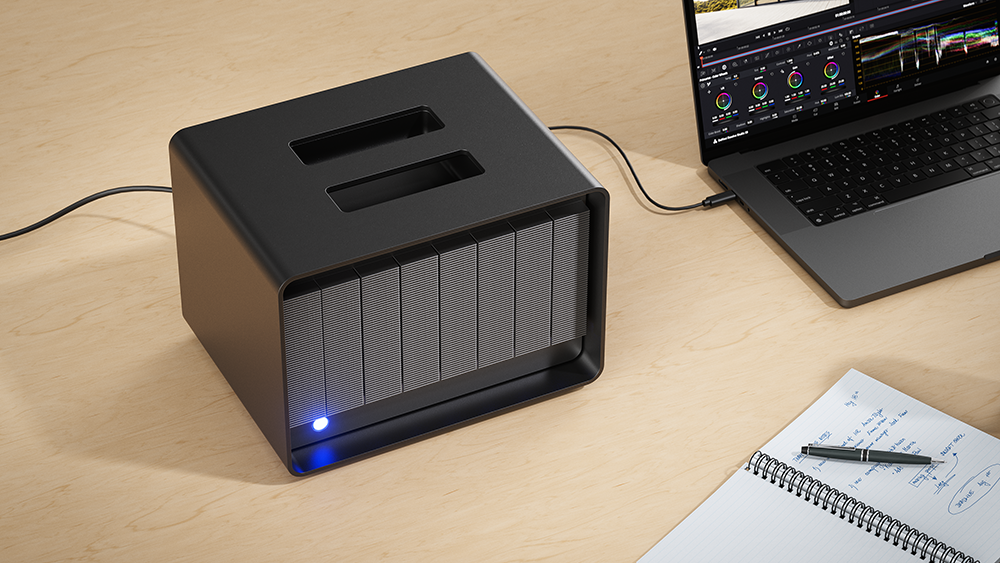
New Delhi, May 19 : Seagate Technology Holdings plc today announced new and refreshed consumer and prosumer storage solutions across its Seagate, and LaCie brands, including the Seagate One Touch desktop external hard drive and the LaCie 8big Pro5 multi-bay RAID storage solution.
Designed to support sustained data growth created at the point of capture, the portfolio provides flexible storage options ideal for higher resolution photos and videos and demanding creative workflows as more and more creators adopt AI content development platforms. As files grow larger and live longer, the updated portfolio delivers simplified operational experience, higher capacities, and scalable performance, helping users stay productive and in control of their data without compromising performance or scalability.
Portfolio highlights:
- Higher capacity options across portable, desktop and RAID storage, scaling up to 256TB
- Industry’s only Bus-Powered USB-C for desktop hard drives, requiring no external power supply
- Thunderbolt™ 5 support for high-performance creative workflows
- Integrated backup, monitoring, and Rescue Data Recovery Service, designed for long-term peace of mind
- Toolkit, user-friendly auto backup to secure all those important files and data
“From AI‑assisted creativity to massive game libraries and family memories, personal data is growing faster and lasting longer,” said Lance Ohara, VP, Edge IoT at Seagate. “People need storage that’s designed for this new reality – simple to use, built to scale, and ready for what AI brings next.”
The Seagate One Touch: everyday convenient backup made easy
Best for: everyday backup and personal use.
The Seagate One Touch desktop external hard drive offers straightforward, high‑capacity storage designed for easy setup and long‑term file management—without added hardware complexity or reliance on cloud subscriptions. A single‑cable USB‑C connection provides both power and data, eliminating the need for external power adapters and reducing desktop clutter.
- Capacities: 8TB, 20TB, 24TB
- Bus-powered 3.5-inch USB-C desktop drive with single cable connectivity
- Drag-and-drop setup and file transfers
- Cross-platform compatibility with Windows and Mac
- Includes Seagate Toolkit, auto backup software and Rescue Data Recovery Services for added peace-of-mind
LaCie 8big Pro5: Professional RAID storage for advanced creative workflows
Best for: creative professionals and production teams
The LaCie 8big Pro5 is a Thunderbolt™ 5 multi‑bay RAID storage solution built for creative professionals working with multi‑stream 4K/8K video, large RAW image libraries, and AI‑assisted production environments. With high-capacity configurations, fast data transfer speeds, and enterprise‑class reliability, it enables teams to work at scale in studio or on‑location environments.
- Capacities: 32TB, 64TB, 128TB, 192TB, 256TB
- Multiple RAID configurations for speed or redundancy, Thunderbolt™ 5 performance (up to 120Gbps) Up to 2800MB/s (RAID 0) performance
- Up to 140W power delivery for laptops
- Includes RAID Manager and 5-year limited warranty with Rescue Data Recovery
19, May 2026
Paymentology Appoints Fiona Tee as Chief Financial Officer
London, UK – 19 May 2026 – Paymentology, the leading global issuer-processor, today announced the appointment of Fiona Tee as Chief Financial Officer, as the company continues to build on its recent momentum following a strategic investment, brand evolution and the next phase of global growth.
Fiona joins Paymentology from Currencycloud, where she spent nine years helping scale the business through a period of significant growth, culminating in its successful acquisition by Visa. She brings more than 25 years of finance leadership experience across fintech and technology, with a strong track record supporting multinational, venture-backed and private-equity-backed businesses through rapid growth, transformation, fundraising, exits and international expansion.

Her appointment comes at a significant moment in Paymentology’s growth journey. Earlier this month, Paymentology announced a $175 million strategic investment from Apis Partners and Aspirity Partners to accelerate its global expansion and continued innovation in modern issuer-processing infrastructure. The company also recently unveiled a new brand identity, reflecting its evolution into a globally scaled, cloud-native payments infrastructure provider supporting banks, fintechs and financial institutions across nearly 70 countries.
Jeff Parker, CEO of Paymentology, said: “Fiona joins us at an incredibly exciting time for Paymentology. As demand for modern issuer-processing infrastructure continues to accelerate globally, her experience scaling fintech businesses and navigating transformational growth will be invaluable as we enter our next phase. She brings deep financial and commercial expertise, alongside a strong entrepreneurial mindset and proven experience supporting high-growth international businesses. I’m delighted to welcome her to the executive leadership team.”
In her new role, Fiona will work closely with the Paymentology team to help deliver Paymentology’s five-year strategy, supporting customer excellence,new market entry, disciplined execution, and the financial performance needed to drive sustainable profitability as the business continues to scale.
Fiona Tee, CFO added: “Paymentology is at a pivotal moment, with strong momentum, ambitious growth plans and a clear opportunity to scale its impact globally. What stood out to me immediately was the strength of the business, the quality of the team and the commitment to delivering exceptional outcomes for customers. I believe sustainable growth comes from a clear strategy, strong financial discipline and a culture that is aligned around execution. I’m excited to join Paymentology at this next stage and help build on the strong foundations already in place.”
As Paymentology continues to expand globally, the company remains focused on enabling traditional banks, digital banks and fintechs to launch, scale and modernise card programmes through flexible, cloud-native payments infrastructure designed for the next generation of financial services.
19, May 2026
AD Ports Group Launches Cruise and Ferry Terminal Services in Egypt, Strengthening Cruise Tourism Across the Red Sea
Sharm El Sheikh, Egypt/ Abu Dhabi, UAE – 19 May 2026: AD Ports Group (ADX: ADPORTS), a leading global enabler of trade, industry, and logistics solutions, today announced the commencement of cruise services at its three terminals in Sharm El Sheikh, Hurghada, and Safaga in Egypt, in addition to facilitating ferry services connecting Safaga and NEOM ports to support transport of Hajj workers between Egypt and Saudi Arabia.
In 2024, AD Ports Group signed a 15-year concession agreement with Egypt’s Red Sea Ports Authority to manage, develop, and operate the three cruise terminals and associated ferry operations on Egypt’s Red Sea coast.

Sharm El Sheikh Cruise Port welcomed the arrival of “Aroya”, the largest mega cruise ship ever to dock directly in the coastal city, marking the beginning of a new era for cruise tourism in the Red Sea.
Aroya’s arrival at Sharm El Sheikh was enabled by the Egyptian Ministry of Transport and the Red Sea Ports Authority’s upgrades to the port’s docking capabilities, delivered in close collaboration with AD Ports Group.
Noura R. Al Dhaheri, Chief Executive Officer of Cruise Business, AD Ports Group, said: “The launch of AD Ports Group’s cruise and ferry terminal services in Egypt underscores our commitment to advancing cruise tourism across the Red Sea, while driving sustainable economic value in the markets where we operate. Through close collaboration with our partners, we will continue to elevate passenger experience by delivering world-class facilities and seamless services.”
The arrival of “Aroya” in Sharm El Sheikh marks the first of several scheduled calls by the mega cruise vessel in 2026, reinforcing Sharm El Sheikh’s position, alongside Hurghada and Safaga, as regular destinations on regional and international cruise itineraries. Aside from its main cruise terminal operations in the UAE, the Group also manages and operates the Aqaba Cruise Terminal in Jordan through a partnership with the Aqaba Development Corporation (ADC).
Egypt and the Red Sea are a focus of AD Ports Group’s expanding global network of integrated trade, transport, and logistics facilities. Beyond its container feeder shipping and stevedoring services, the Group in Egypt this year will inaugurate Noatum Ports Safaga Terminal, a USD 200 million multipurpose cargo terminal and major trade gateway for southern (Upper) Egypt. The Group is also developing the 20 km2 KEZAD East Port Said Industrial and Logistics Park with Egyptian partners at the Mediterranean mouth of the Suez Canal.
In November 2025, AD Ports Group invested 13.2 billion Egyptian pounds (USD 279 million) to acquire a 19.3% stake in one of Egypt’s largest container terminal operators, Alexandria Container & Cargo Handling Company (ALCN), and subsequently moved to acquire a majority stake in the company.
The commencement of passenger ferry and cruise terminal services in Sharm El Sheikh, Hurghada, and Safaga, marks the latest milestone in the Group’s ongoing investment in Egypt, and its support of Egypt’s cruise tourism and maritime connectivity ambitions.
19, May 2026
TVS Racing Wraps Up National Training and Selection Program for OMC 2026
Chandigarh, May 19 : Building on over four decades of racing excellence, TVS Racing today announced the successful completion of the TVS India One Make Championship 2026 Training & Selection Program. Conducted across four cities in India, the initiative reaffirmed TVS Racing’s long-standing commitment to identifying, training and nurturing the next generation of racing talent in the country. The final selection round was held between May 15 and May 17, 2026 at the Madras International Circuit (MIC), Chennai. Over 120 participants took part in the program across multiple categories – Women, Media, Rookie, Electric and TVS Apache RR310 Expert categories.
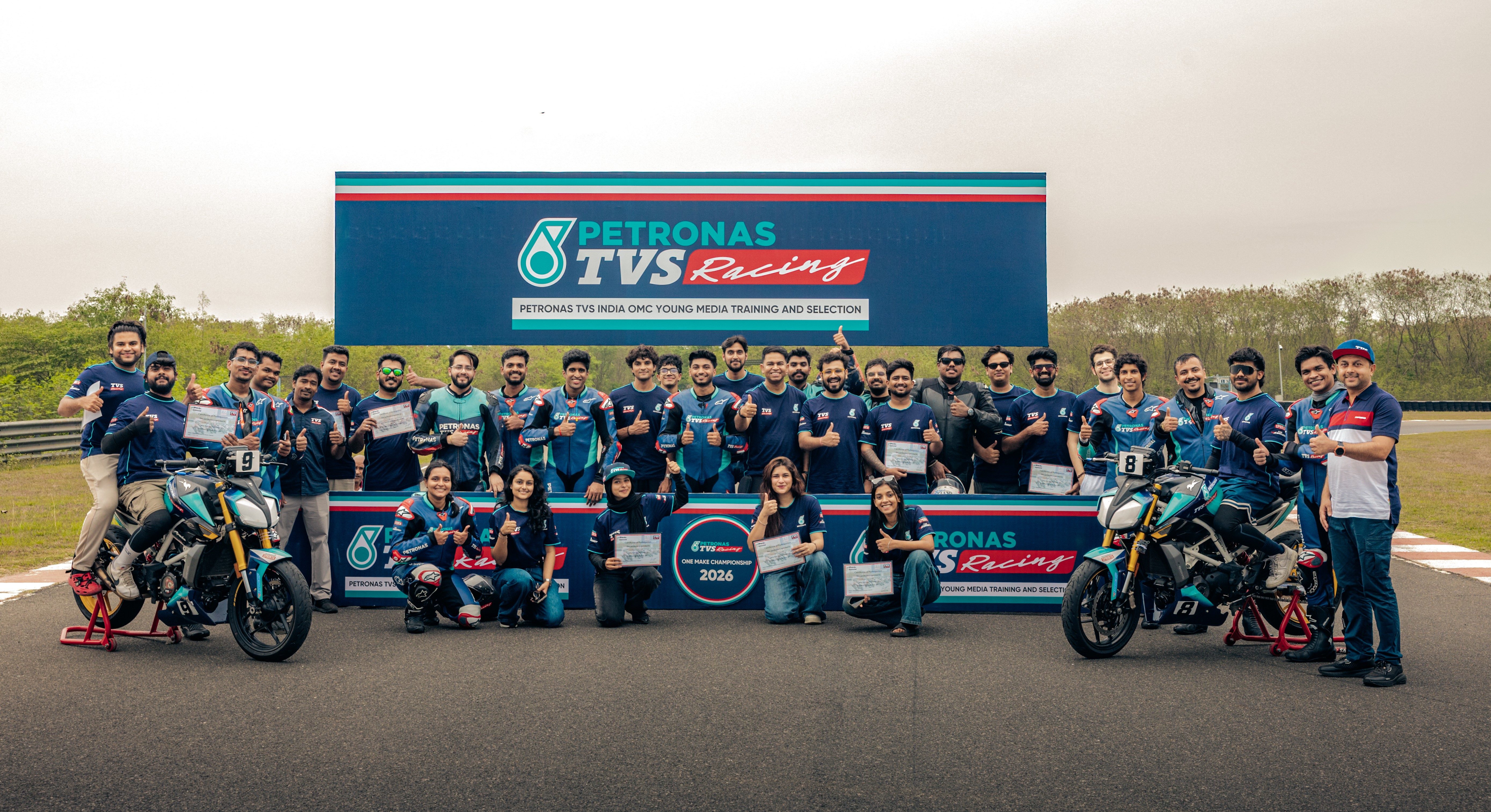
TVS India One Make Championship continues to stand as one of the country’s leading rider development platforms, blending professional racing exposure with structured training to strengthen India’s grassroots motorsport ecosystem and make competitive racing more accessible to aspiring riders.
The 2026 season holds added significance as TVS Apache celebrates 20 years of racing-inspired performance engineering, driven by TVS Racing’s ‘Track to Road’ philosophy. Learnings from the racetrack continue to shape not only motorcycle development, but also the training and preparation of riders for professional motorsport competition.
Participants underwent a structured training and evaluation process conducted by TVS Racing experts, focused on riding technique, consistency, track awareness and overall performance with an uncompromising emphasis on rider safety and race discipline.
Commenting on the successful completion of the program, Vimal Sumbly, Head Business Premium, TVS Motor Company, said,
“The TVS India One Make Championship has always been focused on creating racers through a structured and professional racing ecosystem. We identify, train and develop our riders across multiple stages of their racing journey, from rookies and young talent to experienced racers competing at national and international levels. The successful completion of the 2026 Training & Selection Program reflects our continued commitment to making motorsport more accessible and building the next generation of Indian racers across categories. Through expert mentorship, race craft development and competitive track exposure, TVS Racing continues to provide a structured pathway for riders to progressively build racing skills, gain competitive exposure and transition into higher levels of motorsport. The program has also played a pivotal role in democratising motorsport in India and building a strong, inclusive racing culture in the country.”
Since the inception of the TVS India One Make Championship in 1994, TVS Racing has played a pioneering role in shaping India’s motorsport landscape by building a structured and inclusive racing platform for aspiring riders. Over the last 30 years, the championship has trained and mentored more than 4,000 racers, making it one of India’s most successful rider development programs with a strong focus on rider safety, race discipline and professional racing exposure.
TVS Racing, India’s first factory racing team, was founded in 1982 has won several titles in the road racing, rallying, and supercross formats, contributing significantly to the development of the nation’s motorsport culture. Through decades of racing experience since 1994, TVS India OMC has established one of the most organized rider development ecosystems in the nation, offering a structured rider development ecosystems, creating an easy path from beginner’s training to professional racing competition in the Rookie, Women, Media, Electric, and Expert categories. TVS Racing’s continued success at the Indian National Motorcycle Racing Championship including multiple consecutive manufacturer and team championship victories, further highlights its leadership in developing world-class racing talent.
The initiative continues to focus on identifying emerging racing talent from across regions, encouraging wider participation from women and new-age riders, and strengthening India’s grassroots motorsport ecosystem through structured training and professional mentorship under TVS Racing experts. The platform also plays an important role in building deeper engagement with the performance riding community and fostering a stronger racing culture in the country, strengthening brand affinity among performance enthusiasts.
19, May 2026
Metal Park Launches Phase 2 to Expand UAE Metals Ecosystem
Metal Park, a 500,000 sqm ecosystem established in 2021 in Abu Dhabi with an investment of AED 540 million, has announced the launch of Phase Two of its integrated industrial ecosystem during the Make it in the Emirates 2026, marking a significant milestone in enabling international metal companies to establish and scale operations in the UAE without upfront capital investment.
Following the successful delivery and utilisation of Phase One, the new expansion will introduce more than 700,000 square feet of industrial units dedicated to metal processing and fabrication, further reinforcing Metal Park’s position as the world’s first fully integrated plug & play ecosystem for the metals industry.
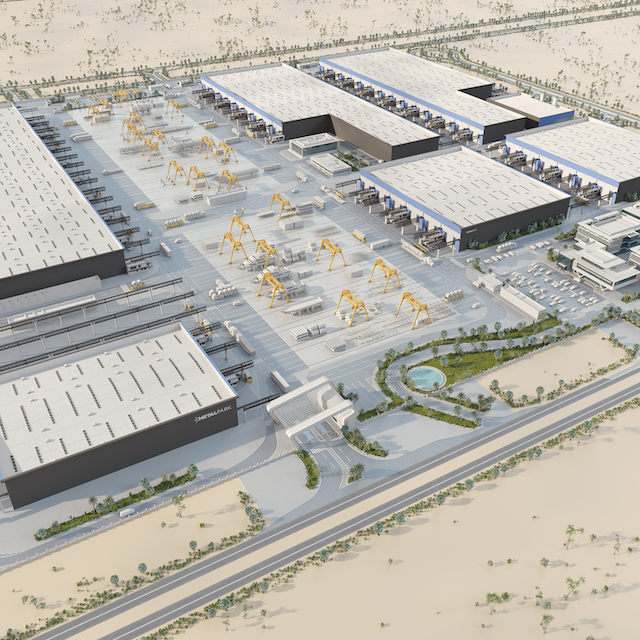
Built around a flexible operational model, Phase Two is designed to simplify industrial growth by combining plug & play infrastructure with pay-as-you-go flexibility, enabling companies to begin operations immediately while scaling according to demand. The expansion aligns directly with the UAE’s national industrial agenda and the vision behind “Make it in the Emirates,” shifting the focus from ownership-driven industrial development to operational readiness and utilisation.
“Industrialisation is no longer about waiting to build, it is about starting to produce,” said Vahid Fouladkar, CEO of Metal Park. “Phase Two continues that shift by enabling companies to enter the market faster, operate with greater flexibility, and scale with confidence as demand grows.”
Phase Two will significantly expand Metal Park’s industrial and logistics capabilities through the addition of more than 700,000 square feet of fabrication and processing units, alongside over 130,000 tonnes of new storage capacity. This expansion will strengthen the Storage Hub in Khalifa Economic Zones Abu Dhabi (KEZAD), bringing Metal Park’s total storage capacity across Abu Dhabi and Fujairah close to 450,000 tonnes. The ecosystem also continues to offer an independent fulfilment model where storage is provided on a per MT/CBM per day basis, removing the need for fixed warehousing commitments and long-term space leasing.
As part of its continued expansion strategy, Metal Park has also strengthened its presence in Fujairah to complement its KEZAD operations and establish a resilient dual-hub logistics structure. This integrated model supports uninterrupted metal flows across the UAE and regional markets, covering import, export, inland distribution, storage, processing, and fabrication through one connected ecosystem designed to streamline both operational and financial flows.
Beyond industrial infrastructure, Phase Two will also introduce expanded facilities aimed at enhancing collaboration and operational support for ecosystem members and partners. These developments include the expansion of the Business Centre with flexible office solutions, the creation of a dedicated Community Centre for partnerships and industry engagement, and enhancements to the Support Centre offering maintenance, testing, packaging, and operational services.
Metal Park has evolved from concept to a fully operational industrial ecosystem, with both its Production and Storage Hubs actively utilised by a growing network of regional and international companies. Phase Two represents the next stage of this evolution, focused on scaling industrial capacity, strengthening supply chain connectivity, and redefining how metal companies establish and grow operations in the UAE.


