


6, Oct 2026
Tara Tarini Temple Hundis Collect Over INR 25.91 Lakh, Foreign Currency Found
Purushottampur, Oct. 6 (UDN): The hundis at Odisha’s renowned Tara Tarini Temple in Ganjam district have yielded more than ₹25.91 lakh in offerings, along with foreign currency, gold and silver ornaments, officials said on Tuesday.

Representational Image
The offerings were collected from five donation boxes at the temple, with the total amount counted at ₹25,91,743.
During the counting process, officials also found three foreign currency notes and seven foreign coins among the offerings.
Several gold and silver ornaments were recovered from the hundis, including decorative gold and silver eyes offered by devotees. Emotional letters written by devotees were also found inside the donation boxes.
The counting was conducted in the presence of Tara Tarini Temple Executive Officer Binod Behera, with officials from Purushottampur Tahasil overseeing the process.
The latest collection marks a significant rise compared with the previous counting, when the temple’s hundis yielded ₹7,17,540.
Officials said the funds collected through the donation boxes will be utilised for the development and improvement of the temple.
The historic Tara Tarini Temple, dedicated to Adi Shakti, stands atop Kumari Hills on the banks of the Rushikulya River near Purushottampur in Ganjam district and attracts devotees from across Odisha and beyond.
- 0
- By Neel Achary

6, Oct 2026
Dharmendra Pradhan Seeks Centre’s Nod for Three Major Highway Projects in Odisha
Bhubaneswar, Oct. 6 (UDN): Sambalpur MP and former Union Minister Dharmendra Pradhan has urged Union Road Transport and Highways Minister Nitin Gadkari to grant administrative and financial approval for three key highway infrastructure projects in Odisha.
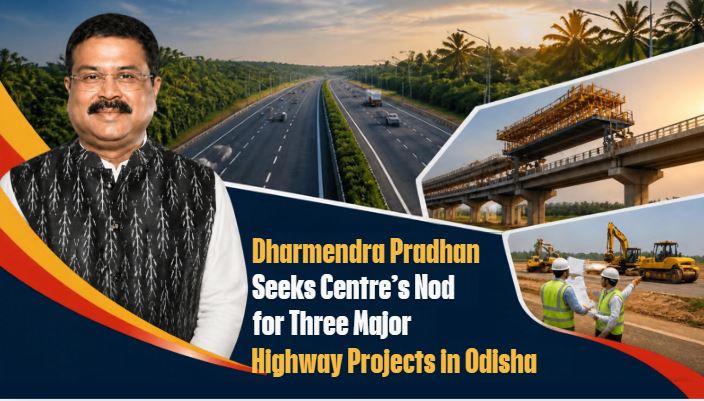
Representational Image
In a letter to Gadkari, Pradhan sought the six-laning of the Sambalpur-Angul-Cuttack National Highway corridor, along with the construction of two-lane service roads on either side.
The MP highlighted the growing volume of passenger and freight traffic on the corridor, which serves as a vital link between western Odisha and major industrial, commercial and urban centres.
Four Underpasses Proposed on NH-55
Pradhan also requested approval for four underpasses along the Angul-Sambalpur stretch of NH-55 at Jindal Road, Jarapada, Jeranga and Charmal.
According to Pradhan, the proposals have been prepared by the Project Implementation Unit (PIU), Sambalpur, as long-term measures to improve road safety.
The stretch witnesses substantial movement of mining and commercial vehicles, increasing the risk of conflicts between heavy traffic, local commuters and pedestrians, he said.
Flyover Sought at Sambalpur Railway Station Square
The Sambalpur MP further sought the construction of a flyover at Sambalpur City Railway Station Square on NH-53.
He pointed out that passengers using the railway station are required to cross the busy highway, creating a significant safety concern. The location has also been identified as a potential accident black spot, according to his letter.
Pradhan urged the Ministry of Road Transport and Highways and the National Highways Authority of India (NHAI) to consider all three proposals on priority.
He said timely implementation of the projects would help improve road safety, reduce traffic-related bottlenecks, facilitate the movement of passengers and goods, and strengthen connectivity across the region.
6, Oct 2026
Dead Souls: Revival, a novel written by GigaChat, goes on sale
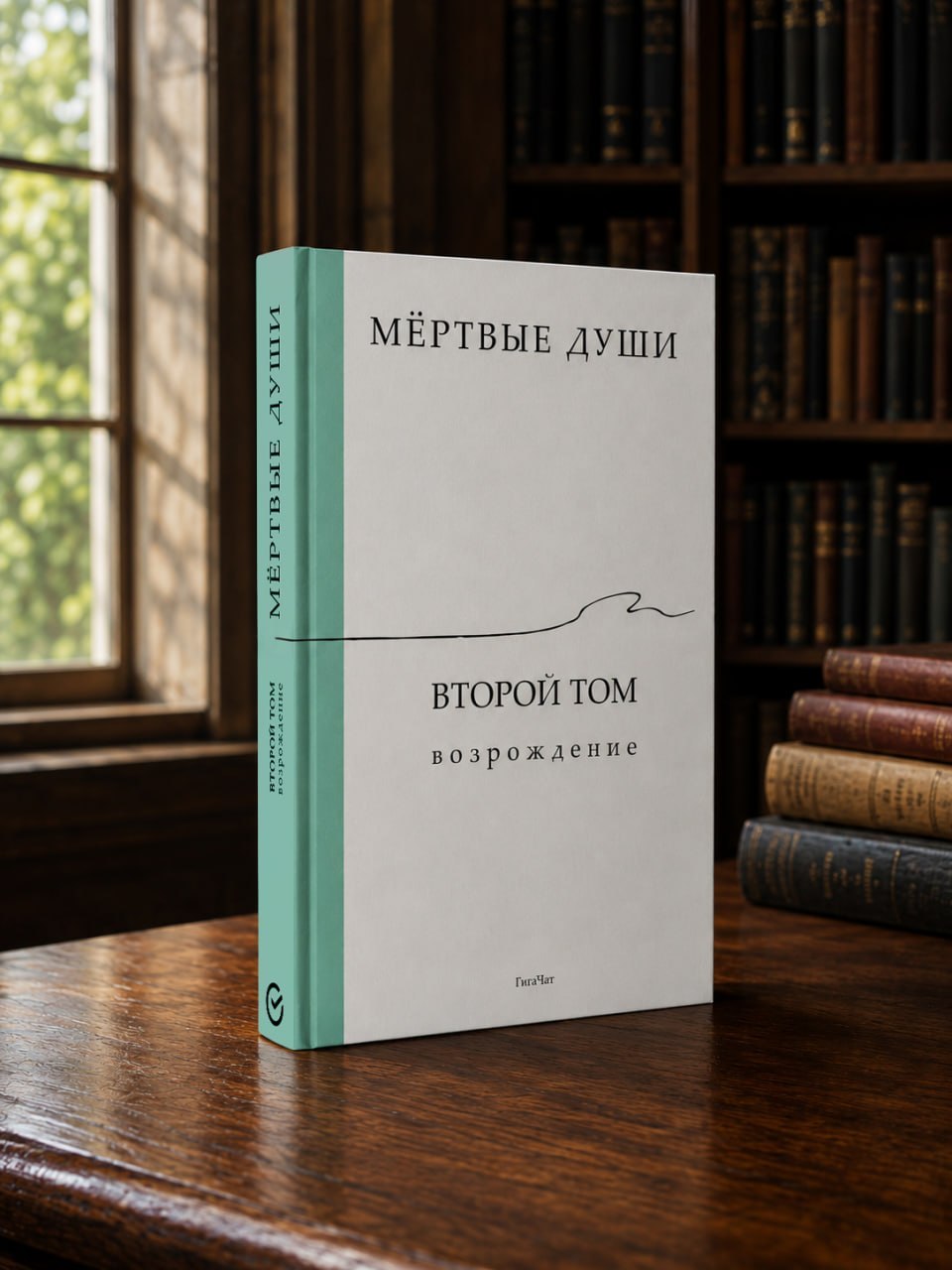
Moscow, Oct 06: In the run-up to its 185th anniversary, Sber is releasing the novel Dead Souls: Volume Two. Revival. This is a continuation of Nikolai Gogol’s immortal novel, with the text generated by the large language model GigaChat. A team of experts — including historians, literary scholars, linguists, and engineers — collaborated with Sber on this cultural research project. It is the first work created by artificial intelligence in the style of a world-renowned literary classic.
The second volume of Dead Souls represents one of the most enigmatic creative catastrophes in world literature. The manuscript, burned by the author on the night of February 24, 1852, has sparked endless debates, hypotheses, and speculation. Sber’s project took over a year. Far from merely compiling existing texts, Sber professionals and invited experts conducted extensive, complex research. GigaChat was trained on Gogol’s complete works — including his letters, drafts, and notebooks — as well as the writings of his contemporaries (Pushkin, Dostoevsky, and Turgenev), philosophical texts, biblical writings, and even the paintings the author admired.
To evaluate the outcome, an 11-parameter system was devised, encompassing lexical diversity (archaisms, Gogol-esque neologisms), syntax (long rhetorical periods), the grotesque, the comic physicality of dialogue, and the active presence of the narrator. Experts verified each generated episode for uniqueness, ensuring the artificial intelligence learned to create new meanings rather than simply copying the classic author. The neural network’s output was meticulously scrutinized to confirm it was generating semantic imagery with fresh meaning, rather than merely compiling existing texts by Gogol.
The resulting text is, undeniably, not Gogol. Yet, it is a text crafted according to the principles of Gogol’s narrative style, an achievement made possible through the synergy of human and artificial intelligence. The project yielded a literary work but also 21 illustrations created by GigaChat in the style of A. Agin, the artist behind the illustrations for the first volume of Dead Souls published during Gogol’s lifetime.
Vladislav Kreynin, senior vice president, director of the Marketing and Communications Department, Sberbank: “Debate surrounding the second volume of Dead Souls continues to this day: why did the writer destroy the manuscript, and what was the fate of the characters? Our project does not aim to settle these arguments but rather offers the reader a new cultural experience. In reviving what was lost, we relied on a solid scholarly foundation and deep respect for the author, setting ourselves two key objectives. The first is research-oriented: to demonstrate that neural networks can serve not merely as assistants for everyday tasks, but as sophisticated tools for analysis and synthesis in the hands of professionals. The second is educational: to engage the younger generation with Russian classics, encourage them to revisit not only Dead Souls but Gogol’s entire body of work, and rediscover the richness of his universe — all while taking another step toward reviving cultural heritage with the help of GigaChat.”
Dead Souls: Revival continues a series of Sber initiatives leveraging artificial intelligence to restore historical memory. Previous efforts include Digital Peter, which deciphered the handwritten manuscripts of Peter the Great; Revived Collection, which helped restore hundreds of paintings lost during the Great Patriotic War; and a project marking the 185th anniversary of Pyotr Tchaikovsky’s birth, which allowed the public to see and hear the maestro’s unfinished opera, Mandragora.
The book’s release is an invitation to dialogue: it is up to the reader to judge whether the neural network succeeded in recreating “the vast universe that is Gogol.”
6, Oct 2026
Sensex Jumps 685 Points, Nifty Reclaims 22,750 as Investors Await RBI Policy Signals
Mumbai, Oct 6: Indian equity markets staged a strong recovery on Tuesday, with the benchmark Sensex gaining nearly 700 points and the Nifty rising above the 22,750 mark as investors stepped up buying across pharmaceuticals, private banks and oil and gas stocks ahead of the Reserve Bank of India’s monetary policy decision.
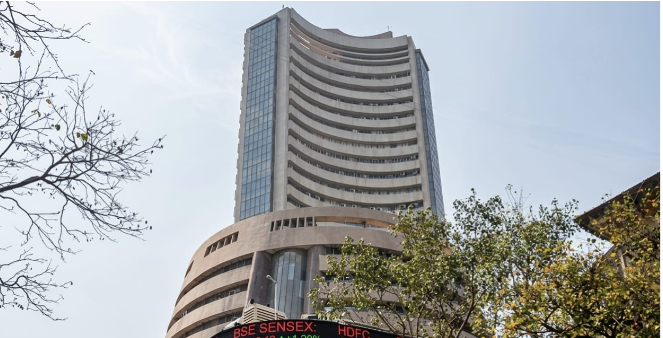
The Sensex climbed 685.34 points, or 0.95 per cent, to close at 73,067.81, while the Nifty 50 advanced 220.35 points, or 0.98 per cent, to settle at 22,776.10.
The rebound came as investors looked beyond recent market volatility and positioned themselves ahead of the RBI’s policy announcement. Market participants are particularly watching the central bank’s stance on interest rates, liquidity and the broader economic outlook.
Nifty gains momentum
Technical indicators also pointed towards some improvement in market momentum. Analysts said a sustained move above the 22,800 level could strengthen the recovery and potentially take the Nifty towards 23,000.
On the downside, 22,600 is emerging as an immediate support level, followed by 22,500. The Relative Strength Index (RSI) has moved into the mid-30s, indicating that momentum is gradually improving, while the easing of the negative MACD histogram suggests that selling pressure may be losing some intensity.
Pharma, banking and oil stocks lead
Buying was visible across several heavyweight stocks, helping the benchmarks maintain their upward momentum through the session.
Among Nifty constituents, Trent, BSE and Kotak Mahindra Bank were among the strongest performers. Pharma and chemical stocks also attracted significant buying interest, with the Nifty Pharma index emerging as the best-performing sectoral index, followed by the Nifty Chemical index.
The broader market participated strongly in the recovery. The Nifty MidCap index rose 1.08 per cent, while the Nifty SmallCap index gained 1.56 per cent, indicating that investor interest extended beyond large-cap stocks.
The IT sector, however, moved in the opposite direction as investors booked some profits. The Nifty IT index was the biggest sectoral laggard during the session.
RBI policy in focus
With the RBI policy decision approaching, investors are likely to closely track signals on inflation, growth, liquidity and interest rates. The central bank’s assessment of domestic economic conditions could play an important role in determining the market’s next move.
The recent decline in crude oil prices has also offered some relief to Indian equities by easing concerns over imported inflation and corporate costs.
Overall, analysts described the near-term market outlook as cautiously constructive. The two-session recovery has improved sentiment, but global uncertainties, currency movements, crude prices and monetary-policy expectations remain key risks for investors.
For the market to extend Tuesday’s gains, sustained buying and a decisive move above the 22,800 resistance zone will be important. A failure to hold the recovery, meanwhile, could bring the 22,600-22,500 support range back into focus.
6, Oct 2026
Professional investors target tokenised gold ETFs as price of precious metal decreases, new research finds
Oct 06: Gold’s recent price decrease has created a strong buying opportunity for 28% of institutional investors and wealth managers participating in global research* from ST0x, the onchain trading infrastructure for tokenised securities issued by S01 Issuer GmbH,
under an EEA base prospectus approved by the FMA Liechtenstein.
A further 48% of the 200 institutional investors and wealth managers surveyed consider the price decrease as a moderate buying opportunity, seeing the precious metal as worth adding while expecting prices to remain range bound in the short term.
One-fifth of respondents are taking a neutral or ‘wait-and-see’ position, holding current allocations and waiting for clear signs of a technical price bottom. Four per cent of respondents say gold’s investment thesis has weakened, and they expect further downside toward previous support lines.
Given the current market environment and gold’s valuation decrease, study participants plan to increase their gold allocations over the next six months. The biggest group (31%) will increase by between 3% and 4% while 23% will up allocations by 2% to 3%.
Around a fifth (19%) will increase by 4% to 5%; one in ten by 1% to 2%; 5% say by more than 5%; the same amount will increase allocations by up to 1% and 6% will maintain current levels.
When asked if they would consider using a tokenised gold ETF as a tactical vehicle to deploy capital rather than a traditional gold ETF, 23% of respondents say they would do so exclusively. Survey participants said the operational advantages including 24/7 trading, near-instant settlement make tokenised ETFs their preferred vehicle to capitalise on gold’s priced decrease.
More than half (58%) will partially allocate to tokenised gold ETFs noting they would split the investment between traditional and tokenised gold ETFs to test liquidity and infrastructure, the research across North America, the UK, continental Europe, the Middle East and Asia Pacific found.
Around 15% of respondents would consider using a tokenised gold ETF and are actively auditing tokenised issuers for future allocations, but they currently prefer traditional ETFs.
Nick Magliocchetti, Director, S01 Issuer GmbH said: “Gold’s recent price decrease is being viewed by professional investors as an opportunity to reassess and increase exposure, rather than a fundamental breakdown in the precious metal’s investment case.
“What is particularly interesting is the willingness of investors to consider tokenised securities referencing gold ETFs as a tactical vehicle for putting that capital to work. The combination of 24/7 access, near-instant settlement and the ability to deploy capital quickly could be particularly valuable when markets move sharply. While traditional ETFs will remain an important part of portfolios, tokenised securities referencing gold ETFs have the potential to give investors greater flexibility and precision when responding to short-term market opportunities.”
Looking at expectations for the spot price of gold (per troy ounce) by end of December, more than half (53%) of professional investors surveyed say $4,201 to $4,600 (Moderate recovery toward the 200-day moving average), while 28% forecast $3,800 to $4,200 (consolidation at current levels).
Some 15% predict $4,601 to $5,000 (strong bullish rebound); 2% say above $5,000 (new historical highs driven by renewed market shocks); and a further 2% say below $3,800 (further deep correction).
The price of gold is currently around $4,180 per troy ounce.
6, Oct 2026
Aahwahan Foundation With The Support of Tredence CSR Strengthens Care and Well-Being of 78 Senior Citizens at Its Gurugram Old Age Home Through ‘Meethi Muskan’
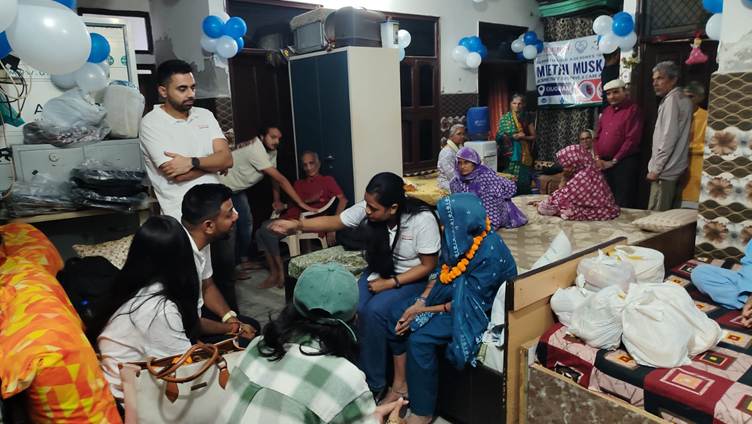
Gurugram, 06 October 2026: Aahwahan Foundation, with the support of Tredence CSR, is pleased to announce the launch of its ‘Meethi Muskan’ initiative, inaugurated at Aahwahan Old Age Home, H. NO, Police chouki, B130, Krishna Hospital Wali Gali, Near Sector 4, Gurugram – 122001. The initiative aims to support senior citizens living in old age homes by improving their living conditions and providing essential assistance in areas such as food, healthcare, clothing, hygiene and overall well–being. At Gurugram Old Age Home, a total of 78 senior citizens benefited from the ‘Meethi Muskan’ initiative. Through this initiative, Aahwahan Foundation seeks to bring greater care, dignity, happiness and hope to elderly people who require continued support. The initiative is designed to provide consistent assistance while contributing to the overall physical, emotional and social well–being of senior citizens.
The elderly residents of this old-age home come from underprivileged and economically disadvantaged backgrounds. They have spent most of their lives earning a living through daily wage and manual labour. At this stage of their lives, they are no longer able to work to support themselves or afford the care and medical treatment they need. Speaking about the initiative, Mr. Braja Kishore Pradhan, CEO & Founder, Aahwahan Foundation, said, “A smile from an elderly person can carry a lifetime of stories, emotions and memories. At this stage of life, people need care and support the most. During our visit to the old-age home in Gurugram, we realised that beyond food, clothing and healthcare, what many senior citizens need most is the warmth of human connection and the feeling that someone cares.”
With the support of Tredence CSR, Aahwahan Foundation has adopted six old age homes across Gurugram, Chennai, Bengaluru, Hyderabad, Pune, & Kolkata. as part of the ongoing initiative. The program will focus on strengthening these homes and helping ensure that residents have access to essential resources and a more comfortable living environment. As an ongoing initiative, Aahwahan Foundation plans to expand Meethi Muskan to additional cities and old age homes across India. Through this continued expansion, the Foundation aims to reach more senior citizens and provide them with meaningful support tailored to their needs.
Meethi Muskan is part of Aahwahan Foundation’s continued efforts to work for vulnerable and underserved communities across India. The Foundation believes that supporting senior citizens requires more than meeting their basic needs-it also involves creating spaces where they can experience respect, companionship and dignity. The initiative reflects Aahwahan Foundation’s broader commitment to social welfare and community development. By combining essential assistance with care and compassion, the Foundation aims to contribute towards creating happier, healthier and more dignified lives for senior citizens.
6, Oct 2026
Odisha Travel Bazaar 2026 Wraps Up With 9,000+ Business Meetings
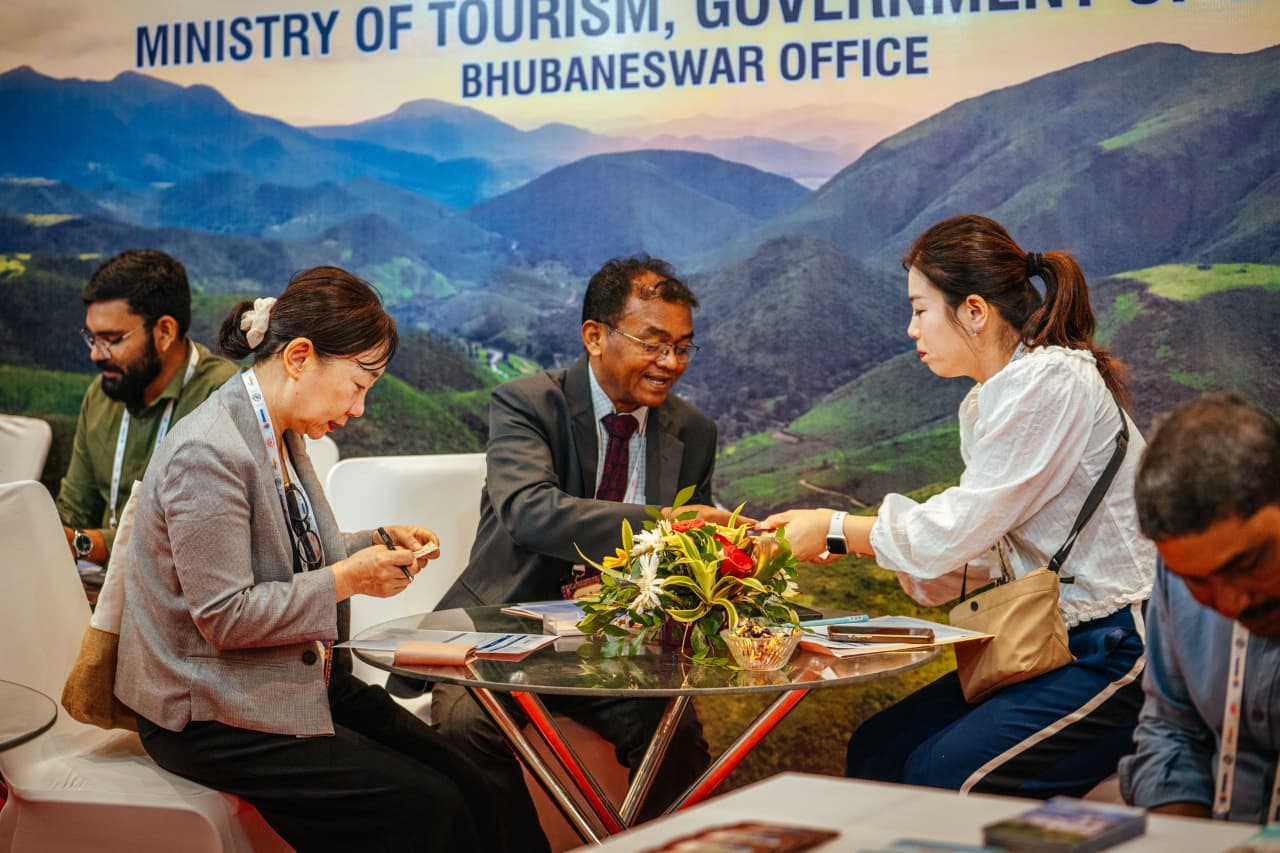
Bhubaneswar, Oct. 6 (UDN): The seventh edition of Odisha Travel Bazaar (OTB) 2026 concluded in Bhubaneswar on Monday, recording more than 9,000 Business-to-Business (B2B) and Business-to-Government (B2G) meetings as Odisha stepped up efforts to expand its footprint in the domestic and international tourism market.
Pic Credit: x.com/DDNewsOdia
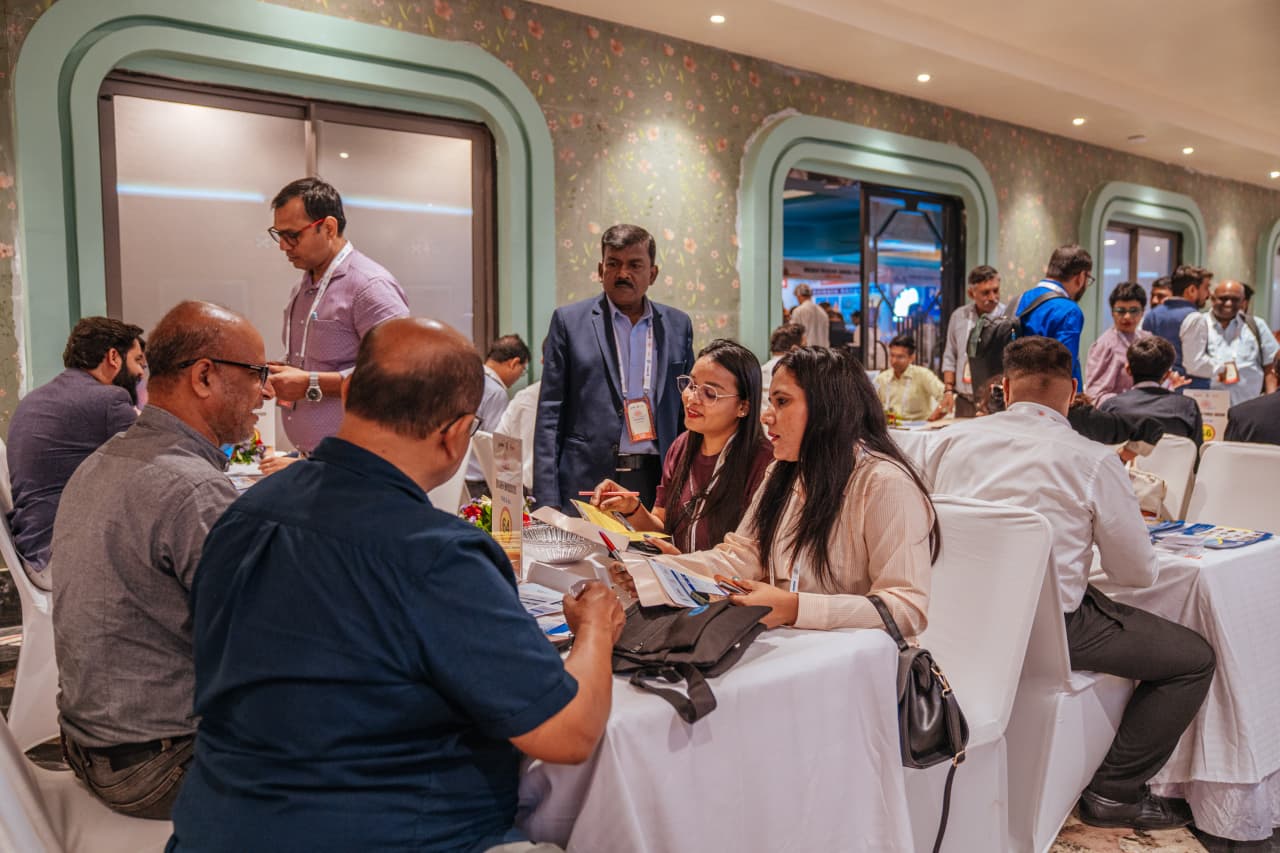
The three-day tourism event, organised by the Odisha Tourism Department in collaboration with FICCI at MAYFAIR Sanctuary, brought together more than 200 buyers and over 100 tourism businesses from across India and abroad.
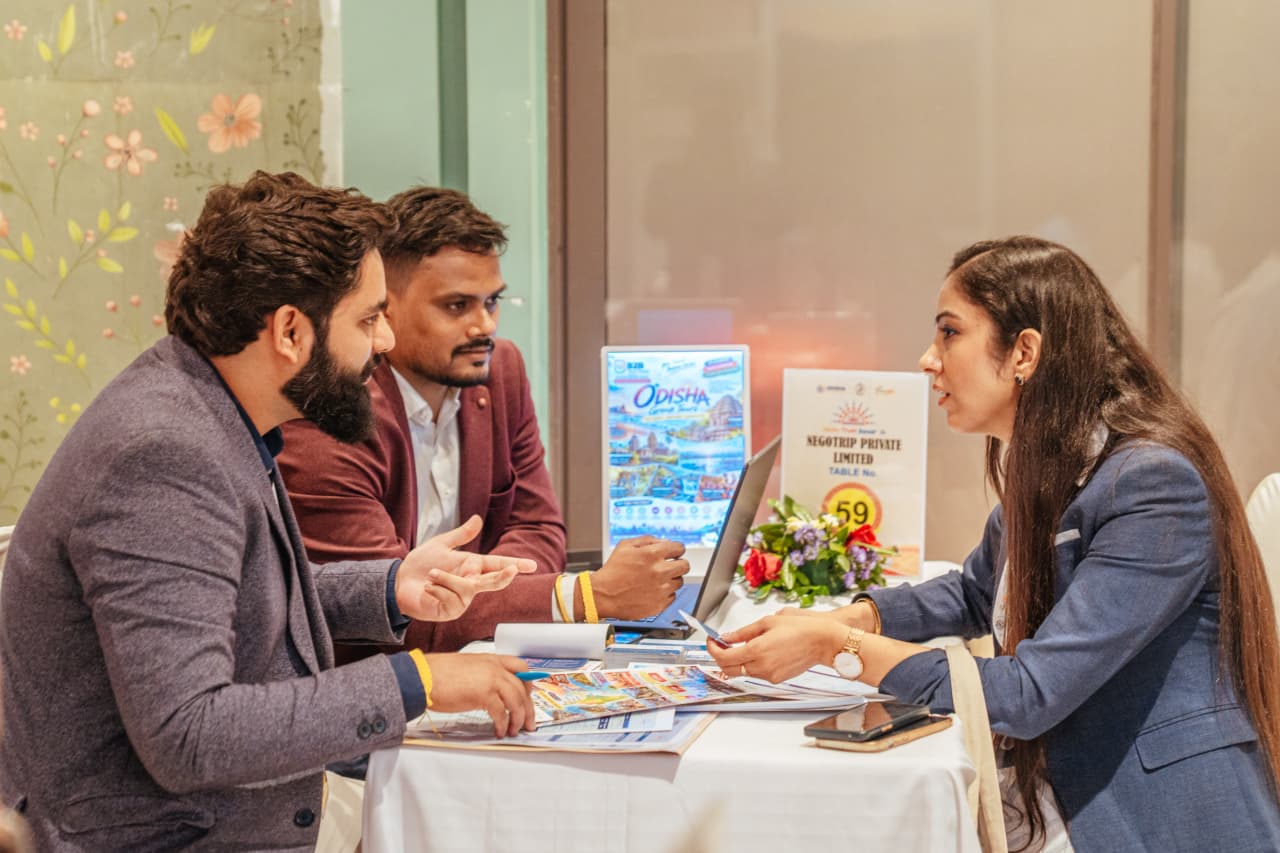
The event featured 145 domestic tour operators from 32 cities and 45 international operators representing 27 countries. The interactions provided Odisha-based tourism stakeholders with opportunities to build partnerships, explore new markets and develop business collaborations.
OTB 2026 showcased the state’s diverse tourism offerings, including heritage and spiritual destinations, beaches, wildlife, nature, adventure, tribal culture and culinary experiences.
Focus on Tourism Investment
Investment promotion emerged as a key component of this year’s event. Around 40 leading hospitality brands from across the country and nearly 250 investors from Odisha participated in discussions on opportunities in the state’s tourism and hospitality sectors.
Officials highlighted the state’s tourism policies, investment incentives, land availability, simplified approval processes and investor facilitation mechanisms aimed at encouraging private investment.
Push for MICE Tourism
The event also placed special emphasis on Meetings, Incentives, Conferences and Exhibitions (MICE) tourism. Industry representatives and policymakers discussed the infrastructure and policy support required to position Odisha as a preferred destination for major corporate and business events.
The Odisha MICE Incentive Portal was inaugurated during a dedicated roundtable, offering a digital platform for promoting MICE tourism and facilitating applications for eligible incentives.
Culture and Cuisine Take Centre Stage
Odisha’s rich culinary traditions, handicrafts, culture and local experiences were also showcased during the event. Celebrity chef and Odisha’s official brand ambassador for Odia cuisine, Ranveer Brar, participated in the programme.
To give visiting tourism professionals first-hand exposure to the state’s lesser-known attractions, eight familiarisation (FAM) tours were organised before and after the main event.
With thousands of business interactions and participation from stakeholders across multiple markets, OTB 2026 is expected to strengthen tourism linkages, attract fresh investments and further enhance Odisha’s visibility as a diverse tourism destination.
6, Oct 2026
AAEON Introduces the RTC-1030, A Rugged Mobile Tablet for Challenging Field Environments
A rugged device with wireless connectivity and hot-swappable batteries, the RTC-1030 targets field inspection, logistics, and manufacturing.
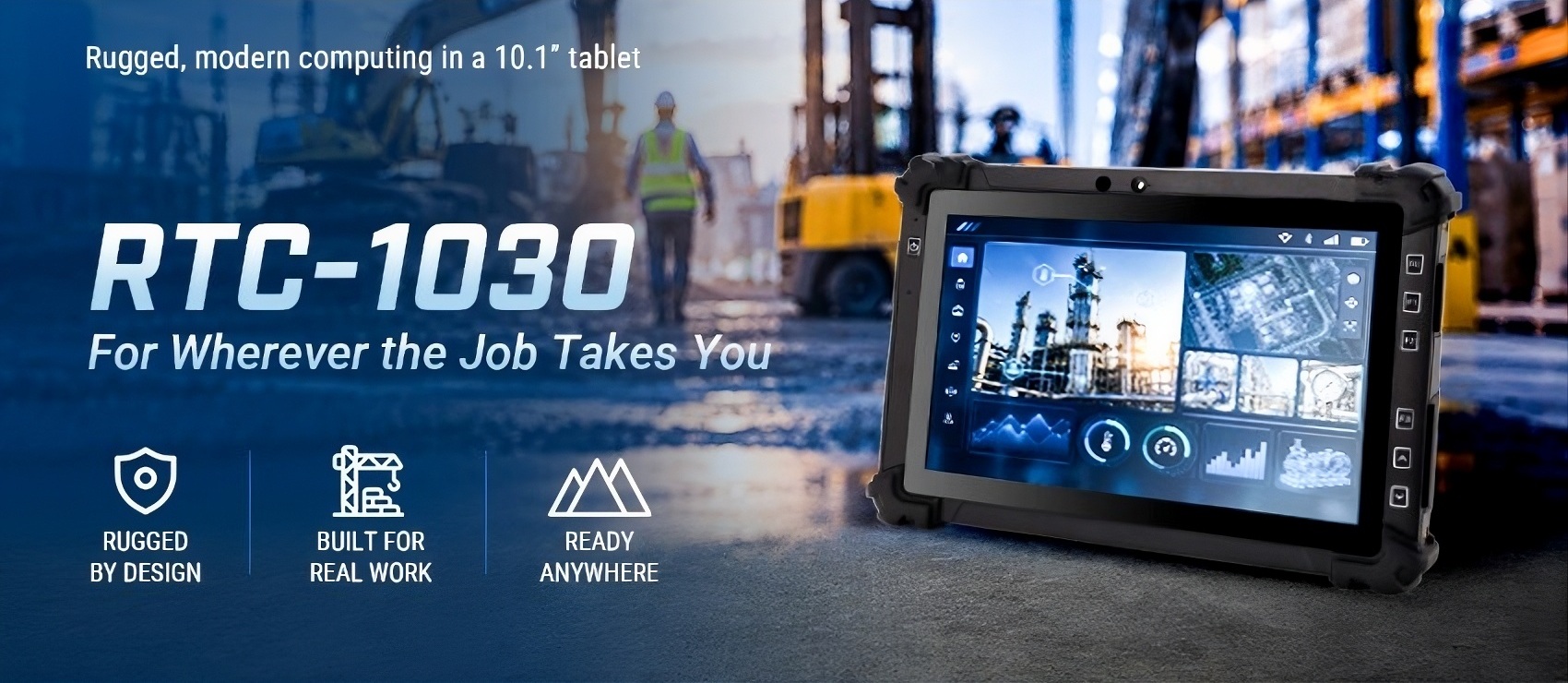
Taipei, Taiwan – Oct 06: Leading embedded computing company AAEON (Stock Code: 6579) today announced the release of the RTC-1030, a 10.1″ rugged mobile tablet designed for use in challenging environments such as field inspection, warehouse management, logistics, and manufacturing. The tablet is the latest addition to AAEON’s Rugged Tablet Computer collection, and the first in the series to feature an Intel® Processor N-series CPU and LPDDR5 system memory.
Given the environments it is designed to operate in, the RTC-1030 is built to be robust, with IP65-rated environmental sealing and a 10.1”, 425-nit projected capacitive multi-touch screen. In addition to this, the tablet lists MIL-STD-810H-tested drop, shock, and vibration resistance and an operating temperature range of -20°C to 50°C.
For continuous in-field use, the tablet supports two 32.7W hot-swappable batteries and offers an 8-hour battery life, with both DC jack and optional USB Type-C charging options available.
Beyond its rugged design, the RTC-1030 provides a number of technical enhancements over previous models from AAEON’s RTC collection, including a 5MP front camera and a 13MP rear camera with flash. Highlights from its I/O include three USB Type-A ports (one USB 3.2 Gen 1, two USB 2.0) and one USB Type-C port with display port functionality, as well as Gigabit Ethernet and a COM port supporting RS-232/422/485.
For wireless connectivity, the RTC-1030 provides Wi-Fi 802.11 a/b/g/n/ac and Bluetooth 5.3, with optional LTE supported through an M.2 slot. Additional connectivity and storage options include SIM card and Micro SD card slots. The tablet supports GPS, GLONASS, Galileo, BeiDou, and QZSS, with GPS and GLONASS provided by default, while storage comes in the form of an M.2 SSD, with 128GB by default, but capacities up to 1TB available upon request.
The RTC-1030 runs on Windows® 11 IoT Enterprise GAC, bringing familiar Windows applications into rugged field environments.
6, Oct 2026
Odisha Swelters in October Heat as Puri, Paradeep, Bhubaneswar Record Near-Record Temperatures
Bhubaneswar, Oct. 6 (UDN): Unseasonal heat continued to grip several parts of Odisha, with Puri, Paradeep and Bhubaneswar recording exceptionally high temperatures for October, according to data released by the India Meteorological Department (IMD).

Representational Image
The unusual rise in mercury has made the beginning of October significantly warmer than normal across several coastal and central parts of the state.
Puri Records Second-Highest October Temperature
Puri recorded a maximum temperature of 36.6°C on October 5, making it the second-highest October temperature ever recorded in the coastal city since systematic meteorological records began in 1896.
The reading highlights the unusual intensity of the heat in a month when temperatures generally begin to moderate following the monsoon season.
Paradeep Also Nears October Record
The coastal port town of Paradeep was another major hotspot, recording a maximum of 36.5°C.
According to IMD records, the temperature ranks as the second-highest October maximum recorded in Paradeep since observations began there in 1969.
Bhubaneswar Sees Fifth-Highest October Heat
The state capital Bhubaneswar also remained unusually hot, with the maximum temperature reaching 35.8°C on Monday.
The IMD data shows that this is the fifth-highest October maximum temperature recorded in the city since 1952.
Coastal Odisha Under Persistent Heat
The latest readings indicate that the heat has remained unusually intense across parts of coastal and central Odisha even in the first week of October.
With several locations recording temperatures among their highest ever for the month, the IMD observations point to an unusually warm start to October across the state.
Residents in affected areas are advised to remain cautious during peak afternoon hours, particularly while the unusual heat conditions persist.
6, Oct 2026
World Bank Raises India’s FY27 Growth Forecast to 7.1 pc on Strong Domestic Demand
New Delhi, Oct 6: The World Bank has raised its forecast for India’s economic growth in FY27 to 7.1 per cent from 6.6 per cent earlier, pointing to resilient domestic consumption and stronger-than-expected economic activity.
The upgrade comes despite continued challenges from elevated energy prices, inflationary pressures and an uncertain global environment. The latest assessment suggests that India’s strong domestic market is helping the economy absorb external shocks while maintaining its growth momentum.
Domestic consumption provides a strong cushion
India’s large consumer base continues to be one of the strongest pillars of its economy. Steady demand for goods and services has helped businesses maintain activity even as input and energy costs remain under pressure.
The World Bank has also revised upward its growth outlook for South Asia to 6.9 per cent in 2026, compared with 6.3 per cent earlier, with India expected to account for a significant share of the region’s expansion.
Strong GDP performance supports optimism
The revised outlook follows 7.8 per cent real GDP growth in India during the April-June quarter, highlighting the strength of economic activity at the beginning of the fiscal year.
Continued infrastructure investment, digital expansion and policy reforms are supporting businesses across manufacturing, services, technology and other sectors. Strong domestic demand could further encourage companies to expand capacity, increase investment and create jobs.
Energy costs remain a key concern
The positive outlook is accompanied by risks, particularly from global energy prices.
Higher crude oil prices can raise transportation, manufacturing and logistics costs and put pressure on household spending. As India relies significantly on imported energy, international oil prices remain an important factor influencing inflation and economic growth.
The potential impact of El Niño and other weather disruptions is another factor to watch, particularly because weaker agricultural output could affect food prices and rural consumption.
AI offers fresh productivity opportunities
Artificial intelligence is also emerging as a potential driver of productivity for Indian businesses.
The World Bank assessment indicates that around 23 per cent of Indian firms report using AI, compared with approximately 43 per cent in the United States. While adoption remains lower, the gap represents considerable room for expansion.
Greater use of AI, combined with investment in digital infrastructure and workforce skills, could help Indian companies improve efficiency, develop new products and services and compete more effectively in global markets.
India’s domestic economy remains resilient
The World Bank’s decision to raise the FY27 growth forecast to 7.1 per cent offers a positive signal for businesses and investors amid continuing global uncertainty.
The key challenge will be to preserve the momentum of consumption and investment while managing inflation, energy costs and external risks. Continued reforms, infrastructure development and productivity-enhancing technology could strengthen India’s growth prospects further.
The latest forecast underlines the growing importance of India’s domestic demand as a stabilising force, reinforcing the country’s position as one of the world’s major engines of economic growth.


