


6, Oct 2026
October Heat Intensifies in Bhubaneswar, ‘Feels Like’ Temperature Soars Amid High Humidity
Bhubaneswar, Oct. 6 (UDN): Bhubaneswar is witnessing an unusual spell of October heat, with daytime temperatures climbing to around 34°C to 36°C, several degrees above the seasonal normal.
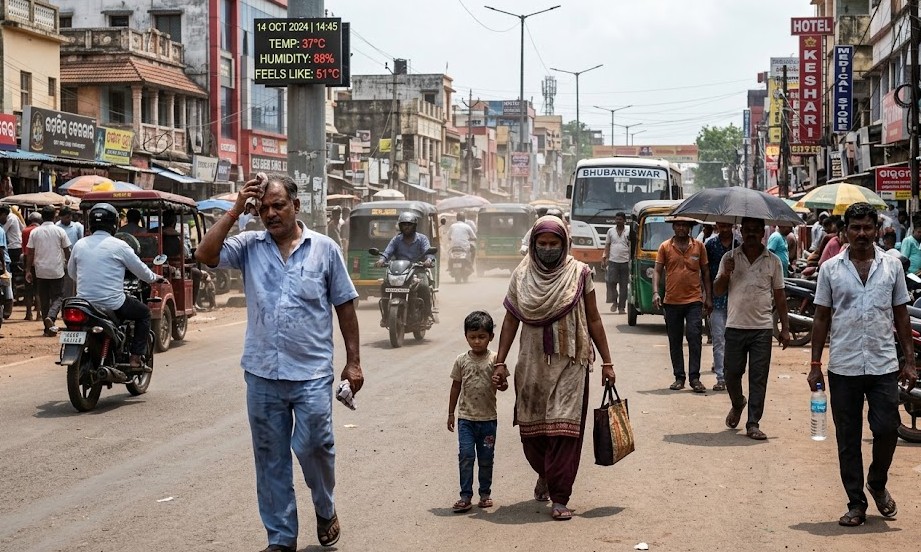
Representational Image
The combination of elevated temperatures and persistent coastal humidity has made the weather particularly uncomfortable, with the heat index or ‘feels-like’ temperature in some conditions reaching significantly higher levels.
Humidity levels hovering between 70% and 90% are adding to the discomfort by slowing the evaporation of sweat from the body, making the heat feel more oppressive than the actual air temperature.
Unusual warmth during the post-monsoon transition
The October heat comes during the transition from the southwest monsoon to the drier post-monsoon season.
With clearer skies and stronger sunshine during the daytime, the land surface can absorb substantial solar heat. The resulting warming is particularly noticeable across densely built-up parts of Bhubaneswar, where concrete structures and paved surfaces retain heat.
Urbanisation adds to the discomfort
The city’s expanding built-up landscape is another factor contributing to local heat.
Reduced vegetation, extensive concrete surfaces, traffic and dense construction can create an urban heat island effect, in which urban areas remain warmer than surrounding less-developed regions.
During the afternoon, this accumulated heat can make outdoor conditions feel considerably harsher, particularly for people working or travelling in direct sunlight.
Humidity makes the heat harder to tolerate
High humidity is a major reason why residents may feel considerably hotter than the thermometer reading suggests.
When atmospheric moisture is high, the body’s natural cooling mechanism—evaporation of sweat—becomes less efficient. As a result, prolonged exposure to the heat can increase the risk of dehydration, exhaustion and other heat-related discomfort.
Children, elderly people, outdoor workers and those with existing health vulnerabilities should take particular care during the hottest part of the day.
Residents advised to take precautions
People in Bhubaneswar are advised to remain hydrated, avoid unnecessary exposure to direct sunlight during peak afternoon hours and wear light, breathable clothing.
Outdoor workers and commuters should take regular breaks in shaded or cool areas and remain alert to symptoms such as excessive sweating, dizziness, weakness or headache.
The current spell serves as a reminder that October, despite marking the onset of autumn, can still bring intense heat to coastal Odisha, especially when high temperatures combine with substantial humidity.
As Bhubaneswar continues to urbanise, the impact of rising daytime temperatures and the urban heat island effect is also likely to remain an important issue for the city’s planners and residents.
- 0
- By Neel Achary

6, Oct 2026
Kalinga Studio Gets a New Lease of Life as Odisha Revamps Film Infrastructure
Bhubaneswar, Oct. 5 (UDN): Odisha has taken a major step towards strengthening its film ecosystem with the inauguration of the redeveloped Kalinga Studio in Bhubaneswar on Monday.
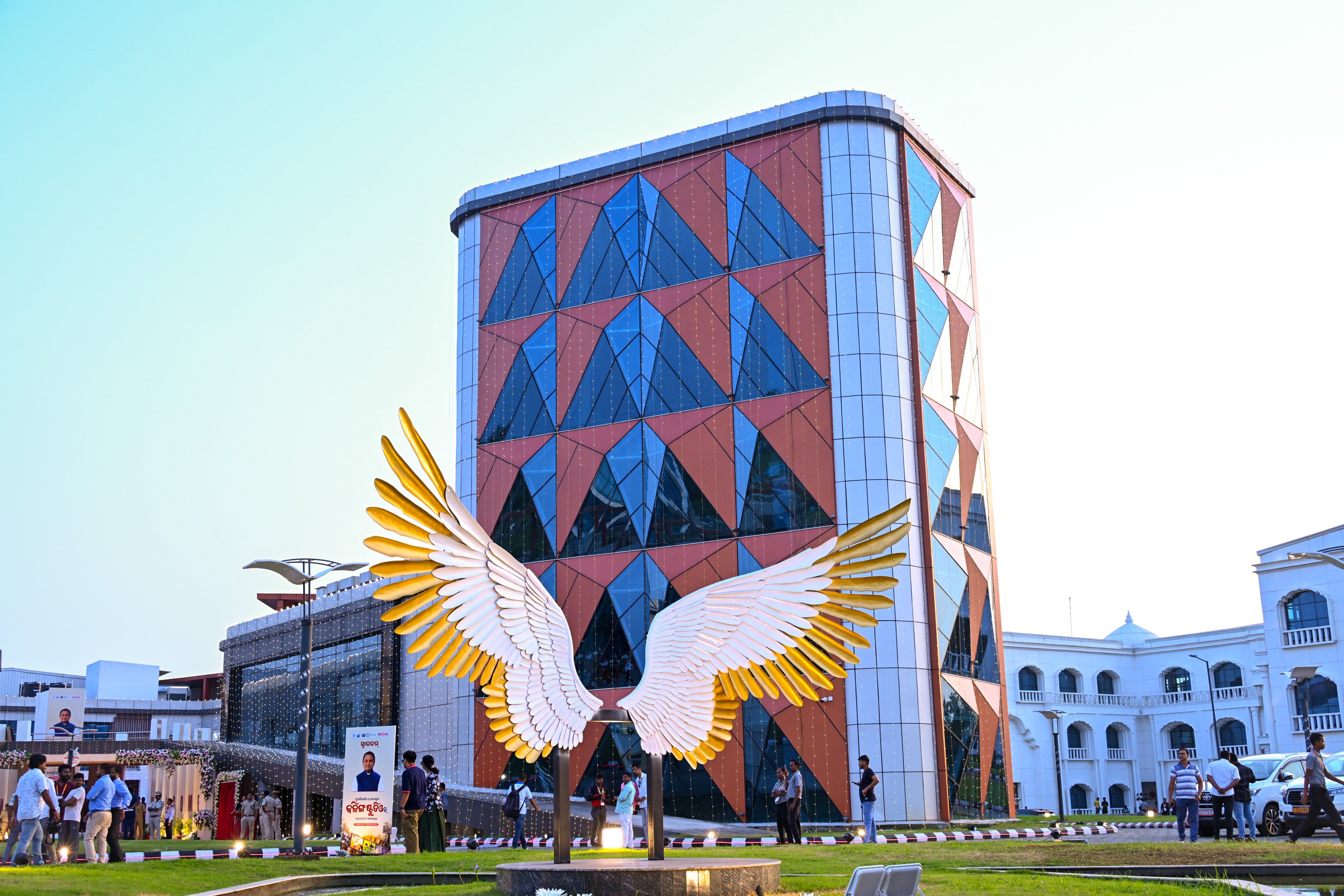
Pic Credit: x.com/CMO_Odisha
Chief Minister Mohan Charan Majhi inaugurated the modernised studio complex along with a dedicated cinema archive and museum, aimed at preserving the state’s rich and evolving cinematic heritage.
The redevelopment is expected to provide filmmakers with modern production and post-production facilities within the state, reducing their dependence on infrastructure outside Odisha.

From shooting floors to post-production
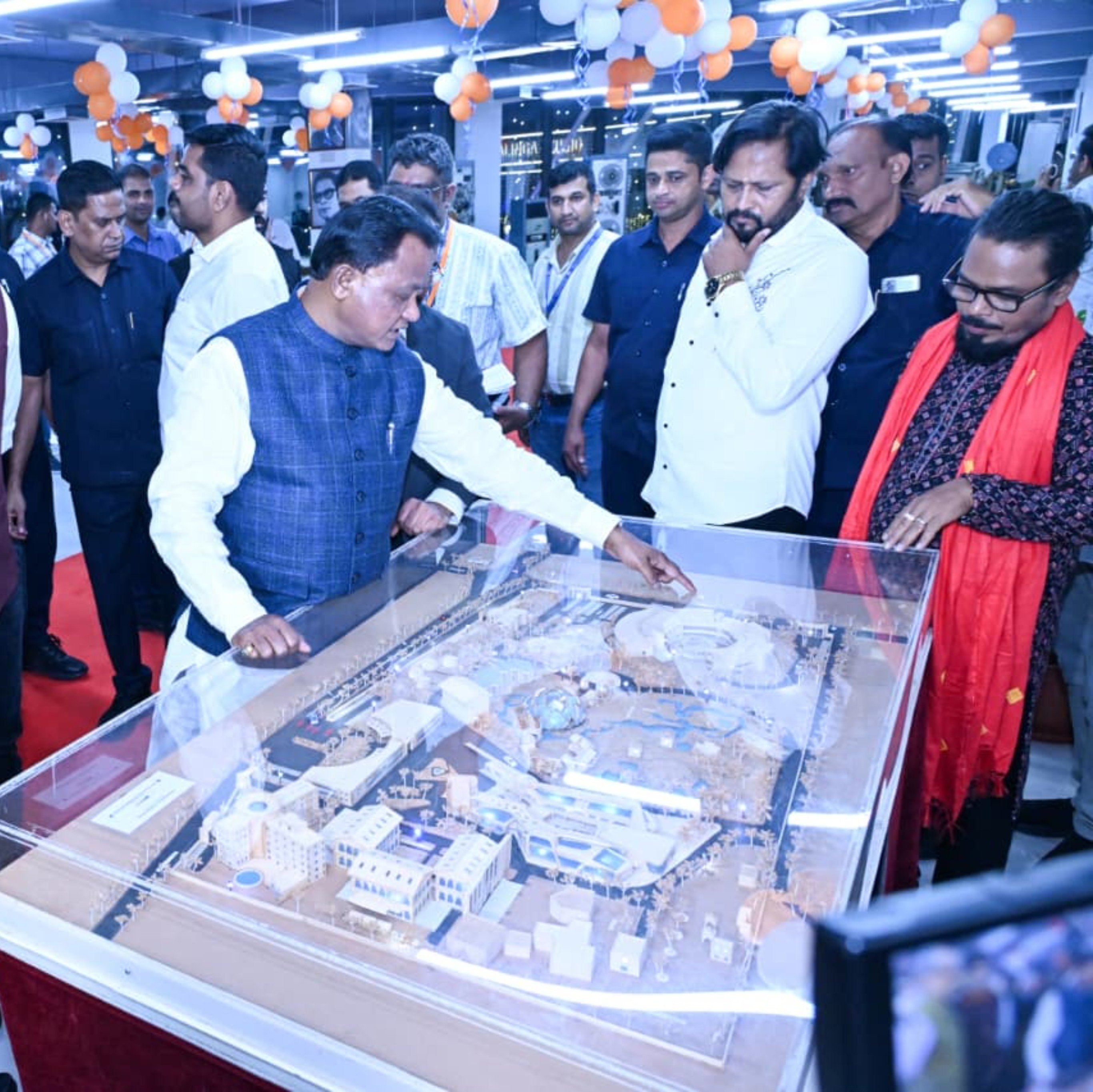
The revamped Kalinga Studio has been designed as an integrated film-production hub, offering facilities covering several stages of filmmaking.
The complex includes indoor shooting floors, a snow house, chroma floor and technology zone, apart from infrastructure for sound recording, dubbing, editing and post-production work.
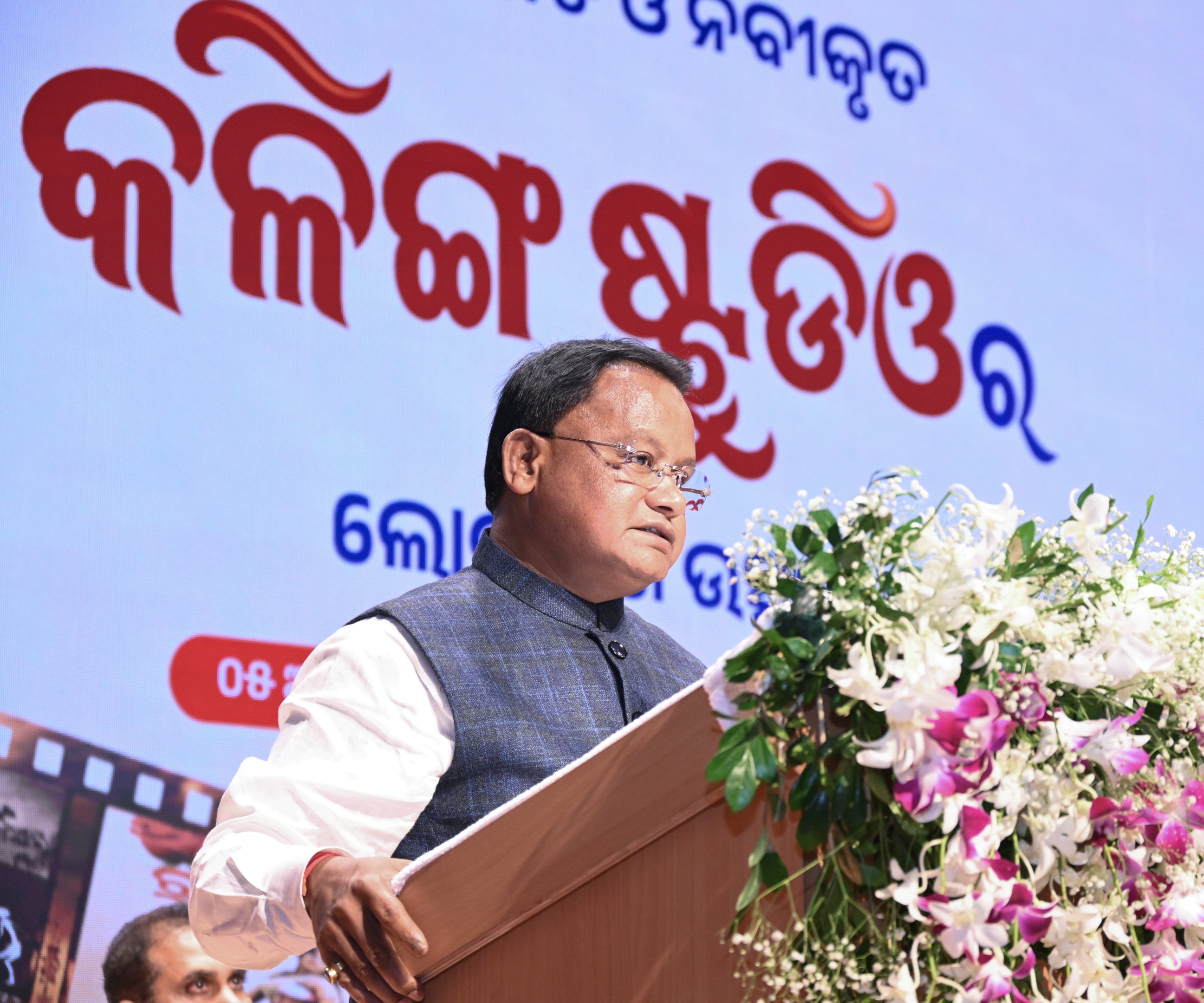
Speaking at the inauguration, Chief Minister Majhi said the upgraded facility would enable Odia filmmakers to access advanced technical infrastructure without having to travel to other states.
He also indicated that additional modern facilities would be introduced at the studio in the future.
A permanent home for Odisha’s cinematic memory
A key feature of the redevelopment is the new archive and museum, which will serve as a repository for the history of Odia cinema.
The facility is expected to preserve old films, posters, photographs and important historical documents, creating a space where future generations can explore the evolution of the state’s film industry.
Recalling the contribution of literature to Odia cinema during the 1950s and 1960s, Majhi referred to classics such as ‘Maa’, ‘Amadabata’ and ‘Matira Manisha’.
He said Odisha’s cinematic journey has been closely linked with its literary and cultural traditions.
From a 1980 film facility to a modern production hub
Established in 1980, Kalinga Studio was created to support film production in Odisha. However, years of natural disasters and rapid advances in filmmaking technology created the need for a comprehensive upgrade.
The redevelopment is intended to bring the facility in line with the changing requirements of the contemporary film industry.
The Chief Minister expressed confidence that Odisha’s young creative talent could make effective use of the new infrastructure.
He highlighted the growing capabilities of young professionals in acting, direction, cinematography, animation, sound design and digital storytelling.
Focus on Odisha’s stories and talent
Majhi urged young filmmakers to use Kalinga Studio to create original productions inspired by Odisha’s folklore, history, traditions and cultural heritage.
The government’s broader objective, officials indicated, is to position filmmaking as more than an entertainment industry and develop it as an economic sector capable of generating employment and supporting allied creative industries.
Industries, Skill Development and Technical Education Minister Sampad Chandra Swain said the redeveloped complex had been planned as an ultra-modern studio capable of supporting filmmakers from production through post-production.
He stressed that the film sector has the potential to become a significant economic ecosystem, generating opportunities for employment, entrepreneurship and creative businesses.
OFDC gets a new digital platform
The occasion also saw the launch of the new official portal of the Odisha Film Development Corporation (OFDC), adding a digital component to the state’s efforts to strengthen the film ecosystem.
The inauguration was attended by Ekamra MLA Babu Singh, Digapahandi MLA Siddhant Mahapatra, Korei MLA Akash Das Nayak, Industries Department Additional Chief Secretary Hemant Sharma and Kalinga Studio Managing Director Surendra Kumar Panda, among others.
With upgraded production infrastructure and a dedicated museum and archive, the redevelopment of Kalinga Studio marks an attempt to connect Odisha’s cinematic past with the opportunities of its emerging film and digital-content industry.
6, Oct 2026
Fiesta Americana Travelty Gives U.S. Travelers the Opportunity to Know Mexico and the Caribbean Like a Local
MEXICO CITY, MEXICO, FALL 2026 — Fiesta Americana Travelty, the online booking platform bringing together the distinct portfolio of Grupo Posadas hotel brands, has introduced a new U.S. consumer campaign inviting travelers to discover Mexico and the Dominican Republic with the insight of a hospitality company that has called Mexico home for more than 50 years.
Available at seven participating resorts, the offer includes 25% savings on stays of three nights or more plus a $300 Experience Credit toward select culinary, wellness, adventure, and destination experiences.
The “Know It Like We Do” campaign builds on Grupo Posadas’ Mexican-born hospitality philosophy and more than five decades of experience welcoming guests. Rather than focusing on rooms and amenities, the campaign highlights the local knowledge, personal connection, and experiences that allow travelers to see beyond the resort and go deeper than familiar landmarks and hotspots.
“Our resorts are gateways into the places we call home,” said Jose Jaime Lorenzo, Grupo Posadas Chief Commercial Officer. “We want guests to leave with more than beautiful photographs. We want them to carry home a story, a connection, a flavor. And with it all, we want them to gain a new understanding of the destination.”
Participating resorts include Devossion by Live Aqua Playa del Carmen, Live Aqua Punta Cana, Live Aqua Cancun, Grand Fiesta Americana Coral Beach Cancun, Fiesta Americana Condesa Cancun, Fiesta Americana Riviera Nayarit, and Fiesta Americana Puerto Vallarta.
The collection includes adults-only and family-friendly options; all are all-inclusive resorts, offering a wealth of elevated culinary journeys that bring local flavors and authentic traditions to life. Eligible experiences vary by resort and may include select dining, wellness, recreation, and destination activities.
For more information on participating resorts, eligible experiences, and booking details, visit https://www.
6, Oct 2026
Leonardo DRS Establishes UK Subsidiary and Launches Local Capabilities for its Tactical Radars including Full Manufacturing
New DRS UK capability will support growing demand for counter-UAS, air defence and active protection system applications
ARLINGTON, Va.– Oct. 6, 2026 – Leonardo DRS, Inc. (Nasdaq: DRS) announced the establishment of DRS UK, a new subsidiary created to support the company’s business in the United Kingdom, along with the launch of local production of tactical radars in the UK.
The newly purpose-built production site expands DRS’s manufacturing footprint and creates a dedicated local presence to support UK defence customers, industry partners and system integrators. The company said the investment is intended to strengthen long-term support for UK programmes and provide greater flexibility to meet evolving operational requirements.
DRS tactical radars are designed to detect, track and classify a wide range of airborne and ground threats, including unmanned aircraft systems (UAS) and rockets, artillery and mortars (RAM). The radars support counter-UAS, air defence, force protection and active protection system applications.
DRS said more than 10,000 radar panels have been deployed worldwide with operational service with the United States Armed Forces, NATO allies and other international customers.
“Establishing DRS UK and launching a full local tactical radar capability, strengthens our ability to support customers and partners with the proximity, responsiveness and manufacturing capacity needed to meet evolving operational requirements,” said John Baylouny, president and chief executive officer of Leonardo DRS. “This investment enables closer collaboration with UK industry partners and integrators to deliver counter-UAS, air defence and force protection capabilities that help protect the warfighter.”
“Our investment in UK-based manufacturing for advanced sensing technologies reinforces the industrial capability, supply chain resilience and skilled workforce needed to support critical defence priorities,” said Max Cohen, senior vice president and general manager overseeing DRS’s tactical radar portfolio. “By establishing this local capacity, we are creating high-value engineering and manufacturing opportunities while positioning DRS UK to support future export growth and deliver greater value to customers across the UK and Europe.”
The UK operation will serve as a strategic hub for DRS’s tactical radar business in the UK and Europe, the company said.
6, Oct 2026
Shasta Pools Hires 30-Year Builder to Head Residential Construction Division
SCOTTSDALE, Arizona (October 6, 2026) – Shasta Pools, Phoenix Metro’s most recognized pool builder, named Vic Harshman as Head of Residential Construction. Harshman joins the new leadership team with more than three decades of hands-on industry experience and a long-standing relationship with the company to one of its most critical leadership roles.
Harshman has held senior construction leadership positions in Arizona and Texas, and worked closely with Shasta Pools, developing firsthand knowledge about the company’s standards, culture and customers. The appointment reflects the momentum Shasta Pools has built since its August 6 acquisition by Dansons Capital Group, Accrual Equity Partners, and Hydro Construction, and positions the full-service 60-year old pool company for continued growth.
Leadership Perspective
“Vic brings exactly the kind of no-nonsense, customer-first leadership our residential construction division needs,” said Jeff Thiessen, President, Dansons Capital Group. “His philosophy is deeply aligned with ours. Keeping customers’ needs as the foremost priority at every stage of the build process is at the center of everything we do, and Vic lives that every day.”
Harshman’s career in pool construction began at age 19, when he purchased a backhoe and launched a business digging plumbing trenches and footings. When the housing market declined in the late 1980s, he relocated to Las Vegas and began excavating swimming pools, a move that led to the creation of Harshman Excavating.
Harshman built and operated excavation businesses in Nevada, Arizona and Texas, primarily serving the pool industry, and served for a period as Shasta’s exclusive excavation contractor.
In 2012, Harshman joined A&A Manufacturing, serving pool builders across an eight-state region and growing annual sales by 10x. In 2020, he joined Keith Zars Pools in Texas as Director of Construction, where he brought together decades of ownership, leadership and industry knowledge.
A Return Rooted in Relationships
“I have always believed that strong relationships, hard work, accountability and taking care of people are the foundation of a successful business,” said Vic Harshman, Head of Residential Construction, Shasta Pools. “Shasta has been a meaningful part of my career for many years. I am genuinely excited to come back and help lead this team into a very exciting future.”
Harshman steps into the role with the full support of Dan Thiessen, Chairman of the new ownership team, and John Mortensen, the outgoing head of residential construction. Mortensen recommended Harshman for the position and will now serve as the company’s lead trainer. That transition reflects Shasta Pools’ commitment to investing in its people and preserving institutional knowledge as the organization continues to grow.
5, Oct 2026
Odisha Police to Recruit 113 Retired Cops as Special Police Officers
Koraput, Oct. 5 (UDN): The South Western Range (SWR) of Odisha Police has opened recruitment for 113 retired police personnel to serve as Special Police Officers (SPOs) on a contractual basis across six districts.

Representational Image
The recruitment drive is aimed at bringing experienced former Assistant Sub-Inspectors, Sub-Inspectors and Inspectors back into service for a fixed tenure.
113 Posts Across Six Districts
The vacancies have been distributed among Koraput, Malkangiri, Rayagada, Nabarangpur, Kalahandi and Nuapada.
Rayagada: 24 posts
Koraput: 22 posts
Malkangiri: 20 posts
Kalahandi: 18 posts
Nabarangpur: 16 posts
Nuapada: 13 posts
Rayagada has the highest number of openings, while Nuapada has the lowest.
Applications Open Till October 15
Eligible retired police personnel are required to submit their applications to the Deputy Inspector General of Police, South Western Range, Koraput.
The applications must reach the DIG’s office by 5.30 pm on October 15, 2026. Authorities have cautioned that incomplete applications or those received after the deadline will not be considered.
Eligibility Conditions
Applicants must be permanent residents of Odisha and should be 65 years of age or below as on the date of publication of the recruitment advertisement.
Candidates must also be able to speak, read and write Odia and should have an unblemished service record. Those facing pending criminal cases or having a previous criminal conviction are not eligible.
Physical Test, Medical Exam and Interview
The selection process will be conducted at the Reserve Police Ground in Koraput at 6.30 am on October 28, 2026.
Candidates will undergo verification of original documents, a medical examination, physical fitness test and interview.
As part of the physical test, applicants will have to walk 5 km within one hour. Failure to complete the distance within the prescribed time will result in disqualification.
One-Year Contractual Re-Employment
Selected candidates will be re-employed as Special Police Officers for one year on a contractual basis.
During their tenure, they will be required to wear the prescribed police uniform and badge. Their remuneration will be determined in accordance with the Odisha Government Finance Department’s applicable guidelines.
The application form and detailed recruitment advertisement have been made available through the Odisha Police website.
5, Oct 2026
Odisha Wins MoHUA Recognition for Highest Number of PMAY-U 2.0 Reforms
Bhubaneswar, Oct. 5 (UDN): Odisha has earned national recognition for its reform-driven approach to urban housing, receiving a Special Recognition Award from the Union Ministry of Housing and Urban Affairs (MoHUA) for carrying out the highest number of reforms under Pradhan Mantri Awas Yojana-Urban (PMAY-U) 2.0.

Representational Image
The award was presented in New Delhi on Monday during the Pradhan Mantri Awas Yojana-Urban Awards 2026, acknowledging the state’s efforts to make the implementation of the urban housing scheme more efficient, transparent and citizen-focused.
Focus on Faster and Transparent Housing Delivery
According to MoHUA, Odisha introduced a series of reforms under PMAY-U 2.0 to improve administrative processes, strengthen coordination between implementing agencies and make greater use of technology.
The reforms are aimed at simplifying the delivery mechanism and ensuring that eligible urban families can access housing assistance with fewer procedural hurdles.
The ministry also highlighted the state’s efforts to create a more streamlined and citizen-centric system for implementing the housing programme.
Minister Credits Collective Government Effort
Welcoming the recognition, Odisha Housing and Urban Development Minister Krushna Chandra Mahapatra said the award reflected the combined efforts of government officials, Urban Local Bodies and agencies involved in implementing PMAY-U 2.0.
He stressed that the government’s objective extends beyond merely constructing houses and includes ensuring that eligible urban families receive safe and dignified homes through a transparent delivery system.
“Our objective is not merely to construct houses, but to ensure that every eligible urban family gets a safe, secure and dignified home through a transparent and citizen-centric system,” Mahapatra said.
Odisha Reaffirms ‘Housing for All’ Commitment
The state government said it would continue to prioritise administrative reforms, faster execution and stronger last-mile delivery under PMAY-U 2.0.
The recognition comes as Odisha seeks to ensure that eligible beneficiaries receive housing assistance in a timely and hassle-free manner.
The award has further highlighted Odisha’s reform-oriented approach to urban housing and its contribution to the national objective of ‘Housing for All’.
5, Oct 2026
Fibe appoints Vivek Sapre as Chief Human Resources Officer

Pune, Oct 05: Digital lending platform, Fibe, has appointed Vivek Sapre as its Chief Human Resources Officer (CHRO). In his new role, Vivek will lead Fibe’s people and culture agenda, focusing on strengthening leadership, developing talent and building a high-performance culture to support the company’s growth.
Vivek brings diverse experience across human resources, consulting, strategy, product management and business leadership.
He joins Fibe from Veranda Learning Solutions, where he served as Group CHRO, leading people strategy and HR initiatives across the group. Previously, he was Head – HR & Corporate Affairs at NeoGrowth Credit, overseeing human resources, learning and development, administration and corporate affairs.
Akshay Mehrotra, Managing Director & Group CEO, Fibe, stated, “Building a company that puts people first means giving employees the opportunity and support to grow as the business evolves. As AI becomes a greater part of how we work, we need to invest equally in upskilling our teams, helping them use technology with confidence and exercise sound judgement. Vivek’s experience across people leadership, strategy and financial services brings a valuable perspective to this effort. We believe that he will help us develop leaders from within, make continuous learning part of everyday work and create a culture where employees can take on greater responsibility and shape Fibe’s future.”
Vivek Sapre, Chief Human Resources Officer, Fibe, said, “What drew me to Fibe is the opportunity to help employees build lasting careers in a sector where the skills needed for success are changing rapidly. My priority will be to attract the right talent, develop leaders who set the tone through their actions and create clear opportunities for career growth. Strengthening learning and development will be central to this, helping employees build new skills and adapt as technology reshapes how we work. I want every individual to feel valued, take ownership and see how their contribution supports Fibe’s larger goals.”
An alumnus of XLRI Jamshedpur, Vivek has also worked with EY, L&T Finance, Tata-Hitachi, Mu Sigma and Infosys. His career spans financial services advisory, product and strategy management, analytics, marketing and technology, bringing a broad business perspective to his people leadership role.
5, Oct 2026
World Skill Center to Launch Green Energy Centre of Excellence in Bhubaneswar
Bhubaneswar, Oct. 5 (UDN): Odisha is set to strengthen its clean-energy workforce with the establishment of a dedicated Green Energy (Solar) Centre of Excellence at the World Skill Center (WSC) in Bhubaneswar.
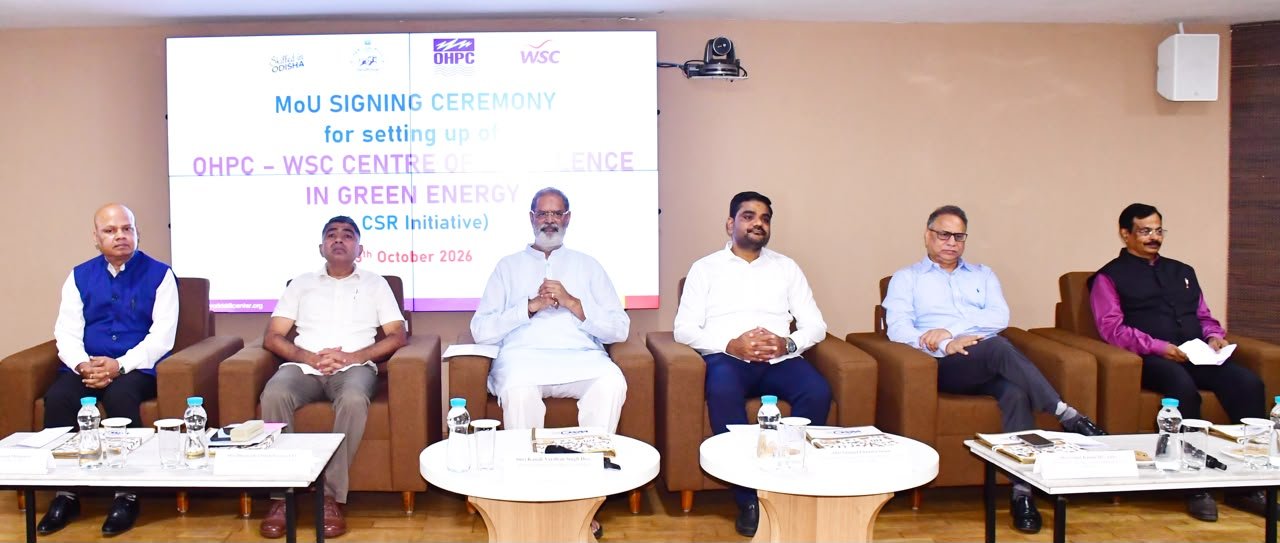
Pic Credit: x.com/EnergyOdisha
The new facility, being developed at the WSC’s Mancheswar campus, will focus on advanced solar technologies and industry-oriented training, preparing young people for emerging jobs in the renewable energy sector.
₹1.48 Crore CSR-Funded Project
The Centre of Excellence will be fully funded under the Corporate Social Responsibility (CSR) programme of the Odisha Hydro Power Corporation (OHPC). The project involves an investment of ₹1,48,75,009 during the financial years 2026–27 and 2027–28.
The initiative was announced on Monday in the presence of Deputy Chief Minister and Energy Minister Kanak Vardhan Singh Deo and Industry, Skill Development and Technical Education Minister Sampad Chandra Swain.
Spread across around 3,000 square feet at Kaushal Bhawan, the facility will feature practical demonstration systems covering rooftop solar, floating solar and solar-tracker technologies.
Focus on Advanced Solar Skills
The Centre will combine WSC’s existing expertise in electrical systems, industrial automation, advanced manufacturing and digital technologies with emerging clean-energy applications.
Training will include technologies such as Programmable Logic Controllers (PLC), SCADA, Industrial Internet of Things (IIoT), remote monitoring, digital twins, predictive maintenance and Energy Management Systems (EMS).
The hands-on approach is aimed at helping trainees move beyond classroom certification and gain the practical skills required for employment in the renewable energy industry.
300 Youth to Receive Training Every Year
The Centre is expected to train around 300 young people annually for specialised roles, including Solar PV Technicians, Operations and Maintenance Technicians, Site Supervisors and Energy Auditors.
Youth from all districts of Odisha will be eligible, with special outreach planned in areas where OHPC operates.
The programme will also emphasise gender inclusion, encouraging greater participation of women in the clean-energy workforce in line with Sustainable Development Goal 5.
WSC Plans Wider Expansion
The event also saw the announcement of plans to expand the World Skill Center’s reach across Odisha.
The number of fully sponsored students at WSC is being increased from 60 to 100 annually from this year. A proposal has also been made to establish new WSC branches in Berhampur and Sambalpur, taking advanced technical skilling beyond Bhubaneswar.
Minister Sampad Chandra Swain said the Centre would play an important role in equipping Odisha’s youth with future-ready skills and creating sustainable employment opportunities in the solar and green-energy sector.
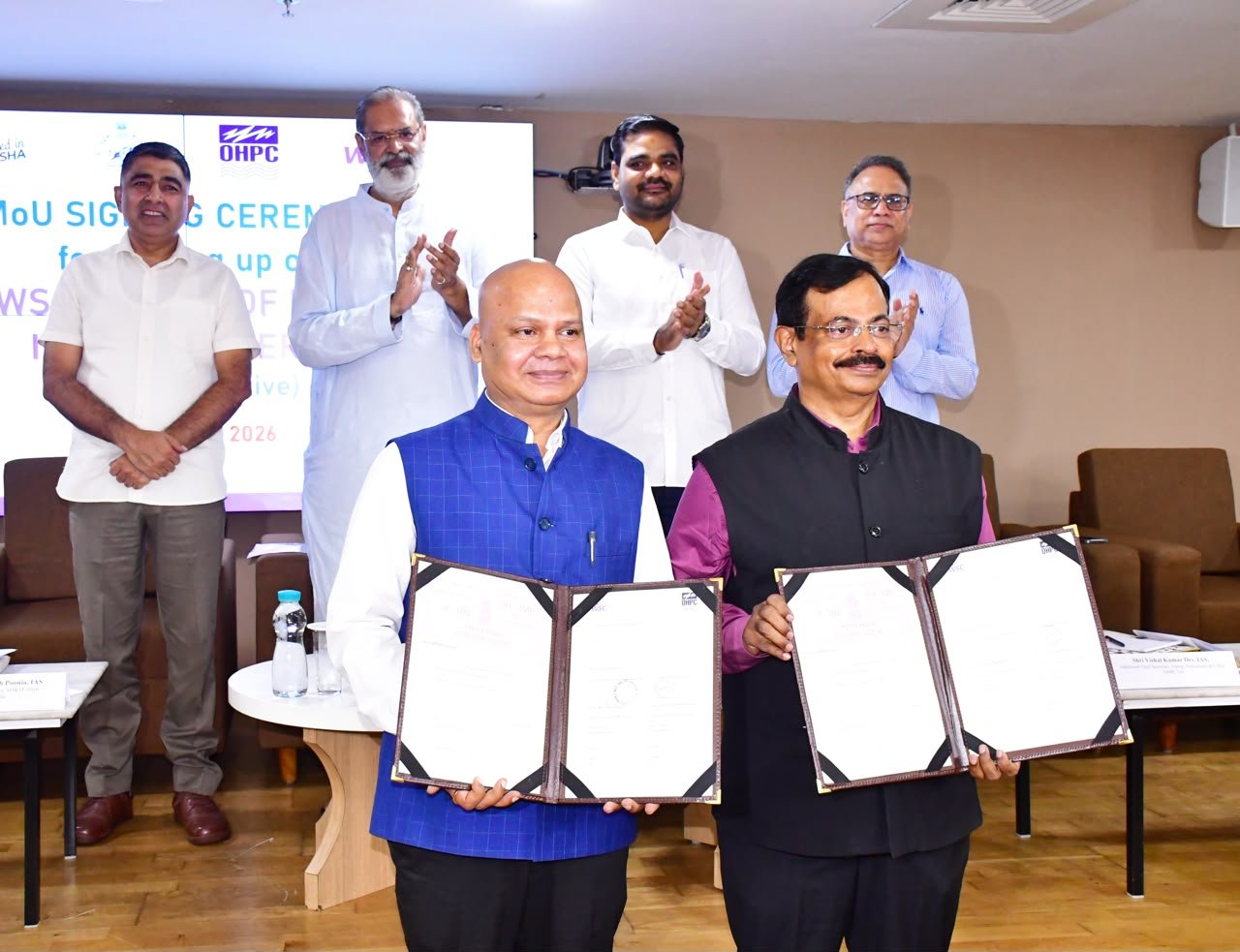
Senior officials, including Additional Chief Secretary, Energy, Vishal Kumar Dev; Commissioner-cum-Secretary, SDTE, Bhupendra Singh Poonia; WSC COO Rashmi Ranjan Mohapatra; and OHPC Director (HR) Sandeep Pattnaik, attended the MoU signing ceremony.
5, Oct 2026
RBI May Hold Repo Rate in October, Rate Hikes Could Start in December: BoB
New Delhi, Oct 5: The Reserve Bank of India (RBI) may keep the repo rate unchanged at 5.25 per cent in its October monetary policy meeting, while a rate-hike cycle could begin from December, according to an assessment by Bank of Baroda.
The bank expects the RBI to maintain its neutral policy stance in October as it continues to monitor inflation, economic growth, crude oil prices and global financial conditions.
Bank of Baroda expects the RBI to raise the repo rate by a total of 50-75 basis points in the next tightening cycle, starting in December. However, the timing and pace of any future rate changes will depend on how inflation and other economic indicators develop.
India’s economy continues to show strong growth, giving the central bank some room to assess the situation before making a change in interest rates. Bank of Baroda expects India’s GDP growth to remain around 7-7.2 per cent in FY27.
Inflation is also an important factor for the RBI. Retail inflation has moved higher in recent months, mainly due to food prices, while core inflation has remained relatively moderate.
The banking system is also seeing surplus liquidity, while credit growth remains healthy across several sectors. These factors could influence the RBI’s approach to monetary policy in the coming months.
Global developments will remain another key factor. Changes in crude oil prices, movements in global interest rates and foreign investment flows can affect India’s inflation outlook, the rupee and bond yields.
If the RBI keeps the repo rate unchanged in October, it would give policymakers more time to assess these developments before considering a possible rate increase later in the year.
For borrowers, businesses and financial markets, the October policy decision and the RBI’s guidance will be closely watched for signals on the future direction of interest rates.


