


30, Apr 2026
BSG Brings Together Stakeholders to Advance Climate-Resilient Communities
New Delhi, Apr 30 (BNP): Bharat Soka Gakkai (BSG) brought together voices from across sectors for its fifth Sustainability Conclave in New Delhi, creating a space for meaningful conversations around climate change and community resilience.
With the theme “Building Resilient Futures: Climate, Communities and Collective Strength,” the conclave focused on a simple but powerful idea: real change happens when people come together. Speakers and participants shared insights on how communities can better prepare for climate challenges, while also supporting each other through sustainable practices.
Rather than just discussing problems, the event highlighted practical ways to move forward—emphasizing collaboration, shared responsibility, and the role every individual can play in building a more resilient future.

- 0
- By Neel Achary

30, Apr 2026
India Deploys Health Cube in Jamaica Under CARICOM Partnership
New Delhi, Apr 30 (BNP): India has deployed its “Aarogya Maitri” health cube in Jamaica as part of its efforts to deepen healthcare cooperation with CARICOM member countries and enhance emergency medical preparedness in the region.
The mobile medical unit is designed to provide rapid and effective critical care support during natural disasters, public health emergencies, and other crisis situations where immediate healthcare infrastructure may be limited. Equipped to function in challenging environments, the system aims to improve response time and strengthen on-ground medical assistance.
Officials said the initiative reflects India’s growing focus on humanitarian assistance and disaster relief cooperation with partner countries, particularly in regions vulnerable to emergencies. The deployment is also expected to support capacity-building in emergency healthcare systems and improve coordination during crisis response efforts.
The move further highlights India’s continued engagement with Caribbean nations, reinforcing its commitment to global health security and international collaboration in disaster management and medical support.
30, Apr 2026
Vaibhav Sooryavanshi Leads IPL 2026 Run Charts as Orange Cap Race Heats Up!
New Delhi, Apr 30 (BNP): The Indian Premier League 2026 season has witnessed explosive batting performances, with the race for the coveted Orange Cap becoming increasingly competitive. Several star batters and emerging talents have dominated the early phase of the tournament, playing crucial roles in their teams’ campaigns.
Leading the charts so far is Vaibhav Sooryavanshi of Rajasthan Royals, who has amassed 400 runs in 9 matches at an impressive average of 44.44 and a staggering strike rate of 238.09. The young batter has already registered one century and two half-centuries, with a highest score of 103, while smashing 34 fours and 37 sixes.
In second place is Abhishek Sharma of Sunrisers Hyderabad, with 380 runs in 8 matches at an average of 54.29 and a strike rate of 212.29. His season includes one century and three fifties, with a top score of 135 not out.
KL Rahul of Delhi Capitals is third on the list, having scored 358 runs in 8 innings at an average of 51.14 and strike rate of 185.49. He has recorded one century and two fifties, including a best of 152 not out.
Veteran star Virat Kohli of Royal Challengers Bengaluru continues to impress, scoring 351 runs in 8 matches at an average of 58.50. Kohli has struck three half-centuries, with a highest score of 81.
Rounding out the top five is Heinrich Klaasen of Sunrisers Hyderabad, who has accumulated 349 runs in 8 matches at an average of 49.86, including three fifties.
With the league entering a crucial stage, the battle for the Orange Cap is expected to intensify further as teams push for playoff qualification and batters chase individual milestones.
30, Apr 2026
Heatwave Drives Strong Uptick in India’s Consumer Durables Market
New Delhi, Apr 30 (BNP): Rising temperatures across several parts of India are leading to a noticeable rise in demand for consumer durable goods, particularly cooling appliances, according to a recent report.
The early and sustained heat conditions this season have encouraged households to step up purchases of air conditioners, fans, air coolers, and refrigerators. This seasonal demand is helping the sector regain momentum after a relatively subdued performance in earlier months.
Retailers and manufacturers report increased footfall and higher order volumes, especially in urban and semi-urban markets, as consumers look to cope with rising temperatures. The trend is also being supported by product upgrades, with many buyers opting for energy-efficient and smart appliances.
Industry observers expect the positive sales trend to continue in the coming weeks if heatwave conditions persist, potentially giving a stronger push to overall revenue growth in the consumer durables segment.
30, Apr 2026
Finvolve & IA Back Vikra Ocean Tech with USD 1 Million Seed Round to Power India’s Indigenous Deep Ocean Robotics Revolution
Apr 30: Finvolve, a multi-stage venture capital fund, has announced a seed investment of $1 million in Vikra Ocean Tech, a Chennai-based deeptech startup developing India’s first fully indigenous ocean robotics stack for underwater and surface operations. The investment, led by Finvolve along with India Accelerator, will be utilized to scale product manufacturing, strengthen the company’s sales pipeline across defence and public sector undertakings (PSUs), and establish recurring revenue streams through service contracts and annual maintenance agreements.
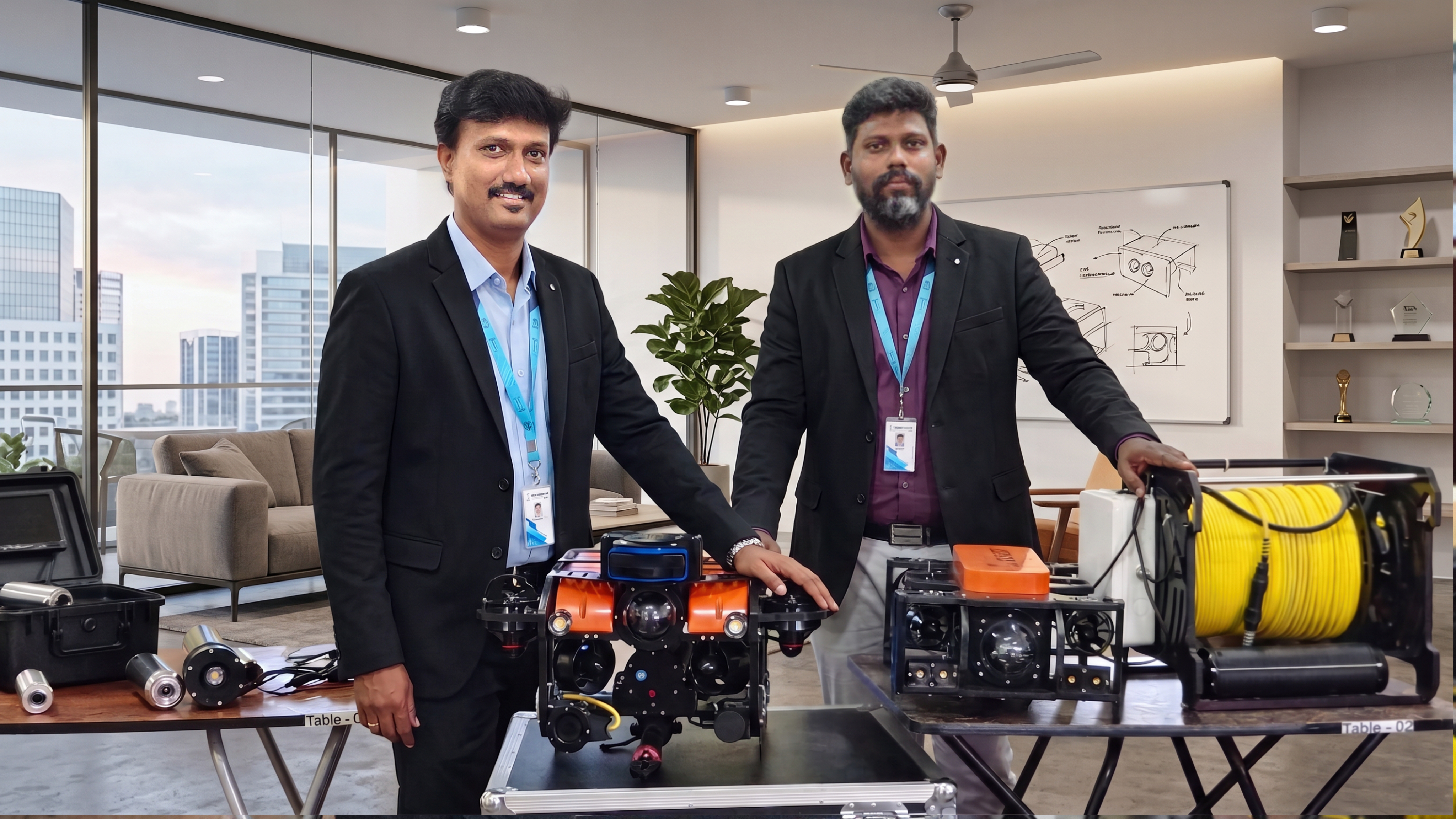
Founded in 2019, Vikra Ocean Tech is developing an indigenous, modular ocean robotics ecosystem that includes deep-water ROVs, autonomous surface vessels, amphibious crawling robots, and AI-enabled imaging and communication systems. Built for interoperability through a unified control platform, its solutions address India’s dependence on imported underwater robotics by offering cost-effective, mission-ready systems tailored for defence, subsea inspection, hydrographic surveys, and disaster response. Its integrated hardware stack is supported by indigenous cameras, lighting, diver communication systems, and AI-based video enhancement tools for simplified and scalable operations.
VIKRA has gained strong early traction across both defence and commercial sectors, including securing two iDEX grants from the Indian Army and the Indian Coast Guard, along with several other prestigious innovation awards. The company has developed India’s first 2000-meter depth-rated deep-ocean camera and lighting systems. Its Autonomous Surface Vehicle (ASV) systems are also seeing wide adoption for offshore marine exploration applications.
The investment comes at a time when global and domestic tailwinds are accelerating the adoption of subsea robotics. With increasing maritime security concerns, rising climate-related disasters, and a strong policy push towards indigenous innovation, the demand for reliable, locally built ocean-tech solutions is growing rapidly. The global subsea robotics market is projected to expand significantly by 2030, while India’s domestic opportunity across inspection, monitoring, and blue economy applications continues to scale, creating a strong foundation for companies like Vikra to emerge as category leaders.
Commenting on the investment, Ashish Bhatia, Co-Founder of Finvolve and Founder & CEO of India Accelerator said,
“Subsea robotics is fast becoming a strategic priority for India across defence, infrastructure, and disaster response. Vikra Ocean Tech is addressing this need with a fully indigenous, integrated robotics stack that combines deep-tech innovation with strong on-ground validation. Their ability to build and deploy scalable, high-performance systems positions them well to lead this space from India.”
Rajagurunathan, Co-Founder, Vikra Ocean Tech, added,
“Our vision is to build a globally competitive ocean robotics ecosystem from India. This investment enables us to accelerate product development, scale deployments, and deepen our engagement with defence and industrial stakeholders. We aim to significantly reduce India’s dependence on imported systems while delivering robust, cost-effective solutions built for real-world conditions.”
Rajeuv, Co-Founder, further added,
“This investment will strengthen our R&D capabilities, scale manufacturing, and accelerate deployments across defence, offshore energy, research, and marine infrastructure sectors. We are committed to building reliable, world-class technologies that position India as a leader in ocean innovation.”
With a vertically integrated product stack, growing commercial traction, and strong alignment with India’s strategic priorities, Vikra Ocean Tech is well positioned to scale its operations and play a defining role in shaping the country’s subsea robotics and ocean-tech landscape.
30, Apr 2026
Philippines Enhances ATF 2026 Preparations in Cebu with Public-Private Support
Cebu, Apr 30 (BNP): The Philippines is intensifying preparations to host the ASEAN Tourism Forum (ATF) 2026 in Cebu, with public-private partnerships playing a key role in supporting infrastructure development and event planning.
Officials said coordination between government agencies and private sector stakeholders is helping streamline preparations across multiple areas, including transport, hospitality, venue readiness, and visitor management systems. These collaborative efforts aim to ensure that Cebu is fully equipped to host international delegates and tourism leaders.
The initiative also focuses on improving overall tourism infrastructure and services in the region, with the goal of delivering a well-organised global event. Authorities believe the forum will not only strengthen regional tourism cooperation but also highlight Cebu’s position as a leading destination for major international gatherings.
30, Apr 2026
First-Time Borrowers Reach 4.4 Crore Despite Stricter Lending Norms
New Delhi, Apr 30 (BNP): The number of first-time borrowers in India has increased to around 4.4 crore, even as lending conditions have become stricter, according to a recent report.
The report indicates that access to credit continues to expand across the country, driven by growing financial inclusion and wider adoption of formal banking services. This trend has persisted despite tighter lending norms introduced by financial institutions.
It also highlights that more individuals are entering the formal credit system for the first time, reflecting improved awareness and easier access to loans through digital platforms and organised financial channels.
Overall, the findings suggest a steady deepening of India’s credit market, with a rising number of new borrowers participating in the formal financial ecosystem.
30, Apr 2026
New Study Shows Mental Health Campaigns and Digital Tools Reduce Risk in Slums

New Delhi, Apr 30 (BNP): A recent study has found that community-based anti-stigma programmes, along with a digital mental health support tool, have helped reduce risks of depression, self-harm, and suicide among adolescents living in urban slum areas.
The research covered 60 slum clusters across New Delhi and Vijayawada in Andhra Pradesh, focusing on improving awareness and access to mental health care for vulnerable teenagers.
India has one of the largest adolescent populations in the world, and a significant share of young people face mental health issues such as anxiety and depression, according to global health estimates.
Researchers observed that adolescents in urban slums are particularly at risk due to factors such as poverty, low awareness about mental health, and limited access to professional support services.
The study suggests that combining community outreach efforts with digital tools can help strengthen mental health support systems in underserved communities.
30, Apr 2026
PhonePe Surpasses 700 Million Registered Users in India
New Delhi, Apr 30 (BNP): Digital payments platform PhonePe has crossed 700 million registered users as of April 29, 2026, marking a major milestone in its growth journey in India.
The company said the achievement reflects its wide user base and expanding presence across digital payments and financial services. It attributed the growth to increasing customer trust, strong distribution reach, and a focus on simple and reliable payment solutions.
PhonePe also highlighted the rapid pace of its expansion, noting that while it initially took 136 days to add its first million users, it is now adding a million users in just a few days. Between FY23 and FY25, the platform reported steady growth momentum, supported by rising adoption of digital payment services across the country.
30, Apr 2026
ETF Inflows Reach Record High in FY26, Led by Gold and Silver Demand
New Delhi, Apr 30 (BNP): Exchange-Traded Funds (ETFs) in India have recorded a sharp rise in investments, with inflows reaching a record ₹1.8 lakh crore in FY26, driven largely by growing interest in gold and silver-backed funds, according to a report.
The surge reflects increased investor preference for safe-haven and commodity-linked assets amid global economic uncertainty and market volatility. Precious metal ETFs, in particular, have seen strong traction as investors look for stability and diversification.
The report highlights that the strong inflows mark a significant jump compared to previous years, indicating rising participation from both retail and institutional investors in ETF products.


