


30, Apr 2026
Penguin Random House India and Kuku FM Launch 12 Hindi Audiobooks from Exclusive Partnership
New Delhi, Apr 30: Penguin Random House India and Kuku FM have announced the launch of 12 Hindi audiobooks as part of their exclusive 15-title collaboration, marking a significant step in expanding regional-language audio content in India.
The newly launched audiobooks span a diverse range of genres, including mythology, memoir, biography, business, self-help, and science. Popular titles such as Ram ki Gatha and Jaya – Mahabharat Ka Sachitra Punarkathan by Devdutt Pattanaik, Tata Stories by Harish Bhat, and Make Epic Money by Ankur Warikoo are now available on the platform.
This initiative marks the first time these titles are being offered in Hindi audiobook format, reflecting Penguin Random House India’s strategic move to cater to evolving content consumption patterns and reach a wider, audio-first audience base.
Vidhi Nangia, Lead – Audiobook Division at Penguin Random House India, said the selection of titles was carefully curated to appeal to a wide range of listeners and represents a new phase in the company’s publishing journey, focused on immersive and high-quality audio storytelling.
Commenting on the partnership, Ankit Saraswat, Vice President – Business at Kuku FM, noted that the collaboration strengthens the platform’s position as a destination for premium content and supports its mission to deliver high-quality audiobooks to India’s rapidly growing regional-language audience.
The partnership underscores the rising popularity of audiobooks, particularly in regional languages, and highlights a shared commitment to making storytelling more inclusive and accessible across the country.
The remaining three titles from the 15-book Hindi audiobook slate are expected to be released in the coming months, further strengthening the presence of both Penguin Random House India and Kuku FM in India’s expanding digital audio ecosystem.

- 0
- By Neel Achary

30, Apr 2026
Exit Polls Signal Tight Bengal Contest, BJP Sweep in Assam; UDF Poised for Kerala Comeback
New Delhi, Apr 30 (BNP): Exit polls for the 2026 Assembly elections have projected a dramatic political contest across five key regions, indicating a close fight in West Bengal, a strong showing for the Bharatiya Janata Party in Assam, a possible return of the United Democratic Front in Kerala, and continued dominance of the Dravida Munnetra Kazhagam in Tamil Nadu.

According to multiple poll projections, West Bengal is headed for one of the most closely watched contests of the election cycle. Several surveys suggest the BJP may breach the long-standing bastion of Chief Minister Mamata Banerjee and challenge the ruling All India Trinamool Congress for power after 15 years. However, some polls have also predicted a strong comeback for the TMC, indicating a razor-edge battle in the 294-member Assembly.
In Assam, nearly all exit polls forecast a decisive return for Chief Minister Himanta Biswa Sarma and the BJP-led alliance, with projections suggesting a comfortable majority and a possible third consecutive term for the NDA in the northeastern state.
In Kerala, exit polls have largely indicated a return of the Congress-led UDF after a decade in opposition. If the predictions hold, it would end the Left Democratic Front’s tenure under Chief Minister Pinarayi Vijayan, who had scripted back-to-back wins in 2016 and 2021.
Tamil Nadu is projected to remain with the ruling DMK-led alliance under Chief Minister M. K. Stalin, with most polls predicting the party could overcome anti-incumbency and secure another term. However, some projections also point to a strong debut performance by Vijay’s Tamilaga Vettri Kazhagam, adding uncertainty to the contest.
In Puducherry, almost all surveys predict that the BJP-led National Democratic Alliance will retain power.
Political analysts cautioned that exit polls are only indicative and have previously missed actual outcomes in several major elections, including West Bengal in 2021 and parts of the 2024 general elections. Final results will be declared on May 4.
The outcome of these elections is expected to have far-reaching implications for national politics, setting the tone for upcoming state polls and shaping the political momentum ahead of future parliamentary contests.
30, Apr 2026
From Foster Care to Homelessness, “No Address” Exposes a Growing Crisis
The feature film ‘No Address’ delivers an emotional and urgent look at the pipeline from foster care to homelessness, and the courage to find a way out
Sacramento, Calif. – Apr 30 – May is Foster Care Awareness Month, a time to recognize the challenges faced by youth in the foster care system and the families, professionals, and advocates who support them. According to the Adoption and Foster Care Analysis and Reporting System (AFCARS), more than 320,000 children are currently in the U.S. child welfare system, with an average age of just eight years old.
Against this backdrop, Robert Craig Films’ feature movie No Address brings a deeply human perspective to the issue, illustrating how quickly a child’s life can be disrupted, and the critical role support and stability play in shaping a better future. The film has resonated with audiences, earning a 96% rating on Rotten Tomatoes.
“No Address humanizes the story of so many individual experiences of homelessness, and Lauren’s story begins with her entering the foster system,” said Robert Craig, Producer at Robert Craig Films. “It’s heartbreaking when children are left without support due to circumstances beyond their control.”
“Films like No Address are critical in helping people understand the real-life challenges foster youth face every day,” said Cheryl Williams, Founder of Fundamentals For Foster Care, a nonprofit dedicated to supporting foster youth through educational stability initiatives. “When young people age out of the system without strong support, they are at significantly higher risk of homelessness.
In No Address, actress Isabella Ferreira portrays Lauren, a young girl whose life is upended when her mother, her only family, passes away, forcing her into the foster care system. Her journey reflects one of many pathways into care, showing how quickly a child’s world can change. Through the support of those around her, Lauren begins to find stability, hope, and a path forward.
The film features an acclaimed ensemble cast including William Baldwin, GRAMMY® Award-winning artist Ashanti, Xander Berkeley, Beverly D’Angelo, and Ty Pennington, whose performances bring authenticity and depth to this powerful story.
Robert Craig Films invites the public to host their own group screenings of the movie as a step toward greater understanding of foster care and homelessness and a better future for those suffering. Information can be found at www.NoAddressMovie.com/
Through No Address and its broader storytelling initiatives, Robert Craig Films is committed to creating films that inspire empathy and meaningful action. Central to this effort is The Big 5 GIVEBACK, part of the No Address Movement, which pledges 50% of net profits from five No Address productions to nonprofit organizations and churches working to combat homelessness in their communities.
For streaming, rental, and purchase information for the feature film, NO ADDRESS, visit www.NoAddressMovie.com.
30, Apr 2026
LTM Recognized as a Market Leader in HFS Next gen IT Infrastructure Services, 2026 Report
April 30: LTM has been recognized as a Market Leader in the HFS Horizons: Next-gen IT Infrastructure Services, 2026 report by HFS Research.
The report evaluates global service providers across the IT infrastructure value chain, assessing their strategies, execution capabilities, go-to-market approaches, and overall market impact. It highlights key areas such as AI readiness, hybrid and distributed architectures, regulatory compliance, platform-enabled operations, and autonomous infrastructure models.
LTM has been positioned among a select group of Market Leaders for its advanced capabilities in delivering AI-native, next-generation infrastructure services at enterprise scale. The recognition underscores the company’s ability to move beyond traditional modernization toward intelligent, policy-aware infrastructure designed for evolving enterprise needs.
The report specifically acknowledges LTM’s strengths in AI-native infrastructure, agent-led operational models, and deep engineering expertise. It also highlights the company’s proven execution across hybrid, cloud, and edge environments, supported by live deployments, strategic ecosystem partnerships, and strong capabilities in compliance-driven industries.
Commenting on the recognition, Krishnan Iyer said the acknowledgment reflects LTM’s commitment to reimagining IT infrastructure as an intelligent, AI-driven foundation for enterprise transformation, enabling organizations to modernize with confidence and scale.
Ashwin Venkatesan noted that LTM is emerging as a front-runner in AI-native infrastructure, driven by its focus on agentic operations and platform-led execution. He further highlighted the company’s investments in BlueVerse and knowledge fabric as a shift toward system-level intelligence embedded within operations.
The recognition reinforces LTM’s long-term focus on infrastructure transformation, as enterprises increasingly address challenges related to AI adoption, regulatory complexity, sustainability, and cost optimization.
With continued investments in platforms, partnerships, and innovative operating models, LTM aims to support enterprises in building resilient, adaptive, and future-ready infrastructure ecosystems.
30, Apr 2026
FIA expands major road safety initiative into Middle East, Africa
H.E. Mohammed Ben Sulayem, President of the FIA, hails decisive step towards making roads safer and delivering lasting change worldwide
Dubai, UAE, 30th April 2026: The Fédération Internationale de l’Automobile (FIA), the global governing body for motor sport and the federation for mobility organisations worldwide, has announced the expansion of a major road safety initiative into the Middle East and Africa.
The FIA Safe Mobility 4 All and 4 Life programme aims to support local authorities and organisations with training, mentorship, and evidence-based actions to develop concrete projects that improve road safety for everyone.

Road traffic crashes remain a leading cause of death worldwide, with the burden falling disproportionately on low- and middle-income countries.
According to the World Health Organization, the African region records the highest road traffic fatality rate globally, while countries across the MENA region continue to face significant and persistent road safety challenges.
The expansion of the FIA Safe Mobility 4 All & 4 Life programme into the Middle East and Africa, following its successful introduction in the Americas and Asia-Pacific regions, further strengthens the Federation’s global effort to promote and protect safe mobility for road users worldwide.
H.E. Mohammed Ben Sulayem, President of the FIA, said: “Following the success of the first FIA Safe Mobility 4 All and 4 Life programmes, I am delighted to announce we are expanding the initiative to Africa and the Middle East. This marks a decisive step towards making roads safer and delivering lasting change worldwide.
“Through our partnership with the United Nations Institute for Training and Research (UNITAR), we are working together with our Members to equip them with the essential tools and networks needed to drive global action and build a safer future for all road users.”
The FIA Safe Mobility 4 All and 4 Life programme was developed by the FIA in collaboration with the United Nations Institute for Training and Research (UNITAR) and with the support of the FIA Foundation.
FIA Region I MENA Mobility Council President Essa Hamza Alfailakawi said: “Across the Middle East and North Africa, improving road safety requires strong collaboration and a shared commitment to change.
“Through the Safe Mobility 4 All & 4 Life programme, we can strengthen regional cooperation and support our Member Clubs to play a leading role in shaping safer mobility systems.”
FIA Region I ACTA President Jinaro Kibet said: “Road safety is one of the most urgent public health challenges across Africa, and initiatives like FIA Safe Mobility 4 All & 4 Life are critical in helping us address it at scale.
“This programme empowers our Member Clubs with global expertise to deliver practical, life-saving solutions within their communities.”
30, Apr 2026
Thunderstorm Alert Issued for Six Odisha Districts by IMD

Bhubaneswar, Apr 30 (BNP): The India Meteorological Department (IMD) in Bhubaneswar has issued a short-term weather alert forecasting thunderstorm activity accompanied by lightning and light to moderate rainfall in parts of Odisha within the next three hours.
As per the nowcast issued at 06:55 am, wind speeds may reach 30–40 kmph, with gusts up to 50 kmph, during the thunderstorm activity. The weather conditions are likely to affect one or two places in Cuttack (including Cuttack city), Khordha, Puri, Koraput, Keonjhar, and Balasore districts.
Authorities have advised residents to stay alert and take necessary precautions, especially in open and vulnerable areas, and to move to safer locations in case of worsening weather conditions.
30, Apr 2026
Epson partners with FLOURISH as NZ artist Emma Bass Redefines the Floral Still Life
SYDNEY, 30 April 2025 – This May, Potts Point’s premier design destination, Becker Minty, presents FLOURISH, by celebrated New Zealand artist Emma Bass. FLOURISH is supported by Epson with all of the artworks in the exhibit printed at SKAR Lab using the Epson SureColor P20560 (64”) fine art printer and the Epson SD-10 Spectrophotometer with Auto Table.

Opening May 8, 2026, the collection offers a bold and contemporary twist on the still life, highlighting fragility, impermanence and cycles of life. Perfectly timed for Mother’s Day.

Transformative beauty
Bass’ works transform the traditional still life into something visceral and emotionally resonant, although they bring joy and uplift, they also contain narrative threads, and cycles of life, decay, death and rebirth. She elevates botanical subjects into commanding focal points that shape the emotional mood and tenor of public and personal spaces.
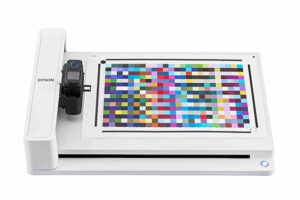
Epson SD-10 Spectrophotometer with Auto Table
From Healthcare to Fine Art
A former nurse with 20 years of experience as a commercial photographer, Bass’ relationship with healthcare has sharpened her understanding of how the visual environment impacts wellbeing, “Flowers mark our most important moments- birth, love, grief, and celebration, says Bass, I photograph them not just as beautiful objects, but as portraits of strength.”
The Intersection of Art and Design
Presented within the curated interior spaces of Becker Minty, FLOURISH places fine art in direct dialogue with design, in their shared objective of uplifting and transforming the spaces in which we dwell. The exhibition reinforces Bass’s belief that art should be lived with, not simply admired. For Mother’s Day, the show invites collectors to invest in a “permanent bloom”- artwork that brings beauty and contemporary edge into everyday living spaces.
Aesthetics as a way of life
Bass’ subtropical mid-century Auckland house and garden is a carefully curated explosion of colour, botanical art and a vast collection of vases. As a products of her environment, both Bass and her works project her art and its philosophy of pleasure, joy and uplift as a way of living.
Epson SureColor P20560
The SureColor P20560 offers fast processing speeds and an expanded 12-colour ink set, providing a wider colour gamut and up to 99% Pantone coverage*. The SC-P20560 is fed by a bulk ink system and ships with 12 cost-effective 1.6L ink packs designed for high-volume print jobs. A 4.3-inch optical touch colour LCD, optional 1Tb SSD and Adobe PostScript 3 improve workflow and efficiency with the SC-P20560. Epson Edge Print PRO RIP software is also bundled with the machine, making it a comprehensive solution for professional printing workflows.
Epson SD-10 Spectrophotometer with Auto Table
The SD-10 is an easy-to-use, full-featured colour measuring device that when seamlessly combined with the Auto Table and Epson Edge Color Lite colour management software (compatible with Epson’s RIP software, Epson Edge Print PRO) offers a genuine colour management solution that addresses most colour management requirements and maximises print output quality. Epson has made colour management for professional printers easier and more reliable than ever with its Auto Table for the SD-10 spectrophotometer. Epson’s Auto Table for the SD-10 Spectrophotometer addresses and rebuffs the common perception that colour management is time consuming and requires high technical knowledge and skills.
EXHIBITION DETAILS
• Title: FLOURISH by Emma Bass
• Dates: From 8 -26 May 2026 (Opening event 8 May from 5.30pm – 7.30pm)
• Location: Becker Minty, 7/81 Macleay Street, Potts Point, Sydney, NSW 2011
*99% coverage of PANTONE PLUS FORMULA GUIDE solid-coated palette based on Epson Proofing Paper White Semimatte printed with the Epson Driver at 2400 x 1200 dpi. PANTONE coverage may vary when printed under other conditions.
Epson, PrecisionCore, SureColor, TFP, UltraChrome, Epson Cloud Solution PORT and Epson Edge are registered trademarks of Seiko Epson Corporation. All other product and brand names are trademarks and/or registered trademarks of their respective companies. Epson disclaims any and all rights in these marks.
30, Apr 2026
Government Boosts Export Strategy, Focus on MSMEs and Agriculture
New Delhi, Apr 30 (BNP): The government has reviewed India’s export ecosystem with an aim to further strengthen the country’s global trade performance, with special emphasis on MSMEs, agriculture exports, and the promotion of “Brand India”.

During the review, officials discussed measures to enhance the competitiveness of Indian exporters in global markets. A key focus was placed on supporting micro, small, and medium enterprises, which play a crucial role in employment generation and export diversification.
The discussions also highlighted the need to boost agricultural and food product exports by improving quality standards, strengthening supply chains, and expanding access to new international markets. In addition, efforts to promote “Brand India” were emphasized to improve the country’s global trade identity and attract stronger demand for Indian goods.
The initiative reflects the government’s broader strategy to increase export volumes, reduce trade barriers for domestic producers, and ensure more inclusive participation in international trade growth.
30, Apr 2026
PM Highlights Citizens’ Hard Work as Key to National Strength

New Delhi, Apr 30 (BNP): Prime Minister Narendra Modi has highlighted that the hard work, dedication, and energy of citizens are the true foundation of a nation’s strength.
In a message shared publicly, he noted that people across the country contribute continuously to national progress through their efforts in different fields. He emphasized that this collective commitment plays an important role in driving development and strengthening the country’s growth journey.
The Prime Minister also underlined that discipline, perseverance, and unity among citizens help accelerate progress, making their contribution central to building a stronger and more prosperous nation.
30, Apr 2026
From Promise to Proof: Strengthening the Evidence Base for Digital Health Technologies
Lawrenceville, NJ, USA, Apr 30: Value in Health, the official journal of ISPOR, has announced the publication of a special themed section focused on advancing methods to evaluate the real-world value of digital health technologies.
The April 2026 issue features a curated series of research papers exploring how digital health solutions create value across clinical, behavioral, and healthcare system pathways, while addressing the challenges of measuring their impact effectively.
The themed section is led by guest editors Axel Mühlbacher (Hochschule Neubrandenburg, Germany), Volker Amelung (Medizinische Hochschule Hannover, Germany), and Katarzyna Kolasa (Kozminski University, Poland).
In their editorial, the editors highlight that digital health technologies are becoming integral to modern healthcare delivery but remain complex to evaluate due to variations in definitions, applications, and outcomes. They emphasize that value is not inherent in the technology itself but emerges through its integration into healthcare systems.
Key Insights from the Research
The collection includes seven research papers covering topics such as health technology assessment frameworks, AI-driven clinical tools, predictive modeling, cost-effectiveness, and sustainability in digital health.
The findings reveal that current evaluation frameworks are often inadequate for capturing the multi-dimensional value of digital health technologies, particularly when benefits are distributed across complex healthcare pathways and systems.
Key Recommendations for the Sector
- Multi-dimensional evaluation: Expanding beyond clinical outcomes to include system efficiency, implementation feasibility, and real-world monitoring
- Decision-relevant models: Incorporating real-world factors such as patient adherence, healthcare capacity, and population-level outcomes
- Behavioral and cost analysis: Measuring health outcomes driven by behavioral change and adopting comprehensive costing frameworks
- Sustainability focus: Integrating environmental impact into evaluation metrics, including lifecycle and energy usage considerations
- Equity considerations: Ensuring fair access and assessing how benefits and burdens are distributed across populations
The editors note that while digital health technologies hold immense promise, their adoption remains limited due to challenges in demonstrating scalable and credible value, as well as barriers in market access and system integration.
The themed section aims to guide policymakers, researchers, and healthcare stakeholders in developing robust, transparent, and actionable frameworks that support the adoption and scaling of digital health innovations.


