


30, Apr 2026
PM Highlights Citizens’ Hard Work as Key to National Strength
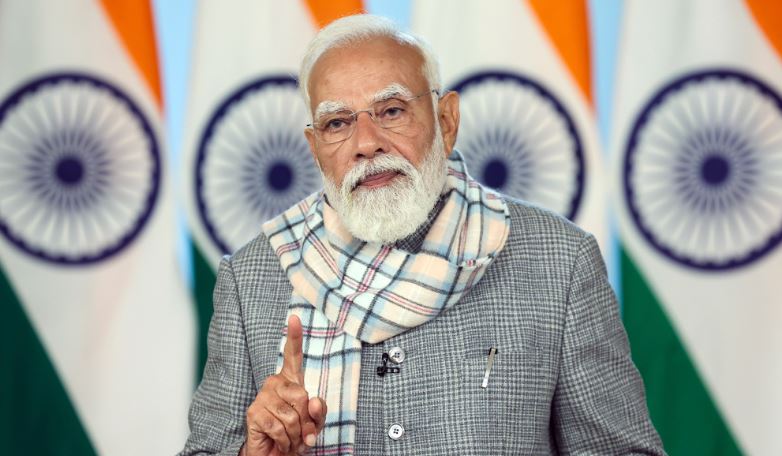
New Delhi, Apr 30 (BNP): Prime Minister Narendra Modi has highlighted that the hard work, dedication, and energy of citizens are the true foundation of a nation’s strength.
In a message shared publicly, he noted that people across the country contribute continuously to national progress through their efforts in different fields. He emphasized that this collective commitment plays an important role in driving development and strengthening the country’s growth journey.
The Prime Minister also underlined that discipline, perseverance, and unity among citizens help accelerate progress, making their contribution central to building a stronger and more prosperous nation.

- 0
- By Neel Achary

30, Apr 2026
From Promise to Proof: Strengthening the Evidence Base for Digital Health Technologies
Lawrenceville, NJ, USA, Apr 30: Value in Health, the official journal of ISPOR, has announced the publication of a special themed section focused on advancing methods to evaluate the real-world value of digital health technologies.
The April 2026 issue features a curated series of research papers exploring how digital health solutions create value across clinical, behavioral, and healthcare system pathways, while addressing the challenges of measuring their impact effectively.
The themed section is led by guest editors Axel Mühlbacher (Hochschule Neubrandenburg, Germany), Volker Amelung (Medizinische Hochschule Hannover, Germany), and Katarzyna Kolasa (Kozminski University, Poland).
In their editorial, the editors highlight that digital health technologies are becoming integral to modern healthcare delivery but remain complex to evaluate due to variations in definitions, applications, and outcomes. They emphasize that value is not inherent in the technology itself but emerges through its integration into healthcare systems.
Key Insights from the Research
The collection includes seven research papers covering topics such as health technology assessment frameworks, AI-driven clinical tools, predictive modeling, cost-effectiveness, and sustainability in digital health.
The findings reveal that current evaluation frameworks are often inadequate for capturing the multi-dimensional value of digital health technologies, particularly when benefits are distributed across complex healthcare pathways and systems.
Key Recommendations for the Sector
- Multi-dimensional evaluation: Expanding beyond clinical outcomes to include system efficiency, implementation feasibility, and real-world monitoring
- Decision-relevant models: Incorporating real-world factors such as patient adherence, healthcare capacity, and population-level outcomes
- Behavioral and cost analysis: Measuring health outcomes driven by behavioral change and adopting comprehensive costing frameworks
- Sustainability focus: Integrating environmental impact into evaluation metrics, including lifecycle and energy usage considerations
- Equity considerations: Ensuring fair access and assessing how benefits and burdens are distributed across populations
The editors note that while digital health technologies hold immense promise, their adoption remains limited due to challenges in demonstrating scalable and credible value, as well as barriers in market access and system integration.
The themed section aims to guide policymakers, researchers, and healthcare stakeholders in developing robust, transparent, and actionable frameworks that support the adoption and scaling of digital health innovations.
30, Apr 2026
Vikram Doraiswami Presents Credentials as India’s Ambassador to China
New Delhi, Apr 30 (BNP): Senior Indian diplomat Vikram Doraiswami has formally taken over as India’s Ambassador to China after presenting his credentials to President Droupadi Murmu at a ceremony held in the national capital.
A seasoned officer of the Indian Foreign Service, Doraiswami brings extensive diplomatic experience to one of India’s most significant overseas postings. His appointment comes at a time when India–China relations remain closely watched, with ongoing efforts to maintain dialogue while addressing outstanding bilateral concerns.
As the new envoy in Beijing, he is expected to focus on strengthening diplomatic communication, managing sensitive issues between the two countries, and supporting efforts to stabilize and advance ties through sustained engagement.
30, Apr 2026
After XChat, XMoney Next: Elon Musk Plans Payments Revolution on X
New Delhi, Apr 30 (BNP): Elon Musk is taking another significant step toward transforming X into an “everything app,” with reports suggesting that its upcoming payments and banking service, X Money, is nearing launch. Following the rollout of XChat, the platform’s standalone messaging service, X is now focusing on digital transactions and financial services integrated directly into the app.
Musk, who played an early role in building PayPal, is now expected to bring a similar payments ecosystem into the social media space. The broader vision is to combine messaging, social networking, commerce, and financial tools within one seamless platform.

What X Money Could Offer
According to reports, X Money is likely to support peer-to-peer payments, allowing users to send and receive money directly through chats or user profiles without leaving the platform. The service has drawn comparisons with WeChat, which successfully combines messaging, payments, and social media features in one ecosystem.
The platform is also reportedly exploring a debit card linked to user accounts, potentially through a personalised Visa card connected to an X profile. This would enable users to make purchases both within and outside the platform.
In addition, an AI-powered assistant developed by xAI may help users track spending, organise transactions, and analyse financial activity in a user-friendly format.
Some early reports also indicate introductory benefits such as cashback offers of up to 3 percent and savings interest rates near 6 percent, though the long-term availability of these incentives remains uncertain.
Launch Timeline and Regulatory Hurdles
While X Money is said to be nearing limited public release, no official launch date has yet been announced. Reports suggest the rollout has been delayed due to regulatory approvals, as payment services in the United States require licences across multiple states. Key approvals, including those in New York, are still pending.
As a result, the service may initially be introduced in phases with restricted access before expanding more broadly.
Part of a Bigger Vision
Payments remain central to Musk’s long-term roadmap for X. The company aims to merge communication, content creation, commerce, and financial services into a single digital platform. Reports also suggest that creator payouts on X could eventually shift to X Money, reducing reliance on third-party payment processors.
Competition and Challenges
If launched successfully, X Money is expected to compete with established players such as PayPal, Cash App, and other fintech platforms, while also entering spaces served by messaging-based payment systems like WhatsApp Payments.
However, analysts note that trust, security, and reliability will be key factors in determining adoption. As banking and payments involve sensitive user data and financial confidence, seamless performance and robust safeguards will be essential once X Money officially launches.
30, Apr 2026
US Bets on Small Modular Reactors to Lower Nuclear Power Costs
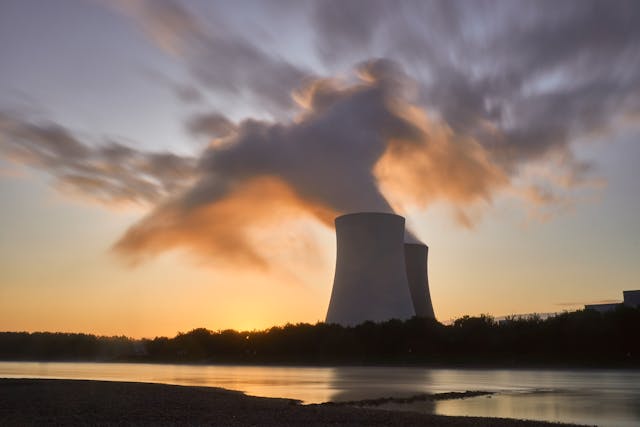
Washington, Apr 30 (BNP): Several companies in the United States are increasingly focusing on small modular reactors (SMRs) as a next-generation option in nuclear energy, according to a report by the US Energy Information Administration (EIA).
Pic Credit: Pexel
The report highlights that SMRs are being developed to address long-standing challenges in the nuclear sector, particularly high construction costs and lengthy approval timelines that have limited new capacity additions.
The United States currently has nearly 98 gigawatts of installed nuclear power capacity, but expansion has remained limited over recent decades due to financial and regulatory constraints.
Unlike conventional nuclear plants, which generate between 550 MW and 1,500 MW per unit, SMRs are compact systems typically producing up to around 300 MW. Their modular structure allows major components to be built in factories and transported to sites for assembly, potentially reducing both construction time and overall costs while offering greater deployment flexibility.
30, Apr 2026
Rupee Slips to Record Low Amid Surging Crude Oil and Strong Dollar
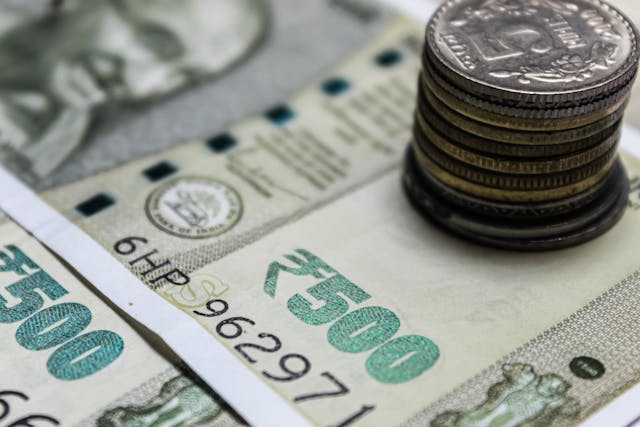
Mumbai, Apr 30 (BNP): The Indian rupee slipped to a fresh all-time low in early trade on Thursday, falling 32 paise to 95.20 against the U.S. dollar.
The currency came under pressure due to sustained strength in the U.S. dollar and a sharp rise in global crude oil prices. Brent crude, trading around $122 per barrel, added further strain on India’s import-heavy economy, increasing demand for the dollar from oil importers.
Forex traders said persistent foreign fund outflows and concerns over elevated energy prices also contributed to the weakening bias in the rupee. Market sentiment remained cautious as global economic uncertainties continued to influence currency movements
30, Apr 2026
Stocks Tumble in Early Trade on Oil Surge
Mumbai, Apr 30 (BNP): Indian equity markets came under significant selling pressure in early trade on Thursday, as a sharp rally in crude oil prices above $120 per barrel unsettled investors and triggered risk-off sentiment.

Benchmark indices opened sharply lower, extending losses as the session progressed. The decline was driven by a combination of factors, including surging global oil prices, weak international market trends, and continued foreign institutional investor (FII) outflows from domestic equities.
Higher crude oil prices raised concerns over inflationary pressures and increased input costs for key sectors such as aviation, automobiles, logistics, and manufacturing. This led to broad-based selling across frontline stocks, with major index constituents facing downward pressure.
Investor sentiment remained cautious amid global economic uncertainty, prompting traders to reduce exposure to equities in early deals. Market analysts noted that volatility could persist in the near term if oil prices remain elevated and global cues stay weak.
30, Apr 2026
A.S. Sharvaanica Wins Krish Chitale Young Achiever Award 2026
Chennai, Apr 30 : The Rotary Club of Madras has conferred the Krish Chitale Young Achiever Award 2026 on chess prodigy A.S. Sharvaanica, recognising her extraordinary talent, discipline and determination that have brought pride to the nation at an exceptionally young age.
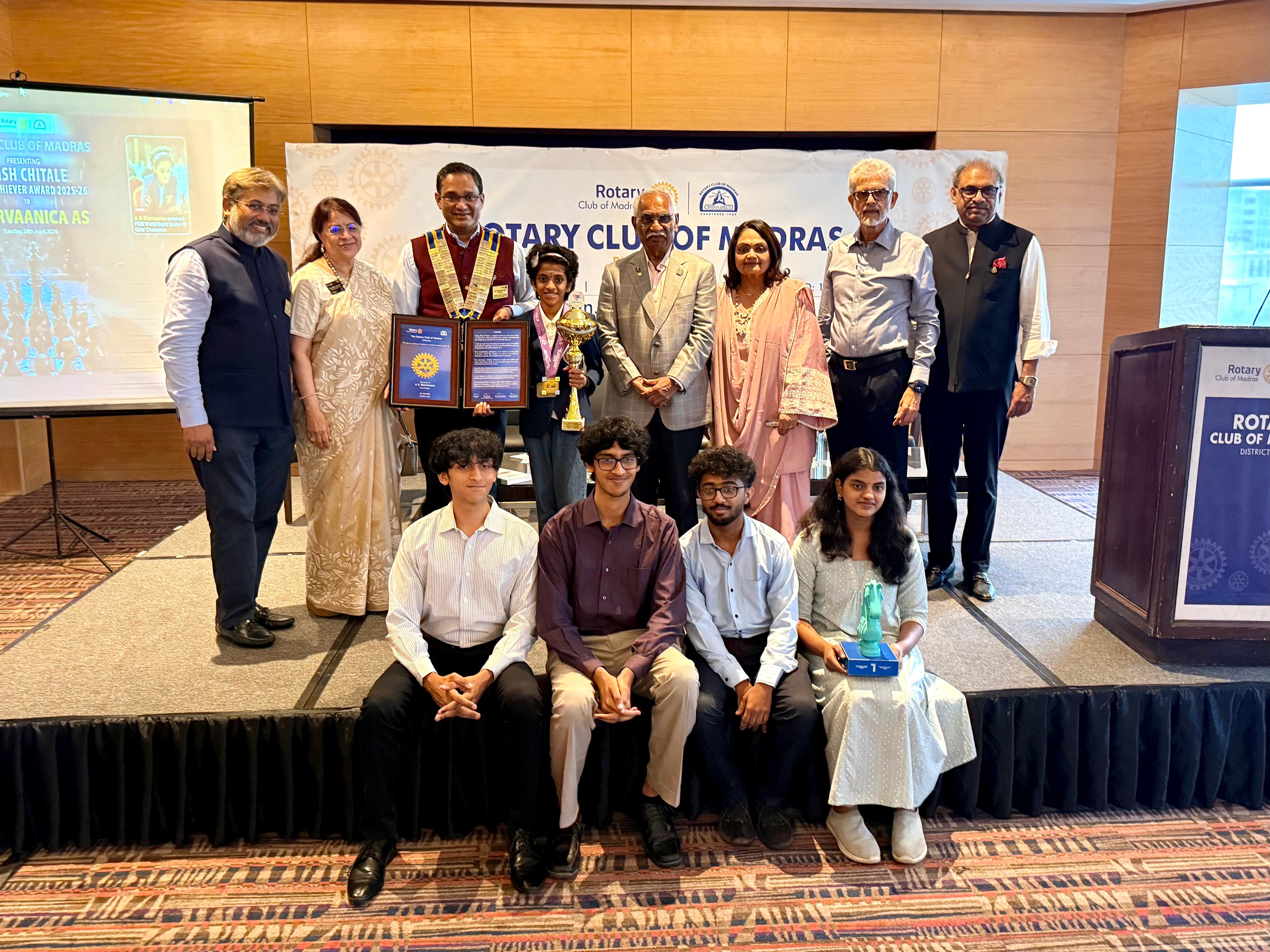
At just ten years old, Sharvaanica has emerged as one of the brightest young talents in global chess, achieving a peak rating of 2049 Elo points and becoming the youngest player in Indian history to reach that milestone.
From record-breaking performances at the national and Asian levels to becoming a World Cadet Champion, her journey has been defined by consistency, excellence and a remarkable competitive spirit. Her achievements including perfect-score victories and multiple gold medals across formats reflect not only technical mastery, but also unwavering focus and a deep love for the game.
Beyond her titles and accolades, Sharvaanica has earned a place among the world’s finest young chess players while inspiring a new generation of budding enthusiasts, proving that greatness knows no age. Her rise continues to exemplify what talent, dedication and perseverance can achieve.
As she continues her journey, the Rotary Club of Madras extends its wishes for even greater milestones, deeper triumphs and a future marked by brilliance, both on and off the board.
With profound admiration and pride, the Rotary Club of Madras is honoured to recognise A.S. Sharvaanica as a true champion and enduring inspiration through the conferral of the Krish Chitale Young Achiever Award 2026.
30, Apr 2026
India’s First Official F1 Sim Racing Championship Launched
Chandigarh, Apr 30: Formula 1 and Mumbai Falcons Racing Limited announce the launch of India’s first Official F1® Sim Racing Championship. Held under an agreement that grants Mumbai Falcons the rights to host an official Formula 1® sanctioned sim racing competition, the F1® Sim Racing India Open 2026 will establish a national competitive platform for emerging talent across the country. The Championship is designed to create a structured pathway from virtual competition to professional motorsport, offering young drivers a credible first step into the wider racing ecosystem. This also marks the first time Formula 1® has introduced a programme of this nature, exclusively for India.
The announcement comes at the perfect time, as conversations around bringing Formula 1® back to India gain momentum and fan interest in the sport continues to surge. With e-sports now officially recognised under the Promotion and Regulation of Online Gaming Act, 2025, initiatives like the F1® Sim Racing India Open 2026 connect India to the global driver pathway of F1®, tapping into a rapidly growing motorsport ecosystem.
Conducted under an agreement granting Mumbai Falcons the rights to host an official F1-sanctioned sim racing competition in India, the Championship will be played on F1® 25, the official game of the FIA Formula 1® World Championship™, featuring identical circuits, competitive formats, and team liveries as the global series. Registrations are set to commence on 30th April, 2026 on the MFRL App (available on Play Store and Apple Store). Participants will be able to compete via PC, PlayStation 5, and Xbox. Online qualifiers in the coming months will lead to city-based simulator rounds, culminating in a national final in Mumbai in November.
On this occasion, India’s first Formula 1® Driver, Narain Karthikeyan, commented,
“India has long been central to global growth story of Formula 1®. With 78.8 million fans and a generation raised on F1® gaming, the time is right to introduce an official, competitive Sim Racing Championship here. Mumbai Falcons are the ideal partner, having invested years in building India’s motorsport pipeline. This initiative is unique, globally exclusive, and will set a new benchmark for talent development.”
“When we founded Mumbai Falcons in 2019, our ambition was to place India firmly on the global motorsport map and build a pipeline for world-class talent. Mumbai Falcons became the first Indian team to win an FIA-accredited international racing Championship. We have also supported the early careers of future Formula 1® stars. Partnering with Formula 1® to bring the F1® Sim Racing India Open 2026 to life is yet another significant initiative in that direction.” said Ameet Gadhoke, Managing Director, Mumbai Falcons Racing Limited.
Mumbai Falcons brings to this programme a track record that few organisations in the world can match. The team has previously supported the early careers of drivers who went on to reach the pinnacle of the sport, including, Jehan Daruvala, Kush Maini, Arthur Leclerc, Dino Beganovic, Sebastian Montoya, Rafael Camara, James Wharton, Freddie Slater, Kean Nakamura Berta, Oleksandr Bondarev, Kimi Antonelli, Arvid Lindblad and Oliver Bearman. It is this foundation of proven talent identification and development that positions Mumbai Falcons to build and deliver India’s first scalable motorsport pipeline.
30, Apr 2026
Skyscanner’s Smarter Summer report: 77% of Indians are confident to travel this summer
Nearly 9 in 10 Indians Are Planning or Have Booked Their Summer 2026 Holiday with Hidden Gems Topping Their Travel Wishlists
Indian Travellers Are Choosing Smarter Summer Holidays from offbeat destinations to flexible travel dates and last-minute bookings
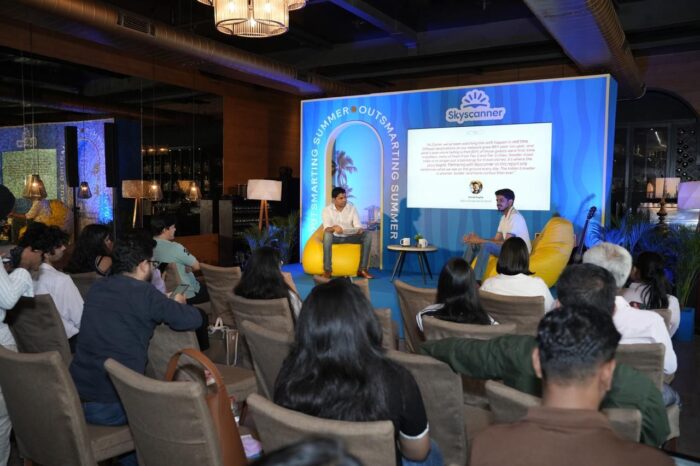
Delhi, Apr 30: Despite a backdrop of uncertainty, summer travel is still on for many, with 77% of Indians confident about travelling in the next 3 months. In fact, nearly 9 in 10 Indians are planning or have already booked their Summer 2026 holiday. With only about 38% yet to book their summer holidays, but are actively looking, showing sustained desire for travel despite ongoing uncertainty.
However, planning is becoming increasingly complex. This evolving approach is being shaped by a few key considerations:
- Airfare trends, with nearly half of travellers (48%) factoring in fluctuating flight prices
- Overall trip value, as 45% weigh total travel costs more carefully
- Travel advisories, influencing decisions for 34% of travellers
- Operational disruptions, such as airport closures, are impacting 32% of plans
However, there are early signs of more informed planning, with 58% believing July offers cheaper flights compared to August, highlighting a growing awareness of when to travel for better value.
As travellers navigate these trade-offs, planning is becoming more dynamic than ever. Rather than locking in early, many are keeping an eye on price movements and exploring alternative destinations before committing
Neel Ghose, Travel and Destinations Expert, Skyscanner India, said, “Summer 2026 is shaping up to be one of the most intent-driven travel seasons we’ve seen in India, but what’s changing is how that intent is translating into action. Travellers are not stepping back; they are adapting within constraints. Instead of cancelling, they are staying flexible on where they go, with many willing to switch destinations in response to changing costs and conditions.
We’re also seeing a clear shift in mindset from ‘where everyone is going’ to ‘where else can I go’. This growing openness to alternative and lesser-known destinations signals a more confident and value-aware traveller, one who is more open to switching plans if it improves the overall experience. With these pressures shaping decisions, travellers are looking for smarter ways to unlock value without compromising on the trip. Tools like Skyscanner’s ‘Whole Month’ search are helping travellers make smarter decisions by making it easier to compare options, track fares, and identify better-value travel windows.”
Outsmart Travel Planning Hurdles
As travel intent remains strong, planning is becoming more dynamic. Rather than cancelling trips, travellers are increasingly adapting, switching destinations, adjusting timing, or rethinking how to get the most out of their travel budgets.
Features like Skyscanner’s Price Alerts are helping simplify these decisions by allowing travellers to track fare changes and book when prices are right.
Outsmart Destination Choices and Summer Crowds
This shift is already visible in destination choices and travel pattern:
- 81% are open to lesser-known destinations
- 60% are actively seeking quieter, less crowded places
- 9 in 10 say it is important that their holiday spend benefits local communities and small businesses
A significant behavioural shift is underway, as travellers move away from crowded hotspots towards more meaningful, offbeat and community-driven experiences.
[See the top most popular and cheapest destinations for Summer 2026 below in the appendix.]
Zostel, a hostel network available on Skyscanner, is already seeing this shift in action.
Aviral Gupta, CEO of Zostel and Zo World, said, “At Zostel, we’ve been watching this shift happen in real time. Offbeat destinations across our network grew 88% year-on-year, and a significant 60% of those guests were first-time travellers, many of them from Tier 2 and Tier 3 cities. Smaller-town India is no longer just a backdrop for travel stories; it’s where the story begins. Partnering with Skyscanner on this report only reinforces what we see on the ground every day. The Indian traveller is smarter, bolder, and more curious than ever.”
Outsmart Flexible Travel Planning
While travel intent remains strong, flexibility is also reshaping how plans are executed. Although 58% of travellers have fixed travel dates due to work or school commitments, 30% are choosing to switch destinations rather than cancel trips, showing how adaptability is becoming central to travel planning.
As travellers balance fixed schedules with evolving preferences, the findings point to a clear shift towards more flexible, value-led decision-making, where being open to alternatives is becoming the defining factor in making summer travel plans work.
Outsmart Group Travel Planning Hurdles
Planning group summer holidays is known to be effortful. On average, Indians spend over 15 hours coordinating a group trip, with nearly half saying it is more stressful than major life events such as moving house or planning a wedding.
The biggest challenge often lies in aligning preferences, budgets and schedules, making group travel one of the most time-consuming parts of the journey. As a result, travellers are increasingly looking for ways to simplify decision-making and reduce friction when planning together. The Skyscanner app has multiple travel planning tools to help travellers compare options and find the best deals available.
Beyond Planning: The Emotional Side of Travel
But beyond the planning, travel remains an emotional experience shaped by the moments, sounds, and memories that stay with us long after the trip ends. Complementing these insights from the Smarter Summer Report, Skyscanner has also curated a summer soundtrack, in collaboration with musician and artist Mayur Jumani, created from familiar sounds of travel, from planes taking off to security check in, luggage trollies, and airport announcements, bringing the rhythm of the journey itself to life.
The campaign will be launched on Skyscanner India’s official Instagram on 1st May.
As always, travellers are encouraged to stay informed and keep up to date with local government travel advice before booking and compare live prices as they plan.


