


29, Apr 2026
Nvidia and Doosan Robotics Expand Partnership on Humanoid Robotics Development
Seoul, Apr 29 (BNP): Nvidia and South Korea’s Doosan Robotics have expanded their collaboration to accelerate development in humanoid and advanced industrial robotics powered by artificial intelligence.
A senior Nvidia representative recently visited Doosan Robotics to review ongoing joint work focused on integrating AI computing with robotic systems. The collaboration aims to build smarter and more adaptive robots capable of operating efficiently in real-world industrial settings.
The partnership brings together Doosan Robotics’ expertise in robotic systems with Nvidia’s strength in AI platforms and simulation technologies. The goal is to improve robot intelligence, precision, and decision-making capabilities in areas such as manufacturing, logistics, and automation.
Both companies are also exploring future applications of humanoid robotics, as industries globally move toward greater automation supported by advanced AI systems.
The development reflects a broader industry trend where artificial intelligence and robotics are increasingly merging to create next-generation smart machines designed for industrial use.
The collaboration is expected to support innovation in intelligent automation and strengthen the future of AI-driven robotics solutions worldwide.

- 0
- By Neel Achary

29, Apr 2026
Bullion Market Shock: Gold Falls INR 26,000, Silver Crashes INR 1.48 Lakh in 89 Days!
New Delhi, Apr 29 (BNP): The Indian bullion market is witnessing a major correction, with gold and silver prices falling sharply after touching record highs earlier this year, bringing relief to buyers and triggering fresh interest among investors.

According to market data, gold prices have fallen by around ₹26,000 per 10 grams, while silver has plunged by nearly ₹1.48 lakh per kilogram over the last 89 days since hitting all-time highs on January 29, 2026.
As per the latest figures, 24-carat gold is trading around ₹1.50 lakh per 10 grams, down from its peak of ₹1.76 lakh, while silver has declined to nearly ₹2.38 lakh per kg from a record high of ₹3.86 lakh per kg.
On April 28, gold prices reportedly dropped by ₹1,629 per 10 grams, while silver fell by ₹5,381 per kilogram, reflecting continued pressure in the precious metals market.
Market analysts attributed the steep decline to profit booking after a strong rally, a strengthening US dollar, easing geopolitical tensions, and reduced demand for safe-haven assets.
Experts said many investors who entered the market during the price surge are now cashing out gains, resulting in a broad-based correction across the bullion segment.
Despite the short-term bearish trend, analysts remain optimistic about the long-term outlook for gold and silver, citing inflation concerns, global economic uncertainty, and sustained physical demand.
Jewellery traders said the price drop has encouraged retail buyers, especially ahead of the upcoming wedding and festive season, with many consumers viewing the correction as a buying opportunity.
However, experts advised investors to remain cautious and closely track global central bank decisions, currency movements, and geopolitical developments before making fresh investments.
29, Apr 2026
India Targets 500 GW Clean Energy Capacity by 2030: Piyush Goyal
New Delhi, Apr 29 (BNP): India has set an ambitious goal of achieving 500 GW of clean energy capacity by 2030, Commerce and Industry Minister Piyush Goyal said, highlighting the country’s strong performance in climate action.
Speaking at a climate resilience dialogue in New Delhi, Goyal said India has already met its earlier renewable energy targets ahead of schedule and continues to rank among the top performers globally in meeting its climate commitments under the G20 framework.
He noted that India’s solar energy capacity target, initially set at 20 GW, was significantly scaled up to 100 GW after 2014 and achieved within the planned timeframe, reflecting the country’s accelerated push toward clean energy expansion.
Goyal said India has evolved from being viewed as a cautious participant in global climate discussions to becoming a key leader, especially since the Paris COP21 agreement, where it played a significant role in building consensus among developed and developing nations.
He also pointed to India’s growing global economic engagement, with active trade discussions underway with several countries across regions including North America, the Middle East, Africa, and Eurasia. According to him, the world is increasingly recognising India’s growth potential and its expanding role in global trade partnerships.
The minister added that climate action in India is no longer seen as a burden but as an economic opportunity, with the renewable energy sector contributing to job creation, industrial growth, and export potential.
He highlighted major reforms in the power sector, including the development of a unified national grid, expansion of transmission infrastructure, and efforts to strengthen base-load capacity to support renewable integration.
Goyal also stressed the importance of collective action in addressing climate challenges, urging individuals and industries to adopt energy-efficient practices such as reducing consumption, improving efficiency, and supporting sustainable behaviour changes.
He said such combined efforts will be crucial not only for achieving climate goals but also for unlocking new economic opportunities in emerging sectors.
29, Apr 2026
Adani Power Q4 Profit Rises 64 pc to Rs 4,271 Crore on Strong Efficiency Gains
Ahmedabad, Apr 29 (BNP): Adani Power Limited reported a strong 64% year-on-year jump in its consolidated net profit for the fourth quarter of FY26, reaching Rs 4,271 crore, supported by improved operational efficiency and lower tax expenses.
The company’s revenue rose 10% to Rs 15,989 crore, while EBITDA increased 27% to Rs 6,498 crore. Power sales volume also saw a marginal rise to 27.2 billion units, backed by steady long-term demand.
For the full year FY26, the company posted a net profit of Rs 12,971 crore, slightly higher than the previous year, with annual revenue at Rs 55,583 crore. Total power generation stood at 105 billion units.
Adani Power continued to expand its long-term portfolio, adding significant capacity tie-ups during the year and securing new long-term supply agreements, strengthening future revenue visibility.
The company said thermal power will remain crucial for grid stability as renewable energy capacity expands, while reaffirming its long-term growth and expansion plans.
29, Apr 2026
Chelsea Captain Millie Bright Announces Retirement from Football
London, Apr 29 (BNP): Chelsea Women’s team captain Millie Bright has announced her retirement from professional football, bringing an end to a highly decorated career at the club and on the international stage.
Bright, who has been Chelsea’s longest-serving player, was part of the squad’s first major trophy win in 2015 and went on to play a key role in 19 more title victories during her tenure. She said the decision marks the beginning of a new chapter in her life after giving everything to the game.
In her statement, Bright expressed gratitude to Chelsea, saying she is proud to have represented the club exclusively throughout her career and will always remain connected to it in a different capacity.
Chelsea confirmed that she will continue her association with the club as a trustee of its foundation and also serve as a club ambassador, reflecting her long-standing contribution and leadership.
During her career, Bright set multiple records, including becoming Chelsea’s all-time appearance leader and making over 300 appearances for the club. She also played a key role in the team’s domestic success, winning multiple league titles, FA Cups, and League Cups.
On the international stage, Bright earned over 80 caps for England and was part of the squad that won the UEFA Women’s Euro 2022. She also captained England to the FIFA Women’s World Cup final in 2023 and was awarded an OBE for her contribution to football.
Her retirement marks the end of an era for Chelsea Women, with her legacy defined by leadership, consistency, and sustained success at the highest level.
29, Apr 2026
UT MD Anderson Establishes Center for Cellular Language Intelligence with $10 Million Gift From Peggy and Carl Sewell
By Andréa Bolt
— Center will accelerate insights by integrating emerging technologies to understand cellular behaviors at unprecedented resolution
The University of Texas MD Anderson Cancer Center today announced a $10 million gift from Peggy and Carl Sewell to establish the Center for Cellular Language Intelligence, a groundbreaking new research center created to understand the behavior of cancer cells at an unprecedented resolution, enabling earlier cancer detection, smarter prevention and more precise, personalized treatments.
Cancer behaves as a dynamic ecosystem where tumor, immune and support cells constantly interact to influence behavior. The “language” of cancer refers to how individual cancer cells and neighboring normal cells organize, communicate, function and adapt across space and time. Using advanced spatial technologies, artificial intelligence (AI) and clinical insights, the Center for Cellular Language Intelligence will decipher this language to accelerate the translation of discoveries into advances that will improve patient care.
“This gift reflects the Sewells’ continued and enduring commitment to supporting our mission to end cancer,” said Peter WT Pisters, M.D., president of UT MD Anderson. “The Center for Cellular Language Intelligence will empower our teams to decode the fundamental mechanisms that shape cancer behavior, positioning UT MD Anderson at the forefront of a new frontier in cancer research that will have a truly extraordinary impact on advancing next-generation therapies.”
The Sewells’ gift provides critical support for strategic recruitment, infrastructure, and cross-disciplinary capabilities needed to launch the center and establish a path for long-term success. These resources will help build the center’s scientific and operational foundation by bringing together top minds and leading technologies to deliver clinical meaningful advances.
This support brings further momentum to UT MD Anderson’s $2.5 billion comprehensive philanthropic campaign, Only Possible Here, The Campaign to End Cancer, and to the institution’s strategic focus on Breakthroughs. This historic effort already has raised more than $2 billion, accelerating progress in groundbreaking innovations and transformative advancements that define UT MD Anderson.
“We are grateful for the Sewells’ longstanding support of research at UT MD Anderson,” said Albert Koong, M.D., Ph.D., interim chief scientific officer. “This gift will accelerate the translation of discoveries into clinical trials that have the potential to change the treatment paradigm for cancer therapy for the benefit of our patients.”
Center will accelerate discovery by decoding the language of cancer
For decades, scientists have studied the genetic and molecular features of tumors, offering important but limited insights. Advances in spatial biology, functional genomics, big data, and AI are making it possible to study cancer at the individual cell level to understand how they are organized within tissues, how they interact with neighboring cells, and how those interactions shape disease progression and treatment response.
The Center for Cellular Language Intelligence will build on these advances to unlock the complex communications that govern tumor ecosystems. Its research will reveal the principles of cellular organization within tissues and identify signaling “hubs” and biological programs that influence cancer initiation, progression, and response to therapy. The center will be led by Linghua Wang, M.D., Ph.D., professor of Genomic Medicine, associate member of the James P. Allison Institute™ and focus area co-lead with the Institute for Data Science in Oncology (IDSO).
Wang will position the center as an institutional hub, collaborating closely with UT MD Anderson’s leading research institutes, focused research programs, translational initiatives and the clinical research enterprise to connect enterprise breakthroughs across disciplines. By linking discovery, causal validation, and clinical translation within a single integrated framework, the center aims to accelerate the pace of discovery and deliver new therapeutic targets, predictive biomarkers, and prevention strategies for patients.
“We are deeply grateful for this gift, which will allow us to build a first-in-class center at UT MD Anderson and an integrated hub for AI-driven discovery and translation,” said Wang. “This is an extraordinary moment in cancer research, as advances in spatial biology, functional genomics, big data, and AI are giving us the ability to decode cellular language in ways that were not possible before. We can now harness these tools to identify key drivers, biomarkers, and therapeutic targets and translate high-dimensional discoveries into actionable biological and clinical insights that can make a real difference for our patients.”
Wang is an internationally recognized leader in single-cell and spatial biology, computational oncology, tumor cell plasticity and the tumor microenvironment. Her laboratory has developed computational tools and AI-enabled analytical frameworks and generated major discoveries that have advanced understanding of tumor-immune interactions, therapy response and resistance, and biomarker development. The Wang Laboratory already has generated impactful findings that are helping to shape new strategies for precision cancer care and therapeutic translation.
A visionary investment from dedicated stewards of cancer research
For more than four decades, Peggy and Carl Sewell have dedicated their time, talent and leadership to advancing UT MD Anderson’s mission. Based in Dallas, the civic-minded couple have an extensive history of supporting charitable causes across the state and nation, many involving higher education and health care. Carl is the longtime chair of Sewell Automotive Companies, where Peggy also serves in the roles of officer and board member. The organization is a national leader in the automotive industry.
Peggy joined UT MD Anderson’s Board of Visitors in 1983, for which she serves as a Life Member, a recognition bestowed upon her in 2024 for her years of service to the institution. The Sewells’ support is further evident in the establishment of the Sewell Family Distinguished University Chair in honor of the institution’s Chief Scientific Officer. Peggy’s extensive participation across various committees, as well as the couple’s shared role in shaping some of the institution’s most successful fundraising initiatives, further underscores the immense and lasting impact of their support.
“We’re honored we could help establish this new center given the tremendous opportunities for discovery, innovation and multidisciplinary collaboration it will support,” Peggy said. “At the convergence of UT MD Anderson’s existing institutes and strategic initiatives, the Center for Cellular Language Intelligence will accelerate advances in care and treatments, bringing us closer to a cure.”
Peggy has been one of the key driving forces behind A Conversation With a Living Legend®, helping propel the signature series to more than $61 million raised since its launch in 1990. Together with Carl, she has worked to cultivate strong engagement for the annual Making Cancer History® seminar series and summer programs in Aspen, Colorado. Their generosity has strengthened UT MD Anderson across numerous fronts, supporting biomedical imaging, research innovation and essential capital projects.
“UT MD Anderson stands for excellence in every way, and what’s happening there is going to change the world,” Carl said. “We are pleased to support such an impactful institution and this exciting center in its efforts to innovate cancer research.”
29, Apr 2026
India–Kenya Bilateral Trade Grows 25 pc, Reaches USD 4.31 Billion in 2025–26
New Delhi, Apr 29 (BNP): India and Kenya have recorded a strong rise in bilateral trade, reflecting deepening economic engagement between the two countries.
Total trade reached USD 4.31 billion in 2025–26, marking an increase of 24.91% compared to USD 3.45 billion in 2024–25.
The growth highlights strengthening commercial ties and expanding trade flows across key sectors. India continues to be one of Kenya’s important trading partners, with both sides witnessing steady momentum in economic cooperation.
Officials indicated that the upward trend points to increasing opportunities for further diversification and long-term partnership between the two economies.
29, Apr 2026
Air India Supports Hub-and-Spoke Model, Plans International Flights from Varanasi
New Delhi, Apr 29 (BNP): Air India has welcomed the government’s “hub-and-spoke” aviation model aimed at transforming India into a global aviation hub, while also announcing plans to introduce international routes from Varanasi under the new framework.
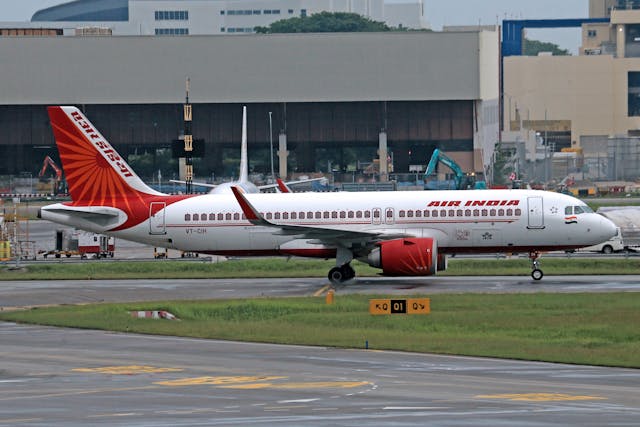
The airline said the initiative is a major step toward strengthening India’s aviation ecosystem, improving connectivity, and making better use of airport infrastructure across the country.
Air India’s CEO and Managing Director described the policy direction as a transformative move for the sector, crediting it with enhancing India’s position in global air travel and supporting long-term industry growth.
As part of its expansion strategy, the airline plans to connect Varanasi with international destinations, improving access for passengers from eastern Uttar Pradesh and nearby regions.
Officials associated with the airline said the model will help extend international connectivity beyond major metro cities, making global travel more accessible for passengers from smaller cities and emerging urban centres.
The hub-and-spoke approach is expected to shift India’s aviation landscape from a point-to-point system to a more integrated transit network, enabling smoother passenger movement between regional airports and international destinations.
Government officials have stated that the framework will also strengthen connectivity under regional aviation initiatives and reduce dependence on foreign transit hubs currently used by a large share of Indian international travellers.
The overall objective is to develop globally competitive aviation hubs within India and position the country as a major global air travel centre.
29, Apr 2026
India’s Global Role Expands in Peace, Economy and Technology: Experts
New Delhi, Apr 29 (BNP): India is increasingly being seen as an important force in shaping global peace, economic stability, and technological progress, according to global experts speaking at a recent international forum.
Experts noted that amid rising geopolitical tensions and global economic uncertainty, India is gaining prominence for its ability to support multilateral cooperation and contribute to global stability. They also highlighted the country’s growing influence in emerging technologies such as artificial intelligence.
An economics expert from a leading university in Singapore said that shifting global trade patterns, rising uncertainty, and weakening international trust are creating challenges for the world economy. In this context, India is viewed as a potential stabilising power capable of contributing to peace and cooperation at a global level.
He added that India’s role in international leadership will depend on how it chooses to engage with evolving global challenges.
A director from a leading science institution in London highlighted India’s positive approach toward artificial intelligence. He noted that while many Western populations remain cautious about AI, India is actively investing in building AI capacity and developing related infrastructure.
He also pointed out that India’s development model reflects a balance between economic growth and improving quality of life, even as the country manages challenges such as rising energy demand.
Experts further observed that India’s progress represents a broader shift in the Global South, where nations are increasingly focusing on innovation-led and inclusive development.
Overall, India’s growing engagement in technology, economy, and global cooperation is positioning it as a key contributor to future global stability.
29, Apr 2026
Indian Markets End Higher Despite Crude Oil-Driven Volatility
Mumbai, Apr 29 (BNP): Indian equity markets closed higher on Wednesday, though they gave up part of their intraday gains due to a sharp rise in global crude oil prices and weak global cues.
The Sensex rose 609.45 points to close at 77,496.36, while the Nifty gained 181.95 points to end at 24,177.65.
Market sentiment turned cautious after Brent crude surged over 3 per cent amid geopolitical concerns and supply uncertainty. Despite this, select heavyweights such as ITC, Tech Mahindra, and Maruti Suzuki supported the indices.
Broader markets showed mixed performance, with small-cap stocks outperforming while mid-caps ended slightly lower. Sectorally, FMCG and realty stocks led gains, while construction and media sectors underperformed.
Analysts said rising crude prices and global developments are likely to keep markets volatile in the near term, with investors also watching upcoming US Federal Reserve policy signals.


